

Note: This article contains affiliate links. If you click on these links and make a purchase, I may earn a small commission at no extra cost to you. This helps support my research and content. Read my full affiliate disclosure here.
Growing tomatoes in containers changes how soil behaves under heat, irrigation cycles, and limited root volume. Choosing the right planter soil for tomatoes affects root oxygen, moisture holding, and steady nutrient delivery, all of which translate directly into fruit set and flavor. This guide collects seven top planter soil blends suited for tomato use, shortlisted for container gardening situations ranging from small balcony pots to larger patio planters. Below we summarize the evaluation criteria gardeners care about-drainage, nutrient retention, structure and aeration, salt control, and ease of use-so you can match a soil to your container setup and tomato variety.
Top Picks at a Glance
| Best Overall The best all-around choice for most situations | Soil Sunrise All-Natural Tomato Starter Potting Mix (8 Quarts) |  |
| Best Quality Built to a higher standard if you want something more solid | Vermont Compost Company Fort Vee Organic Potting Soil Mix, 40 Quart (2 Pack) |  |
| Best Value The sweet spot between price and what you get | Gardenera Organic Tomato Potting Soil (2 Quart) |  |
| Best Budget The cheapest option that still gets the job done reliably | Readi Soil Tomato Planting Blend, 8 qt (Ready-to-Use) |  |
| Highest Rated A top-rated pick with lots of positive feedback | Coast of Maine Tomatoes and Veggies Planting Soil, 20 qt (Pack of 8) |  |
| Most Popular A crowd favorite that many people choose with confidence | Coast of Maine Organic Planting Soil for Vegetables & Tomatoes (20 Qt, 2 Pack) |  |
| Best Seller A high-volume bestseller chosen again and again | Back to the Roots Organic Expanding Coco Coir Potting Soil Brick (10 lb) |  |
Soil Sunrise All-Natural Tomato Starter Potting Mix (8 Quarts)

| Volume | 8 quarts |
|---|---|
| Ingredients | Coco coir, peat moss, perlite, worm castings, lime |
| Brand Name | Soil Sunrise |
Soil Sunrise Tomato Starter is a small-batch potting mix designed to give tomatoes a healthy start from seedling to transplant. It combines coco coir and peat moss for moisture retention, perlite for drainage and aeration, worm castings for biological nutrients, and lime to help balance pH — ingredients you would normally mix yourself. Typical uses are seed starting under lights, up-potting young plants, filling patio containers, or backfilling transplant holes outdoors. Practical benefits include steady moisture without waterlogging, good root aeration that limits compaction, and an organic nutrient boost from worm castings that supports early vigor. Because it is a preblended, tomato-focused mix you save time and reduce guesswork when preparing containers or transplant sites. Limitations are the small 8 quart volume, which means multiple bags are needed for larger container setups or beds, and the presence of peat moss and coco coir which may require occasional feeding later in the season as plants mature and deplete nutrients.
Best for: Gardeners who want a ready-made, tomato-focused potting mix to simplify starting seedlings, filling patio containers, and transplant backfill without mixing ingredients themselves.
Less Ideal for: Growers who need large volumes for raised beds or those seeking peat-free or wholly soilless professional mixes should consider bulk or specialist alternatives.
- Formulated specifically for tomatoes with a blend that balances moisture, aeration, and nutrients
- Includes worm castings for an immediate organic nutrient boost
- Perlite and coco coir reduce compaction and improve root oxygenation
- Hand-blended small-batch approach for consistent mix quality
- Small 8 quart bag size means you will need several bags for multiple plants or large containers
- Contains peat moss which may compress over time and require additional fertilization later
Verdict: Buy this if you want a convenient, all-natural starter mix that streamlines seed starting and container tomato planting with balanced moisture and built-in organic nutrition.
Vermont Compost Company Fort Vee Organic Potting Soil Mix, 40 Quart (2 Pack)

| Brand | Vermont Compost Company |
|---|---|
| Volume | 40 quarts |
| Style Name | Garden,Peat Moss,Potting,Potting Soil Mix,Soil Mix,Vermiculite |
| Unit Count | 1280 Ounce |
This Fort Vee organic potting soil is a compost-heavy mix designed for seed starting, transplants, and container vegetables that need a nutrient boost. It is intended for indoor and outdoor use in trays, soil blocks, and pots and is blended from composted manure and plant materials with sphagnum peat moss, vermiculite, coconut coir, and mineral amendments to improve structure and nutrients. In practice the mix holds its form well for transplanting and gives heavy-feeding crops like tomatoes and peppers a strong start thanks to added blood meal, kelp meal, and bone meal. It is easy to use straight from the bag with no extra amendments required for short-term container growth, and the composition should help with moisture retention while still draining better than plain compost. Important limitations are typical of rich mixes: it is a starter or container medium rather than a final garden topsoil, and the nutrient level may require adjustment or dilution before long-term use in beds or for very young seedlings sensitive to strong fertilizer salts.
Best for: Gardeners who want a reliable, ready-made organic potting mix to start and grow nutrient-hungry vegetables in containers or for transplanting to the garden.
Less Ideal for: People seeking a low-nutrient seed-starting medium for delicate micro-seedlings or gardeners who need bulk topsoil for bed building rather than a concentrated potting mix.
- Compost-based formula supplies organic nutrients useful for heavy-feeding vegetables
- Includes moisture-holding and aeration components like vermiculite and coconut coir
- Pre-mixed with mineral and biological amendments (bone meal, blood meal, kelp) for immediate plant support
- Designed to hold form for soil blocks, trays, and pots which eases transplanting
- High nutrient content makes it stronger than basic seed mixes and may be too rich for very small seedlings
- Formulated as a potting/starting mix rather than a finished garden soil for permanent beds
Verdict: A dependable, nutrient-rich organic potting mix that gives tomato seedlings and other heavy feeders a strong, ready-to-use start in containers.
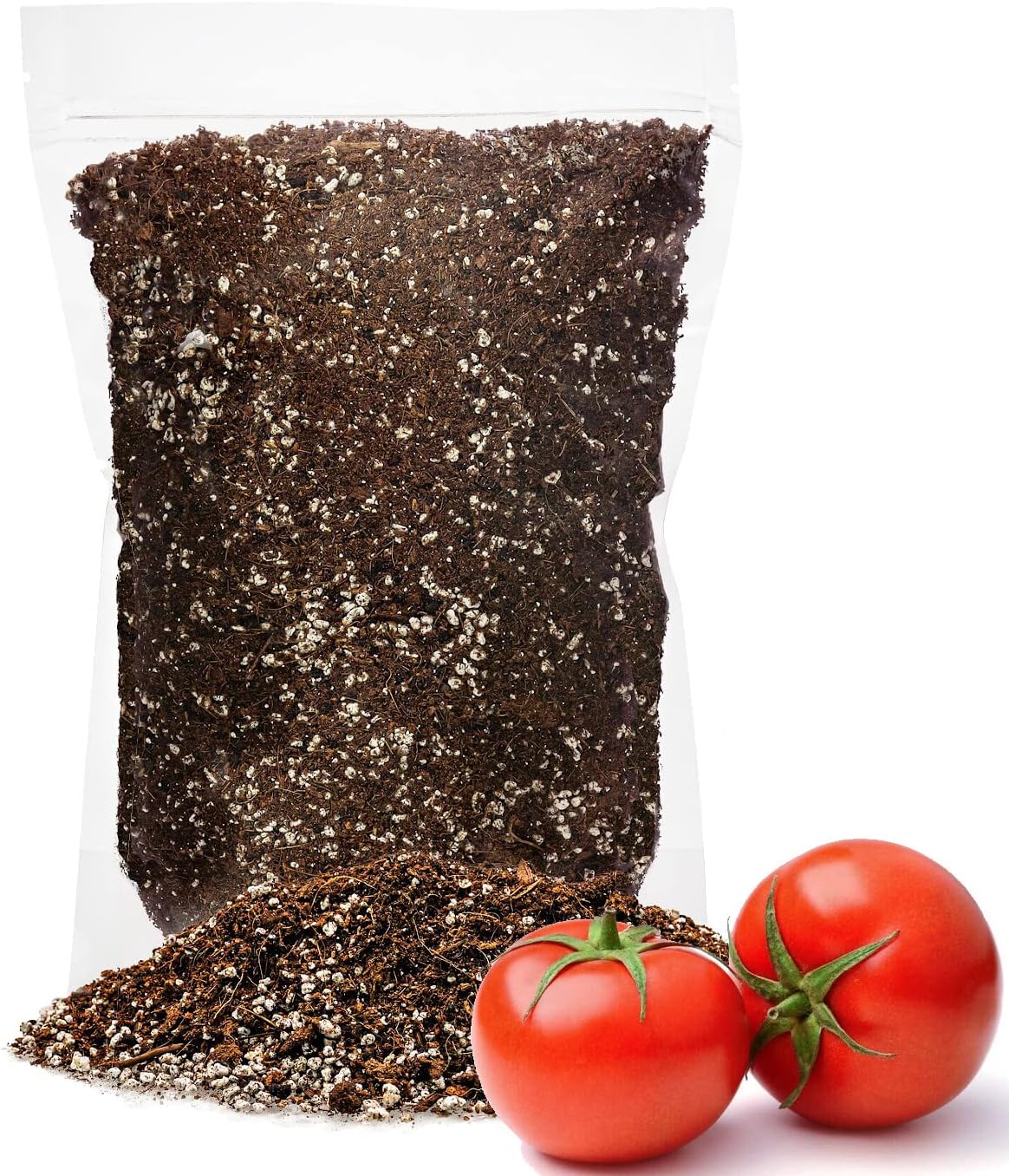
Gardenera Organic Tomato Potting Soil (2 Quart)
| Brand Name | Gardenera |
|---|---|
| Item Type Name | TOMATO Potting Mix |
| Volume | 2 quarts |
| Made in | USA |
Gardenera Organic Tomato Potting Soil is a purpose-built 2 quart mix aimed at starting or container-growing tomato plants. The blend of coco coir and peat moss holds moisture while perlite improves aeration and drainage, and worm castings add organic nutrients to support early root growth. It is hand-blended on a family farm and intended for both indoor and outdoor use, so it works well for seedlings, patio containers, and small raised beds. Practical benefits include improved root development, reduced risk of waterlogged roots due to extra perlite, and a formulation suitable for organic growing. Limitations are the small bag size, which means multiple bags are needed for larger containers or several plants, and the formulation does not list a specific fertilizer analysis so growers seeking a ready-to-go long-term feed may need to supplement with fertilizer as plants mature. Also handle with care to avoid inhaling dust during bagging.
Best for: Home gardeners who want an organic, ready-mixed small-batch soil for starting tomato seedlings or growing one to a few container tomatoes and who value a well-aerated, moisture-retentive mix.
Less Ideal for: Gardeners planting full-size in-ground tomato beds or equipping many large pots should choose bulk bagged soil or mixes formulated with a long-term fertilizer schedule.
- Organic, natural ingredient blend designed for edible plants
- Perlite and coco coir improve drainage and aeration for healthier roots
- Includes worm castings to provide organic nutrient support
- Suitable for both indoor seed starting and outdoor container use
- Only a 2 quart bag so not cost-effective for planting multiple or large containers
- No detailed nutrient analysis provided, likely needs supplemental feeding for fruiting stage
Verdict: A concentrated organic potting mix that gives tomato seedlings and small container plants improved root development and drainage in a ready-to-use 2 quart bag.
Readi Soil Tomato Planting Blend, 8 qt (Ready-to-Use)

| Volume | 8 quarts |
|---|---|
| Contains | Worm castings and peat moss |
| Intended use | Tomato transplants |
| Made in | USA |
Readi Soil Tomato Planting Blend is a small, ready-to-use soil mix designed for moving young tomato transplants into containers, raised beds, or garden spaces. The formula combines on-site produced worm castings with peat moss to add organic matter and improve moisture retention around developing roots. In practice you scoop this mix into pots or planting holes to give transplants an immediately conditioned root zone without pre-mixing compost. The worm castings supply naturally occurring nutrients during early growth, while the peat helps keep the medium light and moisture-manageable. Because the package is only 8 quarts, it is best for single pots, starter containers, or small patch installations rather than large beds. It does not include added calcium or act as a complete fertilizer, so expect to supplement nutrients later and address blossom-end rot separately. Safety directions advise avoiding skin and eye contact. For gardeners wanting a convenient starter medium that improves root establishment, this blend is practical and simple to use.
Best for: Gardeners who need a convenient, no-mix starter medium for a few tomato transplants and prioritize an affordable, ready-made option for containers or small raised beds.
Less Ideal for: Large-scale tomato growers or anyone planting many plants or filling full raised beds should choose bulk soil or mixes sized for larger projects.
- Ready-to-use 8 qt size for quick transplanting
- Contains worm castings to add organic matter and natural nutrients
- Peat moss component helps retain moisture and keeps the mix lightweight
- Made in the USA with on-site produced worm castings
- Small volume limits use to a few containers or small plantings
- No added calcium or complete fertilizer so additional feeding may be required
Verdict: A convenient, budget-friendly ready mix that gives a conditioned root zone for a few tomato transplants without needing to blend your own soil.
Coast of Maine Tomatoes and Veggies Planting Soil, 20 qt (Pack of 8)

| Volume | 20 quarts per bag |
|---|---|
| Number of Packs | 8 |
| Brand Name | Coast of Maine |
This Coast of Maine planting soil is a purpose-built mix for vegetables and container-grown tomatoes, sold as eight 20-quart bags so you can top-dress or fill several raised beds. It is made with composted manure and sphagnum peat moss, which helps improve organic matter and moisture retention in garden beds and pots during seeding, transplanting, or as a dressing around established plants. The bulk pack makes it convenient for dependable, repeatable use across multiple beds, and the US-made formula is designed to revitalize tired soil rather than act as a concentrated fertilizer. Expect good structure and water-holding capacity for tomato root development, though you will still want to manage fertility with regular feeding because the product is a soil conditioner rather than a complete nutrient program. Bags are mid-sized and manageable for two-person handling but will require multiple bags to fill or top-dress standard raised beds. For gardeners prioritizing consistency and a tried-and-true organic base for tomatoes, this mix is a solid, low-risk choice.
Best for: Gardeners who need a dependable organic soil base for tomatoes in raised beds or containers and who value consistent, repeatable results across multiple plantings.
Less Ideal for: Growers looking for an all-in-one fertilized potting mix or those who want a single bag to fill very large raised beds without buying multiple units.
- Formulated specifically for vegetables and container tomatoes with composted manure and sphagnum peat moss
- Sold in an eight-pack of 20 quart bags for consistent coverage across multiple raised beds
- Improves soil structure and moisture retention to support tomato root development
- Made in the United States with recognizable organic ingredients
- Designed as a soil conditioner rather than a complete fertilizer so additional feeding is needed
Verdict: A reliable, organic soil conditioner sold in bulk that provides consistent structure and moisture retention for tomatoes in raised beds and containers.
Coast of Maine Organic Planting Soil for Vegetables & Tomatoes (20 Qt, 2 Pack)

| Volume | 20 quarts |
|---|---|
| Unit count | 2 Count |
| OMRI listed | Yes |
| Ingredients highlighted | Composted manure, sphagnum peat moss, seaweed/lobster meal |
This Coast of Maine planting soil is an organic, compost-rich mix designed specifically for vegetables and tomatoes. Gardeners typically use it for seeding, transplanting, topping off raised beds, or filling pots and containers where tomatoes will grow. The formula contains composted manure, sphagnum peat moss and marine-derived amendments such as kelp and lobster meal, which contribute nutrients and support beneficial soil life. Practical benefits include improved moisture balance so roots get both water retention and drainage, and a texture light enough to work easily into existing beds or pots. It is OMRI listed, so it fits into an organic vegetable program and supports soil biodiversity over time. Important limitations are that the product comes in 20 quart bags so larger gardens will require many bags and the mix is not a complete fertilizer package so occasional feeding may still be needed for heavy-feeding tomato varieties. Also follow the safety guidance to avoid inhaling dust during handling.
Best for: A gardener who prioritizes reliable, organically produced soil that supports healthy tomato growth and soil biology, and who values consistent, repeatable results in containers or beds.
Less Ideal for: Large-scale vegetable growers who need bulk volumes or immediate complete nutrient solutions should consider bulk topsoil blends or dedicated fertilizer programs instead.
- OMRI listed organic formula suitable for organic vegetable gardens
- Contains composted manure and marine amendments that boost microbial activity and nutrients
- Balanced texture for both moisture retention and improved drainage
- Versatile for in-ground use, raised beds, and containers
- Small 20 quart bag size means many bags are needed for larger plots
- Does not include a complete, long-term fertilizer schedule for high-demand tomato varieties
Verdict: Choose this OMRI-listed Coast of Maine blend when you want an organic, biology-supporting soil that reliably balances moisture and drainage for healthy tomato plants.
Back to the Roots Organic Expanding Coco Coir Potting Soil Brick (10 lb)

| Item Highlight | 10 lb compressed coco coir brick; peat-free; OMRI Listed |
|---|---|
| Item Type Name | Coconut Coir |
| Volume | 2 cubic feet |
| Ingredients | Coconut Coir |
| Style Name | Expanding Potting Soil |
This compressed coco coir brick provides a lightweight, peat-free potting medium that expands when you add water to create loose, airy substrate for containers and seed flats. It is typically used by hydrating the 10 lb block to about 2 cubic feet of coir and then using it alone for potted plants, mixing it into garden soil to improve drainage and aeration, or blending with compost for starting seeds. Notable features include OMRI listing for organic use, a balanced pH suited to a wide range of plants, and compact storage before expansion which saves space. Practical benefits are improved root aeration and water retention compared with heavy garden loam, easier handling than bulky bags, and versatility across vegetables, herbs, and ornamentals. Important limitations are that coco coir is a soilless substrate and does not supply significant nutrients on its own so you will need to add fertilizer or compost for long-term potted herbs like rosemary, and the product requires time and a water source to expand before use.
Best for: Buyers who prioritize low-risk, easy-to-handle, organic potting media and want a versatile base for container herbs and seed starting without dealing with heavy bags.
Less Ideal for: Gardeners who want a ready-to-plant, nutrient-rich potting mix out of the box or those who prefer soil with built-in slow-release fertilizer.
- Peat-free OMRI listed organic coco coir suitable for organic growing
- Expands from a compact brick to about 2 cubic feet for easy storage and transport
- pH balanced and airy texture that improves drainage and root aeration
- Versatile use: can be used alone, for seed starting, or mixed into existing soil
- Provides little inherent fertility so supplemental feeding or compost is needed for nutrient-hungry plants
Verdict: A compact, peat-free coco coir brick that expands into an airy, pH-balanced base ideal for low-risk organic container gardening and seed starting when paired with fertilizer or compost.
Choosing the Right Planter Soil for Tomatoes: Key Factors to Consider
Drainage and Percolation
Tomatoes in containers need soil that sheds excess water quickly so roots get oxygen between irrigations. Poor drainage leads to waterlogged roots, root rot, and reduced fruit set. Evaluate the mix's coarse fraction-perlite, pumice, coarse sand, or bark-and how those components distribute pore space.
In practice, look for a balance: enough large pores to avoid standing water and enough fine pores to retain moisture. Consider whether your pots have drainage holes and whether you use saucers; those choices interact with soil drainage and may require a coarser or finer mix.
Moisture Retention and Available Water
Containers dry faster than ground beds, so the soil must hold plant-available water between waterings without becoming soggy. Components like compost, coconut coir, and peat retain moisture but differ in water release speed. A mix that holds moisture too tightly can suffocate roots; one that releases it too quickly forces more frequent watering.
Think about your watering routine and climate. If you travel or have hot afternoons, choose a mix with better water-holding capacity or plan to add water-retentive amendments. For consistently cool or shaded spots, a faster-draining mix reduces risk of overwatering.
Nutrient Retention and Feeding Strategy
Tomatoes are heavy feeders when fruiting, so soils must provide or retain nutrients between feedings. Organic matter and fine clays can hold cations and micronutrients for plant uptake, while inert components like perlite do not. Some mixes include slow-release organic or mineral fertilizers built in, which extend feeding intervals.
Decide whether you prefer a pre-fertilized ready-to-use mix or a neutral base you will fertilize regularly. For longer seasons or larger containers, a mix with built-in nutrient retention reduces the chances of sudden deficiencies.
Structure, Compaction Resistance, and Root Environment
A stable, open structure supports fibrous root growth and prevents compaction across repeated wet-dry cycles. Ingredients that break down quickly may compact and reduce aeration mid-season, so consider the longevity of the mix's structural components. Materials like aged bark and horticultural pumice stay open longer than fine, raw compost.
Good structure also improves anchorage for heavy indeterminate vines and supports healthy microbial activity. For tall or vining tomato varieties, stronger structure reduces tipping risk and keeps roots supplied with oxygen.
Salt Content and pH Compatibility
Salinity and pH affect tomato nutrient uptake and seedling health. Some packaged mixes contain soluble salts from fertilizers or mineral amendments that can stress sensitive transplants. Test for salt buildup if you reuse soil or irrigate with hard water.
Tomatoes prefer a slightly acidic to neutral pH. Choose mixes with pH guidance or amend cautiously. If you plan to rely on regular fertilization, pick a base mix with low initial soluble salt levels to avoid compounding concentrations.
Ease of Use and Readiness for Containers
A ready-to-use container soil saves time, but it must match your container size and tomato type. Some mixes are formulated for small pots and dry quickly, others are designed for large planters. Ease of use includes odor, crumb structure that fills pots without excessive settling, and whether the mix can be used straight from the bag or needs pre-moistening or aeration.
Also consider whether the mix is lightweight for hanging planters or heavy enough to provide stability for tall plants. Ease of amendment and reusability at season end are practical factors for container gardeners.
Matching Soil Texture to Container Size
Small pots and large planters demand different particle mixes. Finer-textured soils hold more available water in small pots but can become oxygen-poor if too dense. Larger planters tolerate and benefit from coarser fractions that improve percolation and reduce compaction.
When selecting a soil, think about the pot's volume and material. Terracotta wicks moisture faster than plastic, so you may want a mix with more moisture retention in terracotta pots. Conversely, large fabric grow bags dry more quickly and need higher water-holding capacity.
- Small pots: higher fine fraction, but add aeration if needed.
- Large containers: coarser mix to prevent soggy zones.
- Fabric or terracotta pots: increase moisture-holding amendments.
Adapting Soil for Different Tomato Types
Determinate bush varieties and compact patio types have less root volume and lower nutrient demand than indeterminate, heavy-yielding vines. For compact types, a lighter, slightly leaner mix reduces excessive vegetative growth that can overwhelm small containers.
Indeterminate varieties benefit from deeper, richer mixes with sustained nutrient supply and stronger structure to support heavy fruit loads and staking systems.
- Bush tomatoes: prioritize moderate nutrients and moisture retention.
- Vining tomatoes: prioritize nutrient holding and stable structure.
Adjusting Watering and Fertilizer with Container Soils
Soil choice changes how you water and feed. Fast-draining mixes need more frequent but shorter waterings to keep roots moist without overwatering. High-retention mixes allow longer intervals but require careful monitoring for signs of over-saturation.
Fertilizer strategy should match nutrient retention. Low-retention mixes need frequent liquid feeding, while mixes with high organic matter can support periodic granular or slow-release feeds. Monitor leaf color and fruit set to adjust timing.
- Frequent light waterings for coarse mixes.
- Less frequent deep waterings for high-retention mixes.
- Liquid feeds for inert mixes; slower-release for organic-rich mixes.
Reusing and Refreshing Container Soil
Reusing container soil can be economical but requires attention to depleted nutrients, disease risks, and compaction. Refresh spent soil by blending in fresh compost or a structured amendment to restore water-holding and aeration.
Solarizing or heat-treating can reduce pathogens, but quality restoration usually involves adding organic matter and a balanced feed. For perennial container tomato setups, plan to replace a portion of the soil every 1 to 2 seasons.
- Top up with compost and structural amendment before replanting.
- Inspect for pests, root disease, and excessive salt buildup.
Container Drainage Practices That Complement Soil Choice
Good container drainage reduces dependence on an overly coarse mix and lowers risk of root issues. Ensure pots have adequate drainage holes and consider using a coarse layer or mesh only if it does not impede flow. Soil should be the primary barrier and facilitator for water movement.
Elevating pots slightly and avoiding standing water in saucers helps maintain oxygenation in the root zone, working together with an appropriate soil choice to keep tomato roots healthy.
- Ensure multiple drainage holes for large planters.
- Avoid blocking holes with landscape fabric that traps water.
How We Chose the Best Planter Soil for Tomatoes
We focused on real-world container tomato growing needs and used concrete, garden-relevant filters to pick the seven soils on this list. Editorial selection prioritized drainage behavior in pots, the mix's ability to hold available water without waterlogging, and nutrient retention that supports fruiting over several weeks. We also assessed particle structure and aeration to reduce compaction, the presence and handling of soluble salts or additives that can stress seedlings, and how ready-to-use the mix is for immediate planting. Excluded were bulk garden soils and mixes designed only for in-ground beds, as those do not perform predictably in restricted containers. We also excluded mixes lacking any information on components or drainage characteristics. The final shortlist balances quick drainage with moisture-holding components, includes mixes with organic feeding strategies or controlled-release amendments, and favors blends that maintain friable texture through a full growing season.
FAQ
Can I use garden soil in containers for tomatoes?
Garden soil is usually too dense for containers and tends to compact, reducing oxygen to roots. It can be used if heavily amended with structure-improving materials, but generally a purpose-made container mix performs better for tomatoes.
How often should I fertilize tomatoes in planters?
Frequency depends on the soil's nutrient retention. Inert, fast-draining mixes typically need liquid feeding every one to two weeks, while organic-rich mixes with slow-release components may require feeding every three to four weeks. Monitor plant growth and fruit development to fine-tune timing.
Is peat or coconut coir better for tomato planters?
Both retain moisture, but coir is more sustainable and holds water differently than peat. Coir tends to rewet more easily and resists compaction better over a season. Choose based on availability and how it balances with other mix components for your watering routine.
How can I test soil for salt buildup in containers?
A simple approach is a soil leachate test: water the container thoroughly and collect the runoff to test with an EC meter. High readings indicate soluble salts. Flushing with extra water and replacing or amending the top layer helps reduce buildup.
Should I pre-moisten bagged planter soil before planting?
Pre-wetting helps settle the mix and reveals compaction or drainage issues before planting. It also reduces air pockets and ensures seedlings or transplants receive moisture immediately. For very dry mixes, moisten and let them drain before planting.
Final Verdict
Choose a planter soil for tomatoes by matching texture and water-holding characteristics to your pot size, watering habits, and tomato type. Prioritize good drainage and stable structure for larger or vining varieties, and favor moderate nutrient retention for smaller containers. Accept tradeoffs: mixes that hold more moisture reduce watering frequency but require careful drainage management. Focus on the criteria discussed-drainage, moisture retention, nutrient holding, structure, and salt control-to pick a soil that supports steady fruiting and healthy tomato plants.
