

Note: This article contains affiliate links. If you click on these links and make a purchase, I may earn a small commission at no extra cost to you. This helps support my research and content. Read my full affiliate disclosure here.
Choosing the right fertilizer for green plants matters because foliage-focused specimens depend on steady, balanced nutrition to maintain color, vigor, and dense growth. Whether you tend houseplants, shade-lovers, or landscape shrubs with a leaf-first focus, the fertilizer you pick affects how quickly leaves darken, how often you need to feed, and whether you risk leaf burn from overconcentration. This guide shortlists the top options for green plants and explains how each type behaves in real garden and indoor conditions. The picks were screened for nutrient balance, application ease, and safety for common leafy species. Read on to understand what to expect from each formula and how to match one to your maintenance style.
Top Picks at a Glance
| Best Overall The best all-around choice for most situations | Miracle-Gro Indoor Plant Food, Liquid, 8 oz. (2-Pack) |  |
| Best Quality Built to a higher standard if you want something more solid | Dyna-Gro Foliage Pro 32 oz Liquid Plant Fertilizer | 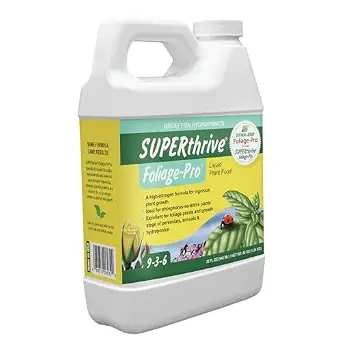 |
| Best Value The sweet spot between price and what you get | BLESS YOUR SOIL Big Green Leaves Indoor Plant Food, 1 lb Concentrated Powder |  |
| Best Budget The cheapest option that still gets the job done reliably | Jobe's Organics Houseplant Fertilizer Spikes, 50 Count |  |
| Highest Rated A top-rated pick with lots of positive feedback | Miracle-Gro Water Soluble All Purpose Plant Food, 1.5 lb |  |
| Most Popular A crowd favorite that many people choose with confidence | Miracle-Gro Indoor Plant Food for All Plants, Liquid, 8 fl. oz. (2-Pack) |  |
| Best Seller A high-volume bestseller chosen again and again | TPS NUTRIENTS Indoor Plant Food Liquid Fertilizer, 8 fl oz |  |
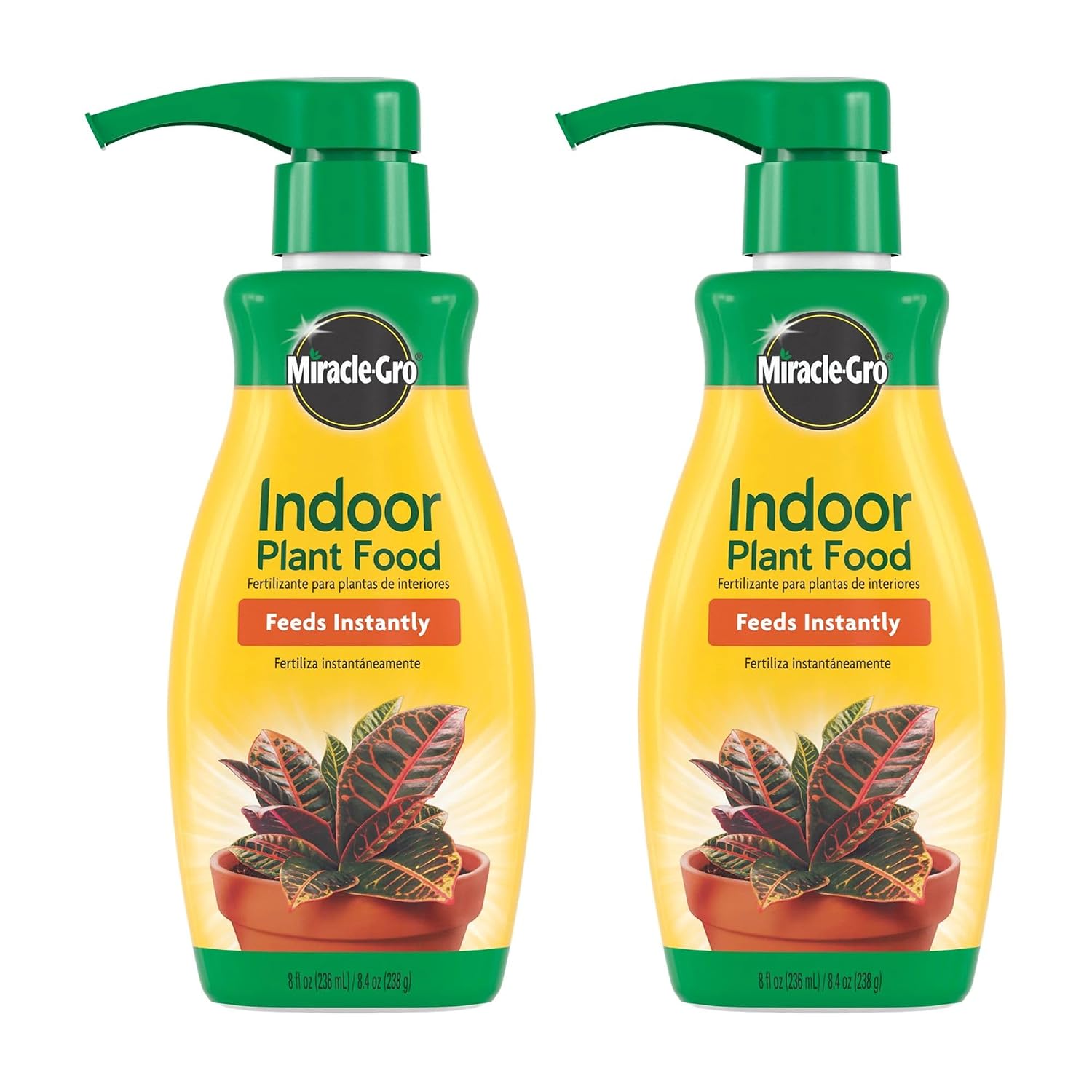
Miracle-Gro Indoor Plant Food, Liquid, 8 oz. (2-Pack)
| Item Form | Liquid |
|---|---|
| Application Method | Apply directly to the soil or mix with water |
| Coverage | Pot size |
| Target Species | Peace Lily, Snake Plant, Croton, Succulents, Herbs |
| Unit Count | 16 Fluid Ounces |
Miracle-Gro Indoor Plant Food is a ready-to-use liquid fertilizer designed for weekly feeding of houseplants. It is applied either by pumping directly into the potting soil (one pump for small pots, two for larger pots) or by diluting four pumps per quart of water and using as a regular watering. The formula is aimed at common indoor species such as snake plants, peace lilies, succulents, herbs and edible container vegetables, so it suits mixed collections. Practical benefits include instant nutrient availability, easy dosing with the pump bottle, and a compact two-pack that keeps a steady supply on hand. Important limitations are that it requires weekly application to see results and contains concentrated nutrients that should be kept away from children and pets and handled with care. Also, instructions assume typical indoor pot sizes so very large container gardens may need adjusted dosing. For everyday indoor gardeners wanting straightforward, frequent feeding, this product makes routine care simple and effective.
Best for: Indoor plant owners who want a simple, regular feeding routine for a mixed collection of houseplants and occasional edible containers.
Less Ideal for: People who prefer organic or slow-release granular fertilizers or those who want a low-maintenance no-fertilizer approach.
- Suitable for a wide range of common houseplants including edibles and succulents
- Easy pump-dosing or water-dilution application for quick feeding
- Comes as a two-pack to maintain a regular feeding schedule
- Liquid form delivers nutrients immediately to the root zone
- Requires weekly application to maintain benefits
- Contains concentrated chemicals that require safe handling away from children and pets
Verdict: A convenient, pump-dosed liquid fertilizer that makes weekly feeding of mixed houseplant collections quick and reliable.
Dyna-Gro Foliage Pro 32 oz Liquid Plant Fertilizer

| Item Form | Liquid |
|---|---|
| Specific Uses For Product | indoor plant care, greenhouse production, and low light environments |
| Application Method | Mix with water |
| Mixing Ratio | 3:1:2 or 9-3-6 |
Dyna-Gro Foliage Pro is a concentrated liquid fertilizer designed as a complete nutrient source for tropical foliage and common indoor plants. It mixes with water and can be used as the sole feed in soil or hydroponic setups, with the label recommending a 3:1:2 or 9-3-6 mixing ratio to match plant needs. In practice it encourages leafy growth, stronger stems, and richer leaf color thanks to its foliage-focused NPK balance, and its liquid form makes it easy to apply during regular watering. The formula is versatile for greenhouse production and low-light interiors where steady nutrition matters. Expect reliable, steady results rather than instant dramatic changes; you still need to follow dilution guidance and schedule to avoid overfeeding. The product comes in a pint/quart-sized bottle that is easy to measure and store, but users should wear basic protection when handling concentrate and keep it away from children and pets.
Best for: Plant owners who prioritize steady, performance-oriented foliage results and want a single liquid feed they can rely on for indoor and greenhouse plants.
Less Ideal for: Growers who need a bloom-boosting or high-phosphorus feed for flowering and fruiting plants should choose a fertilizer formulated for blooms instead.
- Balanced foliage-focused NPK (3:1:2) tuned for leaf growth and coloration
- Liquid concentrate that mixes easily with water for consistent feeding
- Suitable as a sole nutrient for both soil and hydroponic systems
- Works well in low-light and greenhouse environments where steady nutrition is needed
- Requires careful dilution and regular scheduling to avoid nutrient buildup
- Not formulated for heavy-flowering or fruiting requirements where different NPK is preferred
Verdict: If you want a dependable, foliage-focused liquid fertilizer that can serve as a single feed for indoor and greenhouse plants, this is a strong choice.
BLESS YOUR SOIL Big Green Leaves Indoor Plant Food, 1 lb Concentrated Powder

| NPK Ratio | 12-4-8 |
|---|---|
| Form | Powder, water-soluble concentrate |
| Yield | Makes ~90 gallons of solution |
| Application Methods | Soil drench, foliar feed, hydroponic/LECA compatible |
| Includes | Pre-measured teaspoon scoop |
Big Green Leaves is a dry, water-soluble houseplant fertilizer designed to drive leafy growth in tropical indoor plants. It mixes quickly with a pre-measured scoop and yields roughly 90 gallons of feed solution from a 1 lb pouch, so it is typically used as a routine soil drench or foliar spray every 2–4 weeks during active growth. The 12-4-8 NPK leans high on nitrogen for bigger leaves and stems while included sea kelp and a chelated micronutrient blend support root development and consistent uptake across variable pH levels. Practical benefits include compatibility with potting mixes, soilless media, and hydro/LECA systems, a resealable pouch for tidy storage, and no fillers or urea that can cause salt buildup. Important limitations are that its formulation is aimed at foliage-driven tropicals rather than cacti, succulents, or high-phosphorus flowering plants, and the concentrated powder requires careful measuring and dilution to avoid overfeeding sensitive specimens. For growers focused on vigorous leaf production, it delivers a clear, concentrated option with broad application modes.
Best for: Buyers who prioritize rapid, healthy leaf growth on tropical and foliage houseplants and want a concentrated, value-oriented fertilizer they can use across soil and soilless systems.
Less Ideal for: Gardeners who mainly grow succulents, cacti, or flowering houseplants that require higher phosphorus or very low-nitrogen fertilizers should choose a product tailored to those needs.
- High 12-4-8 NPK tailored for leafy tropical houseplants to promote rapid foliage growth.
- Contains sea kelp and chelated micronutrients to support root health and improve nutrient uptake.
- Very concentrated yield (about 90 gallons per pound) for lower cost and less packaging than liquid fertilizers.
- Versatile application: soil drench, foliar feed, hydroponic and LECA compatibility.
- Resealable pouch with a pre-measured scoop for consistent mixing and tidy storage.
- Not formulated for cacti, succulents, or flowering plants that need higher phosphorus levels.
- Requires accurate measuring and dilution because of its concentration, which can risk overfeeding if misused.
Verdict: If you want fast, fuller foliage on tropical houseplants, this concentrated 12-4-8 powder gives strong, versatile feeding and excellent value per gallon.
Jobe's Organics Houseplant Fertilizer Spikes, 50 Count

| Unit Count | 50 Count |
|---|---|
| Application Method | Insert spikes into soil |
| Item Form | Granules, Liquid, Sticks |
| Target Species | Houseplant |
| Mixing Ratio | 13-4-5 |
Jobe's Organics fertilizer spikes are pre-measured, slow-release sticks you insert directly into potting soil to feed indoor flowering and foliage houseplants. Each pack includes 50 spikes formulated at 13-4-5 NPK, designed to supply nutrients at the roots for roughly 60 days before replacement. Use is straightforward: push the recommended number of spikes into the soil around the root zone and forget them until the next application. The spikes eliminate mixing, reduce mess and runoff, and help prevent accidental overfeeding because each spike contains a set dose. For small pots and casual plant owners this delivers consistent feeding with minimal effort, especially where you want steady bloom and leaf color without daily attention. Limitations are the fixed nutrient ratio and dosing schedule so you cannot fine-tune feeding for specific species or correct nutrient imbalances quickly, and spikes may be less practical for very large containers or heavy feeders that need more frequent or soluble feeding.
Best for: A practical, budget-minded houseplant owner who prefers low-effort, scheduled feeding and wants reliable bloom and foliage maintenance without mixing fertilizers.
Less Ideal for: Enthusiasts who need customizable nutrient ratios, rapid corrective feeding, or who primarily care for very large or heavy-feeding plants.
- Pre-measured slow-release spikes remove mixing and reduce mess
- Continuous root-zone feeding for about 60 days per application
- Formulated 13-4-5 NPK suited to flowering and foliage development
- Pack of 50 provides multiple applications for several small plants
- Fixed NPK ratio and dose cannot be adjusted for individual plant needs
- Not ideal for very large pots or plants requiring frequent soluble feeding
Verdict: If you want an inexpensive, no-mess way to provide steady root-zone nutrition to multiple houseplants, these pre-measured spikes are a simple and reliable choice.
Miracle-Gro Water Soluble All Purpose Plant Food, 1.5 lb

| Item Form | Powder |
|---|---|
| Application Method | Watering Can |
| Target Species | For all flowers, vegetables, trees, shrubs and houseplants |
| Mixing Ratio | 24-8-16 |
Miracle-Gro Water Soluble All Purpose Plant Food is a powdered, water-soluble fertilizer formulated to deliver fast nutrition to a broad mix of plants. You mix the powder into a watering can or a garden feeder and apply every 1 to 2 weeks depending on whether plants are indoors or out. The 24-8-16 NPK ratio supplies a strong nitrogen boost for leafy growth along with phosphorus and potassium to support flowering and fruit set. For pepper growers this means it can help produce vigorous plants and encourage fruit development when used at the recommended strengths. Notable features include clear mixing guidance for both indoor and outdoor use and compatibility with container and in-ground plantings. Practical benefits are quick uptake by roots and flexible application options. Important limitations are the high nitrogen proportion, which can favor foliage over fruit if overused, and the need to follow dilution instructions to avoid nutrient burn. This product is best used as a regular boost within a balanced feeding plan rather than the only fertility source for long-term soil health.
Best for: Home gardeners looking for an affordable, easy-to-use boost to support vigorous pepper plant growth and quick results in both containers and garden beds.
Less Ideal for: Growers who want a low-nitrogen or slow-release fertility plan for long-term soil building should consider specialized or organic alternatives.
- Water-soluble powder that feeds plants quickly through the roots
- Clear mixing instructions for indoor and outdoor applications
- Broadly labeled for use on flowers, vegetables, trees, shrubs and houseplants
- Feeds approximately 600 sq. ft. from the 1.5 lb container
- High nitrogen ratio may encourage foliage more than fruit if used too frequently
Verdict: A budget-friendly, fast-acting soluble fertilizer that gives bell pepper plants a regular nitrogen-rich boost to promote vigorous growth and quicker results.
Miracle-Gro Indoor Plant Food for All Plants, Liquid, 8 fl. oz. (2-Pack)

| Item Form | Liquid |
|---|---|
| Application Method | Apply directly to soil or mix with water |
| Target Species | Houseplants |
| Liquid Volume | 8 fluid ounces |
| Mixing Ratio | 4 pumps per 1 quart of water |
Miracle-Gro Indoor Plant Food is a ready-to-use liquid fertilizer for indoor potted plants that you apply either directly to soil or diluted in water. It is typically used every two weeks by mixing the recommended number of pumps into a quart of water or by applying a few pumps for larger pots, making it easy to add to a regular watering routine. The product feeds quickly because nutrients are water-soluble and the pump dispenser gives repeatable doses without measuring spoons. Practical benefits include broad compatibility with most houseplants and a compact bottle size that is convenient for small indoor gardens. Limitations are that the label lists only N, P, K without a full nutrient breakdown, so growers wanting precise NPK ratios or micronutrient profiles may prefer a more detailed formula. Also the 8 fl. oz. bottles are best for hobbyists or small collections rather than large indoor plantings because frequent repurchasing will be necessary for heavy users.
Best for: Buyers who want a simple, low-effort fertilizer to add to a regular watering routine and who prioritize straightforward dosing and broad houseplant compatibility.
Less Ideal for: Specialist growers who need exact NPK ratios, detailed micronutrient information, or bulk quantities for many plants should consider a different product.
- Liquid formula feeds instantly when mixed with water or applied to soil
- Pump dispenser provides simple, repeatable dosing without measuring
- Designed for use with a wide range of indoor plants including herbs, flowers and vegetables
- Full NPK ratio and micronutrient details are not shown on the product summary
- Small 8 fl. oz. bottle size may require frequent replacement for larger collections
Verdict: A convenient, pump-dosed liquid fertilizer that makes fortnightly feeding simple for casual indoor plant owners.
TPS NUTRIENTS Indoor Plant Food Liquid Fertilizer, 8 fl oz

| Item Form | Liquid |
|---|---|
| Specific Uses For Product | Plant Food |
| Application Method | Watering can |
| Mixing Ratio | 2:1 (oz/gallon) or 1:64 (tbsp/gallon) |
TPS NUTRIENTS Indoor Plant Food is a concentrated liquid fertilizer made for regular use with houseplants. You mix the measured dose into water and apply it with your usual watering can; the label gives an easy mixing ratio for household use. Its kelp-enriched formula is pitched at improving leaf color, encouraging steady new growth, and supporting root health, so expect glossier foliage and more frequent leaf production when plants are fed consistently. The 8 fl oz bottle is portable and fits on a plant shelf or utility area, and the liquid form dissolves readily for even application. It is intended for medium coverage and labeled as gentle for weekly feeding, which simplifies care for busy owners. Important limitations are that this is a small bottle meant for regular top-up feedings rather than long-term bulk use, and it assumes you will follow dilution directions to avoid overfeeding. Keep it away from children and pets and avoid skin or eye contact when handling.
Best for: Plant owners who want a simple, low-effort weekly fertilizer to keep indoor foliage vibrant and encourage steady new leaf growth. Good for people who prefer an easy liquid mix applied during regular watering routines.
Less Ideal for: Gardeners needing a bulk or multi-season fertilizer for outdoor beds or large collections should consider larger-capacity or specialized products instead.
- Liquid concentrate mixes easily for even application with a watering can
- Kelp-enriched formula aimed at improving foliage color and encouraging new growth
- Gentle enough for weekly feedings according to product guidance
- Clear mixing instructions for home use
- Small 8 fl oz volume limits how many plants you can feed before repurchasing
- Not formulated or labeled for outdoor or large-scale garden use
Verdict: A convenient kelp-enriched liquid concentrate that makes weekly feeding easy for anyone who wants healthier, more vibrant indoor foliage.
Choosing the Right Fertilizer for Green Plants: Key Factors to Consider
Nutrient Profile and Nitrogen Focus
For green plants, the relative amounts of nitrogen, phosphorus, and potassium guide how foliage develops. Higher nitrogen encourages leaf growth and darker green color, while too much can create weak, floppy growth that attracts pests. Look for clearly stated NPK ratios and consider whether the formula provides both immediately available nitrate/ammonium and slower-release nitrogen forms. Secondary nutrients such as magnesium, iron, and manganese matter because deficiencies show up as yellowing or interveinal chlorosis; formulas that include trace elements can correct or prevent these problems.
Understanding the nutrient profile helps you match a fertilizer to the plant's stage and environment. For newly repotted plants, milder, balanced feeds reduce stress, while established leafy specimens often benefit from a slightly higher nitrogen feed during active growth.
Release Rate and Feeding Frequency
Release rate affects how often you must fertilize and the risk of nutrient spikes. Fast-release liquid feeds produce quick color improvement but require more frequent application and careful dilution to avoid burn. Slow-release granules or coated pellets provide steadier nutrition and suit gardeners who prefer low-maintenance schedules. Osmocote-style or polymer-coated formulas release nutrients in response to soil temperature and moisture, which can match natural growth rhythms in warm seasons.
Decide whether you want rapid correction of pale leaves or a gradual maintenance program. Indoor plants often do better with lower, consistent release to avoid salt build-up, while outdoor foliage beds can handle periodic boost feeds in active growth months.
Form and Ease of Application
Fertilizers come as liquids, water-soluble powders, granules, spikes, and slow-release beads. Liquids and water-soluble powders mix with water and are suitable for regular, controlled feedings, and they are easy to apply to both pots and garden beds. Granules are simple to broadcast or top-dress but require watering-in and may be less precise for small containers. Spikes are tidy and low-mess but may not distribute nutrients evenly in tight pots. Choose a form that fits where you grow green plants and how often you like to tend them.
Practical considerations include measuring accuracy, storage, and whether the product can be applied directly to foliage or must be root-applied. Ease affects adherence to a feeding schedule, which in turn impacts plant health.
Soluble Salt Content and Plant Safety
Soluble salt levels influence burn risk and long-term soil buildup. High-salt fertilizers can damage roots if overapplied or used on drought-stressed plants. Products with lower salt indices or recommendations for conservative dosing reduce the chance of leaf scorch and root injury. If you grow delicate shade plants or species with fine root systems, prioritize formulas with gentle concentrations and clear dilution guidance.
Rinsing and periodic leaching for potted plants can mitigate salt accumulation. Always follow label dilution instructions and reduce frequency for plants showing slow growth or signs of stress.
Micronutrients and Corrective Needs
Micronutrients like iron, manganese, zinc, and boron are essential for chlorophyll production and enzyme functions, and their absence often shows as subtle leaf symptoms. Fertilizers that include chelated iron or a broad trace element package are useful if your water or potting mix is prone to causing deficiencies. Corrective feeds or foliar sprays can rapidly address specific nutrient shortages, but regular balanced fertilization helps prevent recurring problems.
Consider whether your plants have shown signs of micronutrient deficiency in the past. If they have, pick a formulation that explicitly lists those elements so you do not need separate supplements.
Compatibility with Growing Conditions
Growing conditions-container size, light level, watering frequency, and soil type-directly affect fertilizer choice. Containers dry and concentrate salts faster than garden soil, so container-grown green plants usually need milder, more frequent feedings. Low-light indoor plants require lower nutrient rates because their growth is slower. In contrast, bright, actively growing foliage outdoors benefits from fuller-strength feeds during the growing season.
Match the product to both the plant and the environment to avoid overfertilizing or underfeeding, and adjust based on seasonal growth patterns.
When to Boost Leaf Nutrition
Timing fertilizer applications for green plants is about matching feeding to growth cycles. Apply more actively during spring and summer when plants put energy into new leaves, and cut back in autumn and winter as growth slows. Watch new growth color and leaf expansion; pale new leaves or slow new shoots indicate a need for a nitrogen-focused boost.
Avoid heavy feeding during dormancy or in low-light indoor conditions, because excess nutrients can accumulate and stress roots when plants are not using them. For potted specimens, a light monthly feed through the cooler months supports health without encouraging weak, pointless growth.
- Feed actively during active growth months.
- Reduce frequency in low light or dormancy.
- Use a corrective feed for sudden yellowing rather than increasing regular doses.
How to Apply Different Forms
Liquids and water-soluble powders are mixed at recommended dilution and applied at the root zone. They are ideal for quick response and for evenly dosing small pots. Granules are sprinkled and watered-in; they work well in garden beds and larger containers but require attention to distribution.
Slow-release pellets and coated granules provide steady nutrition over weeks or months and are useful for low-maintenance setups. Spikes are convenient but place nutrients in a narrow zone, so rotate placement around the root ball for even results. Always measure and follow label directions to avoid overapplication.
- Dilute liquids according to pot size and frequency.
- Water-in granules to move nutrients to roots.
- Rotate spikes around root zone for even uptake.
Correcting Common Leaf Problems
Yellowing between veins often signals iron or magnesium deficiency rather than a lack of nitrogen. A targeted foliar spray or a chelated micronutrient supplement can produce faster improvements than changing base fertilizer alone. Pale overall color and slow growth more commonly point to inadequate nitrogen, which a balanced foliage fertilizer can address.
Spot-treat problems after diagnosing the likely cause, and avoid doubling down with stronger general feeds before ruling out pests, watering issues, or root problems. Proper diagnosis reduces the chance of masking an underlying non-nutritional issue with extra fertilizer.
- Interveinal chlorosis often needs micronutrients.
- Pale, uniform yellowing usually responds to nitrogen.
- Check watering and pests before changing feed regimes.
Adjusting Feeding for Containers Versus Ground
Container plants experience faster nutrient depletion and salt concentration, so they usually need more frequent, milder feeds. Use water-soluble feeds at a diluted rate every two to four weeks for most foliage containers, and flush pots periodically to prevent buildup. Ground-planted specimens benefit from seasonal granular top-dressing or periodic liquid feeds during the active season.
In garden beds, organic slow-release inputs like composted materials provide both nutrients and improved soil structure, supporting long-term leaf health without the risk of acute salt burn.
- Containers: frequent, low-dose liquid feeding and occasional leaching.
- Ground: seasonal granular or organic top-dress for steady supply.
- Flush containers if salts accumulate or plant shows stress.
Organic Options and Soil Health
Organic fertilizers supply nutrients more slowly and improve soil biology, which can support long-term leaf health and resilience. Materials like compost, kelp, and well-composted manure release nutrients as microbes break them down, providing a gentler, more sustained feed. They are particularly useful for gardeners who prefer hands-off maintenance and want to build soil structure over time.
Keep in mind that organic feeds can be lower in immediately available nitrogen, so they may be best paired with occasional light soluble feeds for rapid correction of visible deficiencies.
- Organics improve soil structure and biology.
- They release nutrients slowly; supplement for fast correction.
- Best for long-term maintenance and steady leaf color.
How We Chose the Best Fertilizer for Green Plants
We selected fertilizers based on criteria that matter most when the main goal is lush, healthy foliage. Primary evaluation criteria included the nutrient profile and nitrogen availability, because leaf color and growth respond directly to available nitrogen and the balance of secondary nutrients. We assessed application methods and ease, covering granules, liquids, spikes, and slow-release formats to reflect different gardener routines. Release rate and feeding frequency were reviewed to separate quick-fix high-nitrogen formulas from steady, low-maintenance options. Plant safety and burn risk were evaluated by looking at recommended dilution ranges and salt index indicators. We also considered compatibility with common green plants, such as shade houseplants and foliage shrubs, to ensure formulations suit leaf-focused needs. Exclusions: any fertilizer marketed solely for blooms or bulbs, products lacking clear nutrient labeling, and mixes intended only for vegetable production were not included. The result is a list of candidates that balance visible leaf improvements with practical application and safety.
FAQ
How often should I feed houseplants that are grown for foliage?
It often depends on the fertilizer form. Liquid feeds diluted to half strength can be applied every two to four weeks during active growth, while slow-release granules may only need replacing every three to four months. Reduce frequency in low light or during dormancy.
Can too much fertilizer improve leaf color faster?
Too much fertilizer can cause leaf burn, excessive soft growth, and salt buildup that weakens plants. Faster color change usually comes from correctly balanced, not heavier, feeding combined with adequate light and water.
Should I use a fertilizer labeled for houseplants or one for lawns on green plants?
Formulas for lawns often have higher nitrogen geared for turf and may be too strong for potted or tender foliage plants. Choose a product with an NPK and application method suited to container or garden planting rather than assuming lawn mixes are interchangeable.
Are micronutrient supplements necessary for green plants?
Micronutrient supplements are useful if you see specific deficiency symptoms or if your water and soil are known to cause shortages. Many balanced foliage fertilizers include trace elements, which reduces the need for separate supplements in typical conditions.
How do I avoid fertilizer salt buildup in pots?
Use lower-dose, more frequent feedings and periodically flush containers with clear water to leach salts. Choosing slow-release or organic options also reduces the risk of rapid salt accumulation.
Will switching fertilizer improve leaf gloss and texture quickly?
Switching to a formula with appropriate nitrogen and micronutrients can show visible improvement in weeks, especially on actively growing plants. However, leaf texture and long-term gloss also depend on light, humidity, and watering practices, so fertilizer is only one piece of the puzzle.
Final Verdict
Prioritize a fertilizer that matches how and where you grow green plants. Focus on nitrogen availability and NPK ratios for visible leaf improvements, but balance that with release rate and plant safety to avoid burn. Choose a form that fits your maintenance style-liquids for quick corrections, slow-release for lower effort, and organics for soil health. By weighing nutrient profile, application ease, and compatibility with containers or beds, you can select an option that produces steady, healthy foliage without unnecessary risk.
