

Note: This article contains affiliate links. If you click on these links and make a purchase, I may earn a small commission at no extra cost to you. This helps support my research and content. Read my full affiliate disclosure here.
Picking the right fertilizer for hybrid tea roses matters because these plants are bred for large, showy blooms but need precise nutrition to perform. The wrong feed can produce lots of foliage with poor flowers, weak canes, or fluctuating vigor from season to season. This guide looks at seven top fertilizers chosen for their nutrient profiles, feeding schedules, and ease of use, so you can match a feed to your planting style and maintenance plan. We shortlisted options that suit potted roses, established beds, and spring-through-fall bloom cycles. Below you will find practical notes on application, expected results, and the traits gardeners rely on when feeding hybrid tea roses.
Top Picks at a Glance
| Best Overall The best all-around choice for most situations | BioAdvanced All‑In‑One Rose & Flower Care Granules, 4 lb |  |
| Best Quality Built to a higher standard if you want something more solid | Dr. Earth Total Advantage Rose & Flower Fertilizer, 4 lb |  |
| Best Value The sweet spot between price and what you get | Jobe's Organics Granular Rose & Flower Fertilizer, 4 lb |  |
| Best Budget The cheapest option that still gets the job done reliably | Jobe's Rose Fertilizer Spikes, 10 Count (9-12-9) |  |
| Highest Rated A top-rated pick with lots of positive feedback | Espoma Organic Rose-Tone 4-3-2 Organic Fertilizer, 18 lb. Bag (2-Pack) |  |
| Most Popular A crowd favorite that many people choose with confidence | Miracle-Gro Shake 'N Feed Rose & Bloom Plant Food, 4.5 lb |  |
| Best Seller A high-volume bestseller chosen again and again | Miracle-Gro Water Soluble All Purpose Plant Food, 1.5 lb |  |
BioAdvanced All‑In‑One Rose & Flower Care Granules, 4 lb

| Item Form | Granules |
|---|---|
| Target Species | Insects |
| Special Features | Breathable |
| Active Ingredients | 0.11% Imidacloprid, 1.06% Tebuconazole, 0.05% Clothianidin |
BioAdvanced All‑In‑One Rose & Flower Care is a granular, systemic product designed to feed roses and ornamentals while protecting them from common pests and fungal diseases. You broadcast granules around the root zone and water them in; the systemic actives move through the plant so there is no spraying and protection is rainproof for up to six weeks. Notable features include a balanced plant food to promote roots and blooms plus insect control for pests such as aphids and Japanese beetles and a fungicide to help prevent black spot and powdery mildew. For a gardener growing Knock Out roses this simplifies routine care by combining three tasks into one application and reducing labor. Limitations are that it contains low levels of neonicotinoid active ingredients and clothianidin which some gardeners avoid, and it is not labeled for sale in certain states so local restrictions may apply. It is best used as a scheduled maintenance treatment rather than a cure for severe infestations or advanced disease.
Best for: Gardeners who want a low-effort, maintenance product to keep Knock Out roses healthy with regular feeding and broad pest and disease prevention.
Less Ideal for: Those who prioritize organic or pollinator-safe products or who need a targeted treatment for serious infestations or advanced disease.
- Three-in-one formula feeds plants while providing insect and disease control
- Systemic granules that are rainproof and require no spraying
- Provides up to six weeks of protection per application
- Easy application by spreading around the root zone and watering in
- Contains neonicotinoid and related actives that some gardeners prefer to avoid
- Not labeled for sale in some U.S. states which limits availability in those areas
Verdict: If you want a simple, no‑spray maintenance product that feeds Knock Out roses while protecting them from common insects and fungal diseases, this combines all three tasks in one application.
Dr. Earth Total Advantage Rose & Flower Fertilizer, 4 lb
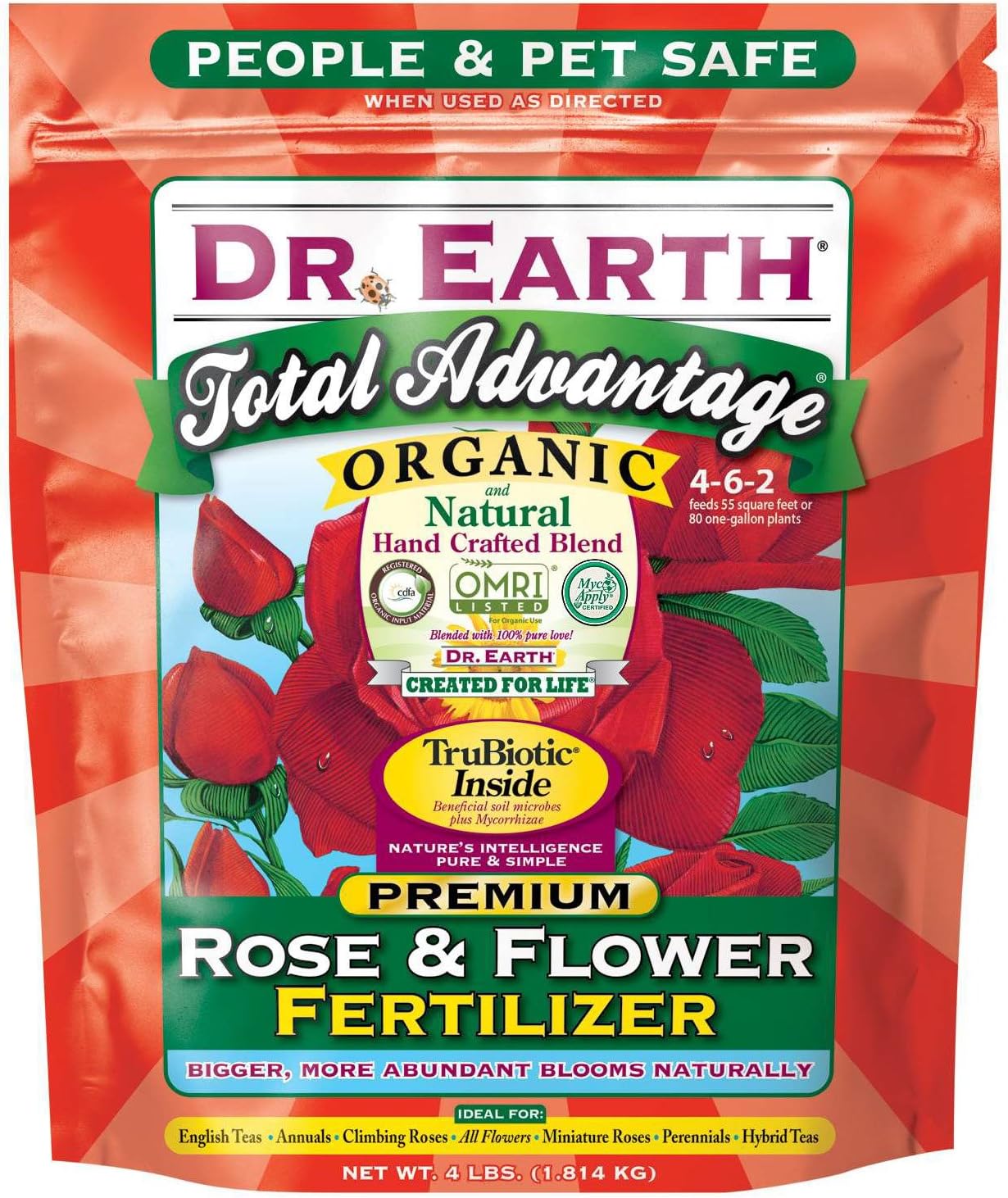
| Item Form | Granules |
|---|---|
| Specific Uses For Product | Organic |
| Coverage | Medium |
| Target Species | flowers, roses, flowering trees, shrubs, annuals & perennials |
| Unit Count | 64 Ounce |
This Dr. Earth granular fertilizer is formulated specifically for roses and flowering plants and is intended to encourage larger, more frequent blooms by supplying a steady organic nutrient source. Typical use is sprinkling or incorporating into beds at planting, adding mid-season feeds, or using as a compost-tea drench or foliar spray; the product notes container feeding every six weeks. Notable features include an organic ingredient list with added humic acids, trace minerals and proteins, Non-GMO Project verification and multiple organic certifications that support clean, soil-building nutrition. Practically, it promotes healthier soil biology rather than quick synthetic feeding so results appear over weeks as plants respond with fuller growth and improved bloom set. Limitations are that it is not a fast-release synthetic fertilizer so gardeners seeking immediate, dramatic color boosts or rapid green-up will see slower changes, and application near water sources should be avoided to prevent runoff. Follow the package directions for timing and mixing ratios to get the intended steady feeding effect.
Best for: Roses and flower gardeners who prioritize organic, soil-building nutrition and steady bloom improvement over rapid synthetic results.
Less Ideal for: Gardeners who need quick, immediate feeding responses or instant visual changes after application should consider faster-acting alternatives.
- Formulated specifically for roses and flowering plants to promote bigger blooms
- Certified organic and Non-GMO Project verified for clean inputs
- Contains humic acids and trace minerals to support soil health and microbial activity
- Versatile application methods including broadcast, compost tea drench, foliar spray and container feeding
- Slow-release organic formula produces gradual results rather than immediate color or growth spikes
- Instructions caution against applying near water sources to avoid runoff
Verdict: Choose this product when you want a certified organic, soil-focused fertilizer built to improve rose blooms through steady, long-term nourishment.
Jobe's Organics Granular Rose & Flower Fertilizer, 4 lb

| Item Form | Granules |
|---|---|
| Specific Uses For Product | Plant Growth,Root Development,Seed Developmen,tSoil Conditioning |
| Target Species | roses, hydrangeas, hibiscus, azaleas, and other flowering shrubs |
| Mixing Ratio | 3-5-3 |
| Unit Count | 64 Ounce |
This granular organic fertilizer is designed for roses, hydrangeas and other flowering shrubs and supplies balanced nutrients in a 3-5-3 NPK formula. It is OMRI listed so it can be used in organic gardens and is supplied as easy-to-scatter granules that you work into the soil or apply around the drip line every six weeks during the blooming season. Key ingredients listed include nitrogen, phosphate, potash and essential secondary nutrients like calcium and magnesium, which help blooms and overall plant vigor. The packaging size and medium coverage make it practical for small to medium beds or several container hydrangeas, and the granular form reduces mess and runoff compared with liquid feeds. Limitations are that the bag is only 4 pounds so larger hydrangea plantings will require frequent repurchase, and the fixed 3-5-3 ratio may not match specialty needs for acid-loving hydrangea color manipulation. Follow the product directions and wear gloves when handling.
Best for: Gardeners who want a straightforward, organically approved granular feed for hydrangeas and other flowering shrubs and prefer simple, scheduled applications during the bloom season.
Less Ideal for: Growers managing large beds or commercial plantings who need bulk fertilizer or gardeners seeking a product specifically formulated to alter hydrangea flower color.
- OMRI listed and suitable for certified organic gardening
- Balanced 3-5-3 NPK tailored to promote flowering and root development
- Granular form is easy to measure and apply with reduced runoff and mess
- Contains secondary nutrients like calcium and magnesium to support plant vigor
- 4 lb bag provides limited coverage for larger gardens
- Fixed NPK ratio limits flexibility for gardeners who need different nutrient balances
Verdict: A small, OMRI-listed granular fertilizer that reliably feeds hydrangeas and other flowering shrubs with a bloom-focused 3-5-3 formula for easy, organic seasonal applications.
Jobe's Rose Fertilizer Spikes, 10 Count (9-12-9)

| Unit Count | 10 Count |
|---|---|
| NPK | 9-12-9 |
| Application Method | Insert into soil |
| Item Form | Sticks |
Jobe's Rose Fertilizer Spikes are premeasured sticks you insert into the soil around roses and other flowering shrubs, including hibiscus. Each spike releases a balanced 9-12-9 formula slowly over about eight weeks so you do not need to mix or apply granular fertilizer frequently. Typical use is to push spikes into the root zone in early spring when new growth begins and replace every two months during the growing season. The spikes are convenient and mess free, come in a resealable pouch, and are formulated from feather meal, bone meal, and sulfate of potash to support blooms and root development. Because the nutrients are delivered at the roots they are less likely to wash away with watering. Limitations are that spikes provide medium coverage per unit and are best for individual shrubs or small groups rather than broad beds, so you may need multiple packs for larger plantings; they also deliver nutrients on a set schedule so you have less control over timing and exact rates than with granular or liquid options.
Best for: Gardeners who want a low-effort, no-mess way to feed individual hibiscus plants or small groups and prefer scheduled, slow-release feeding over frequent applications.
Less Ideal for: Those managing large beds, landscapes, or who need precise, adjustable nutrient dosing should consider granular or liquid fertilizers instead.
- Premeasured spikes are easy and clean to apply with no mixing required
- Slow-release 9-12-9 formula feeds roots for about eight weeks
- Formulated to support blooms and root development using feather meal and bone meal
- Resealable waterproof pouch keeps unused spikes dry
- Medium coverage means multiple packs are needed for larger plantings
Verdict: A simple, low-effort slow-release spike that makes regular feeding of hibiscus easy and mess free.
Espoma Organic Rose-Tone 4-3-2 Organic Fertilizer, 18 lb. Bag (2-Pack)

| Item Form | Granules |
|---|---|
| Specific Uses For Product | Organic Plant Food for flowers |
| Coverage | Medium |
| Target Species | roses |
| Mixing Ratio | 4-3-2 |
Espoma Rose-Tone is a ready-to-use granular organic fertilizer designed for roses and other flowering shrubs like viburnum. You apply it around the plant drip line and water in monthly during the growing season to encourage green growth and abundant blooms. The 4-3-2 N-P-K balance with added calcium and the company s Bio-tone blend provides gentle, slow-release nutrition suited to established shrubs and repeat feeding without mixing. Being an approved organic input makes it a dependable choice for gardeners who want predictable, soil-friendly feeding that supports long-term plant health. The product is medium coverage per bag and comes in a large unit suited to multiple plants or repeat monthly applications. It does not dissolve instantly like a liquid feed, so results build over weeks rather than days, and it requires correct placement and watering to be effective. For reliability-focused gardeners this fertilizer reduces guesswork by using a proven formula, but those needing rapid correction of severe deficiencies may prefer a soluble supplement.
Best for: Gardeners who prioritize consistent, low-risk feeding for flowering shrubs and want an organic, easy-to-apply fertilizer they can use monthly through the growing season.
Less Ideal for: Growers who need a fast corrective feed for acute nutrient deficiencies or who prefer liquid concentrates for quick uptake should consider alternative products.
- Organic formulation approved for organic gardening and soil-friendly feeding
- Balanced 4-3-2 N-P-K with added calcium supports flowering and overall plant vigor
- Ready-to-use granular form that requires no mixing and is easy to apply around the drip line
- Suitable for repeat monthly applications through the growing season for steady nutrition
- Slow-acting granular formula means results accumulate over weeks rather than delivering an immediate boost
- Coverage is described as medium so very large plantings may require multiple bags
Verdict: A reliable, organic granular fertilizer that delivers steady monthly nutrition to support flowering shrubs like viburnum and roses.
Miracle-Gro Shake 'N Feed Rose & Bloom Plant Food, 4.5 lb

| Item Form | Granules |
|---|---|
| Specific Uses For Product | Plant Food |
| Coverage | 4.5 pounds |
| Target Species | roses and flowering plants |
Miracle-Gro Shake 'N Feed Rose & Bloom is a granular, slow‑release plant food designed to encourage bigger blooms and sustained flowering with minimal upkeep. You apply it by shaking the granules onto dry soil around the plant, working them in, and watering to start the release; one application is meant to feed for up to three months. The formula contains organic ingredients such as kelp, feather meal, bone meal, and earthworm castings that support soil microbes and root development, which can improve water efficiency and bloom production. For ranunculus growers seeking reliable bloom performance without frequent feedings, this product offers convenient, season‑long nutrition for both in‑ground beds and containers. Limitations to consider are that it is a general rose/flower formula rather than a ranunculus‑specific NPK balance and results will depend on proper soil preparation and watering; heavy feeders or growers wanting very precise nutrient ratios may prefer a specialty bulb or bloom booster fertilizer. Pack size and the granular format make it easy to apply to small beds but do require occasional incorporation into the topsoil.
Best for: Gardeners who prioritize reliable, low‑maintenance bloom feeding and want season‑long results with minimal reapplication for their flowering borders or containers.
Less Ideal for: Specialists who need a fertilizer matched precisely to ranunculus tuber requirements or growers who prefer water‑soluble feeds and exact NPK control.
- Slow‑release formula feeds up to three months from one application
- Contains natural, soil‑building ingredients that support microbes and root health
- Easy granular application for beds and containers
- Suitable for both in‑ground and container flowering plants
- Not formulated specifically for ranunculus so NPK is not tailored to bulb/tuber needs
- Granules must be worked into soil surface for best effect rather than delivered directly to the crown
Verdict: Provides convenient, long‑lasting nutrition to boost blooms with one easy granular application every three months.
Miracle-Gro Water Soluble All Purpose Plant Food, 1.5 lb

| Item Form | Powder |
|---|---|
| Application Method | Watering Can |
| Target Species | For all flowers, vegetables, trees, shrubs and houseplants |
| Mixing Ratio | 24-8-16 |
Miracle-Gro Water Soluble All Purpose Plant Food is a powdered, water-soluble fertilizer formulated to deliver fast nutrition to a broad mix of plants. You mix the powder into a watering can or a garden feeder and apply every 1 to 2 weeks depending on whether plants are indoors or out. The 24-8-16 NPK ratio supplies a strong nitrogen boost for leafy growth along with phosphorus and potassium to support flowering and fruit set. For pepper growers this means it can help produce vigorous plants and encourage fruit development when used at the recommended strengths. Notable features include clear mixing guidance for both indoor and outdoor use and compatibility with container and in-ground plantings. Practical benefits are quick uptake by roots and flexible application options. Important limitations are the high nitrogen proportion, which can favor foliage over fruit if overused, and the need to follow dilution instructions to avoid nutrient burn. This product is best used as a regular boost within a balanced feeding plan rather than the only fertility source for long-term soil health.
Best for: Home gardeners looking for an affordable, easy-to-use boost to support vigorous pepper plant growth and quick results in both containers and garden beds.
Less Ideal for: Growers who want a low-nitrogen or slow-release fertility plan for long-term soil building should consider specialized or organic alternatives.
- Water-soluble powder that feeds plants quickly through the roots
- Clear mixing instructions for indoor and outdoor applications
- Broadly labeled for use on flowers, vegetables, trees, shrubs and houseplants
- Feeds approximately 600 sq. ft. from the 1.5 lb container
- High nitrogen ratio may encourage foliage more than fruit if used too frequently
Verdict: A budget-friendly, fast-acting soluble fertilizer that gives bell pepper plants a regular nitrogen-rich boost to promote vigorous growth and quicker results.
Choosing the Right Fertilizer for Hybrid Tea Roses: Key Factors to Consider
Nutrient Ratio and Release Type
Hybrid tea roses respond differently to immediate-release versus slow-release nutrients. A bloom-focused ratio will typically have higher phosphorus relative to nitrogen, but too much quick-release nitrogen can produce lush foliage at the expense of flower formation. Slow-release formulas deliver a steadier supply that reduces flushes of leafy growth and lowers the chance of fertilizer burn.
Consider how often you want to feed and how closely you follow a pruning and bloom schedule. Liquid or water-soluble feeds let you correct deficiencies quickly and support a bloom flush, while granular slow-release products reduce maintenance by providing steady nutrition over weeks or months.
Application Method and Labor
Application style affects how precisely you can feed, how often you need to work, and how evenly nutrients reach the roots. Granules and spikes are low-effort and good for gardeners who prefer occasional feeding, but they may not distribute as evenly in mixed soils or containers. Water-soluble fertilizers let you apply with irrigation or a watering can, offering better coverage for container roses and newly planted bushes.
Also think about winter storage and mixing requirements. Concentrated liquid feeds require dilution and careful measurement, while ready-to-use forms add convenience but cost and waste. Match method to how much time you want to spend and the scale of your rose plantings.
Salt Index and Root Safety
Roses are moderately sensitive to high soluble salt levels in fertilizer. High-salt formulations can stress roots, scorch leaf margins, and reduce water uptake, especially in containers or heavy, compacted soils. Low-salt or controlled-release products reduce risk, particularly when watering is inconsistent or the soil already has a buildup of minerals.
When choosing a fertilizer, consider whether you water with hard water or grow in pots. Those situations increase the chance of salt accumulation and make root-safe formulations preferable. Frequent leaching with plain water can mitigate salt buildup but adds work.
Soil Type and pH Considerations
Soil texture and pH influence nutrient availability and how often you need to feed. Sandy soils drain quickly and often require more frequent, lighter feedings. Clay soils hold nutrients longer but can lock up certain elements when pH is off. Most hybrid tea roses prefer slightly acidic to neutral soil where micronutrients remain available.
Test soil pH before choosing a fertilizer. If your soil is alkaline, look for products or complementary amendments that help maintain iron and micronutrient availability. For containers, use mixes designed for good drainage and plan more frequent, diluted feedings because potting media release and retain nutrients differently than garden beds.
Bloom Timing and Seasonal Feeding
Hybrid tea roses have clear seasonal cycles that interact with feeding. Early spring applications that coincide with new growth help build cane strength, while targeted midseason feeds support peak bloom. Some gardeners use higher-phosphorus feeds just before major bloom cycles to encourage bud set, then switch to maintenance blends afterward.
Plan your feeding so applications align with pruning, transplanting, and expected flowering. Overfeeding late in the season can delay hardening off before winter and increase susceptibility to cold damage, so reduce or stop high-nitrogen feeds as growth slows.
Compatibility With Organic Practices
Not every gardener wants synthetic feeds. Organic fertilizers and amendments supply nutrients more slowly and often improve soil biology, which benefits roses over the long term. However, organic options may not supply immediately available phosphorus or micronutrients in predictable amounts, which can be limiting for show roses needing repeated bloom cycles.
If you prefer organic approaches, combine slow-release organic fertilizers with periodic applications of soluble micronutrients or compost teas to fill short-term gaps. Understand that organic feeding often requires more attention to soil health and long-term planning rather than immediate bloom responses.
Timing Feedings Around Pruning and Bloom Cycles
Coordinate fertilizer applications with pruning and expected bloom windows. A feed at bud break supports cane development, while a midseason feed timed for bud formation helps maximize bloom size and repeat flowering. Avoid heavy nitrogen late in the season so plants can harden off for winter.
For repeat-blooming hybrid teas, consider lighter, more frequent feedings rather than a single heavy application. This approach keeps soil nutrients available during successive flushes without causing large vegetative spikes.
- Apply a balanced feed at bud break after pruning
- Use higher phosphorus mildly when buds form to encourage bloom set
- Reduce feeding intensity as autumn approaches to prepare canes for dormancy
Feeding Roses in Containers Vs In-Ground Beds
Container-grown hybrid teas need more frequent, diluted feeds because potting mix drains quickly and nutrients wash out with watering. Use water-soluble fertilizers at lower concentration and increase application frequency. Consider slow-release granules incorporated into the potting mix for steady baseline nutrition.
In-ground roses benefit from bulk slow-release options or well-aged compost incorporated at planting. Monitor soil moisture and leach salts periodically to prevent buildup, especially in drier climates or where irrigation water has high mineral content.
- Containers: dilute soluble feeds every 1 to 2 weeks; use slow-release at planting
- Beds: feed monthly or use seasonal slow-release products; mulch to conserve moisture and moderate nutrient release
Balancing Flower Size With Cane Strength
Fertilizer choice influences whether a hybrid tea produces big, showy blooms or focuses energy on woody cane development. Higher phosphorus supports bud set and larger flowers, while balanced nitrogen helps maintain healthy foliage and cane growth. Overemphasis on nitrogen can reduce flower abundance or quality.
Aim for a feeding plan that alternates bloom-promoting applications with maintenance feeds to keep canes vigorous without sacrificing bloom quality. Strong canes support larger blooms and reduce the chance of stem collapse during heavy flower displays.
- Use bloom-support feeds during bud formation
- Follow with balanced maintenance feeds to strengthen canes
Addressing Common Nutrient Deficiencies
Yellowing leaves, poor bud set, or weak growth can indicate specific nutrient shortfalls. Iron chlorosis often shows as yellow leaves with green veins and responds to pH correction or targeted iron supplements. Phosphorus deficiency may reduce bud formation and smaller flowers.
Soil testing is the best first step to pinpoint deficiencies. When tests are not available, a measured program of balanced feeding combined with occasional micronutrient foliar sprays can correct many issues without overloading the root zone.
- Iron issues: check pH and consider chelated iron if needed
- Phosphorus shortfall: a bloom-focused feed can help set buds
Environmental Impacts and Responsible Feeding
Excess fertilizer can leach into waterways or cause nutrient imbalances in surrounding plants and soil. Use the minimum effective amount and follow label directions for application rates. Mulching and improving soil organic matter reduce the need for heavy feeding by improving nutrient retention.
Choose formulations that match your garden scale. Slow-release and targeted soluble applications reduce the chance of runoff compared with blanket broadcasting of high-concentration products.
- Avoid over-application near water sources
- Improve soil organic matter to enhance nutrient retention and reduce feed frequency
How We Chose the Best Fertilizer for Hybrid Tea Roses
We focused on fertilizer attributes that matter in everyday rose care. Key evaluation criteria included nutrient ratio and release type to judge how a formula supports bloom production versus vegetative growth, and feeding schedule flexibility so gardeners can match applications to pruning and bloom cycles. We tested information on ease of application, covering granules, spikes, and soluble feeds, plus how straightforward each option is to apply accurately. Longevity and reapplication frequency were considered to estimate seasonal labor. We also examined salt index and formulation concentration to reduce the risk of root burn or leaf scorch. Finally, we assessed suitability across planting situations, such as in-ground beds, containers, and heavy- or light-soil types. We excluded specialty products aimed exclusively at disease control, purely organic soil amendments without analyzable nutrient ratios, and turf fertilizers not formulated for flowering shrubs. The list emphasizes balanced, rose-specific feeds and general-purpose formulas that demonstrably support repeated bloom cycles and cane strength.
FAQ
How often should hybrid tea roses be fertilized?
Frequency depends on the fertilizer type. Slow-release products often need feeding once in early spring and again midseason, while soluble feeds are typically applied every 2 to 4 weeks during the growing season. Adjust frequency for containers and sandy soils, which require more frequent, lighter feedings.
Can I use a general-purpose fertilizer on hybrid tea roses?
General-purpose fertilizers can work if they provide an appropriate nutrient balance and are applied carefully. Look for a formula that supports flowering and does not overload nitrogen. Supplement with bloom-targeted feeds during bud formation if needed.
When is the best time of day to apply fertilizer?
Apply liquid or soluble feeds in the morning or late afternoon to reduce evaporation stress. Granules and slow-release feeds can be applied at any cool part of the day and watered in thoroughly to move nutrients into the root zone.
Will feeding more produce larger flowers?
Extra feeding can increase bloom size up to a point, but overfeeding, especially with nitrogen, often produces more foliage rather than bigger flowers. Focus on balanced nutrition and proper timing to encourage larger blooms without sacrificing plant health.
Should I stop fertilizing before winter?
Yes. Reduce or stop high-nitrogen feeding as growth slows in late summer or early fall to help canes harden off. A final light feeding for root health can be applied earlier in autumn, but avoid late heavy feeds that promote tender growth before cold weather.
Final Verdict
Choosing the right fertilizer for hybrid tea roses is about matching nutrient timing, application method, and soil conditions to your maintenance routine. Prioritize nutrient ratios and release type based on whether you want immediate bloom support or steady seasonal nutrition, and consider root safety when gardening in containers or heavy soils. With the right feed strategy, you can balance big, repeat blooms with strong cane structure for long-term rose health.
