

Note: This article contains affiliate links. If you click on these links and make a purchase, I may earn a small commission at no extra cost to you. This helps support my research and content. Read my full affiliate disclosure here.
Hydrangea macrophylla respond strongly to fertilizer choices, so a targeted feed regime can change bloom size, frequency, and even the color range you get. Choosing a product formulated for these shrubs matters because their nutrient needs shift through the season and different soils affect available nutrients. This guide covers seven shortlisted fertilizers suited for Hydrangea macrophylla and explains the practical differences you will notice in the garden. We focus on nutrient balance, longevity, and ease of application so you can pick a feed that fits your routine and soil conditions. Read on for how each fertilizing approach affects bloom production and plant vigor.
Top Picks at a Glance
| Best Overall The best all-around choice for most situations | TPS Nutrients Hydrangea Liquid Fertilizer, 32 oz |  |
| Best Quality Built to a higher standard if you want something more solid | ENVY Acid-Loving Special Water-Soluble Plant Food (Hydrangea, Azalea & Blueberry) |  |
| Best Value The sweet spot between price and what you get | ASTEVORA 8-4-8 Granular Fertilizer for Acid-Loving Plants (12 oz) |  |
| Best Budget The cheapest option that still gets the job done reliably | Gardenera 8-4-8 Slow-Release Fertilizer for Acid-Loving Plants (8 oz) |  |
| Highest Rated A top-rated pick with lots of positive feedback | Espoma Organic Holly-Tone 4-3-4 Evergreen & Acid-Loving Plant Food, 4 lb. Bag (Pack of 2) |  |
| Most Popular A crowd favorite that many people choose with confidence | TPS Nutrients Hydrangea Liquid Fertilizer, 8 oz |  |
| Best Seller A high-volume bestseller chosen again and again | Espoma Holly-Tone Organic 4-3-4 Fertilizer for Acid-Loving Plants, 36 lb Bag |  |
TPS Nutrients Hydrangea Liquid Fertilizer, 32 oz

| Item Form | Liquid |
|---|---|
| Target Species | Hydrangea |
| Unit Count | 32 Fluid Ounces |
| Mixing Ratio | 2 Tbs per gallon or 1 tsp per quart |
| Coverage | Medium |
This 32-ounce liquid fertilizer is designed for Hydrangea macrophylla and other acid-loving flowering shrubs, delivering a balanced feed that encourages fuller foliage, stronger roots, and richer blooms. It is used diluted in a watering can, hose-end sprayer, or as a leaf mist according to the clearly printed mixing ratios, making it easy to apply to garden beds or containers. The fast-absorbing liquid form means nutrients get to the roots quickly, and the recommended seasonal schedule (every 1–2 weeks in growth season, monthly in dormant months) helps maintain steady bloom production. Practical benefits include targeted formulation for hydrangeas, multiple application methods, and simple dosing instructions that suit casual and attentive gardeners. Limitations are that it is a single-purpose hydrangea-targeted feed rather than an all-in-one general fertilizer and continued results rely on regular reapplication; users should also handle it with gloves and keep it away from children and pets per safety guidance.
Best for: Gardeners who want a straightforward, hydrangea-focused feed to maintain consistent bloom size and color in beds or containers and who prefer simple, repeatable application routines.
Less Ideal for: Gardeners seeking a multi-purpose all-season fertilizer for mixed planting beds or those who prefer granular slow-release formulas.
- Formulated specifically for hydrangeas to encourage fuller blooms and foliage
- Multiple application methods: watering can, hose-end sprayer, or leaf mist
- Clear mixing ratios and seasonal schedule for straightforward use
- Fast-absorbing liquid delivers nutrients quickly to roots
- Designed specifically for hydrangeas so not a substitute for general-purpose garden fertilizer
- Requires regular reapplication to maintain bloom color and plant vigor
Verdict: Choose this product if you want an easy-to-use, hydrangea-specific liquid feed that supports fuller blooms and steady seasonal color.
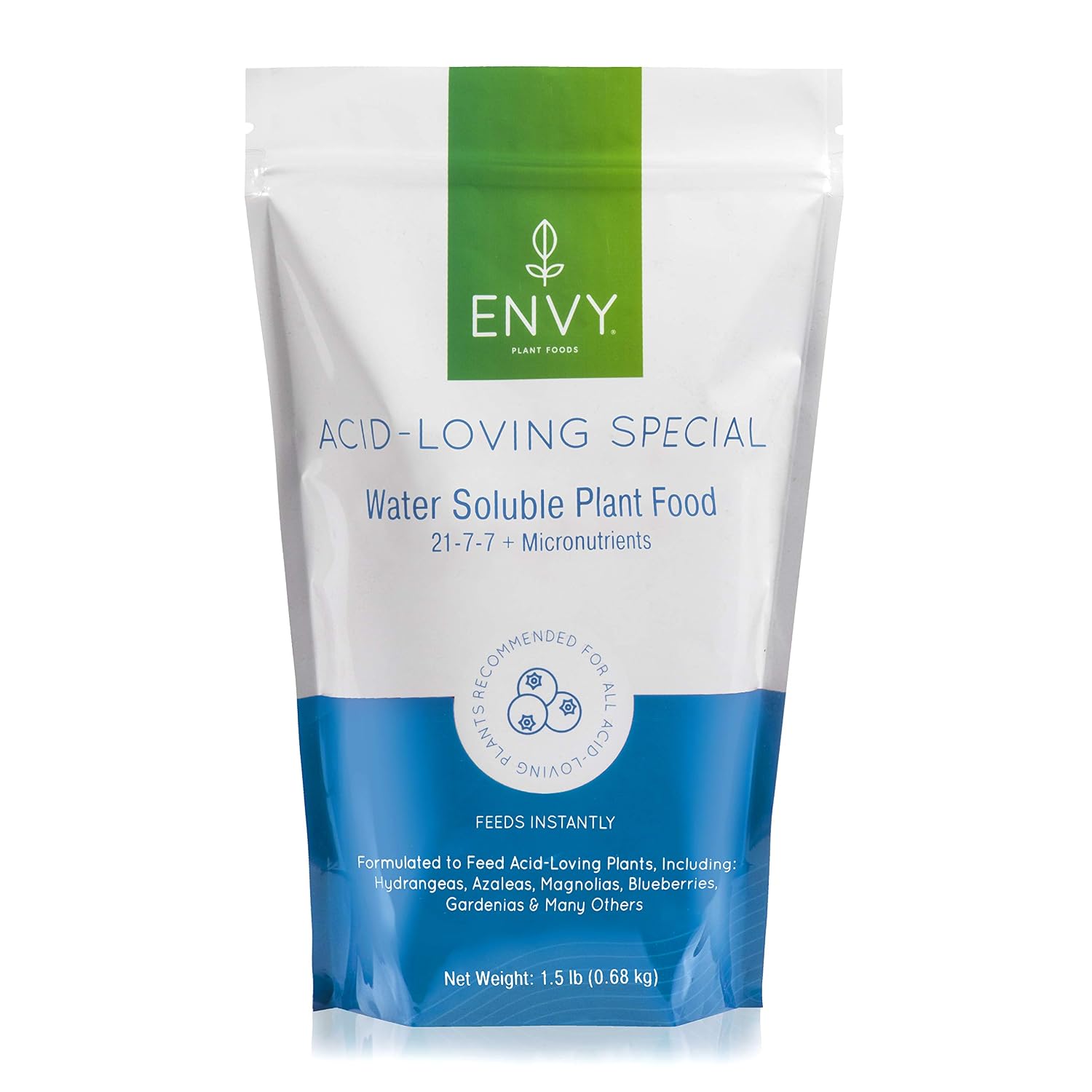
ENVY Acid-Loving Special Water-Soluble Plant Food (Hydrangea, Azalea & Blueberry)
| Item Form | Liquid |
|---|---|
| Application Method | Water Soluble |
| Specific Uses For Product | Plant Food |
| Target Species | Azaleas; Hydrangeas; Magnolias; Gardenias; Camellias; Rhododendrons; Blueberries; Citrus |
| Mixing Ratio | 21:7:7 |
This ENVY Acid-Loving Special is a water-soluble liquid plant food designed to feed acid-loving shrubs and berries. You mix the measured scoop into water using the labeled 21-7-7 ratio and apply it to soil-grown hydrangeas, azaleas, rhododendrons, gardenias and blueberries to encourage greener foliage and stronger blooms. The formula is easy to dissolve and the resealable pouch with included scoop makes repeat dosing simple and low-mess for a seasonal feeding routine. Because it targets acid-loving species, it supplies nutrients tuned to plants that prefer lower pH rather than a one-size-fits-all feed. Limitations to note are the small unit size relative to repeated large-bed use and that it is a general N-P-K blend rather than a specialty bloom booster for dramatic flower size; heavy users will need multiple pouches. For gardeners who want a straightforward, soluble fertilizer to keep hydrangeas healthy and flowering, this is a practical, easy-to-use choice.
Best for: Gardeners who prioritize efficient, repeatable feeding for hydrangeas and other acid-loving shrubs and want an easy-to-mix liquid they can apply on a regular schedule.
Less Ideal for: Large-scale landscapers or growers needing bulk quantities per season or users seeking a specialized high-phosphorus bloom concentrate for show-size flowers.
- Formulated for acid-loving plants commonly used with hydrangeas and azaleas
- 100% water soluble for easy mixing and even application
- Includes measuring scoop and resealable pouch for accurate, low-mess dosing
- Unit is relatively small so frequent gardeners or large beds may need multiple pouches
- Not marketed as a high-phosphorus bloom booster for maximizing flower size
Verdict: A practical, easy-to-mix liquid fertilizer tailored to acid-loving plants that keeps hydrangeas healthy with minimal fuss.
ASTEVORA 8-4-8 Granular Fertilizer for Acid-Loving Plants (12 oz)

| Item Form | Granules |
|---|---|
| Specific Uses For Product | For acid-loving plants; enhances bloom vibrancy and acidifies soil |
| Application Method | Spread evenly to soil and water thoroughly |
| Target Species | azaleas, camellias, hydrangeas, magnolia trees, evergreens, blueberries, gardenias, rhododendrons |
ASTEVORA 8-4-8 is a small-format granular fertilizer designed for acid-loving plants such as gardenias, azaleas, hydrangeas, camellias, rhododendrons and blueberries. You apply it by sprinkling the granules around the plant canopy, lightly mixing into the topsoil and watering; the manufacturer recommends three feedings a year for steady results. The formula delivers primary nutrients (8% N, 4% P, 8% K) plus added magnesium, iron and manganese to help prevent yellowing in plants that prefer acidic soil. It is described as a slow-release, bio-solid product with beneficial microbes intended to support soil life and reduce the need for frequent applications. Practical benefits for gardenias include improved foliage color and more consistent blooms without complex dosing, and the 12 oz size is convenient for smaller beds or container-grown plants. Limitations are the small unit size for larger gardens and the need to follow safety precautions during handling because it is a concentrated granular fertilizer. For cautious gardeners, the clear directions and slow-release behavior make it straightforward to use safely.
Best for: Gardeners who want an easy, low-maintenance fertilizer specifically for gardenias and other acid-loving plants and prefer straightforward instructions and predictable, slow-release feeding.
Less Ideal for: Large-scale gardeners or those with many plants who need bulk coverage should choose a larger package or professional-grade supply.
- Balanced 8-4-8 NPK with added magnesium, iron and manganese to help prevent chlorosis in acid-loving plants
- Slow-release granules meant for three applications per year, reducing application frequency
- Formulated to acidify soil and support plants that prefer lower pH, like gardenias and hydrangeas
- Simple application method suitable for beginners: sprinkle, mix lightly, and water
- Only a 12 oz package which may be insufficient for larger gardens
- Contains concentrated fertilizer granules that require protective handling and care around pets and children
Verdict: A simple, slow-release granular fertilizer tailored to gardenias and other acid-loving plants for reliable color and bloom improvement with minimal fuss.
Gardenera 8-4-8 Slow-Release Fertilizer for Acid-Loving Plants (8 oz)

| Item Form | Granules |
|---|---|
| Specific Uses For Product | Hydrangeas |
| Coverage | Acid-loving plants (indoor & outdoor) |
| Unit Count | 8 Ounce |
This 8-4-8 granular fertilizer is designed specifically for hydrangeas and similar acid-loving shrubs and is sold in an 8 ounce package for spot treatments or container plants. You sprinkle the sulfur-coated granules around the plant base, water in, and the slow-release formula delivers nutrients for up to three months while supplying iron and sulfur to help maintain acidic soil conditions and richer flower color. Its concentrated size makes it convenient for potted hydrangeas, isolated specimens, or touch-up applications in beds without treating the whole border. Practical benefits include easy application with no mixing, a formula aimed at improving bloom power and foliage health, and instructions that stress safe handling. Limitations are the small package size, which means frequent repurchase or multiple units are needed for larger gardens, and the product is a targeted fertilizer rather than an all-purpose feed for mixed-plant beds.
Best for: Buyers who need an affordable, easy-to-use fertilizer for one or a few hydrangeas or container specimens and prefer a targeted slow-release product to reduce maintenance.
Less Ideal for: Gardeners who need to feed many shrubs, large landscape beds, or an entire garden beds regularly should choose a larger-capacity or bulk fertilizer option.
- Formulated for acid-loving plants with added iron and sulfur to support bloom color and soil pH
- Slow-release granules feed plants for up to three months reducing application frequency
- Easy, no-mix application suitable for containers and individual shrubs
- Granular form allows targeted placement at the root zone to limit waste
- Small 8 ounce package size is not cost-effective for large beds or multiple shrubs
Verdict: A compact, slow-release formula made for hydrangeas that delivers targeted acidity and bloom support with minimal fuss.
Espoma Organic Holly-Tone 4-3-4 Evergreen & Acid-Loving Plant Food, 4 lb. Bag (Pack of 2)

| Item Form | Powder |
|---|---|
| Specific Uses For Product | Organic,Plant Food |
| Application Method | Sprinkle over the root zone and water in |
| Coverage | Medium |
| Target Species | Acid-loving Plants |
Espoma Holly-Tone is a ready-to-use organic fertilizer made for acid-loving plants such as blueberries and raspberries. Supplied as a powder/granular form with an N-P-K of 4-3-4 and added sulfur, it is intended to be sprinkled around the root zone and watered in, providing a slow-release nutrient reservoir that supports blooms and fruiting over the growing season. Its organic ingredients and Bio-tone inoculant are designed to feed plants while improving soil biology, which suits gardeners who prefer low-chemical approaches. Practical benefits include simple application with no mixing, suitability for spring and fall feedings, and certification for organic gardening. Limitations are that it delivers modest nutrient levels per application, so heavy-feeding situations may need more frequent use or supplementary fertilizer, and the medium coverage means larger plantings require multiple bags. For cautious gardeners wanting predictable, organic nutrition for blueberries and raspberries, Holly-Tone offers a reliable, low-risk option that integrates easily into standard care routines.
Best for: Gardeners who prioritize organic, low-risk feeding for acid-loving fruit shrubs and want a simple, no-mix fertilizer to maintain soil health and steady fruiting.
Less Ideal for: Growers managing large commercial patches or plants that need high immediate nutrient boosts should consider higher-analysis or concentrated products instead.
- Organic formula with Bio-tone to support soil biology and gradual nutrient release
- Formulated specifically for acid-loving plants like blueberries and raspberries
- Ready-to-use granular powder that requires no mixing and is simple to apply
- Contains sulfur to help maintain acidic soil conditions favored by target plants
- Low N-P-K ratio means heavier feeders may need additional applications or supplements
- Medium coverage requires multiple bags for larger patches or rows
Verdict: A dependable organic, ready-to-use fertilizer that makes feeding blueberries and raspberries simple while supporting soil biology.
TPS Nutrients Hydrangea Liquid Fertilizer, 8 oz

| Item Form | Liquid |
|---|---|
| Application Method | Dilute in water and apply to soil |
| Coverage | Medium |
| Mixing Ratio | 1:200 |
| Unit Count | 8 Fluid Ounces |
This 8 oz liquid fertilizer is made specifically for hydrangeas and is mixed into water at a 1:200 ratio for monthly applications from early spring through late summer. It supplies balanced, fast-absorbing nutrients intended to encourage fuller blooms, richer flower color, stronger leaf and stem growth, and healthier root development. Typical use is diluting 5 mL per gallon of water and applying to soil around garden beds or container plants; the small concentrated bottle is convenient for spot treatments and patio pots. Practical benefits include targeted nutrition for acid-loving shrubs, an easy dilution guide, and a fast-absorbing liquid formula that reduces mess compared with granular feeds. Limitations are the small 8 oz volume, which means multiple bottles are needed for larger gardens, and the product assumes plants are not drought stressed when applied. You must follow safety instructions like wearing gloves and avoid use on dry plants. For spring feeding routines this product fits into a simple monthly schedule and pairs well with routine watering and soil care.
Best for: Gardeners who want a simple, targeted monthly fertilizer to boost hydrangea blooms and foliage in beds or patio containers and prefer a fast-absorbing liquid feed.
Less Ideal for: People managing large landscapes who need bulk fertilizer or those seeking an all-purpose feed for non-acid-loving plants.
- Formulated specifically for hydrangeas and other acid-loving flowering shrubs
- Fast-absorbing liquid that is easy to dilute and apply
- Clear mixing ratio and monthly application schedule for spring through summer
- Suitable for both garden beds and containers
- Small 8 oz bottle may not be economical for large gardens or many plants
- Not intended for use on drought-stressed or dry plants
Verdict: A concentrated, easy-to-use liquid feed that simplifies monthly spring-to-summer care for hydrangeas and patio shrubs.
Espoma Holly-Tone Organic 4-3-4 Fertilizer for Acid-Loving Plants, 36 lb Bag

| Item Form | Granules |
|---|---|
| Specific Uses For Product | Acid-loving plants |
| Application Method | Sprinkle around the drip line and water thoroughly |
| Coverage | Acid-loving plants (hollies, azaleas, camellias, evergreens, dogwoods, rhododendrons) |
Espoma Holly-Tone is an organic, granular plant food designed specifically for acid-loving plants and evergreens. You apply it by sprinkling around the drip line and watering it in, typically in spring and fall for flowering and evergreen shrubs; it is also recommended for blueberries and other acid-preferring species. The 4-3-4 NPK formulation with added sulfur and Bio-tone microbes provides a steady nutrient release that supports leaf color and flowering while improving soil biology over time. Because it is organic and approved for organic gardening, it suits gardeners who prefer natural inputs and want to avoid synthetic quick-release fertilizers. The product comes ready to use with no mixing required and covers multiple shrubs per bag, making it practical for yards and small landscapes. Limitations are that results build gradually rather than immediately and the large 36 lb bag may be bulky to handle for some users; detailed application rates by plant size are not provided on the product page, so careful dosing is needed to avoid over-application.
Best for: Gardeners who want a reliable, organic fertilizer for hollies, rhododendrons and other evergreens and prefer steady feeding and improved soil biology over instant results.
Less Ideal for: People who need fast, visible green-up within days or who only have tiny container plants where a smaller, more concentrated product would be easier to manage.
- Formulated specifically for acid-loving plants and broad evergreen coverage
- Organic granular formula with Bio-tone microbes supports soil health
- Slow-release nutrients provide longer-lasting feeding than quick-release products
- Ready-to-use granules require no mixing and are easy to apply around the drip line
- Large 36 lb bag can be heavy and awkward to handle for one person
- Nutrient uptake is gradual so visible improvement may take time
Verdict: Choose Espoma Holly-Tone when you want an organic, slow-release fertilizer tailored to acid-loving evergreens that improves plant health and soil life over time.
Choosing the Right Fertilizer for Hydrangea Macrophylla: Key Factors to Consider
Nutrient Ratio and Timing
Hydrangea macrophylla benefit from balanced fertilization that supports foliage early in the season and flowering later on. A feed higher in phosphorus relative to nitrogen can encourage bloom formation, while excessive nitrogen late in spring can promote leafy growth at the expense of flowers.
Timing matters because early-season applications support shoot and leaf development, while a mid-season boost helps set and sustain blooms. Slow-release formulas offer steady nutrients over weeks, reducing the chance of flushes of vegetative growth, while soluble feeds let you deliver targeted boosts when buds are forming.
Soil pH and Flower Color
Soil pH strongly affects the availability of aluminum, which influences blue versus pink tones in many Hydrangea macrophylla. If you want bluer flowers, an acidifying approach or choosing feeds that do not raise pH helps; for pinker tones, neutral-to-alkaline soils are more favorable.
Some fertilizers are labeled as acidifying or contain sulfate-based amendments that slowly lower pH; others are pH-neutral. Consider testing your soil before choosing a fertilizer so you can match product chemistry to your color goals without causing abrupt pH swings that stress the plant.
Application Method and Garden Routine
How a fertilizer is applied affects convenience and consistency. Granular slow-release products are easy to broadcast around shrubs and left to work over weeks, which suits gardeners who prefer low-frequency maintenance. Water-soluble feeds let you apply frequent, measured doses and are useful when you want rapid responses or are adjusting feeding during bloom development.
Liquid and soluble feeds may require more frequent applications but let you correct deficiencies quickly. Also consider whether you prefer broadcast spreading, granular banding at the dripline, or soil drench applications; choose a product compatible with your watering habits to avoid over- or under-feeding.
Organic Vs Synthetic Options
Organic fertilizers supply nutrients more slowly as microbes break down material, often improving soil structure and microbial life over time. They can be gentler and reduce the risk of burning roots, but results may be slower and more influenced by soil biology and temperature.
Synthetic feeds typically act faster and allow for precise N-P-K ratios, giving predictable bloom responses. Decide whether long-term soil-building or immediate bloom enhancement is your priority, and match the fertilizer type accordingly.
Micronutrients and Color Modifiers
Trace elements such as iron, manganese, and aluminum interact with soil chemistry and can influence leaf health and flower color. A fertilizer that includes iron can help prevent chlorosis in alkaline soils, while sulfur or sulfate-containing formulations can help lower pH gradually.
If color adjustment is a goal, look for products that either complement your soil pH approach or are explicitly neutral so you can manage color with separate pH amendments. Be cautious about high aluminum additions unless you understand how it will affect plants and local soil chemistry.
Safety for Surrounding Plants and Lawn
Fertilizer you apply to hydrangeas will sometimes reach adjacent beds or lawns, so consider runoff, salt content, and potential effects on nearby plants. High-salt synthetic feeds can damage sensitive groundcovers if overapplied, while some organic amendments are gentler but may attract wildlife or alter soil nitrogen dynamics.
Choose formulations and application methods that minimize drift and runoff. Using targeted banding at the shrub dripline rather than broad broadcasting reduces impact on adjacent plantings and ensures the shrub receives most of the nutrients.
Adjusting Fertilizer Strategy by Season
Hydrangea macrophylla have shifting nutrient needs through the growing year, so a seasonal approach gives the best results. In early spring focus on balanced nitrogen to support leaf and shoot growth, switching to higher phosphorus or bloom-focused feeds as buds form. After peak flowering, a light maintenance feed can help plants recover and set buds for the following year without overstimulating late vegetative growth.
- Spring: balanced slow-release or low-nitrogen start
- Pre-bloom: boost phosphorus to aid bud formation
- Post-bloom: light maintenance feeding to aid recovery
Feeding Hydrangeas in Containers Vs In-Ground
Container-grown Hydrangea macrophylla need more frequent, lighter feeds because potting mixes hold fewer nutrients and buffer less pH change. Water-soluble or liquid feeds applied at lower concentrations every few weeks are often best for pots. In-ground plants benefit more from slow-release granules or annual organic applications that build soil fertility over time.
- Containers: frequent dilute soluble feedings
- In-ground: slow-release or organic soil amendments
- Monitor moisture and adjust feed frequency accordingly
Using Soil Tests to Guide Feeding Choices
A simple pH and nutrient test will steer your fertilizer decisions and prevent unnecessary applications. Soil results tell you if you need to correct pH for color goals, supplement phosphorus for bloom development, or add trace elements to address deficiencies. Test before major interventions and repeat every couple of years to track changes caused by amendments and natural soil processes.
- Test pH to plan color management
- Check available phosphorus and potassium before heavy bloom-feeding
- Re-test periodically to confirm long-term trends
Combining Fertilizers With Mulch and Organic Matter
Mulch and organic matter influence how fertilizers behave in the root zone by moderating moisture and supporting microbial activity. Applying compost or well-rotted leaf mold improves nutrient retention and provides a slow, steady supply of nutrients, reducing the need for frequent synthetic feeds. Coordinate mulching with fertilizer timing. Apply organic mulch in spring after soil has warmed to keep roots insulated and to help maintain even moisture levels that support nutrient uptake.
- Use compost to build long-term fertility
- Apply mulch to conserve moisture and protect roots
- Avoid burying fresh high-nitrogen manures against roots
Common Mistakes to Avoid When Fertilizing
Overfeeding is a frequent problem that causes excessive leafy growth, fewer flowers, and increased susceptibility to pests and winter damage. Follow label rates and avoid blanket broadcast applications late in the season. Another mistake is trying to change flower color solely with fertilizer when pH amendments or soil practices are needed. Finally, inconsistent watering with soluble feeds can cause uneven uptake; pair liquid applications with steady moisture for predictable results.
- Do not overapply nitrogen late in season
- Match feed to soil test results rather than guessing
- Keep moisture steady when using soluble fertilizers
How We Chose the Best Fertilizer for Hydrangea Macrophylla
We evaluated candidate fertilizers for Hydrangea macrophylla against concrete gardener-focused criteria to identify options that reliably support flower production, leaf health, and desired color outcomes. Our filters prioritized nutrient formulae that match the feeding needs of macrophylla types, including appropriate ratios of nitrogen, phosphorus, and potassium and the presence or absence of supplemental micronutrients that influence flower color and overall vigor. Application method and convenience were key: we selected products that are straightforward to apply in common garden settings, whether you prefer granular slow-release, water-soluble feed, or organic alternatives. Longevity of effect and recommended feeding frequency were assessed so gardeners can match a product to maintenance time and seasonality. Soil interaction was also considered, including whether a fertilizer is neutral, acidifying, or pH-stable, since pH affects aluminum availability and therefore flower color. We excluded specialist landscape-grade treatments and formulations intended only for container production to keep the list practical for typical home gardens and borders. Products were chosen for broad suitability across common soil types and climates rather than narrow or trial-stage formulations. The selection criteria align with the scoring metrics used below.
FAQ
How often should I feed Hydrangea macrophylla?
Frequency depends on the product type. Slow-release granular fertilizers may only need one to two applications per season, while water-soluble feeds are usually applied every two to four weeks during the growing season. Adjust frequency based on plant vigor and local growing conditions.
Can fertilizer change hydrangea flower color?
Fertilizer can influence color indirectly by affecting soil pH and nutrient availability, but it does not guarantee color change. To shift color reliably you usually need to manage soil pH and aluminum availability in addition to choosing compatible fertilizers.
Are organic fertilizers effective for hydrangeas?
Yes, organic fertilizers work well but act more slowly because they depend on soil microbes to release nutrients. They also improve soil structure and microbial life, which benefits hydrangea health over the long term, though immediate bloom responses may be less dramatic than with synthetic feeds.
When should I stop fertilizing before winter?
Stop major fertilizer applications at least six to eight weeks before the first expected hard freeze to avoid encouraging late-season growth that could be damaged by cold. A light, low-nitrogen maintenance feed earlier in autumn is acceptable if needed for plant vigor.
Will fertilizer burn hydrangea roots?
Most fertilizers are safe when applied at recommended rates. Root burn usually results from overapplication or using concentrated liquid feeds without dilution. Always follow label instructions and water after granular applications to help nutrients move into the root zone.
Final Verdict
Choose a fertilizer strategy that matches your goals: steady soil-building organic approaches if you want long-term fertility and soil health, or targeted synthetic or soluble feeds if you need quick bloom responses and precise nutrient ratios. Prioritize nutrient balance, seasonally timed applications, and how the product interacts with your soil pH when flower color is a concern. Careful application and occasional soil testing will help you avoid common mistakes like overfeeding or mismatched pH management. With the right feeding plan tailored to Hydrangea macrophylla, you can maximize bloom production and maintain healthy shrubs year after year.
