

Note: This article contains affiliate links. If you click on these links and make a purchase, I may earn a small commission at no extra cost to you. This helps support my research and content. Read my full affiliate disclosure here.
If you grow chillies in pots, raised beds, or a vegetable patch, the right liquid fertilizer for chilli plants changes how quickly seedlings establish, how well flowers set, and how large fruits mature. Liquid feeds let you deliver nutrients on a predictable schedule and correct deficiencies faster than slow-release granules. This guide shortlists seven top options suited specifically for chilli growing and explains the practical tradeoffs between nutrient mixes, concentration, and application frequency. We evaluate each choice on real-garden concerns such as nutrient balance, ease of use, and salt safety so you can pick a feed that matches your watering routine and planting setup.
Top Picks at a Glance
| Best Overall The best all-around choice for most situations | FoxFarm Grow Big Liquid Plant Food (16 fl oz) |  |
| Best Quality Built to a higher standard if you want something more solid | FoxFarm Soil Liquid Trio Pack (Big Bloom, Grow Big, Tiger Bloom) |  |
| Best Value The sweet spot between price and what you get | Purived All-Purpose Liquid Houseplant Fertilizer, 16 fl oz (Makes 50 Gallons) |  |
| Best Budget The cheapest option that still gets the job done reliably | Bonide Liquid Plant Food 10-10-10 (8 fl oz) |  |
| Highest Rated A top-rated pick with lots of positive feedback | Pegmapri Organic Liquid Plant Food, 8.45 fl oz Concentrated |  |
| Most Popular A crowd favorite that many people choose with confidence | Miracle-Gro Liquid All Purpose Plant Food Concentrate, 32 oz |  |
| Best Seller A high-volume bestseller chosen again and again | TPS Nutrients Liquid Plant Food for AeroGarden and Hydroponics, 8 oz | 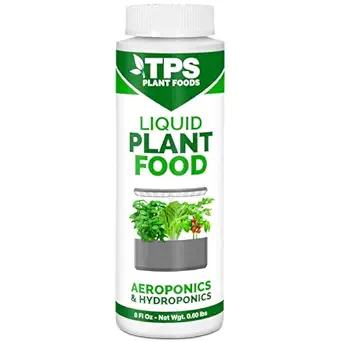 |
FoxFarm Grow Big Liquid Plant Food (16 fl oz)

| NPK | 6-4-4 |
|---|---|
| Form | Liquid |
| Unit Count | 16 Fluid Ounces |
| Mixing Ratio | 2 teaspoons per 1 gallon |
FoxFarm Grow Big is a 6-4-4 liquid concentrate designed to boost vegetative size and structure for vegetables, roses and houseplants. Mix at the manufacturer recommendation (2 teaspoons per gallon) and apply as part of your watering or as an early-morning foliar spray; the low pH formula helps keep micronutrients stable for reliable uptake. For tomato growers it delivers a nitrogen-forward balance that supports leafy growth and strong vines during the pre-flowering and fruit-set stages, and the pint concentrate is easy to store and measure. Notable features include quick-soluble liquid delivery and clear feeding guidance so you can feed every other watering without extensive guesswork. Limits to consider are that this is a vegetative feed rather than a bloom/fruit-specific formula, so you will want to switch to a bloom or fruit-focused fertilizer at flowering to optimize fruit development, and a pint will require careful dilution for larger vegetable beds or multiple plants. Overall it is a dependable, easy-to-use vegetative booster when you want predictable growth before tomatoes set heavy fruit.
Best for: Gardeners who prioritize consistent, predictable vegetative growth for tomato plants and want a straightforward, low-fuss feeding routine. Ideal for growers who value reliable nutrient uptake and clear instructions over experimental blends.
Less Ideal for: Growers seeking an all-in-one bloom and fruit booster or those managing large-scale tomato plantings who need bulk quantities of fertilizer.
- Concentrated liquid formula for fast nutrient uptake and easy mixing.
- Low pH formulation that helps keep micronutrients stable and available.
- Clear mixing instructions and flexible application by watering or foliar spray.
- Nitrogen-focused NPK (6-4-4) that promotes robust vegetative growth and strong vines.
- Not formulated specifically for flowering or heavy fruiting stages so a bloom/fruit fertilizer is needed later.
- Pint size may be small for larger vegetable gardens and requires frequent repurchasing.
Verdict: A dependable, easy-to-use liquid concentrate that reliably promotes vigorous vegetative growth in tomatoes during the pre-flower stages.
FoxFarm Soil Liquid Trio Pack (Big Bloom, Grow Big, Tiger Bloom)

| Brand | FoxFarm |
|---|---|
| Item Form | Liquid |
| Unit Count | 48 Fluid Ounces |
| Specific Uses For Product | Plant Food |
| Coverage | Organic |
The FoxFarm Soil Liquid Trio Pack combines Big Bloom, Grow Big, and Tiger Bloom into a simple program for indoor gardeners who want strong vegetative growth followed by bigger blooms and fruit. Typical use is stage-based: Grow Big during vegetative growth to push leafy development, Big Bloom as an all-purpose supplement across cycles, and Tiger Bloom once buds form to encourage multiple bud sites and fuller flowers. The liquids are concentrated and greenhouse-tested for consistency, so measured feedings integrate easily with regular watering schedules. Practical benefits include a complete, complementary nutrient progression and formulations designed to keep micronutrients available in storage. Important limitations are that these are general-purpose concentrates rather than precision NPK formulations for specialty crops, and users who want exact nutrient ratios or automated dosing systems will need extra equipment and testing. Safety precautions such as keeping away from children and pets and wearing protective clothing are required when handling concentrated liquids.
Best for: Indoor growers who prioritize measurable performance and want a simple, stage-based feeding plan to push vigorous growth and larger blooms without building their own nutrient lineup.
Less Ideal for: Growers seeking exact NPK control, automated dosing integration, or a fertilizer tailored to a single specialist crop should consider lab-formulated or hydroponic-specific options instead.
- Three complementary formulas cover vegetative growth, bloom support, and fruiting in one kit
- Concentrated liquid form mixes readily for regular indoor feedings
- Greenhouse-tested formulations deliver consistent performance across batches
- Suitable for a wide range of indoor plants including houseplants, herbs, and vegetables
- Not a precision nutrient program for specialty or hydroponic crops
- Concentrated liquids require careful measuring and handling to avoid overfeeding
Verdict: For indoor gardeners who want a proven, stage-based liquid feeding program to boost vegetative growth and maximize blooms, this trio delivers a ready-made performance pathway.
Purived All-Purpose Liquid Houseplant Fertilizer, 16 fl oz (Makes 50 Gallons)

| Item Form | Liquid |
|---|---|
| Application Method | soil drench, foliar feed, full & semi hydroponics |
| Target Species | Houseplants |
| Mixing Ratio | 320:1 |
Purived All-Purpose Liquid Houseplant Fertilizer is a concentrated 16 fl oz bottle that mixes 1 cap per gallon to treat up to 50 gallons of water. It is formulated for indoor potted plants and supports multiple application methods including soil drench, foliar spray, and full or semi-hydroponics, so you can use the same product whether you water, mist, or run nutrient solutions. The formula lists primary macronutrients and a range of micronutrients, which helps correct common deficiencies and supports steady growth when used at the recommended dilution. Practical benefits include an easy-to-follow mixing ratio, an odorless solution that is simple to store, and broad compatibility with different feeding routines. Important limits are that the label gives no N-P-K percentages, so precise nutrient planning for sensitive seedlings or specialty plants is not possible, and safety precautions mean you must handle and store it carefully. For new plants, start at or below the recommended dilution and observe growth before increasing frequency.
Best for: Buyers who want a versatile, no-fuss fertilizer for establishing and maintaining new houseplants and who value a single product that works across watering, misting, and basic hydroponic setups.
Less Ideal for: Growers who need exact N-P-K formulations for seedlings, specialty plants, or strict hydroponic nutrient regimens should consider a product with full nutrient breakdown and concentration details.
- Very concentrated so one bottle treats up to 50 gallons, reducing repurchase frequency
- Suitable for multiple application methods: soil drench, foliar feed, and hydroponics
- Includes a range of micronutrients in addition to primary NPK components
- Simple, clear mixing ratio (320:1) that is easy to follow
- No N-P-K ratio listed on the product information, limiting precise nutrient management
- Requires careful handling and storage due to safety warnings
Verdict: A concentrated, easy-to-use all-purpose fertilizer that covers feeding, foliar, and basic hydroponic needs for new houseplants.
Bonide Liquid Plant Food 10-10-10 (8 fl oz)
| Item Form | Liquid |
|---|---|
| Specific Uses For Product | Plant Food |
| Target Species | orchids |
| Liquid Volume | 236.6 ml |
| Mixing Ratio | 1/8 tsp per quart (≈12 drops) |
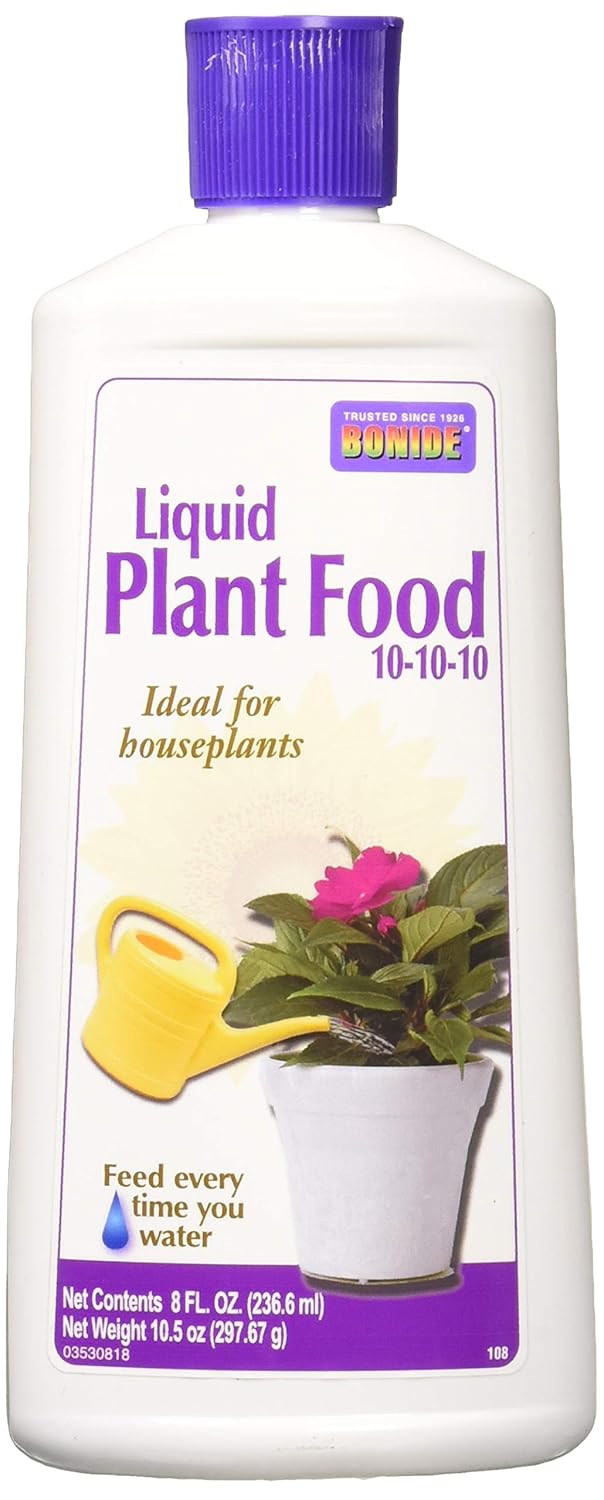
Bonide Liquid Plant Food 10-10-10 is a concentrated, water-soluble fertilizer intended to be mixed into your watering can and applied each time you water. The balanced N-P-K ratio makes it a general-purpose feed that supports steady growth, leaf health, and overall vigor for potted plants. It ships as an 8 fl oz concentrate with a very small recommended dose—about 1/8 teaspoon or roughly 12 drops per quart—so a little goes a long way for multiple feedings. Practical benefits include easy mixing, compatibility with routine watering, and a simple dosing guideline that is forgiving for beginner gardeners. Because it is a mid-coverage, liquid formula it delivers nutrients quickly compared with granular slow-release options. Limitations are its small bottle size if you manage many chili plants and the generic 10-10-10 ratio which is not tailored for high-fruiting crops that may prefer higher potassium or phosphorus during bloom and fruit set. For focused bloom or fruit promotion you may still want a bloom-specific feed alongside this product.
Best for: Budget-minded growers seeking an inexpensive, easy-to-use all-purpose liquid feed for potted chili plants and everyday maintenance.
Less Ideal for: Growers with large outdoor chili beds or those wanting a bloom/fruit-specific fertilizer for peak yields should consider higher-volume or specialized formulations.
- Balanced 10-10-10 formula suitable for general plant growth
- Concentrated liquid with very low per-use dosage stretches a small bottle
- Simple mixing directions for feeding with every watering
- Delivers nutrients quickly compared with granular fertilizers
- Small 8 fl oz volume may require frequent repurchasing for larger collections
- Not specifically formulated for fruiting boost during flowering and harvest
Verdict: A low-cost, concentrated all-purpose liquid feed that stretches far and makes routine watering-time feeding simple for small-scale chili growers.
Pegmapri Organic Liquid Plant Food, 8.45 fl oz Concentrated

| Item Form | Liquid |
|---|---|
| Specific Uses For Product | Plant Growth, Root Development, Seed Development, Soil Conditioning |
| Application Method | Watering can, Drip irrigation, Soil drenching |
| Target Species | Houseplants |
| Liquid Volume | 8.45 fluid ounces |
This Pegmapri liquid plant food is a small, concentrated bottle designed to stretch into multiple gallons of ready-to-use nutrient solution for houseplants, herbs, vegetables, and flowers. You use it by diluting the concentrate in water for routine watering, soil drenching, drip irrigation, or hydroponic feedings. Notable features include an all-purpose organic nutrient blend, fast root uptake compared with granular slow-release feeds, and a low-residue formula meant to avoid clogging pumps and lines. In practice it provides quick, visible green-up and supports root and stem development when applied at regular intervals. The compact, leak-resistant bottle is convenient for storage and precise pouring. Limitations are that the product listing does not show an NPK breakdown or specific dosing chart on the product page, so users should follow included directions carefully or start at reduced strength to avoid overfeeding sensitive plants.
Best for: Buyers who prioritize a dependable, easy-to-use feed for routine indoor container gardening and want a concentrated organic option that works across watering and hydroponic systems.
Less Ideal for: Growers who require exact nutrient formulations for advanced fertilization schedules or commercial-scale nutrient management should consider products with full lab-verified analyses and detailed dosing charts.
- Concentrated formula that dilutes to feed multiple gallons, saving shelf space
- Organic nutrient blend suitable for indoor and outdoor container plants
- Water-soluble and low-residue so it works with watering cans, drip systems, and hydroponics
- Fast root uptake to encourage quicker green-up and root development
- No explicit NPK ratio or full ingredient breakdown provided in the product details
Verdict: A compact, concentrated organic liquid fertilizer that reliably feeds indoor container plants and hydroponic setups for steady growth and stronger roots.
Miracle-Gro Liquid All Purpose Plant Food Concentrate, 32 oz

| Item Form | Liquid |
|---|---|
| Specific Uses For Product | Plant Growth, Root Development |
| Application Method | Mix with water in a watering can |
| Mixing Ratio | 1:10 (concentrate to water, estimate) |
Miracle-Gro Liquid All Purpose is a water-soluble concentrate you mix into a watering can and apply every 1 to 2 weeks to container and in-ground plants. It is formulated for general plant growth and root development and is marketed for flowers, vegetables, shrubs and houseplants, so it works as a straightforward feed for flowering bulbs like calla lilies. The bottle’s mixing guidance (cap measures for garden application and 1 teaspoon per gallon for containers) makes it easy to dose for pots or small beds. Practical benefits include fast uptake through the soil when applied as directed and compatibility with routine watering schedules. Limitations to note are that it is an all-purpose formula rather than a bloom-focused or calcium-rich fertilizer tailored specifically to calla lilies, so growers seeking targeted bloom enhancement or specialty nutrition may want a supplement. Also, frequent use at higher-than-recommended strength can risk fertilizer burn, so follow the mixing directions and schedule.
Best for: Buyers who want an affordable, easy-to-use liquid fertilizer to keep calla lilies and other flowering plants regularly fed without fuss.
Less Ideal for: Growers seeking a specialist bloom-boost or a fertilizer formulated for specific micronutrient needs should consider a targeted or bloom-specific product instead.
- Concentrated liquid mixes easily with water for quick application
- Clear dosing instructions for both garden beds and container plants
- Suitable for a wide range of plant types including flowering bulbs and houseplants
- General all-purpose formula not specifically formulated for enhancing blooms of calla lilies
Verdict: A budget-friendly, easy-to-use liquid concentrate that reliably feeds calla lilies and other common garden plants on a regular schedule.
TPS Nutrients Liquid Plant Food for AeroGarden and Hydroponics, 8 oz

| Item Form | Liquid |
|---|---|
| Specific Uses For Product | Plant Growth, Root Development |
| Target Species | Herb, Vegetable |
| Mixing Ratio | 5 mL (1 tsp) per quart of feedwater |
| Unit Count | 8 Fluid Ounces |
This 8 oz liquid plant food provides concentrated, reservoir-safe nutrition intended for AeroGarden and comparable hydroponic units. It is used by mixing the recommended 5 mL per quart of feedwater into the system reservoir on a regular feeding schedule to supply macro and micronutrients for herbs, greens, and other compact edible plants. Notable features include a liquid formulation that dissolves easily, a focus on root development, and explicit compatibility with indoor hydroponic gardens. In practice it simplifies feeding for small indoor crops because a measured teaspoon per quart is straightforward to dose and store. Important limitations are the small bottle size, which will require frequent repurchasing for larger or multiple units, and the need to follow dilution directions carefully to avoid overfeeding. Safety handling is necessary because the concentrate should be kept away from children and pets. For risk-averse growers, the product’s clear mixing ratio and hydroponic focus make predictable feeding simple, but you should track reservoir concentrations rather than guessing frequency or volume adjustments.
Best for: Buyers who want a simple, low-risk feeding routine for indoor green onions and other small edible hydroponic crops and prefer clear dosing instructions they can follow reliably.
Less Ideal for: Growers managing large hydroponic setups, outdoor beds, or those who need a detailed NPK profile for tailored nutrient programs should look for larger or fully specified concentrates.
- Designed specifically for AeroGarden and similar hydroponic systems for straightforward compatibility
- Liquid formula mixes easily for even nutrient distribution in the reservoir
- Clear mixing ratio (5 mL per quart) simplifies dosing and repeatable feeding
- Targets root development and steady growth for herbs and vegetables
- Small 8 oz bottle may not last long for multiple or larger units
- No full nutrient analysis or NPK breakdown provided on the product listing
Verdict: A compact, easy-to-dose liquid fertilizer that makes predictable feeding of indoor green onions simple and low risk.
Choosing the Right Liquid Fertilizer for Chilli Plants: Key Factors to Consider
Nutrient Balance and Stage-Specific Needs
Chilli plants require different nutrient ratios across stages. Seedlings and vegetative plants do best with slightly higher nitrogen to build foliage, while flowering and fruiting stages need more phosphorus and potassium to support blooms and pepper development. A liquid fertilizer that provides clear NPK numbers and includes essential micronutrients helps prevent common deficiencies such as blossom drop or yellowing leaves.
Choosing a feed that allows adjusting the concentration for stage-specific needs matters. Some liquid fertilizers are formulated for general use, others offer 'grow' and 'bloom' strengths. Being able to change dilution or select a balanced formula will directly affect flowering intensity and fruit size.
Concentration and How Long It Lasts
Liquid fertilizers vary widely in concentration. A highly concentrated product stretches further by volume but requires careful measurement to avoid overfeeding. Lower-concentration feeds are more forgiving but need more frequent top-ups and larger volumes to treat a batch of pots.
Estimate bottle yield for your setup before choosing. If you grow many containers, concentrated formulas reduce trips to refill. For small balcony gardeners, a mild concentration reduces the risk of accidentally applying too much nutrient and causing salt burn.
Salt Load and Container Safety
Salinity from fertilizers builds up in container media and can stress chilli roots, especially in smaller pots. Liquid feeds that list electrical conductivity or warn about salt accumulation are easier to manage; they often come with recommended leaching or reduced-frequency schedules to avoid buildup.
Gardeners who use pots should plan periodic deep watering to flush salts or choose lower-salt formulations. In beds with good drainage, salt accumulation is less of an issue, but it still matters when multiple fertilized crops are grown in rotation.
Application Method and Ease of Use
Liquid fertilizers can be applied to the soil at the root zone or as foliar sprays. Soil drench feeding is the most common for chillies, while light foliar feeding can quickly correct micronutrient deficiencies. Clear dilution instructions, measuring caps, and the ability to mix the feed with water in a watering can or hose-end applicator make a product more user-friendly.
Time-poor gardeners should prefer products that match their routine. If you already hand-water daily, a simple measured dose added to your watering can is ideal. For growers using automated irrigation, compatibility with injectors or low-salt concentrates is important to avoid clogging or plant stress.
Compatibility With Organic or Cultural Practices
Some gardeners prefer organic-approved liquid fertilizers while others use synthetic formulations for precise control. Organic liquids often provide micronutrients and soil-building benefits but can be lower in immediately available nitrogen or phosphorus compared with synthetic options. Consider whether the feed will be used alongside compost teas, microbial inoculants, or other cultural amendments.
If you follow organic practices, check certification or ingredient lists. If you alternate feeds and soil amendments, choose a liquid fertilizer that mixes safely with those inputs or schedule applications to avoid chemical interactions.
Cost Per Application and Practical Packaging
Beyond upfront price, evaluate how much each application costs based on dilution and recommended frequency. Packaging that includes measuring devices or multiple cap sizes reduces guesswork and waste. Bulky bottles are economical but can be inconvenient for small gardeners; small bottles are portable but may mean more frequent purchases.
Also consider storage life and whether the concentrate separates or requires shaking. A stable formula that stores well between seasons gives you confidence the feed will perform consistently year to year.
When to Feed Chilli Plants
Timing feeds to plant growth stages improves uptake and reduces waste. Start with light, balanced applications after seedlings have developed their second true leaves, then increase feed frequency and switch to a bloom-oriented ratio as buds form.
Avoid heavy feeding during extreme heat or drought because stressed plants cannot use extra nutrients effectively. In pots, plan for weekly or fortnightly liquid feeds depending on concentration; in-ground plants typically need less frequent feeding.
- Seedlings: dilute to half-strength and feed sparingly.
- Pre-flowering: use a balanced formula to build structure.
- Flowering/fruiting: boost phosphorus and potassium moderately.
Mixing and Application Best Practices
Always measure and mix liquid fertilizer in a clean watering can, then apply evenly to the root zone. For foliar sprays, choose cooler parts of the day to avoid leaf scorch and ensure fine misting for even coverage.
Rinse measuring tools after use to prevent cross-contamination of concentrates. When switching between products, flush the irrigation lines or water the media thoroughly to avoid chemical carryover.
- Follow label dilution rates closely; underdosing limits benefit, overdosing risks burn.
- Use room-temperature water to mix concentrates for consistent dissolution.
Adjusting Feed for Different Growing Setups
Container-grown chillies need more regular, lighter feeding because potting mix supplies are limited. Use a weaker solution more frequently rather than a single heavy dose to maintain steady nutrient availability.
In raised beds or garden rows with rich soil, reduce feed frequency and concentrate on bloom and fruiting stages. Mulching and regular compost top-dress can reduce reliance on frequent liquid feeds.
- Small pots: dilute and feed weekly.
- Large containers and beds: feed every 2 to 3 weeks depending on soil fertility.
Common Nutrient Symptoms and Quick Fixes
Yellowing lower leaves with green veins often indicates nitrogen deficiency; a balanced liquid feed at a slightly higher nitrogen ratio will usually correct this within a couple of weeks. Pale new growth and distorted leaves can point to micronutrient shortages treatable with a foliar feed containing chelated iron and trace elements.
Blossom drop or poor fruit set can be caused by inconsistent watering, heat stress, or incorrect nutrient balance. A bloom-focused liquid dose and steady moisture regime help, but also inspect for pests and environmental stress triggers.
- Nitrogen deficiency: pale older leaves, slow growth.
- Micronutrient deficiency: pale new growth or leaf distortion.
- Blossom drop: environmental stress or low potassium/phosphorus.
Safe Storage and Environmental Considerations
Store concentrates in a cool, dark place and keep caps tightly closed to prevent spills and degradation. Follow local guidance for disposal of unused concentrates and rinse water; avoid pouring concentrated products into storm drains or natural waterways.
Consider low-salt options if you are near sensitive environments or use drip irrigation that returns unused water to the landscape. Choosing stable formulations reduces the chance of unexpected microbial growth or separation in storage.
- Keep out of reach of children and pets.
- Label containers with purchase date and dilution instructions for later seasons.
How We Chose the Best Liquid Fertilizer for Chilli Plants
Our shortlist focused on attributes that matter for growing healthy, productive chilli plants in containers and garden beds. We prioritized nutrient profile accuracy because chillies need a balance that supports early leaf growth and later fruit set. Application clarity was another filter, giving preference to feeds with straightforward dilution rates and compatible dosing for foliar or soil feeding. Salt load and osmotic risk were considered to avoid products that can stress roots in pots. We also assessed compatibility with common irrigation routines and the ability to mix with other routine treatments. Practical packaging and concentration were included so gardeners can estimate how long a bottle will last for typical pot and bed sizes. Exclusions included specialty formulations intended only for lawns, woody ornamentals, or fruit trees, and any products that require complex on-site mixing or lab testing to use. The final picks reflect a balance of nutrient formulation, user-friendly dosing, concentration, salt safety, and versatility across common chilli-growing setups.
FAQ
How often should I feed chilli plants with liquid fertilizer?
Frequency depends on concentration and container size. For most pot-grown chillies, a light feed once a week or a moderate feed every two weeks works well. In outdoor beds with rich soil, feeding every two to three weeks during the growing season is usually sufficient.
Can I use the same liquid fertilizer for seedlings and fruiting plants?
You can use the same product if it has clear dilution guidance for different stages. Reduce strength for seedlings and increase phosphorus and potassium proportionally as plants begin to flower. Some gardeners prefer separate 'grow' and 'bloom' dilutions for simplicity.
Is foliar feeding better than soil drench for chillies?
Foliar feeding is a useful way to quickly correct micronutrient deficiencies because leaves absorb trace elements fast. For general feeding and sustained nutrition, soil drench is more reliable because it supplies roots directly and supports longer-term uptake.
How do I avoid fertilizer burn when using liquid feeds?
Avoid over-concentrating the solution and never apply heavy feeds during heat stress or drought. Use recommended dilutions, water the soil before applying a concentrated solution, and flush pots periodically to prevent salt buildup.
Can I mix liquid fertilizer with other garden treatments?
It depends on the product and chemicals involved. Many liquid fertilizers mix with common foliar sprays and wetting agents, but avoid mixing with incompatible systemic treatments or concentrated chemicals. When in doubt, do a small compatibility test and consult label instructions.
Will liquid fertilizer affect the heat level of chillies?
Fertilizer mainly influences plant vigor and fruit development rather than inherent capsaicin levels. Stress and water availability can change flavor and heat perception, so maintaining balanced nutrition and steady watering helps produce consistent-tasting peppers.
Final Verdict
Choosing a liquid fertilizer for chilli plants comes down to matching nutrient balance, concentration, and application style to how you grow. Prioritize a formula that lets you adjust strength between vegetative and fruiting stages, keeps salt levels low for container culture, and fits your watering routine. Accept tradeoffs between convenience and precision: concentrated bottles save trips but need careful measuring, while milder feeds are easier to handle but require more frequent application. Focus on consistent feeding, correct dilution, and watching plant symptoms to refine your choice over a season.
