

Note: This article contains affiliate links. If you click on these links and make a purchase, I may earn a small commission at no extra cost to you. This helps support my research and content. Read my full affiliate disclosure here.
If you want faster establishment, better transplant survival, and stronger perennial anchors, picking the right root fertilizer matters more than you might think. Root-targeted fertilizers are formulated to feed new and existing root systems directly, helping plants take up nutrients and water more efficiently in the first critical weeks after planting. This guide covers seven shortlisted options suited to a range of garden uses, from annuals and vegetables to shrubs and container plants. We evaluated products for nutrient balance, delivery method, uptake speed, root-stimulating additives, and ease of application so you can choose the best fit for your growing situation.
Top Picks at a Glance
| Best Overall The best all-around choice for most situations | Bonide Root & Grow Concentrate 32 oz |  |
| Best Quality Built to a higher standard if you want something more solid | GS Plant Foods Root Ruckus Liquid Compost, 1 Gallon |  |
| Best Value The sweet spot between price and what you get | Burpee Bone Meal Fertilizer, 3 lb |  |
| Best Budget The cheapest option that still gets the job done reliably | Bonide Bontone II Rooting Powder, 1.25 oz |  |
| Highest Rated A top-rated pick with lots of positive feedback | Xtreme Gardening Mykos Granular Mycorrhizal Inoculant (2.2 lb) |  |
| Most Popular A crowd favorite that many people choose with confidence | Southside Plants Root Drops Liquid Rooting Hormone (4 oz) |  |
| Best Seller A high-volume bestseller chosen again and again | TPS NUTRIENTS Indoor Plant Food Liquid Fertilizer, 8 fl oz |  |
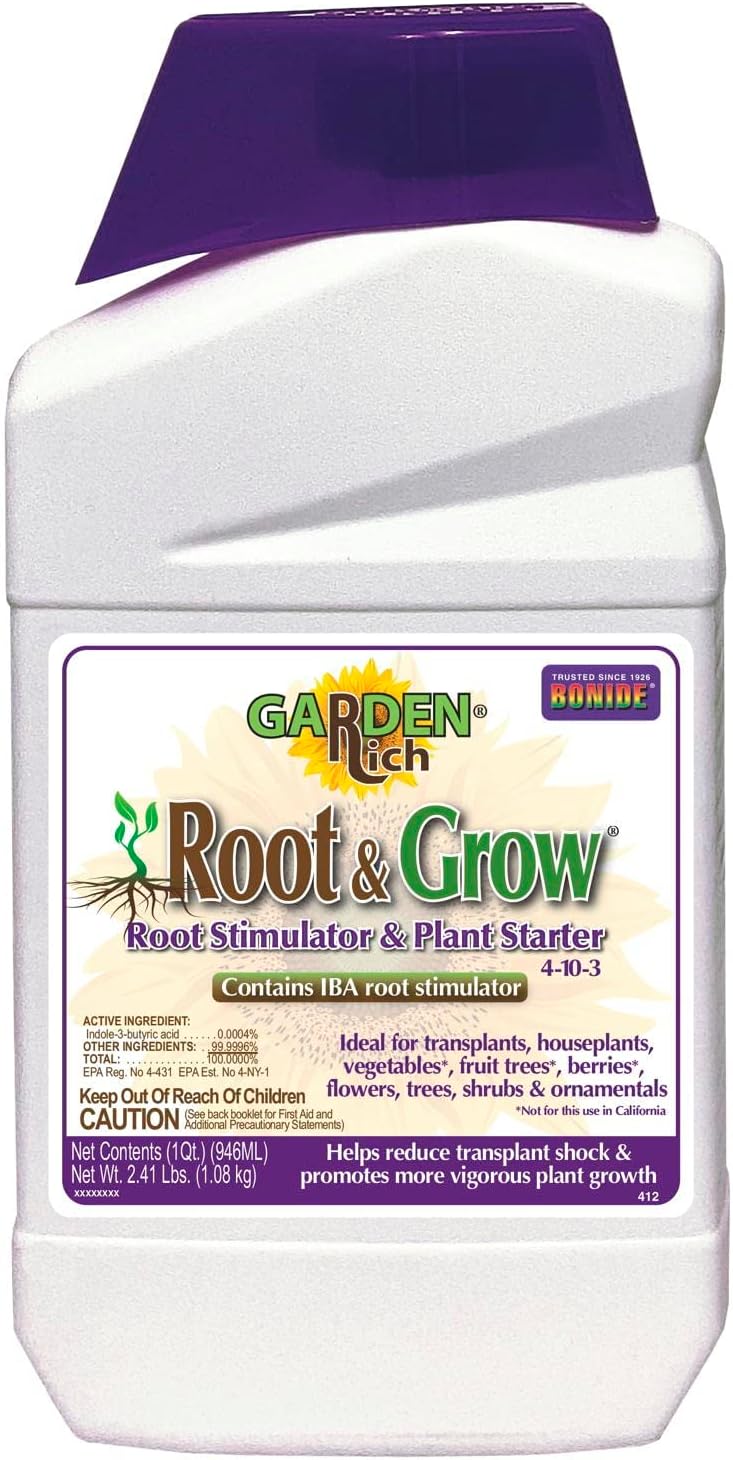
Bonide Root & Grow Concentrate 32 oz
| Item Form | Liquid |
|---|---|
| Specific Uses For Product | Root Development |
| Application Method | Pouring directly onto the soil and roots |
| Target Species | fruit, vegetables, flowers, trees, and bedding plants |
| Mixing Ratio | 4:10:3 |
Bonide Root & Grow is a liquid concentrate designed for use when seeding or transplanting to speed early root formation and help plants establish. You dilute the concentrate per label instructions and pour the solution onto soil and roots when potting seedlings, transplanting plugs, or setting out young vegetables and ornamentals. Notable features include an active IBA rooting hormone and a 4-10-3 nutrient ratio that supplies extra phosphorus to support root growth. In practice it can reduce transplant shock and promote quicker, stronger root systems, which is useful for both container-grown seedlings and recently set out bedding plants. Because it is a concentrate, a single 32 oz bottle yields multiple applications, which stretches a limited budget. Important limitations are that it is a specialized root stimulator rather than an all-purpose feed for ongoing growth and it requires careful dilution and label compliance to avoid overapplication.
Best for: Buyers wanting an affordable, concentrated product to give seedlings and recent transplants a stronger start and who prioritize preventing transplant shock over routine feeding.
Less Ideal for: Gardeners looking for a general weekly fertilizer or a balanced feed for mature plants should choose a different product.
- Contains IBA rooting hormone to stimulate root initiation
- 4-10-3 fertilizer ratio provides extra phosphorus for root development
- Concentrated 32 oz bottle yields many applications, good for tight budgets
- Easy to apply by diluting and pouring directly onto soil and roots
- Formulated mainly for root stimulation so not ideal as a regular all-purpose feed
- Requires careful mixing and label reading to use safely and effectively
Verdict: A budget-friendly concentrated root stimulator that helps seedlings and transplants establish faster by combining IBA with a phosphorus‑rich fertilizer.
GS Plant Foods Root Ruckus Liquid Compost, 1 Gallon

| Unit Count | 128 Fluid Ounces |
|---|---|
| Item Form | Liquid |
| Mixing Ratio | 3 oz per 1 gallon |
| Ingredients | Organic humic acid, organic liquid kelp, mycorrhizae |
| Specific Uses For Product | Indoor or outdoor plants, vegetables, shrubs, roses, lawns |
Root Ruckus is a concentrated liquid compost designed to improve root establishment and enhance fertilizer performance. It is used as a foliar spray or soil drench; typical mixes are 2 to 3 ounces per gallon for foliar applications, 3 to 4 ounces per gallon for soil drenches, and a reduced rate for hydroponics. The formula pairs organic humic acid and liquid kelp with soil-colonizing mycorrhizae, which together help chelate nutrients, improve water retention, and extend fungal networks for better nutrient access. In practice this makes fertilizer feeds more efficient and can speed recovery after transplanting or stress. The product is easy to apply with any pump, hose-end, or backpack sprayer and one gallon yields many gallons of working solution for broad coverage. Limitations are that it is a supplement rather than a replacement for balanced fertilizers and results depend on correct dilution and regular use; it also requires storage and handling like any concentrated organic input.
Best for: Gardeners focused on maximizing plant performance who want a biological supplement to improve fertilizer efficiency and root establishment across beds, containers, or lawns.
Less Ideal for: Casual buyers seeking an all-in-one fertilizer or someone unwilling to mix concentrates and follow dilution guidelines.
- Contains humic acid, liquid kelp, and mycorrhizae to support nutrient uptake and root vigor
- Concentrated formula: 1 gallon mixes into many gallons of working solution for large-area coverage
- Versatile application: foliar spray, soil drench, or adapted rates for hydroponics
- Works alongside any fertilizer to improve fertilizer conversion and plant stress tolerance
- Not a complete fertilizer so must be used with a balanced fertilizer program
- Effectiveness depends on consistent, correctly measured applications
Verdict: Choose Root Ruckus when you want a biological liquid supplement that boosts root health and makes your fertilizer applications more effective.
Burpee Bone Meal Fertilizer, 3 lb

| Item Form | Powder |
|---|---|
| Specific Uses For Product | Plant Growth, Root Development |
| Coverage | 240 Sqaure Feet |
| Target Species | tomatoes, peppers, and bulbs |
Burpee Bone Meal is a slow-release granular fertilizer designed to boost early root development and flowering in root and bulb crops. Gardeners typically work it into planting holes for bulbs or mix it into soil and potting media when starting seeds or transplanting vegetables like carrots, beets, and onions. The product is OMRI listed for organic gardening and provides phosphorus and calcium that support stronger root systems and better early-season growth. Its fine granular texture makes it easy to apply evenly, and because it breaks down slowly it feeds plants over the season without burning them. Practical benefits include targeted support for root vegetables and an easy application method for beds and containers. Limitations are that it supplies mainly phosphorus and calcium rather than a balanced NPK profile, so it is best used alongside a nitrogen source if foliage development is needed, and results are gradual rather than immediate because of the slow-release nature.
Best for: Gardeners focused on improving root development and bulb planting who prefer organic inputs and want a simple amendment to add at planting or during bed preparation.
Less Ideal for: Growers seeking an all-in-one balanced fertilizer for both foliage and root development or those who need fast-acting, soluble nutrients for immediate correction.
- OMRI listed for organic gardening, suitable for certified organic beds
- Fine granular form that is easy to spread and incorporate
- Provides phosphorus and calcium to encourage strong root and bulb development
- Slow-release action reduces risk of burning plants and supplies season-long support
- Not a complete fertilizer profile so additional nitrogen may be needed for leafy growth
Verdict: A reliable organic bone meal to strengthen roots and jump-start bulbs and root vegetables when added at planting.
Bonide Bontone II Rooting Powder, 1.25 oz

| Item Form | Powder |
|---|---|
| Specific Uses For Product | Root Development |
| Application Method | dip and shake |
| Target Species | azaleas, mums, geraniums, pachysandra, poinsettias and others |
| Unit Count | 1.25 Ounce |
Bonide Bontone II is a classic IBA-based rooting powder sold in a small 1.25 oz dust jar for home gardeners and hobbyists. You apply it by dipping a cutting’s wound into the powder, shaking off excess, and planting into moist media; it can also be used to coat seeds or bulbs in a bag before planting. The product’s straightforward formulation of indole-3-butyric acid targets root initiation and is effective on both softwood and hardwood cuttings as well as many ornamentals and vegetables. In practice the powder is convenient to use, has a medium coverage per package, and reduces the time and failure rate for many common cuttings. Limitations are the small unit size if you plan to take large numbers of cuttings, and because it is a dry powder it can be messier to apply than gel alternatives. Safety precautions are also reasonable to follow since it is a plant hormone rather than an inert filler.
Best for: Gardeners who want a reliable, easy-to-use rooting hormone backed by long-standing use and positive user feedback and who take a cautious approach to selecting proven products for their cuttings.
Less Ideal for: Propagation professionals or growers who take very large numbers of cuttings and need bulk quantities or who prefer the tidier application of gels or liquid dilutions.
- Contains indole-3-butyric acid (IBA), a proven rooting hormone for cuttings
- Ready-to-use powder that is simple to apply by dip and shake
- Versatile for cuttings, seeds, bulbs, and transplants across many ornamental and edible plants
- Compact jar size convenient for occasional home garden use
- Small 1.25 oz package may not be economical for frequent or large-scale propagation
- Powder form can be messier and harder to control than gel or liquid formulations
Verdict: A proven, ready-to-use IBA powder that reliably speeds rooting for home gardeners focused on successful cuttings.
Xtreme Gardening Mykos Granular Mycorrhizal Inoculant (2.2 lb)

| Item Form | Granules |
|---|---|
| Coverage | 4 cubic feet |
| Specific Uses For Product | Gardening,Growth |
| Target Species | Pumpkin |
Xtreme Gardening Mykos is a granular mycorrhizal inoculant designed to colonize plant roots and expand the effective root zone so plants access more moisture and nutrients. It is typically mixed into potting media or soil when transplanting, added around established plants, or used with cuttings and starts. The product is OMRI listed and comes as granules for easy placement at the root zone, with usage guidance such as 2 tablespoons per plant site for starts and 1 lb per 4 cu ft for soil amendment. Practical benefits include stronger root systems, improved nutrient uptake, and better drought resilience thanks to the fungal network. The granule form makes application straightforward with transplants or container mixes, and stated coverage helps plan use across beds or pots. Limitations are that results depend on proper placement and existing soil biology, and benefits develop over weeks rather than immediately; it is not a quick-acting fertilizer for instant leaf greening. Follow safety directions to avoid inhalation or skin contact during handling.
Best for: Gardeners who prioritize consistent, long-term root health and prefer organic, biology-based solutions for transplants and container plants rather than quick synthetic feeds.
Less Ideal for: People needing rapid leaf or flower response for short-term displays or those who want a single product to immediately correct nutrient deficiencies.
- OMRI listed organic mycorrhizal fungi suitable for organic gardening
- Granular form for direct placement at the root zone during transplanting or soil amendment
- Product directions specified for starts, transplants, soil amendment, and established plants
- Claims broad compatibility with vegetables, herbs, flowers, fruits, trees, shrubs and containers
- Benefits are gradual and rely on correct application and compatible soil conditions
- Not a fast-acting nutrient source for immediate aboveground greening
Verdict: Choose Mykos when you want a reliable, OMRI-listed mycorrhizal inoculant to build stronger roots and improve nutrient and water uptake over the long term.
Southside Plants Root Drops Liquid Rooting Hormone (4 oz)

| Item Form | Liquid |
|---|---|
| Specific Uses For Product | Cuttings in water, soil, or newly transferred to soil |
| Application Method | Drops |
| Unit Count | 4 Ounce |
| Target Species | Houseplants |
Southside Plants Root Drops is a concentrated liquid rooting hormone designed to speed and strengthen root formation for indoor plant propagation. It is applied as drops — for water propagation the recommended dose is two drops per cup — and the product is also intended for use when transplanting cuttings into soil or soilless media such as LECA or sphagnum moss. The formula lists 0.025% indole butyric acid plus vitamins and lanolin-based proprietary components, which makes it more comparable to liquid hormone treatments than to powders or gels. Practical benefits include easy, mess-free dosing, suitability across multiple substrates, and a small bottle that lasts because of the low dose. Limitations are that the concentration is fixed so you cannot adjust strength beyond changing dose, and the product is aimed at houseplants rather than outdoor or edible crops. For growers focused on efficient, repeatable propagation this is a simple, usable option; those needing broad agricultural use or adjustable formulations should consider alternatives.
Best for: Buyers who prioritize efficient, low-waste propagation for houseplants and want a hassle-free liquid option that performs across water and soilless setups.
Less Ideal for: Growers who need adjustable-strength rooting solutions or products formulated for large-scale outdoor or edible crop propagation should look elsewhere.
- Concentrated liquid formula that requires only a few drops per propagation session
- Works across multiple media: water, soil, LECA and sphagnum moss
- Includes vitamins and lanolin-based ingredients intended to promote stronger, healthier roots
- Dropper bottle enables clean, mess-free application
- Fixed formulation with a single listed concentration limits ability to fine-tune hormone strength
- Product labeling and ingredients list use proprietary terms so exact composition beyond active IBA percentage is limited
Verdict: A compact, easy-to-use liquid rooting hormone that speeds and supports houseplant propagation across water and soilless media.
TPS NUTRIENTS Indoor Plant Food Liquid Fertilizer, 8 fl oz

| Item Form | Liquid |
|---|---|
| Specific Uses For Product | Plant Food |
| Application Method | Watering can |
| Mixing Ratio | 2:1 (oz/gallon) or 1:64 (tbsp/gallon) |
TPS NUTRIENTS Indoor Plant Food is a concentrated liquid fertilizer made for regular use with houseplants. You mix the measured dose into water and apply it with your usual watering can; the label gives an easy mixing ratio for household use. Its kelp-enriched formula is pitched at improving leaf color, encouraging steady new growth, and supporting root health, so expect glossier foliage and more frequent leaf production when plants are fed consistently. The 8 fl oz bottle is portable and fits on a plant shelf or utility area, and the liquid form dissolves readily for even application. It is intended for medium coverage and labeled as gentle for weekly feeding, which simplifies care for busy owners. Important limitations are that this is a small bottle meant for regular top-up feedings rather than long-term bulk use, and it assumes you will follow dilution directions to avoid overfeeding. Keep it away from children and pets and avoid skin or eye contact when handling.
Best for: Plant owners who want a simple, low-effort weekly fertilizer to keep indoor foliage vibrant and encourage steady new leaf growth. Good for people who prefer an easy liquid mix applied during regular watering routines.
Less Ideal for: Gardeners needing a bulk or multi-season fertilizer for outdoor beds or large collections should consider larger-capacity or specialized products instead.
- Liquid concentrate mixes easily for even application with a watering can
- Kelp-enriched formula aimed at improving foliage color and encouraging new growth
- Gentle enough for weekly feedings according to product guidance
- Clear mixing instructions for home use
- Small 8 fl oz volume limits how many plants you can feed before repurchasing
- Not formulated or labeled for outdoor or large-scale garden use
Verdict: A convenient kelp-enriched liquid concentrate that makes weekly feeding easy for anyone who wants healthier, more vibrant indoor foliage.
Choosing the Right Root Fertilizer: Key Factors to Consider
Nutrient Profile and NPK Balance
A root-focused fertilizer usually emphasizes lower nitrogen and higher phosphorus and potassium ratios to encourage root development over leafy growth. Phosphorus supports root initiation and branching, while potassium helps roots manage water and stress. Understanding the NPK ratio helps you match the fertilizer to the plant stage: newly planted transplants generally need a formula that favors root-promoting nutrients rather than high nitrogen for top growth.
Check the label for guaranteed analysis and consider how concentrated the nutrients are per application. For container plants, a lower-strength but more frequent feed can be safer than a single concentrated dose.
Presence of Biologicals and Growth Promoters
Some root fertilizers include beneficial microbes, mycorrhizal inoculants, humic acids, or plant hormones that encourage finer root hairs and better soil-root interactions. These biological additives can increase nutrient availability and improve root-soil contact, which is especially useful in poor or disturbed soils.
Not every garden needs microbial inoculants, but if your planting area is newly built, heavily amended, or compacted, biologicals can jump-start root establishment. Verify compatibility with existing soil amendments and avoid combining strong fungicides or sterilizing treatments that will kill beneficial organisms.
Formulation and Uptake Speed
Liquid concentrates and water-soluble powders typically deliver nutrients to roots faster than granular, slow-release products. Rapid uptake is valuable when you need quick root support after transplanting or during stress events. Granules or slow-release beads are better for long-term maintenance and reduced reapplication.
Consider whether you need immediate root stimulation or steady feeding. Faster uptake also increases the risk of overfeeding, so follow dilution guidelines carefully, particularly with young plants.
Application Method and Ease
Root fertilizers come in multiple formats: drenches, root dips, soluble powders, granules, and injectable concentrates for irrigation systems. The right method depends on your workflow and planting style. Root dips are useful when transplanting many seedlings, while soluble drenches fit raised beds and containers. Granular products can be worked into the soil for slower release.
Evaluate how easy the product is to measure and apply, whether it mixes cleanly with garden water, and if it fits your irrigation setup. Ease of use often determines whether you will follow application intervals correctly.
Compatibility with Plant Stage and Type
Different plants and growth stages have different root needs. Seedlings and cuttings are more sensitive to concentrated feeds and require gentler formulations, while established shrubs and trees can tolerate stronger root boosters. Some root fertilizers are labeled specifically for vegetables, ornamentals, or woody plants-choose one that matches your primary use to avoid stressing plants.
Also consider salt index and potential for fertilizer burn in containers or poor-draining soils. A product safe for delicate seedlings may not provide enough concentration for a large shrub, so plan reapplication or follow-up feeding accordingly.
Safety and Environmental Impact
Check whether the fertilizer contains synthetic hormones, high-salt soluble salts, or other components that could harm beneficial soil life. Products with beneficial microbes and low-salt formulas are generally gentler on soil biology. Consider runoff risks: granular or highly soluble products used on slopes or in heavy rain can leach into waterways.
For edible gardens, ensure any additives are labeled safe for food crops and observe harvest intervals if specified. Proper storage and handling instructions also matter for home gardeners to avoid accidental misuse.
When to Apply Root Fertilizer
Timing matters. Apply root-targeted fertilizers at planting, during transplanting, or when new root growth is expected, such as after pruning or division. A light application at planting helps seedlings and transplants establish faster, while periodic root drenches can support recovery after stress.
For perennials and shrubs, give a root treatment in early growth stages and repeat according to label directions. Avoid heavy root feeding during dormant periods when plants are not actively growing.
- Apply at planting and again after the first few weeks for transplants
- Use gentler concentrations for seedlings and cuttings
- Hold off on root feeding during dormancy
Using Root Dips and Transplant Soaks
Root dips and transplant soaks are concentrated ways to deliver root-promoting compounds directly where they are needed. They work best for batches of young plants, bare-root perennials, and woody transplants. The technique coats roots with nutrients and beneficial microbes to reduce transplant shock.
Prepare dips according to dilution instructions and avoid prolonged soaking that could suffocate roots. After dipping, plant immediately so the treated roots contact soil for rapid establishment.
- Mix according to label and use immediately
- Use short dips for delicate seedlings, longer soaks for larger bare-root stock
- Plant promptly to maximize soil contact
Integrating Root Fertilizer Into Irrigation
Soluble and liquid root fertilizers can be run through drip systems or hand-watering to feed root zones uniformly. This approach is convenient for container gardens, raised beds, and rows of transplants. Ensure the product is labeled safe for injector use and rinse systems after application to prevent clogging.
Regular low-dose feedings through irrigation can maintain steady nutrient availability without the spikes that stress roots.
- Check injector compatibility before use
- Rinse lines after application to prevent buildup
- Prefer low-dose, frequent applications for containers
Using Mycorrhizae and Microbial Additives
Mycorrhizal fungi and beneficial bacteria increase root surface area and nutrient exchange. They are particularly beneficial in new beds, poor soils, or when planting trees and shrubs. Apply them at planting or mix into the planting hole so roots contact the inoculant directly.
Keep in mind that microbial products need living hosts and suitable soil conditions. Avoid combining with broad-spectrum fungicides or high-salt fertilizers that can reduce microbial survival.
- Apply at planting for best results
- Avoid fungicide contact for several weeks after inoculation
- Store microbial products as directed to preserve viability
Troubleshooting Poor Root Development
If plants show slow establishment despite root feeding, look beyond fertilizer. Compacted soil, poor drainage, and root-bound containers are common causes. Improve soil structure with organic matter, correct drainage problems, or repot when roots are crowded.
Also check for pests and diseases that attack roots. Root-feeding fertilizers help only when the root system can actually use the nutrients. Addressing physical or biological soil problems often returns better results than increasing fertilizer strength.
- Inspect root health before increasing fertilizer strength
- Amend compacted soils with organic matter and aeration
- Repot root-bound plants rather than overfeeding
How We Chose the Best Root Fertilizer
We selected products that specifically target root development or are commonly used as root-strengthening treatments in gardens. Our evaluation emphasized measurable, gardener-relevant criteria: nutrient profile and NPK ratios appropriate for root stimulation, presence and quality of biologicals or hormones that promote root branching, rate of nutrient uptake or formulation concentration, suitability for common application methods used in the garden, and safety for seedlings, transplants, and container-grown plants. We excluded general-purpose lawn feeds and products intended solely for foliar feeding or bloom boosting that do not provide clear root benefits. We also filtered out formulations with unclear ingredient lists or those lacking directions for root-zone application. The final list prioritizes products that combine effective root-targeted nutrition with practical application options and documented compatibility with typical garden plants.
FAQ
How often should I apply root fertilizer to newly planted transplants?
Often a single light application at planting followed by a repeat in two to four weeks is sufficient. Frequency depends on the formulation and strength; soluble feeds can be applied more frequently at lower doses, while slow-release granules need fewer applications.
Can I use root fertilizer on container-grown vegetables?
Yes, but use gentler concentrations because containers concentrate salts. Low-dose liquid drenches or frequent dilute feedings are safer than a single strong dose. Watch for signs of salt buildup and flush containers with water if necessary.
Are microbial additives necessary for good root growth?
They are helpful in many situations, especially in poor or newly created soils, but not always necessary in healthy, biologically active garden soils. Microbial additives work best when combined with good soil structure and organic matter.
Will root fertilizer help revive a stressed shrub or tree?
Root fertilizers can support recovery by improving nutrient availability, but they cannot fix problems like severe root rot, compacted soil, or chronic drought. Diagnose and correct underlying stressors in addition to applying root nutrition.
Can I mix root fertilizer with my regular liquid feed?
It depends on formulations. Many liquid root products are compatible with standard feeds, but always check labels for mixing instructions and avoid combining with products that contain high salt or harsh chemicals that could harm roots or beneficial organisms.
Final Verdict
Prioritize the nutrient profile, application method, and plant stage when choosing a root fertilizer. Decide whether you need fast-acting soluble nutrition or a slower, maintenance-style product, and consider biological additives if your soil is depleted or newly installed. Balance efficacy with safety for seedlings and containers, and address any soil physical problems before relying solely on fertilizer. With the right root-focused approach, you will improve establishment, reduce transplant shock, and build stronger, more resilient plants.
