

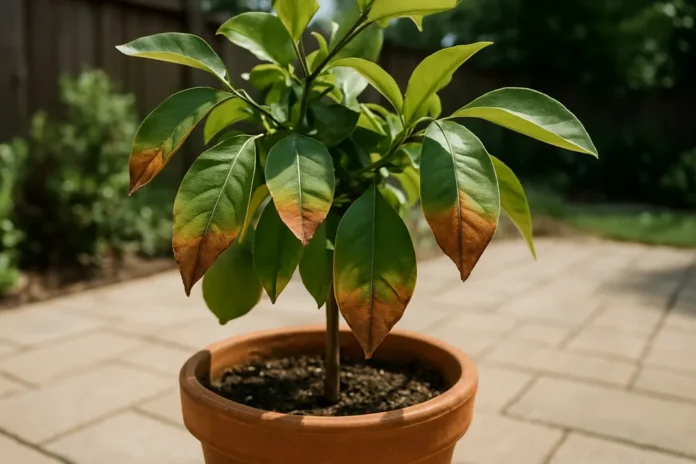
Lemon tree leaf tips usually turn brown because the tree is under stress from watering problems, salt buildup, dry air, root issues, or weather extremes. The damage often starts at the tips because that part of the leaf dries out first.
Brown tips on a lemon tree can be frustrating because they make the whole plant look unhealthy, even when the problem is still fairly minor. In my experience, lemon tree brown leaf tips are often the tree's early warning system. The plant is telling you that moisture, roots, salts, or the surrounding environment are not quite right.
The tricky part is that several different problems can cause the same symptom. A lemon tree kept in a pot on a sunny patio may develop crisp tips from inconsistent watering, while one indoors may show the same browning from dry air, fertilizer salts, or cold drafts. The good news is that tip burn is usually fixable once you narrow down the stressor and watch how the new growth responds.
If your lemon tree still has green leaves overall and is pushing new growth, do not panic. Brown tips rarely mean the tree is beyond saving. They usually mean it needs a few growing conditions adjusted before the damage spreads further.
What Brown Leaf Tips Usually Mean
When only the tips turn brown first, the issue is often related to water movement through the plant. Citrus leaves lose moisture from their surface all day, and the thin outer tips are the most likely area to dry, scorch, or accumulate excess salts. That is why tip browning is more commonly tied to stress than to a classic leaf spot disease.
Look closely at the pattern. If the very end of the leaf is dry and crispy, moisture stress or salt burn is likely. If the tip is brown but the surrounding leaf is yellowing, root trouble or nutrient imbalance may be involved. If the damage is mostly on the windward or sun-exposed side, weather injury becomes more likely.
When I diagnose citrus, I pay more attention to which leaves are affected than to the brown tip itself. If older leaves are hit first, I suspect root stress, salts, or inconsistent watering. If tender new flush is burning, I look harder at fertilizer strength, dry air, or recent weather swings.
Watering Problems Are the Most Common Cause
Underwatering and Drought Stress
Lemon trees do not like to stay bone dry for long, especially in containers. When the root ball dries too much, the tree cannot move enough water to the leaves, and the tips begin to dry out first. You may also notice leaves curling slightly, dropping prematurely, or feeling brittle instead of flexible.
This happens a lot in warm weather when a potted tree suddenly needs water much more often than it did a few weeks earlier. Terracotta pots, small containers, and fast-draining mixes can all dry faster than gardeners expect. A tree can look fine one week and show tip burn the next after a few hot, windy afternoons.
Overwatering and Soggy Roots
Too much water can cause a similar symptom. When roots sit in saturated soil, they lose oxygen and stop functioning well. The leaves may still show brown tips because damaged roots cannot supply moisture properly, even though the soil is wet. In this case, the leaves often look dull, soft, or slightly yellow before the tips crisp.
Overwatered citrus is especially common in decorative pots without proper drainage, oversized containers, or heavy soil that stays wet for too long. If the pot feels heavy for days after watering or the soil smells sour, root stress from excess moisture is a strong possibility.
- Underwatering clues: dry soil pulling from the pot edge, crisp leaves, light container weight, rapid wilting in afternoon heat
- Overwatering clues: constantly wet soil, yellowing leaves, slow growth, leaf drop, sour-smelling mix, fungus gnats indoors
- Both problems can produce brown tips because both interfere with steady moisture reaching the leaf
I prefer to judge citrus watering by soil depth and pot weight, not by the calendar. A lemon tree may need very different watering in April than in July, even if it sits in the same spot.
Salt Buildup From Fertilizer or Tap Water
Salt buildup is one of the classic reasons citrus leaf tips turn brown, especially in containers. Fertilizer salts and minerals from hard tap water can accumulate in the potting mix over time. As those salts concentrate around the roots, they interfere with water uptake and can burn the leaf margins and tips.
This often shows up when gardeners feed a little too often, use strong liquid fertilizer, or water lightly instead of thoroughly. Light watering moistens the top but does not flush excess salts downward and out of the drainage holes. The result is a root zone that becomes harsher over time even though the tree is getting regular care.
You may see a white crust on the soil surface or around the pot rim. Leaves can develop a dry brown point first, then a thin brown edge. The tree may also seem stalled, with new growth smaller than usual.
- Frequent fertilizing without occasional flushing encourages salt accumulation
- Hard water can worsen tip burn over time, particularly in small pots
- Brown tips from salts are common even when the tree is not actually thirsty
Low Humidity and Dry Indoor Air
Indoor lemon trees often struggle with dry air, especially in winter. Heated homes can pull moisture from leaves faster than the roots can replace it. The result is browning at the tips and edges, sometimes with slight curling or a papery texture.
This is most common when a tree sits near a heat vent, fireplace, radiator, or sunny window with very dry air around it. Citrus can tolerate average indoor conditions better than many people think, but prolonged low humidity paired with bright light and warm room temperatures can still push leaf tips over the edge.
Humidity alone is not always the whole problem. More often, it teams up with inconsistent watering or salt buildup. That combination is why indoor citrus can be so fussy by late winter.
Cold, Heat, Wind, and Sun Stress
Lemon trees are sensitive to sudden environmental swings. A burst of cold air, a surprise heat wave, drying wind, or intense reflected sun can all scorch the ends of leaves. The damage may appear quickly after the stressful event, even if the rest of the tree still looks mostly healthy.
Cold injury often causes browning after a chilly night near a window, door, or patio edge. Heat and wind stress are more common outdoors, especially when a potted tree is moved into full sun without a gradual adjustment. Hot wind can dehydrate leaves faster than the roots can keep up, producing crisp brown tips in a short time.
- Cold draft damage often affects leaves closest to the source of the chill
- Wind scorch tends to hit exposed foliage more than protected inner leaves
- Sun stress is common after moving a lemon tree from indoors to bright outdoor light too quickly
Root Problems and Pot Issues
If your lemon tree has been in the same container for a long time, cramped roots may be contributing to brown tips. Rootbound trees dry out faster, hold salts more easily, and struggle to support healthy foliage. You may notice water running straight through the pot or circling roots when you slide the plant out.
Poor drainage can create the opposite problem. A pot with too few drainage holes, a saucer left full of water, or compacted soil can keep roots overly wet. Once roots are stressed, leaves often respond with yellowing, tip browning, and eventual drop.
In-ground lemon trees can also develop root stress from heavy clay, poor drainage, or damage from trenching and digging nearby. If the browning started after a planting change, construction, or a period of saturated soil, root injury is worth considering.
Nutrient Imbalances and pH Problems
While plain brown tips are more often linked to moisture or salts, nutrient issues can play a role. Potassium deficiency, magnesium deficiency, or a broader uptake problem caused by wrong soil pH can weaken leaves and contribute to tip and edge burn. Citrus is especially sensitive when it cannot access nutrients even if they are technically present in the soil.
Nutrient-related browning usually comes with other signs. Older leaves may yellow between veins, leaves may look pale overall, or growth may be weak and undersized. If you recently repotted into a poor-quality mix or have been using a non-citrus fertilizer sparingly for a long time, nutrition deserves a closer look.
I get cautious about blaming nutrients too early. Many gardeners see a brown tip and reach for fertilizer, but adding more feed to a stressed citrus tree often makes salt burn worse unless you are sure the plant is actually underfed.
Pests and Disease Are Less Common but Still Possible
Brown tips alone do not usually point to a major pest or disease issue, but it is still smart to inspect the tree. Spider mites, scale, and sap-sucking insects can weaken foliage and make leaf edges look dry or scorched. Indoor lemon trees are especially prone to spider mites when air is warm and dry.
Check the undersides of leaves for fine webbing, sticky residue, shell-like bumps, or tiny moving specks. Pest damage usually comes with stippling, mottling, or a generally tired appearance rather than clean tip burn alone.
Fungal and bacterial leaf diseases typically create spots, halos, lesions, or irregular patches rather than just neatly browned tips. If the damage looks spotted instead of dried out, you may be dealing with something beyond routine stress.
How to Figure Out Which Cause Fits Your Tree
Start with the simplest clues before changing anything. Check whether the soil is staying too dry or too wet. Think about whether you recently fertilized, moved the tree, had a temperature swing, or switched water sources. Look at where the damaged leaves are located and whether old or new leaves are affected most.
- Feel the soil several inches down instead of judging the surface only.
- Lift the pot if the tree is container-grown and note whether it feels unusually light or heavy.
- Look for crusty salt deposits on the soil or pot rim.
- Check for drafts, heat vents, reflected sun, or windy exposure.
- Inspect roots and drainage if the tree has been in the same pot for a long time.
- Examine leaves closely for mites, scale, or spot patterns that suggest pests or disease.
The most useful sign is what happens on new growth after you make corrections. Brown tissue on damaged tips will not turn green again, so your goal is not to repair old leaves. Your goal is to stop the symptom from appearing on fresh leaves.
How to Fix Brown Tips on a Lemon Tree
Adjust Watering Habits
Water deeply enough that moisture reaches the whole root ball and excess runs out the drainage holes. Then let the top layer begin to dry before watering again, rather than keeping the soil constantly wet. For in-ground trees, deep and less frequent watering is usually better than shallow daily watering.
Flush Excess Salts
If you suspect salt buildup, water thoroughly several times in one session to help wash excess minerals from the potting mix. Long term, use fertilizer at the recommended citrus rate and occasionally leach the soil with a deep watering. If your tap water is very hard, filtered or rainwater can help reduce future buildup.
Improve the Environment
Move indoor trees away from heat vents, fireplaces, and cold drafts. If humidity is very low, a humidifier or grouping plants together can help more than light misting. Outdoors, protect the tree from harsh wind and avoid sudden moves from shade to intense sun.
Address Roots and Drainage
Repot rootbound trees into a slightly larger container with a fast-draining citrus-friendly mix. Make sure the pot drains freely and never leaves roots standing in water. If soil is compacted or sour-smelling, refreshing the mix can make a big difference.
Feed Carefully
Use a fertilizer made for citrus when the tree is actively growing, but do not overcorrect by feeding heavily right away. A stressed plant handles moderation better than a burst of nutrients. If deficiency symptoms are broad and persistent, a soil or tissue test gives a much clearer answer than guesswork.
Change one thing at a time when possible. If you repot, change fertilizer, move the tree, and alter watering all in the same week, it becomes much harder to tell what actually helped or what caused additional stress.
When to Prune and What to Expect After Treatment
You can trim off badly browned leaf tips for appearance, but only if the rest of the leaf is still mostly healthy and you do not remove too much green tissue. I usually leave lightly damaged leaves in place because they still help feed the tree. If a leaf is more than half damaged, it is reasonable to remove it.
Do not expect old leaves to recover. Brown tip tissue is dead, so the sign of success is clean new growth and the end of further browning. Once the root zone and environment are corrected, a lemon tree often improves gradually over several weeks.
If the problem keeps spreading despite better watering and care, or if you see major leaf drop, black roots, trunk problems, or obvious pests, the issue may be more serious than mild stress. At that point, a closer inspection or local citrus-specific advice is worthwhile.
FAQ
Should I Cut the Brown Tips Off My Lemon Tree Leaves?
You can trim them for looks, but it is optional. If most of the leaf is still green, I usually leave it alone so the tree can keep using that leaf for energy.
Will Brown Leaf Tips Turn Green Again?
No. The browned portion is dead tissue. The goal is to stop new leaves from developing the same damage.
Can Hard Tap Water Cause Brown Tips on Citrus?
Yes. Hard water can add minerals and salts to the potting mix over time, especially in containers, and that buildup can contribute to tip burn.
How Often Should I Water a Potted Lemon Tree?
There is no fixed schedule that works year-round. Water when the root zone has started to dry but before the tree becomes fully parched, and always adjust for season, heat, pot size, and light.
Are Brown Tips a Sign of Overfertilizing?
They can be. Overfertilizing often causes salt buildup, which can burn leaf tips and edges, particularly in potted lemon trees.
Can Low Humidity Alone Cause Lemon Leaf Tips to Brown?
Yes, especially indoors in winter, though it often combines with watering inconsistency or salt buildup rather than acting alone.
Do Pests Make Lemon Leaf Tips Brown?
Sometimes, but pests usually cause other symptoms too, such as stippling, sticky residue, webbing, or distorted foliage. Brown tips without those signs are more often caused by stress.
When Should I Worry About Brown Tips on My Lemon Tree?
Worry more if the browning is spreading fast, many leaves are dropping, the soil stays soggy, roots smell rotten, or you also see pests, spots, or stem damage.
Want to fix citrus problems faster? Read our guide to the best citrus fertilizers, potting mixes, and watering tools so you can choose the right treatment for your lemon tree.
