

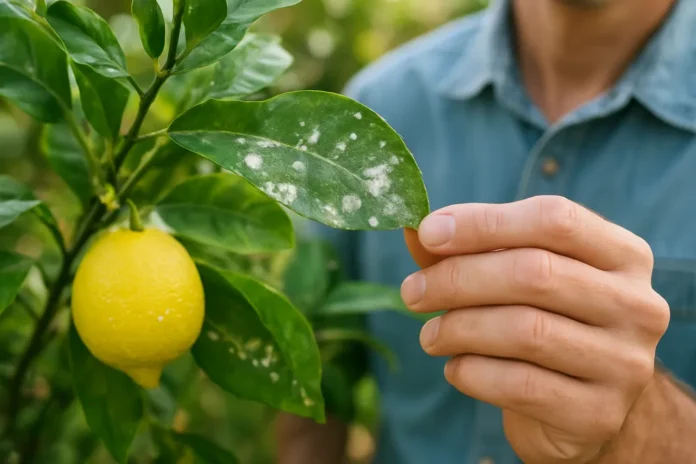
White stuff on lemon tree leaves is usually powdery mildew, mealybugs, scale insects, whiteflies, or dried mineral residue. The exact cause depends on whether it looks fuzzy, cottony, powdery, waxy, or crusty.
If you notice white stuff on lemon tree leaves, the good news is that this symptom is usually recognizable once you slow down and look closely. In my experience, gardeners often assume every white patch is disease, but on citrus it is just as likely to be insects or even harmless residue left behind by hard water or foliar sprays.
The appearance matters more than the color alone. A white coating that wipes off like dust points in one direction, while cottony clumps in leaf joints point in another. If the leaves are sticky, curling, speckled, or dropping, those extra clues usually narrow it down fast.
Below, I will walk through the most common reasons lemon tree leaves develop a white film, fuzz, or crust, how to tell them apart, and what to do for each one.
What the White Material Usually Means
On lemon trees, white material on leaves usually falls into three broad categories: fungal growth, sap-sucking pests, or surface residue. Powdery mildew creates a pale, dusty coating. Mealybugs, scale, and whiteflies leave cottony or waxy white buildup. Hard water, fertilizer salts, or dried spray products can leave a chalky film or spotting.
- Powdery or dusty usually suggests powdery mildew
- Cottony clumps often mean mealybugs or cottony cushion scale
- Tiny white insects that flutter point to whiteflies
- Flat white or tan bumps may be scale insects
- Crusty or chalky residue can be mineral deposits or dried sprays
When I diagnose citrus, I do not start by asking what the white color is. I start by asking how it is attached. If it brushes away cleanly, I think fungus or residue. If it feels stuck on or reveals insects underneath, I think pests.
That distinction matters because the wrong treatment wastes time and can stress the tree further. Spraying fungicide on mealybugs will not solve the problem, and scrubbing harmless mineral residue as if it were disease can damage tender leaves.
Powdery Mildew on Lemon Leaves
How It Looks
Powdery mildew appears as a soft white or grayish powder on the leaf surface. It can show up in patches at first, then spread into a thin coating. Young leaves may curl, twist, or look slightly puckered, and new growth can be more affected than mature leaves.
Why It Happens
This fungus is encouraged by poor air circulation, crowding, mild temperatures, and damp conditions around the plant canopy. Unlike many fungal problems, powdery mildew does not need soaking wet leaves to get started. A lemon tree kept in a sheltered patio corner, greenhouse, or crowded indoor sunroom is especially prone to it.
What to Do
- Remove the worst affected leaves if the problem is light and mostly on new growth.
- Prune lightly to improve airflow through the canopy.
- Avoid late-day overhead watering that keeps the area humid overnight.
- If needed, treat with a citrus-safe fungicidal option such as horticultural oil, neem oil, sulfur, or potassium bicarbonate, following the label exactly.
- Do not spray oils during extreme heat, and avoid combining sulfur and oil too closely together.
Powdery mildew is usually manageable if you catch it early. The goal is not making damaged leaves look perfect again. The real measure of success is whether the new leaves emerge clean.
Mealybugs and Cottony Citrus Pests
What Mealybugs Look Like
Mealybugs look like tiny bits of white cotton or fluff, often clustered where leaves meet stems, along the midrib, or around tender new shoots. They are slow-moving insects covered in a waxy white coating. Heavy infestations can make leaves sticky with honeydew and may lead to black sooty mold later.
Other Cottony Pests to Know
Cottony cushion scale is another classic citrus pest. Instead of looking like loose powder, it forms more obvious white ribbed cottony sacs attached to stems and leaf areas. This pest can look dramatic very quickly, especially on stressed container lemon trees.
Signs That Point to a Pest Instead of Fungus
- Sticky leaves or nearby surfaces
- Ants climbing the tree, because they feed on honeydew
- White material concentrated in leaf joints and stem crotches
- Distorted new growth
- Black sooty mold forming after the white buildup appears
How to Treat Mealybugs and Cottony Scale
- Isolate the tree if it is in a patio grouping or indoors near houseplants.
- Wipe or dab visible clusters with a cotton swab dipped in rubbing alcohol.
- Rinse the tree with a firm spray of water, especially under leaves and at stem joints.
- Apply insecticidal soap or horticultural oil thoroughly, covering hidden areas where pests gather.
- Repeat treatments as directed on the product label because eggs and crawlers often survive the first pass.
- Control ants around the tree, since ants protect honeydew-producing insects from beneficial predators.
With mealybugs, I have the best results when I physically remove the obvious clusters before I spray. The waxy coating sheds water, so a contact treatment works much better after you knock the population down by hand.
Whiteflies and Scale Insects
How Whiteflies Show Up on Lemon Trees
Whiteflies are tiny winged insects that often rest on the undersides of leaves. When you disturb the branch, they flutter up in a small white cloud. Their nymphs can look like pale scales stuck to the leaf surface, and their feeding causes yellowing, stickiness, and eventual sooty mold.
How Scale Differs
Scale insects are less obviously insect-like than mealybugs or whiteflies. They may look like small bumps, discs, or shells stuck to leaves and stems. Some are whitish, tan, or gray. You cannot brush them off like dust because they are attached and feeding on plant sap.
What to Do
- Check the undersides of leaves first, since that is where whiteflies and many young scale insects gather.
- Prune out heavily infested twigs if the problem is localized.
- Use insecticidal soap or horticultural oil and cover both upper and lower leaf surfaces.
- Repeat applications because contact products do not always affect eggs.
- Avoid excess nitrogen fertilizer that pushes soft, pest-prone growth.
For severe scale on a mature outdoor lemon tree, you may need a more targeted citrus-approved product. Always make sure the treatment is labeled for edible plants and for the specific pest you are seeing.
Harmless White Residue From Water, Dust, or Sprays
Not every white mark is a living problem. Lemon leaves often collect a chalky film from hard water, overhead irrigation, dried fertilizer splash, foliar nutrients, insecticidal soap residue, kaolin clay products, or ordinary dust. This kind of residue tends to look flat and superficial rather than fuzzy or cottony.
Clues That It Is Only Residue
- The white material is spread evenly over exposed leaves
- It wipes off easily with a damp finger or cloth
- There is no stickiness, leaf curling, or insect activity
- The residue appeared after spraying or watering
- New growth looks normal and clean
If it is just residue, you can gently rinse the leaves or wipe a few for appearance, but treatment is usually unnecessary. The more important fix is adjusting the source, such as avoiding repeated foliar sprays in hot sun or using less mineral-heavy water where practical.
How to Tell the Difference Quickly
When gardeners send me photos of a lemon tree with white leaves, I usually ask a few simple questions before naming a cause. Those questions save a lot of guessing.
- Does it look like dust, cotton, bumps, or crust?
- Can you wipe it off cleanly with your finger?
- Is it mostly on the top of leaves, undersides, stems, or leaf joints?
- Do tiny insects fly up when you shake the branch?
- Are the leaves sticky or followed by black sooty mold?
- Did this appear after watering, feeding, or spraying?
A white coating on top of leaves with mild distortion often suggests powdery mildew. Cottony clusters at leaf joints strongly suggest mealybugs or cottony scale. White flecks combined with fluttering insects usually means whiteflies. Flat chalky spotting after irrigation often points to mineral residue.
If only older outer leaves have a pale film but the hidden inner leaves are clean, I start thinking residue. If the newest tender growth is hit hardest, I become much more suspicious of pests or mildew because that fresh growth is what they target first.
How to Treat a Lemon Tree Safely
Lemon trees can be sensitive to poorly timed sprays, especially in hot weather. Whatever the cause, gentle and well-timed treatment is usually more effective than using the strongest product on hand.
- Treat early in the morning or late in the day, not during intense midday sun.
- Test any spray on a small area first if the tree is stressed.
- Do not combine multiple products unless the label allows it.
- Avoid spraying drought-stressed trees or leaves that are already heat-damaged.
- Focus on thorough coverage, especially undersides of leaves and stem joints.
For fungal coatings, improving air circulation and reducing humidity around the canopy can matter as much as spraying. For pests, repeated contact treatments and physical cleanup are often more effective than one heavy application. For residue, the safest fix is often simply correcting your watering or spray habits.
How to Prevent White Buildup From Coming Back
Healthy lemon trees are less likely to develop serious pest and disease problems, but prevention on citrus is mostly about environment and routine observation. A few small habits make a big difference.
- Give the tree plenty of sun and airflow
- Avoid overcrowding with other plants
- Water consistently, but do not keep the root zone soggy
- Inspect new growth and leaf undersides every week during warm weather
- Wash off dust and early pest buildup before it becomes heavy
- Do not overfertilize with nitrogen, especially in containers
- Keep ants under control so beneficial insects can do their job
Container lemon trees need especially close monitoring because they often sit in protected, warm spaces where whiteflies, mealybugs, and mildew can build up fast. I find that a weekly leaf check takes less than two minutes and catches most problems before they turn into a full cleanup job.
When the Problem Is Serious Enough to Escalate
Most white stuff on lemon leaves is fixable at home, but there are times when the tree needs more aggressive care. If the canopy is heavily infested, leaves are dropping fast, fruit is failing, or sticky residue and sooty mold are covering much of the tree, a stronger labeled citrus treatment may be warranted.
You should also step up your response if a young tree is declining, the trunk and stems are becoming coated with scale, or repeated mild treatments are not slowing the problem. In that case, it is worth bringing a close sample to a local extension office or reputable garden center for confirmation before you spray again.
FAQ
Can I Just Wipe the White Stuff Off My Lemon Tree Leaves?
You can wipe off residue, some powdery mildew, and visible mealybugs, but wiping alone usually does not solve an active infestation or fungal issue. It helps as part of treatment, not as the whole fix.
Is White Stuff on Lemon Leaves Harmful to Fruit?
It can be, depending on the cause and severity. Light residue is mostly cosmetic, but pests and fungal growth can weaken the tree, reduce vigor, and affect fruit quality if left untreated.
Will Neem Oil Fix White Stuff on Lemon Tree Leaves?
Neem oil can help with some pests and some fungal issues, but it is not the right answer for every white coating. It will not remove hard water residue, and it must be used carefully on citrus to avoid leaf burn.
Why Are Ants on My Lemon Tree when I Also See White Bugs?
Ants are often attracted to honeydew produced by mealybugs, scale, and whiteflies. They may even protect those pests, which is why ant control is part of getting the infestation under control.
Can Powdery Mildew Spread to Other Plants Near My Lemon Tree?
Yes, powdery mildew can spread, especially in crowded or humid conditions. Good spacing and airflow help reduce the chance of it moving through nearby plants.
Is Hard Water Residue Bad for Lemon Tree Leaves?
Usually it is more of a cosmetic issue than a serious health problem. Heavy deposits can block light slightly and make leaves look dull, but they are not the same as a disease or insect attack.
Should I Remove Badly Affected Lemon Leaves?
If only a limited number of leaves are badly covered, removing them can reduce pest or fungal pressure. Do not strip the tree heavily, though, because lemon trees still need enough healthy foliage to recover.
Need the right fix fast? Read our citrus pest and disease treatment guide to compare the best sprays, soaps, oils, and prevention products for lemon trees.
