

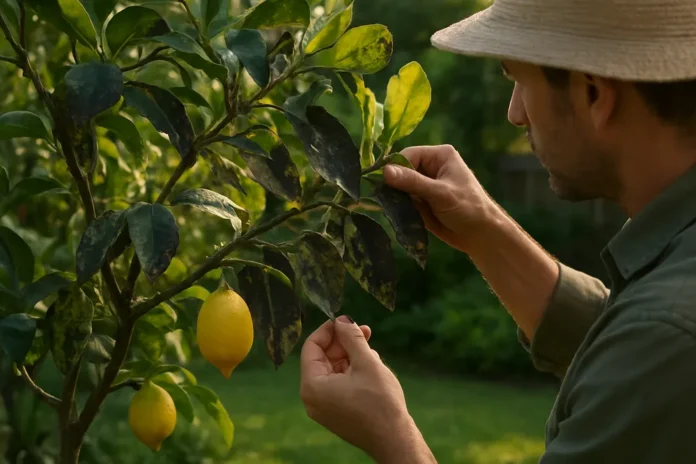
Lemon tree leaves usually turn black because of sooty mold growing on sticky insect honeydew, root problems from excess moisture, or cold-damaged tissue that has died. In some cases, leaf spot diseases or twig dieback can also darken the leaves.
When I see lemon tree leaves turning black, I do not assume it is one problem every time. Blackening can mean a surface coating you can wipe away, dead tissue caused by cold or rot, or a true disease issue moving through the canopy.
The most common cause on home citrus is sooty mold that grows on the sticky residue left behind by aphids, scale, whiteflies, or mealybugs. But if the leaves are black, soft, curling, or dropping fast, I start thinking about root stress, canker, or weather damage instead. The exact look of the blackening matters more than the color alone.
The good news is that black leaves on lemon trees are often diagnosable with a close look at the leaf surface, nearby stems, and the soil. Once you match the symptom pattern to the cause, the fix gets much more straightforward.
What the Black Color Is Telling You
Before treating anything, figure out whether the black material is sitting on the leaf or whether the leaf tissue itself has turned dark and died. That one distinction rules out a lot of confusion. Sooty mold looks like a dusty or soot-like film on top of the leaf. Dead tissue from cold, rot, or disease is part of the leaf itself and will not wipe clean.
- If the black coating rubs off on your fingers or a damp cloth, it is usually sooty mold.
- If the leaf looks water-soaked, soft, or limp before darkening, suspect root stress, rot, or cold injury.
- If the blackening starts as spots with yellow halos or irregular lesions, a disease is more likely.
- If leaves blacken along with twigs, tips, or blossoms, look beyond the leaf and inspect the whole branch.
When I diagnose citrus, I always check both old leaves and the newest flush. If only the older, shaded leaves are coated black, I lean toward insect honeydew and mold. If tender new growth blackens quickly after a cold night, weather damage jumps to the top of my list.
Sooty Mold From Sap-sucking Insects Is the Most Common Cause
On backyard lemon trees, the leading reason leaves look black is sooty mold. This fungus does not usually infect the leaf itself. Instead, it grows on honeydew, the sticky waste produced by insects such as aphids, scale, whiteflies, and mealybugs. The mold can cover the leaves, stems, and even fruit, making the tree look dirtier and sicker than it actually is.
Sooty mold blocks light and reduces photosynthesis when it gets heavy, but the real problem is the insect population feeding on the tree. If you only wash the black coating off without controlling the insects, it comes right back.
How to Recognize Sooty Mold
- Leaves feel sticky before or along with the black film
- Black residue sits on the surface and can often be wiped away
- Ants may be moving up and down the trunk because they protect honeydew-producing insects
- You may see bumps from scale, cottony clusters from mealybugs, or tiny soft-bodied insects on new growth
How to Fix It
- Inspect the undersides of leaves, stems, and branch crotches for aphids, scale, mealybugs, or whiteflies.
- Prune out heavily infested twigs if the tree is dense and airless.
- Wash reachable foliage with a steady spray of water to remove insects and some of the mold.
- Treat the pests with insecticidal soap, horticultural oil, or neem labeled for citrus, coating the insects directly.
- Control ants around the tree so they stop protecting the pests.
- After the insects are gone, rinse the foliage again. Old black residue may linger until weather and new growth replace it.
If scale is the culprit, I prefer horticultural oil over random repeated sprays of different products. It works by coating the insects, and thorough coverage matters much more than using a stronger product.
Overwatering and Root Rot Can Make Leaves Darken and Drop
Lemon trees hate sitting in waterlogged soil. When roots stay too wet, they lose oxygen, weaken, and become vulnerable to rot pathogens such as Phytophthora. Once the roots fail, the canopy starts showing stress. Leaves may yellow first, but they can also develop dark blotches, blackened edges, or dull blackish patches before dropping.
This is especially common in containers without excellent drainage or in landscape sites where clay soil stays wet after irrigation or rain. A tree that is watered on a schedule instead of by soil dryness can slide into trouble surprisingly fast.
Signs the Roots Are Involved
- Leaves look limp, dull, or scorched even though the soil is wet
- Blackening is part of the leaf tissue, not a wipeable surface coating
- Leaf drop increases and new growth stalls
- The pot feels heavy for days after watering or the planting site stays soggy
- The trunk base may show dark, wet-looking bark if crown rot has started
What to Do
Let the root zone dry somewhat before watering again. In pots, make sure excess water runs freely out of the drainage holes and never let the container sit in a saucer full of water. If the mix is dense and soggy, repot into a fast-draining citrus mix. In the ground, reduce irrigation frequency and correct any low spot that traps water around the root crown.
Remove obviously dead leaves and twigs, but do not strip the tree hard all at once. The goal is to stabilize the roots first. If trunk rot is visible at the base, recovery becomes less certain and early intervention matters.
Cold Damage Can Blacken Tender Leaves Overnight
Lemon trees are more cold-sensitive than many other citrus. After a frost or near-freezing event, tender leaves and shoot tips can turn dark green, then black or brownish black as the tissue collapses. This kind of damage often appears suddenly, especially on the outer canopy or the side exposed to wind.
Cold injury is easy to miss at first because the leaves may still be attached and look only slightly water-soaked. Within a day or two, the damaged areas darken and dry out. Blossoms, tiny fruit, and young shoots are usually hit first.
How to Tell if Frost Is the Issue
- Blackening appears right after a cold night
- The youngest leaves are affected more than older hardened foliage
- Leaf tissue looks burned or collapsed rather than coated
- Shoot tips and flowers may also darken
Do not rush to prune immediately after a cold snap. Wait until new growth begins and you can clearly see which wood is alive. Pruning too soon can remove tissue that might still recover, and it can stimulate new tender growth before another cold event.
Leaf Spot and Canker Problems Can Also Darken the Foliage
Several disease issues can create black or very dark lesions on lemon leaves. Some fungal leaf spots begin as small brown or dark specks that enlarge over time. Citrus canker, where present, causes raised corky lesions often surrounded by yellow halos. Severe infections can lead to distorted leaves, defoliation, and blemished fruit.
Disease is more likely when the blackening shows up as distinct spots or lesions rather than an overall film or general collapse. Trees that stay wet from overhead irrigation, overcrowding, or poor airflow tend to have more trouble.
Clues That Point to Disease
- Spots have defined edges instead of a uniform black coating
- Some lesions may be slightly raised, corky, or surrounded by yellow
- The pattern repeats on many leaves, not just a few damaged ones
- Fruit and young stems may show matching lesions
How to Respond
- Remove and discard badly affected fallen leaves and prunings
- Improve air circulation by thinning crowded growth lightly
- Water at the soil line instead of wetting the foliage
- Disinfect pruners between cuts when disease is suspected
- Use a copper-based fungicide or bactericide only if the product is labeled for citrus and the diagnosed issue
I get cautious when gardeners call every dark citrus spot a fungus. If the marks are all over the upper leaf surface but absent on stems and fruit, I still check for honeydew and mold first. True disease lesions usually have a more organized shape and pattern than dirty-looking soot.
Chemical Burn, Salt Buildup, and Sun-stressed Tissue Can Mimic Black Leaves
Not every blackened lemon leaf comes from pests or pathogens. Overapplied foliar sprays, strong fertilizer, salty irrigation water, or heat stress following a spray application can injure leaf tissue. Damaged areas may first look bronzed or water-soaked, then turn dark brown to nearly black.
This tends to happen after a recent treatment, especially if oils or soaps were applied during hot sun or if fertilizer salts built up in a potting mix. Container lemon trees are particularly vulnerable because salts concentrate faster in limited soil volume.
When to Suspect Chemical or Salt Damage
- Symptoms appeared soon after spraying or fertilizing
- Leaf edges or exposed surfaces are affected more than shaded inner leaves
- There is no sticky residue or obvious insect activity
- White crust may be visible on the soil surface in containers
If you think spray burn or salt buildup is involved, stop additional treatments for the moment, flush container soil thoroughly if drainage is good, and return to a measured fertilizer schedule. Always apply oils and soaps during cooler parts of the day and follow the label exactly.
How to Diagnose the Problem Step by Step
A careful five-minute inspection usually narrows the cause quickly. Start with the leaf surface, then move to the stems, soil, and recent weather or care routine. Avoid treating blindly, because black leaves caused by insects need a different fix than black leaves caused by root stress.
- Wipe a black leaf with a damp paper towel to see whether the coating comes off.
- Check for stickiness, ants, scale bumps, aphids, mealybugs, or whiteflies.
- Look at whether the youngest growth, older leaves, or the whole canopy is affected.
- Feel the soil several inches down or inspect the potting mix for prolonged wetness.
- Think back to recent cold nights, heavy rain, fertilizing, or spray applications.
- Inspect twigs, fruit, and the trunk base for lesions, dieback, or dark bark.
If the pattern still does not fit clearly, take close photos of both sides of several leaves, the stems, and the overall tree. A local extension office or citrus-savvy nursery can often help distinguish insects, mold, and disease from a good set of images.
Change one variable at a time if the cause is not obvious. If you cut watering, spray oil, fertilize, and prune all in the same week, it becomes much harder to tell what helped and what made the tree more stressed.
How to Help Your Lemon Tree Recover
Recovery depends on solving the original issue and then giving the tree steady, low-stress care. Lemon trees bounce back best when they have strong light, even moisture, good drainage, and no extra strain from overfeeding or repeated unnecessary sprays.
- Remove only clearly dead or badly damaged leaves and twigs
- Water deeply but only when the upper soil has begun to dry appropriately
- Use a citrus fertilizer at the recommended rate rather than guessing high
- Keep mulch a few inches away from the trunk
- Monitor new growth, because healthy new leaves tell you more than old damaged leaves
- Protect the tree from future cold snaps if you garden in a marginal citrus climate
Do not expect old blackened leaves to return to normal. The real sign of progress is clean, healthy new growth and a stop in the spread of symptoms. Once the cause is corrected, many lemon trees push fresh leaves within a few weeks in warm weather.
When Black Leaves Mean the Tree Needs Urgent Attention
Some black-leaf situations are minor and cosmetic, but others point to a larger decline. If the tree is losing leaves rapidly, the trunk base is dark and wet, branches are dying back, or the blackening is spreading across the whole canopy, act quickly. Root and crown problems can move from fixable to severe if the tree stays waterlogged.
- Seek local advice fast if the trunk base is cracking, oozing, or blackening
- Treat insect infestations early before mold covers most of the canopy
- Get a disease diagnosis if spots are also showing on fruit and stems
- Replace severely compacted or poorly draining container soil before the roots decline further
FAQ
Can Black Lemon Tree Leaves Turn Green Again?
If the black material is sooty mold on the surface, washing and controlling the insects can improve how the leaves look. If the leaf tissue itself has turned black from cold, rot, or disease, that tissue will not turn green again.
Is Sooty Mold Killing My Lemon Tree?
Usually not directly. Sooty mold is more often a sign that sap-sucking insects are feeding heavily on the tree, and that insect pressure is the real issue to fix.
Should I Cut Off All the Black Leaves?
No. Remove leaves that are clearly dead, heavily diseased, or badly coated and no longer useful, but avoid stripping the tree hard. The tree still needs foliage while it recovers.
Why Are Ants All Over My Lemon Tree with Black Leaves?
Ants are often attracted to honeydew produced by scale, aphids, whiteflies, or mealybugs. Their presence is a strong clue that the black coating may be sooty mold.
Can Overwatering Really Make Citrus Leaves Turn Black?
Yes. Constantly wet soil can suffocate roots and lead to rot, which can cause leaves to darken, wilt, and drop. This is especially common in pots with poor drainage.
Will Neem Oil Remove the Black Coating?
Neem oil can help manage certain insect pests that are causing the honeydew, but it does not instantly erase old sooty mold. Once the pests are controlled, you can rinse the foliage and let weathering remove the remaining residue.
How Do I Know if Cold Damaged My Lemon Tree?
Look for blackened or collapsed young leaves and shoot tips right after a cold night. Frost damage usually appears suddenly and affects the most tender growth first.
Need the right fix fast? Read our citrus pest and disease treatment guides to choose the best spray, soil, and recovery plan for your lemon tree.
