

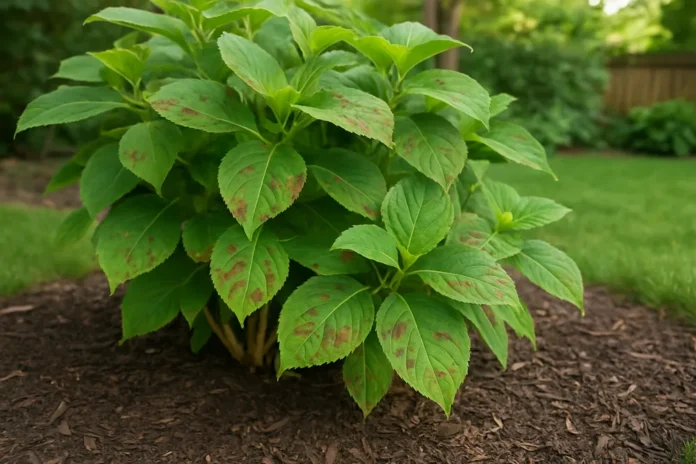
Hydrangea leaves usually develop brown spots because of fungal or bacterial leaf diseases, water stress, harsh sun, or root problems. The exact cause often shows up in the size, color, and placement of the spots.
Seeing hydrangea leaves with brown spots can be frustrating, especially when the shrub was lush and healthy just a week or two earlier. In my experience, this symptom can look alarming fast, but it is often easier to diagnose than gardeners expect once you pay attention to the pattern on the leaves.
Some spots stay small and round, which often points toward a leaf disease. Others start at the edges or appear as larger scorched patches, which leans more toward heat, drought, or watering problems. On hydrangea leaves, the location of the damage matters just as much as the color, so the best fix starts with figuring out what kind of spotting you are actually seeing.
The good news is that many hydrangeas recover well once the cause is corrected. Even if the older leaves stay blemished, healthy new growth is usually the sign that you are back on track.
What Brown Spots on Hydrangea Leaves Usually Mean
Brown spots are not one single problem. They are a symptom with several common causes, and each one tends to leave a different visual clue. If the spotting is scattered across the leaf blade in neat circles or irregular blotches, disease is often involved. If the damage appears mostly on the most exposed leaves, especially after hot weather, sun scorch becomes more likely. If the entire plant looks wilted or stressed along with the spots, moisture problems may be the root issue.
- Small purple-brown or tan spots with defined edges often suggest Cercospora leaf spot or another fungal issue.
- Water-soaked dark spots that may merge together can point to a bacterial leaf spot problem.
- Crispy brown areas on leaf margins or between veins often show up with drought stress, heat, or fertilizer burn.
- Large bleached or brown patches on sun-facing leaves are common with sun scorch.
- General yellowing followed by browning can happen when roots stay too wet and begin struggling.
When I inspect a spotted hydrangea, I always compare several leaves from different parts of the plant. If only the outer, top, or west-facing leaves are damaged, I think weather first. If the spots are sprinkled all through the shrub, including inner leaves, disease moves much higher on my list.
Leaf Spot Diseases Are Among the Most Common Causes
Fungal Leaf Spot
One of the most common reasons hydrangea leaves get brown spots is fungal leaf spot, especially Cercospora. This disease usually begins as small purple, brown, or tan specks that expand over time. The centers may turn lighter while the margins stay darker. It often starts on lower or interior leaves where airflow is weaker and moisture lingers longer.
Warm, humid weather encourages fungal problems, and overhead watering makes them worse by keeping foliage wet. Splashed soil can also move spores onto leaves. A healthy hydrangea can usually survive a mild infection, but repeated spotting weakens the plant, causes premature leaf drop, and makes the shrub look rough by midsummer.
Bacterial Leaf Spot
Bacterial leaf spot is less common than fungal spotting, but it can happen, especially during wet conditions. These spots often look dark, water-soaked, or irregular rather than neatly round. They may spread quickly after rainy stretches. In severe cases, the affected tissue tears or turns almost black.
- Remove badly spotted fallen leaves from around the base of the shrub.
- Avoid wetting the foliage when you water.
- Thin nearby plants if crowding keeps the hydrangea damp for long periods.
- Prune lightly for airflow if the shrub is very dense, but do not overprune during heat stress.
Fungicides can help prevent new fungal spotting in plants with a history of severe infection, but they do not erase existing spots. For most home gardeners, sanitation, drier foliage, and better airflow make the biggest difference. Bacterial issues are also managed mostly by moisture control and cleanup rather than by trying to rescue already damaged leaves.
Watering Problems Can Create Brown Spotting and Scorched Edges
Hydrangeas are thirsty shrubs, but they do not like sitting in soggy soil. Both underwatering and overwatering can lead to brown areas on leaves, and the damage can look surprisingly similar at first glance. That is why it helps to check soil moisture before assuming the plant needs more water.
Underwatering and Drought Stress
When hydrangeas get too dry, the leaves often droop first. After repeated wilting, the edges and tips may turn brown and crisp. Sometimes the browning spreads inward and resembles spots, especially on broadleaf hydrangeas. Hot afternoons, reflected heat from pavement, and shallow watering all make this worse.
Overwatering and Poor Drainage
If roots sit in overly wet soil, they cannot take up oxygen well. That stress can show up as soft yellowing leaves that later develop brown patches or spotting. In heavy clay soil or poorly drained beds, hydrangeas may look both wilted and wet at the same time, which confuses many gardeners.
- Dry soil 2 to 3 inches down suggests the plant may need a deep watering.
- Sticky, wet soil that stays saturated suggests drainage or overwatering problems.
- Repeated afternoon wilt that recovers by evening often points to heat stress, but repeated crisping means the roots are not keeping up.
- Mulch helps buffer moisture swings, but keep it a few inches away from the stems.
If you are unsure whether the plant is too dry or too wet, do not react by watering more often right away. I get better results by checking the root zone over a few days, because hydrangeas decline quickly from soggy roots when gardeners misread wilting as thirst.
Too Much Sun and Heat Can Mimic Disease
Many hydrangeas prefer morning sun and afternoon shade, especially in hotter parts of the U.S. When they get blasted by intense afternoon sun, leaves can develop brown patches that look like disease from a distance. The tissue may first appear pale, bleached, or slightly papery before turning tan or brown.
Sun scorch usually appears on the most exposed leaves rather than evenly throughout the shrub. The south- or west-facing side often looks worst. This kind of damage is especially common after a stretch of extreme heat, when the plant is newly transplanted, or when pruning has suddenly exposed inner leaves that were used to shade.
- Damage is heaviest on outer leaves facing hot afternoon sun.
- Spots may be larger and less defined than fungal lesions.
- Leaf edges can crisp while veins stay visible.
- The problem often appears suddenly after very hot or windy weather.
If the plant is in a harsh site, temporary shade during heat waves, deeper watering, and a mulch layer can reduce stress. In some gardens, the long-term fix is moving the hydrangea or planting something nearby that softens late-day sun.
Nutrient Issues, Fertilizer Burn, and Salt Buildup
Hydrangeas do not usually show nutrient problems as neat brown spots first, but imbalances can contribute to ugly foliage. Overfertilizing is a more common problem than underfeeding. Too much fertilizer, especially fast-release products, can burn roots and lead to brown leaf edges, patchy necrosis, and stress-related spotting.
Salt buildup from fertilizer or poor-quality irrigation water can also dry out leaf tissue. If the browning follows a recent feeding, fertilizer burn belongs high on your suspect list. New growth may look distorted or weak, and the plant can appear scorched even when soil moisture seems adequate.
- Skip extra feeding if the shrub was fertilized recently.
- Use a slow-release fertilizer formulated for flowering shrubs if feeding is actually needed.
- Water deeply after fertilizing to move nutrients into the root zone and reduce surface salt concentration.
- Avoid piling fertilizer against the stem base.
True nutrient deficiencies are more likely to show yellowing patterns between veins or overall pale growth before leaves turn brown. If you suspect a deficiency, a soil test is far more useful than guessing with additional fertilizer.
Pests and Root Stress Can Leave Secondary Spotting
Pests are not the first cause I think of with brown spots on hydrangeas, but they can contribute. Spider mites, aphids, and scale insects stress leaves and make them more vulnerable to scorching and disease. Mite damage often starts as stippling or a dusty look before tissue browns out.
Root stress from transplant shock, compacted soil, or mechanical damage can also show up as patchy browning on the foliage. Hydrangeas that were recently planted or moved often struggle to keep leaves hydrated while roots reestablish. In those cases, the spots are more of a stress response than a leaf disease.
- Check the undersides of leaves for fine webbing, stippling, or clustered insects.
- Look for signs of recent root disturbance such as digging, edging, or transplanting.
- Notice whether only new growth is affected or whether the whole shrub looks off-color and weak.
- Consider whether herbicide drift may have hit the plant if nearby weeds were sprayed.
I get cautious about blaming pests unless I can actually find them. Hydrangeas with brown spots are much more often reacting to moisture, weather, or leaf disease than to insects alone, so a close look under the leaves saves a lot of unnecessary spraying.
How to Tell Which Cause Is Most Likely
The fastest way to narrow this down is to look at three things together: where the spots are, what shape they have, and what the recent weather has been. Brown spots that follow a rainy, humid stretch strongly suggest disease. Broad brown patches after triple-digit heat push the diagnosis toward scorch or water stress.
- Look at leaf placement. Inner and lower leaves suggest moisture-related disease. Outer, exposed leaves suggest sun or heat.
- Study spot shape. Small distinct lesions point toward fungal or bacterial causes. Large irregular burned areas point toward stress.
- Check the soil. Bone-dry soil and crispy margins suggest drought. Constantly wet soil and yellowing suggest root trouble.
- Review recent care. A recent fertilizer application, transplant, or pruning change can explain sudden damage.
- Watch new growth. If new leaves emerge clean after conditions improve, the main problem was likely environmental rather than ongoing infection.
Do not expect damaged leaves to turn green again. The goal is to stop the problem from spreading and protect future growth. Once you start seeing healthy new leaves, you can be confident the treatment is working even if the old foliage still looks marked.
What to Do to Help Your Hydrangea Recover
Recovery starts with matching the fix to the cause, but a few steps help almost every spotted hydrangea. First, remove the worst fallen leaves from the ground to reduce disease carryover. Next, water the root zone deeply when needed instead of giving the shrub frequent shallow drinks. Then make sure mulch is helping regulate soil moisture rather than smothering the crown.
- Water early in the day and aim at the soil, not the leaves.
- Add 2 to 3 inches of mulch to keep roots cooler and moisture steadier.
- Space or prune surrounding plants to improve airflow.
- Avoid fertilizing a stressed plant unless a deficiency is confirmed.
- Remove severely diseased leaves if practical, but do not strip the plant bare during hot weather.
If leaf spot has been a recurring issue year after year, a labeled fungicide used preventively may be worthwhile, especially during prolonged wet weather. For plants suffering from sun scorch or chronic heat stress, the best long-term fix may be better siting. Hydrangeas in the wrong exposure often improve dramatically once afternoon sun is reduced.
Be patient with appearance. Hydrangeas can hold onto spotted leaves for a while, and older damage may remain until the plant naturally sheds them. What matters most is whether the plant resumes steady growth, holds turgor better, and produces cleaner foliage after you adjust conditions.
How to Prevent Brown Spots in the Future
Prevention is mostly about reducing stress and keeping leaves dry when possible. A well-sited hydrangea with even moisture and decent airflow is far less likely to develop chronic spotting. Many cases start when several small stressors overlap, such as heat, crowded growth, and frequent overhead watering.
- Plant hydrangeas where they get morning sun and relief from the hottest afternoon exposure.
- Water deeply and consistently during dry spells instead of waiting for repeated wilt.
- Keep mulch over the root zone but away from the stems.
- Clean up diseased leaf litter in fall and again in spring.
- Avoid crowding hydrangeas against walls, fences, or dense shrubs that trap humidity.
- Use fertilizer sparingly and only when the plant actually needs it.
In my own garden, the biggest difference usually comes from consistent watering and better air movement. Once hydrangeas stop cycling between too wet and too dry, a lot of mysterious brown spotting becomes much less common.
FAQ
Should I Cut Off Hydrangea Leaves with Brown Spots?
You can remove badly damaged or heavily diseased leaves, especially if they have dropped or are crowding the plant, but do not strip off large amounts of foliage during hot weather. The shrub still needs leaves to make energy and recover.
Will Brown Spots on Hydrangea Leaves Go Away on Their Own?
The existing spots will not disappear, but the plant can still recover. What you want to see is clean new growth after you correct the underlying problem.
Can Too Much Rain Cause Brown Spots on Hydrangeas?
Yes. Extended rainy weather encourages fungal and bacterial leaf spotting, and constantly wet soil can also stress roots, which may lead to browning or patchy leaf damage.
Do I Need Fungicide for Hydrangea Brown Spots?
Not always. Mild fungal spotting is often managed with leaf cleanup, better airflow, and watering at the soil line. Fungicide is more useful when the problem returns every year or spreads heavily during wet weather.
Can Full Sun Cause Brown Spots on Hydrangea Leaves?
Yes, especially in hot climates or during heat waves. Full afternoon sun can scorch exposed leaves and create brown patches that look like spots.
Is Epsom Salt Good for Hydrangeas with Brown Spots?
Usually no. Epsom salt is not a general cure for leaf spotting, and adding it without a confirmed magnesium deficiency can create more imbalance than benefit.
Why Are Only the Lower Hydrangea Leaves Getting Brown Spots?
Lower leaves often stay damp longer and get less airflow, so fungal leaf spot tends to begin there first. Soil splash during rain or watering can also spread spores onto the lower foliage.
Need the right treatment fast? Read our guide to the best fungicides, watering tools, and mulch options for hydrangeas so you can stop leaf damage and get cleaner growth sooner.
