

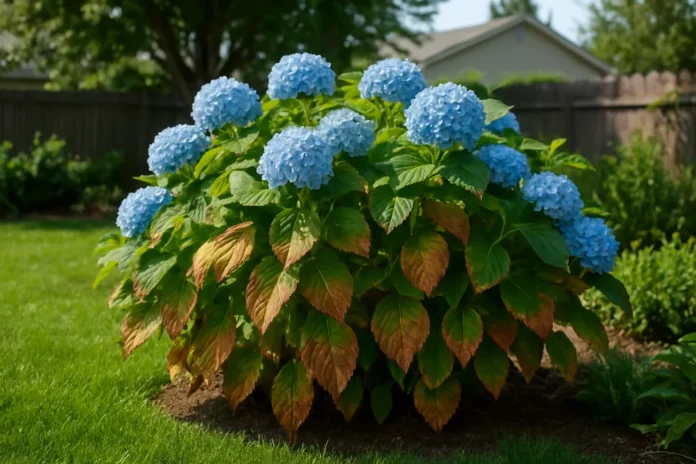
Hydrangea leaves usually turn brown because of heat and drought stress, uneven watering, excess fertilizer, or leaf diseases. Browning can also come from wind, winter injury, or roots struggling in poor soil.
Brown leaves on a hydrangea can be alarming, especially when the shrub was lush and healthy just a week or two earlier. In most home gardens, hydrangea leaves turning brown points to stress rather than an instant death sentence. I have seen it happen after hot afternoons, erratic watering, late frosts, and even after gardeners tried to help with too much fertilizer.
The tricky part is that brown foliage can show up in different ways. Sometimes the edges crisp first. Sometimes whole patches of the leaf tan out between the veins. In other cases, spots spread and merge until the leaf looks scorched. The pattern matters, because hydrangea leaves do not all brown for the same reason.
If you look at when the damage started, where it appears on the plant, and what the weather has been doing, you can usually narrow it down pretty quickly. Once you know the cause, the fix is often straightforward.
What Brown Leaves Usually Mean on Hydrangeas
Brown leaves are a symptom, not a diagnosis. Hydrangeas respond to several kinds of stress by sacrificing leaf tissue. The plant is trying to cope with conditions it cannot balance well, such as losing water faster than roots can replace it, taking up salts from excess fertilizer, or fighting off a fungal infection.
Start by noticing whether the browning is mostly on leaf edges, in scattered spots, on sun-exposed leaves, or across the whole shrub. Also ask whether flower heads are drooping, the soil has been staying soggy, or the weather recently turned hot, windy, or cold. Those clues are often more useful than the brown color itself.
When I diagnose hydrangea problems, I look at the newest leaves and the oldest leaves separately. If the newest leaves are staying decent while older, outer leaves crisp up, I usually suspect environmental stress before disease.
Heat, Sun, and Drought Stress
Leaf Scorch Is One of the Most Common Causes
Hydrangeas, especially bigleaf types, can struggle in intense afternoon sun and high summer heat. When temperatures climb and the soil dries too quickly, the leaves lose moisture faster than the roots can supply it. The edges and tips often turn brown first, then become papery or crisp.
This is especially common when a hydrangea gets morning shade but more afternoon sun than expected, or when nearby trees were trimmed and suddenly expose the shrub to harsher light. Reflected heat from siding, stone, concrete, or fences can make it worse.
- Brown, crispy margins along leaf edges
- Wilting during the hottest part of the day
- Damage worse on the sunniest side of the shrub
- Flower heads drying faster than normal
- Soil pulling away from the edge of the planting hole or container
If heat stress is the issue, the fix is usually better moisture management and reducing exposure. Deep watering, a thicker layer of mulch, and protection from hot afternoon sun can make a major difference. Existing brown tissue will not turn green again, but new growth should look healthier once conditions improve.
Watering Problems and Root Stress
Too Little Water
Hydrangeas have a reputation for being thirsty, and for good reason. Their large leaves lose a lot of moisture, so underwatering often shows up fast. If the root ball dries out repeatedly, leaves may brown at the margins, curl, and drop early.
Too Much Water
Overwatering can also produce brown leaves, but the texture usually differs. Instead of crisp edges, you may see limp, blotchy, or dull-looking foliage. Waterlogged soil deprives roots of oxygen, and stressed roots cannot support healthy leaves. Browning may be paired with yellowing, drooping, or a general lack of vigor.
Compacted or Poorly Drained Soil
Even if your watering routine seems reasonable, dense clay or a low spot in the yard can keep roots wet too long. On the other hand, sandy soil may dry out so quickly that the plant never gets a deep soak. In both cases, root stress can lead to browning.
- Underwatering often causes crispy edges and faster wilting
- Overwatering often causes soft decline, yellowing, and root stress
- Poor drainage can mimic drought because damaged roots cannot absorb water properly
- Container hydrangeas dry out and overheat much faster than in-ground shrubs
I prefer to water hydrangeas slowly and deeply instead of giving them a little splash every day. Shallow watering encourages shallow roots, and those roots are the first to suffer when a hot spell hits.
Fertilizer Burn and Salt Buildup
A lot of gardeners respond to a struggling hydrangea by feeding it, but too much fertilizer can make the problem worse. Excess fertilizer salts pull moisture away from roots and burn leaf tissue. The result can look a lot like drought stress, with browning along the margins and tips.
This is common after applying a high-nitrogen lawn fertilizer near the shrub, using liquid feed too often, or piling composted manure against the base. Container plants are even more vulnerable because salts accumulate faster in potting mix.
- Browning starts soon after feeding
- Leaf tips and edges burn first
- Growth may be lush but weak before browning appears
- White crust on the soil surface in containers can signal salt buildup
If you suspect fertilizer burn, stop feeding for now and flush the soil with water if drainage is good. In the future, use a balanced slow-release fertilizer at the labeled rate, or skip feeding if the plant is already growing well.
Wind, Winter Injury, and Weather Extremes
Hydrangea leaves can turn brown after rough weather even when watering is fine. Dry wind strips moisture from broad leaves quickly, and late spring cold snaps can damage tender foliage that emerged during warm weather. Winter burn can also show up on stems and buds, especially in exposed sites.
Cold injury often leaves leaves blackened, bronze, or brown shortly after the event. Wind damage tends to be worse on the outer or upper part of the plant, where leaves are most exposed. If a shrub sits near a driveway, open corner, or winter wind tunnel, that location may be part of the problem.
Weather-related browning usually does not spread the way disease does. Damaged leaves stay damaged, but new growth can be normal once conditions settle. Prune off badly ruined foliage only after the plant has resumed active growth and you can clearly see what is alive.
Leaf Spot and Other Diseases
How Disease Browning Looks Different
Fungal leaf spot is another common reason hydrangea leaves develop brown areas. Instead of crisp edges caused by drought or sun, disease usually creates distinct spots or irregular patches. These may start purple, tan, or dark brown and then enlarge over time.
Leaf spot problems are more likely when humidity is high, air circulation is poor, and leaves stay wet for long periods. Overhead watering can encourage the issue, especially in dense shrubs that never dry out well.
- Small brown or purple spots that spread
- Spots merging into larger dead patches
- More damage after rainy or humid weather
- Lower or inner leaves affected first where airflow is poorest
- Premature leaf drop later in the season
Most leaf spot issues are more cosmetic than fatal, but repeated infections weaken the plant over time. Remove heavily spotted fallen leaves, avoid wetting the foliage when you water, and thin crowded growth if needed. Fungicides may help in recurring severe cases, but sanitation and airflow matter more in many home gardens.
If every damaged leaf looks a little different, I lean toward weather stress. If the leaves show repeating spots with similar size and shape, disease moves higher on my list.
Soil Problems and Nutrient Imbalances
Nutrient issues more often cause yellowing, pale leaves, or poor growth before brown tissue develops. For example, chronic root stress in poor soil can lead to marginal burn later in the season. If your hydrangea has struggled for more than one year, a soil test is worth considering rather than guessing with random amendments.
- Heavy clay can suffocate roots and hold excess water
- Very sandy soil can dry too quickly in summer
- Low organic matter reduces moisture buffering
- Wrong pH can limit nutrient uptake and weaken growth
Transplant Shock and Container Stress
Newly planted hydrangeas often brown because their roots have not settled in yet. A shrub that came from a nursery pot may dry out unpredictably, especially if the original root ball stayed dense and the surrounding soil dries at a different rate. Transplant shock can show up as drooping, edge burn, and patchy browning on older leaves.
Potted hydrangeas are even more vulnerable. Containers heat up quickly, dry out fast, and can also become waterlogged if drainage holes are poor. When roots circle inside the pot, the plant may need water more often than expected but still perform poorly because the root system is cramped.
- Browning starts soon after planting or repotting
- Outer leaves decline before inner new growth
- Container soil swings between very dry and very wet
- Roots may be crowded if the plant has been in the same pot too long
Give newly planted hydrangeas consistent moisture, mulch the root zone, and protect them from harsh afternoon exposure until they establish. If a container plant is rootbound, move it into a slightly larger pot with fresh mix rather than a dramatically oversized one.
How to Tell Which Cause You Are Dealing With
The fastest way to narrow down the cause is to match the browning pattern with recent conditions. Brown edges after a hot spell usually mean scorch or watering stress. Brown spots that multiply during humid weather point more toward leaf spot. Browning that starts after feeding suggests fertilizer burn. Sudden damage after a late frost or drying wind often has a weather connection.
- Check whether the leaf tissue is crisp, soft, or spotted.
- Notice if damage is worst on outer, upper, or sunny sides of the plant.
- Think back over the last two weeks for heat waves, heavy rain, fertilizer, frost, or wind.
- Feel the soil a few inches down rather than judging by the dry surface.
- Look for a pattern on old versus new leaves and for signs of repeated spotting.
This kind of simple observation usually gives you a better answer than rushing to spray or fertilize. Hydrangeas respond best when you solve the original stress instead of treating the brown leaves themselves.
What to Do to Help Your Hydrangea Recover
Once leaves turn brown, those damaged sections stay brown. Recovery is measured by healthier new growth, not by old leaves looking fresh again. That is why it helps to focus on conditions around the plant instead of cosmetic damage.
- Water deeply when the top few inches of soil are drying, especially in heat
- Add 2 to 3 inches of mulch to hold moisture and buffer root temperatures
- Provide afternoon shade if the shrub is getting scorched
- Stop unnecessary fertilizer applications
- Avoid overhead watering when disease is suspected
- Remove badly infected or collapsed leaves from the ground and plant
- Improve drainage or soil texture if roots stay wet too long
- Be patient and judge recovery by the condition of new leaves
Make one major change at a time if possible. If you increase water, add fertilizer, prune hard, and spray all in the same week, it becomes much harder to tell what actually helped or harmed the plant.
Light cleanup pruning is fine, but avoid aggressive pruning unless you know your hydrangea type and bloom habit. Some hydrangeas flower on old wood, so cutting too much can remove future blooms even if the plant survives just fine.
When Brown Leaves Are Normal Enough to Ignore
Not every brown leaf means something is seriously wrong. Older inner leaves often age and drop later in the season, especially after the plant puts energy into flowering. A little tip burn at the end of a long hot summer is also common, particularly on established shrubs that otherwise look healthy.
If most of the plant looks vigorous, blooming is normal, and only a small portion of older foliage is browning, you may not need to do much beyond steady watering and basic cleanup. The real warning signs are widespread decline, repeated spotting, branch dieback, or browning that keeps getting worse despite mild weather.
FAQ
Should I Cut Off Brown Hydrangea Leaves?
You can remove badly damaged or diseased leaves for appearance and sanitation, but lightly browned leaves can stay until the plant replaces them. Avoid stripping too much foliage at once, because the plant still uses remaining green tissue for energy.
Will Brown Hydrangea Leaves Turn Green Again?
No. Brown tissue does not recover. What you want to watch for is healthy new growth after you correct the underlying problem.
Can Too Much Sun Cause Hydrangea Leaves to Turn Brown?
Yes. Strong afternoon sun and heat commonly cause leaf scorch, especially on bigleaf hydrangeas. The edges and tips usually dry and crisp first.
How Often Should I Water a Hydrangea with Brown Leaves?
There is no single schedule that fits every yard, but hydrangeas do best with deep, consistent watering rather than frequent shallow watering. Hot weather, containers, sandy soil, and newly planted shrubs all need closer attention.
Do Coffee Grounds Fix Brown Leaves on Hydrangeas?
No. Coffee grounds are not a direct fix for brown leaves, and adding them without a reason can create other soil issues. Brown leaves are more often tied to water stress, sun scorch, salts, or disease.
Can Overwatering Make Hydrangea Leaves Brown?
Yes. Saturated soil stresses roots and can lead to brown, limp, or blotchy leaves, often along with yellowing and drooping. It can also encourage root and leaf problems.
Why Are Only the Edges of My Hydrangea Leaves Turning Brown?
Brown edges usually point to leaf scorch, dry soil, hot wind, or fertilizer burn. That margin pattern is less typical of fungal spotting, which usually starts as separate spots or patches.
Is Leaf Spot Fatal to Hydrangeas?
Usually not, especially when the infection is mild. It is often more of a cosmetic and stress issue than a fatal one, but repeated severe infections can weaken the plant over time.
Need the right fix fast? Read our hydrangea care and treatment guides to choose the best watering tools, mulch, soil amendments, and disease controls for healthier growth.
