

Note: This article contains affiliate links. If you click on these links and make a purchase, I may earn a small commission at no extra cost to you. This helps support my research and content. Read my full affiliate disclosure here.
A well-chosen trellis for roses transforms sprawling canes into an organized, flowering display while protecting stems and improving air flow. Whether you train climbers up a wall, define a border, or add vertical interest to a small yard, the right trellis keeps canes tied in place, reduces mildew risk, and helps blooms show to best effect. This guide covers seven top trellises for roses across common garden situations and explains the practical differences that matter to backyard gardeners. We'll summarize how each option handles strength, plant attachment, weather exposure, and installation so you can pick the right structure for your site and rose type.
Top Picks at a Glance
| Best Overall The best all-around choice for most situations | VEVOR Metal Garden Trellis 87 x 20 in (4-Pack) |  |
| Best Quality Built to a higher standard if you want something more solid | Adorox Heavy-Duty Metal Garden Arch Trellis (7.3 ft) |  |
| Best Value The sweet spot between price and what you get | LeJoy Garden 6.3 ft Metal Obelisk Trellis |  |
| Best Budget The cheapest option that still gets the job done reliably | Miuwauer 6 ft Garden Obelisk Trellis for Climbing Plants (Matte Black) |  |
| Highest Rated A top-rated pick with lots of positive feedback | Gardener's Supply Company 7 ft Garden Obelisk Trellis, Powder-Coated Steel |  |
| Most Popular A crowd favorite that many people choose with confidence | Adorox Metal Garden Arch Trellis, Powder-Coated Black |  |
| Best Seller A high-volume bestseller chosen again and again | Adorox Garden Arch Trellis — White Powder-Coated Metal Arbor |  |
VEVOR Metal Garden Trellis 87 x 20 in (4-Pack)

| Material Type | Q195 |
|---|---|
| Finish Type | Powder Coated |
| Product Style | 4Packs |
| Shape | Arched Rectangular |
These VEVOR trellis panels are heavy-duty metal supports intended for roses, clematis and other climbing plants. Each panel uses Q195 steel tubing with a powder-coated finish to resist rust and provide long-term outdoor durability. The 87 x 20 inch arched rectangular shape gives plenty of vertical space for training canes and vines, and the set of four makes it simple to create a row, a screen, or individual supports scattered through a bed. Assembly is straightforward and requires minimal tools, so you can position them where your roses need support without a long installation process. Because the tubing is relatively thick the panels stay rigid under normal plant loads, but the product notes sharp edges and possible instability under very heavy loads, so very large mature vines may need additional anchoring. These are decorative as well as functional, so they will tidy up sprawling growth while adding a classic garden accent.
Best for: Gardeners who want a durable, attractive support for multiple rose plants and prefer ready-to-install metal panels that create structure and vertical interest in beds or borders.
Less Ideal for: People seeking lightweight, temporary supports or those who need custom-size trellises for unusually large or sprawling climbers should consider other options.
- Durable Q195 steel construction for reliable plant support
- Powder-coated finish that helps resist rust and outdoor corrosion
- Four panels in one pack allow flexible layouts or continuous screening
- Arched rectangular design gives ample vertical space for training climbing roses
- May require extra anchoring for very heavy or mature vines
- Sharp edges reported so gloves and care needed during installation
Verdict: A sturdy, rust-resistant 4-pack of metal trellis panels that gives reliable vertical support and a decorative look for rose beds.
Adorox Heavy-Duty Metal Garden Arch Trellis (7.3 ft)

| Material Type | Metal |
|---|---|
| Finish Type | Powder Coated |
| Size | Heavy Duty |
| Item Weight | 2.77 kg |
This Adorox garden arch is a heavy-duty metal trellis built to give climbing plants sturdy vertical support while forming an attractive garden entrance. Constructed from 16 mm steel tubes with 0.5 mm thick walls and a powder-coated finish, the frame resists bending and surface corrosion better than lightweight decorative arches. It is intended to be set along pathways or over a walkway and used for roses, clematis, wisteria and similar vines to climb and fill the structure. The open trellis grid offers plenty of attachment points for tying canes and training shoots, and the 63-inch opening leaves generous clearance for people and larger rose bushes. Practical benefits include a solid load capacity for hanging planters or training heavy floriferous varieties and a modern finish that blends with most landscapes. Expect some assembly and the need to anchor the base in soil for full stability; very heavy varieties or neglected anchoring could cause leaning over time. Overall it is a purpose-built arch for gardeners who want reliable, long-lasting support for climbing roses and decorative entrances.
Best for: Gardeners who grow heavy-flowering climbing roses and want a durable, performance-oriented trellis to train and can be used as a formal entrance or focal point.
Less Ideal for: Small balcony gardeners or anyone needing a compact or portable trellis; not suited for supporting extremely heavy structures or large trained trees.
- Sturdy 16 mm steel tubes and thicker walls provide robust structural support for climbing plants
- Powder-coated finish helps resist weathering and corrosion
- Spacious 63-inch walkthrough opening accommodates pathways and larger plants
- Open trellis framework gives multiple tie-in points for training roses and vines
- Requires soil anchoring and careful assembly for long-term stability
- Load capacity is limited to lighter training and décor rather than very heavy loads
Verdict: Choose this arch when you need a sturdier, weather-resistant trellis that reliably supports and showcases climbing roses.
LeJoy Garden 6.3 ft Metal Obelisk Trellis

| Material Type | Metal |
|---|---|
| Finish Type | Epoxy Coated |
| Item Highlight | Upgraded 16mm Thick Steel Tubes |
| Size | Large |
This LeJoy Garden obelisk is a straightforward, performance-focused plant support built from metal tubing with an epoxy finish. At 6.3 feet tall it gives vines, roses, clematis and even indeterminate tomatoes room to climb vertically, and the round, four-stake base design helps keep the frame stable once plants begin to weigh it down. Assembly is simple: tubes arrive pre-drilled which speeds setup, and the epoxy coating gives basic weather resistance against rust. The 16 mm thick tubes and nearly 5 lb weight make it heavier and more rigid than many lightweight decorative trellises, so it stays put in garden beds and large pots. Expect some sharp edges during assembly so wear gloves, and note that while the finish resists weathering it is not stainless steel so long-term coastal exposure may still cause corrosion. The trellis works best as a structural support rather than a decorative instant topiary, and it is easy to decorate with lights or garland for events.
Best for: Gardeners who prioritize durable, functional supports for heavy or prolific climbers and want a tall, no-nonsense frame that stays upright in beds and large containers.
Less Ideal for: Buyers seeking a lightweight decorative piece for small indoor pots or those who need stainless steel corrosion resistance for coastal locations should look elsewhere.
- Tall 6.3 ft height provides ample vertical space for large climbers and indeterminate tomatoes
- Thicker 16 mm metal tubing and 4.9 lb mass offer greater rigidity and stability than flimsy wire trellises
- Epoxy coating adds basic rust resistance for outdoor use
- Pre-drilled tubes simplify and speed assembly
- Not stainless steel so may eventually corrode in very wet or salty environments
- Sharp edges reported during assembly require careful handling
Verdict: Choose this obelisk when you need a tall, heavier-duty metal trellis that keeps vigorous climbers and tomato vines supported season after season.
Miuwauer 6 ft Garden Obelisk Trellis for Climbing Plants (Matte Black)

| Material Type | Steel, Plastic |
|---|---|
| Finish Type | Matte |
| Size | 69 inch x 12 inch |
| Item Type Name | Garden Trellis |
This Miuwauer garden obelisk is a simple, affordable trellis that gives roses and other climbers a vertical framework without tools or complicated assembly. It arrives as several tubular sections and plastic-coated rings that twist together and stake into soil, so you can install it in a container or directly in a flower bed. The steel tubes are coated in PE plastic to resist rust and reduce abrasion on stems, and the round, minimalist shape creates evenly spaced support for canes and vines. It is best suited to light to medium roses, clematis, jasmine and similar plants rather than heavy established climbers. Because the sections are lightweight, the trellis is easy to reposition and store off season, but it will need to be pushed well into soil or weighted in windy sites for stability. The finish blends into garden beds and the included decorative tops let you personalize the look. For gardeners on a budget who need straightforward seasonal support for smaller rose bushes, this trellis covers the basics cleanly and cheaply.
Best for: Gardeners who want an inexpensive, no-fuss support for small to medium rose bushes or other light climbers and value easy assembly and seasonal portability.
Less Ideal for: Those needing heavy-duty support for large established climbers or very windy exposed sites should choose a sturdier, more deeply anchored structure.
- Simple, tool-free assembly from interlocking sections
- Plastic-coated steel resists rust and is gentle on plant stems
- Lightweight and easy to move or store for seasonal use
- Minimalist matte finish that blends into beds and pots
- Lightweight construction can be unstable in strong wind without extra anchoring or deep insertion into soil
Verdict: A budget-friendly, rust-resistant obelisk that delivers easy, tool-free support for small to medium roses and other light climbers.
Gardener's Supply Company 7 ft Garden Obelisk Trellis, Powder-Coated Steel

| Material Type | powder-coated steel |
|---|---|
| Finish Type | Powder Coated |
| Shape | Semicircular |
| Size | 7 Foot |
This 7-foot garden obelisk is a simple, performance-focused freestanding trellis for training climbers such as clematis, morning glories, sweet peas, and climbing roses. Built from powder-coated steel, the semicircular frame resists weathering and holds upright without stakes when placed over plants or in a flowerbed. The design stacks together for tool-free assembly and can be taken apart flat for winter storage, which makes it easy to move and reuse season after season. In practice it offers immediate vertical structure to boost blooms and improve air circulation through the canopy, and its narrow footprint works well where ground space is limited. The main limitations are its single-piece shape and moderate diameter, which means very heavy vines or large shrub-like climbers will need additional anchoring or multiple supports to prevent leaning. It is decorative enough to function as a garden focal point even before plants fill in, and it doubles as a frame for string lights or holiday décor.
Best for: Gardeners who prioritize reliable, long-lasting supports to maximize bloom display and plant health in small to medium beds, and who want a no-fuss solution that assembles and stores easily.
Less Ideal for: People growing very heavy vines or establishing large climbing shrub forms that require broad or highly adjustable support systems.
- Tall 7-foot height provides strong vertical support for flowering climbers and vines
- Powder-coated steel construction resists weathering for season-to-season use
- Tool-free stackable assembly and flat disassembly for easy setup and storage
- Narrow footprint fits small beds or patios without taking much ground space
- Single freestanding frame may need extra anchoring for very heavy or dense climbers
- Not adjustable in width or shape, limiting custom configurations for larger plantings
Verdict: Choose this sturdy, no-tool 7-foot steel obelisk when you want a durable vertical support that quickly boosts blooms and fits into small garden spaces.
Adorox Metal Garden Arch Trellis, Powder-Coated Black
| Material Type | Metal |
|---|---|
| Finish Type | Powder Coated |
| Shape | Single Arch |
| Size | Standard |
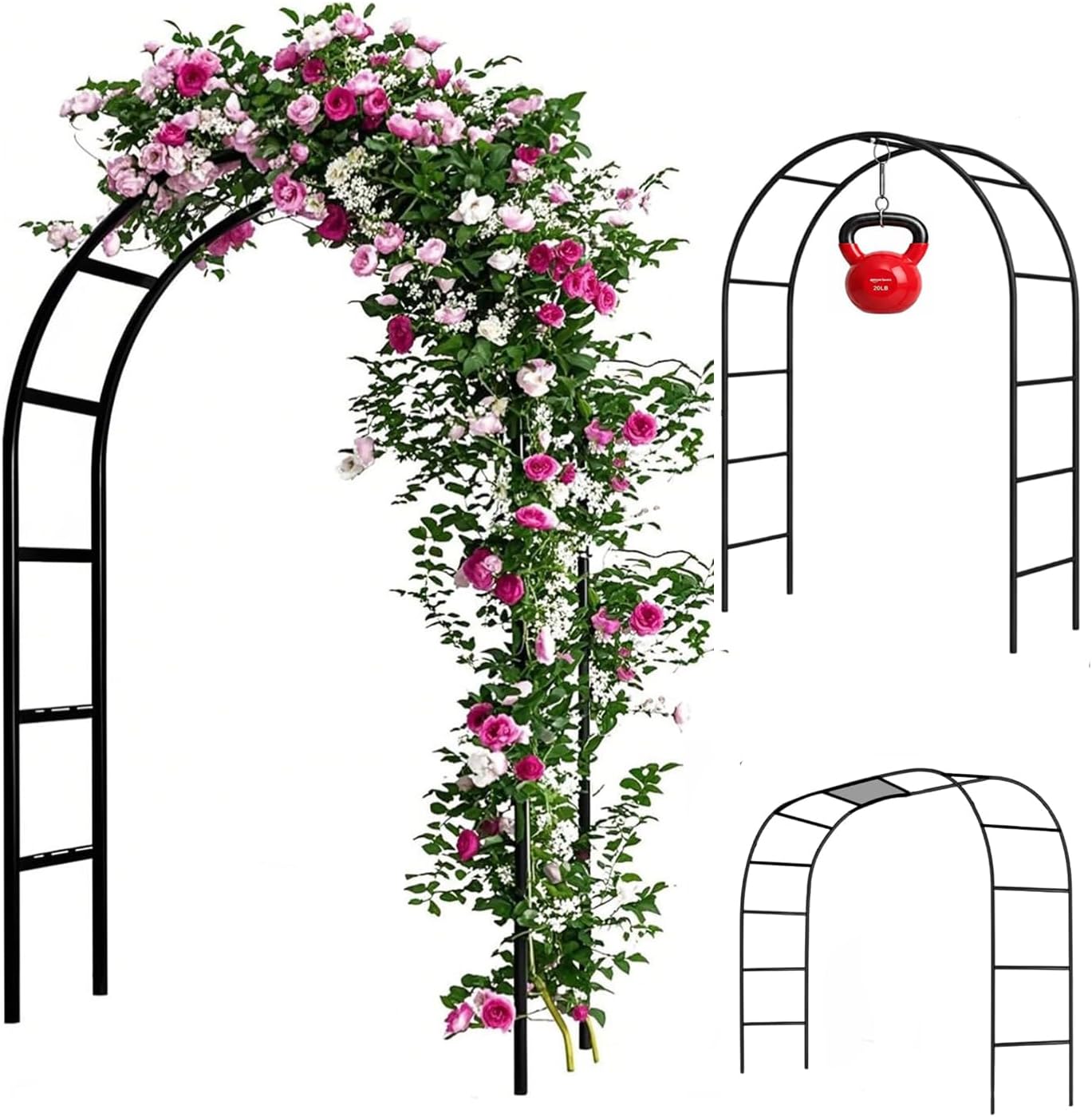
This Adorox garden arch is a straightforward metal arbor that gives climbing roses, clematis, vines, or seasonal decorations a neat vertical framework. It arrives as sectional metal pieces with a powder-coated finish and assembles in simple steps to create a single arched entrance or focal point for a walkway, garden bed, or event backdrop. The open-frame design lets plants weave through the bars and provides height without blocking sightlines, while the powder coating helps resist rust in typical outdoor conditions. Because it is relatively lightweight and sectional, it is easy for two people to position and plant around, and it is also simple to dress with string lights or fabric for celebrations. Expect to secure it into the ground or use anchors before loading with heavy mature vines, since the slim metal sections will perform best when planted with lighter to moderate climbers rather than very heavy, established growth. Assembly is convenient but may require basic tools and a second person to steady the arch while tightening connections.
Best for: Buyers who want an attractive, easy-to-install arch to add vertical interest and support for climbing plants or seasonal decor, and who prefer a straightforward product with visible user feedback to inform the choice.
Less Ideal for: Gardeners seeking a heavy-duty permanent arbor to bear large mature vines or climbing shrubs should look for a sturdier, commercial-grade structure with integrated anchoring.
- Simple sectional design that is easy to assemble and position
- Powder-coated metal finish improves resistance to outdoor corrosion
- Open-arch framework allows vines and flowers to weave naturally and creates visual height
- Lightweight enough for two people to handle and decorative enough for events or pathways
- Relatively lightweight construction needs anchoring before supporting heavy, mature vines
- No built-in ground stakes or heavy bases included for long-term high-wind stability
Verdict: A lightweight, powder-coated metal arch that quickly creates a decorative entry or plant support for garden paths and small to moderate climbers.
Adorox Garden Arch Trellis — White Powder-Coated Metal Arbor

| Material Type | Metal |
|---|---|
| Finish Type | Powder Coated |
| Product Style | Garden |
| Shape | Single Arch |
This Adorox garden arch is a lightweight, sectional metal arbor that provides a decorative framework for climbing roses, clematis, and other vines. It assembles from multiple pieces and is intended to stand over a path or bed to create an entrance or focal point; once secured in place it gives plants something to weave through and climb. The powder-coated finish helps resist light weathering and keeps the white look tidy in a variety of garden styles. Because the frame is open and unobtrusive it works well as a backdrop for flowering roses without overshadowing the plants. The main limitations are its light construction and modest size, which means very heavy or extensively trained rose canes will need additional support and careful anchoring. Expect to reinforce the base if you live in windy conditions and plan regular touch-ups to prevent long-term corrosion in harsher climates.
Best for: Home gardeners who want an attractive, easy-to-assemble arch to display climbing roses or vines and who prefer low-risk, straightforward garden additions that do not require heavy structural work.
Less Ideal for: Gardeners training large, heavy or highly ramified rose varieties or those needing a permanent, load-bearing arbor for mature plants should consider heavier-duty steel or timber structures instead.
- Powder-coated metal finish offers basic corrosion resistance and a clean white look
- Open arched design lets climbing roses weave naturally and remain visible
- Sectional frame for relatively straightforward home assembly
- Lightweight design is easy to position and relocate in the garden
- Lightweight construction may not support very heavy or mature rose canes without reinforcement
- No ground anchors included so additional anchoring hardware is required for stability
Verdict: A lightweight, powder-coated metal arch that gives climbing roses an attractive, easy-to-install focal frame for small to medium plantings.
Choosing the Right Trellis for Roses: Key Factors to Consider
Material and Corrosion Resistance
The trellis material determines how long it will hold up when exposed to water, sun, and soil contact. Metal options offer high strength but vary in coating quality; powder-coating or galvanized finishes resist rust better than bare steel. Wooden trellises have a warm look but need rot-resistant species or preservative treatment, and painted wood will require periodic maintenance.
Material choice also affects how heavy a mature rose the structure can support. Thicker gauge metal or hardwood posts handle larger rambling roses without noticeable deflection. Consider local climate when choosing materials: coastal or humid areas need higher corrosion resistance, while dry inland gardens can get away with less protective finish.
Size and Scale Relative to Rose Type
Match trellis height and width to the growth habit of your roses. Short obelisk-style supports suit smaller patio roses or short climbing roses, while tall wall-mounted or arch trellises are appropriate for vigorous ramblers and large climbers. Width matters for lateral training; a narrow trellis concentrates canes and can cause crowding, whereas a broader structure allows you to spread canes and encourage more lateral flowering.
Also think about how the trellis will fit into the surrounding landscape. An oversized trellis can dominate a small bed, while an undersized support can force repeated re-training and heavy pruning. Plan for future growth so you do not need to replace the trellis as plants mature.
Anchoring Method and Soil Conditions
Anchoring determines whether a trellis will stay upright under wind and the weight of a mature rose. Some trellises are designed to be staked directly into the soil, others bolt to walls or fences, and heavy free-standing units require concrete footings. Loose or sandy soils will need deeper anchors or wider footings to prevent tipping.
If you rent, wall-mounted options or removable stake systems let you add support without permanent concrete. Conversely, permanent plantings in exposed sites often benefit from fixed, well-anchored installations because they minimize long-term maintenance and resettling.
Ease of Training and Access for Pruning
Good trellis design makes it simple to weave, tie, and prune canes without damaging them. Large grid openings or widely spaced horizontal slats let you weave canes neatly and allow air and light to reach the center of the plant, reducing disease risk. Narrow lattices or decorative patterns can trap stems and complicate pruning.
Also consider whether you can reach the interior of the plant for seasonal pruning and winter inspections. Trellises that allow easy access make training less labor-intensive and help you maintain plant health over time.
Aesthetics and Landscape Fit
The trellis should complement your roses and garden design. Some gardeners want a structure that fades into the background to emphasize blooms, while others choose a bold architectural piece as a focal point. Finish color, profile, and detailing influence how the trellis reads with different rose colors and surrounding plantings.
Think about seasonal appearance too. A trellis that looks attractive in winter when bare stems remain will add year-round interest. Balance aesthetics against practical needs so style does not compromise function.
Best Trellis Shapes for Different Rose Habits
Different trellis shapes suit different training styles. Upright panels and arbors work well for formal training against walls or fences, giving a flat plane to tie canes horizontally. Arches and obelisks create vertical focal points and are ideal for shorter climbers or for guiding canes over a path. Freestanding arches can also form gateways covered in roses, distributing weight across two supports.
Horizontal wires and ladder-style trellises encourage lateral growth and can increase bloom production on repeat-flowering roses by exposing new shoots to light. When selecting a shape, plan how you will secure canes and whether the form allows routine pruning and tying without excessive strain.
- Flat panels are best for espaliered or wall-trained roses
- Obelisks and cones suit smaller climbers and shrub roses
- Arches and arbors provide passageways and broad support
- Wire or ladder systems promote lateral flowering on repeat bloomers
Installing a Trellis Safely
Safe installation begins with locating underground services and choosing a position that balances sun exposure and wind protection. Dig holes deep enough for the trellis posts and use gravel for drainage in wet soils. For heavy structures or windy sites, set posts in concrete footings to prevent looseness over time.
Use appropriate fasteners when attaching to walls or fences and check that the substrate can take the load of a mature rose. After planting, allow a season for the rose to establish before tying heavy canes to the trellis to avoid pulling the root system.
- Check for buried utilities before digging
- Use concrete footings for tall or heavy trellises
- Allow the rose to settle before training heavy canes
- Use flexible ties to avoid girdling stems
Training Techniques for Long-Lived Climbers
Start training young canes by fastening them near the base and gradually securing successive growth. For long-lived climbers, tie canes loosely to permit trunk thickening and adjust ties seasonally so stems are not constricted. When replacing older canes, tie new shoots slightly lower to take on future load.
Spread canes horizontally when possible to encourage more bloom spurs. When a cane needs to be shortened, cut back to an outward-facing bud to promote an open vase-shaped framework that improves air flow and reduces disease pressure.
- Begin training early with loose ties
- Retie canes annually to prevent constriction
- Favor horizontal layout to increase blooms
- Prune to outward-facing buds for open structure
Winter Care and Durability
Consider how the trellis will behave in winter. Some materials become brittle in cold climates, while metal can contract and loosen fasteners. Where heavy snow or ice is likely, choose a form that sheds weight easily or can be temporarily relieved by unfastening some ties.
Inspect connections and coatings each spring and perform light maintenance like tightening bolts and touching up paint where needed. Proper winter preparation and periodic checks extend a trellis's useful life and prevent midseason failures when roses are heavy with bloom.
- Select materials suited to local winter conditions
- Design allows shedding of snow and ice
- Inspect and maintain fasteners each spring
- Loosen or remove some ties in severe storms
Blending Trellises with Companion Plantings
Use lower-growing perennials or groundcovers at the base of a trellised rose to hide anchors and create a layered look. Choose companions that do not compete aggressively for water and nutrients. Plants that bloom at different times extend seasonal interest around the trellis.
Be mindful of root spread and maintenance needs. Avoid vigorous shrubs too close to the trellis, as they can complicate access for pruning and create crowded conditions that encourage pests and disease.
- Select low-maintenance, non-competitive companions
- Layer seasonal bloom times for extended interest
- Leave access space for pruning and inspection
- Avoid dense shrubs directly adjacent to the trellis
How We Chose the Best Trellis for Roses
We shortlisted trellises for roses using criteria that reflect how these supports perform in real gardens. Durability under load was a primary filter because climbing roses can become heavy when in full bloom; we favored designs and materials that resist bending and corrosion. Attachment and training options were assessed for how easily canes can be tied or woven without damage, and whether the trellis accommodates pruning and seasonal adjustment. Stability and anchoring were evaluated for typical yard winds and soil types, including options that can be staked, bolted to walls, or set in concrete. Weather resistance covered coating, rot resistance, and maintenance needs so a trellis stays serviceable for multiple seasons. Finally, aesthetics and scale were considered to ensure a trellis fits common rose types from ramblers to repeat-blooming climbers. We excluded lightweight decorative screens and temporary garden panels that lack the structural strength needed for mature climbing roses. We also set aside specialized engineered systems designed for commercial trellising where installation and maintenance differ from home gardens. The resulting list focuses on durable, garden-appropriate trellises that balance strength, plant access, and visual impact.
FAQ
How high should a trellis be for climbing roses?
Height depends on the rose type. Many climbers do well on trellises 6 to 8 feet tall, while vigorous ramblers may need 10 feet or more. Choose a height that matches mature cane length and leaves room for training and pruning.
Can I attach a trellis directly to a brick or siding wall?
Yes, provided the wall can bear the load. Use appropriate masonry anchors or through-bolts and spread attachment points to distribute weight. Inspect the wall for structural soundness before fastening.
What is the best way to tie rose canes to a trellis?
Use soft, flexible ties that will not cut into the stem, and tie loosely to allow stem growth. Secure canes at multiple points as they lengthen and retie annually to prevent girdling as the cane thickens.
Do wooden trellises last in wet climates?
Wooden trellises can last if you choose rot-resistant species or treated wood and keep the base clear of constant soil contact. Regular maintenance such as repainting or re-sealing will extend life, but metal options generally need less upkeep in wet sites.
Will a trellis reduce disease in roses?
A trellis that encourages an open structure and improves air circulation can reduce fungal disease pressure. Proper spacing of canes and avoiding dense mats of foliage are important, though trellising alone does not eliminate the need for good cultural care.
Can I move a trellis after installation?
Temporary or staked trellises can be repositioned, but heavy freestanding units set in concrete are harder to move. Plan placement with future garden changes in mind if you anticipate relocating supports.
Final Verdict
When choosing a trellis for roses, prioritize structural strength, suitable size for the rose habit, and a secure anchoring method that matches your soil and exposure. Balance material and aesthetic preferences with maintenance needs so the structure remains serviceable across seasons. By focusing on durability, ease of training, and proper installation, you will create a support that encourages healthier plants and more reliable blooms.
