

Note: This article contains affiliate links. If you click on these links and make a purchase, I may earn a small commission at no extra cost to you. This helps support my research and content. Read my full affiliate disclosure here.
If you grow snap peas, the right trellis changes how productive and manageable your rows will be. A well-chosen trellis keeps vines off the ground, improves air flow to reduce disease, and makes picking pods faster and cleaner. This guide covers the top shortlisted trellis options for snap peas, explaining why each type made the cut and how we evaluated structural strength, ease of setup, and garden fit. Use the evaluation notes and practical tips below to pick a trellis that matches your garden space, planting style, and workload. Read on for clear buying guidance and practical setup advice before the product list.
Top Picks at a Glance
| Best Overall The best all-around choice for most situations | PyraLine 50" x 17" Heavy-Duty Steel A-Frame Garden Trellis (1 Pack) |  |
| Best Quality Built to a higher standard if you want something more solid | HIHADUUM 2-Pack 50" A-Frame Metal Trellis for Climbing Plants |  |
| Best Budget The cheapest option that still gets the job done reliably | Tcamp Heavy-Duty Polyester Trellis Netting, 5 x 15 ft, 6" Mesh |  |
| Most Popular A crowd favorite that many people choose with confidence | VIVOSUN 5×5 ft Elastic Trellis Netting with 4 Rust‑Proof Hooks |  |
| Best Seller A high-volume bestseller chosen again and again | Generic Heavy-Duty A-Frame Cucumber Trellis, 2-Pack (Galvanized Steel) |  |
PyraLine 50" x 17" Heavy-Duty Steel A-Frame Garden Trellis (1 Pack)
| Material | Steel |
|---|---|
| Finish | Powder Coated |
| Shape | A-Shape |
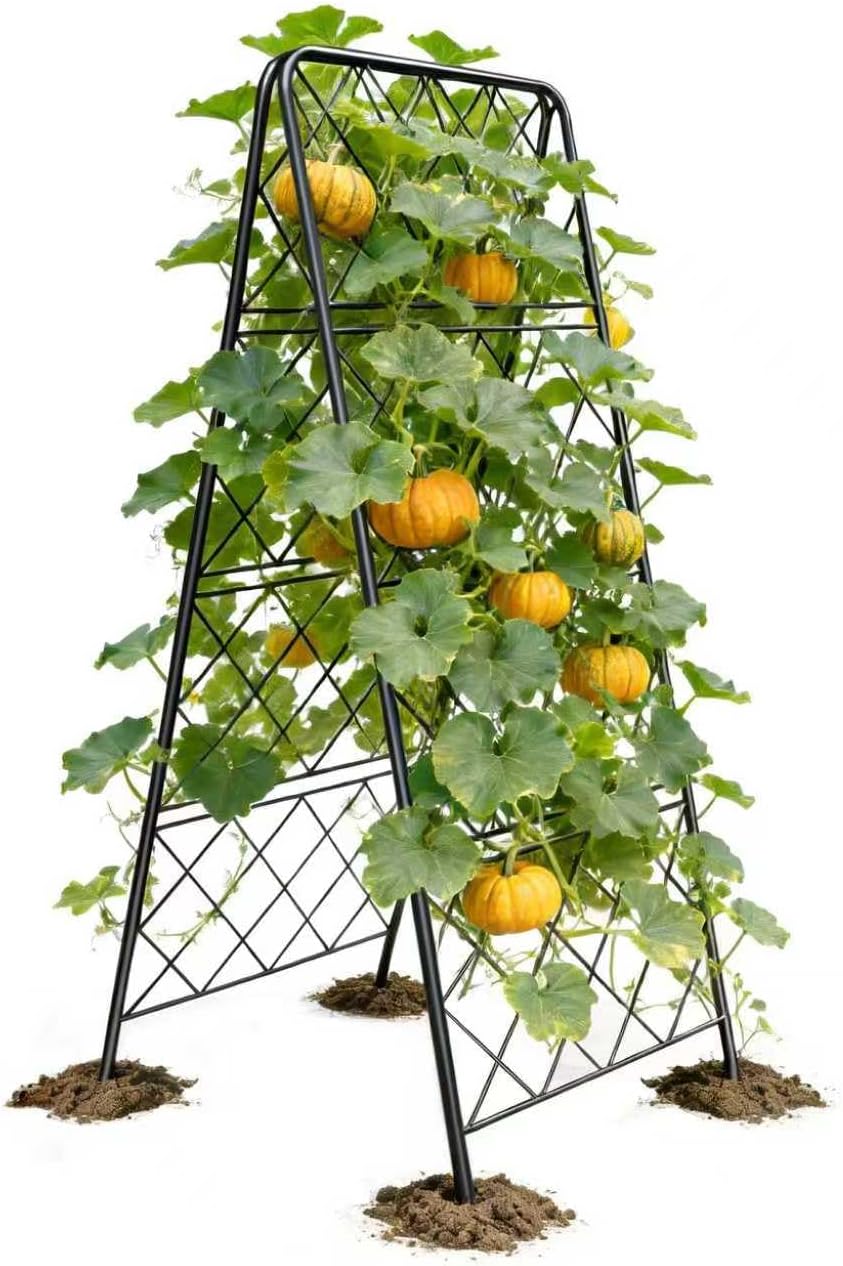
This PyraLine A-frame trellis is a one-piece, powder-coated steel support designed to hold heavy vines and fruiting crops. It sets up as a stable A-frame with high-density rhombus steel grids that distribute weight across the panel, so cucumbers, tomatoes, beans, and even small melons can climb without overly stressing individual bars. The hinge is factory-fused rather than bolted, which keeps the frame rigid under load and reduces the need for periodic tightening. The trellis adjusts from a low height to full 50 inches as plants grow and then folds flat for compact storage after the season. Practical benefits include strong wind resistance from the thick steel frame, rust protection from the powder coating, and quick deployment in raised beds or containers. Limitations are that it is a single-panel solution so larger climbs may require multiple units or additional anchoring, and its steel construction makes it heavier to move compared with lightweight bamboo or plastic supports.
Best for: Gardeners who prioritize long-lasting, load-bearing plant supports and want a sturdy, low-maintenance trellis for heavy fruiting vines in raised beds or containers.
Less Ideal for: People who need long continuous trellis runs, extremely lightweight temporary supports, or those who prefer completely tool-free, ultra-light structures for annual annuals.
- High-density rhombus steel grid evenly distributes plant weight and reduces sagging
- Factory-fused one-piece hinge increases rigidity and stays solid under heavy vines
- Powder-coated steel finish resists rust, UV, and outdoor weathering
- Collapses flat for compact off-season storage
- Single 1-pack panel may require multiple units for longer trellising runs
- Heavier steel construction is less portable than bamboo or plastic options
Verdict: Buy this trellis if you need a durable, rust-resistant steel support that holds heavy cucumbers and tomatoes upright season after season.
HIHADUUM 2-Pack 50" A-Frame Metal Trellis for Climbing Plants

| Number of Packs | 2 |
|---|---|
| Material Type | Iron, Metal |
| Finish Type | Powder Coated |
| Shape | A-Shape |
| Size | 50" X 17" |
This two-pack of A-frame trellises gives home gardeners a heavy-duty, space-saving way to train cucumbers, beans, tomatoes and other vining crops. The frames are powder-coated iron with a reinforced 1 cm outer frame and solid steel support bars, so they stay upright under load and resist bending in wind. The 5.3 x 6.1-inch grid balances airflow with plenty of places for tendrils to grab, while the modular adjustable design lets you change height and stack or pair frames across raised beds. Setup is straightforward because the frames unfold and lock without extra hardware, and the kit includes 20 plant clips, twist wire and garden tape so you can secure vines immediately. Practical limitations are that the A-frame footprint is fairly narrow, so it is best for rows or raised beds rather than wide sprawling plants, and the metal construction will still need occasional inspection for surface wear over many seasons. Packed flat for offseason storage, these trellises are a durable, low-effort support solution for backyard vegetable plots.
Best for: Gardeners who want a reliable, low-maintenance trellis for raised beds or row planting and value durability and easy setup over decorative features.
Less Ideal for: People growing very wide-spreading squash, pumpkins, or large melons that need broader horizontal support should consider larger or ground-level supports instead.
- Reinforced powder-coated steel frame for good stability and rust resistance
- Adjustable, modular A-frame design that folds flat for storage
- Grid spacing that promotes airflow while providing multiple attachment points
- Includes accessory kit with plant clips, twist ties and tape for immediate use
- Sturdy enough to support heavy vine loads like cucumbers and tomatoes
- Narrow 17" footprint limits use with very wide or sprawling plants
- Metal finish may require occasional inspection for surface wear over many seasons
Verdict: A sturdy, ready-to-use two-pack trellis that delivers durable vertical support and easy setup for backyard vegetable growers.
Tcamp Heavy-Duty Polyester Trellis Netting, 5 x 15 ft, 6" Mesh

| Material Type | Nylon, Plastic |
|---|---|
| Size | 6" Mesh, 5 x 15 Ft (1-Pack) |
| Finish Type | Unfinished |
This Tcamp trellis netting is a simple, budget-friendly support for climbing vegetables and flowering vines. Made from heavy-duty nylon with 6 inch square openings, the netting is sold as a single 5 x 15 foot panel that can be cut to size and used vertically or horizontally. Typical uses include draping it between posts for snap peas, tying it to a fence, or attaching it to a frame for vertical training. The soft nylon is easy to handle, resists tangling, and is gentle on stems so it will not damage tendrils or young shoots. Its advertised breaking strength and commercial-grade construction mean it can carry dense pea vines during peak production, and the vacuum-packed panel is compact to store. Limitations are that the mesh size is on the larger side for very small seedlings or micro-climbers and it requires a separate frame, posts, or strong anchor points for reliable tension and longevity in windy sites.
Best for: Pea growers who want an inexpensive, easy-to-install support for standard snap peas and value a reusable, flexible netting solution.
Less Ideal for: Gardeners seeking a complete freestanding trellis system or those growing very small-climbing varieties that need finer mesh spacing.
- Heavy-duty nylon construction suitable for supporting heavy pea vines.
- 6 inch square mesh that lets tendrils climb without cutting into stems.
- Flexible panel can be cut to size and used vertically or horizontally.
- Soft, nonabrasive material that is safe for plants, children, and wildlife.
- Requires posts, frame, or anchors because it is sold as the netting only.
- 6 inch mesh may be too large for very young seedlings or tiny climbers.
Verdict: A cost-effective, heavy-duty nylon trellis panel that provides simple, reusable support for snap peas when paired with basic posts or anchors.
VIVOSUN 5×5 ft Elastic Trellis Netting with 4 Rust‑Proof Hooks

| Size | 5×5 ft stretched |
|---|---|
| Mesh size | 3.9" x 3.9" |
| Material | Elastic polyester |
| Hooks included | 4 rust‑proof S hooks (22 mm) |
This VIVOSUN trellis is a lightweight, elastic net intended to give climbing plants a grid to latch onto and to keep vines organized. It ships as a 5 x 5 ft net with four rust‑proof S hooks so you can wrap or attach it to poles, fences, or grow‑tent frames and then pull it taut. The elastic 3 mm thread and 3.9" square mesh make it easy to weave pea tendrils or train young snap pea stems while still leaving enough room to pick pods and prune. Because the material stretches, it accommodates plant movement and can carry the weight of vegetables and flowers without sagging when properly tensioned. The net is reusable and can be cut to size so leftovers work for another bed. Limitations are that the product is relatively small for large beds and relies on an external frame or stakes for anchoring rather than standing on its own, and very heavy fruit loads may require additional support.
Best for: Gardeners who want an easy, low‑effort way to train snap peas and other vining vegetables in small plots or grow tents and who value tested, durable components.
Less Ideal for: Growers needing a freestanding or very large trellis solution for long rows or heavy fruiting vines should consider sturdier frame-based systems.
- Elastic polyester material stretches to accommodate plant growth and movement
- Included rust‑proof S hooks simplify mounting to frames or poles
- 3.9" square mesh provides room to weave and harvest snap peas without obstruction
- Reusable and can be trimmed to fit different trellis sizes
- Requires a separate frame, fence, or stakes for proper tension and support
- 5 x 5 ft size may be small for larger garden rows or beds
Verdict: A compact, elastic trellis that makes training and harvesting snap peas simple for small beds and indoor grow setups.
Generic Heavy-Duty A-Frame Cucumber Trellis, 2-Pack (Galvanized Steel)

| Material Type | Metal |
|---|---|
| Finish Type | galvanized steel |
| Number of Packs | 2 |
| Shape | A-shape, Rectangular |
This two-pack of galvanized-steel A-frame trellises is designed to give quick, sturdy vertical support for cucumbers, peas, beans and similar vining vegetables. The panels arrive ready to use with no assembly required and connect together with supplied springs and twist ties so you can make a wider span by pairing units. The metal grid and galvanized finish resist rust for outdoor use and the A-frame shape provides stable support for fruiting vines while allowing airflow and easier harvesting. Practical benefits include quick setup straight out of the box, compact folding for off-season storage, and compatibility with raised beds or small plots. Important limitations are the modest height and single-panel width per unit, which means very heavy gourds or large pumpkins may need additional bracing or multiple units chained together; the panels also have sharp edges so careful handling and secure anchoring in windy sites are necessary. If you want a simple, low-maintenance way to add vertical space for common garden vines, these trellises do the job with minimal fuss.
Best for: For gardeners who prefer low-effort, reliable support for common climbing vegetables and want something ready to install without tools or complex setup.
Less Ideal for: Not the best choice for growers of very large melons or pumpkins who need extra height and heavy-duty bracing, or for landscapers seeking decorative trellis styles.
- No assembly required so units are usable straight from the box
- Galvanized steel grid offers rust resistance for outdoor seasons
- A-frame design gives stable, breathable support for climbing vegetables
- Includes connectors and ties to join panels for wider coverage
- Folds flat for compact storage when not in use
- Height and single-panel width limit support for very large or heavy fruiting vines
- Edges can be sharp and require careful handling during installation
Verdict: A simple, no-assembly galvanized-steel trellis pair that quickly adds durable vertical support for everyday vining vegetables.
Choosing the Right Trellis for Snap Peas: Key Factors to Consider
Support Strength and Anchoring
Snap pea vines are lightweight individually but can become heavy collectively once pods form and after rain. A trellis must resist bending and tipping so vines are held upright throughout the season. Consider materials and construction: solid posts and taut crosslines keep the structure rigid and prevent sagging that lets vines sprawl.
Anchoring matters as much as the frame. In windy or exposed sites, stakes driven deep or ground anchors prevent the trellis from leaning. For soft or recently turned soil, broader footings or guy lines reduce the chance of pull-out when vines are loaded.
Attachment Surface and Climbability
Peas climb best when they have something to twine around. Netting, horizontal wires, or closely spaced slats provide the surfaces peas need to grab. Wide mesh or smooth surfaces can frustrate tendrils and force plants to scramble along the ground instead.
Also check how you will secure the mesh or lines to the frame. Knotted netting, tied twine, or reusable clips each have different effects on long-term maintenance and on delicate stems during harvest.
Height and Access for Harvesting
Choose a trellis height that keeps most of the vine within comfortable reach for picking. Taller trellises increase vertical space for vines but can make harvest awkward and require longer poles for stability.
If you plan recurrent harvests, prioritize designs that allow easy access to pod clusters without dislodging neighboring vines. Removable panels or a single-sided face can make picking simpler and reduce accidental snapping of branches.
Durability and Weather Resistance
Trellises are exposed to sun, rain, and frost. Materials that resist rot, rust, and UV degradation extend the useful life of the structure. Pressure-treated or naturally rot-resistant wood, coated metal, and UV-stable synthetic netting are common durable choices.
Also think about how moisture and freezing temperatures affect joints and fasteners. Corrosion-resistant hardware and designs that shed water reduce maintenance and the likelihood of midseason failure.
Storage, Portability, and Seasonal Use
Many gardeners put up trellises only for the growing season and store them afterward. Lightweight, foldable, or easily disassembled trellises reduce winter storage headaches and allow flexible garden layouts.
Portability also matters if you rotate crops or move beds. Frames that can be left in place but have replaceable netting make seasonal chores easier and let you reuse good hardware across years.
Space Efficiency and Garden Layout
How much horizontal and vertical space a trellis occupies affects row spacing and companion planting. Narrow-footprint trellises maximize bed real estate in small gardens while A-frame or broad trellises can serve double duty as a support and light screen.
Consider the sun path and plant shading when situating a trellis. Tall structures can cast shade at certain times of day, so position them to avoid shading shorter crops or to provide deliberate afternoon shade where beneficial.
Trellis Types and When to Use Them
Different trellis styles suit specific garden situations. Vertical netting or single-face frames work well along fences or narrow beds where you want to use vertical space without sacrificing width. A-frame or tunnel trellises spread the weight across two faces and are useful for heavier crops or where you want a walk-through planting.
Free-standing pole-and-line systems let you create long continuous runs and make removing netting simple at season end. Wooden lattices add stability and a neater look but require more permanent installation.
- Vertical netting: compact footprint and easy to install.
- A-frame: dual-sided growth and easier harvest from either side.
- Pole-and-line: flexible length and easy seasonal removal.
- Lattice: sturdy and visually tidy for permanent beds.
Materials: Pros and Cons in the Garden
Wood offers a natural look and good rigidity but can rot over several seasons unless treated or naturally rot-resistant. Metal frames are strong and slim but need corrosion-resistant coatings to last outdoors. Synthetic netting is lightweight and often UV-stable, though lower-grade plastics can sag under load.
Match material choice to how you use the trellis. If you want a long-term structure, choose corrosion-resistant metal or rot-resistant wood. For temporary or movable trellises, lightweight poles with replaceable netting minimize storage space and cost.
- Rot-resistant wood: natural appearance, needs occasional maintenance.
- Coated metal: slim profile and strong support, check coatings.
- Synthetic netting: light and flexible, verify UV resistance.
- Natural fibers: biodegradable but may degrade midseason in wet climates.
Practical Setup Tips for Better Results
Install trellises at planting or when vines are young. Early support encourages upward growth and reduces the time plants spend scrambling. Drive posts into firm soil and tension netting or lines so there is minimal sag when vines are mature.
Train young plants by loosely attaching stems to the support or gently weaving tendrils into the mesh. Maintain even spacing when planting so each stem has a chance to climb without overcrowding.
- Set posts deep and use anchors for exposed sites.
- Tension netting to avoid sag under wet weight.
- Train vines early to prevent matting on the ground.
Maintenance and Seasonal Care
Inspect fasteners, ties, and netting midseason and tighten or replace anything showing wear. After harvest, remove plant debris to reduce disease carryover and examine the structure for rot or corrosion so repairs can be made before winter.
Store removable netting and lightweight frames in a dry place to prolong life. For permanent installations, perform an end-of-season check of posts and coatings and apply protective treatments if needed.
- Clean away plant debris to lower disease risk.
- Dry and store netting to prevent mold.
- Replace damaged ties and retension lines annually.
Designing Trellises for Small Spaces
Small plots benefit most from narrow, tall trellises that use vertical space without reducing bed width. Wall-mounted or fence-attached netting is an efficient option. Consider staggered plantings so you can rotate crops and avoid shading smaller companions.
Portable frames that fold flat are particularly useful for balcony or patio gardeners who may need to move supports seasonally or store them during winter.
- Use narrow-footprint vertical supports for tight beds.
- Attach netting to existing fences to save space.
- Choose foldable frames for balconies and patios.
How We Chose the Best Trellis for Snap Peas
We focused on criteria that matter when supporting snap pea vines rather than general ornamental trellises. Structural strength and load capacity were primary filters because mature snap pea vines can be heavy with pods and rain. Ease of setup and take-down was evaluated for gardeners who need seasonal storage or quick planting. Durability in outdoor conditions and resistance to rot or corrosion were assessed for repeated seasonal use. Plant compatibility and attachment options were judged to ensure peas can climb naturally and that nets, twine, or clips work effectively. Footprint and space adaptability were considered so recommendations fit narrow rows, raised beds, or larger plots. We excluded structures intended only for heavy perennial vines or strictly decorative screens that do not offer practical attachment points. We also excluded temporary solutions that lack sufficient anchoring for windy or wet conditions. The remaining selections meet our structural and horticultural thresholds and perform well across common garden setups.
FAQ
How tall should a trellis be for snap peas?
Most gardeners choose trellises between 4 and 6 feet tall. Height depends on pea variety and harvesting comfort. Taller trellises give more vertical yield but may require stronger anchors and make picking the top pods harder.
Can I reuse trellis netting from year to year?
Often you can reuse netting for several seasons if it is UV-stable and stored dry over winter. Check for fraying, stretched mesh, or brittleness before reinstalling, and replace any degraded sections to prevent sagging.
Is it better to train peas to a single face or both sides of a trellis?
Training to a single face maximizes exposure and simplifies harvesting in narrow beds. Using both faces increases planting density and overall yield but can make harvesting more fiddly and may require a wider footprint or an A-frame design.
How do I prevent a trellis from blowing over?
Drive posts deeper into the ground, use thicker posts, or add ground anchors or guy lines for wind-prone areas. Tensioning the netting and distributing weight evenly across the frame also reduces wind stress.
What is the easiest trellis to set up for a beginner?
A simple vertical netting system attached to two sturdy posts is usually the easiest. It requires minimal tools, is quick to install, and can be reused or removed easily for seasonal storage.
Final Verdict
Choose a trellis that balances strength, climbability, and ease of use for your garden layout. Prioritize support and anchoring where wind or heavy rains are likely, and favor attachment surfaces that give pea tendrils something to grasp. For small gardens, narrow vertical systems save space, while A-frames or sturdy lattices work well when you need extra capacity. Decide which tradeoffs matter most to you-portable and lightweight versus permanent and rigid-and pick the trellis type that matches your planting style and maintenance plans. With the right support, snap peas spend less time on the ground and more time producing clean, easy-to-harvest pods.
