

Note: This article contains affiliate links. If you click on these links and make a purchase, I may earn a small commission at no extra cost to you. This helps support my research and content. Read my full affiliate disclosure here.
A healthy lawn starts under the surface. The right soil tester for lawns helps you identify pH imbalances, moisture issues, and nutrient gaps before they show up as brown patches or thin turf. In this guide we shortlisted the five best options that suit typical yard sizes and routine maintenance plans, then evaluated them for accuracy, ease of use, and durability. You will find tools that work with handheld probes and simple meters as well as models suited to frequent seasonal testing. Below we explain how each device performs in real lawn care, what matters when you test, and which features make routine soil checks faster and more reliable.
Top Picks at a Glance
| Best Overall The best all-around choice for most situations | Soil Test Kit 140 Tests — pH, Nitrogen, Phosphorus, Potassium & Ammonia |  |
| Best Quality Built to a higher standard if you want something more solid | MySoil Test Kit PRO Pack — 2 Mail‑In Soil Tests with Soil Probe |  |
| Best Value The sweet spot between price and what you get | HSLGOVE 7-in-1 Soil Test Kit with Dual Screen: Moisture, pH, Fertility, Temp, Light, Humidity |  |
| Best Budget The cheapest option that still gets the job done reliably | SONKIR MS02 3-in-1 Soil Moisture, pH and Light Tester |  |
| Highest Rated A top-rated pick with lots of positive feedback | MySoil Professional Mail‑In Soil Test Kit (1 Test) |  |
Soil Test Kit 140 Tests — pH, Nitrogen, Phosphorus, Potassium & Ammonia

| Tests included | pH, Nitrogen, Phosphorus, Potassium, Ammonia |
|---|---|
| Total tests | About 140 |
| Manufacturer | Dewilde Trading Co |
This liquid soil test kit is built for routine fertility checks on lawns and gardens, offering about 140 individual tests across pH, nitrogen, phosphorus, potassium and ammonia. You use small soil samples, mix them with reagents, and compare color changes to supplied charts to get quick, on-site readings. The kit’s biggest practical benefit is coverage: multiple parameters in one kit mean you can diagnose common nutrient imbalances and pH issues without sending samples to a lab. That makes it handy for planning lime or fertilizer applications and for checking results after treatment. The instructions appear updated for 2026 which should ease setup, and the included volume of tests supports seasonal monitoring across a small to medium lawn. Expect the usual limitations of colorimetric kits: results are good for directional guidance but less precise than laboratory assays, and accurate interpretation depends on following sample timing and mixing steps closely. For users who want fast, repeatable checks rather than lab-grade precision, this kit is a practical, cost-effective choice.
Best for: Homeowners and lawn care hobbyists who monitor turf fertility regularly and want a single, economical kit to guide fertilizer and lime decisions without sending samples to a lab.
Less Ideal for: Users needing laboratory-accurate nutrient concentrations for commercial production or research should use professional lab testing instead.
- Tests five key soil parameters (pH, nitrogen, phosphorus, potassium, ammonia) in one kit
- Large test count (about 140) supports repeated seasonal checks
- Liquid colorimetric method gives quick on-site results without lab turnaround
- Updated instructions intended to simplify use and reduce user error
- Color chart readings are inherently less precise than laboratory analysis
- Accurate results depend on strict adherence to timing and mixing procedures
Verdict: A practical, all-in-one kit for regular lawn fertility checks that gives fast, actionable results without lab costs.
MySoil Test Kit PRO Pack — 2 Mail‑In Soil Tests with Soil Probe

| Number of Packs | 2 |
|---|---|
| Tests Included | 2 single‑use tests |
| Analysis Coverage | 13 nutrients + pH |
| Turnaround | 6-8 days |
The MySoil Test Kit PRO Pack is designed to give a performance‑minded gardener lab‑grade soil data without needing in‑house equipment. You collect soil using the included 8 inch probe and sample jars, register each kit online, then mail the prepaid envelopes to the lab; results and tailored fertilizer recommendations (organic and nonorganic) arrive in about 6 to 8 days. The test analyzes 13 plant‑available nutrients plus pH, so it identifies specific deficiencies and prevents blanket treatments that waste time and money. For lawn use you can expect clear direction on nitrogen, potassium, and phosphorus needs and exact application rates. The kit is single‑use per test, so it is best for spot checks, seasonal sampling, or performance troubleshooting rather than continuous monitoring. Because samples are processed offsite the turnaround time means it is not for immediate, same‑day decisions, but the accuracy and actionable recommendations make it a solid tool for anyone focused on measurable turf improvement.
Best for: Gardeners and lawn caretakers who prioritize accurate, lab‑quality data and want actionable recommendations to improve turf performance and correct nutrient issues.
Less Ideal for: People needing instant on‑site readings or continual real‑time monitoring should consider handheld meters or probes that give immediate results.
- Laboratory analysis of 13 plant‑available nutrients plus pH for more accurate results than DIY meters or strips
- Includes 2 single‑use sample kits and an 8 inch soil probe for consistent, repeatable sampling
- Prepaid mailers and online results dashboard with clear, custom fertilizer and amendment recommendations
- Covers all soil types and typical lawn scenarios including turf, compost, and landscape soils
- Each kit is single‑use so ongoing monitoring requires purchasing additional kits
- 6–8 day turnaround from sample submission delays time‑sensitive decisions
Verdict: Choose this kit when you want lab‑grade nutrient and pH analysis plus clear, actionable recommendations to boost lawn performance.
HSLGOVE 7-in-1 Soil Test Kit with Dual Screen: Moisture, pH, Fertility, Temp, Light, Humidity

| Manufacturer | HSLGOVE |
|---|---|
| Item model number | 001 |
| Item Weight | 4.8 ounces |
| Product Dimensions | 11.5 x 2.9 x 1.5 inches |
This HSLGOVE 7-in-1 soil tester combines a probe meter and an LCD readout to give quick, on-the-spot measurements for moisture, pH, fertility, light and both soil and air temperature and humidity. You use it by inserting the probe into potting mix or garden soil and switching the dial to the desired mode; the LCD shows numeric readings in a few minutes. The unit’s multi-metal probe and dedicated modes make it convenient for routine checks across houseplants, vegetable beds and container gardens, so you can adjust watering, fertilizing and siting decisions with more confidence. Its strengths are ease of use, the consolidated readings on one compact tool and the visible LCD that displays both soil and ambient conditions. Limitations are that it is a probe-style meter not designed for testing liquids, it does not provide laboratory-level accuracy for pH or nutrients, and results can vary by soil type and probe insertion depth. For gardeners seeking a practical, all-in-one field tester for frequent checks, it is a useful everyday instrument.
Best for: Gardeners who want a single, easy-to-use tool to monitor watering, light and basic soil conditions across indoor plants and outdoor beds and prefer practical, frequent checks over lab testing.
Less Ideal for: Users who need laboratory-grade soil analysis, detailed nutrient breakdowns, or a contactless/remote monitoring solution.
- Measures seven parameters (moisture, pH, fertility, light, soil temp, air temp and humidity) from one device
- Dual-display design shows probe readings and ambient data on the LCD for quick interpretation
- Simple dial-and-button operation that delivers results in a few minutes
- Probe construction with multiple metals designed for durability and consistent contact in soil
- Probe-style testers are less precise than laboratory analysis for pH and nutrient levels
- Not suitable for testing liquids and requires consistent insertion depth for repeatable readings
Verdict: A convenient, all-in-one field tester for gardeners who want quick, practical readings of moisture, pH, fertility and environmental conditions to guide everyday plant care.
SONKIR MS02 3-in-1 Soil Moisture, pH and Light Tester
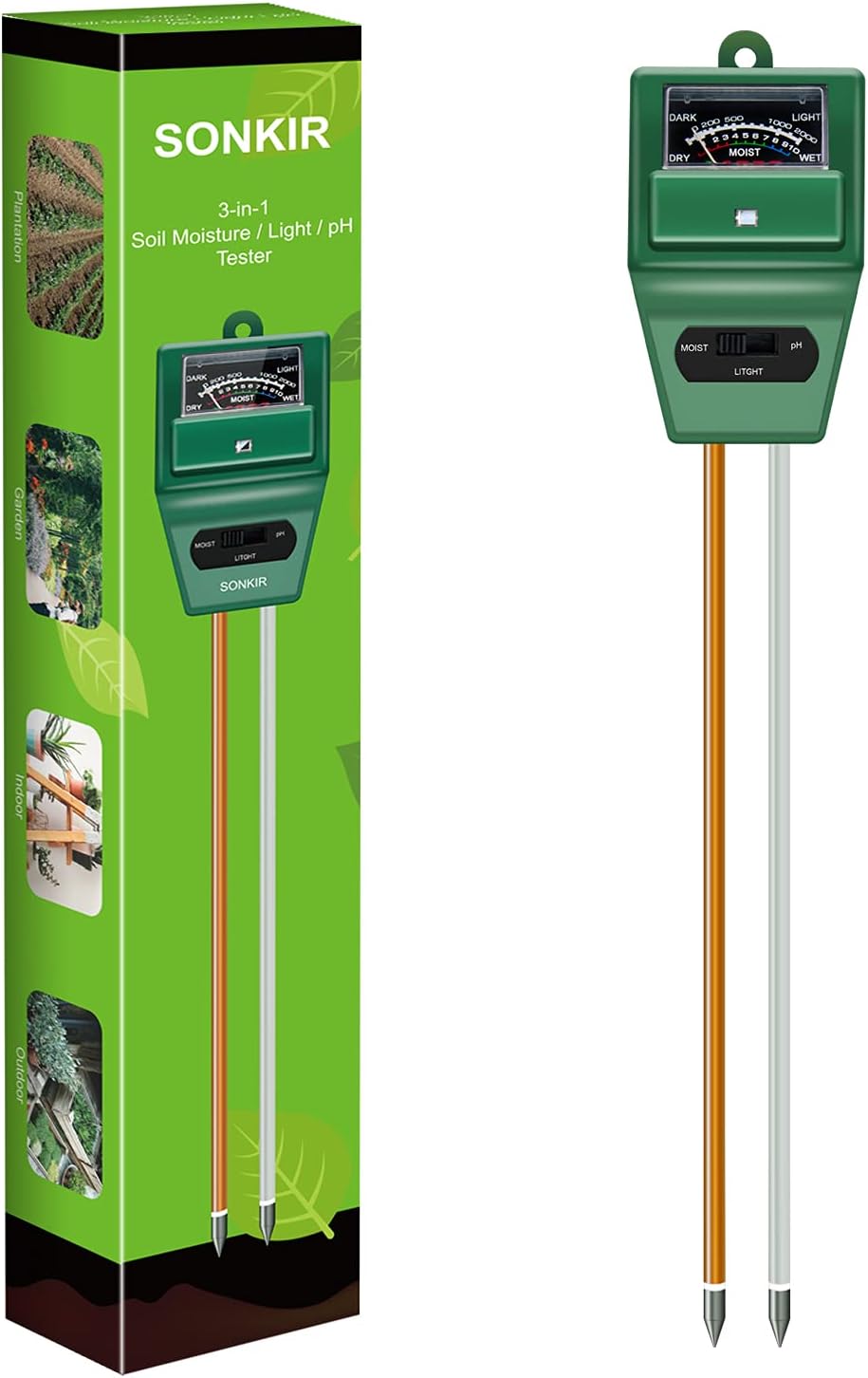
| pH range | 3.5-8 pH |
|---|---|
| Moisture range | 1-10 scale |
| Probe length | 7.9 inches |
| Power | No battery required |
The SONKIR MS02 is a handheld, no-battery soil meter that gives quick, visual readings of moisture, pH and sunlight to help you maintain healthier grass and garden plants. You switch the dial to the desired function, push the probe into the soil about 6 to 7 inches, wait roughly 10 minutes and read the needle on the analog display. The meter covers a practical pH range for lawns and gardens and shows moisture on a 1 to 10 scale so you can decide when to water. Its long probe and compact, lightweight body make it convenient for spot-checking multiple areas of a lawn or garden bed. Important limitations are that the pH probe is intended for soil only and the analog needle can be slow to move in very dry soils or close-to-neutral pH, so readings sometimes require rechecking after moistening the sample or testing several spots. The unit is best for gardeners who want an affordable, easy-to-use tool for routine soil checks rather than laboratory-accurate analysis.
Best for: Someone who wants an inexpensive, easy-to-use tool for routine soil checks across a lawn or garden and values practical, repeatable guidance over laboratory precision.
Less Ideal for: Users who need lab-grade pH or moisture measurements, continuous data logging, or digital readouts for precise record keeping should consider more advanced instruments.
- 3-in-1 functionality measures moisture, pH and sunlight without extra tools
- No battery required so it is always ready to use and low maintenance
- Long probe and compact form factor make spot checks across a lawn or garden quick
- Simple analog dial is straightforward for fast, at-a-glance decisions
- pH function is designed for soil only and cannot test water or other liquids
- Analog needle can be unresponsive in very dry soil or near-neutral pH, requiring repeated tests
Verdict: A straightforward, no-battery 3-in-1 tester that gives fast, practical soil moisture, pH and light checks for everyday lawn and garden care.
MySoil Professional Mail‑In Soil Test Kit (1 Test)
| Number of Packs | 1 |
|---|---|
| Unit Count | 1 Count |
| Manufacturer | Predictive Nutrient Solutions, Inc |
| Item Weight | 4.6 ounces |
The MySoil kit is a single‑use mail‑in soil test designed to give a professional laboratory analysis rather than an instant at‑home reading. You collect a sample in the included jar, register the kit online, mail the prepaid envelope to the lab, and get a detailed report in about 6–8 days. Results cover pH plus 13 plant‑available nutrients and include step‑by‑step recommendations for what to apply, how much, and when, with both organic and conventional options. That makes it useful for diagnosing lawn problems, planning fertilization for turf or vegetable beds, or checking soil before planting. The kit contains everything needed for one test and saves time by replacing guesswork with specific advice, which can reduce unnecessary product use. The main limitation is that each kit covers only a single sample, so testing multiple areas or repeated checks requires buying multiple kits; turnaround also depends on mailing times. For a homeowner who wants accurate, lab‑grade guidance for improving grass and garden soil, MySoil provides actionable results without complex equipment.
Best for: Homeowners focused on improving lawn health who want reliable, lab‑grade soil data and clear amendment instructions rather than DIY meters or strips.
Less Ideal for: People who need rapid, repeated tests across many spots or instant field readings should consider multi‑test packs or handheld meters instead.
- Laboratory analysis of pH plus 13 plant‑available nutrients for accurate results
- Includes prepaid mail envelope and everything needed to collect and send one sample
- Custom, easy‑to‑follow recommendations for what, when, and how much to apply
- Works for any soil type and a wide range of uses including lawn and turf
- Single‑use kit covers only one sample location
- Results take several days since samples are mailed to a lab
Verdict: For reliable, lab‑grade soil diagnostics and clear fertilizer guidance to improve grass and garden performance, choose this single‑test MySoil kit.
Choosing the Right Soil Tester for Lawns: Key Factors to Consider
pH and Nutrient Readings
Soil pH controls nutrient availability for turf grasses. A tester that reports accurate pH values helps you decide whether to apply lime or sulfur and which fertilizers will be effective. In practice, small pH differences alter which nutrients are available to roots, so a lawn-focused tester should provide reliable readings across the typical lawn pH range.
Because lawn soils tend to be shallow and variable, check several spots and average results rather than relying on a single sample. Units that display numeric pH values rather than color charts make it easier to track trends across the season and compare before-and-after results following amendments.
Moisture Sensing and Depth
Moisture meters help determine whether your lawn needs irrigation and how deep water is penetrating. For turf, surface readings can be misleading; a good lawn soil tester either has a probe long enough to reach the root zone or its instructions explain how to interpret shallow measurements.
Consistent moisture readings let you avoid overwatering, which causes shallow rooting and disease. If your tester gives only a relative scale, learn the device's wet-to-dry benchmarks for your soil type so you can translate readings into irrigation decisions.
Probe Design and Durability
Probes do the physical work of pushing into compacted turf and root zones. A robust probe resists bending and corrosion when used in clay or gritty soils and when left outdoors between uses. For lawn work, choose a tester with a solid, well-joined probe or the option to replace probe tips.
Thin or flimsy probes can give erratic readings because they do not make consistent contact with the soil. Look for devices with reinforced stems or stainless components if you expect frequent seasonal testing or if your yard has compacted areas.
Readout Clarity and Usability
Simple, clear readouts reduce user error during spot checks. Digital displays that show numeric pH and moisture values are easier to read in low light and at a glance, while basic analog gauges or color scales may be fine for casual checks but require calibration against known references.
Controls should be intuitive for outdoor use. Large buttons, backlit screens, and minimal calibration steps matter when you are moving across a lawn. The easier the device is to use, the more likely you will test regularly and spot developing problems early.
Calibration and Maintenance
Accurate testing depends on regular calibration and simple maintenance. Some meters come pre-calibrated but need periodic checks with buffer solutions or moist-cleaning routines. For lawn care, where you will test multiple locations and seasons, pick a tester with straightforward calibration steps that do not require specialized tools.
Maintenance also includes cleaning probe tips after use and storing the unit away from moisture and freezing temperatures. Consider how often the device will need calibration and whether replacement parts or batteries are easy to manage between spring and fall testing cycles.
When to Test Your Lawn
Test soil at the start of the growing season and again after major treatments like lime, fertilizer, or soil amendments. Early spring testing shows winter effects and helps plan corrective action before the main growth period.
Also test after prolonged dry spells or heavy rainfall, because moisture levels and pH can shift with extreme conditions. Regular seasonal checks let you track whether amendments are working or if deeper cultural changes are needed.
- Test several locations across the lawn, including low spots and high traffic areas
- Avoid testing immediately after heavy rain; wait until surface moisture is representative
- Keep records of readings so you can compare results year to year
How to Take Representative Samples
Gather multiple spot readings across any given lawn zone and average them rather than relying on a single point. Lawns are heterogeneous: soil under a tree, near a driveway, and in an open area often differ.
For each spot, clear surface thatch and insert the probe to the recommended depth for turf root zones. If you are using a shallow probe, take more samples to compensate for variability and note the probe depth when recording results.
- Map your lawn into zones with similar sun, traffic, and soil conditions
- Label readings with date and location for seasonal tracking
- Use consistent depth and technique each time you test
Translating Readings Into Lawn Care Actions
Use pH readings to decide on lime or sulfur applications and choose fertilizers that match nutrient availability at that pH. Moisture readings guide irrigation frequency and duration to promote deeper rooting.
Avoid overreacting to single outlier readings. Instead, confirm unexpected results with a second test nearby or after drying the probe and repeating the measurement.
- Slightly acidic lawns often benefit from lime; strongly acidic conditions need larger, staged corrections
- If moisture meters show persistent dryness, check soil structure and consider aeration
- Combine test results with visual lawn symptoms before changing long-term practices
Maintaining Your Tester for Accurate Results
Clean probe tips after each use to prevent cross-contamination and corrosion. Wipe away soil and allow the probe to dry before storage. For digital units, remove batteries if storing through winter to prevent leakage.
Follow manufacturer calibration instructions at the recommended interval. Even durable probes can drift over time, so periodic checks against a known reference solution or a trusted soil sample help keep readings meaningful.
- Rinse probes with clean water and gently dry after use
- Store in a cool, dry place away from freezing temperatures
- Replace batteries and worn probe parts before the start of the busy testing season
Common Testing Mistakes to Avoid
Do not rely on a single reading or location. Lawns vary, and a single test can misrepresent the entire yard. Take multiple tests and average the results instead.
Avoid testing immediately after heavy irrigation or rain. Excess surface moisture can mask true root zone conditions and give overly wet readings. Also, do not insert probes into compacted spots without loosening slightly when recommended, because excessive force can bend probes and affect accuracy.
- Failing to clean probes between tests can transfer soil and skew results
- Using a meter with dead batteries or a poorly calibrated probe yields unreliable data
- Interpreting shallow readings as root zone moisture can lead to watering mistakes
How We Chose the Best Soil Tester for Lawns
We focused on practical lawn care needs and tested candidate features gardeners actually use when monitoring turf health. Primary evaluation criteria included measurement accuracy for pH and moisture, probe and sensor durability for repeated use in compacted turf, and the clarity of readouts so results are easy to interpret in the yard. We also weighed ease of use for quick spot checks across a lawn and the unit's adaptability to different soil types common in turf care. Products that required complex lab procedures, non-repairable electronics, or specialized consumables were excluded unless they offered clear advantages in accuracy for lawn-scale testing. We favored devices that delivered repeatable readings with minimal calibration and that stood up to outdoor handling. Where applicable we considered battery life and weather resistance because lawn testing often happens in damp conditions. These selection filters aimed to surface reliable, gardener-friendly soil testers for routine lawn diagnostics.
FAQ
How often should I test my lawn soil?
For typical home lawns, test at least once each growing season: early spring and optionally in mid-summer after major treatments. Test more often if you are troubleshooting problems or after applying lime or heavy amendments.
Can I use the same tester for garden beds and lawns?
Often yes. Many testers work across garden beds and turf, but probe length and calibration matter. For deep-rooted beds you may need a longer probe or different insertion technique to sample the active root zone.
Do moisture readings differ across the lawn surface?
Yes. Moisture varies with soil type, slope, shade, and irrigation patterns. Take multiple readings across zones-shady areas, sunny spots, and compacted traffic lanes-to get a representative picture.
What should I do if my tester gives inconsistent pH readings?
First clean and dry the probe and repeat the test. Check calibration and test several nearby spots to rule out localized anomalies. If inconsistency persists, recalibrate according to the device instructions or consult a soil laboratory for a confirmatory sample.
Will temperature affect my soil tester readings?
Temperature can influence sensor response, especially in inexpensive meters. Many lawn tests are robust across typical outdoor temperatures, but avoid testing when the soil is near freezing or immediately after hot midday sun for more consistent results.
Final Verdict
Choose a soil tester for lawns that balances accurate pH and moisture sensing with durable probe design and simple readouts. Prioritize the measurements that will change what you do: reliable pH data for amendment decisions and clear moisture readings for irrigation scheduling. Expect tradeoffs between ruggedness and extra features. For most home lawns, pick a straightforward, easy-to-calibrate tester you can use regularly and maintain between seasons. Regular testing and consistent technique will give the best guidance for healthier turf.
