

Note: This article contains affiliate links. If you click on these links and make a purchase, I may earn a small commission at no extra cost to you. This helps support my research and content. Read my full affiliate disclosure here.
A well-built wooden compost bin turns kitchen scraps and yard waste into usable compost without creating a mess or a maintenance headache. Choosing the right wooden compost bin matters because construction, airflow, and access determine how quickly material breaks down and how much effort you put in. This guide covers the top shortlisted options for backyard composting and explains the practical tradeoffs between durability, ventilation, and ease of turning. We evaluated these wooden compost bins on real gardener concerns like weather resistance and maintenance. Read on for the factors we used to pick the top choices and straightforward guidance to match a bin to your space and composting style.
Top Picks at a Glance
| Best Overall The best all-around choice for most situations | dobar Lärchi Square Wooden Composter (420 L) |  |
| Best Quality Built to a higher standard if you want something more solid | Greenes Fence Premium Cedar Wood Composter (231.9 gal) |  |
| Best Value The sweet spot between price and what you get | Goplus Solid Acacia Wood 48-Gallon Outdoor Compost Bin with Sliding Door |  |
| Best Budget The cheapest option that still gets the job done reliably | SOCOME 95 Gallon Canada Spruce Wooden Compost Bin |  |
| Highest Rated A top-rated pick with lots of positive feedback | Greenes Fence Cedar Composter (36" Square, 173.92 gallons) |  |
| Most Popular A crowd favorite that many people choose with confidence | Greenes Fence Premium Cedar Compost Bin (77.3 gal) |  |
dobar Lärchi Square Wooden Composter (420 L)

| Capacity | 420 liters |
|---|---|
| Material Type | Larch wood |
| Included Components | 1 x composter, assembly instructions |
The dobar Lärchi wooden composter is a straightforward, no-frills outdoor compost bin that turns garden and kitchen waste into usable humus. Its slot-together plug-in construction assembles quickly without tools and creates a sturdy square container that sits outdoors season after season. Made from FSC-certified larch wood, the panels are weather resistant and spaced about 1 to 1.5 cm apart to promote airflow while keeping most material inside. The roughly 420 liter capacity suits medium gardens and seasonal green waste piles, and the open-vent design helps aerobic breakdown so composting proceeds steadily. Practical benefits include simple assembly, sustainable materials, and a solid, traditional wooden look that blends into garden beds. Limitations are the absence of a hinged door or accessible base for easy turning and removal, and wooden slats will require occasional maintenance to maximize lifespan in wet climates. This is a sensible, eco-conscious choice if you want a durable natural bin rather than a sealed plastic tumbler or insulated composter.
Best for: Gardeners who prefer an eco-friendly, natural-looking compost solution and want a simple, sturdy bin they can assemble quickly without tools.
Less Ideal for: People who need frequent easy access to finished compost or who prefer low-maintenance plastic or insulated composters for cold climates.
- 420 liter capacity suitable for medium gardens
- FSC-certified larch wood offers natural weather resistance and sustainable sourcing
- Tool-free plug-in assembly for fast, easy setup
- Slatted sides provide good ventilation to support aerobic composting
- No hinged access panel or removable base makes turning and harvesting compost less convenient
- Wood requires periodic maintenance in very wet conditions
Verdict: Choose this bin if you want a sustainably made, easy-to-assemble wooden composter that provides solid ventilation and a traditional garden appearance.
Greenes Fence Premium Cedar Wood Composter (231.9 gal)

| Capacity | 231.9 gallons |
|---|---|
| Material Type | Cedar Wood |
This Greenes Fence cedar composter is a straightforward, performance-focused wooden bin built to handle large seasonal volumes of yard and kitchen waste. The untreated North American cedar panels lock into routed corner posts and slide together without tools for quick assembly, and the open slatted design promotes airflow so material breaks down faster when regularly turned. With a roughly 232‑gallon capacity it suits gardeners who move substantial amounts of material through a single bin or staged multi‑bin setup. Cedar resists rot and weathering so the structure should last several seasons without chemical treatment, but its open construction means it will lose more moisture than an enclosed tumbler and may need more frequent watering in dry climates. There is no integrated access door or turning mechanism, so you will rely on a pitchfork or aerator to mix the pile. For anyone prioritizing durable, natural materials and steady composting performance in a wooden bin, this is a solid option.
Best for: Gardeners who need a durable, high-capacity wooden bin and prioritize steady, aerobic decomposition and natural materials over mechanical turning systems.
Less Ideal for: Users who want a compact or fully enclosed tumbler, automated mixing, or frequent easy-access harvesting without manual turning tools.
- Large 231.9 gallon capacity handles substantial yard and kitchen waste
- Untreated North American cedar resists rot and ages naturally without chemicals
- Tool-free interlocking design allows quick assembly
- Open slatted construction promotes airflow to speed decomposition
- No built-in access door or removal panel for easy finished-compost retrieval
- Open design can dry out faster than enclosed bins, requiring more moisture management
Verdict: Buy this cedar composter if you want a large, long‑lasting wooden bin that encourages fast, aerobic composting and assembles without tools.
Goplus Solid Acacia Wood 48-Gallon Outdoor Compost Bin with Sliding Door

| Capacity | 48 gallons |
|---|---|
| Material Type | Wood |
| Number of Lids | 2 |
| Opening Type | Bottom sliding door |
This Goplus wood compost bin is designed to turn kitchen scraps and yard waste into usable compost while blending into a garden setting. Built from acacia, the box provides a natural, sturdy frame with multiple ventilation holes to encourage airflow and speed decomposition. Two hinged top lids with gas rods let you add material from above without holding the lid open, and the cutout handles make loading convenient. Finished compost is retrieved through a smooth sliding door at the bottom that secures with a locking pin to deter small animals. Typical use is straightforward: layer greens and browns, add periodically through the top, and pull finished material from the base. Assembly is required and the wood will need occasional weather protection to maintain appearance and longevity. The 48-gallon capacity is practical for small to medium yards but may be limiting for very large gardens or heavy seasonal leaf runs. Overall the design favors ease of use and tidy backyard integration for gardeners who prefer a natural wood look over plastic alternatives.
Best for: Gardeners who want a tidy, natural-looking composter that is easy to load from the top and harvest from the bottom, and who prioritize straightforward, low-tech composting for small to medium yards.
Less Ideal for: People who need very large-capacity or fully weatherproof commercial-style composting systems or those wanting a no-maintenance plastic bin for wet climates.
- Natural acacia construction offers solid, attractive outdoor durability
- Ventilation holes promote better airflow for faster decomposition
- Gas rods and cutout handles make topping up material easier and safer
- Bottom sliding door with locking pin provides clean, simple access to finished compost
- Requires assembly and occasional weatherproofing to prevent degradation
- 48-gallon capacity may be small for very large gardens
Verdict: Choose this compact acacia wood composter if you want an easy-to-use, attractive backyard bin that speeds composting with good airflow and simple bottom access.
SOCOME 95 Gallon Canada Spruce Wooden Compost Bin

| Capacity | 95 gallons |
|---|---|
| Material Type | Wood |
This SOCOME wooden compost bin is a straightforward, no-frills option for turning kitchen scraps and yard waste into usable compost. The slatted Canada spruce panels improve airflow and heat retention to help materials decompose, while the flip-top lid makes adding scraps easy and the hinged pull-out door at the base lets you turn contents and harvest finished compost without digging. Assembly is simple and can be completed in about 15 to 30 minutes with basic tools. At 95 gallons it holds a lot more than small plastic tumblers, so it suits households that produce moderate volumes of green and brown waste. Because it is wood, expect natural weathering over time and plan to place it on a well-draining spot to avoid rot; it also lacks features like a removable liner or insulated walls that speed winter composting. Overall it is a practical, roomy wooden bin that balances capacity and straightforward maintenance for gardeners who prefer natural materials.
Best for: Best for gardeners on a budget who want a natural-wood compost solution with high capacity and simple operation for a backyard or garden.
Less Ideal for: Not a good choice for users who need pest-proof, insulated, or maintenance-free plastic or tumbling systems, or for those with very small patios or indoor composting needs.
- Large 95 gallon capacity suitable for households with steady compost output
- Slatted Canada spruce construction promotes airflow and heat retention for active decomposition
- Flip-top lid and bottom hinged pull-out door for easy loading, turning, and harvesting
- Quick, tool-friendly assembly that gets you composting within 15–30 minutes
- Made from natural wood so it will weather and may require periodic maintenance to prevent rot
- No insulated or locking features for pest control or accelerated cold-weather composting
Verdict: A roomy, easy-to-assemble wooden compost bin that gives budget-minded gardeners a natural, high-capacity option for backyard composting.
Greenes Fence Cedar Composter (36" Square, 173.92 gallons)

| Capacity | 173.92 gallons |
|---|---|
| Material Type | Cedar Wood |
| Included Components | 4 posts, 24 boards, and 40 spacers |
| Item Type Name | Cedar Composter |
The Greenes Fence cedar composter is a straightforward wooden compost bin built for outdoor backyard use. It assembles without tools by sliding 3/4" cedar boards and spacers into routed corner posts, so one person can put it together quickly using a rubber mallet if needed. The open slatted design gives good airflow and drainage, which helps materials break down and makes it easy to turn the pile with a shovel or pitchfork every two to three weeks. Because it is made from untreated North American cedar, it resists rot and insects while remaining safe for compost destined for edible gardens. The composter is modular and can be expanded into a multi-bin system with add-on kits to support continuous composting. Limitations are its basic open-top design, which requires a tarp or plywood cover to retain heat and moisture in cold or very wet climates, and the wooden walls mean you will need to replace or repair boards after many seasons of heavy use.
Best for: A beginner who wants a low-fuss, natural-material compost bin that is easy to assemble and can be expanded into a multi-bin system for steady compost production.
Less Ideal for: Gardeners who need a fully enclosed, insulated tumbler for fast hot composting or people who want a maintenance-free plastic/metal bin that never needs repair.
- Tool-free, quick assembly with slotted posts and boards
- Untreated cedar construction resists rot and is safe for edible gardens
- Open slatted design provides good airflow and drainage to speed composting
- Modular posts allow easy expansion into a multi-bin system
- No included lid or cover so you must provide a tarp or plywood to retain heat or keep out heavy rain
- Wood will weather over time and may require occasional board replacement
Verdict: A simple, expandable cedar composter that gives beginners an easy, natural way to produce garden-safe compost with minimal assembly.
Greenes Fence Premium Cedar Compost Bin (77.3 gal)
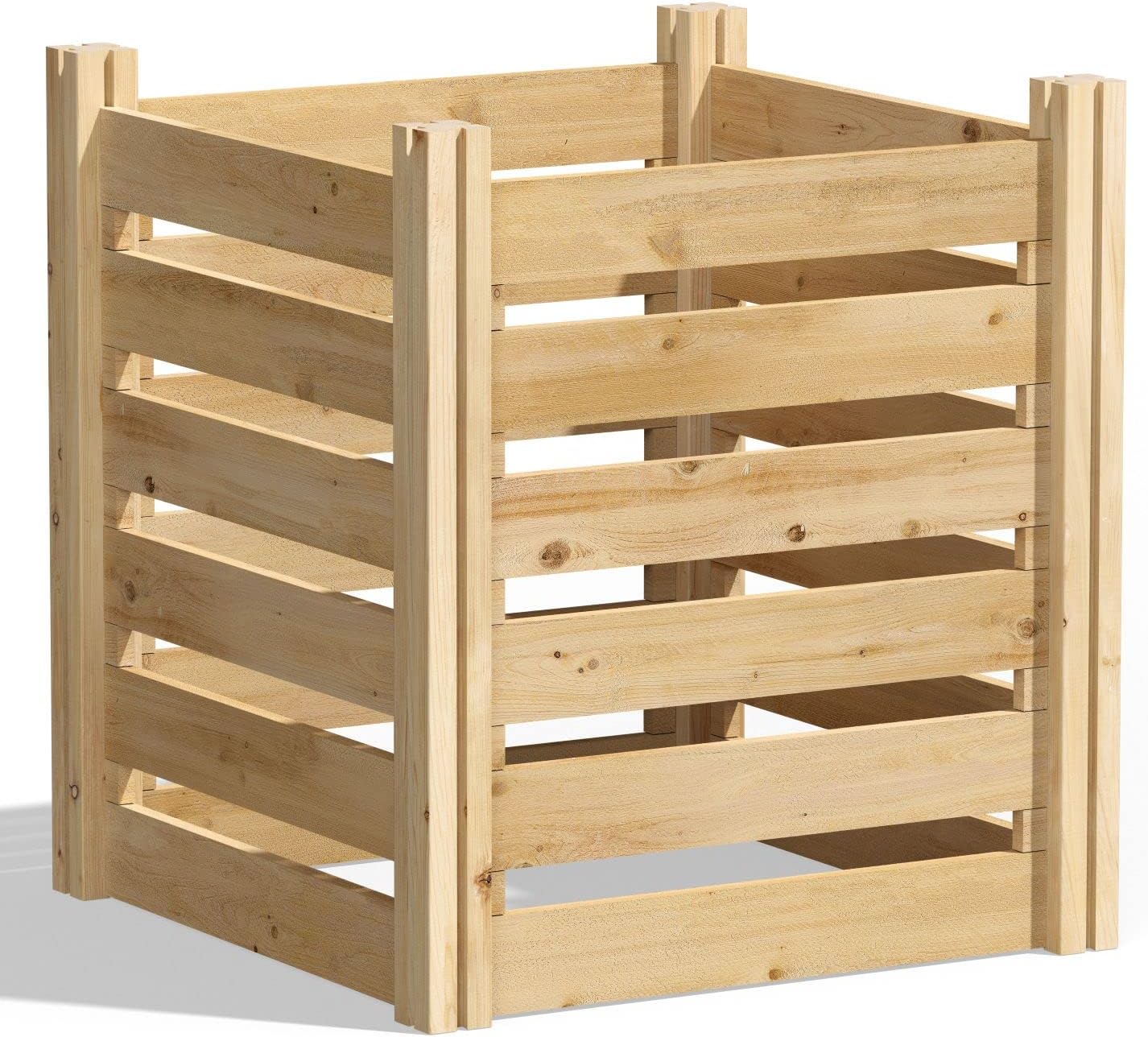
| Capacity | 77.3 gallons |
|---|---|
| Material Type | Cedar Wood |
This Greenes Fence cedar composter is a straightforward wooden bin that turns yard and kitchen waste into usable compost for small to medium gardens. The untreated North American cedar panels lock into routed corner posts so assembly is quick and requires no tools, and the open slatted design encourages airflow to speed aerobic decomposition. At about 77 gallons capacity the bin is large enough for a season’s worth of kitchen scraps and garden prunings for most urban plots, and the cedar resists rot and insects without chemical treatments. Practical touches include an open bottom for contact with soil organisms and spacers that help maintain airflow between boards. Limitations to note are the lack of a lid or pest-proofing, so it may need a cover or mesh if rodents are a concern, and its fixed-size square frame cannot be collapsed for storage. If you want a simple, attractive, long-lasting wooden bin that integrates easily into a backyard or community garden, this is a sensible choice.
Best for: Gardeners who want a low-maintenance, long-lasting wooden composter that assembles quickly and looks good in small yards or urban plots.
Less Ideal for: People who need a fully enclosed, pest-proof system or a collapsible/portable bin for seasonal storage or frequent relocation.
- Durable untreated cedar construction resists rot and pests naturally
- Tool-free interlocking panels allow quick, straightforward assembly
- Open slatted design and spacers provide good airflow to aid aerobic composting
- Open-bottom contact with soil encourages beneficial organisms and faster breakdown
- No included lid or pest barrier which may allow animals or excess rain into the pile
- Fixed frame size with no collapse or modular expansion option
Verdict: A durable, tool-free cedar composter that gives small-lot gardeners a natural, attractive bin for steady compost production.
Choosing the Right Wooden Compost Bin: Key Factors to Consider
Construction and Rot Resistance
Wood type and joinery determine how long a wooden compost bin lasts in an outdoor setting. Dense, naturally rot-resistant woods or pressure-treated lumber resist decay from constant contact with moist organic material. Look for boards that are thick enough to provide structural stability and joints that keep the bin square without allowing excessive sagging.
Finish and any protective coatings matter too. A breathable wood preservative can extend service life while still permitting moisture exchange. Avoid sealed finishes that trap water inside the pile. Proper construction reduces the chance of repairs and preserves the bin's usability through wet seasons.
Ventilation and Aeration Design
Composting needs oxygen to encourage aerobic breakdown and minimize odors. A good wooden compost bin balances airflow with insulation so the pile stays active. Ventilation can come from slatted walls, gaps between boards, drilled holes, or removable slats that allow you to poke and turn the pile.
Too little airflow slows decomposition and produces anaerobic pockets that smell. Too much exposure can dry the pile and stall microbial activity. Choose a design that lets you adjust aeration through turning, adding moisture, or temporarily closing gaps during very dry weather.
Access for Turning and Harvesting
Ease of access directly affects how often you will turn the pile and how cleanly you can remove finished compost. Good access options include removable front panels, hinged lids, or side slats that come out to expose the contents. These features save effort when aerating, mixing green and brown materials, or extracting finished compost from the bottom.
If access is awkward, beginners tend to skip turning and the pile compacts. Consider how you will reach into the bin with a pitchfork or compost aerator and whether the opening is wide enough to extract cured compost without spilling.
Capacity and Footprint
Matching capacity to the amount of kitchen and yard waste you generate keeps composting steady. A too-small bin fills up and compacts quickly; an oversized bin may cool and slow decomposition if not filled regularly. Consider household size, seasonal yard work, and whether you want a single large bin or multiple smaller bins for staged composting.
Footprint matters for placement. A bulky bin may crowd a small yard or block access to other garden areas. Also think about the base: bins placed directly on soil allow worms and microbes to migrate in, while those on hard surfaces need a different approach for drainage and contact with soil life.
Moisture Management
Moisture balance is essential to active composting. Wooden bins can absorb and release water, which affects internal humidity. Good designs include ways to manage moisture such as removable lids, slatted sides, or drainage gaps. You should be able to cover the pile in heavy rain and open it during dry spells.
Overly wet piles become anaerobic and smelly. If you live in a very wet climate, expect to monitor drainage and possibly raise the bin off the ground slightly. Conversely, in arid areas plan for ways to retain moisture, like adding wetter greens or covering the bin during hot, dry periods.
Pest Control and Stability
Wooden bins need features that deter rodents and larger pests while still allowing beneficial organisms to access the pile. Secure lids, tight-fitting panels, and the option to add a bottom barrier or hardware cloth help prevent animals from turning the pile into a food source. Balance pest exclusion with airflow needs so you do not create sealed anaerobic conditions.
Stability is also part of pest resistance. A solidly built bin stands up to wind and repeated access without falling over. Anchoring options or heavier base boards improve longevity and reduce the chance of damage during maintenance.
Best Placement and Siting Tips
Place a wooden compost bin on level ground with good drainage and partial sun. Morning sun helps warm the pile and speeds decomposition without over-drying the material in hot afternoons.
Avoid low spots that collect rainwater or areas next to buildings where dampness can be a problem. If you lack soil contact, for example on a patio, plan for a shallow bed of leaves or a worm-friendly base to help introduce microbes.
- Allow at least a small clearance from fences or walls for airflow and maintenance.
- Consider proximity to the kitchen for convenience but keep it far enough to avoid pests being attracted to the house.
- Position the bin where you can easily access it with a wheelbarrow or pitchfork.
Turning Techniques for Faster Compost
Turning redistributes oxygen and mixes dry and wet materials. For wooden bins with removable fronts or slats, use a pitchfork to pull the center outward and layer new material into the heart of the pile.
If a bin has limited access, consider active turning with a garden fork from the top in a three-bin system where material moves from one compartment to the next as it matures.
- Turn every 1 to 2 weeks for hot composting, less often for slower, passive methods.
- Moisten dry material when turning; fluff compacted sections to restore airflow.
Maintaining a Wooden Bin Through Seasons
Inspect wood and fasteners each season and replace or tighten components as needed. Small repairs are easier than rebuilding a collapsed bin.
In winter, insulate the pile with a thick layer of browns or a removable lid to retain heat. In wet seasons, create a shallow drainage channel at the base or raise the bin slightly to avoid waterlogged material.
- Retreat exposed cut edges with a non-sealing wood preservative that allows vapor exchange.
- Store spare slats or screws so they are available when you need quick repairs.
Options for Small Yards and Portable Setups
If space is limited, choose a compact wooden bin with a modest footprint or a modular design that lets you build in stages. Portable wooden bins that come apart make seasonal storage and relocation easier.
Raised or elevated configurations keep the bin off decking and can simplify access for harvesting. They also provide better control over drainage if you do not have direct soil contact.
- Measure your intended spot before buying to ensure doors or lids can open fully.
- Consider a two-bin approach if you want continuous turnover without a large single unit.
How We Chose the Best Wooden Compost Bin
We focused on attributes that affect real-world backyard composting rather than marketing claims. Key evaluation criteria included construction and rot resistance, ventilation and aeration design, access for turning and harvesting, and capacity relative to typical household and yard waste. We also considered ease of assembly and maintenance because a bin that is hard to build or service gets neglected in a busy garden. Stability and footprint were important for small yards and for bins placed on uneven ground. Finally we looked at how each design manages moisture and pests without needing constant intervention. Excluded from consideration were plastic or metal-only units and novelty designs that lack practical access for turning or harvesting. We did not include products that require specialized tools or continuous maintenance to operate. The list prioritizes straightforward, durable wooden bins that perform well for mixed kitchen and garden waste, offer sensible airflow features, and keep the composting process manageable for typical home gardeners.
FAQ
How big should a wooden compost bin be for a household of four?
A medium to large bin is usually best for four people. Look for capacity that can handle regular kitchen scraps plus seasonal yard waste. If you prefer staged composting, two smaller bins or a multi-compartment design helps maintain continuous turnover.
Can I put a wooden compost bin directly on the soil?
Yes. Placing the bin on soil allows worms and microbes to migrate in and helps drainage. Ensure the ground is relatively level and not prone to pooling water. In some cases a gravel base or a few stones improves drainage without blocking soil life.
How do I stop mice or rats from getting into a wooden compost bin?
Secure lids and tight-fitting panels reduce access. Avoid putting cooked food or large amounts of meat and dairy into the pile. For extra protection, line the lower interior with hardware cloth or add a removable bottom barrier that still allows airflow but keeps pests out.
What maintenance does a wooden compost bin need?
Routine checks for loose boards, rusted fasteners, or rot keep a bin functional for years. Replace damaged slats, tighten screws, and consider a breathable wood preservative on exposed ends. Also monitor moisture and aeration and adjust turning frequency as needed.
Will a wooden bin make my compost smell?
A properly managed wooden bin should not smell strongly. Bad odors usually mean anaerobic conditions from too much moisture or insufficient aeration. Turning the pile, adding dry browns, and ensuring adequate ventilation will typically resolve odors.
Final Verdict
Choose a wooden compost bin by prioritizing durable construction, workable access for turning, and ventilation that suits your climate. Balance capacity with available space so the bin gets used consistently rather than becoming a maintenance burden. Accept tradeoffs: heavier, more robust bins last longer but may be harder to move; lighter modular designs are easier to handle but may need more upkeep. Focus on practical features that fit how you compost-easy access for turning if you plan to be active, or insulated, higher-capacity designs for more passive, seasonal use. With the right match, a wooden compost bin becomes a low-effort, long-term asset for producing rich compost in your backyard.
