

Note: This article contains affiliate links. If you click on these links and make a purchase, I may earn a small commission at no extra cost to you. This helps support my research and content. Read my full affiliate disclosure here.
Removing dandelions is more than cosmetic. Those taproots re-sprout when fragments remain, and repeated bending or kneeling makes routine weeding a chore. Picking the right weeding tool for dandelions changes how often you need to attack beds, lawns, and cracks in hard surfaces. This guide covers our seven shortlisted weeding tools for dandelions and explains why each type works in different situations. We evaluate root extraction capability and ease of use plus factors like durability and suitability for tight spots so you can pick the right approach for your garden.
Top Picks at a Glance
| Best Overall The best all-around choice for most situations | WORKPRO 11.5" Dandelion Weeder Puller Tool with Soft Handle |  |
| Best Quality Built to a higher standard if you want something more solid | Fiskars 39" Deluxe Stand-Up 4-Claw Weed Puller | 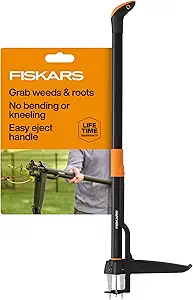 |
| Best Value The sweet spot between price and what you get | SIXCAR 4-Tine Stainless Steel Garden Weed Remover with Rubber Handle |  |
| Best Budget The cheapest option that still gets the job done reliably | Linatikou Stainless Steel Stand-Up Dandelion Weeder with Ergonomic Handle |  |
| Highest Rated A top-rated pick with lots of positive feedback | Garden Guru Dandelion Weeder with Fulcrum and Ergonomic Handle |  |
| Most Popular A crowd favorite that many people choose with confidence | Walensee Stand-Up Weed Puller, Long-Handle 3-Claw Weeder |  |
| Best Seller A high-volume bestseller chosen again and again | Grampa's Weeder Original Stand-Up Weed Puller with Bamboo Handle |  |
WORKPRO 11.5" Dandelion Weeder Puller Tool with Soft Handle

| Head Material | Stainless Steel |
|---|---|
| Handle Material | PP+TPR |
| Item Weight | 7.4 ounces |
This WORKPRO hand weeder is a simple, purpose-built tool for pulling dandelions, thistles, and other taproot weeds from beds, borders, and cracks. The polished stainless steel two-pronged fork slices into soil and grips roots so you can lever them out without excessive twisting. Its soft, non-slip plastic handle improves control and reduces wrist strain for longer sessions, and the hanging hole makes storage easy. Because it is only 11.5 inches long and lightweight, it is convenient for close work around plants and for carrying when tending small plots or container gardens. The stainless construction resists rust and holds up to regular outdoor use, but the short handle means you will be bending or kneeling rather than working upright for extended periods. It is best used on loosened or moist soil where the fork can penetrate and grab roots; very large or deep-rooted plants may need a longer tool or a digging spade. For gardeners who value efficient, durable hand tools for routine spot-weeding, this is a solid, no-frills choice.
Best for: Gardeners who prioritize efficient, durable hand tools for regular spot-weeding in beds, borders, and containers and who prefer a compact tool for close-up work.
Less Ideal for: People who need a tool for long stretches without bending or for removing very large deep-rooted plants should consider a long-handled weed puller or digging tool instead.
- Polished stainless steel fork resists rust and provides strong leverage for root removal
- Two-pronged design penetrates soil and grips taproots for effective dandelion extraction
- Soft, non-slip handle reduces hand and wrist fatigue during repetitive weeding
- Compact and lightweight for precise work in beds, containers, and along sidewalks
- Short 11.5-inch length requires bending or kneeling for most tasks
- Not intended for very large or deeply rooted weeds where a long-handled tool is preferable
Verdict: A durable, compact stainless steel hand weeder that makes fast work of dandelions and other taproots for gardeners who do close-up spot-weeding.
Fiskars 39" Deluxe Stand-Up 4-Claw Weed Puller

| Head Material | Stainless Steel |
|---|---|
| Handle Material | Aluminum |
| Grip Material | Thermoplastic Elastomer (TPE) |
| Number of Items | 1 |
The Fiskars 39" Deluxe Stand-Up Weeder is built for fast, permanent removal of dandelions, thistles, and other deep-rooted weeds without kneeling or herbicides. You position the head over the weed, step on the reinforced foot pedal to drive four serrated stainless-steel claws into the soil, pull back to extract the root, then use the easy-eject mechanism to clear the head. The long aluminum shaft and offset handle reduce back and wrist strain for longer sessions, while the viewing window in the pedal helps accurate placement. It performs best in moist or recently watered soil; in hard, compacted, or clay-heavy ground you will need to pre-soften the area for the claws to penetrate fully. The tool is light enough for extended use yet feels sturdy when you step down, and the stainless blades are made to stay sharp through repeated use. If you want a durable, ergonomically designed manual weeder that prioritizes effective root removal and less physical strain, this is a practical choice.
Best for: Buyers who want an efficient, ergonomic hand tool to remove broadleaf and taproot weeds by the root while avoiding bending and repeated chemical treatments.
Less Ideal for: Gardeners who need a tool for cutting large woody roots, heavy-duty excavation, or frequent use in hard, compacted clay without pre-wetting the soil should consider more heavy-duty or powered options.
- Long 39-inch shaft and offset handle reduce bending and wrist strain for extended use
- Four serrated stainless-steel claws grab roots for thorough removal
- Reinforced foot pedal and viewing window enable confident placement and penetration
- Easy-eject mechanism clears pulled weeds quickly for faster repetition
- Requires moist or softened soil to penetrate compacted or clay-heavy ground effectively
- Not suited for very large woody roots or extremely dense turf
Verdict: Choose this weeder if you want a durable, ergonomic stand-up tool that reliably extracts weeds by the root with minimal bending.
SIXCAR 4-Tine Stainless Steel Garden Weed Remover with Rubber Handle

| Manufacturer | SIXCAR |
|---|---|
| Item Weight | 7.7 ounces |
| Material | Stainless steel |
| Handle | Rubber |
This compact four-tine weeder is built for close-up digging and uprooting of common lawn and garden weeds like dandelions, thistles, and crabgrass. The stainless steel polished tines provide stiffness and corrosion resistance so you can pry roots out rather than just cutting crowns, and the rubber handle gives a comfortable non-slip grip for repeated use. Typical use is standing or kneeling weeding in beds, lawns, or vegetable plots where you need to dig around a taproot and lever it free. The tool is simple and low-maintenance, with a durable all-steel head that resists bending under normal garden loads. It is small and portable for spot weeding and precision work but not intended to replace long-handled weed pullers for large areas. The blade is sharp, so gloves are recommended when using or storing it. If you want a straightforward, sturdy hand weeder for targeting dandelions and similar weeds, this tool does that job efficiently.
Best for: Gardeners who prioritize effective, low-fuss tools for targeted removal of dandelions and other taproot weeds and who prefer a durable hand tool for beds and small plots.
Less Ideal for: People who need to clear large expanses of lawn quickly or who prefer long-handled ergonomic weed extractors for back-saving, continuous use.
- Four hardened stainless steel tines designed to pry and extract taproots
- Rubber handle offers a comfortable, non-slip grip during repeated use
- Compact and portable for precision spot weeding around plants
- Polished steel finish resists rust and is easy to clean after use
- Hand tool size makes it inefficient for large lawns or heavy-duty commercial use
- Sharp blade edges require gloves and careful storage to avoid injury
Verdict: A sturdy, no-nonsense hand weeder that efficiently pries out dandelions and other taproot weeds for gardeners who want targeted, durable tools.
Linatikou Stainless Steel Stand-Up Dandelion Weeder with Ergonomic Handle

| Material Type | Plastic, Stainless Steel |
|---|---|
| Blade Material | Stainless Steel |
| Handle Material | Plastic |
| Grip Type | Ergonomic Rubber |
This Linatikou weed puller is a simple hand tool aimed at removing deep-rooted weeds like dandelions by driving its V-shaped fork into the soil and levering out the root. It is typically used for spot weeding in lawns, flower beds, cracks in patios, and around delicate plants where a powered tool would be too aggressive. Notable features include a stainless steel blade and fork for rust resistance and strength, a curved ergonomic rubber handle for a non-slip comfortable grip, and a compact profile that lets you work accurately in narrow spaces. In practice it pulls whole roots when used with a short twisting and rocking motion, reducing regrowth compared with surface cutting. The tool is lightweight and easy to store, making it handy for regular maintenance sessions. Limitations are that it is a manual tool so larger infestations require time and physical effort, and it is best for individual plants rather than clearing large areas quickly.
Best for: Buyers wanting an inexpensive, no-frills hand weeder for spot removal and routine lawn or bed maintenance who prefer simple, durable tools over powered equipment.
Less Ideal for: People who need to clear large expanses of weeds quickly or prefer motorized solutions for heavy-duty yard work should consider larger or powered options.
- V-shaped stainless steel fork extracts deep roots to reduce regrowth
- Ergonomic rubber handle provides a secure, comfortable grip for extended use
- Compact design reaches tight spaces, cracks, and around plants with precision
- Manual operation is time-consuming for large areas and heavy infestations
Verdict: A dependable, budget-friendly hand weeder that pulls deep roots and is ideal for targeted spot weeding around the yard.
Garden Guru Dandelion Weeder with Fulcrum and Ergonomic Handle

| Manufacturer | Garden Guru Lawn & Garden Tools |
|---|---|
| Material finish | Rust-resistant stainless steel |
| Item weight | 8.4 ounces |
| Product model | FULCRUMWEEDER |
The Garden Guru Dandelion Weeder is a compact hand tool built to remove weeds by levering them out from the root rather than digging large holes. Its V-shaped two-prong fork and tapered, sharpened tip slide into soil around a weed, then the fulcrum base and sturdy shaft provide mechanical advantage to pull stubborn dandelions, thistles, and similar taproot weeds cleanly. Made from stainless steel with a rust-resistant finish, the tool is lightweight but stiff enough to resist bending during leverage. The contoured soft-grip handle reduces hand and wrist fatigue and improves control for repeated use or for gardeners with weaker grip strength. Practical benefits include reduced disturbance to surrounding plants, easier removal of whole roots to slow regrowth, and a durable finish for outdoor storage. Limitations are its handheld size, which makes it best for spot weeding rather than treating large areas, and it requires kneeling or bending for low weeds since it is not a long-handled model.
Best for: Best for gardeners who prioritize a durable, dependable hand tool for precise spot weeding and want a product that lasts season after season.
Less Ideal for: Not a good fit for people who need to clear large lawns quickly or who prefer upright, long-handled weeders to avoid bending or kneeling.
- Fulcrum base and sturdy shaft provide strong leverage to extract deep taproots.
- Stainless steel construction with rust-resistant finish resists bending and corrosion.
- V-shaped two-prong tip and tapered point enable precise root-grabbing with minimal soil disturbance.
- Ergonomic soft-grip handle reduces hand and wrist fatigue during repeated use.
- Handheld design makes it slow for wide areas compared with long-handled or powered tools.
- Not suited for extremely compacted or rocky soils where the fork may not penetrate easily.
Verdict: A sturdy, rust-resistant hand weeder that reliably pulls whole taproots with mechanical leverage, ideal for gardeners who want a long-lasting spot-weeding tool.
Walensee Stand-Up Weed Puller, Long-Handle 3-Claw Weeder

| Handle length | 39" |
|---|---|
| Claw length | 2.75" |
| Material | Stainless steel |
The Walensee stand-up weed puller is a hands‑free style weeding tool built to remove dandelions and other taproot weeds while you stay upright. You plant the three pointed steel tines over the weed, press the foot pedal to drive the claws into the soil, then tilt the shaft to extract the root. Its 39 inch handle and stainless steel construction make it easier to work beds and lawns without constant bending or kneeling, which reduces strain during longer sessions. The three 2.75 inch claws are long enough to engage deep taproots in moist garden soil, so you get cleaner root removal than simple hand pulling. It is best used in softer, cultivated or recently watered soil rather than gravelly or very compacted ground. While the tool simplifies repetitive weeding and saves back effort, very rocky ground or dense clay can limit how deeply the tines penetrate. For gardeners focused on removing dandelions and similar broadleaf taproots, this tool speeds the job and conserves energy, but it performs best when used with moist, looser soil.
Best for: Gardeners who want a low‑effort way to remove dandelions and other taproot weeds while avoiding bending or kneeling, and who prefer a simple mechanical tool with proven user results.
Less Ideal for: People who primarily weed in rocky, gravelly, or heavy clay yards should consider a different tool or soil preparation before use.
- Long 39" handle lets you extract weeds while standing to reduce back strain
- Three pointed stainless steel claws reach and grip deep taproots for more complete removal
- Foot pedal provides leverage to drive tines into soil without excessive force
- Durable stainless steel construction suited for repeated outdoor use
- Less effective in gravelly, very compacted, or rocky soil where tines cannot penetrate fully
- Requires moist or loosened soil to reliably grab whole roots
Verdict: If you want to remove dandelions without bending and get deeper root removal in moist garden soil, this long‑handle 3‑claw weeder is a practical, low‑effort choice.
Grampa's Weeder Original Stand-Up Weed Puller with Bamboo Handle

| Handle Material | Bamboo |
|---|---|
| Head Material | Alloy Steel |
| Item Weight | 2.3 pounds |
| Head Size | Small |
Grampa's Weeder is a simple, hand-operated stand-up tool that uses a 4-claw alloy steel head and a long bamboo handle to pinch and extract weeds by their roots. To use it you press the footpad into soft or recently watered soil, lean the handle toward the footpad so the forks close around the weed, then lift to remove the root. The lightweight bamboo handle and footpad make repeated weeding less strenuous on the back and knees than traditional hand pulling or kneeling. The steel claws are effective on dandelions, crabgrass, and similar taproot weeds in softer soils but the tool is not intended for very hard clay or rocky ground. Its straightforward design requires no power, so it is quiet and chemical-free, and the lifetime guarantee reflects a confidence in build quality. If you have compacted soil or deep-rooted tough perennial weeds you may need additional leverage or a different tool, but for routine weeding in beds and lawns after watering this is a durable, low-effort solution.
Best for: Gardeners who value proven, low-effort hand tools and want a durable, chemical-free way to remove common taproot weeds while protecting their back and knees.
Less Ideal for: People who need to clear large weedy areas quickly or who work primarily in compacted clay or rocky ground should consider heavier-duty or powered alternatives.
- Stand-up design reduces bending and kneeling for gentler, ergonomically easier weeding
- 4-claw alloy steel head grips and pulls taproots effectively in soft or recently watered soil
- Bamboo long handle keeps the tool lightweight while providing comfortable reach
- Simple mechanical operation requires no power or chemicals and is easy to maintain
- Performance drops on hard clay or rocky soil where forks cannot penetrate easily
- Small head size can be slow for very large infestations or broad areas
Verdict: A lightweight, reliable stand-up weeder that removes taproot weeds without bending, ideal for routine gardening in soft or watered soil.
Choosing the Right Weeding Tool for Dandelions: Key Factors to Consider
Root Extraction Ability
Dandelions have long, single taproots that regenerate if any portion remains in the soil. A tool that can reach deep and grip the root without breaking it significantly reduces regrowth. Design matters: narrow forks, serrated tines, or shaped blades that cradle the root let you pry downward and extract the entire root rather than shearing it.
Consider how the tool bites into soil and whether it creates a channel to ease pulling. Tools that let you rock or twist while pulling provide mechanical advantage and reduce the chance of leaving fragments behind.
Ergonomics and User Strain
Frequent dandelion removal becomes physically demanding if you must kneel or bend for each plant. Long-handled tools with good leverage avoid repeated stooping, while short handheld tools with comfortable grips reduce wrist stress when working at ground level. Handle shape, padding, and length influence how long you can work without fatigue.
Also consider the tool's weight and balance. A heavy head can help with penetration but increases arm and shoulder load. Ergonomic choices should match your typical weeding posture and any mobility considerations.
Suitability for Different Surfaces
You will encounter dandelions in lawns, planted beds, gravel, mulch, and between pavers. A weeding tool that performs well in loose garden soil might not work in compacted turf or tight paver joints. Some tools are designed to wedge into cracks and pry, others to be pushed into loosened soil and then twisted to pull the root free.
Think about where most dandelions appear in your garden and pick a tool whose profile and length fit those areas. For example, a slim blade is better for paver joints while a fork with wider tines is better for loosened borders.
Durability and Materials
Weeding often exposes metal to moist soil, grit, and fertilizer residues. Hardened steel or stainless components resist bending and corrosion and keep edges that bite into soil. Joints and connections between handle and working head should be robust to avoid wobble or failure during leverage.
Also consider replaceable or serviceable parts. A solid welded head typically lasts longer than glued assemblies, and finishes that resist rust require less frequent maintenance.
Maintenance and Ease of Cleaning
Soil, roots, and sap build up on blades and tines after use. Tools that are easy to rinse or have simple, smooth shapes save time and prevent disease transfer between beds. Removable parts or simple blade geometry make scraping and drying straightforward.
Regular cleaning and occasional sharpening or oiling extend service life. If you use herbicides or compost from problem areas, cleaning prevents carrying seed fragments elsewhere.
Storage, Portability, and Safety
How you store a weeding tool affects its lifespan and safety. Tools with protective covers for sharp ends are safer to store in sheds and garden bags. Compact handheld tools are easier to carry during walk-through weeding, while long-handled designs might require wall hooks or racks.
Also think about safety around children and pets. Sturdy locking mechanisms or sheathes reduce accidental injury and protect sharp edges between uses.
When to Choose Long-Handle Vs Handheld Tools
Long-handle weeding tools let you stand while levering out taproots and are best when dandelions are widespread across lawns or between large beds. They reduce back strain and speed up large-area work but can be cumbersome in tight garden spaces.
Handheld tools shine when you need precision near desirable plants, in tight paver gaps, or in raised beds where reach is limited. They require more kneeling or bending but give better tactile feedback when teasing roots from soil.
- Long-handle: faster across larger areas, less bending, more leverage
- Handheld: more precise, better for edges and pavers, simpler to store
Techniques for Pulling Full Taproots
Loosen soil around the dandelion before attempting to pull. A few seconds of rocking or levering to widen a small hole reduces root breakage and makes extraction cleaner.
Grip the plant low at the crown and use steady downward pressure combined with a slight twist. If your tool has a forked head, position the root between tines and pull while rocking the handle back to use leverage rather than raw force.
- Wetting compacted soil lightly can ease extraction in lawns
- Avoid quick jerks that shear the root; use steady leverage
Working in Lawns and Turf Without Damaging Grass
Aim to remove dandelion roots with minimal disturbance to surrounding grass roots. Slim, narrow blades that slide beneath the taproot allow targeted leverage without creating a large divot. After removal, tamp the soil lightly and reseed or patch if needed.
For small infestations, target pulling when soil is moist and the plant is vigorous but not seed-bearing to reduce spread.
- Use slim tools for tight removal in turf
- Fill and tamp holes promptly to limit new weed establishment
Dealing With Deep or Old Taproots
Older dandelions develop thicker, deeper roots that resist pullout. Tools with longer, narrow blades or tubular mechanisms that grip and slide down the root can increase success for these stubborn plants. You may need to loosen a deeper channel before attempting extraction.
When roots are deeply set in compacted soil, repeating removal over several weeks as the root weakens can be more effective than forcing a single tug that risks breaking the root.
- Consider tools that let you penetrate deeper without enlarging the hole
- Plan follow-up removal to catch regrowth from any missed fragments
Caring for Your Weeding Tool
After each session, remove soil and root debris, dry metal parts, and apply a light oil to prevent rust. Sharpening edges or re-facing tines keeps penetration efficient and reduces the force needed.
Store sharp tools with protective covers and inspect handles and fasteners periodically. Tighten loose connections and replace worn grips to maintain leverage and comfort.
- Rinse off wet soil and allow tools to dry before storing
- Sharpen and oil metal parts seasonally or when penetration slows
How We Chose the Best Weeding Tool for Dandelions
We focused on tools and designs that are specifically effective at lifting long taproots intact and that reduce physical strain during repeated use. Evaluation prioritized root extraction ability, the ergonomics of handles and grips, suitability for different surfaces (lawn, mulch, pavers, compacted soil), durability of blades or forks, and ease of cleaning and maintenance. We also considered how well a tool lets you work in tight spaces or close to plants you want to keep. Excluded from consideration were general multipurpose pruners and powered implements that are impractical for singular dandelion removal or that risk damaging surrounding plants. We looked for solutions gardeners can use by hand without complex attachments or frequent replacement parts. Final selections were narrowed to entries that balance mechanical advantage for pulling taproots against simplicity of use and longevity.
FAQ
Can I remove dandelions by hand without a tool?
You can pull small dandelions by hand, especially when soil is moist, but success depends on getting the full taproot. Hand removal often breaks the root and leads to regrowth, so a purpose-built tool increases the chance of complete extraction.
How deep do dandelion taproots typically grow?
Taproots commonly reach several inches deep and can be deeper in loose or cultivated soil. The depth varies with plant age and soil conditions, which is why tools that reach and grip below the crown are helpful.
Is it better to pull dandelions when soil is wet or dry?
Soil that is slightly moist is easiest to work because it loosens around the root and reduces breakage. Avoid working in very wet soil that compacts easily or in bone-dry conditions where roots are brittle.
Will removing dandelion flowers stop new plants from appearing?
Removing flowers prevents seed spread but does not remove plants already rooted in the soil. To stop regrowth from established plants you need to remove the taproot or weaken the plant through repeated removal.
Can I use the same tools in lawn and garden beds?
Often yes, but choose tools with a profile suited to the space. Slim, narrow tools work better in turf and paver joints while wider forks are efficient in loosened beds. Clean tools between uses to avoid transferring seeds or pathogens.
Final Verdict
Pick a weeding tool that matches where most of your dandelions grow and how much bending you are willing to do. Prioritize designs that extract the taproot cleanly and that feel comfortable in hand or at standing height. Accept tradeoffs: long-handled tools save your back but may be less precise near plantings, while handheld versions give control at the cost of more kneeling. Focus on root extraction ability, ergonomics, and durability to make the most effective choice for persistent dandelion problems.
