

Note: This article contains affiliate links. If you click on these links and make a purchase, I may earn a small commission at no extra cost to you. This helps support my research and content. Read my full affiliate disclosure here.
Pruning roses correctly makes the difference between a tangled shrub and vigorous, prolific blooms. The right pair of rose pruning shears gives you clean, precise cuts that heal quickly and reduce disease entry. This guide covers seven top picks narrowed for rose-care needs and explains the practical features gardeners should weigh. You will see how we evaluated blade geometry, hand comfort, and durability so you can choose a tool that suits your pruning frequency and wrist strength. Read on for a concise look at what matters when selecting shears for roses.
Top Picks at a Glance
| Best Overall The best all-around choice for most situations | Decerk 8.5" Bypass Pruning Shears with Titanium-Coated SK5 Blade |  |
| Best Quality Built to a higher standard if you want something more solid | Felco F2 Pruning Shears (F-2) — Swiss-Made Bypass Pruner |  |
| Best Value The sweet spot between price and what you get | Kynup Pruning Shears with SK5 High Carbon Steel Blade |  |
| Best Budget The cheapest option that still gets the job done reliably | Hungsual 7.5" Pruning Shears with Stainless Steel Blades and Softgrip Handles |  |
| Highest Rated A top-rated pick with lots of positive feedback | BYANE 8.5" Bypass Pruning Shears with SK5 Titanium-Coated Blade |  |
| Most Popular A crowd favorite that many people choose with confidence | Fiskars Bypass Pruning Shears — 5/8" Cut Capacity |  |
| Best Seller A high-volume bestseller chosen again and again | Craft911 2-Pack Stainless Steel Pruning Shears and Snips |  |
Decerk 8.5" Bypass Pruning Shears with Titanium-Coated SK5 Blade

| Blade Type | Bypass |
|---|---|
| Blade Material | Titanium |
| Cutting width | 20 millimeters |
| Hand Orientation | Ambidextrous |
| Included Components | Replacement Spring |
These Decerk 8.5" bypass pruning shears are built for regular rose care and general garden use. The SK5 high-carbon blade is nano-polished and titanium-coated to resist rust and hold an edge longer, which helps deliver clean cuts on live stems and minimizes damage to rose canes. The pruner’s optimized lever-action multiplies cutting force up to four times, so 3/4" branches and thicker flowering shoots are easier to trim without excessive hand strain. Aluminum handles with rubber overmolds give a secure, cushioned grip that is friendlier for longer sessions or users with weaker hands, and an ambidextrous design works for left- or right-handed pruning. A one-hand safety lock and included replacement spring are practical touches for safe storage and extended use. Limitations to note are the 3/4" cut capacity, which is fine for most roses but not for larger woody canes, and the metal-heavy build may be heavier than ultra-light hobby shears. Regular cleaning and occasional oiling will keep the titanium-coated blade performing best.
Best for: A gardener who wants a reliable, everyday pruner for roses and mixed garden tasks who values clean cuts and reduced hand effort during regular pruning sessions.
Less Ideal for: Not the best choice for arborists or gardeners who need a tool for very thick, woody canes or for those who prioritize the absolute lightest possible pruner for travel or minimal-hand-strength use.
- Titanium-coated SK5 blade for longer edge life and corrosion resistance
- Lever-action design increases cutting force for easier snips on thicker stems
- Ergonomic rubberized handles reduce hand fatigue during longer pruning sessions
- Ambidextrous bypass blade gives clean cuts ideal for live rose growth
- Includes spare spring and one-hand safety lock for convenience and safety
- Maximum cut capacity about 3/4 inch limits use on very woody or overgrown canes
- Aluminum and metal construction makes it heavier than ultra-light pruning models
Verdict: A durable, arthritis-friendly bypass pruner that delivers clean rose cuts with boosted leverage for easier everyday pruning.
Felco F2 Pruning Shears (F-2) — Swiss-Made Bypass Pruner

| Cutting width | 1 inches |
|---|---|
| Blade Length | 2 inches |
| Hand Orientation | Right |
| Blade Material | Metal,Steel |
| Manufacturer Warranty Description | 1 year |
The Felco F2 is a precision bypass pruner designed for professional gardeners and serious rose pruners who need clean, reliable cuts. It is typically used for routine pruning, deadheading, and shaping of roses and other woody ornamentals. Notable features include a hardened carbon-steel blade for sharp, long-lasting cutting performance, forged aluminum handles with a non-slip grip for comfort during extended use, and a design that allows every part to be replaced or serviced. In practice the F2 delivers very clean cuts on stems up to about 1 inch, which helps wounds heal faster and reduces disease risk on roses. The tool is lightweight for its strength, and the ergonomic angled head lessens wrist strain during repetitive pruning. Important limitations are that it is sized for right-handed users and comes as the larger F2 size which may be bulky for very small hands, and the high-quality construction means it is an investment compared with basic consumer pruners. Replacement parts and serviceability extend its useful life for long-term ownership.
Best for: Gardeners who prioritize cutting performance and long-term tool reliability for frequent rose pruning and maintenance, and who want a serviceable, professional-grade shear they can keep for years.
Less Ideal for: Casual gardeners who rarely prune or those with very small hands who should consider smaller or ambidextrous models instead.
- Hardened carbon-steel blade for clean, precise cuts up to 1 inch.
- Forged aluminum handles that balance strength with relatively low weight.
- Ergonomic non-slip grip and angled head reduce hand and wrist fatigue.
- Fully replaceable parts allow long-term maintenance and serviceability.
- Right-hand orientation only, not suitable for left-handed users.
- Larger F2 size may be uncomfortable for very small hands.
Verdict: Buy this if you want a professional, serviceable pruning shear that makes consistently clean cuts for rose care.
Kynup Pruning Shears with SK5 High Carbon Steel Blade

| Blade Material | High Carbon Steel |
|---|---|
| Blade Type | Bypass |
| Cutting width | 1 inches |
| Hand Orientation | Ambidextrous |
These Kynup pruning shears are built for precision rose pruning and everyday garden tasks. The bypass SK5 high carbon steel blade and serrated edge deliver clean, tear-free cuts on stems and branches up to about 1 inch diameter, which helps roses heal faster. The ambidextrous, non-slip rubber grip and built-in spring reduce hand strain, making longer sessions or gardeners with weaker hands easier. A thumb-accessible safety lock protects the blades and fingers during storage. Practical extras include a polished finish and a non-stick coating on the blade to resist sap and rust, so the tool stays smooth with routine cleaning. Limitations are typical for compact hand pruners: they are not suitable for large-diameter limbs beyond the stated cutting width and will require regular sharpening for heavy frequent use. For focused rose work and general shrub trimming the shears balance control, comfort, and blade performance in a small, easy-to-handle package.
Best for: Gardeners who want a reliable, comfortable pruner for regular rose and shrub maintenance and who prioritize clean cuts and low hand fatigue during routine pruning.
Less Ideal for: People needing a heavy-duty tool for large tree limbs or professional landscapers who frequently cut branches thicker than 1 inch should choose a larger lopper or saw.
- SK5 high carbon steel bypass blade produces clean, precise cuts up to 1 inch in diameter
- Ergonomic non-slip rubber handle and spring reduce hand strain for longer use
- Ambidextrous design and easy one-hand safety lock suitable for left- and right-handed users
- Non-stick coating and polished finish help resist sap buildup and corrosion
- Compact size limits use to small branches and stems rather than thick limbs
- Will need periodic sharpening with heavy or professional use
Verdict: A compact, ergonomic bypass pruner that delivers clean 1-inch cuts with minimal hand strain, ideal for precise rose and shrub maintenance.
Hungsual 7.5" Pruning Shears with Stainless Steel Blades and Softgrip Handles

| Blade Length | 2 inches |
|---|---|
| Cutting width | 1 inches |
| Blade Edge | Asymmetrical, Single Bevel |
| Blade Type | Parrot Beak |
| Blade Material | Stainless Steel |
These Hungsual pruning shears are a straightforward, no-frills tool for routine rose pruning and light shrub work. The 2-inch stainless steel parrot-beak blades are shaped for precise snips on stems and small branches up to about 0.6 inches, which makes them well suited to deadheading roses and shaping bushes. The ambidextrous design and soft TPR grip reduce hand fatigue during repeated cuts, and the one-handed safety lock keeps the blades closed for tidy storage. Practical features include an asymmetrical single-bevel cutting edge for cleaner cuts and a compact 7.5-inch length that fits easily in a garden apron or pocket. Expect reliable performance for seasonal pruning and everyday trimming, though these shears are aimed at light to moderate garden use rather than heavy carpentry-style cutting. If you need heavier duty capacity or replaceable blade systems, you will want a more professional pruner, but for cost-conscious gardeners who prune roses and maintain shrubs, these deliver solid value and comfortable handling.
Best for: Practical gardeners on a budget who need a comfortable, reliable shear for regular rose deadheading and light shrub maintenance.
Less Ideal for: Professional landscapers or users who regularly cut thick woody branches and need heavy‑duty, serviceable pruning tools.
- Stainless steel parrot-beak blade provides clean, precise cuts on stems
- Soft, non-slip TPR handles reduce hand fatigue during extended use
- Ambidextrous design works for left- or right-handed users
- Compact 7.5-inch size is easy to carry and store
- One-handed safety lock secures blades for safe storage
- Cutting capacity limited to light-to-moderate stems, not suited for thick branches
- No replaceable blade or advanced sharpening system for long-term maintenance
Verdict: A budget-friendly, comfortable pruning shear that delivers precise cuts for regular rose care and light garden trimming.
BYANE 8.5" Bypass Pruning Shears with SK5 Titanium-Coated Blade

| Blade Material | Stainless Steel |
|---|---|
| Blade Type | Bypass |
| Hand Orientation | Ambidextrous |
| Item Highlight | Lever-assisted cutting for branches up to 3/4" |
These BYANE 8.5-inch bypass pruning shears are built for regular garden use, especially trimming roses, small shrubs and shaping bonsai. The SK5 high-carbon blade is nano-polished and finished with a three-layer titanium coating, which delivers clean cuts on live stems and improves corrosion resistance so the tool stays reliable over time. A lever-assist mechanism reduces hand effort and makes cutting branches up to about 3/4 inch easier without straining the fingers. The anodized aluminum handles with rubber cushioning provide a secure, comfortable grip for both right- and left-handed users and the included spare spring and one-handed safety lock simplify maintenance and storage. Expect consistent performance for deadheading, harvesting herbs and routine rose pruning, though very hard or overly dry wood may require a larger pruner. Regular cleaning and light oiling as described will keep the blades performing well season after season.
Best for: Gardeners who want a dependable, low-effort hand pruner for regular rose maintenance, deadheading and small shrub trimming and who prioritize long-term, consistent performance.
Less Ideal for: People who regularly need to cut large-diameter branches or heavy woody growth should choose a larger lopper or pruning saw instead.
- SK5 high-carbon blade with three-layer titanium coating for smooth cuts and improved rust resistance
- Lever-assisted cutting reduces hand effort when cutting up to 3/4-inch branches
- Ambidextrous, cushioned non-slip grips on lightweight aluminum handles for comfortable repeated use
- Includes a spare spring and one-handed safety lock for easier maintenance and secure storage
- Cutting capacity is limited to about 3/4 inch and may struggle with very hard or dry wood
Verdict: A reliable, low-effort bypass pruner that delivers clean cuts and comfortable handling for routine rose pruning and general garden maintenance.
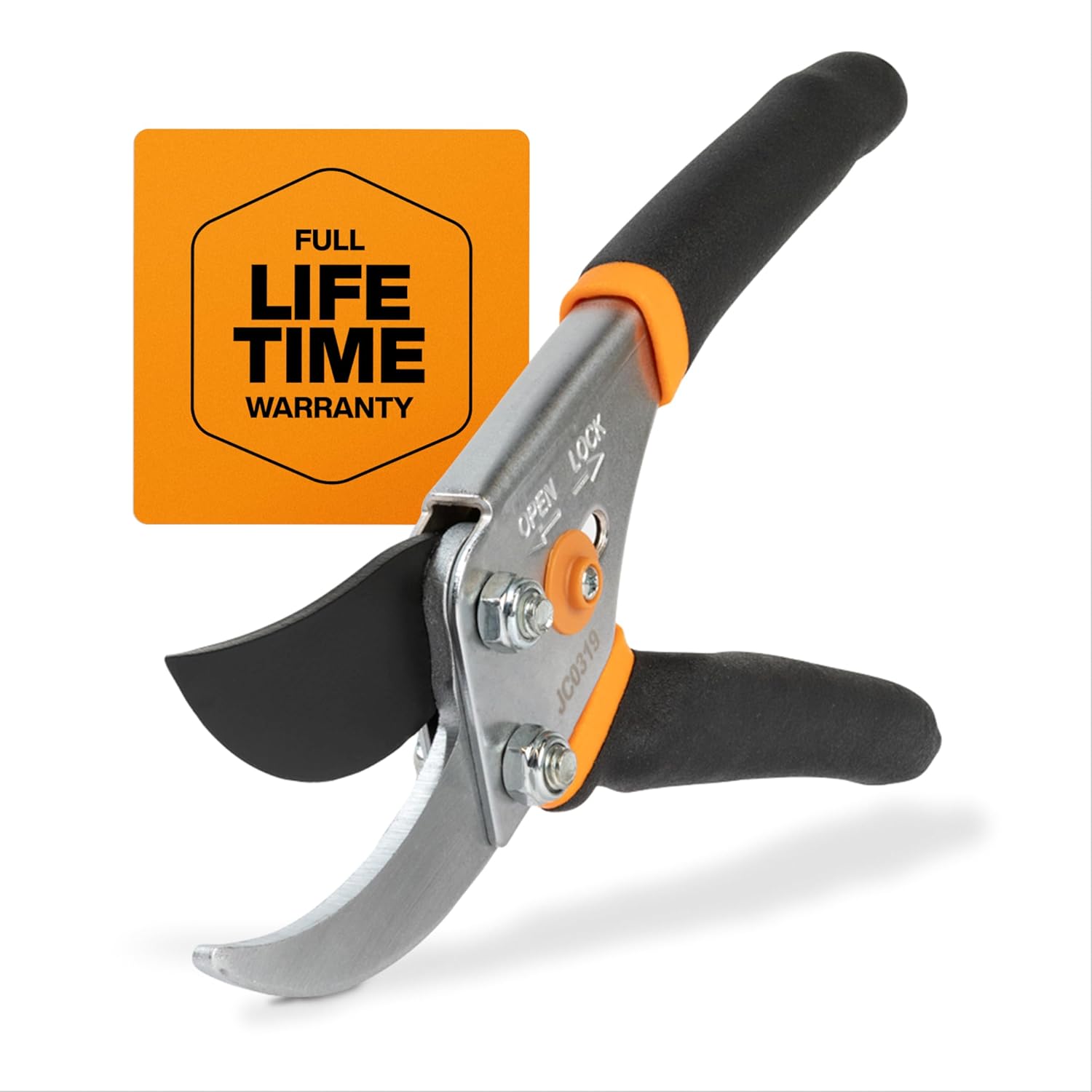
Fiskars Bypass Pruning Shears — 5/8" Cut Capacity
| Cutting width | 0.63 inches |
|---|---|
| Blade Edge | Serrated |
| Blade Material | Alloy Steel |
| Hand Orientation | Ambidextrous |
| Item Highlight | Self-Cleaning Sap Groove Prevents Sticking |
These Fiskars bypass pruning shears are a straightforward, dependable hand pruner for routine rose and garden maintenance. The bypass blade action and precision-ground alloy-steel blades make clean, shearing cuts on live stems up to about 5/8 inch, which helps reduce tearing and stress on rose canes. A low-friction coating and self-cleaning sap groove keep the blades moving smoothly and slow down sap buildup that can gum the mechanism, while the ambidextrous non-slip handle gives good control during detailed trimming and deadheading. The all-steel construction feels sturdy for regular use and the simple safety lock keeps the tool closed when stored. The main limitations are the 5/8 inch cutting capacity, which rules out thicker canes and heavier pruning, and the steel handles mean this is a basic durable tool rather than an ultra-light ergonomic model for users with severe hand issues. For everyday rose shaping, frequent deadheading, and snipping back new growth, these pruners are an efficient, low-fuss choice.
Best for: Home gardeners who value a reliable, well-made pruner for regular rose care and frequent deadheading and who prefer tools with a proven track record.
Less Ideal for: Gardeners who regularly prune large, woody canes or those needing an ultra-light pruner for limited hand strength should look at larger loppers or ergonomically specialized models.
- Bypass blade design delivers clean cuts on live stems to minimize plant damage
- Precision-ground alloy-steel blades with low-friction coating resist gumming and rust
- Self-cleaning sap groove prevents sticking during repeated cuts
- Ergonomic non-slip handle provides control for detailed pruning and deadheading
- All-steel construction offers durability for regular garden use
- 5/8 inch cut capacity is too small for thicker rose canes or heavy pruning
- Steel handles add durability but are heavier than some composite or aluminum alternatives
Verdict: A durable, no-nonsense bypass pruner that delivers clean cuts for everyday rose pruning and frequent deadheading.
Craft911 2-Pack Stainless Steel Pruning Shears and Snips

| Blade Material | Stainless Steel |
|---|---|
| Blade Edge | Serrated, Straight |
| Blade Type | Bypass |
| Hand Orientation | Ambidextrous |
This Craft911 two-pack pairs a full-size bypass pruning shear with a smaller pruning snip so you can handle both thicker stems and delicate rose work with one set. The blades are stainless steel, with the snip carrying a titanium coating for extra edge life, and both tools lock closed for safe storage. They are ambidextrous and have non-slip, comfortable handles that reduce hand fatigue during longer sessions, which is useful when deadheading or shaping roses. The bypass blade and serrated options give clean cuts that help protect plant tissue and reduce tearing. Because the materials are rust resistant and the tools are easy to clean, they require minimal maintenance between uses. On the downside the handles are listed as plastic or metal without a specific ergonomic mechanism for heavy-duty leverage, so they are best for routine rose pruning and lighter branches rather than very thick woody canes. For gardeners who prefer straightforward, low-maintenance tools this combo covers most rose-care tasks effectively.
Best for: Gardeners who want dependable, low-maintenance tools for routine rose pruning, deadheading, and shaping and who prefer safe, easy-to-use gear.
Less Ideal for: Those who regularly cut very large or old woody rose canes and need heavy-duty loppers or pruners with superior leverage and anvil-style cutting.
- Includes both full-size bypass shears and a precision snip for versatile rose care
- Stainless steel blades with a titanium-coated snip edge for lasting sharpness
- Ambidextrous design and non-slip handles that reduce hand fatigue
- Built-in safety locks keep blades closed for safe storage and transport
- Handles are basic plastic or metal without advanced leverage for very thick canes
- Not intended for heavy woody pruning of large rose canes
Verdict: A safe, low-maintenance pruning combo that handles most rose grooming tasks well with sharp stainless blades and easy-to-use locks.
Choosing the Right Rose Pruning Shears: Key Factors to Consider
Blade Type and Geometry
Blade design determines how the shear slices through rose canes. Bypass blades act like scissors and make thin, precise cuts that are ideal for live wood and help stems heal quickly. Anvil-style blades crush as they cut and are better only for dead wood or very hard stems.
Consider blade curvature, tip shape, and whether a single beveled edge or double-bevel design is used. A curved blade helps hold the stem steady during the cut, reducing slippage on thorny branches. Blade geometry also affects the actions needed for different cane diameters, so match the blade style to the typical thickness you prune.
Steel Quality and Edge Retention
The steel alloy and heat treatment determine how long an edge stays sharp and how easily you can re-sharpen the blade. Harder steels keep a keen edge but may be more brittle and require careful handling; softer steels dull faster but are easier to hone in the field.
Look for blades that offer a balance of hardness and toughness suitable for outdoor tools, with clear guidance on sharpening angle. Also consider replaceable blades or blade coating options that extend time between maintenance sessions.
Ergonomics and Hand Fatigue
Pruning roses often means hundreds of repetitive cuts, so hand comfort matters as much as cutting performance. Handle shape, padding, and the spacing between grips influence wrist angle and grip force. Offset or angled handles can place the wrist in a neutral position to reduce strain during long sessions.
Also evaluate grip material for slip resistance when gloves get sticky with sap. For gardeners with smaller hands or joint issues, look for shorter handles or models that require less squeezing force to close.
Cutting Capacity and Mechanisms
Different shears are optimized for different stem diameters. Many rose pruning shears are rated for stems up to a certain thickness; exceeding that rating risks nicked blades or crushed cuts. Ratcheting or compound-leverage mechanisms can increase effective cutting force while reducing user effort, useful for older gardeners or heavy pruning days.
However, extra mechanisms add moving parts that may require maintenance, so weigh the need for mechanical advantage against long-term durability and ease of cleaning.
Rust Resistance and Sap Management
Roses secrete sap that can gum up moving parts and promote corrosion if tools are stored damp. Stainless finishes, protective coatings, or corrosion-resistant alloys prolong service life when tools are used outdoors and not cleaned immediately after use.
Consider how easy the shear is to disassemble for cleaning and whether surfaces and joints resist sap build-up. A well-draining pivot area and a simple locking mechanism help reduce moisture traps and make seasonal maintenance easier.
Maintenance, Sharpening, and Replacement Parts
Tools that are easy to maintain stay in service longer and perform better. Check how accessible the pivot is for cleaning and whether blades are user-sharpenable with common sharpening stones. Some designs allow blade replacement, which can extend overall tool life without full replacement.
Also consider availability of spare parts like springs, pivot bolts, and adjustment washers. A shear that can be tensioned or reconditioned will usually provide more consistent cuts over several seasons.
When to Prune Roses
Timing depends on rose type and local climate. Many gardeners do the heaviest pruning in late winter or early spring when the risk of severe cold has passed but before new growth begins. Light deadheading and corrective pruning can be done through the growing season to maintain form and encourage blooms.
Prune for shape, to remove crossing canes, and to cut back weak or diseased wood. Clean, sharp shears make these tasks faster and reduce the chance of tearing living tissue that invites disease.
- Major renewal pruning in late winter or early spring
- Deadheading and light shaping during bloom season
- Remove dead or diseased canes as discovered
How to Make a Clean Pruning Cut
Aim to cut at a 45-degree angle just above an outward-facing bud. That angle sheds water away from the bud and helps the plant direct new growth outward. Place the sharp part of the blade on the side of the bud that will remain on the stem so the shears slice cleanly rather than crush.
For thicker canes, use progressive cuts rather than forcing a too-small shear. A clean cut seals faster and reduces the risk of cane splitting and disease entry.
- Cut 1/4 inch above an outward-facing bud
- Angled cuts help shed water away from new growth
- Avoid crushing by using the correct blade type for live wood
Protecting Your Shears and Preventing Disease Spread
Clean shears between plants when disease is suspected. Wiping blades with a disinfectant after cutting diseased material prevents cross-contamination. Regular cleaning also keeps sap from building up on moving parts and the pivot.
Store shears dry and lightly oiled to protect metal surfaces. Replace worn springs and pads to maintain proper alignment and cutting action.
- Disinfect blades after cutting diseased canes
- Wipe sap away promptly to prevent sticking
- Store tools dry with a light coating of oil
Gloves and Personal Protection for Rose Pruning
Roses have thorns that can tear thin gloves, so choose gloves with reinforced palms and thumb protection. Longer gauntlet-style gloves protect wrists and forearms during heavy pruning.
Good protection makes it easier to handle thorny canes and reduces the chance of accidental slips that could nick hands or damage the plant. Combine gloves with sharp shears to minimize hand strain from awkward grips.
- Use reinforced gloves for thorn protection
- Gauntlet-style cuffs protect forearms
- Pair durable gloves with ergonomic shears to reduce fatigue
Seasonal Care and Storage
At the end of a pruning session, wipe blades clean, apply a drop of oil to the pivot, and lock the shears closed for safe storage. Deep clean and sharpen blades before long-term storage and check for worn parts.
In damp climates, keep tools in a dry, ventilated place. Consider a small silica pack or desiccant in the tool box to limit moisture. Routine seasonal maintenance keeps cutting performance consistent from year to year.
- Clean, oil, and sharpen before storage
- Check pivot tension and springs seasonally
- Store in a dry, ventilated location
How We Chose the Best Rose Pruning Shears
We shortlisted tools that address the specific demands of rose pruning rather than general garden cutting. Selection prioritized blade geometry and edge retention because roses need clean scissor- or bypass-style cuts to avoid crushing stems. Ergonomics and hand fatigue were weighted heavily since rose pruning often involves many cuts in a single session. Durability and corrosion resistance were included because outdoor tools face sap, moisture, and seasonal storage. Safety features and ease of maintenance rounded out the screening to favor shears that are simple to sharpen and adjust. We excluded multi-tool grabbers, heavy loppers, and generic kitchen-style cutters that do not match rose stem sizes or pruning technique. Final choices balanced cutting performance, user comfort, and long-term serviceability.
FAQ
Are bypass shears always better for roses?
Bypass shears are usually preferred for live rose canes because they make cleaner, scissor-like cuts that heal well. Anvil shears can work for dead wood but often crush live stems and are not ideal for routine rose pruning.
How often should I sharpen my pruning shears?
Frequency depends on use and steel quality. For regular rose pruning during the season, a quick touch-up every few weeks keeps edges sharp. Heavier or frequent use may need more frequent sharpening.
Can I sterilize my shears between cuts?
Sterilizing between cuts is not necessary for routine pruning but is recommended after cutting diseased material. Wiping blades with a disinfectant or alcohol between plants reduces the risk of spreading fungal or bacterial pathogens.
What is the best way to cut a thick cane?
For thicker canes, make a relief cut or use shears with a higher cutting capacity or compound leverage. Cutting a large cane in stages reduces strain and helps avoid crushing the stem.
How do I prevent sap from gumming up my shears?
Wipe sap from blades during pruning sessions and clean with a solvent if heavy build-up occurs. A light oil on the pivot after cleaning helps prevent future sticking and protects metal from corrosion.
Final Verdict
Choose rose pruning shears that match the thickness of canes you typically work with and prioritize a sharp bypass blade for living wood. Balance blade steel and edge retention against how easy the tool is to sharpen and maintain. Pay attention to ergonomics and corrosion resistance to reduce fatigue and extend tool life. With those tradeoffs in mind, focus on clean cutting action and comfortable handling to keep roses healthy and productive season after season.
