

Note: This article contains affiliate links. If you click on these links and make a purchase, I may earn a small commission at no extra cost to you. This helps support my research and content. Read my full affiliate disclosure here.
If you spend time pulling weeds from beds, borders, or a larger yard, the right long handle weeding tool can make a big difference in comfort and results. A properly chosen tool reduces bending, speeds up work, and helps you remove roots cleanly so weeds are less likely to regrow. This guide covers seven top long handle weeding tools shortlisted for effectiveness in real garden conditions. We evaluated reach, handle comfort, blade or tine design, and durability to help you pick a tool that fits your body and gardening style. Read on to find an option that keeps you working with less strain and better control.
Top Picks at a Glance
| Best Overall The best all-around choice for most situations | Fiskars 39" Deluxe Stand-Up 4-Claw Weed Puller | 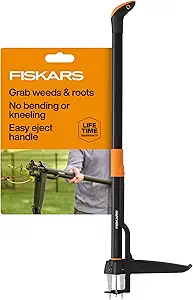 |
| Best Quality Built to a higher standard if you want something more solid | KAKURI Japanese Nejiri Gama Long-Handle Weeder (42") |  |
| Best Value The sweet spot between price and what you get | CKLT 2-in-1 Garden Hoe and Weed Puller with Adjustable Handle |  |
| Best Budget The cheapest option that still gets the job done reliably | GOXAWEE 45" Stand-Up Weed Puller Tool |  |
| Highest Rated A top-rated pick with lots of positive feedback | Ryscam 59-inch Stainless Steel Crack Weeder (Adjustable Length) |  |
| Most Popular A crowd favorite that many people choose with confidence | Grampa's Weeder Original Stand-Up Weed Puller with Bamboo Handle |  |
| Best Seller A high-volume bestseller chosen again and again | DonSail Adjustable Long-Handle Stirrup (Scuffle) Hoe |  |
Fiskars 39" Deluxe Stand-Up 4-Claw Weed Puller

| Head Material | Stainless Steel |
|---|---|
| Handle Material | Aluminum |
| Grip Material | Thermoplastic Elastomer (TPE) |
| Number of Items | 1 |
The Fiskars 39" Deluxe Stand-Up Weeder is built for fast, permanent removal of dandelions, thistles, and other deep-rooted weeds without kneeling or herbicides. You position the head over the weed, step on the reinforced foot pedal to drive four serrated stainless-steel claws into the soil, pull back to extract the root, then use the easy-eject mechanism to clear the head. The long aluminum shaft and offset handle reduce back and wrist strain for longer sessions, while the viewing window in the pedal helps accurate placement. It performs best in moist or recently watered soil; in hard, compacted, or clay-heavy ground you will need to pre-soften the area for the claws to penetrate fully. The tool is light enough for extended use yet feels sturdy when you step down, and the stainless blades are made to stay sharp through repeated use. If you want a durable, ergonomically designed manual weeder that prioritizes effective root removal and less physical strain, this is a practical choice.
Best for: Buyers who want an efficient, ergonomic hand tool to remove broadleaf and taproot weeds by the root while avoiding bending and repeated chemical treatments.
Less Ideal for: Gardeners who need a tool for cutting large woody roots, heavy-duty excavation, or frequent use in hard, compacted clay without pre-wetting the soil should consider more heavy-duty or powered options.
- Long 39-inch shaft and offset handle reduce bending and wrist strain for extended use
- Four serrated stainless-steel claws grab roots for thorough removal
- Reinforced foot pedal and viewing window enable confident placement and penetration
- Easy-eject mechanism clears pulled weeds quickly for faster repetition
- Requires moist or softened soil to penetrate compacted or clay-heavy ground effectively
- Not suited for very large woody roots or extremely dense turf
Verdict: Choose this weeder if you want a durable, ergonomic stand-up tool that reliably extracts weeds by the root with minimal bending.
KAKURI Japanese Nejiri Gama Long-Handle Weeder (42")

| Overall length | 42.1 inches |
|---|---|
| Blade material | Japanese carbon steel & soft iron |
| Handle material | Poplar wood |
| Made in | Japan |
The KAKURI Nejiri Gama long-handle weeder is a stand-up sickle built for removing tough weeds across larger patches without bending. It pairs a twisted, laminated Japanese steel blade with a 42 inch poplar handle so you can scrape roots and slice tall grass while standing, which speeds work and reduces back strain. The laminated blade construction combines a hard cutting core with softer backing for durability and easier resharpening, and the blade’s geometry is shaped to dig into soil and pry out roots as well as make clean base cuts. Typical use is across beds, edges, and open areas where quick upright passes are more efficient than hand pulling. The tool is lightweight for its length and delivers precise, long-lasting cutting performance when maintained with occasional whetstone sharpening. Important limitations are that it is a specialized sickle rather than a multipurpose hoe so it is less suited to very narrow tight spots or for heavy chopping of woody stems, and the wooden handle will need care to avoid weathering if left outdoors.
Best for: Gardeners who prioritize efficient, high-performance upright weeding over long stretches of beds or turf and want a durable, razor-sharp tool they can maintain for years.
Less Ideal for: People who need a compact tool for tight beds, potted plants, or frequent chopping of woody stems should consider a different weeder or a heavy-duty hoe.
- Long 42 inch handle enables upright weeding to reduce back and knee strain
- Twisted razor-sharp Japanese laminated steel blade scrapes roots and cleanly cuts tall weeds
- Laminated blade structure improves durability and makes resharpening easier
- Lightweight construction for easier sweeping coverage of wide or open areas
- Designed primarily for herbaceous weeds and may struggle with thick woody stems
- Wooden handle requires protection from prolonged exposure to the elements
Verdict: Choose this long-handle Nejiri Gama if you want a high-performance, maintainable stand-up weeder built to scrape roots and cut tough weeds across wide areas.
CKLT 2-in-1 Garden Hoe and Weed Puller with Adjustable Handle

| Head material | Tempered spring steel |
|---|---|
| Rake width | 3.75 inches |
| Handle | 4-section adjustable up to 61 inches |
| Fasteners | 304 stainless steel bolts and nuts |
This CKLT 2-in-1 garden hoe and weed puller combines a sharp trapezoid hoe edge with a 3.75-inch tempered spring-steel rake to tackle weeding, digging, and light trenching. The tool is used either upright with the full-length handle to protect your back or shortened for close work around plants and in raised beds. Hardened spring-steel heads resist bending and provide enough spring-back to pull stubborn taproots and loosen compacted soil, while the pre-sharpened edge helps cut through roots and compacted ground. The four-section adjustable handle locks up to 61 inches so you can work standing up or reduce length for precision tasks. A sand-texture finish and 304 stainless fasteners improve corrosion resistance for outdoor use. Expect a durable, versatile weeder that covers beds, lawns, gravel, and pathways. Limitations: the head is best for surface weeding and loosening rather than heavy-duty excavation, and metal-to-metal joints may need occasional tightening after frequent heavy leverage work.
Best for: Buyers who prioritize durable, proven tools and prefer a single versatile weeder that lets them work standing up to reduce back strain while handling routine garden and lawn maintenance.
Less Ideal for: If you need a tool for deep digging, heavy root removal, or professional-scale landscaping, a dedicated digging spade or heavy pry bar would be a better choice.
- Dual-function head lets you switch between raking and hoeing without changing tools
- Tempered spring steel head resists bending and maintains sharpness for cutting roots
- Adjustable four-section handle provides upright working height or a shorter shaft for precision
- Sand-texture finish and stainless fasteners improve rust resistance for outdoor storage
- Pre-sharpened edge reduces effort when cutting through compacted soil and roots
- Not intended for heavy excavation or prying very large roots
- Adjustable locking sections can loosen over time and may require periodic tightening
Verdict: A practical, back-friendly two-in-one hoe and rake that reliably handles routine weeding and soil loosening across beds and paths.
GOXAWEE 45" Stand-Up Weed Puller Tool

| Material | 100% steel |
|---|---|
| Handle lengths | 33 and 45 inches (adjustable) |
The GOXAWEE stand-up weed puller is a simple, steel-bodied tool that lets you extract weeds while standing to reduce back strain. It uses a four-claw steel head that grips roots; you press the tool into the soil and lift to pull out taproots rather than just snapping off foliage. The handle adjusts between two lengths for different users and the all-metal construction means there are no plastic weak points to break under regular garden use. Practical benefits include faster removal compared with hand-pulling, less kneeling or bending for people with joint issues, and compact disassembly for storage. Important limitations are its basic manual operation that still requires foot or upper-body force on dense or deeply rooted weeds and the relatively heavy all-steel build that may feel bulky for prolonged use. It works best on lawns, beds, and small to medium plots where you need repeated root removal but is not a substitute for powered tools on very large areas.
Best for: Buyers who want an affordable, durable long-handle weeder that minimizes bending and removes roots cleanly for routine garden maintenance.
Less Ideal for: People managing very large lawns or commercial areas who need powered weed removal or lighter tools for extended continuous use.
- All-steel construction for durability and resistance to breakage
- 45-inch adjustable long handle reduces bending and back strain
- Four-claw head designed to grab and remove roots for cleaner weed removal
- Breaks down for compact storage and easy assembly
- Manual operation can be tiring on dense, deep-rooted weeds
- Heavier steel build may be tiring during long sessions
Verdict: A budget-friendly, heavy-duty stand-up weeder that pulls roots while letting you work upright, ideal for routine home garden maintenance.
Ryscam 59-inch Stainless Steel Crack Weeder (Adjustable Length)

| Handle length | 59 inches |
|---|---|
| Blade material | High carbon steel |
| Blade finish | Anti-rust coating |
| Recommended crack width | 0.1 inch (2.5mm) or wider |
| Recommended depth | Under 2 inches (5cm) |
This Ryscam crack weeder is a purpose-built long-handle tool for removing weeds and moss from narrow cracks in driveways, patios, and walkways while keeping you upright. The shaft breaks down into sections so you can assemble four different working lengths, and the 59-inch configuration lets you work without bending or kneeling for extended sessions. The L-shaped high-carbon steel blade is angled to dig beneath roots and lever them out rather than snapping off at the surface, and an anti-rust coating helps it resist corrosion from damp conditions. Two-section non-slip PVC grips give you control and reduce hand fatigue during repetitive scraping and pulling. It performs best on gaps about 0.1 inch wide and up to 2 inches deep, so it tackles common residential crevices efficiently. Expect a manual tool feel though: it requires some physical force on compacted or deep-rooted weeds, and the fixed blade shape is less versatile than interchangeable heads for other chores.
Best for: Buyers who prioritize a dependable, low-maintenance hand tool for frequent crevice weeding and prefer to avoid bending over during yard work.
Less Ideal for: Gardeners who need a multipurpose tool for large beds, very wide cracks, or who prefer powered weed removal methods.
- Adjustable 4-length shaft lets you work standing to reduce back and knee strain
- L-shaped high-carbon steel blade digs under roots for more complete removal
- Anti-rust coating and sturdy forged construction improve durability in wet conditions
- Non-slip PVC grips provide control and reduce hand fatigue during extended use
- Best suited to cracks roughly 0.1 inch wide and under 2 inches deep so not ideal for very large gaps or deep-rooted problems
- Requires physical effort on compacted surfaces compared with powered options
Verdict: A sturdy, long-handle weeder built to remove roots from narrow pavement cracks while keeping you standing for comfortable, repeatable use.
Grampa's Weeder Original Stand-Up Weed Puller with Bamboo Handle

| Handle Material | Bamboo |
|---|---|
| Head Material | Alloy Steel |
| Item Weight | 2.3 pounds |
| Head Size | Small |
Grampa's Weeder is a simple, hand-operated stand-up tool that uses a 4-claw alloy steel head and a long bamboo handle to pinch and extract weeds by their roots. To use it you press the footpad into soft or recently watered soil, lean the handle toward the footpad so the forks close around the weed, then lift to remove the root. The lightweight bamboo handle and footpad make repeated weeding less strenuous on the back and knees than traditional hand pulling or kneeling. The steel claws are effective on dandelions, crabgrass, and similar taproot weeds in softer soils but the tool is not intended for very hard clay or rocky ground. Its straightforward design requires no power, so it is quiet and chemical-free, and the lifetime guarantee reflects a confidence in build quality. If you have compacted soil or deep-rooted tough perennial weeds you may need additional leverage or a different tool, but for routine weeding in beds and lawns after watering this is a durable, low-effort solution.
Best for: Gardeners who value proven, low-effort hand tools and want a durable, chemical-free way to remove common taproot weeds while protecting their back and knees.
Less Ideal for: People who need to clear large weedy areas quickly or who work primarily in compacted clay or rocky ground should consider heavier-duty or powered alternatives.
- Stand-up design reduces bending and kneeling for gentler, ergonomically easier weeding
- 4-claw alloy steel head grips and pulls taproots effectively in soft or recently watered soil
- Bamboo long handle keeps the tool lightweight while providing comfortable reach
- Simple mechanical operation requires no power or chemicals and is easy to maintain
- Performance drops on hard clay or rocky soil where forks cannot penetrate easily
- Small head size can be slow for very large infestations or broad areas
Verdict: A lightweight, reliable stand-up weeder that removes taproot weeds without bending, ideal for routine gardening in soft or watered soil.
DonSail Adjustable Long-Handle Stirrup (Scuffle) Hoe

| Extendable Length | 30", 43", 60" |
|---|---|
| Material – Pole | Premium steel |
| Material – Blade | Premium steel |
| Handle Top Material | Plastic |
The DonSail adjustable stirrup hoe is a simple long-handle weeding tool built around a hollow, commercial-grade steel shaft and a looped cutting blade for push-pull scuffle weeding. It assembles by screwing three pole sections together and extends to several lengths so you can work from a more upright position and avoid bending. In use the stirrup blade slices weed roots with a short back-and-forth motion, making it efficient for row gardens, flower beds, and vegetable patches without disturbing nearby plants. The tool is lightweight yet made from thicker steel for durability, and the plastic top provides a comfortable grip for longer sessions. Limitations are that it is a single-purpose hand tool best for surface weeds and light cultivation rather than heavy digging or chopping roots, and the adjustable pole depends on threaded joints that should be checked periodically for tightness.
Best for: A cautious gardener who prefers dependable, low-effort tools for regular bed maintenance and wants to minimize bending and back strain while removing surface weeds.
Less Ideal for: Gardeners who need a multipurpose digging tool or who frequently tackle deep-rooted or woody weeds should choose a different heavy-duty hoe or digging implement.
- Adjustable handle length reduces bending and improves comfort for different heights
- Stirrup (scuffle) blade efficiently severs weeds with a push-pull motion
- Commercial-grade hollow steel construction balances strength with light weight
- Quick tool-free assembly by screwing three pole sections together
- Not suitable for heavy-duty digging or cutting large, established roots
- Threaded pole joints may loosen over time and require periodic tightening
Verdict: A practical, easy-to-use stirrup hoe that reduces bending and speeds routine weeding in garden beds.
Choosing the Right Long Handle Weeding Tool: Key Factors to Consider
Shaft Length and Working Reach
Shaft length affects how upright you can remain while weeding. A longer shaft lets you cover more ground without bending, which reduces lower-back strain during long sessions. However, overly long shafts can be awkward in tight beds or when working between closely planted vegetables. Consider how much clearance you need to stand upright and still reach the base of weeds. Adjustable-length handles offer flexibility for different gardeners and tasks, but check that locking mechanisms are secure so the shaft does not slip while you apply downward force.
Head Design and Root Removal
The shape of the blade, fork, or claw determines how easily a tool cuts through soil and grabs the whole root. Narrow, pointed heads slide between plants and target taproots, while wider forks lift out fibrous roots and sod-bound weeds. A head that penetrates deeply with minimal soil disturbance helps remove the entire root system and lowers regrowth. Also consider whether the head clears soil as you lift; some designs clog and need frequent cleaning, which slows work.
Handle Grip and Hand Positioning
Handle feel matters because you control the tool through your hands for extended periods. Padded or contoured grips reduce hotspots and blisters, while textured surfaces prevent slipping when your hands are sweaty or wet. The grip shape should allow natural wrist alignment so you can apply downward leverage without awkward twisting. Some long-handle tools include secondary grips or T-handles to alter hand placement for different tasks; that versatility can reduce fatigue and improve leverage when prying stubborn roots.
Material Choice and Corrosion Resistance
Materials determine how long a tool stays serviceable in wet soil and outdoor storage. Stainless steel or high-carbon steel heads hold an edge and resist rust better than untreated steel, but carbon steel may need occasional oiling to prevent corrosion. Aluminum shafts keep weight down but may dent or bend under heavy force, while steel shafts offer greater stiffness for prying. Protective coatings, powder-coat finishes, and sealed connections help prevent premature failure when tools are used in damp conditions.
Weight, Balance, and Manoeuvrability
A long handle increases leverage but also multiplies perceived weight at the head. The tool should be balanced so the head does not feel heavy when extended. Lighter tools are easier to swing across wider areas and reduce arm fatigue, while heavier, sturdier tools may perform better when levering out large roots. Consider the combination of shaft material, head mass, and grip placement. Balance affects control when working near delicate plants and when aiming to extract roots cleanly without disturbing surrounding soil.
Maintenance, Sharpening, and Repairs
Tools that are easy to maintain stay useful longer and save replacement headaches. Look for heads that can be cleaned easily of packed soil and designs that allow the blade or tines to be sharpened or resprung. Replaceable components or straightforward rivets and bolts make field repairs possible. If a shaft is hollow or has a sealed end, inspect for water intrusion points that can cause internal corrosion. Routine wiping, drying, and occasional oiling will extend most long-handle weeding tools' service life.
When to Use a Long Handle Weeding Tool
Long handle weeders are best when you need to work standing up across larger beds, along fences, or in lawn edges where repeated bending would be tiring. They are especially helpful for gardeners with back or knee sensitivity because they reduce the amount of stooping required.
They are less suited to very tight, densely planted containers or crowded raised beds where a short-handled tool gives better precision. Think about the types of weeds you face too. Deep taproots and perennial runners benefit from a tool that reaches and leverages, while shallow annuals can often be removed with shorter hand tools.
- Use in borders, perennial beds, and pathways to cut down on bending
- Avoid in tightly spaced seedlings or crowded container plantings
- Ideal for standing edging and managing weeds along fences and walls
Standing Technique and Body Mechanics
Good technique extends endurance and reduces injury risk. Stand with feet hip-width apart and bring the tool close to your body when applying downward force. Use your legs and core, not just your arms, to stabilize and lift stubborn roots.
Rotate your stance rather than twisting your spine when reaching across a bed. Short, controlled pulls that leverage the shaft are more effective than jerky yanking, which can break the head or tear surrounding plants.
- Keep the tool aligned with your center of gravity
- Shift feet to change angle instead of twisting your back
- Use two-handed grips for extra leverage on deep roots
Soil Conditions and Tool Choice
Soil texture dramatically affects how a long handle weeding tool performs. In compacted clay, a narrow, sturdy blade or tine with a pointed tip will penetrate better, but you may need to loosen soil first with a fork. In loose, sandy soils a wider head can lift roots with less resistance and risk of breakage.
Moisture matters too. Tools work best after light rain or watering when soil holds together around roots. Avoid trying to lever out roots from very dry, hard soil because the head is more likely to slip and damage nearby plants.
- Choose pointed heads for compacted or clay soils
- Wider forks work well in looser, sandy soils
- Work after watering for easier root removal
Maintaining Your Long Handle Tool
After each use, knock loose soil from the head and wipe it dry. Periodically sharpen edges or realign tines so the tool continues to penetrate cleanly. If the shaft has ferrules or joints, check and tighten them to avoid wobble during use.
Store tools off the ground in a dry place. A simple coat of light oil on metal parts prevents rust. For wooden handles, sand rough spots and apply a thin coat of linseed oil to keep the wood from drying and cracking.
- Clean and dry after use to prevent corrosion
- Sharpen and realign blades or tines seasonally
- Tighten fasteners and oil moving parts as needed
Accessories and Add-ons That Help
Certain accessories make standing weeding more comfortable and efficient. Secondary grips or a padded T-handle can reduce hand fatigue and improve leverage. A small hand trowel or fork carried on a belt can help when you need to finish detail work near delicate plants.
Edge guards or head covers protect sharp components in storage and prevent accidental damage. A simple wrist strap can stop a tool from slipping out of your hands when working on slopes or muddy patches.
- Consider padded secondary grips for long sessions
- Carry a hand tool for close-in cleanup
- Use head covers to protect edges and reduce injury risk
How We Chose the Best Long Handle Weeding Tool
We focused on practical, gardener-centered criteria to narrow dozens of long-handled weeding tools down to the final seven. Primary evaluation points were reach and ergonomics to reduce back strain, cleaning and root extraction performance to minimize regrowth, and materials plus construction for corrosion resistance and long service life. We also assessed handle grip comfort and shaft length adjustability because those influence fatigue during extended use. Ease of maintenance and the availability of replacement parts or simple components were included so a tool can be kept in service rather than replaced. Tools that were very specialized for one micro-task, or that lacked sturdiness for regular yard use, were excluded. The final picks balance comfortable long-handle ergonomics, reliable soil penetration or hook action, and rugged build quality suitable for most backyard and community garden situations.
FAQ
How long should the shaft be for most gardeners?
Most gardeners prefer shafts between about 30 and 48 inches, depending on height. Taller gardeners benefit from longer shafts to avoid bending, while shorter gardeners may prefer shorter lengths or adjustable shafts to maintain control.
Can a long handle weeder damage nearby plants?
It can if used carelessly. Maintain control by working close to the weed base, using two-handed grips when prying, and avoiding large lever motions near delicate stems. A narrower head offers more precision when working near other plants.
Are long handle weeders harder to store?
They take more space than hand tools but can be kept on wall hooks, in a shed corner, or with a dedicated garden rack. Many long-handle tools are lightweight and can be stored vertically to save floor space.
Is a metal shaft better than an aluminum one?
Metal steel shafts are generally stiffer and better for levering heavy roots, while aluminum is lighter and easier to handle for extended periods. The choice depends on whether you prioritize leverage and durability or reduced tool weight.
How often should I sharpen or maintain the head?
Sharpen or realign edges once or twice per season depending on use. More frequent maintenance is needed if you work in rocky soil or use the tool heavily. Routine cleaning after each use greatly reduces the need for frequent sharpening.
Final Verdict
A long handle weeding tool is primarily a tool for comfort and reach. Prioritize shaft length and ergonomic grips to protect your back, and choose a head design suited to the common weeds and soil types in your garden. Expect tradeoffs between weight and prying power; balance and build quality will determine how effective a tool feels in real use. With attention to maintenance and the right technique, a well-chosen long handle weeder will make regular weed control faster and less taxing.
