

Note: This article contains affiliate links. If you click on these links and make a purchase, I may earn a small commission at no extra cost to you. This helps support my research and content. Read my full affiliate disclosure here.
If crabgrass is taking over patches in your lawn, the right hand tool can make removal practical and long lasting. A purpose-built weeding tool for crabgrass focuses on extracting fibrous roots and loosening compacted soil so regrowth is less likely. In this guide we narrowed the field to seven top options gardeners actually use in turf and small lawn settings. We evaluated each pick for how well it pulls roots, how easy it is to use for repeated sessions, and how durable it will be in heavy soil. Read on for concise pros and tradeoffs that match common lawn conditions and gardener preferences.
Top Picks at a Glance
| Best Overall The best all-around choice for most situations | Grampa's Weeder Stand-Up Metal Weed Puller with Long Handle |  |
| Best Quality Built to a higher standard if you want something more solid | Fiskars 39" Deluxe Stand-Up 4-Claw Weed Puller | 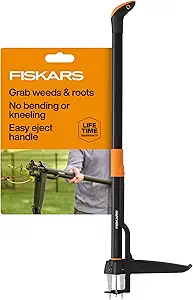 |
| Best Value The sweet spot between price and what you get | FmnyYaid 2-in-1 Long-Handle Weed Puller and Garden Hoe (Adjustable) |  |
| Best Budget The cheapest option that still gets the job done reliably | Linatikou Stainless Steel Stand-Up Dandelion Weeder with Ergonomic Handle |  |
| Highest Rated A top-rated pick with lots of positive feedback | CobraHead Original Weeder & Cultivator |  |
| Most Popular A crowd favorite that many people choose with confidence | Grampa's Weeder Original Stand-Up Weed Puller with Bamboo Handle |  |
| Best Seller A high-volume bestseller chosen again and again | SIXCAR 4-Tine Stainless Steel Garden Weed Remover with Rubber Handle |  |
Grampa's Weeder Stand-Up Metal Weed Puller with Long Handle

| Manufacturer | Grampa's Gardenware Co. |
|---|---|
| Item model number | MW-01 |
| Customer Reviews | 4.4 out of 5 stars |
Grampa's Weeder is a stand-up, four-claw manual weeder built from heavy-duty steel and a long handle so you can extract tap-rooted weeds without kneeling or bending. It assembles by twisting three pieces together and the foam grips make repeated use more comfortable. The four-claw head is designed to grab deep roots like dandelions, thistles, and crabgrass, and the all-metal construction promises durability and long service life. Because it works mechanically, the tool is best used in softer or loosened soil where the claws can penetrate; it is not intended for rock-hard, compacted ground. The simple design keeps maintenance minimal and eliminates the need for chemicals, which is safer for kids, pets, and garden beds. Expect straightforward, manual operation rather than levered or powered extraction, so it requires some force for stubborn or large-rooted plants. For gardeners who value a proven, no-frills tool that targets tap roots while protecting the back, this is a dependable choice.
Best for: Gardeners who want a reliable, low-tech tool to remove tap-rooted lawn weeds comfortably while avoiding chemicals and frequent bending.
Less Ideal for: People with very compacted, rocky ground or those who need a powered or lever-assisted extractor for large roots should look at alternative tools.
- Stand-up long-handle design reduces bending and kneeling for easier use
- Heavy-duty steel construction for durability and long service life
- Four-claw head targets tap-rooted weeds for more complete removal
- Foam grips improve comfort during extended weeding sessions
- Less effective in very compacted or rocky soils where claws cannot penetrate
- Requires manual force and effort for large or deeply rooted weeds
Verdict: A tough, no-nonsense stand-up metal weeder that removes tap-rooted lawn weeds while saving your back.
Fiskars 39" Deluxe Stand-Up 4-Claw Weed Puller

| Head Material | Stainless Steel |
|---|---|
| Handle Material | Aluminum |
| Grip Material | Thermoplastic Elastomer (TPE) |
| Number of Items | 1 |
The Fiskars 39" Deluxe Stand-Up Weeder is built for fast, permanent removal of dandelions, thistles, and other deep-rooted weeds without kneeling or herbicides. You position the head over the weed, step on the reinforced foot pedal to drive four serrated stainless-steel claws into the soil, pull back to extract the root, then use the easy-eject mechanism to clear the head. The long aluminum shaft and offset handle reduce back and wrist strain for longer sessions, while the viewing window in the pedal helps accurate placement. It performs best in moist or recently watered soil; in hard, compacted, or clay-heavy ground you will need to pre-soften the area for the claws to penetrate fully. The tool is light enough for extended use yet feels sturdy when you step down, and the stainless blades are made to stay sharp through repeated use. If you want a durable, ergonomically designed manual weeder that prioritizes effective root removal and less physical strain, this is a practical choice.
Best for: Buyers who want an efficient, ergonomic hand tool to remove broadleaf and taproot weeds by the root while avoiding bending and repeated chemical treatments.
Less Ideal for: Gardeners who need a tool for cutting large woody roots, heavy-duty excavation, or frequent use in hard, compacted clay without pre-wetting the soil should consider more heavy-duty or powered options.
- Long 39-inch shaft and offset handle reduce bending and wrist strain for extended use
- Four serrated stainless-steel claws grab roots for thorough removal
- Reinforced foot pedal and viewing window enable confident placement and penetration
- Easy-eject mechanism clears pulled weeds quickly for faster repetition
- Requires moist or softened soil to penetrate compacted or clay-heavy ground effectively
- Not suited for very large woody roots or extremely dense turf
Verdict: Choose this weeder if you want a durable, ergonomic stand-up tool that reliably extracts weeds by the root with minimal bending.
FmnyYaid 2-in-1 Long-Handle Weed Puller and Garden Hoe (Adjustable)

| Handle Material | Plastic |
|---|---|
| Head Material | Metal |
| Grip Material | Stainless Steel |
| Handle Type | Adjustable |
| Head Size | 3 inches |
This FmnyYaid tool is a budget-friendly 2-in-1 weeder and hoe designed for small to medium garden jobs. The head pairs a six-tine rake for penetrating soil and grabbing taproot weeds with a flat, sharp edge for scraping and leveling soil, so you can pull individual weeds or clear larger patches without switching tools. The adjustable stainless-steel handle extends from 16 to 60 inches, which reduces bending and lets taller and shorter users work standing or sitting. The cast steel heads are welded for durability and rinse clean easily after use. Assembly is straightforward though the manufacturer notes you may need to tap pieces into alignment before inserting screws. Expect solid basic performance for crabgrass, dandelions, and light turf weeds, but the lightweight plastic handle and modest head size mean it is best for routine garden beds and edges rather than heavy clay or rocky ground. For gardeners on a budget who want one tool that covers both scraping and tining, it performs well; those needing industrial-strength digging should look at heavier duty alternatives.
Best for: Buyers who want an affordable, multipurpose weeding tool to reduce bending and handle everyday garden bed and edge maintenance without buying separate tools.
Less Ideal for: Not the best choice for professional landscapers or gardeners who frequently dig in heavy clay, rocky soil, or need a heavy-duty digging tool for large roots.
- Two-in-one head combines six tines and a sharp hoe edge for both targeted weed removal and area scraping
- Adjustable stainless-steel handle extends to multiple lengths to allow standing or seated use
- Cast steel head construction with welded joints resists deformation and cleans easily
- Lightweight design makes it easy to maneuver for routine bed and patio weeding
- Plastic handle may feel less sturdy under heavy leverage or when working in very compacted soil
- Head size is modest so removing large deep-rooted weeds may take more effort
Verdict: A low-cost, space-saving 2-in-1 weeder and hoe that makes everyday bed and edge weeding easier by reducing bending and tool switching.
Linatikou Stainless Steel Stand-Up Dandelion Weeder with Ergonomic Handle

| Material Type | Plastic, Stainless Steel |
|---|---|
| Blade Material | Stainless Steel |
| Handle Material | Plastic |
| Grip Type | Ergonomic Rubber |
This Linatikou weed puller is a simple hand tool aimed at removing deep-rooted weeds like dandelions by driving its V-shaped fork into the soil and levering out the root. It is typically used for spot weeding in lawns, flower beds, cracks in patios, and around delicate plants where a powered tool would be too aggressive. Notable features include a stainless steel blade and fork for rust resistance and strength, a curved ergonomic rubber handle for a non-slip comfortable grip, and a compact profile that lets you work accurately in narrow spaces. In practice it pulls whole roots when used with a short twisting and rocking motion, reducing regrowth compared with surface cutting. The tool is lightweight and easy to store, making it handy for regular maintenance sessions. Limitations are that it is a manual tool so larger infestations require time and physical effort, and it is best for individual plants rather than clearing large areas quickly.
Best for: Buyers wanting an inexpensive, no-frills hand weeder for spot removal and routine lawn or bed maintenance who prefer simple, durable tools over powered equipment.
Less Ideal for: People who need to clear large expanses of weeds quickly or prefer motorized solutions for heavy-duty yard work should consider larger or powered options.
- V-shaped stainless steel fork extracts deep roots to reduce regrowth
- Ergonomic rubber handle provides a secure, comfortable grip for extended use
- Compact design reaches tight spaces, cracks, and around plants with precision
- Manual operation is time-consuming for large areas and heavy infestations
Verdict: A dependable, budget-friendly hand weeder that pulls deep roots and is ideal for targeted spot weeding around the yard.
CobraHead Original Weeder & Cultivator

| Material Type | Alloy Steel, Plastic |
|---|---|
| Operation Mode | Manual |
| Item Highlight | Forged Steel Blade, Recycled Plastic Handle |
The CobraHead Original is a simple, reliability-oriented hand tool for digging out weeds and cultivating soil around lawns and beds. Its tempered, forged steel curved blade is shaped to slice under roots and plow through compacted soil, making it effective for prying up crabgrass and other shallow-rooted weeds. The recycled plastic handle is ergonomically designed for right- or left-handed use and keeps the tool light for repetitive weeding sessions. Typical use is to insert the blade at the base of the weed, lever and pull to extract roots, or to run the blade along edges to loosen soil for edging and planting. Because it is manual, it gives precise control and avoids chemical use, but it requires physical effort in large areas and is best for spot weeding or smaller patches of crabgrass rather than whole-yard control. The construction and USA manufacture make it a durable choice that stands up to repeated outdoor use, though heavy rocky soil will slow progress and may blunt the blade faster than lighter soils.
Best for: Gardeners who prioritize a dependable, no-frills hand tool for targeted crabgrass removal and regular bed maintenance, and who prefer durable, US-made gear.
Less Ideal for: People needing to clear very large turf areas of crabgrass quickly or those who prefer power or chemical solutions for turf-scale weed control.
- Forged tempered steel blade effective at slicing under roots for clean weed removal
- Ergonomic recycled-plastic handle usable by right- and left-handed gardeners
- Lightweight design reduces fatigue during spot weeding
- Versatile for digging, edging, planting and cultivating around lawns and beds
- Manual operation requires more time and physical effort for large infestations
- Blade can dull faster when used in heavy rocky or abrasive soils
Verdict: A durable, easy-to-use manual weeder built for reliable, precise removal of crabgrass and regular spot maintenance.
Grampa's Weeder Original Stand-Up Weed Puller with Bamboo Handle

| Handle Material | Bamboo |
|---|---|
| Head Material | Alloy Steel |
| Item Weight | 2.3 pounds |
| Head Size | Small |
Grampa's Weeder is a simple, hand-operated stand-up tool that uses a 4-claw alloy steel head and a long bamboo handle to pinch and extract weeds by their roots. To use it you press the footpad into soft or recently watered soil, lean the handle toward the footpad so the forks close around the weed, then lift to remove the root. The lightweight bamboo handle and footpad make repeated weeding less strenuous on the back and knees than traditional hand pulling or kneeling. The steel claws are effective on dandelions, crabgrass, and similar taproot weeds in softer soils but the tool is not intended for very hard clay or rocky ground. Its straightforward design requires no power, so it is quiet and chemical-free, and the lifetime guarantee reflects a confidence in build quality. If you have compacted soil or deep-rooted tough perennial weeds you may need additional leverage or a different tool, but for routine weeding in beds and lawns after watering this is a durable, low-effort solution.
Best for: Gardeners who value proven, low-effort hand tools and want a durable, chemical-free way to remove common taproot weeds while protecting their back and knees.
Less Ideal for: People who need to clear large weedy areas quickly or who work primarily in compacted clay or rocky ground should consider heavier-duty or powered alternatives.
- Stand-up design reduces bending and kneeling for gentler, ergonomically easier weeding
- 4-claw alloy steel head grips and pulls taproots effectively in soft or recently watered soil
- Bamboo long handle keeps the tool lightweight while providing comfortable reach
- Simple mechanical operation requires no power or chemicals and is easy to maintain
- Performance drops on hard clay or rocky soil where forks cannot penetrate easily
- Small head size can be slow for very large infestations or broad areas
Verdict: A lightweight, reliable stand-up weeder that removes taproot weeds without bending, ideal for routine gardening in soft or watered soil.
SIXCAR 4-Tine Stainless Steel Garden Weed Remover with Rubber Handle

| Material | Stainless steel |
|---|---|
| Handle | Rubber |
| Item Weight | 7.7 ounces |
| Length | 13.3 x 1.7 x 3.1 inches |
This four-tooth hand weeder from SIXCAR is a simple, durable tool for removing shallow-rooted weeds like crabgrass, dandelions, and chickweed. The polished stainless steel tines are designed for high impact resistance and tensile strength so they resist bending when prying roots and compacted soil. The 13.3-inch length and rubber handle give you reach and a comfortable grip for short tasks and close-up precision in beds and borders. Typical use is to position the tines around a weed, push or pry to loosen the root, then lift and shake out soil to remove the root ball. Because the blade is relatively sharp it slices into compacted ground more easily, but users should wear gloves and take care around plant stems. This is a straightforward, no-frills tool that excels at quick spot-weeding and work in vegetable or flower beds, though it is not a substitute for long-handled tools when you need to cover large lawns or very deep roots.
Best for: Best for gardeners who want a reliable, easy-to-use hand tool for spot-removing crabgrass and other common weeds in beds, borders, and small vegetable plots.
Less Ideal for: Not a good choice for users who need to clear large lawns or remove very deep-rooted shrubs and taproots; consider long-handled or heavy-duty tools for those tasks.
- Four stainless steel tines resist bending and pry out root balls effectively.
- Polished anti-rust steel construction for durability in garden use.
- Compact 13.3-inch length provides good reach for beds while remaining easy to control.
- Rubber handle improves grip and reduces hand fatigue during repeated use.
- Not suited for removing very deep or large taproots where a long-handled tool is better.
- Sharp tines require gloves and care when working near delicate plants.
Verdict: A tough, comfortable hand weeder that reliably pries out crabgrass and common garden weeds for quick spot removal.
Choosing the Right Weeding Tool for Crabgrass: Key Factors to Consider
Root Extraction Power
Crabgrass spreads from fibrous, shallow but tenacious roots that re-sprout if fragments remain. A tool that reaches under the crown and lifts most of the root mass will reduce regrowth and the number of repeat visits. Look for thin, tapered blades, forks, or curved heads designed to slide under the grass and pry upward rather than just cutting at the surface.
Extraction force matters more in compacted soils where tugging can leave broken roots. Consider how the tool transfers leverage-longer handles allow more pulling force while short hand tools give better precision close to desired plants.
Ergonomics and User Comfort
Removing crabgrass often requires multiple short sessions across a lawn, so handle shape, grip texture, and usable length determine how much strain you feel. Tools with cushioned or contoured grips reduce blistering during repetitive work. For people with back or knee sensitivity, a stand-up design or a long-handled tool limits bending and kneeling.
Weight distribution affects control. Heavy heads increase extraction power but add fatigue. Evaluate whether the tool balances leverage with a grip that supports the hand through the pulling motion.
Durability and Construction
Soil, moisture, and small stones accelerate wear. Hardened steel or corrosion-resistant finishes extend service life when the metal contacts wet turf repeatedly. Pay attention to how heads attach to handles. Welded or one-piece constructions tend to survive rough use better than press-fit or glued connections that can loosen.
Replaceable parts or easily tightened fasteners are practical in the long run. Quality metalworking and robust handle materials matter because a bent tine or split shaft reduces extraction effectiveness and can make the tool unsafe.
Soil Compatibility
Different lawns have different soils, and the best weeding tool for crabgrass should perform across those conditions. In clay-heavy turf you need narrow, stiff tines to penetrate and pry without clogging. In sandy or loose soils a broader head may scoop root mass more cleanly. Some tools have interchangeable ends or adjustable widths that make them adaptable for both compacted and friable soils.
Also consider moisture: tools that work well when the soil is slightly damp may struggle in dry, cemented dirt. Knowing when to weed-typically after light watering or rain-also interacts with your tool choice.
Ease of Cleaning and Maintenance
Crabgrass removal leaves a lot of damp plant material and soil on the tool. Smooth finishes and simple head shapes are easier to clean and less likely to hold grit that accelerates corrosion. Tools with tight crevices will trap debris and require more maintenance to keep working smoothly.
Maintenance considerations include the ability to sharpen edges, replace small parts, and secure loose fittings. Simple designs with fewer moving parts reduce the time you spend maintaining the tool between uses.
Maneuverability in Tight Lawns and Borders
Crabgrass often appears near driveways, sidewalks, and garden edges where access is limited. Compact or offset heads make it easier to reach along hard edges without damaging surrounding turf or edging.
A tool that pivots or has an angled head improves access in narrow spots, while a slim shaft helps you work between dense ornamental plantings. Balance maneuverability with extraction power so you can work both open lawn areas and awkward corners effectively.
When to Pull Crabgrass By Hand
Hand removal is most effective when crabgrass is young and the soil is slightly moist. At that stage the root mass is smaller and easier to extract intact. Waiting until plants set seed increases the likelihood of a future outbreak from seed bank renewal.
Targeting small patches early prevents larger infestations that require more disruptive interventions. In many lawns a brief, regular walk-through after rain or light irrigation lets you remove seedlings before they compete aggressively with desired turf.
- Best after light rain or irrigation when soil holds together but is not muddy
- Focus on young clumps before flowering and seed set
- Remove the entire root crown rather than just cutting foliage
Techniques for Effective Root Removal
Approach each clump from several small tugs rather than a single large pull. Work the tool under the crown at a slight angle, rock it to loosen soil, then lift smoothly to avoid breaking roots. This technique preserves the main root mass and reduces regrowth.
For long or stubborn runners, dig a shallow arc around the clump to free surrounding soil, then lift the plant. Use a hand fork or narrow blade to tease roots free in compacted areas before pulling.
- Insert tool close to crown and pry upward with steady leverage
- Loosen surrounding soil first in compacted spots
- Extract the entire root cluster when possible
Maintaining Your Weeding Tool
After each session, knock off loose soil and wipe the head dry. If you worked in wet conditions, rinse and dry metal parts to slow corrosion. Lightly oil moving joints or metal faces to prevent rust and keep parts sliding smoothly.
Sharpening edges on tapered blades restores penetration and reduces the force needed to extract roots. Tighten fasteners and inspect handles for cracks periodically so the tool stays safe to use.
- Clean soil and plant debris after use
- Oil metal parts and sharpen edges as needed
- Check fasteners and handle integrity before each season
Adapting Technique to Lawn Type
Dense, slow-growing turf reacts differently to weeding than fast-recovering lawns. In tight, fine-bladed turf aim for minimal disturbance by using narrow, precise tools and working gently along the edges of crabgrass clumps. In coarse or resilient turf you can be more aggressive with prying motions because the lawn tolerates brief gaps.
When working near ornamental beds, protect desirable plants by isolating clumps and using small hand trowels for precision work. Adjust your approach based on how quickly the surrounding turf fills in post-removal.
- Use narrow tools for fine-bladed turf to avoid bare patches
- Be gentler in slow-recovering lawns
- Prioritize precision near ornamentals and borders
Alternatives and Complementary Practices
Hand tools are one part of crabgrass management. Cultural practices like proper mowing height, regular overseeding, and balanced fertilization reduce open niches that crabgrass exploits. Improving soil structure with aeration also makes root extraction easier and strengthens desirable turf.
Timing is important. Preventive cultural measures limit future outbreaks, while manual removal addresses existing patches. Combining both approaches gives the best long-term control in most home lawns.
- Maintain recommended mowing height to shade out seedlings
- Overseed thin areas to close gaps quickly
- Aerate compacted soil to improve turf health and ease weeding
How We Chose the Best Weeding Tool for Crabgrass
We shortlisted tools that address the biology and growing habit of crabgrass and that perform reliably in lawn settings. Our evaluation emphasized root extraction effectiveness in compacted turf, ergonomics for repeated kneeling or standing use, and build durability against soil abrasion. We gave additional weight to ease of cleaning and maintenance since organic debris and damp soil affect performance after each use. Material quality and fastening methods were reviewed to anticipate common failure points like bent shafts or loose heads. Finally we considered versatility across soil types so a tool useful in clay, loam, and sandy patches could serve gardeners with mixed lawns. We excluded tools designed strictly for broad garden beds, heavy-duty digging, or chemical application only. Items that were primarily motorized or intended for large-scale turf renovation were not considered, because this roundup focuses on hand tools suited to targeted crabgrass removal. The listed criteria reflect what actually matters to gardeners dealing with crabgrass: root removal, handling comfort, durability, soil compatibility, and ease of cleaning.
FAQ
Can I remove crabgrass by hand without a specialized tool?
Often you can pull small seedlings by hand when the soil is moist, but specialized weeding tools make it easier to remove the root crown intact and reduce regrowth. In compacted or clay soils a tool that provides leverage and a narrow blade prevents root breakage.
How deep do I need to remove roots to prevent regrowth?
Crabgrass roots are typically shallow and fibrous, so removing the crown and most of the attached roots usually suffices. Aim to lift the plant with surrounding soil to capture the root cluster rather than just cutting the top growth.
Is it better to pull crabgrass when the soil is wet or dry?
Slightly damp soil is best because it holds together enough to let you extract roots. Very wet mud clings to the tool and can be messy, while dry, hard soil increases the chance of breaking roots during removal.
Will removing crabgrass leave bare spots in the lawn?
It can if large patches are removed aggressively. Minimize bare areas by working carefully and timing removal to allow rapid recovery, or overseed thin spots soon after removal so desirable turf fills in.
How often should I inspect my lawn for crabgrass?
Check your lawn weekly during warm, growing months when crabgrass typically emerges. Early detection of small patches makes hand removal quicker and prevents larger infestations.
Final Verdict
Focus on tools that match your lawn conditions and the way you prefer to work. Prioritize root extraction power and ergonomics if you plan repeated sessions, and choose durable construction if you expect regular seasonal use. Consider soil compatibility and maintenance needs so the tool stays effective over time. Ultimately, the best weeding tool for crabgrass is the one that lets you remove crowns cleanly with minimal strain and keeps your lawn disruption to a minimum. Use consistent technique and cultural practices alongside hand weeding for lasting results.
