

Note: This article contains affiliate links. If you click on these links and make a purchase, I may earn a small commission at no extra cost to you. This helps support my research and content. Read my full affiliate disclosure here.
Ants find kitchens, pantries, and cracks in walls quickly, and the wrong bait can leave you chasing scouts instead of the colony. Choosing the right ant bait for use inside the house matters because indoor placements change exposure risks, bait attractiveness, and how quickly you see results. This guide covers six top shortlisted ant baits suited for indoor use and explains the features that determine effectiveness, placement safety, and convenience. Below we evaluate each option across key factors gardeners and homeowners care about, including bait formulation, placement method, and household safety to help you pick the best indoor solution.
Top Picks at a Glance
| Best Overall The best all-around choice for most situations | Syngenta Advion Ant Gel (4 Tubes, 30 g each) |  |
| Best Quality Built to a higher standard if you want something more solid | Syngenta Advion Ant Gel Bait, 30 g |  |
| Best Value The sweet spot between price and what you get | Terro Ant Killer II Liquid Ant Baits, Pack of 4 |  |
| Best Budget The cheapest option that still gets the job done reliably | Raid MAX Liquid Ant Baits, 4 Count |  |
| Highest Rated A top-rated pick with lots of positive feedback | ROUTADE 48-Pack Slow-Acting Ant Gel Bait Stations |  |
| Most Popular A crowd favorite that many people choose with confidence | TERRO Liquid Ant Killer Bait Stations, 12-Pack (T300B) |  |
Syngenta Advion Ant Gel (4 Tubes, 30 g each)

| Unit Count | 4.23 Ounce |
|---|---|
| Included Components | 4 Tubes x 30-Grams, 1 Plunger and 2 Tips |
| Item Form | Gel |
| Active Ingredients | 0.05% indoxacarb |
| Target Species | Insects |
Advion Ant Gel is a user-friendly gel bait intended to control common household and structural ant species by exploiting worker foraging behavior. You apply small spots or short lines of the odorless gel along active trails, in cracks and crevices, and near entry points; foraging workers consume the bait and carry it back to the nest where it is shared, helping to eliminate the queen and other nestmates. The kit ships with four 30 g tubes plus an applicator plunger and tips for precise placement, which makes targeting tight spaces straightforward. Its non-repellent formula with 0.05% indoxacarb is formulated to be attractive to a range of species including Argentine and carpenter ants, and it is labeled for both indoor and outdoor use. Limitations to note are that it is a chemical bait so safety precautions are needed around children and pets and efficacy depends on ants accepting the bait matrix versus other available food sources.
Best for: Homeowners and renters who want a targeted, easy-to-apply solution to eliminate established ant infestations and prefer a bait that works via worker-mediated transfer to treat whole colonies.
Less Ideal for: People seeking non-chemical or immediate-contact kill methods or those who need a one-time spray rather than ongoing baiting strategies should consider other options.
- Non-repellent gel formulation designed for worker ants to feed and transfer bait to the colony
- Includes four 30 g tubes plus a plunger and application tips for precise placement
- Labelled for both indoor and outdoor use, suitable for common pest species
- Odorless formula that is easy to place along trails, cracks, and crevices
- Contains a chemical active ingredient so it must be kept away from children and pets
- Effectiveness depends on ants preferring the bait over other available food sources
Verdict: Choose Advion Ant Gel when you want a precise, bait-based solution that encourages workers to carry poison back to the nest for colony-level control.
Syngenta Advion Ant Gel Bait, 30 g
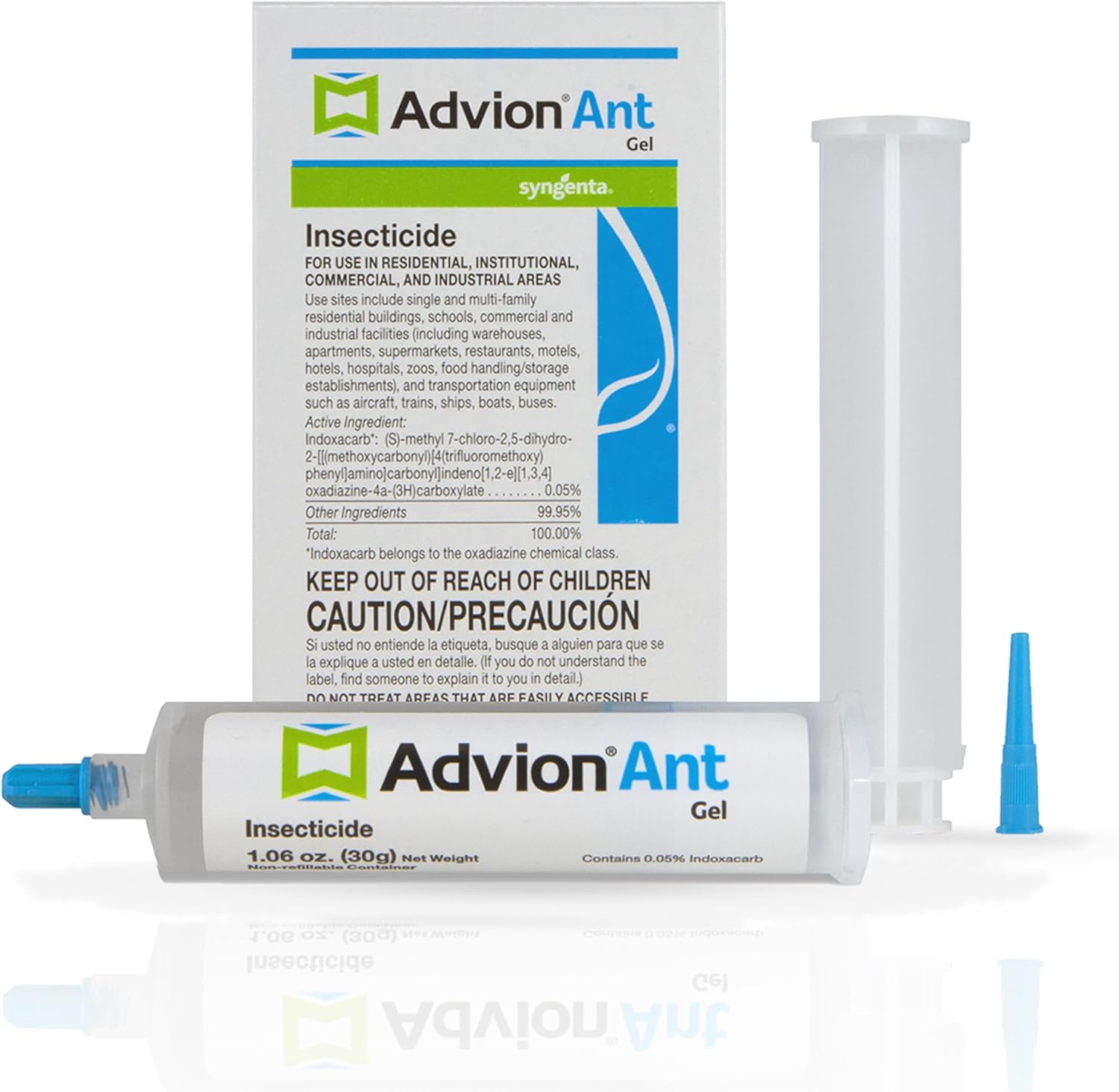
| Item Form | Gel |
|---|---|
| Target Species | Insects |
| Active Ingredients | Indoxacarb |
Advion Ant Gel is a concentrated, professional-style ant bait formulated around indoxacarb and a highly palatable gel matrix to lure foraging ants and carry toxicant back to the colony. You apply small dabs of the translucent, nonstaining gel in ant trails, near nesting sites, or in voids where ants forage; workers feed on the gel and transfer it through trophallaxis, which helps suppress entire colonies rather than just worker ants. The formulation is touted for lasting integrity with low odor and high attractiveness to sweet-feeding species, so you do not need frequent reapplication in protected spots. Because it is a targeted bait rather than a broadcast insecticide, it is practical for spot treatments in kitchens, pantries, and around baseboards as well as sheltered outdoor locations. Important limits are that it is a bait product requiring worker-mediated distribution so results are not instant and indoor use requires keeping it away from children and pets.
Best for: Buyers who prioritize effective colony-level control and want a concentrated, professional-style bait for spot treatments inside homes or in sheltered outdoor locations.
Less Ideal for: People needing immediate knockdown of visible ants or those who require a product for widespread outdoor perimeter treatments should consider different control methods.
- Contains indoxacarb, a potent active ingredient with a unique mode of action
- Highly palatable, translucent gel that attracts sweet-feeding ants
- Maintains formulation integrity for extended periods in sheltered application sites
- Suitable for indoor and sheltered outdoor spot treatments
- Relies on worker feeding and transfer so colony elimination can take several days to weeks
- Not intended for broad outdoor broadcast use or exposed wet areas
Verdict: Choose Advion Ant Gel when you want a high-performance, worker-transferred bait that targets colonies rather than just knocking down visible ants.
Terro Ant Killer II Liquid Ant Baits, Pack of 4
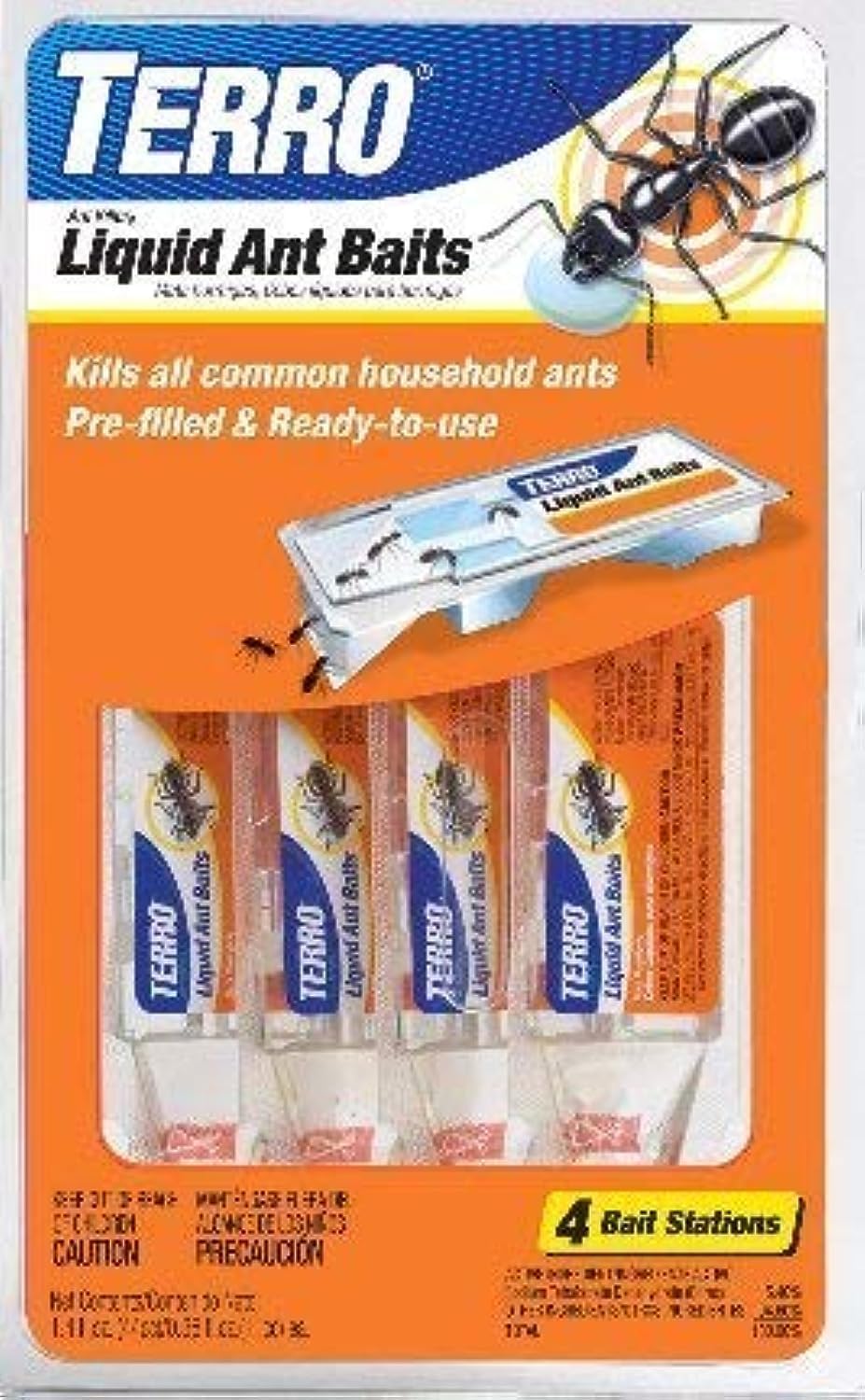
| Item Form | Liquid |
|---|---|
| Target Species | Insects |
| Liquid Volume | 0.36 fluid ounces |
| Active Ingredients | Sodium Tetraborate Decahydrate (Borax) |
Terro Ant Killer II comes as four self-contained liquid bait stations designed for indoor use around ant trails and entry points. Each station contains a borax-based liquid attractant that worker ants carry back to the nest, which helps eliminate the colony rather than just individual foragers. The patented enclosed design minimizes drips and spills and prevents the bait from drying out, so you can place them near baseboards, under sinks, or along windowsills without constant maintenance. They are straightforward to deploy: put the stations where you see ant activity and replace them as recommended to maintain supply. Limitations to keep in mind are that these are targeted at ants and work through colony transfer, so results are not instantaneous and depend on ants accepting the bait; they are not a broad-spectrum insect spray. Also they contain borax so keep them out of reach of children and pets. For someone focused on practical, low-effort indoor ant control, these baits offer an effective, low-mess option.
Best for: Homeowners wanting a low-maintenance, indoor solution to reduce household ant populations with minimal handling and cleanup.
Less Ideal for: People who need rapid knockdown of visible ants or a product that controls a wide range of household pests should choose a different method.
- Ready-to-use enclosed bait stations reduce spills and mess
- Borax-based liquid formula is transferred by worker ants to target the colony
- Patented design helps prevent the bait from drying out for longer effectiveness
- Simple placement along ant trails makes setup quick and low-effort
- Not an immediate kill method since it relies on ants carrying bait back to the nest
- Formulation targets ants specifically and will not control non-ant pests
Verdict: A low-mess, ready-to-use liquid bait system that quietly targets ant colonies by relying on worker ants to carry borax back to the nest.
Raid MAX Liquid Ant Baits, 4 Count

| Unit Count | 4 Count |
|---|---|
| Item Form | LIQUID |
| Target Species | Insects |
| Active Ingredients | Spinosad |
Raid MAX Liquid Ant Baits are small pre-filled liquid stations intended to be placed where ants are active indoors or at entry points outdoors. The bait attracts sweet-feeding and foraging ants which drink the liquid and carry it back to the nest, so the product targets the colony rather than only killing visible workers. Typical use is to set the stations along baseboards, in pantries, near trash or along ant trails; they are spill-proof and come ready to use so there is no measuring or mixing. The active ingredient listed is spinosad which is effective against many common household ants but is explicitly not for fire ants, carpenter ants, harvester ants or pharaoh ants. Practical benefits are ease of placement, low handling, and colony-level control when the target species are present. Limitations include a narrow list of excluded ant species, small individual bait volume that may need frequent replacement in heavy infestations, and the need to identify ant type for best results.
Best for: Homeowners or renters who want an inexpensive, low-effort way to reduce common household ant colonies around kitchens, pantries, and entryways.
Less Ideal for: People dealing with infestations of fire ants, carpenter ants, pharaoh ants, or large outdoor mound infestations should choose a product formulated for those species or consult a pest professional.
- Ready-to-use, pre-filled liquid stations require no mixing or measuring
- Designed for indoor and outdoor placement to treat ant activity at entry points
- Targets the colony by having worker ants carry bait back to the queen
- Spill-proof station design reduces mess and exposure during use
- Not effective against several ant species including fire ants and carpenter ants
- Small bait volume may require multiple units or frequent replacement in heavy infestations
Verdict: An easy, budget-friendly liquid bait for homeowners who need simple indoor and perimeter control of common household ants by knocking out colonies from the inside.
ROUTADE 48-Pack Slow-Acting Ant Gel Bait Stations
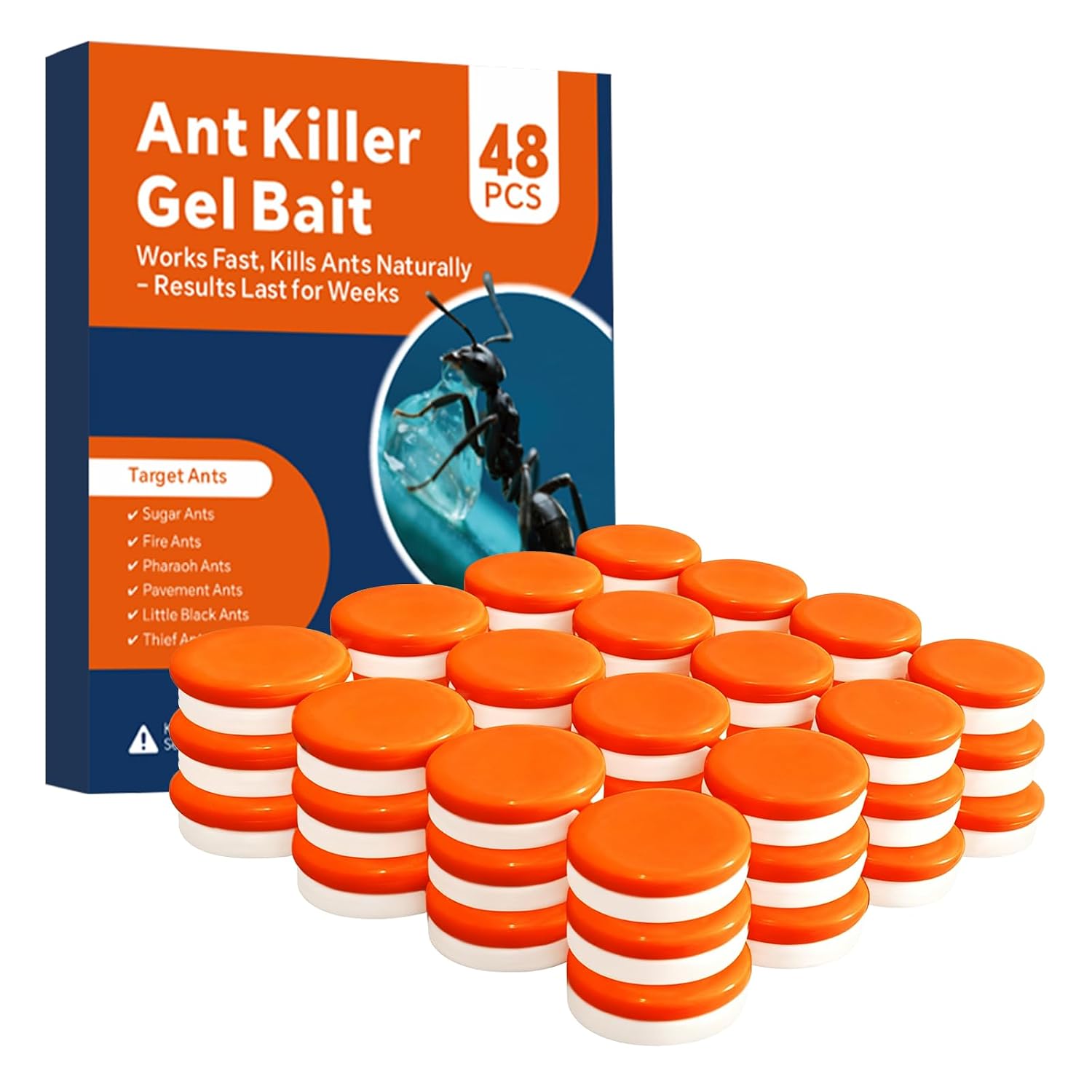
| Unit Count | 48 Count |
|---|---|
| Item Form | Gel |
| Target Species | Ants |
| Included Components | Ant gel bait |
This 48-pack of ROUTADE slow-acting ant gel bait stations is built for systematic, long-term ant control in and around the kitchen. Each station contains a gel formula that worker ants consume and carry back to the nest, which helps reduce the entire colony rather than only visible foragers. The product is supplied in ready-to-use stations with adhesive tape so you can place them along baseboards, in cabinets, near sinks, and on entry thresholds without messy sprays or frequent repositioning. The large pack lets you deploy multiple stations in high-traffic areas and replace them over time for continuous coverage. Because the formula is slow-acting, it is effective against a range of common household species including carpenter ants and sugar ants, but it requires several days to weeks to knock down a colony and will not give instant removal of visible ants. Also the stations are small and contain gel rather than a tamper-resistant hard block, so keep them away from children and pets. For someone wanting a low-maintenance, colony-focused approach to kitchen ant problems, this kit makes it easy to set and forget while the bait works.
Best for: Homeowners who prioritize reliable, long-term elimination of ant colonies in kitchens and want a low-maintenance bait they can deploy across multiple hotspots.
Less Ideal for: People who need an immediate knockdown of visible ants or who require childproof solid bait stations should consider alternatives.
- Slow-acting gel designed for worker ants to carry bait back to the nest for colony-level control
- Ready-to-use bait stations with adhesive for easy placement along baseboards and in cabinets
- 48-count pack provides broad coverage around a kitchen and enough replacements for extended use
- Versatile for indoor and outdoor placement to block entry points and high-traffic ant routes
- Slow-acting formula takes days to weeks to eliminate a colony so visible results are not immediate
- Gel in small stations may require careful placement to keep away from children and pets
Verdict: A practical, deploy-and-forget gel bait kit for reliable colony-level control of kitchen ant infestations.
TERRO Liquid Ant Killer Bait Stations, 12-Pack (T300B)

| Unit Count | 12 Count |
|---|---|
| Item Form | Liquid |
| Target Species | Insects |
| Active Ingredients | Sodium Tetraborate Decahydrate (Borax), 5.40% |
Terro Liquid Ant Killer bait stations are prefilled, single-use traps designed for indoor control of common sugar-loving ants. You place the small stations along baseboards, in corners, under appliances, or on countertops where you see ant activity. Worker ants are drawn to the sweet liquid, feed on it, and take it back to the nest so the borax-based active ingredient can eliminate the colony over days to weeks. The product is easy to use with no mixing or setup and the 12-pack gives coverage for several rooms. Because the bait is contained inside a low-profile plastic station, it reduces incidental contact risk compared with loose sprays or powders and lasts for weeks while ants continue to visit. Limitations are that the formula targets sugar-preferring species so very protein- or grease-attracted ants may ignore it, and control can take 2 to 4 weeks for larger infestations. Also stations should be placed away from pets and children despite the contained design since the bait contains borax.
Best for: Homeowners who prioritize an easy, low-hassle indoor solution and want a bait that works at the colony level with minimal hands-on pest handling.
Less Ideal for: People who need immediate knockdown of ants or who have pets or children that frequently access treated areas and cannot reliably keep them away from placed stations.
- Ready-to-use stations require no mixing or setup
- Designed to be carried back to the nest for colony-level control
- Low-profile enclosed bait reduces messy exposure compared with loose liquids or sprays
- 12 stations provide coverage for multiple rooms or hotspots
- Formulation is sugar-based so less effective on ants that prefer protein or grease
- Control can take 2–4 weeks for large or established colonies
Verdict: A simple, low-contact indoor bait system that reliably reduces sugar-loving ant infestations by getting worker ants to carry borax back to the colony.
Choosing the Right Ant Bait for Inside House: Key Factors to Consider
Bait Formulation and Ant Preferences
Different ant species prefer different food types at various times of year and colony stages. Sugary gel and liquid baits attract carbohydrate-seeking workers, which are common when ants are foraging for energy. Protein- or oil-based baits appeal when larvae require protein. Knowing which feeding preference the local indoor ant population shows affects how quickly workers accept the bait.
Formulation also influences how bait travels back to the nest. Thinner liquid matrices move more readily through worker crops and can be redistributed, while thicker gels or paste can be slower to carry but may be easier to place without spills. Pick a formulation that matches likely ant preferences in your house and that you can place safely where indoor traffic is low.
Placement Method and Containment
Indoor use raises the stakes for containment because children, pets, and food preparation areas are present. Baits designed with sealed stations, tamper-resistant trays, or small enclosed pods reduce accidental contact and mess. Some bait formats come with adhesive bases or narrow entry points that let ants in but keep larger animals out.
Consider where you can place bait discreetly but effectively: along ant trails, near entry points, or behind appliances. A station that allows easy inspection and replacement without touching the bait is preferable for routine indoor maintenance.
Active Ingredient and Mode of Action
Active ingredients vary in speed and how they affect colony dynamics. Some act quickly on foragers but do not transfer effectively back to the queen, leading to temporary reductions. Others are delayed or designed for transfer through trophallaxis so the toxicant reaches the queen and brood over time.
For indoor baiting you should weigh the desire for rapid visible knockdown against the need for long-term colony elimination. A slower-acting, transferable ingredient may take longer to show results but offers a better chance of addressing the entire colony when placed correctly.
Safety Around Pets and People
Indoor baiting must be balanced with household safety. Look for formulations and packaging that minimize direct exposure and include clear instructions about placement distance from children, pets, and food. Some products emphasize low mammalian toxicity but still require keeping the bait out of reach.
Check for obvious physical hazards too. Sticky gels or liquids can soil floors and counters if a station is disturbed. Pick a bait system that fits your household habits and can be secured in locations pets and youngsters cannot easily access.
Ease Of Use and Maintenance
A bait that is difficult to position, inspect, or replace will be used less consistently. Indoor-appropriate options have straightforward placement instructions, visible indicators of feeding activity, and dispensers that let you swap baits without touching the active material. Refillable stations may be convenient for repeated use, while single-use pods simplify disposal.
Consider how often you can realistically check placements and whether you need long-lasting cartridges for low-maintenance situations. Ease of cleaning up accidental spills is also an important practical factor for busy households.
Shelf Life and Storage
Once opened, bait can dry out or lose attractiveness, especially in low-humidity indoor air. Choose products with a reasonable longevity after opening so you are not constantly replacing stale bait. Unopened shelf life matters too if you plan to keep bait on hand for seasonal invasions.
Storage instructions should be clear and suitable for typical household conditions. Baits that require refrigeration or special handling are less practical for most indoor users. Good packaging will preserve efficacy and make the product more reliable when an ant problem appears.
Common Indoor Ant Species And Their Behaviors
Knowing which ant species you are dealing with helps you choose the right bait matrix and placement. Some indoor species are sugar foragers and will quickly accept sweet gels and liquids, while others prefer proteins and are more likely to accept paste or granular matrices used in stations.
Observe where workers are traveling and what they are carrying. Trails that originate near window frames, baseboards, or plumbing often indicate indoor nests or easy entry points. Adjust bait placement to follow the trail toward the source rather than only targeting visible workers.
- Sugar-preferring ants: look for gel and liquid baits
- Protein-preferring ants: choose paste or protein-based formulations
- Trail observation helps locate placement points
- Check near potential entry points like door thresholds and plumbing
Safe Placement Strategies for Kitchens and Food Areas
Kitchens and pantries require extra caution. Place bait stations behind appliances, under sinks, or along cabinet toe-kicks where they are out of direct contact with food preparation surfaces. Avoid placing open gels or liquids on countertops.
If children or pets have access to an area, choose enclosed stations that lock or use adhesives to secure stations to the baseboard. Regularly inspect placements and remove any debris or spilled bait promptly to prevent accidental contact.
- Use enclosed stations near food areas
- Secure stations with adhesive or in inconspicuous gaps
- Avoid direct contact with food prep surfaces
When To Expect Results And How To Monitor Progress
Expect visible reductions in worker numbers within days for fast-acting baits. For slower, transferable baits it can take one to several weeks to see colony decline as the bait circulates and reaches the queen and brood. Continue monitoring placements for feeding activity and replace or refresh bait when activity wanes.
Keep a log of where you placed stations and how many workers you observe each day. This helps identify which placements are working and when you may need to move stations closer to the nest or increase the number of stations.
- Fast-acting baits show quick worker declines
- Transferable baits require patience for colony-level control
- Track feeding activity and adjust placement as needed
Non-Bait Measures That Complement Indoor Baiting
Baiting is most effective when combined with sanitation and exclusion. Wipe up spills promptly, store food in sealed containers, and fix leaks that provide water sources. Reducing attractants encourages workers to accept bait more readily.
Seal cracks, weatherstrip doors, and use screens to reduce new entry points. While these measures do not eliminate an existing colony, they reduce reinvasion risk after the bait has suppressed or removed the source population.
- Maintain strict sanitation to improve bait uptake
- Repair plumbing and seal entry points
- Use exclusion to reduce reinfestation after control
Disposal and Cleanup Best Practices
When replacing or discarding baits, follow label instructions for disposal. For DIY safety, wear gloves and place single-use pods into a sealed bag before throwing them into household waste to prevent accidental contact.
Clean any surfaces that had bait spills with soapy water to remove residual attractants. If you use adhesive stations, check that adhesives do not damage surfaces when removed and replace any soiled station components promptly.
- Seal used bait pods before disposal
- Clean bait spills to remove attractants
- Inspect and replace soiled station components
How We Chose the Best Ant Bait for Inside House
We shortlisted products that are formulated and packaged for indoor placement and that offer clear guidance for use around people and pets. Our selection criteria focused on bait attractiveness to common indoor ant species, secure placement options that reduce accidental contact, and formulation variety so different feeding preferences and colony stages are covered. Key evaluation criteria included bait efficacy against worker and queen stages, bait matrix type and how it affects uptake, packaging and dispenser design for safe indoor placement, and instructions that minimize household exposure. We also considered how long a bait remains effective once opened and how compatible it is with typical indoor environments like kitchens, bathrooms, and basements. Excluded items included outdoor-only granular treatments, sprays intended for surface contact rather than baiting, and unsealed bulk formulations without secure indoor dispensers. The aim was to include only indoor-appropriate bait formats and clear use directions so the options are practical for real households.
FAQ
How long should I leave indoor bait stations in place?
Leave stations until you no longer see worker activity feeding at them, which can be days for fast baits or several weeks for transferable baits. Continue to monitor locations for at least two to four weeks to ensure colony decline and reposition stations if activity persists.
Are ant baits safe around pets and children?
Many indoor baits are formulated with low mammalian toxicity and come in tamper-resistant stations, but they still require careful placement out of reach. Use enclosed stations and follow label directions to minimize accidental exposure and avoid placing bait where small children or pets can access it.
What if bait attracts more ants into the house at first?
It is common to see increased worker traffic initially because bait is attractive. That indicates ants are finding and taking the bait back to the colony. Continue monitoring and avoid destroying trails; increased activity often precedes colony-level reduction.
Can I use outdoor baits inside the house?
Outdoor formulations and granular products are usually not intended for indoor use because they lack secure containment and may present greater exposure risks. Use products labeled for indoor use to ensure safer packaging and instructions suited to household environments.
How many bait stations should I use in a typical home?
Start with stations along observed trails and at likely entry points such as door thresholds, window sills, and near plumbing. For moderate infestations, three to six well-placed stations often cover common access routes, but adjust based on observed activity and the size of the affected area.
Final Verdict
When choosing ant bait for inside the house, prioritize a formulation and dispenser that match the feeding preferences of the indoor ant species and that keep bait contained from people and pets. Balance the desire for quick visible results with the need for transferable active ingredients if colony elimination is the goal. Focus on safe placement, routine monitoring, and complementary sanitation and exclusion steps. That approach helps you minimize household risk while increasing the odds of eliminating the source rather than only reducing worker numbers temporarily.
