

Note: This article contains affiliate links. If you click on these links and make a purchase, I may earn a small commission at no extra cost to you. This helps support my research and content. Read my full affiliate disclosure here.
Cutting medium-density fiberboard requires a different approach than sawing solid wood. MDF frays and chips easily along the cut, and a dull or flexible blade makes tearout worse. Choosing the right hand saw for MDF matters because the wrong tool wastes time, ruins edges, and increases sanding work. This guide shortlists six top hand saws suited for MDF and explains the practical differences gardeners, woodworkers, and DIYers will notice at the workbench. We evaluate blade stiffness, tooth geometry, ease of control, and edge finish to help you pick the best fit for your projects. Read on for clear criteria and real-world use tips before the product list.
Top Picks at a Glance
| Best Overall The best all-around choice for most situations | SUIZAN Flush Cut Saw 5" Japanese Pull Saw |  |
| Best Quality Built to a higher standard if you want something more solid | SUIZAN Ryoba 7" Double-Edge Japanese Pull Saw |  |
| Best Value The sweet spot between price and what you get | WORKPRO 6" Japanese Pull Saw — Dual-Edged SK5 Blade with Beech Handle |  |
| Best Budget The cheapest option that still gets the job done reliably | VPQZUPG 6" Japanese Pull Saw, SK5 Double-Edge (14/17 TPI) |  |
| Highest Rated A top-rated pick with lots of positive feedback | Magicbox 2-Piece Japanese Hand Saw Set (SK5 Steel) |  |
| Most Popular A crowd favorite that many people choose with confidence | RUITOOL 6" Japanese Ryoba Pull Saw with SK5 Steel Blade and Beech Handle |  |
SUIZAN Flush Cut Saw 5" Japanese Pull Saw

| Blade Material | Japanese Steel |
|---|---|
| Handle Material | Wood |
| Blade Length | 5 inches |
| TPI | 17 & 25 |
| Blade Thickness | 0.012" (0.3mm) |
This SUIZAN 5" flush cut Japanese pull saw is built for delicate trimming tasks where control and a clean finish matter. It uses a thin 0.012" blade with zero-set teeth so the blade can lie flat and cut dowels, plugs, and molding flush to the surface without scratching the surrounding wood. One edge is 17 TPI for harder timbers and the other 25 TPI for softer material, so you can switch edges depending on the MDF density and the finish you want. The pull-stroke design reduces effort and improves accuracy in tight spots that larger saws cannot reach. The beech handle feels comfortable for detail work but the blade is fixed and not replaceable, so this is a long-term hand tool rather than a disposable blade system. Its very narrow kerf minimizes material loss and the flexible blade makes it easy to trim flush, though it is less suited to fast rough ripping or cutting large panels. For precision trimming, joinery cleanup, and flush work on MDF or trim, this saw performs very well.
Best for: A buyer who values precise, clean trimming and finish work on MDF, trim, and small parts and wants a compact tool that excels in tight or detailed jobs.
Less Ideal for: Contractors or hobbyists who need to cut large MDF sheets quickly or prefer replaceable blades and modular systems for heavy production work.
- Very thin flexible blade and zero-set teeth allow flush cuts without scratching surrounding surfaces
- Double-edged blade with 17 and 25 TPI covers both harder and softer materials
- Pull-stroke design offers accurate, low-effort control in tight spaces
- Narrow 0.012" kerf preserves material and leaves a smooth surface
- Blade is fixed and not replaceable
- Not intended for fast ripping or cutting large MDF panels
Verdict: Choose this saw when you need a compact, razor‑sharp tool for clean, scratch‑free flush trimming and precise cuts on MDF and trim.
SUIZAN Ryoba 7" Double-Edge Japanese Pull Saw
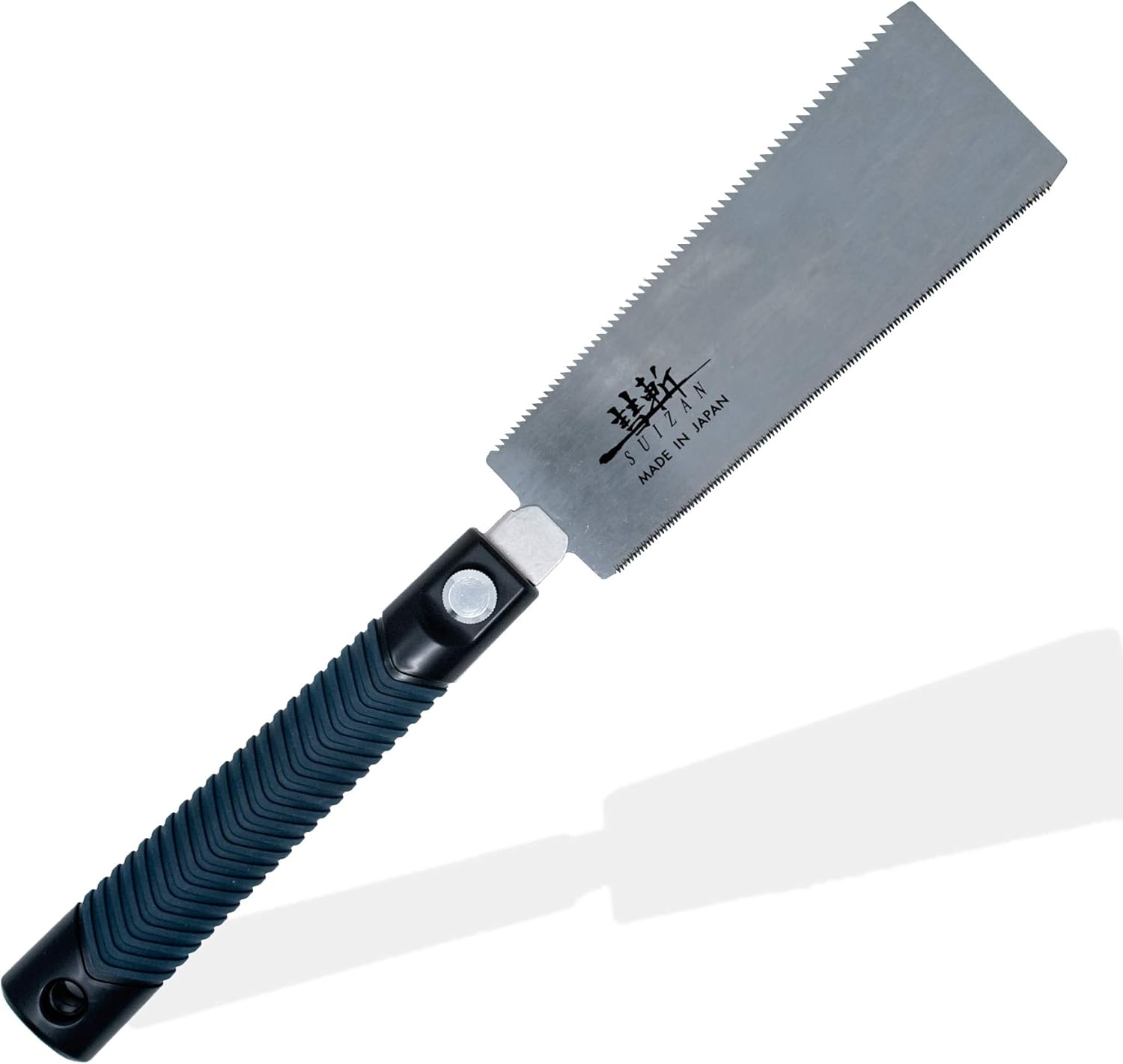
| Blade Length | 7 inches |
|---|---|
| Blade Material | Japanese Steel |
| Blade Thickness | 0.02" |
| Kerf Width | 0.03" |
| Number of Teeth | 19 |
The SUIZAN 7" Ryoba is a performance-focused pull saw built for clean, accurate cuts on trim, joinery and small panels. It uses a very thin 0.02" Japanese steel blade that cuts on the pull stroke, which reduces blade flex and user fatigue while delivering a narrow 0.03" kerf ideal for tight-fitting joints and minimal tearout. The double-edge layout gives you rip teeth on one side and fine 19-TPI crosscut teeth on the other so you can switch between ripping and crosscutting without changing tools. The elastomer handle offers a secure, non-slip grip and the blade is user-replaceable without tools, useful when working through abrasive materials. Performance buyers will appreciate the razor-sharp edge and the ability to make controlled, precise cuts for MDF trim and small panels. Note that the short 7" blade limits long through-cuts and a thin blade can be more delicate against nails or very hard material, so it is best used for finished work and accurate short cuts rather than heavy demolition or long rip cuts.
Best for: Skilled hobbyists and pros who prioritize cut quality and control for trim, joinery, and detailed MDF work and want a compact saw that produces clean, low-tearout edges.
Less Ideal for: People who need to make long through-cuts, heavy demolition, or frequent cuts through embedded fasteners should choose a longer, heavier-duty saw.
- Very thin 0.02" blade gives a narrow 0.03" kerf for precise, low-waste cuts
- Double-edge design provides rip teeth and 19-TPI crosscut teeth in one tool
- Razor-sharp Japanese steel delivers clean cuts with less pulling effort
- Elastomer non-slip handle for secure grip during controlled pull strokes
- Tool-free replaceable blade keeps the saw working sharp without special tools
- 7" blade is short for long rip cuts or large panel work
- Thin blade is more vulnerable to bending or damage when contacting metal or very hard material
Verdict: Buy this saw if you want a compact, high-precision pull saw that delivers razor-sharp, low-kerf cuts for MDF trim and detailed joinery.
WORKPRO 6" Japanese Pull Saw — Dual-Edged SK5 Blade with Beech Handle

| Blade Material | High Carbon Steel (SK5) |
|---|---|
| Number of Teeth | 60 (14 TPI / 17 TPI sides) |
| Handle Material | Beechwood |
| Surface Recommendation | Wood |
The WORKPRO 6" Japanese pull saw is a compact dual-edged hand saw made for fine woodworking and tight-space cuts. One edge has 14 TPI for rip-style cuts and the other 17 TPI for crosscuts, so you can switch between cleaner long-grain and cross-grain cuts without changing tools. The thin, flexible SK5 steel blade with a rust-resistant gold coating lets the saw follow tight lines and flush into corners, which is helpful when trimming or shaping MDF panels and small joinery. The non-slip beechwood handle gives a comfortable grip for controlled pull strokes and the triple-tooth geometry improves chip removal for smoother cuts. Because the blade is very thin and optimized for precision, it is best used on sheet goods and soft to medium-density woods rather than heavy demolition work. The blade is not hardened like a specialized carbide blade so it will dull over time if used on abrasive materials or nails. For hobbyists and shop optimizers who value a small, accurate saw for trimming, smoothing edges, and detailed work on MDF, this is a practical, budget-friendly choice.
Best for: Buyers who want a compact, accurate saw for trimming, fine edge work, and finishing tasks on MDF and other sheet goods and who prioritize control and clean cuts over brute force.
Less Ideal for: Contractors or users who need a durable demolition saw for heavy framing, metal, or frequent cutting of abrasive materials should choose a more robust or carbide-tipped alternative.
- Dual-edged blade (14 TPI and 17 TPI) for both rip and crosscuts without swapping tools
- Thin, flexible SK5 high-carbon steel blade enables precise, flush and tight-radius cuts
- Gold coating provides corrosion resistance to extend blade life
- Non-slip beechwood handle offers comfortable, controlled pull strokes
- Triple-tooth geometry improves chip removal for cleaner cuts on panel goods
- Thin blade is optimized for precision and may bend or wear faster under heavy or abusive use
- Not intended for cutting metal, fasteners, or highly abrasive materials which will dull the blade
Verdict: A compact, dual-edged SK5 pull saw that delivers precise, clean cuts on MDF and small woodworking tasks, ideal for buyers who prioritize control and finish quality.
VPQZUPG 6" Japanese Pull Saw, SK5 Double-Edge (14/17 TPI)

| Blade material | SK5 steel |
|---|---|
| Blade length | 6 inch |
| Tooth count | 14/17 TPI double edge |
| Cut type | Pull-cut |
This 6-inch Japanese pull saw uses an SK5 steel blade with two tooth densities (14 and 17 TPI) to give you a choice between faster cutting and finer, more controlled cuts. It cuts on the pull stroke, which helps keep the blade on line and reduces the effort needed for delicate trimming and joinery. The short blade and wood handle make it easy to maneuver around small workpieces and inside tight spaces, which is handy for trimming MDF edges, cutting small panels, and precision craft work. Because the blade is relatively short and optimized for detail, it is best for crosscuts, trimming, and small rip cuts rather than large-sheet resawing. The simple wooden handle keeps cost and weight down but offers less ergonomic padding for long sessions. Overall this is a capable, budget-friendly option if you need a small, precise handsaw for tidy MDF work and light workshop tasks rather than heavy ripping or large-format cutting.
Best for: A buyer looking for an inexpensive, precise hand saw for small MDF tasks, trim work, and hobby woodworking who values control and maneuverability over speed.
Less Ideal for: Not a good choice for contractors or users who need to cut large MDF sheets, do heavy ripping, or require an ergonomically padded handle for long sessions.
- Double-edge blade (14 and 17 TPI) lets you choose between faster cuts and finer finishing.
- SK5 steel blade offers good edge retention for repeated trimming and detail work.
- Compact 6-inch blade and pull-cut action provide precise control in tight spaces.
- Simple wood handle keeps the tool lightweight and inexpensive.
- Short blade length limits speed and efficiency on large MDF panels or long rip cuts.
- Wood handle lacks cushioning for extended use which can cause hand fatigue.
Verdict: A very affordable, compact pull saw that gives precise, controllable cuts for trimming and small MDF jobs.
Magicbox 2-Piece Japanese Hand Saw Set (SK5 Steel)

| Blade Material | Carbon Steel |
|---|---|
| Handle Material | Wood |
| Power Source | hand powered |
| Unit Count | 2 Count |
| Included Components | Case |
This Magicbox two-piece Japanese hand saw set pairs a double-edge pull saw (11/17 TPI) with a pointed fine-detail saw to cover common workshop tasks. Both blades are made from heat-treated SK5 carbon steel for durability and the fine teeth help produce smooth cuts with reduced tear-out, which is helpful when trimming MDF edges or cutting trim. Wooden ergonomic handles give a comfortable grip for controlled pull strokes and the included blade covers make storage safer. The double-edge saw lets you switch between coarser rip cuts and finer crosscuts without changing tools, while the pointed saw reaches tight spots and performs detailed joinery or flush trimming. Limitations are that the set does not include a dedicated finishing flush-cut blade or replaceable blades, so extremely fine veneer trimming or very high-volume production work may require a specialized saw. Also the wooden handles and manual design mean cutting speed depends on user technique rather than power tools.
Best for: Buyers who prioritize reliable, precise hand tools for workshop projects and want durable saws that produce clean cuts on sheet goods and trim.
Less Ideal for: Users who need a flush-cutting or replaceable-blade solution for constant production work or those who prefer powered cutting tools for faster throughput.
- Two complementary blade types (11 and 17 TPI) cover rip and cross cuts for versatile use
- SK5 carbon steel blades are heat treated for strength and long edge life
- Ergonomic wooden handles for comfortable pull-stroke control during detailed cuts
- Protective blade covers for safer storage and transport
- No replaceable or disposable blades included which limits long-term maintenance options
- Not intended for high-speed or high-volume production compared with powered saws
Verdict: A durable, no-frills two-saw kit that delivers precise pull-cut performance for careful MDF trimming and general woodworking.
RUITOOL 6" Japanese Ryoba Pull Saw with SK5 Steel Blade and Beech Handle

| Blade Material | SK5 steel |
|---|---|
| Blade Length | 6 inches |
| Number of Teeth | 14 & 17 TPI |
| Blade Thickness | 0.67mm |
| Handle Material | Beechwood |
The RUITOOL 6" Ryoba pull saw is a short, precise hand saw built for fine woodworking and flush cuts. It uses a thin, flexible SK5 high-carbon steel blade with two tooth patterns: a finer 17 TPI edge for crosscuts and a 14 TPI edge for faster rip cuts. The hardened three-edge teeth and slim 0.67 mm blade translate to quick, clean slices and reduced tear-out on finish pieces. Its compact length makes it easy to control for trimming moldings, small joinery, and tight spots where a full-size saw would be unwieldy. The beechwood handle is simple but comfortable for light-to-moderate sessions. Limitations are its short 6" blade, which is not suitable for long rip cuts or heavy stock removal, and the thin blade requires a steady hand to avoid binding on very dense material. For MDF specifically, the fine teeth and thin blade help reduce chipping on edges, but you may still want to score cut lines or use a sacrificial fence for the cleanest results on laminated or painted MDF.
Best for: A buyer who values controlled, precise finish work on small panels and trim and wants a compact saw for detailed cuts and flush trimming.
Less Ideal for: Not a good fit for users who need to make long rip cuts, remove large amounts of material quickly, or work primarily on very thick hardwoods without additional support.
- Dual-edge teeth (14 and 17 TPI) let you switch between faster rip cuts and finer crosscuts without changing tools
- SK5 high-carbon steel blade is thin and flexible for precise, low-tear cuts and flush trimming
- Hardened three-edge tooth geometry improves sharpness and chip removal for smoother surfaces
- 6" blade length limits reach and makes long straight cuts slower or impractical
- Thin flexible blade can bind or wander in very dense or poorly supported stock
Verdict: Choose this compact Ryoba saw when you need a precise, low-tear hand tool for clean edge and flush cuts on MDF and trim work.
Choosing the Right Hand Saw for Mdf: Key Factors to Consider
Blade Stiffness and Thickness
Blade stiffness determines how straight and true your cuts will be in MDF. A thin, highly flexible blade tends to wobble once the cut kerf deepens, which leads to uneven edges and more sanding to correct the line. Thicker blades resist bending and transmit your hand movements into a predictable cut path, which is especially important when cutting long panels.
However, thicker blades can require more effort to push through the board. For most MDF tasks you want a balance: enough thickness to prevent wobble but not so thick that control and cutting rhythm suffer. Look for blades described as 'rigid' or constructed from higher gauge steel when working with large sheets.
Tooth Geometry and Pitch
Tooth shape and teeth per inch (TPI) are critical to minimizing tearout on MDF. A finer tooth pitch with teeth designed to score and shear fibers will produce a cleaner edge than a coarse, aggressive tooth meant for ripping softwood. Crosscut-style teeth or teeth described as 'hybrid' that combine scoring and material removal often work best on engineered boards.
Also consider whether the saw uses impulse-hardened or ground teeth. Hardened teeth hold an edge longer against the abrasive fillers in MDF, while ground teeth cut more smoothly and can be sharpened to restore performance. The right tooth geometry reduces the need for back-sanding and clean-up after the cut.
Cutting Technique and Control
How you guide the saw matters as much as the blade itself. MDF responds poorly to aggressive, uncontrolled strokes that lift or tear fibers at the cut edge. A saw with a comfortable, balanced handle helps you maintain a steady rhythm and consistent kerf during both the initial scoring stroke and the main cut.
Using a scored starter line or a straightedge guide reduces the chance of wandering. Pay attention to stroke length and pressure: long, even strokes reduce the number of times teeth engage and disengage, which helps keep the edge clean. For precise joinery or face-edge work, consider a saw designed for fine crosscuts and controlled hand placement.
Handle Design and Comfort
Sustained sawing on large MDF panels can strain your wrist and forearm if the handle is poorly shaped or slippery. Look for handles with enough palm and thumb support to steer the saw with minimal grip force. A well-balanced saw centers the blade on your stroke, making accuracy easier to maintain.
Materials and finish of the handle also affect control. Hardened plastic or contoured wooden handles can be comfortable, but textured surfaces or ergonomically shaped grips reduce sweat-related slippage during long cuts. Consider how the handle mounts to the blade; secure mechanical fastening prevents wobble between handle and blade that would otherwise show up as uneven edges.
Blade Finish and Corrosion Resistance
MDF dust is hygroscopic and can carry moisture into the blade if you work in damp conditions. A protective blade finish reduces corrosion and maintains smooth tooth action over time. Coatings also help the saw glide through dense composite material and reduce resin buildup that increases friction.
While coatings do not replace good maintenance, they extend service life and keep cuts consistent. Consider whether the manufacturer specifies anti-stick or anti-corrosion treatments and how easy the blade is to clean after prolonged MDF cutting.
Sharpening, Replaceability, and Maintenance
MDF contains fine mineral fillers and resins that accelerate tooth wear. A blade that can be resharpened or replaced economically keeps long-term costs down and maintains cut quality. Check whether the teeth are sharpenable by a competent hobbyist and whether replacement blades are readily available if the saw uses modular blades.
Regular maintenance like cleaning resin and dust from the gullets and applying a light lubricant will slow wear. If you do large-volume MDF work, factor in how often you will need to service or replace the blade when making a purchase decision.
Preparing MDF for a Clean Hand-Saw Cut
Scoring the cut line before the main pass reduces chipping on the panel face. Use a sharp utility knife and a straightedge to cut a shallow groove along the layout line; this severs surface fibers and gives the saw teeth a clean starting path. For edge work, clamp the panel vertically to mimic the support the saw expects and prevent tearout from unsupported fibers.
If you have a straightedge or track, guide the saw along it to maintain a perfectly straight line. Support the offcut so the blade does not pinch as the cut completes; sudden pinching increases splintering.
- Score the cut line with a knife first
- Use a straightedge or guide for long cuts
- Support the offcut to avoid pinching at the end of the cut
Best Stroke Techniques When Cutting MDF by Hand
Start with short, controlled strokes to establish the kerf and then lengthen to full strokes once the blade is seated. Keep even pressure through each stroke and avoid lifting the saw at the end of a pull to prevent tearout on the trailing edge. Maintain a comfortable stance and let the saw do the work; forcing the blade accelerates wear and causes wandering.
When crosscutting smaller pieces, consider holding the board against a bench hook or guide to stabilize it. For long rip cuts, make sure your sawing rhythm is consistent so the cut track remains straight.
- Begin with short starter strokes
- Progress to long, steady strokes
- Avoid forcing the blade; let it cut at its own rate
Edge Finishing Tips After Sawing MDF
Even the cleanest hand-saw cut may need minor cleanup. Use a sanding block or a card scraper to remove any tiny fuzz or raised fibers left along the edge. Sand lightly across the face to avoid creating dips; a sanding block keeps the surface flat.
If you need a pristine face for veneer or paint, consider a light pass with a plane set very shallowly, then finish with sanding. Always dust off the surface thoroughly before gluing or finishing to ensure proper adhesion.
- Use a sanding block for flat, even cleanup
- A shallow plane pass can improve veneer edges
- Clean dust before finishing or gluing
Workshop Setup and Dust Management
MDF produces a lot of fine dust that is harmful to breathe and clogs tools quickly. Work in a well-ventilated area and use a dust mask or respirator rated for fine particles. Position a shop vacuum or dust extractor near the cutting area to capture dust at the source.
Keep a brush and compressed air handy to clear the kerf and gullets during long cuts. Regularly clear dust from the workspace to prevent buildup on the blade and handle, which degrades control and finish quality.
- Use a respirator for fine MDF dust
- Deploy a shop vacuum or extractor at the cut
- Clear dust from the blade frequently during long sessions
Alternatives and When to Choose a Power Tool
Hand saws excel for small trimming tasks, controlled edge work, and situations without power access. For repetitive long rip cuts or large sheet breakdowns, a power saw with a fine-tooth blade can be faster and produce consistently straight cuts with less effort. However, the setup time and need for dust control increase with power tools.
If you need occasional, precise, small cuts or are working in a constrained space, a hand saw designed for MDF remains an excellent choice because it gives you direct control and minimal setup.
- Hand saws are best for small, precise, or portable work
- Power saws are efficient for large, repetitive cuts but need more setup
- Match tool to task size and frequency of use
How We Chose the Best Hand Saw for Mdf
We focused on the attributes that directly affect how MDF behaves under a hand saw. First, blade stiffness and thickness were weighted heavily because a flexible blade produces wobble and irregular cuts in MDF. Second, tooth geometry and pitch were evaluated for their ability to shear fibers cleanly rather than tear them apart. Third, handle ergonomics and control were assessed so the saw can be guided steadily along layout lines without undue fatigue. Fourth, blade coating and anti-corrosion finishes were considered because they influence long-term smooth cutting, especially when working in humid or dusty workshops. We also checked ease of sharpening or replaceability for blades that may dull quickly when used on abrasive engineered boards. We excluded tools designed primarily for rough framing or metal cutting, and we did not consider powered saws. Products that lacked sufficient user-control features or had visibly thin, highly flexible blades were filtered out. The final picks balance clean-edge capability, user control, and durability for working MDF. Our scoring focused on measurable attributes like stiffness, tooth pattern suitability, handle stability, and finish longevity.
FAQ
Can I use a general-purpose handsaw on MDF?
Often you can, but general-purpose saws may leave more tearout and a rougher edge. Saws with finer tooth geometry and stiffer blades produce cleaner results on MDF.
What tooth count works best for MDF?
A finer tooth pitch usually works better for clean face edges. Something in the medium-to-high TPI range minimizes chipping, though exact counts depend on the saw's tooth geometry.
How do I prevent burning or gumming on the blade when cutting MDF?
Keep the blade clean of dust and resin, use steady strokes without forcing, and consider a blade finish that resists sticking. Frequent cleaning during long sessions helps prevent buildup that causes friction.
Is it worth sharpening a hand saw used mostly for MDF?
It depends on volume. MDF dulls teeth faster because of fillers. For occasional use, periodic sharpening restores performance. For heavy use, replaceable or hardened-tooth blades reduce downtime.
Do I need special PPE when sawing MDF?
Yes. MDF dust contains fine particles and resins that can irritate lungs. Use a good respirator or dust mask, eye protection, and maintain ventilation or dust extraction near the cutting area.
Final Verdict
Choosing the right hand saw for MDF comes down to managing edge cleanliness, blade stability, and user control. Prioritize a stiff blade with tooth geometry suited to shearing fine fibers, a comfortable handle that lets you guide steady strokes, and a finish that resists corrosion and resin buildup. Balance cutting speed against the need for a tearout-free edge: a slightly slower, cleaner cut often saves time on sanding and finishing later. Make your decision based on the scale of work you do. For occasional, detailed cuts, favor control and tooth design. For frequent panel breakdowns, prioritize durability and ease of maintenance. With the right tradeoffs in mind, you can pick a hand saw that delivers neat, repeatable cuts in MDF and reduces downstream finishing work.
