

Note: This article contains affiliate links. If you click on these links and make a purchase, I may earn a small commission at no extra cost to you. This helps support my research and content. Read my full affiliate disclosure here.
Growing citrus indoors changes the light equation for your trees. Without strong natural sun, you need a grow light that provides the right spectrum and intensity to support leaf health, flowering, and fruit development. This guide covers six shortlisted grow lights chosen for indoor citrus trees and explains the practical tradeoffs between output, coverage, heat, and energy use. You will get clear reasons each criterion matters for potted citrus and guidance to match a lamp to your space and tree size. Read on for the evaluation criteria and what to look for when choosing a grow light to keep citrus productive and vigorous in an indoor setting.
Top Picks at a Glance
| Best Overall The best all-around choice for most situations | Barrina T10 Vertical Grow Light, 4 ft, 42W Full Spectrum (5000K) |  |
| Best Quality Built to a higher standard if you want something more solid | VIVOSUN LumaLight 100W LED Full Spectrum Grow Light |  |
| Best Value The sweet spot between price and what you get | GLOWRIUM G2 Floor Grow Light with Adjustable Stand | 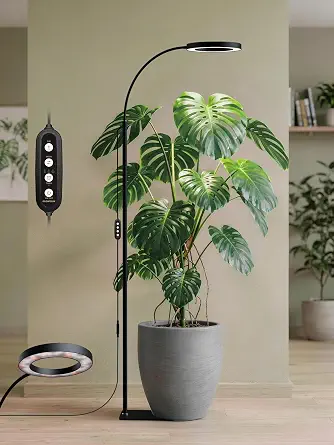 |
| Best Budget The cheapest option that still gets the job done reliably | FECiDA 2-Head Adjustable Floor Grow Light with Stable Base |  |
| Highest Rated A top-rated pick with lots of positive feedback | Hemonee GL-3 Four-Head Full-Spectrum LED Floor Grow Light with Adjustable Tripod |  |
| Most Popular A crowd favorite that many people choose with confidence | GLOWRIUM G2 Pro 48W Full‑Spectrum LED Floor Grow Light with Adjustable Stand |  |
Barrina T10 Vertical Grow Light, 4 ft, 42W Full Spectrum (5000K)

| Wattage | 42 watts |
|---|---|
| Light Source Type | LED |
| Light Color | 5000K |
| Mounting Type | Floor Mount |
| Control Method | Touch with foot control |
The Barrina T10 Vertical Grow Light is a freestanding 4 foot LED lamp designed to provide broad side lighting for indoor plants. It is typically used next to tall potted specimens where upright coverage matters, such as larger houseplants or small indoor trees; set the tripod, attach the lamp, plug it in and control power with the foot switch. Notable features include a 42 watt full-spectrum 5000K output, an aluminum body with plastic elements, touch control plus foot controller, and advertised high PPFD for close-range plant lighting. In practice that means strong, daylight-white illumination that encourages leaf photosynthesis across a taller canopy and keeps plants looking natural under a high CRI. The lamp is height adjustable and easy to assemble with the included tripod and hex wrench. Limitations are its indoor-only design and lack of water resistance, so it must stay dry and protected, and the freestanding tripod can require occasional tightening to remain stable for heavy pots. Overall it is a straightforward, space-conscious choice for adding supplemental light to taller indoor plants.
Best for: Buyers who want a balanced, all-purpose supplemental light for taller indoor plants or small indoor citrus trees and prefer a simple freestanding setup over ceiling or hanging fixtures.
Less Ideal for: People who need weatherproof lighting for humid rooms or outdoor use or growers who require integrated timers and smart controls built into the fixture.
- Full-spectrum 5000K output with high CRI for natural-looking daylight and photosynthesis support
- Tall freestanding design provides side lighting suited to taller plants and larger pots
- 42W LED with advertised high PPFD for effective close-range light intensity
- Easy, tool-light assembly with adjustable height and included tripod and hex wrench
- Not water resistant so unsuitable for humid, wet, or outdoor locations
- Freestanding tripod may need periodic tightening to remain stable with heavy pots
Verdict: A compact, easy-to-assemble vertical full-spectrum LED that gives tall indoor plants strong, daylight-like illumination in a freestanding package.
VIVOSUN LumaLight 100W LED Full Spectrum Grow Light

| Wattage | 100 watts |
|---|---|
| Light Source Type | LED |
| Number of Light Sources | 336 |
| Is Waterproof | True |
| Control Method | Remote |
The VIVOSUN LumaLight 100W is a compact full-spectrum LED grow light intended for indoor gardens and patios. It uses a mix of white, blue, red and far-red diodes to support all growth stages from seedlings through flowering, and the array is arranged to deliver uniform intensity across the canopy. Typical use is hanging above a small grow area with the included rope hangers and adjusting intensity via the four-level dimming knob or remote/mobile control when paired with VIVOSUN accessories. Notable features include IP65 water and dust resistance for high-humidity setups, a low-heat design for closer placement to plants, and Bluetooth/remote control compatibility for easier scheduling. Practical benefits are even coverage for several small plants, lower heat stress, and long expected LED life. Limitations are its 100W power level, which is best for small tents or a few plants rather than larger grow rooms, and some advanced scheduling requires the separate GrowHub controller for full smart automation.
Best for: A practical home grower who wants a reliable, compact full-spectrum light for seedlings through flowering and values even coverage and low heat in a small tent or patio setup.
Less Ideal for: Large-scale growers or those outfitting multi-shelf systems who need higher wattage fixtures or broader coverage should consider more powerful models.
- Full-spectrum diode mix (white, blue, red, far-red) suitable for all growth stages
- Dimmable four-level control plus Bluetooth/remote connectivity for convenient intensity adjustments
- IP65 waterproof and dustproof rating allows use in humid or misted environments
- Low-heat design with aluminum body for efficient thermal management and longer LED life
- At 100 watts it is intended for small tents or modest plant counts and not optimized for larger grows
- Advanced smart scheduling requires purchasing the GrowHub controller separately
Verdict: A dependable, compact full-spectrum LED grow light that delivers even coverage and low heat for small indoor grows.
GLOWRIUM G2 Floor Grow Light with Adjustable Stand

| Light Source Type | LED |
|---|---|
| Additional Features | Adjustable Height, Dimmable, Flexible, Full Spectrum, Timer |
| Wattage | 20 watts |
| Number of Light Sources | 66 |
| Controller Type | Remote Control |
The GLOWRIUM G2 is a floor-style grow lamp designed to give large indoor plants reliable supplemental light without complicated installation. It uses 66 full-spectrum LEDs in a 20W fixture mounted on a three-section aluminum stand so you can raise the lamp to match a Monstera's canopy as it grows. Controls include stepless 10 to 100% dimming across six levels, a 3/9/12-hour auto timer, and a remote plus in-line push-button operation for quick adjustments. Practical features such as a wide base, anti-slip design, 13-foot power cord, and good heat dissipation make it easy to position near living-room plants and keep running safely for long periods. The lamp offers three light modes that combine warm, cool, and red spectrums to support rooting, vegetative growth, and flowering stages. Limitations are that it is meant for indoor use only and has a freestanding footprint, so it takes floor space and is less suitable for very small apartments or for growers who need wall- or ceiling-mounted fixtures.
Best for: Houseplant owners who want a straightforward, durable lamp to give a growing Monstera reliable, adjustable supplemental light without fussing with mounts or complex setups.
Less Ideal for: People with very limited floor space, those who need ceiling- or wall-mounted lighting, or growers who require IP-rated fixtures for humid rooms.
- Adjustable three-section stand lets you raise the light to match Monstera height and changing canopy needs
- Full-spectrum LED array with warm, cool, and red modes supports all growth stages
- Stepless 10–100% dimming and 3/9/12-hour timer add automation and precise intensity control
- Aluminum construction improves heat dissipation for longer runtime and durability
- Long 13-foot power cord and stable anti-slip base make placement flexible and secure
- Freestanding design requires floor space and may not fit very tight or high-shelf setups
- Specified as indoor use only so it is not suitable for humid outdoor or unprotected patio placements
Verdict: A practical, easy-to-use floor grow light that gives Monsteras adjustable full-spectrum illumination as they grow.
FECiDA 2-Head Adjustable Floor Grow Light with Stable Base

| Light Source Type | LED |
|---|---|
| Number of Light Sources | 204 |
| Additional Features | 4,8,12,16,20 Hr Timer |
| Mounting Type | Free Standing On Floor |
| Power Source | Corded Electric |
This FECiDA floor grow light is built for tall houseplants like a Monstera, offering a two-head lamp on a stable round base with a height range that suits large foliage. It uses LED light sources and a full spectrum that includes warm 3000K, cool 5000K, and 660nm plus UV-IR elements to encourage vegetative growth and fuller leaves. The touch control and 5-mode timer (4/8/12/16/20 hours) make it easy to set daily on/off cycles so you can maintain consistent light without monitoring. The unit is corded and plugs into a standard outlet and supports daisy-chaining up to three units from one socket for larger setups. Practical benefits include an elegant living-room friendly design that doubles as décor, a sturdy base that resists tipping, and adjustable height for different plant sizes. Important limitations are the modest 25 watt rating listed in specs despite marketing claims of high lumen output and that the lamp is meant for indoor use only, so it is not suited to outdoor or weather-exposed placements.
Best for: Plant owners who prioritize consistent, high-quality light for large indoor specimens and want a floor lamp that fits a living-room aesthetic while delivering full-spectrum output and timer automation.
Less Ideal for: Growers needing high-intensity, commercial-grade output for dense canopy flowering or large multi-shelf grow tents should consider higher-wattage fixtures instead.
- Full-spectrum LED array including 3000K, 5000K and 660nm plus UV-IR for balanced plant growth
- Adjustable height that accommodates tall plants and multiple link rods for different sizes
- Built-in 5-mode timer with daily auto on/off for consistent light cycles
- Stable base and decorative design suitable for living-room placement
- Daisy-chainable power allowing up to three units from one outlet for expanded coverage
- Wattage listed at 25 watts may be lower than buyers expect given some brightness claims
- Intended for indoor use only and not weatherproof for outdoor placement
Verdict: A stylish, full-spectrum floor lamp that gives Monstera and other tall houseplants reliable, timed indoor sunlight in a living-room friendly form.
Hemonee GL-3 Four-Head Full-Spectrum LED Floor Grow Light with Adjustable Tripod

| Light Source Type | Light Emitting Diode |
|---|---|
| Power Source | Corded Electric |
| Mounting Type | Floor Mount |
| Light Source Special Features | 4 modes, 6 dimmable levels, 3/6/12H timer, adjustable heads |
| Number of Light Sources | 4 |
The Hemonee GL-3 is a floor-mounted LED grow lamp built to supplement sunlight for indoor plants using four independently adjustable heads and 420 LEDs that cover a wide 380–800 nm full spectrum. Typical use is positioning the tripod near a citrus tree or other large houseplants, setting the height between 15 and 63 inches, angling the gooseneck heads for canopy coverage, and choosing one of four light modes and six brightness levels. The unit includes a 3/6/12-hour auto on/off timer with memory so it can run the same daily schedule without manual switching. Its aluminum construction and aviation-grade heat sink help dissipate heat during extended runs. Practical benefits include flexible light placement for taller plants, the ability to tailor intensity across growth stages, and energy saving by powering only the heads you need. Limitations are that the product is corded so you need a nearby outlet, and the tripod design is less compact than panel-style fixtures, which may affect stability around very large potted citrus or in tight spaces.
Best for: Buyers who want a dependable, configurable supplemental light for medium to large indoor citrus trees and who value scheduled, hands-off operation and flexible head positioning.
Less Ideal for: People needing a very compact or wall-mounted fixture for cramped spaces or growers who want a plug-and-play full-coverage LED panel for large commercial setups.
- Full 380–800 nm spectrum suitable for all growth stages
- Four independently adjustable heads for broad canopy coverage
- Six dimmable levels plus four modes to match plant light needs
- Built-in 3/6/12-hour timer with memory for consistent daily schedules
- Requires a nearby outlet because it is corded and not battery-powered
- Tripod floor mount takes more floor space than wall or panel fixtures
Verdict: A versatile, timer-equipped floor grow light that reliably delivers full-spectrum, adjustable illumination for indoor citrus trees needing consistent supplemental sun.
GLOWRIUM G2 Pro 48W Full‑Spectrum LED Floor Grow Light with Adjustable Stand

| Light Source Type | LED |
|---|---|
| Additional Features | Adjustable Height, Dimmable, Dual Heads, Full Spectrum, Timer |
| Power Source | Corded Electric |
| Voltage | 24 volts_of_direct_current |
| Mounting Type | Freestanding |
The GLOWRIUM G2 Pro is a freestanding floor grow light designed to provide consistent, full‑spectrum illumination for indoor plants from seedling through flowering. It uses LED strips and a wide lamp head on a four‑section adjustable pole so you can raise or lower the light for short seedlings or taller houseplants. Controls include stepless dimming, three color modes, and a built‑in timer with 3/9/12/16‑hour cycles, which makes daily scheduling simple. Notable extras are the plant care assistant functions such as light measurement, watering reminders, and growth records that help standardize care. The unit runs on a low‑voltage 24V supply and has an aluminum construction with a heavier base for stability, so it feels safer and more durable than cheaper clip lights. Expect good coverage for a small to medium cluster of pots, but the light is a floor lamp form factor so it takes floor space and is not ideal for mounting over wide racks or whole‑room installs. If you need app control or a wall/ceiling mounting solution, look at other form factors instead.
Best for: Buyers who prioritize a reliable, sturdily built grow light that maintains consistent schedules and plant care routines with minimal fuss, especially for small to medium indoor collections.
Less Ideal for: Growers who need ceiling or rack‑mounted fixtures to cover large multi‑shelf setups or who require integrated app/remote control for remote management.
- Full spectrum LED with stepless dimming and three modes to match seedling, vegetative, and flowering stages
- Adjustable four‑section pole and 360° gooseneck for precise positioning and wider coverage
- Built‑in timer and plant care assistant features for automated schedules and care reminders
- Aluminum construction with a heavier base and 24V low‑voltage supply for stable, durable, and safer operation
- Freestanding floor design requires floor space and is less suitable for wide or multi‑tier rack installations
- No explicit app or remote control on this model so remote scheduling options are limited
Verdict: Choose this GLOWRIUM floor grow light if you want a stable, full‑spectrum LED unit with adjustable height, dependable timer functions, and built‑in plant care tools for consistent indoor plant growth.
Choosing the Right Grow Light for Indoor Citrus Trees: Key Factors to Consider
Spectrum and Light Quality
Citrus trees respond to both blue and red wavelengths at different growth stages. Blue light encourages compact strong leaves while red and far-red support flowering and fruit set. A fixture that provides a balanced spectrum or allows spectrum adjustment will let you support vegetative growth and then shift toward bloom-friendly wavelengths during flowering.
Spectrum quality also affects how foliage and fruit color look under the light and whether the plant senses a natural day-length signal. Fixtures that list correlated color temperature and a spectral distribution chart give you useful information for matching a lamp to citrus needs.
Delivered Light: PPFD and Canopy Distance
Published PPFD values or total photon flux measured at recommended hanging heights tell you how much usable light the tree actually receives. Indoor citrus benefits from moderate to high PPFD for several hours daily to sustain flowering and fruiting. Consider the fixture's rated output at the distance you will hang it, because a high-power lamp too far away can under-illuminate the canopy.
Also think about how many hours per day you can run the light. A slightly lower PPFD with a longer photoperiod can sometimes substitute for higher instantaneous output, but fruiting plants still need strong enough daily light integral to support energy-intensive processes like blossom and fruit development.
Coverage Area and Beam Uniformity
Citrus trees have a three-dimensional canopy. Good coverage and even light distribution prevent shaded branches that drop leaves or fail to bloom. Look for fixtures with wide, even beams or the option to add reflectors or multiple mounting points so you can shape the light to the pot and canopy size.
If you plan to run a single fixture over a tall potted citrus, verify the manufacturer's coverage chart or use multiple smaller fixtures to layer light vertically. Uneven light forces the tree to stretch toward bright spots and can reduce overall fruit productivity.
Heat Output and Plant Safety
Excess heat can stress leaves and cause tip burn, while insufficient ventilation shortens component life. Choose fixtures with good passive or active cooling and place them at a distance that delivers the needed PPFD without baking foliage. LEDs run cooler than many traditional lamps but still generate heat in drivers and diodes that must be managed.
Consider the interior environment too. In small rooms heat from lights can raise ambient temperatures and change humidity, which affects citrus flowering and fruit set. Fixtures that allow you to dim or change duty cycles give you more control over thermal load.
Energy Use and Long-Term Running Costs
Indoor citrus often needs extended daily light periods, so electrical efficiency matters for long-term costs and household circuit sizing. Compare input wattage to delivered photon output when assessing efficiency. Fixtures with dimming or programmable schedules can lower consumption while still delivering the light integral citrus requires.
Also consider driver efficiency and rated lifespan. Higher initial fixture cost can be offset by lower energy use and fewer replacements over several seasons of indoor citrus care.
Fixture Form Factor and Installation
How a fixture mounts and adjusts affects how well you can position light as the tree grows. Hanging hardware, height adjusters, and the ability to angle the lamp are practical features. Slim panels work well in tight living spaces while adjustable multi-bar systems are better for wider canopies.
Think about room fittings, ceiling height, and how often you will need to move or lift the lamp for pruning and maintenance. Fixtures with simple plug-and-play setups and clear instructions reduce installation headaches, especially when working around potted citrus indoors.
Matching Fixture Output to Tree Size
A small 1 to 3 gallon potted citrus needs far less absolute light than a large 15-gallon specimen. For small trees you can use a compact panel or a single-bar fixture hung closer to the canopy. Larger trees need broader coverage or multiple fixtures to reach inner branches.
Measure the pot and canopy spread, then pick a fixture that offers even PPFD across that footprint at a practical hanging height. If you plan to up-pot or keep the tree long-term, choose a system that scales by adding additional fixtures rather than replacing the whole lamp.
- Use closer mounting for compact fixtures and higher power or multiple fixtures for broad canopies
- Plan for future growth when selecting coverage
Timing and Daily Light Integral
Citrus benefits from a substantial daily light integral rather than short bursts of intense light. Aim for a consistent daily schedule and adjust run time as natural daylight changes with seasons.
A timer and dimming control let you experiment with photoperiods that encourage bloom without overstressing the tree. Track how flowers and fruit set respond when you alter hours or intensity.
- Longer photoperiods with moderate PPFD can substitute for short intense sessions
- Use timers to ensure consistent light cycles that mirror seasonal changes
Placement, Reflectors, and Room Considerations
Positioning the fixture relative to windows, walls, and reflective surfaces changes effective light. Light-colored walls and reflective panels can improve uniformity around a potted citrus. Avoid placing fixtures so close that light falls primarily on one side of the tree.
Also consider human comfort. Bright grow lights can be visually intense in living areas, so install shields or indirect mounting and avoid glare at eye level. Ensure the fixture and any cords are safely routed for indoor use.
- Enhance coverage with reflective surfaces if needed
- Keep fixtures out of direct sightlines where brightness is uncomfortable
Using Spectrum Shifts to Encourage Bloom
During vegetative growth, emphasize blue-rich light to keep foliage compact and healthy. When you want to trigger flowering, increase the proportion of red wavelengths or deploy a bloom mode if the fixture offers it. These shifts mimic seasonal cues and can coax an indoor citrus into producing more flowers.
If your fixture lacks spectrum control, manage flowering with changes to photoperiod and slight increases in total daily light rather than relying purely on spectrum shifts.
- Blue-rich light supports leaf growth, red-rich supports flowering
- Use spectrum shifts or photoperiod adjustments to simulate seasonal signals
Maintenance and Longevity of Fixtures
Keep fixtures dust-free and check cooling vents or fans periodically. Dust accumulation reduces light output and can lead to higher operating temperatures. Replace drivers or fans at the first sign of irregular operation to prevent sudden light loss.
Inspect hanging hardware and cords for wear, especially in humid indoor environments. Fixtures rated for continuous operation with replaceable parts usually last longer and offer a better return over multiple citrus growing seasons.
- Regular cleaning preserves output
- Inspect electrical components and mounting hardware annually
How We Chose the Best Grow Light for Indoor Citrus Trees
We focused on specifications and real-garden performance factors that matter for potted citrus grown indoors. Key evaluation criteria included spectral quality, measured as a balanced spectrum or tunable white/red ratios that support both vegetative growth and flowering; delivered light output measured in PPFD or total photon flux across a realistic canopy distance; coverage pattern and beam control so one fixture can evenly light a citrus canopy without hot spots; thermal management and fixture durability to avoid heat stress or rapid component aging; energy efficiency and electrical reliability to keep running costs and circuit load reasonable; and physical form factor, including height adjustability and mounting options suited to living spaces. Products were excluded if they lacked clear photometric data, used only vague marketing claims about "full spectrum," or were designed solely for seedlings rather than active fruiting plants. We also favored fixtures with clear specifications for dimming or spectrum control because indoor citrus needs different light at vegetative and flowering stages. The scoring focused on measurable lighting outcomes and practical installation factors that gardeners will deal with in real indoor setups.
FAQ
How many hours a day should I run a grow light for indoor citrus?
It usually depends on the light intensity and season. Many growers run lights 10 to 14 hours daily to achieve a sufficient daily light integral. If you use higher PPFD, shorter hours may work; with lower PPFD, lengthen the photoperiod.
Can I use a single fixture for multiple citrus trees?
You can if the fixture provides even coverage across the combined canopy. For clustered pots, a wide panel or multiple fixtures spaced for overlap is better than a single concentrated beam, which causes uneven growth.
Will LEDs produce too much heat for indoor citrus?
LEDs are generally cooler than traditional lamps, but they still generate heat in drivers and diodes. Proper mounting distance and good fixture cooling prevent heat stress. Monitor leaf tips and ambient temperature to avoid tip burn and reduced humidity.
Is spectrum control necessary for fruiting citrus indoors?
Spectrum control helps because citrus responds differently to blue and red light at separate stages. However, a well-balanced full-spectrum fixture with adequate intensity can still support fruiting if you manage photoperiod and overall light integral.
How high should I hang a grow light above my citrus tree?
Hang the fixture at the height that provides the manufacturer's recommended PPFD for your canopy size. For compact panels this is often 12 to 24 inches, while higher-output fixtures may be 24 to 36 inches or more. Adjust based on light readings and plant response.
Do I need a light meter to choose or position a grow light?
A light meter or PAR meter is useful but not strictly required. Manufacturer output charts help approximate placement. If you want precision, a PAR meter will let you measure PPFD across the canopy and fine-tune height and spacing.
Final Verdict
Choosing a grow light for indoor citrus trees means balancing spectrum, delivered light, coverage, heat, and long-term energy use. Prioritize fixtures that provide a balanced spectrum or adjustable output, clear PPFD information at practical hanging heights, and even beam control for a three-dimensional canopy. Also consider thermal management and installation flexibility so you can position light as the tree grows or moves. Focus on the factors that match your space and tree size: compact panels for small pots, broader systems or multiple fixtures for larger trees, and dimming or scheduling to tune daily light. With the right fixture and consistent light schedule, you can encourage healthy foliage, reliable flowering, and better fruit set indoors.
