

Note: This article contains affiliate links. If you click on these links and make a purchase, I may earn a small commission at no extra cost to you. This helps support my research and content. Read my full affiliate disclosure here.
Keeping a fiddle leaf fig vigorous and glossy depends heavily on the feeding plan you choose. A product formulated for these large-leaved indoor trees supplies the right mix of nitrogen, phosphorus, potassium and micronutrients to support leaf production without forcing weak, leggy growth. You will find shortlisted fertilizers that suit different pot sizes, soil mixes, and care routines. This guide covers seven top options selected for reliability in real home conditions. We explain the evaluation criteria used, how each product type behaves in a planted container, and the factors to weigh when picking a fertilizer for your fiddle leaf fig. Read on for practical advice that helps you match a feeding routine to your light, watering, and repotting schedule.
Top Picks at a Glance
| Best Overall The best all-around choice for most situations | GARDENWISE 3-1-2 Liquid Fertilizer Concentrate for Fiddle Leaf Fig (8 oz) |  |
| Best Quality Built to a higher standard if you want something more solid | BLESS YOUR SOIL Big Green Leaves Indoor Plant Food, 1 lb Concentrated Powder |  |
| Best Value The sweet spot between price and what you get | Purived All-Purpose Liquid Houseplant Fertilizer, 16 fl oz (Makes 50 Gallons) |  |
| Best Budget The cheapest option that still gets the job done reliably | Perfect Plants Fiddle Leaf Fig Slow-Release Fertilizer Pellets, 5 oz |  |
| Highest Rated A top-rated pick with lots of positive feedback | NitroGene Tech 3-1-2 Liquid Fertilizer for Fiddle Leaf Fig, 8 oz |  |
| Most Popular A crowd favorite that many people choose with confidence | TPS Nutrients Fiddle Leaf Fig Liquid Fertilizer, 8 oz |  |
| Best Seller A high-volume bestseller chosen again and again | Miracle-Gro Indoor Plant Food for Tropicals, 8 fl. oz. (2-Pack) |  |
GARDENWISE 3-1-2 Liquid Fertilizer Concentrate for Fiddle Leaf Fig (8 oz)
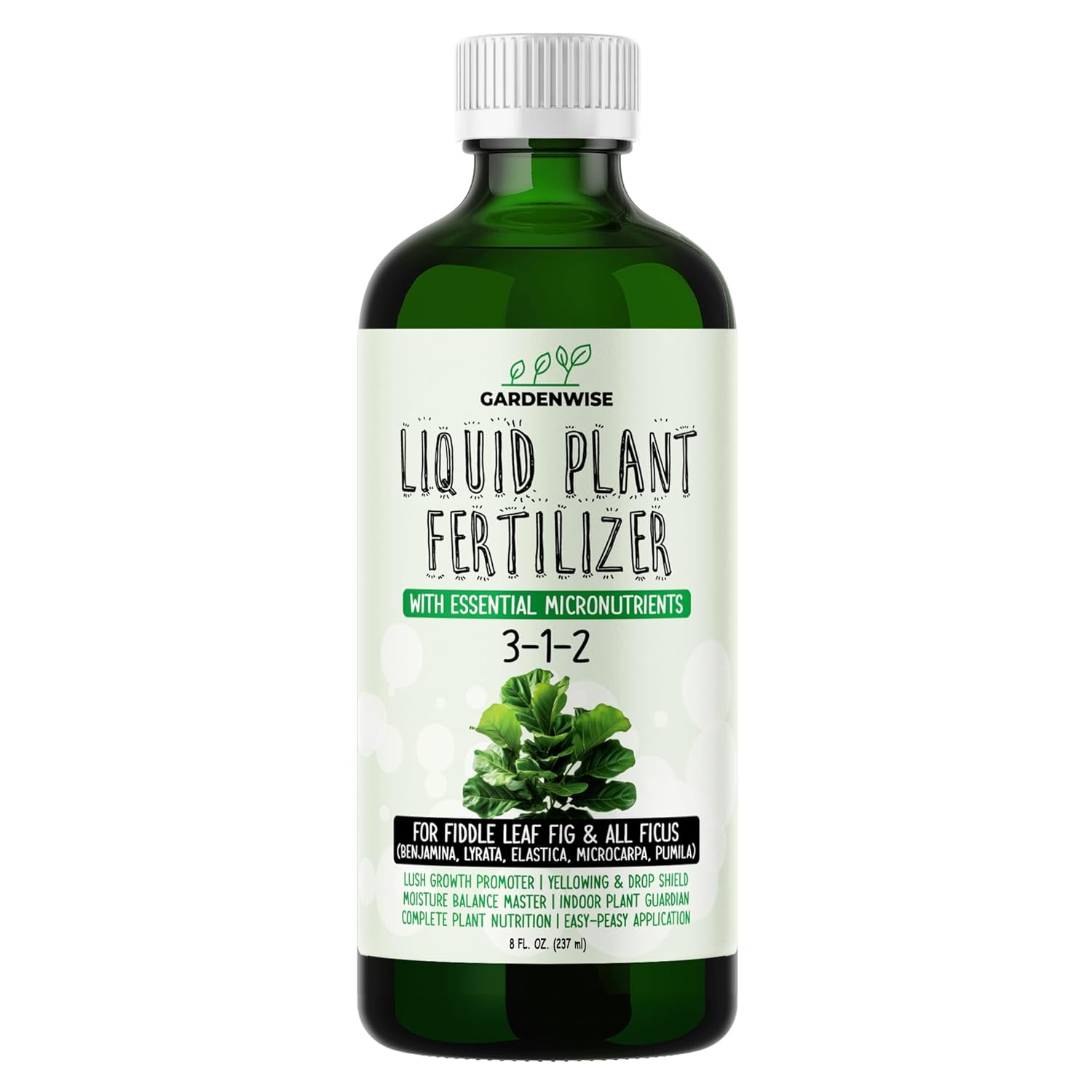
| Unit Count | 8 Fluid Ounces |
|---|---|
| Item Form | Liquid |
| Target Species | Fiddle Leaf Fig Food 3-1-2 |
| Mixing Ratio | 2 tbsp/gallon |
| Ingredients | N 24% P2O5 8% K2O 16% plus micronutrients |
This 8 oz GARDENWISE liquid concentrate is formulated specifically for Fiddle Leaf Figs and other fig trees, delivering a 3-1-2 N-P-K ratio plus chelated micronutrients to support larger, glossier leaves and stronger roots. You use it as a root feed mixed at 2 tablespoons per gallon every two weeks in the growing season or as a weekly light foliar spray when diluted; the product includes clear directions for both applications. The concentrated formula makes it easy to store and treats multiple plants without frequent repurchasing. Included micronutrients such as iron, manganese, zinc, copper, boron, and molybdenum address common indoor deficiencies and can help reduce browning tips and leaf drop when used correctly. Important limits are that it is a synthetic mineral-based feed that requires careful dilution to avoid overfeeding and that it is packaged in a small 8 oz bottle, which may be consumed quickly with several large plants. Safety guidance is explicit so you must handle it with gloves and avoid contact or drift when spraying indoors.
Best for: Plant owners who want a practical, targeted nutrient routine for a Fiddle Leaf Fig and value straightforward dosing and visible leaf and root improvements.
Less Ideal for: People who prefer fully organic fertilizers or those who do not want to handle concentrated synthetic products and dilution steps.
- Formulated specifically for Ficus lyrata with a 3-1-2 N-P-K balance
- Includes chelated micronutrients (Fe, Mn, Zn, Cu, B, Mo) to address common indoor deficiencies
- Dual application: root feeding and foliar spray with clear dilution instructions
- Concentrated formula (mixing ratio provided) treats multiple applications from one bottle
- Small 8 oz bottle may run out quickly for owners of multiple or large plants
- Contains synthetic mineral sources so some users preferring organic fertilizers may avoid it
Verdict: A concentrated, fiddle leaf fig–focused liquid fertilizer that delivers targeted N-P-K and micronutrients for bigger, healthier leaves and stronger roots.
BLESS YOUR SOIL Big Green Leaves Indoor Plant Food, 1 lb Concentrated Powder

| NPK Ratio | 12-4-8 |
|---|---|
| Form | Powder, water-soluble concentrate |
| Yield | Makes ~90 gallons of solution |
| Application Methods | Soil drench, foliar feed, hydroponic/LECA compatible |
| Includes | Pre-measured teaspoon scoop |
Big Green Leaves is a dry, water-soluble houseplant fertilizer designed to drive leafy growth in tropical indoor plants. It mixes quickly with a pre-measured scoop and yields roughly 90 gallons of feed solution from a 1 lb pouch, so it is typically used as a routine soil drench or foliar spray every 2–4 weeks during active growth. The 12-4-8 NPK leans high on nitrogen for bigger leaves and stems while included sea kelp and a chelated micronutrient blend support root development and consistent uptake across variable pH levels. Practical benefits include compatibility with potting mixes, soilless media, and hydro/LECA systems, a resealable pouch for tidy storage, and no fillers or urea that can cause salt buildup. Important limitations are that its formulation is aimed at foliage-driven tropicals rather than cacti, succulents, or high-phosphorus flowering plants, and the concentrated powder requires careful measuring and dilution to avoid overfeeding sensitive specimens. For growers focused on vigorous leaf production, it delivers a clear, concentrated option with broad application modes.
Best for: Buyers who prioritize rapid, healthy leaf growth on tropical and foliage houseplants and want a concentrated, value-oriented fertilizer they can use across soil and soilless systems.
Less Ideal for: Gardeners who mainly grow succulents, cacti, or flowering houseplants that require higher phosphorus or very low-nitrogen fertilizers should choose a product tailored to those needs.
- High 12-4-8 NPK tailored for leafy tropical houseplants to promote rapid foliage growth.
- Contains sea kelp and chelated micronutrients to support root health and improve nutrient uptake.
- Very concentrated yield (about 90 gallons per pound) for lower cost and less packaging than liquid fertilizers.
- Versatile application: soil drench, foliar feed, hydroponic and LECA compatibility.
- Resealable pouch with a pre-measured scoop for consistent mixing and tidy storage.
- Not formulated for cacti, succulents, or flowering plants that need higher phosphorus levels.
- Requires accurate measuring and dilution because of its concentration, which can risk overfeeding if misused.
Verdict: If you want fast, fuller foliage on tropical houseplants, this concentrated 12-4-8 powder gives strong, versatile feeding and excellent value per gallon.
Purived All-Purpose Liquid Houseplant Fertilizer, 16 fl oz (Makes 50 Gallons)

| Item Form | Liquid |
|---|---|
| Application Method | soil drench, foliar feed, full & semi hydroponics |
| Target Species | Houseplants |
| Mixing Ratio | 320:1 |
Purived All-Purpose Liquid Houseplant Fertilizer is a concentrated 16 fl oz bottle that mixes 1 cap per gallon to treat up to 50 gallons of water. It is formulated for indoor potted plants and supports multiple application methods including soil drench, foliar spray, and full or semi-hydroponics, so you can use the same product whether you water, mist, or run nutrient solutions. The formula lists primary macronutrients and a range of micronutrients, which helps correct common deficiencies and supports steady growth when used at the recommended dilution. Practical benefits include an easy-to-follow mixing ratio, an odorless solution that is simple to store, and broad compatibility with different feeding routines. Important limits are that the label gives no N-P-K percentages, so precise nutrient planning for sensitive seedlings or specialty plants is not possible, and safety precautions mean you must handle and store it carefully. For new plants, start at or below the recommended dilution and observe growth before increasing frequency.
Best for: Buyers who want a versatile, no-fuss fertilizer for establishing and maintaining new houseplants and who value a single product that works across watering, misting, and basic hydroponic setups.
Less Ideal for: Growers who need exact N-P-K formulations for seedlings, specialty plants, or strict hydroponic nutrient regimens should consider a product with full nutrient breakdown and concentration details.
- Very concentrated so one bottle treats up to 50 gallons, reducing repurchase frequency
- Suitable for multiple application methods: soil drench, foliar feed, and hydroponics
- Includes a range of micronutrients in addition to primary NPK components
- Simple, clear mixing ratio (320:1) that is easy to follow
- No N-P-K ratio listed on the product information, limiting precise nutrient management
- Requires careful handling and storage due to safety warnings
Verdict: A concentrated, easy-to-use all-purpose fertilizer that covers feeding, foliar, and basic hydroponic needs for new houseplants.
Perfect Plants Fiddle Leaf Fig Slow-Release Fertilizer Pellets, 5 oz

| Unit Count | 5 Ounce |
|---|---|
| Item Form | Granules |
| Specific Uses For Product | Fiddle Leaf Fig Trees |
| Application Method | Sprinkle |
| Mixing Ratio | 16:5:11 |
This 5 oz bag of slow‑release pellets is made specifically for fiddle leaf fig trees and is used by sprinkling granules into the potting mix where they release nutrients gradually as the plant is watered. The 16-5-11 formula delivers a higher nitrogen balance to support leaf growth and glossy foliage while the pellets are intended to feed for roughly six months, so you only need to apply twice a year for most indoor plants. The resealable bag keeps unused pellets dry between applications and the granular form avoids frequent liquid mixing or measuring. Expect easier maintenance and steadier growth compared with spot feeding liquid fertilizers, though the small 5 oz size is best for a single plant or a couple of pots rather than a collection. Also, slow‑release granules are less flexible for correcting acute nutrient deficiencies quickly. For routine care of a healthy fiddle leaf fig this is a low‑effort option that keeps leaves green and reduces fertilizing chores.
Best for: Buyers who want a low‑maintenance, set‑and‑forget feeding schedule for one or a few indoor fiddle leaf figs and prioritize convenience over frequent dosing.
Less Ideal for: Growers with large collections of plants or those needing rapid correction of nutrient problems should consider larger or fast‑acting fertilizers instead.
- Formulated specifically for fiddle leaf fig trees with a 16-5-11 NPK balance
- Slow‑release pellets feed plants for up to six months from one application
- Granular application is simple to sprinkle into potting mix and avoids liquid measuring
- Resealable bag preserves unused pellets between uses
- Small 5 oz package is most suitable for one or two plants rather than multiple trees
- Slow‑release granules cannot correct nutrient deficiencies immediately
Verdict: If you want an easy, low‑effort fertilizer that feeds a fiddle leaf fig for about six months from a single application, this slow‑release pellet formula is a practical pick.
NitroGene Tech 3-1-2 Liquid Fertilizer for Fiddle Leaf Fig, 8 oz

| Item Form | Liquid |
|---|---|
| Application Method | Watering |
| Target Species | Ficus plants |
| Liquid Volume | 8 fluid ounces |
| Mixing Ratio | 3-1-2 |
This 3-1-2 liquid fertilizer is designed specifically for fiddle leaf figs and other Ficus species and is used by diluting a small amount in water and applying during regular watering. The concentrated formula (mix one teaspoon per two cups of water) makes it easy to feed plants weekly without mess, and the product emphasizes micronutrients to support root strength, reduce leaf yellowing, and promote glossy foliage. In practical use the small bottle is convenient for indoor growers and allows precise dosing for single pots; the liquid form also avoids granular residue and mixes quickly. Limitations include the small 8 oz size, which means frequent repurchase for larger collections, and the product does not list an NPK breakdown beyond the 3-1-2 ratio or detailed micronutrient amounts on the provided information. For growers seeking a simple, plant-specific liquid feed that fits a routine watering schedule this fertilizer is straightforward and reliable, but those who need larger volumes or full nutrient analysis may want a different option.
Best for: Buyers who prioritize a predictable, easy-to-use fertilizer tailored to fiddle leaf figs and who prefer a simple weekly liquid feed that integrates with normal watering.
Less Ideal for: Collectors with many houseplants or those who want bulk fertilizer or a complete, labeled nutrient analysis should consider larger or more fully specified products instead.
- Formulated specifically for fiddle leaf figs and Ficus species
- Concentrated liquid mixes quickly for mess-free, teaspoon dosing
- Promotes root development and greener foliage through added micronutrients
- Simple weekly application that fits into regular watering routine
- Small 8 oz bottle may not last for multiple plants or long-term use
- No detailed NPK breakdown or micronutrient quantities provided in the listed specs
Verdict: A straightforward, fiddle leaf fig–focused liquid feed that delivers easy weekly dosing for reliable indoor growth.
TPS Nutrients Fiddle Leaf Fig Liquid Fertilizer, 8 oz

| Item Form | Liquid |
|---|---|
| Application Method | Dilute and apply to soil |
| Coverage | Medium |
| Target Species | Fig |
| Mixing Ratio | 1:32 |
This 8 oz liquid fertilizer is formulated specifically for fiddle leaf figs and designed to be diluted and applied to the soil. It contains an NPK profile aimed at supporting foliage and new growth and includes kelp to help reduce yellowing and leaf drop. Typical use is straightforward: mix according to the listed 1:32 ratio and water the potting mix every few weeks to provide steady nutrition without granular mess. The liquid format absorbs quickly so symptoms of nutrient deficiency can respond faster than with slow-release products, and the gentle formula reduces the risk of burning when used as directed. Limitations are the small bottle size for larger or multiple trees and the product does not give precise per-plant dosing beyond the mixing ratio, so careful measuring is necessary to avoid overfeeding.; frequent feeders or big specimens will need repeated purchases.
Best for: Buyers who want a fiddle leaf fig–focused, easy-to-apply liquid feed and who prefer products with many user reviews to confirm consistent results.
Less Ideal for: Those managing large collections or very large indoor trees who prefer bulk or slow-release fertilizers that require less frequent reapplication.
- Formulated specifically for fiddle leaf figs to support leaf size and color
- Liquid concentrate absorbs quickly for faster correction of deficiencies
- Kelp-enriched formula adds natural growth stimulants
- Gentle feeding profile reduces risk of fertilizer burn if mixed properly
- Small 8 oz bottle may not last long for medium to large plants or multiple specimens
- Product directions do not include precise per-pot dosage guidance beyond the mixing ratio
Verdict: A fiddle leaf fig–targeted liquid concentrate that delivers fast-acting, kelp-enriched nutrition in a compact, easy-to-mix bottle.
Miracle-Gro Indoor Plant Food for Tropicals, 8 fl. oz. (2-Pack)

| Item Form | Liquid |
|---|---|
| Application Method | Directly to soil or mixed with water |
| Target Species | Tropical Plants |
| Mixing Ratio | 4 pumps:1 quart of water |
| Unit Count | 16 Fluid Ounces (per bottle) |
This liquid formula is designed to feed tropical indoor plants and is useful for houseplants that benefit from regular, low‑volume nutrition. It can be applied directly to potting soil using the built‑in pump or diluted at a ratio of 4 pumps per quart of water for routine watering, with reapplication every two weeks. The potassium‑focused formulation aims to promote lush green foliage, which matters for many broadleaf tropicals. Practical benefits include an easy pump dispenser for small pots, two bottles in the bundle for longer supply, and clear mixing guidance so dosing is straightforward. Limitations to consider: the product is formulated for general tropical houseplants rather than a specialist crop, and coverage is described as low so frequent dosing or multiple bottles may be needed for larger collections. If you prefer granular slow‑release nutrition or a fertilizer tailored to a very specific species, this liquid feed may not match those needs.
Best for: Indoor plant owners who want a simple, pump‑dispensed liquid fertilizer to maintain lush foliage on common tropical houseplants and who value straightforward dosing and social proof from other buyers.
Less Ideal for: Collectors seeking a slow‑release granular fertilizer, a formula customized for specialist epiphytes, or growers who want concentrated coverage for large collections.
- Designed specifically for tropical indoor plants with a potassium‑focused formula to support foliage
- Built‑in pump and clear 4 pumps per quart mixing ratio for easy, repeatable dosing
- Comes as a two‑bottle bundle so you have spare supply for ongoing feeding
- Liquid form delivers nutrients immediately when applied to soil
- Not species‑specific so it is a general tropical formula rather than tailored to unusual plants
- Labeled coverage is low, meaning frequent applications or additional product may be required for many plants
Verdict: A convenient, pump‑dispensed liquid fertilizer that makes biweekly feeding of common tropical houseplants quick and reliable.
Choosing the Right Fertilizer for Fiddle Leaf Fig: Key Factors to Consider
Nutrient Ratio and Balance
The relative proportions of nitrogen, phosphorus and potassium determine whether your fiddle leaf fig focuses on leaf growth, root development, or overall hardiness. A formula with moderate nitrogen supports lush leaf expansion without encouraging overly soft new growth that is prone to browning or pests. Adequate potassium and phosphorus help develop stronger cell walls and root systems to support the large leaves.
Micronutrients like magnesium, iron and calcium are often critical for preventing common indoor deficiencies, such as yellowing between veins or brown leaf edges. When a fertilizer lists these trace elements, it reduces the need for separate supplements and lowers the risk of subtle chronic deficiencies.
Release Type and Feeding Frequency
Fertilizers come as soluble liquids, water-soluble powders, granular slow-release, and spikes. Each release type changes how often you must feed and how responsive the plant is to correction. Water-soluble feeds give quick results and are useful if you need to correct a deficiency, but they require more regular dosing and careful measurement to avoid salts building up.
Slow-release granules reduce the need for frequent feeding and lower the risk of overfertilizing, which is helpful if you travel or keep a light feeding schedule. Match release type to how often you water and how attentive you are to routine maintenance.
Salt Build-Up and Potting Mix Interaction
Container-grown fiddle leaf figs are vulnerable to salt accumulation in the potting mix, which causes leaf margin browning and reduced water uptake. Some fertilizers produce higher soluble salt levels; others are formulated to minimize residue. Consider how often you repot, whether you leach containers periodically, and whether your water supply is high in dissolved minerals.
Choosing a fertilizer that pairs well with your mix-especially if it contains bark, coco coir, or heavy amendments-helps maintain stable moisture and nutrient availability. If your potting medium is fast-draining, a more frequent, gentler feed may be preferable.
Form and Ease of Application
How easy a fertilizer is to measure and apply affects whether you will follow the recommended schedule. Liquid concentrates and pre-measured water-soluble packets are straightforward for regular feeding. Granules and spikes are set-and-forget but require correct portioning relative to pot size.
Also consider whether the product needs dilution, whether it leaves visible residue on soil, and whether it works with common watering routines such as top-watering or bottom-watering.
Micronutrient Content and pH Considerations
Micronutrients influence leaf color and long-term vigor. Iron and magnesium shortages show up as interveinal chlorosis, which is common in indoor plants if pH drifts too high. Some fertilizers include chelated micronutrients that remain available across a wider pH range.
Check whether a fertilizer alters substrate pH over time. For fiddle leaf figs, maintaining a slightly acidic to neutral root zone usually improves nutrient uptake. A product that provides micronutrients in plant-available forms reduces the need for corrective treatments.
Safety for Indoor Use and Leaf Contact
Indoor applications mean fertilizer can contact flooring, furniture, or foliage during application. Low-odour, low-dust formulas reduce mess and inhalation risk. Avoid materials that can scorch leaves when sprayed directly or that leave sticky residues that attract pests.
Also think about household members and pets. Choose products with clear labeling and safe handling guidance, and prefer formulations that minimize accidental overexposure if you keep plants in living spaces.
Matching Feed Intensity to Light Level
Fiddle leaf figs in bright, filtered light can tolerate and benefit from a fuller feeding schedule because higher light drives faster growth and greater nutrient demand. If your plant receives lower light, reduce feeding frequency and concentration; otherwise new leaves may be weak and more susceptible to damage. Adjust both the nutrient concentration and how often you apply it rather than relying solely on higher-strength feeds.
- High light: follow manufacturer's regular schedule or lean slightly stronger for active growth
- Medium light: reduce concentration to half to three quarters of the recommended rate
- Low light: cut feeding frequency and strength to avoid salt stress
Adjusting for Pot Size and Root Volume
A plant in a small nursery pot needs far less fertilizer than the same specimen in a large container. Smaller volumes concentrate salts faster and dry out sooner, increasing risk of overfeeding. Base feed amounts on the current pot size and the root density you observe; densely rooted pots often require more frequent feeding than recently repotted plants with fresh mix.
- Use smaller doses after repotting until roots re-establish
- Scale granular or spike products by pot diameter rather than a flat product label recommendation
Timing Fertilizer With Repotting and Pruning
Avoid heavy feeding immediately after aggressive pruning or a fresh repot. Newly disturbed roots take time to recover and can be sensitive to salt stress. If you repot into a nutrient-rich mix, delay additional fertilizer for several weeks. When pruning stimulates new flushes of leaves, plan gentler, more frequent feeding to support steady development rather than a single strong dose.
- Wait 4 to 8 weeks after repotting in amended soil before resuming full-strength feeding
- After pruning, use weaker liquid feeds to support new growth without causing tip burn
Practical Application Tips for Indoor Settings
Measure carefully and keep a log of feed dates and observed responses. Regularly flush containers with plain water every few months to prevent salt accumulation, especially if you use water-soluble fertilizers. If you notice leaf tip browning or yellowing, back off feeding frequency and consider leaching the potting mix once to remove excess salts.
- Label dilution ratios for quick reference
- Use a funnel or dedicated watering can to avoid spills on floors and furniture
How We Chose the Best Fertilizer for Fiddle Leaf Fig
We focused on items that perform well for large-leaved indoor trees and are appropriate for common home care routines. Selection prioritized nutrient formulas suited to foliage development and root health, predictable release profiles that limit fertilizer burn, and delivery methods that fit typical indoor schedules. We evaluated each option using measurable horticultural dimensions: guaranteed nutrient analysis and micronutrient mix, release type and feeding frequency, solubility or dispersal in potting mix, safety margin for indoor use, and how the product interacts with common potting media and watering habits. Excluded from consideration were fertilizers formulated exclusively for outdoor lawns or crops where the nutrient ratios and application rates do not translate to container-grown houseplants. We also excluded products with unclear labeling on nutrient percentages or application guidance. The listed options passed these filters and reflect solutions that gardeners can use without specialized equipment. Our scoring emphasized predictable nitrogen delivery for leaf size, balanced potassium and phosphorus for root and structural support, and ease of applying the correct dosing in a home setting.
FAQ
How often should I fertilize a fiddle leaf fig indoors?
It depends on the formula. Water-soluble feeds are usually applied every 2 to 4 weeks during the growing season. Slow-release granules typically last 3 to 6 months. Match frequency to light levels and watch for signs of salt stress.
Can I use a general houseplant fertilizer on my fiddle leaf fig?
Often yes if the fertilizer has a balanced N-P-K and micronutrients. Watch for overly high nitrogen ratios that encourage soft growth, and adjust dosing to pot size and light. Prefer formulas that include trace elements like iron and magnesium.
Will fertilizer fix yellow leaves on a fiddle leaf fig?
Sometimes yellowing indicates nutrient deficiency, but it can also result from overwatering, low light, or root issues. Correct diagnosis matters. A balanced feed can help if a deficiency is confirmed, but addressing watering and light is equally important.
Is slow-release fertilizer better than liquid feeding?
Both have advantages. Slow-release reduces the risk of accidental overfeeding and is low maintenance. Liquid feeds offer faster correction for deficiencies and finer control. Your schedule and how attentive you are will determine which is better.
Should I reduce feeding in winter?
Yes. Fiddle leaf figs grow more slowly in lower light and cooler indoor temperatures, so reduce frequency and concentration in fall and winter to prevent buildup of salts and weak, stressed new growth.
Final Verdict
Choose a fertilizer that matches how you care for your fiddle leaf fig, factoring light level, pot size, and how often you can apply feedings. Prioritize a balanced nutrient profile with micronutrients, a release type that fits your routine, and a formulation that minimizes salt build-up in container soil. If you are uncertain, start with gentler concentrations and monitor leaf response, adjusting frequency and strength over several growth cycles to find the best match for your environment.
