

Note: This article contains affiliate links. If you click on these links and make a purchase, I may earn a small commission at no extra cost to you. This helps support my research and content. Read my full affiliate disclosure here.
Healthy, uniform greens depend on more than mowing and irrigation. The right fertilizer for greens supplies the precise nutrients and release characteristics that keep turf dense, recover fast from wear, and show the consistent color players and gardeners expect. This guide covers five carefully shortlisted fertilizers for greens that suit putting surfaces, bowling greens, and closely mown ornamental turf. We evaluated products for nutrient balance, turf safety, application flexibility, and how they perform under frequent play or close mowing. Read on for practical notes on what matters when feeding greens and how each pick meets common maintenance goals.
Top Picks at a Glance
| Best Overall The best all-around choice for most situations | YARDi Brassicas & Greens Liquid Plant Food 32 oz (8-3-3) |  |
| Best Quality Built to a higher standard if you want something more solid | True Organic Blood Meal — High‑Nitrogen Organic Fertilizer, 3 lb |  |
| Best Value The sweet spot between price and what you get | HiThrive Herbs & Leafy Greens Liquid Fertilizer, 16 oz |  |
| Best Budget The cheapest option that still gets the job done reliably | TPS Nutrients High Nitrogen Vegetable Fertilizer, 8 fl oz |  |
| Highest Rated A top-rated pick with lots of positive feedback | Down To Earth Organic Vegetable Garden Fertilizer, 4-4-4, 1 lb |  |
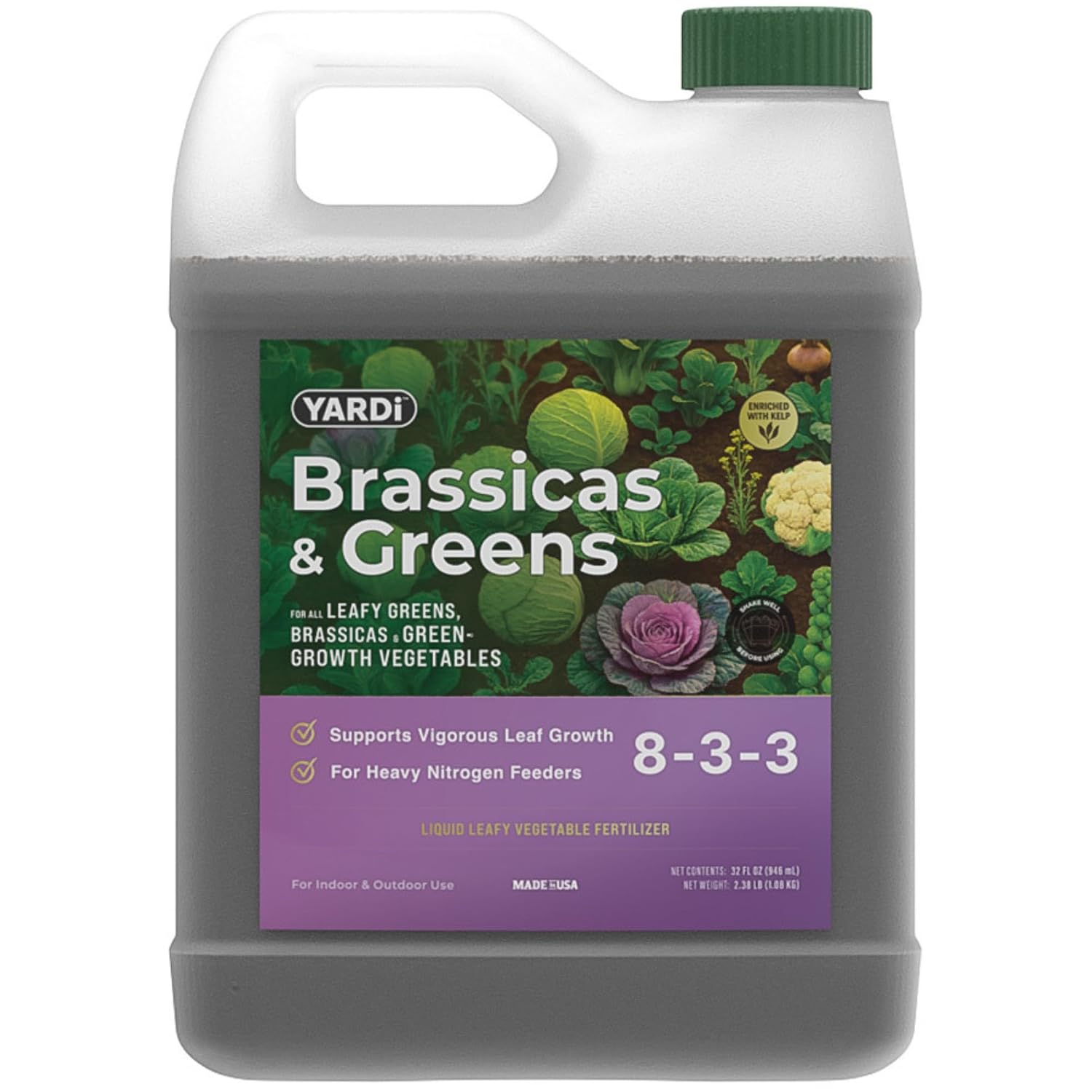
YARDi Brassicas & Greens Liquid Plant Food 32 oz (8-3-3)
| Item Form | Liquid |
|---|---|
| Specific Uses For Product | Leafy Greens |
| Target Species | Vegetables |
| Unit Count | 32 Fluid Ounces |
This 32-ounce YARDi liquid plant food is a nitrogen-forward 8-3-3 concentrate designed for outdoor brassicas and salad greens. It mixes easily with water (the label suggests 1–2 teaspoons per gallon) and can be applied as a soil drench, foliar spray, through drip irrigation, or with a hose-end applicator, making it flexible for beds, raised planters, and small-scale vegetable plots. The higher nitrogen ratio promotes lush, dark green foliage and sustained leafy growth in crops like kale, cabbage, broccoli, spinach and lettuce, and the formula includes micronutrients to support overall plant vigor. Practical benefits include straightforward dilution instructions and multiple application methods so you can feed regularly every 2–3 weeks during the growing season. Limitations are that the product is targeted to leafy vegetables and may be less appropriate for fruiting or flowering stages where balanced or phosphorus-heavy feeds are preferred, and frequent foliar or high-nitrogen use can require monitoring to avoid excess vegetative growth at the expense of yield.
Best for: Gardeners who prioritize big, healthy leaves on brassicas and salad greens and want a simple liquid feed they can use across beds and containers throughout the season.
Less Ideal for: Growers focused on flowering or fruiting crops or those who prefer granular slow-release fertilizers for low-maintenance feeding.
- High nitrogen 8-3-3 formula tailored for vigorous leafy growth
- Liquid concentrate that dilutes easily for foliar, soil drench, drip, or hose-end use
- Clear directions for regular feeding every 2–3 weeks during the season
- Includes micronutrients to support plant vigor beyond basic NPK
- Formulated specifically for leafy greens so not ideal as an all-purpose or bloom-promoting fertilizer
- Requires regular applications and careful dosing to avoid excessive leafy growth
Verdict: Choose this liquid 8-3-3 feed when your goal is consistently lush, vigorous leafy growth in brassicas and salad greens.
True Organic Blood Meal — High‑Nitrogen Organic Fertilizer, 3 lb

| Item Form | Granules |
|---|---|
| Unit Count | 48 Ounce |
| Mixing Ratio | 12-0-0 |
| Specific Uses For Product | Agriculture, Gardening |
True Organic Blood Meal is a simple, single-ingredient granular fertilizer that supplies a concentrated source of nitrogen for leafy, heavy-feeding vegetables and ornamentals. It is typically applied to soil in spring and fall or worked into potting mixes for container crops to encourage rapid green growth. The product is made from blood meal and labeled with a 12-0-0 analysis, so it delivers mostly nitrogen without added phosphorus or potassium. Practical benefits include easy application, suitability for both beds and containers, and an organic input that supports soil microbial activity rather than introducing synthetic chemicals. The 3 lb bag is sized for small to medium gardens and the stated coverage gives a clear guideline for treating around 100 sq ft. Important limitations are that it only supplies nitrogen so it should be paired with a balanced fertility plan for blooms or root development, and like all high-nitrogen amendments it can burn plants if overapplied or placed in direct contact with roots. For risk-averse gardeners, following the mixing ratio and recommended timing will help get vigorous foliage without surprises.
Best for: Gardeners who prioritize predictable, organic nitrogen boosts for leafy crops and want a straightforward product with established application timing and coverage guidance.
Less Ideal for: Growers seeking an all-in-one fertilizer for blooms, fruits, or complete feeding regimes should choose a balanced or blended product instead.
- High nitrogen content (12-0-0) that rapidly promotes leafy growth
- Single-ingredient blood meal with no synthetic additives
- Suitable for both in-ground beds and container plants
- Clear coverage guidance for planning applications
- Provides only nitrogen so additional nutrients are needed for flowering and fruiting
- Risk of root burn if overapplied or placed in direct contact with plant roots
Verdict: Use this concentrated organic blood meal when you need a reliable, high-nitrogen boost to rapidly green up heavy-feeding vegetables and leafy plants.
HiThrive Herbs & Leafy Greens Liquid Fertilizer, 16 oz

| Item Form | Liquid |
|---|---|
| Application Method | Watering can or leaf misting |
| Target Species | Vegetables |
| Mixing Ratio | 1 teaspoon per quart of water |
| Unit Count | 16 Fluid Ounces |
HiThrive Herbs & Leafy Greens is a water-soluble liquid fertilizer intended for herbs and leafy vegetables both indoors and outdoors. The 2-2-2 NPK formula plus added micronutrients (calcium, iron and others) is blended to encourage leaf growth, improve color and help correct mild nutrient deficiencies. Use it by mixing the recommended teaspoon-per-quart ratio into a watering can or dilute smaller for foliar misting, then apply every one to two weeks during the active growing season. A 16 oz bottle mixes into about 24 gallons of solution, so a little goes a long way for small kitchen gardens and container beds. Notable features are the simple mixing ratio, suitability for both root watering and leaf misting, and a focus on leafy crops and herbs. Limitations are the modest NPK that is tailored to foliage rather than heavy fruiting or flowering needs and that stronger deficiencies or soil problems may require a soil amendment or targeted product instead.
Best for: Gardeners who want a simple, economical liquid feed to keep kitchen herbs and leafy greens consistently productive and flavorful with minimal fuss.
Less Ideal for: Growers focused on high-yield fruiting vegetables, large in-ground beds, or those seeking a single product to rebuild poor soil structure should look elsewhere.
- Balanced low-strength 2-2-2 NPK suited for continuous feeding of leafy greens and herbs
- Includes micronutrients like calcium and iron to address common leaf deficiencies
- Concentrated mix yields about 24 gallons from a 16 oz bottle for economical use
- Straightforward mixing and dual application options (watering can or foliar mist)
- Not formulated for heavy fruiting or flowering fertilizer needs
- No soil-building or slow-release components for long-term fertility
Verdict: A concentrated, easy-to-mix liquid feed that gives cooks and small-plot gardeners an economical way to keep herbs and leafy greens lush and flavorful.
TPS Nutrients High Nitrogen Vegetable Fertilizer, 8 fl oz

| Item Form | Liquid |
|---|---|
| Application Method | liquid |
| Target Species | Vegetables |
| Liquid Volume | 8 fluid ounces |
| Mixing Ratio | 1:0:0 |
This 8 fl oz TPS Nutrients high‑nitrogen liquid is designed to boost leafy growth in vegetables, herbs, and salad greens. It mixes into water and is applied as a liquid feed, making it easy to use for garden beds, raised planters, and containers. The formula is explicitly nitrogen‑rich and fast acting, so you can expect fuller, greener foliage within a few feedings when used at recommended dilution. Because it is concentrated, small amounts treat multiple applications which stretches the bottle for many small beds or pots. The product is focused on vegetative stages rather than fruit production, so it works best when you want robust leaf growth for lettuce, spinach, kale, and similar crops. Limitations are that the high nitrogen balance can delay flowering or fruit set if used through reproductive stages, and the small 8 ounce size is better suited to targeted feeding rather than large vegetable plots. Follow mixing instructions to avoid overfeeding sensitive seedlings.
Best for: Best for budget-minded growers focused on producing lush salad greens and herbs in containers or small beds who want a quick, easy liquid feed that stretches with dilution.
Less Ideal for: Not a good fit for gardeners needing a balanced all‑purpose fertilizer for flowers or fruiting vegetables or those managing large vegetable plots.
- High nitrogen formula promotes rapid leafy and vegetative growth
- Water‑soluble concentrated liquid mixes easily for foliar or soil feeding
- Suitable for garden beds, raised planters, and container vegetables
- Small concentrated bottle can treat many applications for small-scale growers
- Not balanced for flowering or fruiting stages and can inhibit bloom/fruit if overused
- 8 fl oz volume is small for large gardens and requires frequent repurchases
Verdict: A concentrated, easy-to-mix liquid fertilizer that delivers quick, budget‑friendly leafy growth for greens and container vegetables.
Down To Earth Organic Vegetable Garden Fertilizer, 4-4-4, 1 lb

| Item Form | Granules |
|---|---|
| Specific Uses For Product | Organic Gardening, Transplating, Vegetable Gardens |
| Coverage | Full |
| Target Species | vegetable gardens |
| Mixing Ratio | 4-4-4 |
This is a compact, all-natural granular fertilizer designed for vegetable beds, herbs and container-grown edibles. It supplies a balanced 4-4-4 NPK from ingredients like fish bone meal, alfalfa meal, feather meal and seaweed, so it feeds plants gradually and helps build soil biology rather than forcing fast leaf growth. Typical use is top-dressing or incorporating into planting holes and mixing at the suggested ratio for transplants and ongoing feedings. The slow-release nature reduces the chance of nutrient burn and limits leaching, which is practical for small to medium gardens and raised beds. Because it is OMRI-listed and made from recognizable organic inputs it is suitable for gardeners who prioritize natural approaches and pollinator safety. The 1 lb size is convenient to store and reduces waste for hobby plots, but gardeners with larger plots will need larger bags or frequent replenishment. There is no synthetic quick-release boost for urgent corrections, so expect steady improvements over weeks rather than immediate greening.
Best for: Practical home vegetable gardeners on a budget who grow in raised beds, containers, or small plots and prefer an organic, slow-release feed that supports steady, healthy growth.
Less Ideal for: Large-scale growers or anyone needing fast corrective feeding for nutrient-deficient soil should consider bulk or quick-release alternatives.
- Balanced 4-4-4 NPK tailored for vegetables and herbs
- Made from natural ingredients and listed for organic use
- Slow-release granules reduce risk of burn and nutrient leaching
- Small 1 lb package is easy to store and minimizes waste for small gardens
- 1 lb size is too small for larger gardens and requires frequent repurchasing
- Not formulated for rapid nutrient corrections or instant greening
Verdict: A small, organic slow-release fertilizer that fits budget-minded home vegetable gardeners who want steady, natural feeding rather than instant fixes.
Choosing the Right Fertilizer for Greens: Key Factors to Consider
N-P-K Ratio and What It Means for Greens
The primary macronutrient balance guides growth habit on fine turf. Nitrogen promotes color and shoot density but excessive nitrogen leads to lush growth that scallops under a reel mower and requires more frequent clipping. Phosphorus is rarely needed in established, well-managed greens and should be applied based on soil or tissue tests. Potassium helps stress tolerance and wear recovery and is more important during summer stress or heavy play. Matching the N-P-K label to your soil test and seasonal goals prevents unwanted growth and keeps mowing predictable.
Consider split applications that deliver modest nitrogen frequently rather than one large dose. That approach supports steady color and recovery without pushing excessive leaf extension that affects ball roll.
Release Type: Quick Green-Up Versus Steady Feeding
Granular fertilizers come as soluble quick-release or polymer-coated slow-release. Quick-release products give rapid color improvement useful after aeration or in cooler conditions, but they increase clipping volume and raise burn potential if watered inadequately. Slow-release formulations supply nitrogen gradually, stabilizing turf response and reducing the frequency of applications, which is often preferable on greens where surface consistency matters.
Liquid or foliar feeds provide rapid correction for nutrient deficiencies and can be useful between granular applications. Choose a release profile that matches your maintenance rhythm: frequent light feeds for high-use greens, and longer-release options for lower-traffic surfaces.
Salt Index and Turf Burn Risk
Close-mown turf is particularly vulnerable to salt-induced leaf scorch because fertilizer salts concentrate at the surface. Low-salt formulations and controlled-release coatings reduce burn risk, especially when application timing is tight before hot, dry weather. Always follow labeled rates and ensure adequate irrigation after application when using higher-salt products to dilute surface salts.
When recovery time is limited between events or rounds of play, prioritize products with the lowest burn potential to avoid cosmetic damage and inconsistent ball roll.
Micronutrients and Balance
Fine turf often shows visual improvement from trace elements like iron, manganese, and zinc. Iron is frequently used to deepen green color without excessive top growth. Micronutrients also influence turf resilience to disease and stress. However, imbalance can mask underlying issues, so micronutrient applications should be informed by soil or tissue testing.
Consider combined formulations that include calibrated micronutrient levels rather than repeated single-element foliar sprays. This helps maintain color while avoiding nutrient antagonism or unbalanced uptake.
Application Practicalities and Equipment Compatibility
Greens maintenance teams need products that work with common spreaders and liquid rigs and that allow precise small-area applications. Granule size and coating uniformity affect spreader calibration and distribution accuracy. Liquids must be compatible with tank-mix partners and non-ionic surfactants used on greens.
Also think about packaging that fits storage and mixing workflows for greenstaff. Ease of measuring, mixing, and cleanup reduces application errors that can harm surface quality.
Timing, Frequency, and Seasonal Adjustments
The best feeding plan for greens adapts to growth rate, traffic, and season. Spring and fall often call for different nutrient emphases than summer. For example, higher potassium and moderated nitrogen support heat tolerance in summer while slightly elevated nitrogen can improve recovery in cooler months. Frequent, small applications help maintain uniform color and recovery during peak use periods.
Plan fertilization around aeration, topdressing, and overseeding events to avoid compounding growth responses. Consistent timing supports predictable mowing height and ball roll.
When to Use Foliar Feeds on Greens
Foliar applications give quick symptom relief and are particularly useful for correcting iron chlorosis or supplying a rapid nitrogen boost between granular applications. They act fast because leaves absorb nutrients directly, but the effect is often temporary and should be paired with a base granular program.
Apply foliar feeds during cool, calm periods to maximize uptake and avoid leaf burn. Use them sparingly and after confirming the deficiency by tissue testing when possible.
- Best for rapid color correction and short-term recovery
- Not a substitute for a balanced root-feeding program
- Work well as supplements after aeration or heavy play
Integrating Fertilizer with Cultural Practices
Fertilizer decisions should align with aeration, topdressing, irrigation, and mowing practices. Aeration increases nutrient uptake temporarily, so a light feed after core removal can speed recovery. Topdressing after application helps incorporate granular nutrients into the root zone and smooth the surface.
Irrigation timing is critical: water in enough to move soluble nutrients into the root zone but avoid overwatering that leaches nutrients away. Coordinate mowing height and frequency to match the growth response expected from your chosen fertilizer.
- Apply light feeds after aeration for faster recovery
- Topdress to help granules reach the root zone
- Adjust irrigation to balance uptake and leaching
Addressing Wear and Recovery on High-Use Greens
High-traffic greens need fertilizers that promote rapid tillering and root resilience without causing excessive blade growth. Look for nutrient programs emphasizing steady nitrogen with supportive potassium and micronutrients that encourage recovery from divots and foot traffic.
Frequent small applications maintain color and recovery better than infrequent heavy doses, which can create uneven surfaces and variable mowing demands.
- Prioritize steady-release nitrogen for constant recovery
- Include potassium for stress resilience
- Use split applications during peak season
Adapting Fertilizer Strategy for Different Climates
Cool-season and warm-season turf grasses have different nutrient rhythms. Cool-season turf benefits from fall-strengthening applications and moderate spring nitrogen, while warm-season turf emphasizes summer potassium and careful nitrogen timing to avoid excess top growth during heat stress.
In arid regions, choose low-salt or controlled-release products and rely on irrigation scheduling to minimize burn. In high-rainfall areas, favor formulations less prone to leaching or plan more frequent light applications to maintain available nutrients.
- Match seasonal nutrient emphasis to grass type
- Manage salt and leaching based on local rainfall
- Adjust timing to local temperature and growth patterns
Record-Keeping and Monitoring Results
Track application dates, rates, weather, and observed turf responses to refine your program. Regular soil and tissue tests are the most reliable way to confirm nutrient status and to avoid over-application. Small adjustments based on records help stabilize color and surface conditions over seasons.
Calibrating spreaders and sprayers and noting the equipment used for each application reduces variability between crews and helps reproduce good results.
- Keep a simple log of applications and observations
- Use soil and tissue tests to guide micronutrient decisions
- Calibrate equipment before each season
How We Chose the Best Fertilizer for Greens
We focused on attributes that directly affect turf health and playability on closely mown greens. Primary evaluation criteria included N-P-K ratio and micronutrient profile to judge how well a fertilizer meets the specific nitrogen and trace element needs of fine-textured turf. Release type and longevity were weighed to determine whether a product gives steady feeding or fast green-up while minimizing growth surges that upset mowing schedules. Turf safety and burn potential were assessed from label application rates and salt index information; any product with a high documented burn risk under typical greens practice was excluded. Ease of application and compatibility with common spreaders or liquid rigs mattered for crews managing frequent, small applications. We also considered formulation versatility, such as whether the product can be used in both granular and foliar programs or tank-mixed with wetting agents. Excluded from the list were fertilizers intended only for broad lawn use without guidance for close-mown turf, products with unproven label directions for greens, and those with clearly inappropriate salt loads. The resulting shortlist highlights items that balance color, recovery, and safety for demanding greens maintenance.
FAQ
How often should I feed closely mown greens?
Feeding frequency depends on use and the release type chosen. Many crews prefer frequent light applications of balanced nitrogen during peak use to maintain color and recovery. Slow-release options allow longer intervals, while liquid foliar feeds can be used as short-term touch-ups.
Can I use a general lawn fertilizer on greens?
General lawn fertilizers may not suit the fine turf requirements of greens because of coarser granule size, different nutrient ratios, and higher salt content. If using a lawn product, ensure the N-P-K and salt index are appropriate and calibrate spreaders for even coverage at lower rates.
When should I apply potassium on greens?
Apply potassium during periods of heat stress, drought, or heavy traffic to improve wear tolerance and recovery. Seasonal programs often increase potassium in summer or ahead of expected stress events to bolster root health and cell function.
Are iron applications safe for improving color?
Iron is commonly used to deepen color without stimulating excessive leaf growth. It is usually safe when applied at recommended rates, but repeated high-dose foliar sprays can cause temporary scorch if applied in hot, sunny conditions. Tissue testing helps guide proper use.
How do I avoid fertilizer burn on greens?
Avoid burn by choosing low-salt or coated-release formulations, following label rates, irrigating appropriately after application, and not applying high soluble nitrogen when turf is drought-stressed or during extreme heat. Calibrated application and smaller, more frequent doses also reduce burn risk.
Final Verdict
Choosing the right fertilizer for greens means balancing color, recovery, and surface consistency. Prioritize a nutrient profile and release type that match your grass species, seasonal goals, and traffic levels. Pay close attention to burn risk and micronutrient needs, and favor frequent, measured applications over large infrequent doses. A clear feeding plan tied to aeration, topdressing, and irrigation will produce the most consistent playing surface. Use testing and records to refine rates and timing so you can maintain uniform color and reliable recovery without sacrificing surface quality.
