

Note: This article contains affiliate links. If you click on these links and make a purchase, I may earn a small commission at no extra cost to you. This helps support my research and content. Read my full affiliate disclosure here.
Choosing the right ground cover shapes how a garden looks and performs year after year. The best ground cover stabilizes soil, suppresses weeds, and fills bare patches with attractive foliage and seasonal interest. In this guide we shortlisted seven top options suited to common garden situations and maintenance levels. Each pick was evaluated for how it behaves in real yards and beds, including light and moisture preferences, spread rate, and maintenance needs. Read on to match a ground cover to your site conditions and landscape goals.
Top Picks at a Glance
| Best Overall The best all-around choice for most situations | DeWitt Pro-5 5 oz Weed Barrier Fabric, 3 ft x 250 ft |  |
| Best Quality Built to a higher standard if you want something more solid | VEVOR 4 x 100 ft Heavy Duty Weed Barrier Fabric, 5.8 oz Landscape Fabric |  |
| Best Value The sweet spot between price and what you get | FEED GARDEN 4 ft x 100 ft Heavy-Duty Woven Landscape Fabric (2×50 ft) with 30 U-Shaped Stakes |  |
| Best Budget The cheapest option that still gets the job done reliably | Groweco Heavy-Duty Weed Barrier Landscape Fabric, 1.4 ft x 50 ft |  |
| Highest Rated A top-rated pick with lots of positive feedback | DeWitt UltraWeb 3000 Ground Cover Mat, 4 x 100 Feet, 2-Pack |  |
| Most Popular A crowd favorite that many people choose with confidence | LAVEVE Heavy Duty Weed Barrier Landscape Fabric, 4 ft x 100 ft (two 4×50 ft rolls) |  |
| Best Seller A high-volume bestseller chosen again and again | Happybuy 6 ft x 300 ft Heavy-Duty Weed Barrier Landscape Fabric |  |
DeWitt Pro-5 5 oz Weed Barrier Fabric, 3 ft x 250 ft

| Item Form | Ground Cover Mat |
|---|---|
| Special Features | Safe Around Vegetation |
| Surface Recommendation | Outdoors |
| Scent | Unscented |
DeWitt Pro-5 is a commercial-grade woven weed barrier intended for large garden beds, pathways, and landscape runs where durable, long-term weed control is needed. The fabric is heavy-duty and tear-resistant, so it holds up during installation and under light foot traffic. It is water-permeable and breathable, which lets rainfall and nutrients pass into the soil while suppressing weed growth, and gold alignment stripes every foot make laying out straight rows and spacing plants simpler. In practice it works well under mulch, gravel, or around raised beds to reduce maintenance and help planted areas stay tidy. The main compromises are that woven landscape fabric does not eliminate persistent weeds that grow from seed on top of the fabric and that it requires careful cutting and placement around plants to avoid interfering with root zones. For balanced, all-purpose landscape use this fabric offers a durable, low-maintenance ground-cover solution for medium to large projects.
Best for: Gardeners and landscapers who want a durable, low-maintenance ground cover for medium to large beds, pathways, and commercial planting runs and value longevity over short-term convenience.
Less Ideal for: People with very small container gardens or those who prefer to eliminate weeds without using physical barriers should consider other options.
- Heavy-duty woven construction resists tears and punctures during installation
- Allows air, water, and nutrients to pass through to the soil
- Gold alignment stripes every 12 inches simplify row layout and plant spacing
- Suitable for large runs and high-traffic landscaping uses
- Will not stop weeds that germinate in mulch placed on top of the fabric
- Requires careful cutting and placement around existing plants to avoid root restriction
Verdict: A tough, water-permeable woven fabric that gives reliable, long-lasting weed suppression for medium to large landscape and garden projects.
VEVOR 4 x 100 ft Heavy Duty Weed Barrier Fabric, 5.8 oz Landscape Fabric

| Area | 4 x 100 ft |
|---|---|
| Material weight | 5.8 oz/sq. yd |
| Construction | Woven + needle-punched (dual layer) |
This VEVOR landscape fabric is a performance-focused weed barrier built from a dual-layer construction: woven fabric laminated to needle-punched non-woven for higher density and tear resistance. Typical use is under beds, pathways, gravel or around vegetable patches where long-lasting weed suppression and soil breathability are priorities. Notable features include 5.8 oz/sq yd material weight, ultrasonic-cut smooth edges and printed guide lines to speed layout and trimming. In practice the fabric blocks sunlight to inhibit weed growth while remaining permeable enough to let water and air reach roots, which helps retain soil moisture without puddling and supports organic breakdown in the soil. Installation is straightforward — unroll, cut along the green lines, and secure with staples (not included) — and the heavy weight stands up to foot traffic and surface gravel. Limitations are that it still requires proper anchoring and occasional maintenance around plantings, and heavy or persistent perennial weeds may eventually find seams or damaged areas to exploit.
Best for: Gardeners and landscapers who prioritize durable, long-lasting weed control for beds, paths, or high-traffic ground-cover areas and want a product that balances weed suppression with soil breathability.
Less Ideal for: Those who plan to frequently reconfigure plantings, small-scale container growers, or gardeners who prefer organic sheet-mulching that allows full soil turnover.
- Dual-layer woven plus needle-punched construction for improved tear resistance
- High material density (5.8 oz/sq yd) that offers strong shading and long-term weed suppression
- Permeable design lets water and air through to prevent puddling and support plant health
- Ultrasonic-cut edges and printed guide lines make measuring and trimming easier
- Requires external staples or anchors to secure effectively and prevent shifting
- Heavy-duty fabric can make planting through it and later reworking beds more labor intensive
Verdict: Choose this heavy-duty fabric when you need durable, high-performance weed control that still lets water and air reach the soil.
FEED GARDEN 4 ft x 100 ft Heavy-Duty Woven Landscape Fabric (2×50 ft) with 30 U-Shaped Stakes

| Material | Woven polypropylene |
|---|---|
| Pack quantity | 2 pieces (4 ft × 50 ft each) |
| Included accessories | 30 U-shaped stakes |
| Weight | 3.2 oz (fabric weight listed in title) |
This FEED GARDEN landscape fabric is a heavy-duty woven polypropylene ground cover sold as two 4 ft × 50 ft rolls and includes 30 U-shaped stakes to hold it in place. It is used by laying the fabric over garden beds or paths, cutting it to fit around plants with the printed guide lines, and fastening it with the supplied stakes. The woven construction provides good permeability so water and air still reach the soil while the fabric blocks sunlight to limit weed growth. Practical benefits include durable tensile strength for seasonal use, easy trimming to custom shapes, and the included stakes that simplify initial installation. Important limitations are that woven fabric will not stop deeply rooted perennial weeds without proper soil prep and it does not eliminate the need for edging or additional anchoring in high-wind areas. Expect the best results when combined with proper bed preparation and a layer of mulch on top for appearance and extra weed suppression.
Best for: Gardeners who prioritize a low-maintenance, practical solution to reduce annual weeds across beds and paths and who want an easy-to-install fabric they can cut to fit.
Less Ideal for: People seeking a permanent, maintenance-free barrier for aggressive perennial weeds or those who prefer a decorative surface without adding mulch or rock on top.
- Woven polypropylene construction lets water and air pass through while blocking sunlight to reduce weeds
- Comes as two 4 ft × 50 ft rolls that are easy to cut and shape for beds, paths, and borders
- Includes 30 U-shaped stakes to simplify anchoring during installation
- Printed guide lines make alignment and cutting around plants easier
- Won't fully prevent established deep-rooted perennial weeds without prior removal
- May require additional anchoring or edging in windy or high-traffic areas
Verdict: A practical, easy-to-install woven landscape fabric that cuts to fit and comes with stakes for straightforward weed suppression across beds and paths.
Groweco Heavy-Duty Weed Barrier Landscape Fabric, 1.4 ft x 50 ft

| Material | Polypropylene (PP) |
|---|---|
| Weight | 3.2 OZ |
| Available widths | 1.4FT, 2.8FT, 6FT, 15FT |
| Available lengths | 50FT, 100FT |
| Intended use | Landscape weed barrier, underlayment for artificial grass |
The Groweco heavy-duty weed barrier is a woven polypropylene landscape fabric intended as a low-maintenance ground cover under mulch, gravel, artificial turf, or around planting beds. It comes with printed alignment lines to make straight cuts and installation easier and is sold in multiple widths and lengths to suit small garden runs or longer pathways. The fabric’s 3.2 oz weight gives it noticeable tear resistance for routine foot traffic and tool use, while its woven construction still permits water and air to reach the soil so plants do not suffocate. In practice it reduces weed germination by blocking light to seeds and simplifies mulching jobs, speeding up maintenance. Limitations are that it must be trimmed around plants and anchored properly to avoid movement, and it will eventually degrade under heavy UV exposure so it is better for mulched or covered applications than exposed decorative beds. For a budget-focused ground cover solution this fabric balances durability and breathability for many common garden uses.
Best for: Gardeners who need an inexpensive, practical ground cover to reduce weeding and speed up maintenance in beds, paths, or under artificial turf. Good for homeowners prioritizing straightforward installation and low upfront cost.
Less Ideal for: Those seeking a permanent, fully UV-stable solution for exposed driveways or decorative beds should consider heavier geotextiles or hard landscaping alternatives.
- Woven polypropylene construction blocks weed germination while allowing water and air through
- Printed green guide lines simplify alignment and cutting during installation
- 3.2 oz weight gives improved tear resistance for routine garden use
- Versatile for use under mulch, gravel, artificial turf, walkways and vegetable beds
- Will eventually degrade with prolonged UV exposure if left uncovered
- Requires edging or staples and trimming around existing plants during installation
Verdict: A cost-conscious, heavy-duty woven fabric that reliably blocks weeds while letting water and air through, making it a practical choice for everyday garden ground cover.
DeWitt UltraWeb 3000 Ground Cover Mat, 4 x 100 Feet, 2-Pack

| Material | Woven polypropylene |
|---|---|
| UV treatment | Yes |
The DeWitt UltraWeb 3000 is a heavy-duty woven ground cover intended for large beds, landscapes, and agricultural rows where long-term weed suppression and water permeability matter. Install it by laying the roll over prepared soil, cutting holes for plants, and securing edges with staples or pins; the woven construction resists tearing during handling and installation. Notable features include UV treatment to slow breakdown in sunlight and a weave tight enough to limit weed growth while still permitting water and air to reach the soil, which helps conserve moisture and support healthier roots. Compared with thin black plastic, this fabric is more breathable and better for long-term planting areas, and the 2-pack roll format makes it convenient for covering wide swaths without many seams. Limitations are that it still requires proper anchoring and overlap to prevent weed intrusion at joints and that it does not biodegrade, so removal or edging may be needed if you later change landscaping plans.
Best for: Gardeners and landscapers who prioritize a reliable, long-lasting weed barrier for large beds or landscape projects and want breathable fabric that conserves soil moisture.
Less Ideal for: People planning temporary or short-term plantings who prefer compostable solutions or those who need a decorative surface cover rather than a functional weed barrier.
- Woven polypropylene construction provides strong tear resistance for easier installation and long use
- UV-treated to resist sun damage and extend outdoor lifespan
- Permeable design lets air and water reach soil while reducing evaporation
- Comes in wide rolls useful for covering large areas with fewer seams
- Non-biodegradable material requires removal if you redesign beds later
- Effective weed control depends on correct overlapping and secure anchoring at edges
Verdict: Buy this if you need a durable, UV-resistant woven ground cover that reliably suppresses weeds while allowing water and air to reach the soil.
LAVEVE Heavy Duty Weed Barrier Landscape Fabric, 4 ft x 100 ft (two 4×50 ft rolls)

| Material | Polypropylene |
|---|---|
| Permeability | Breathable, allows water and air flow |
| UV resistance | Resistant to sun exposure |
| Package | Two rolls totaling 4 ft x 100 ft |
This LAVEVE landscape fabric is a heavy-duty woven polypropylene ground cover intended to suppress weeds while letting moisture and air reach the soil. It ships as two 4 ft x 50 ft rolls (total 4 ft x 100 ft) with printed guide lines that make cutting and alignment straightforward. In practice it is laid over prepared beds, cut for plantings, and secured with U-shaped pegs; the fabric’s permeability helps reduce erosion and allows irrigation to penetrate. The material is UV-resistant and built for typical garden uses such as flower beds, vegetable plots, gravel paths, and sidewalks. Because it is a woven polypropylene, it is sturdier than thin nonwoven mats and stands up to foot traffic when covered with mulch or gravel. Limitations to expect are that surface-seeded weeds or seeds blown onto mulch can still germinate on top, and long-term burial or heavy soil compaction can reduce effectiveness; occasional maintenance and proper installation around plants are required to keep beds weed-free.
Best for: Gardeners who want a durable, breathable ground cover to reduce routine weeding and tidy beds across medium-length runs of pathway or planting area, and who value a product with solid usage feedback.
Less Ideal for: People seeking a permanent, maintenance-free solution or those who prefer chemical weed control methods; also not the best choice for beds where frequent deep digging or planting changes are required.
- Woven polypropylene construction provides durable, tear-resistant coverage
- Permeable design allows water and air to reach soil, reducing erosion
- Printed guide lines make measuring and cutting easier during installation
- Suitable for multiple applications including beds, paths, and under gravel
- Comes as two rolls totaling 4 ft x 100 ft for extended coverage
- Does not prevent weeds that germinate in mulch or on top of the fabric
- Requires proper securing and occasional maintenance to stay effective
Verdict: A sturdy, breathable woven fabric that gives reliable, easy-to-install weed suppression for medium garden beds and paths backed by strong user approval.
Happybuy 6 ft x 300 ft Heavy-Duty Weed Barrier Landscape Fabric
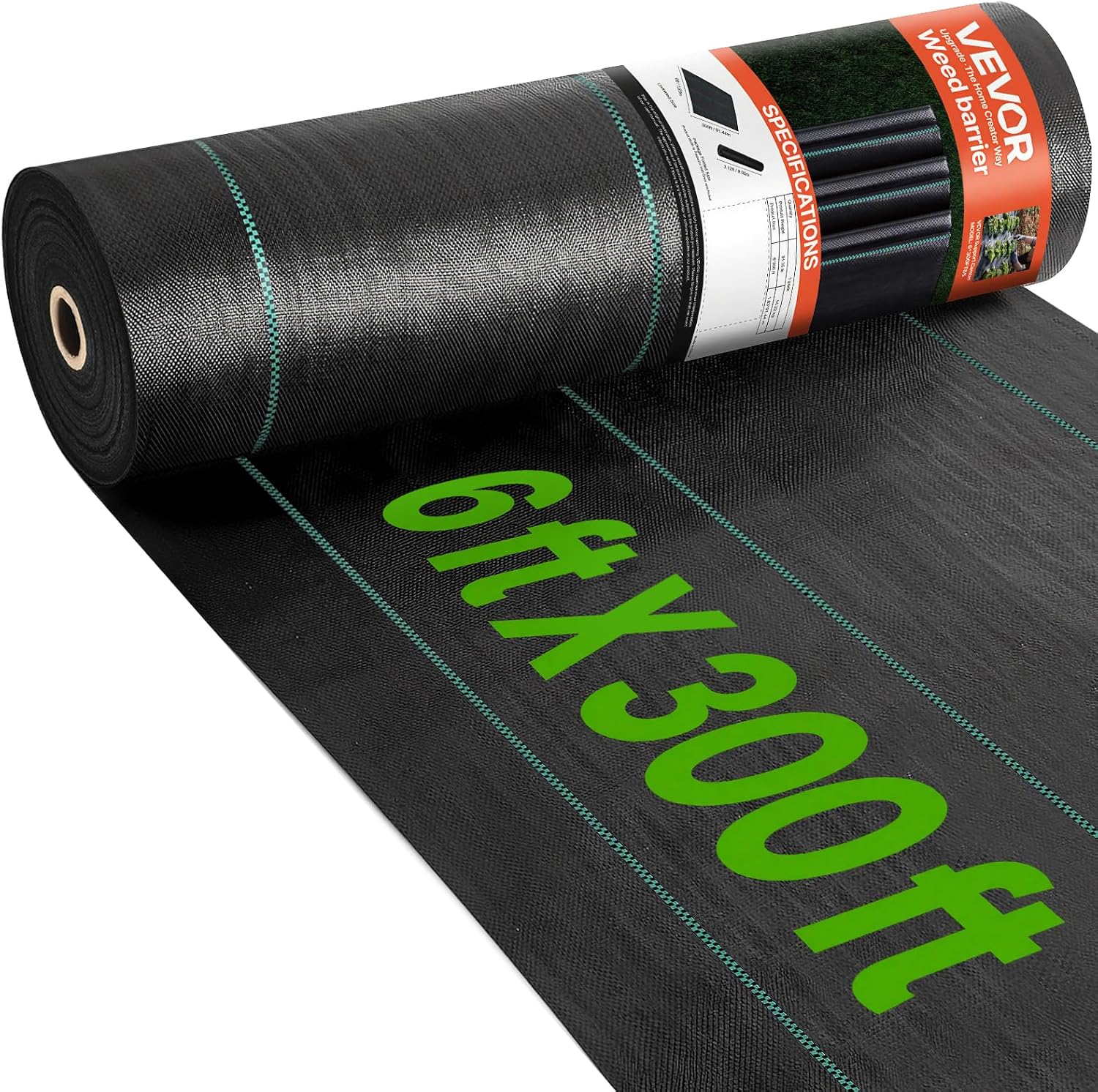
| Material | Polypropylene fabric |
|---|---|
| Size | 6 ft x 300 ft |
| Density | 2.4 oz |
| Permeability | Allows air and water passage |
| Packaged width note | Half-folded roll packaging |
This woven polypropylene landscape fabric is meant to be an underlayer for beds, walkways, and driveways to suppress weeds while letting water and air reach the soil. The 6 ft x 300 ft roll covers a large area and unrolls easily; the fabric includes green guide lines to make cutting and aligning plants straightforward. At 2.4 oz density it is lightweight yet described as tear-resistant, so it is suitable for routine garden use and for laying under mulch, gravel, or artificial turf. The material’s permeability prevents puddling and helps soil retain moisture, which can reduce watering frequency and support plant health. Installation requires staples or pins (not included) and occasional trimming around plants, and like most woven blockers it will eventually allow some root growth at seams or edges if not secured. It is not a permanent hardscape solution but offers a practical, low-effort way to reduce weeding across large areas and to improve the look of planted and mulched beds.
Best for: Gardeners who want a low-maintenance, reliable ground cover to cut back on weekly weeding and protect beds across medium to large landscapes. It suits people who prefer straightforward installation and steady, practical results rather than a permanent hardscape fix.
Less Ideal for: Anyone looking for a permanent weed-proof hard surface or a decorative top layer on its own; also not ideal for very small potted setups or areas where fabric visibility is unwanted.
- Large single roll covers up to roughly 1800 square feet so fewer seams and quicker installation for big areas
- Woven polypropylene lets water and air pass through to avoid puddling and help soil health
- Tear-resistant construction and guide lines make cutting and laying the fabric easier
- Suitable under mulch, gravel, and artificial turf to reduce weed growth and soil erosion
- Requires separate staples or pins to secure edges and seams
- Over time weeds can appear at cuts, seams, or if edges are not well anchored
Verdict: A large, easy-to-install woven polypropylene barrier that reliably reduces weeds and conserves soil moisture across wide garden areas.
Choosing the Right Ground Cover: Key Factors to Consider
Light and Shade Match
Ground covers vary widely in the amount of sun they need. Some species thrive in full sun and will scorch or thin out in shade, while others tolerate deep shade and will stay lush under tree canopies. Matching the plant to the actual hours of direct sun, filtered light, or deep shade on the planting site reduces thinning, bare patches, and failure.
Consider microclimates such as reflected heat from walls or cool north-facing slopes. When in doubt, choose a plant rated for slightly lower light than your site needs rather than one needing more sun than available.
Spread Rate and Containment
How quickly a ground cover spreads affects planting density, upkeep, and whether it will encroach on adjacent beds or lawns. Some varieties spread by runners or stolons and can blanket an area fast, which is useful for quick coverage but may require edging or periodic removal. Clumping types expand slowly and are easier to confine but take longer to fill a space.
Plan for containment with physical edging, root barriers, or regular cutting if using aggressive spreaders. For small gardens or mixed borders, favor slower-spreading forms to avoid invasive behavior.
Soil and Moisture Requirements
Different ground covers have distinct soil and moisture preferences. Some prefer well-drained, lean soils and resent waterlogged conditions, while others handle clay or consistently moist soils without decline. Soil pH and fertility also influence vigor and foliar color.
Match plants to existing soil where possible to minimize soil amendments and irrigation. Where drainage is poor, select tolerant species or improve growing conditions with raised beds or amended planting zones.
Erosion Control and Rooting Habit
If the planting goal includes stabilizing slopes or preventing washout, choose ground covers with dense, fibrous root systems that bind soil. Low-growing mats with a tight root mass hold soil better than sparse clumpers. Consider seasonal dieback: plants that lose top growth in winter may offer less protection during wet months.
For steep banks, favor species known for aggressive rooting and rapid soil coverage, and combine them with structural solutions like terraces where needed.
Maintenance and Longevity
Maintenance needs vary from almost zero to regular trimming and replacement. Low-maintenance ground covers remain attractive with occasional thinning, while others need periodic division to rejuvenate plants and prevent legginess. Consider mowing compatibility if ground cover will meet turf.
Think about long-term costs in time and materials. A low-maintenance option that establishes slowly may still be preferable if it reduces yearly labor over a high-maintenance fast spreader.
Aesthetic Goals and Seasonal Behavior
Ground cover contributes to texture, color, and flowering in the lower layer of the garden. Decide whether you want evergreen foliage for winter interest, seasonal blooms for pollinators, or a tidy carpet effect. Some species offer attractive foliage color or variegation, while others emphasize bloom time.
Balance appearance with function. A highly ornamental option may require more care, while a plain but tough species could perform better in difficult sites.
Best Ground Covers for Slopes and Erosion Control
When stabilizing banks and preventing runoff, prioritize plants that form tight root mats and spread to close ground quickly. Look for species that resist being washed out during heavy rains and that maintain coverage through their rooting habit rather than relying on dense top growth alone.
For newly planted slopes, combine fast-covering ground covers with temporary mulch to protect soil while roots become established.
- Dense, fibrous roots are better than shallow taproots for surface stabilization
- Plant in staggered rows to create an interlocking root network
- Mulch and temporary erosion control fabrics can help during establishment
Low-Maintenance Ground Covers for Small Gardens
Small yards and patio beds benefit from ground covers that stay compact and require little pruning. Choose varieties that do not aggressively invade containers or adjacent plantings and that maintain a tidy habit with minimal intervention.
Consider evergreen options for year-round color and those that tolerate light foot traffic if the area doubles as a pathway between pavers.
- Clumping habits reduce the need for edging
- Prefer drought-tolerant forms where irrigation is limited
- Select low-growing species for a neat, lawn-like appearance
Ground Covers That Support Pollinators
Some ground covers produce small but abundant flowers that attract bees and other beneficial insects. When pollinator support is a goal, include species that bloom at different times to extend nectar availability through the season.
Even low-growing shrubs with ground-hugging forms can offer shelter and forage for garden wildlife.
- Mix flowering ground covers with evergreen fillers for continuous habitat
- Avoid blanket planting of a single species if pollinator diversity is a priority
- Plant in sun exposures that favor flowering for best nectar production
Replacing Turf With Ground Cover
Replacing patches of lawn with ground cover reduces mowing and can improve biodiversity. Prepare the site by removing turf crowns and improving soil contact for planted plugs or runners. Thinner ground covers planted at the right density will outcompete remaining grass over time.
Consider access needs and whether the replaced area will require stepping stones or paths to avoid trampling delicate plants.
- Gradual replacement reduces shock to the landscape
- Edge the new planting to prevent grass reinvasion
- Use denser planting near existing turf to speed outcompetition
Seasonal Care and Renewal Practices
Most ground covers benefit from an annual tidy: removing dead stems, light pruning, and dividing overgrown clumps. Timing depends on the species; perform renewal in spring or early autumn to allow recovery before stress periods.
For aggressive spreaders, mechanical trimming or digging out runners every few years keeps them within bounds without harming overall coverage.
- Inspect for thinning and divide dense clumps to rejuvenate growth
- Avoid heavy fertilization unless the soil is poor; many ground covers prefer modest fertility
- Replant bare spots promptly to prevent weed establishment
How We Chose the Best Ground Cover
We focused on practical attributes that determine long-term success for ground cover in gardens and landscapes. Key evaluation criteria included light and shade tolerance to match sun exposure, spread behavior and containment to predict how quickly a plant will fill an area or require control, root structure and erosion control for slope stability, seasonal appearance to judge year-round interest, and maintenance demands such as pruning, division, or replanting frequency. We also considered hardiness and pest resilience because plants that survive local stressors reduce replacement work. Options that required constant supervision or frequent replanting were excluded. We did not include plants that are invasive in most temperate regions or that need highly specialized care. Our final list emphasizes species and forms that provide predictable ground coverage, manageable spread, and long-term landscape benefits.
FAQ
How long does it take for ground cover to fill an area?
It depends on species and site conditions. Fast-spreading runners can establish visible coverage within a single growing season, while clumping types may take several seasons to create a continuous mat. Soil fertility, moisture, and initial planting density also affect the timeline.
Can ground cover replace lawn in part of a yard?
Yes, many ground covers are used to replace turf in low-traffic areas. Success depends on removing existing grass effectively, matching plants to site conditions, and planting at sufficient density to outcompete regrowth.
Will ground cover attract pests or diseases to my garden?
Some ground covers are susceptible to specific pests or fungal issues in certain climates. Choosing species adapted to local conditions and avoiding overwatering reduces risk. Regular inspection and good air circulation help prevent problems.
How do I stop a ground cover from spreading into other beds?
Containment strategies include installing edging, using root barriers for runner-producing plants, and regular mechanical removal of runners. Selecting slower-spreading or clumping varieties is another practical way to limit spread.
Are evergreen ground covers better for winter interest?
Evergreen ground covers provide foliage color and soil cover through winter, which helps with erosion control and year-round appearance. However, some evergreen types may be less tolerant of heavy foot traffic or extreme cold, so choose based on site stressors.
Final Verdict
Pick ground cover by matching the plant's light, moisture, and spread tendencies to the site and desired maintenance level. Prioritize root structure and spread control for slopes, and choose clumpers for small or formal beds where containment matters. Balance seasonal interest with functional needs such as erosion control or pollinator support. Ultimately, the right ground cover reduces labor while improving soil stability and garden texture. Focus on predictable habits and manageable maintenance so your choice delivers long-term coverage without constant intervention.
