

Note: This article contains affiliate links. If you click on these links and make a purchase, I may earn a small commission at no extra cost to you. This helps support my research and content. Read my full affiliate disclosure here.
Shade changes everything in a garden. Plants that thrive in sun will sulk under trees, and bare soil in shady beds invites weeds and erosion. Choosing the right ground cover for shade helps you create a tidy, low-maintenance understory that reduces weeding, holds soil on slopes, and adds texture to dim corners. This guide shortlists the top options for shade, covering quick establishment, spread control, maintenance needs, and ornamental value. Use the evaluation notes to match a cover to your specific light, soil, and maintenance priorities before exploring individual product options below.
Top Picks at a Glance
| Best Overall The best all-around choice for most situations | Greenwood Nursery Pachysandra terminalis (Japanese Spurge) — 100 Bare Roots |  |
| Best Quality Built to a higher standard if you want something more solid | Outsidepride Irish Moss (Sagina subulata) Ground Cover Seeds, 10,000 Pack |  |
| Best Value The sweet spot between price and what you get | Pennington Smart Seed Dense Shade Grass Mix, 3 lb |  |
| Best Budget The cheapest option that still gets the job done reliably | Carpet Creeping Viola sororia Violet Seeds, 200 Count |  |
| Highest Rated A top-rated pick with lots of positive feedback | Loseedsoo Wild Ginger (Asarum canadense) Seeds — 30+ Perennial Shade Groundcover Seeds |  |
| Most Popular A crowd favorite that many people choose with confidence | Pennington Smart Seed Dense Shade Grass Seed Mix, 7 lb |  |
| Best Seller A high-volume bestseller chosen again and again | KVITER Forget Me Not Heirloom Flower Seeds (1200 Count) |  |
Greenwood Nursery Pachysandra terminalis (Japanese Spurge) — 100 Bare Roots

| Indoor Outdoor Usage | Outdoor |
|---|---|
| Sunlight Exposure | Partial Sun |
| USDA Hardiness Zone | 4, 5, 6, 7, 8 |
| Moisture Needs | Moderate Watering |
| Unit Count | 100 Count |
These Pachysandra terminalis bare roots are sold in a 100-count bundle for establishing a dense, evergreen groundcover in shady to partly sunny sites. Buyers typically space plants about 12 inches apart and plant into well-prepared, loam-rich soil; the listing notes plants form a low mat roughly 6 to 12 inches tall and fill about 100 square feet at the recommended spacing. Greenwood ships the roots bundled and wrapped with hydrating gel so they arrive moist and ready to plant. Practical benefits include year‑round planting flexibility, fast coverage for suppressing weeds, and low ongoing care once established. This selection suits shaded paths, under trees, and sloped areas where erosion control and a uniform green carpet are desired. Important limits: these are bare-root plugs so they require prompt planting and initial watering to recover from transit, and they prefer moderate moisture and well‑drained loam — very dry or intensely sunny sites will reduce performance. The product includes planting care instructions and a 14‑day seller guarantee for arrival issues.
Best for: Gardeners who need an affordable, reliable evergreen groundcover to quickly fill shady or partly shaded beds and suppress weeds while keeping upkeep low.
Less Ideal for: People with very sunny, arid landscapes or heavy clay soil who need a drought‑tolerant or sun‑loving groundcover should consider other species.
- Large quantity covers about 100 sq ft at 12" spacing for fast area coverage
- Evergreen and compact habit suited to shade and partial sun
- Ships as bare roots wrapped with hydrating gel to help survival in transit
- Low maintenance once established and useful for weed suppression and erosion control
- Requires prompt planting and initial care because plants are shipped bare-root
- Prefers moderate moisture and loam soil so performance drops in very dry or heavy clay sites
Verdict: Choose these Pachysandra bare roots if you want a ready-to-plant, low-maintenance evergreen groundcover that establishes quickly in shady beds.
Outsidepride Irish Moss (Sagina subulata) Ground Cover Seeds, 10,000 Pack

| Unit Count | 10000 Count |
|---|---|
| USDA Hardiness Zone | 4 |
| Sunlight Exposure | Partial Sun |
| Expected Blooming Period | Spring to Fall |
| Moisture Needs | Moderate Watering |
Outsidepride Irish Moss seeds (Sagina subulata) are sold as a bulk packet intended to establish a dense, carpet-like ground cover that stays 1 to 2 inches tall. Typical use is surface-sowing in well-drained soil in spring, then keeping the seedbed consistently moist until seedlings are established; the packet claims coverage up to about 100 square feet when sown at recommended rates. Notable features include shade tolerance, small white spring-to-summer flowers, and suitability for light foot traffic between pavers or on pathways. Practically, it is a low-maintenance option that suppresses bare soil, helps retain moisture, and creates a soft, barefoot-friendly surface where a low-profile look is desired. Limitations are that it prefers consistent moisture and cooler conditions in warm regions, can be slow to fill in compared with faster-spreading lawn alternatives, and is intended only for light traffic situations rather than play areas or heavy use.
Best for: Gardeners and landscapers who need a tidy, low-profile ground cover for shaded paths, rock gardens, or between stepping stones and prioritize a neat, long-term carpet effect over rapid coverage.
Less Ideal for: Those needing an immediate, dense turf for heavy foot traffic areas or for locations with prolonged drought and high heat where moisture is difficult to maintain.
- Very low growth habit creates a neat, 1–2 inch living carpet ideal for filling gaps between stones
- Tolerates partial shade so it works in shaded borders and under trees
- Produces delicate white blooms that add seasonal interest without increasing height
- Bulk pack (10,000 seeds) can cover a substantial area when sown at recommended rates
- Requires consistent moisture and well-drained soil for reliable establishment
- Slower to establish and fill in than some aggressive ground covers
Verdict: Choose these Irish Moss seeds when you want a low-growing, shade-tolerant living carpet between pavers or in rock gardens that creates a soft, long-term ground cover.
Pennington Smart Seed Dense Shade Grass Mix, 3 lb

| Sunlight Exposure | 2-6 hours |
|---|---|
| Seed Treatment Method | Coated |
| Moisture Needs | Moderate Watering |
| USDA Hardiness Zone | 1-12 |
| Included Components | 3 lb bag of dense shade grass mix |
Pennington Smart Seed Dense Shade is a premixed lawn seed designed for shady lawns and bare-spot repair. It combines Tall Fescue, Perennial Ryegrass and Kentucky Bluegrass with a coated, fertilizer-enhanced seed treatment to speed germination and encourage greener growth. Typical use is overseeding thin shady areas in early spring or early fall or starting small new lawns; the bag lists application rates for overseeding and new lawns and recommends daily watering until seedlings reach about 3 inches. In practice the coated seed and built-in fertilizer make establishment quicker and less fussy than untreated seed, with visible sprouting often within 8 to 16 days. The mix is bred for disease and traffic resistance and claims reduced water needs once established. Limitations are that shaded sites still need some sunlight and consistent moisture during establishment, and the 3 lb bag covers limited square footage, so larger projects will need multiple bags and careful rate calculation.
Best for: Homeowners who want a practical, lower-maintenance way to thicken thin or shaded lawn areas and prefer a seed that includes starter fertilizer to speed establishment.
Less Ideal for: People starting large new lawns who need to cover many square feet on a tight budget should consider bulk or larger-coverage seed options instead.
- Formulated for 2–6 hours of sunlight so it performs in partial shade
- Coated seed with fertilizer speeds germination and promotes greener growth
- Blend of fescue, ryegrass and bluegrass for durability and disease resistance
- Claims lower long-term water needs once established
- 3 lb bag covers a modest area so multiple bags may be needed for larger lawns
- Requires daily watering during establishment which can be time-intensive
Verdict: Choose this seed when you need a ready-to-apply, fertilizer-enhanced mix that reliably thickens lawns in partial shade.
Carpet Creeping Viola sororia Violet Seeds, 200 Count

| Unit Count | 200 Count |
|---|---|
| Sunlight Exposure | Full Sun to Full Shade |
| USDA Hardiness Zone | 3 |
| Moisture Needs | Regular Watering |
| Material Features | GMO Free |
These Viola sororia seeds are a straightforward, low-cost way to establish a native violet ground cover in shady or partly sunny areas. The packet contains 200 seeds labeled non-GMO and is intended for outdoor planting in spring; with regular moisture and partial to full shade the plants form low clumps of heart-shaped leaves and produce violet to blue flowers in spring and early summer. Practical benefits include easy maintenance once established, attraction of pollinators and use as a natural weed-suppressing ground layer under trees or in shade gardens. Because they are a native perennial suited to USDA zones down to zone 3 and adaptable to common soil types, they fit a range of temperate garden sites. Limitations are typical for seed products: germination and establishment depend on site preparation, consistent watering, and local conditions so results can vary and some seedlings may be lost to competition or pests; buyers seeking instant coverage should plan for several seasons of growth rather than immediate dense matting.
Best for: Gardeners on a budget who want to convert shady patches into a native, pollinator-friendly groundcover and are willing to grow plants from seed.
Less Ideal for: People who need immediate, dense groundcover or who prefer planting mature plugs or sod for instant results.
- Large 200-count packet provides many seeds for seeding larger shady areas
- Non-GMO native species that attracts bees and butterflies
- Shade tolerant and adapts to a wide range of common soil types
- Low maintenance once established and returns as a perennial in suitable zones
- Seed establishment is slow and results depend on watering and site preparation
- Not an instant groundcover; several seasons may be needed for full coverage
Verdict: An inexpensive seed-based way to establish native violet groundcover in shady gardens that attracts pollinators once established.
Loseedsoo Wild Ginger (Asarum canadense) Seeds — 30+ Perennial Shade Groundcover Seeds

| Botanical Name | Asarum canadense |
|---|---|
| Plant Type | Perennial |
| Light | Partial Shade to Full Shade |
| Soil | Rich, Moist, Well-Drained |
| Unit Count | 1 Count |
These Loseedsoo wild ginger seeds supply 30+ Asarum canadense seeds for establishing a native, shade-tolerant groundcover. Wild ginger is grown from seed for its heart-shaped leaves that form a dense, low mat beneath trees and in shaded borders; the plants also produce small reddish-brown flowers near the soil line. Typical use is sowing in rich, consistently moist, well-drained soil with partial to full shade, and seeds often benefit from cold stratification and patient, steady moisture while germinating. The package supports naturalizing an area rather than quick instant cover since germination can be slow and spacing of 12–18 inches is recommended as plants fill in over seasons. Pros include authentic native species for woodland gardens and attractive perennial foliage once established. Limitations are that seed starting is slower and less predictable than transplants and it requires consistent soil moisture and some patience before a full carpet forms. This is a practical option for gardeners willing to plan for multi-season establishment in shaded sites.
Best for: Gardeners who want a dependable native groundcover to naturalize shaded areas and are prepared to start plants from seed and manage soil moisture over time.
Less Ideal for: Those who need immediate groundcover or prefer instant results from potted transplants rather than seed-starting.
- Native perennial species suited to shaded and woodland garden conditions
- Produces dense, low-growing heart-shaped foliage that naturalizes over time
- Seeds come in a usable packet quantity (30+ seeds) for establishing patches
- Flowers add seasonal botanical interest near the soil surface
- Germination can be slow and may require cold stratification and careful moisture management
- Establishment from seed takes multiple seasons to form complete groundcover
Verdict: A practical seed option for gardeners who want a reliable native perennial groundcover for shaded gardens and are willing to invest time to establish it.
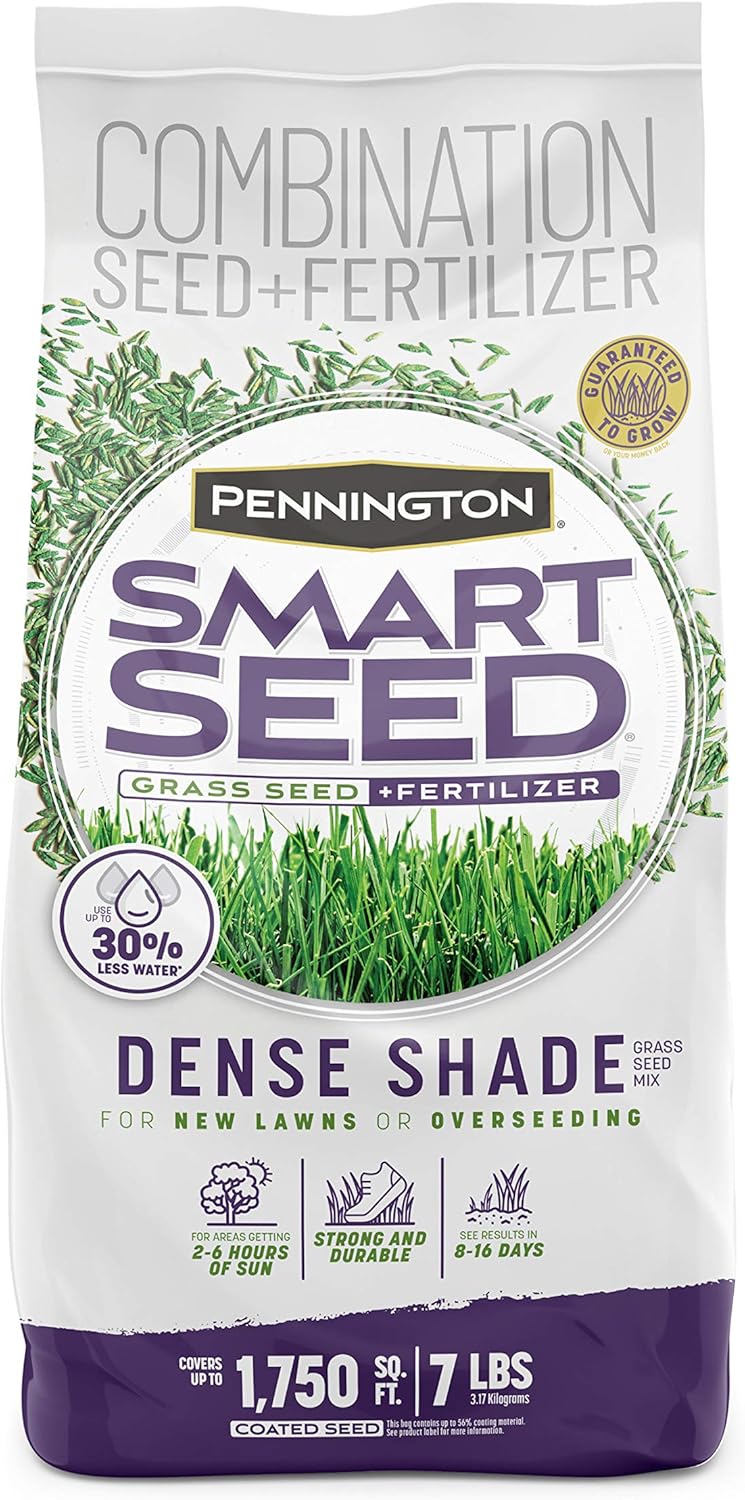
Pennington Smart Seed Dense Shade Grass Seed Mix, 7 lb
| Sunlight Exposure | 2-6 Hours |
|---|---|
| USDA Hardiness Zone | 1-12 |
| Moisture Needs | Moderate Watering |
| Included Components | Pennington Smart Seed Dense Shade Grass Mix Bag 7 lb |
Pennington Smart Seed Dense Shade is a grass seed mix designed specifically for low-light lawn areas. It combines tall fescue, fine fescue and perennial ryegrass with a lightly fertilizer-enhanced seed coat so seedings often germinate and green up quickly. Use it to overseed thin shady patches or to start a new lawn in spots that get only 2 to 6 hours of sun; the manufacturer recommends spring or fall planting and daily shallow watering until seedlings reach about 3 inches. Notable features include coverage guidance (up to 1,750 sq ft for overseeding), a built-in starter fertilizer that speeds establishment, and breeding aimed at improved drought tolerance once established. In practice this means faster visible results and a lawn that can need less water over time compared with ordinary seed. Limitations are typical for shade mixes: success still depends on good seed-to-soil contact, consistent moisture during germination, and realistic expectations in very dense shade or under trees where roots and competition reduce success rates.
Best for: Homeowners who need a practical, proven lawn seed to repair or overseed shady patches and who prefer solutions with built-in fertilizer and research-backed genetics.
Less Ideal for: People seeking an immediate, no-maintenance ground cover for deep, tree-rooted shade or those wanting non-grass ornamental groundcovers that tolerate full shade.
- Formulated for low-light areas that receive 2 to 6 hours of sun
- Seed coat includes starter fertilizer to speed germination and greening
- Mix of tall fescue, fine fescue and perennial ryegrass for durability
- Designed for improved drought tolerance once established
- Requires daily moisture during germination which demands ongoing attention
- Performance can be limited in extremely dense shade or heavy root competition
Verdict: Choose this seed mix when you want a research-backed, fertilizer-coated grass seed that establishes faster and performs better in moderate shade.
KVITER Forget Me Not Heirloom Flower Seeds (1200 Count)

| Unit Count | 1200 Count |
|---|---|
| Sunlight Exposure | Full Sun |
| Expected Blooming Period | Spring to Summer |
| USDA Hardiness Zone | 1,2,3,4,5,6,7,8,9,10,11,12 |
| Material Features | GMO Free, Heirloom |
These KVITER Forget Me Not seeds come in a bulk 1200-count pack and are intended for direct sowing outdoors in spring. The packet contains heirloom, non-GMO seeds plus a step-by-step growing guide, and the variety is described as hardy across USDA zones 1–12. In practice you sow just below the surface, keep the soil consistently moist and expect germination in 10–21 days at typical cool-to-mild temperatures. Plants form compact, upright clumps to about 16 inches and produce blue flowers from late spring into summer, making them suitable for edging beds or filling shady borders where low ground cover is needed. Key practical benefits are the included instructions for nervous planters, broad hardiness, and the large seed count for mass plantings or repeat sowings. Limitations are that the mix is described for full sun in one section while other notes say part sun to shade, so site selection may need testing, and bulk seed means variable plant spacing and potential thinning work to avoid overcrowding.
Best for: Gardeners who want a low-risk, easy-to-follow seed option to establish a dense, blue-flowering ground cover in shady borders and prefer non-GMO heirloom varieties with clear instructions.
Less Ideal for: Growers who need perfectly spaced plugs or instant mature cover should choose nursery plants or pre-grown mats instead.
- Very large 1200-count packet ideal for mass plantings or shade ground cover
- Heirloom non-GMO seed with seed-saving potential and traditional cultivar traits
- Detailed step-by-step growing guide included for beginners
- Hardy across USDA zones 1–12 so suitable in almost any climate
- Packaging is bulk seed which requires thinning or transplanting to achieve neat spacing
- Conflicting notes on light needs (listed as full sun and also suitable for part sun to shade) may require site testing
Verdict: If you want a forgiving, large-quantity heirloom seed for creating blue-flowering ground cover in shady borders, this packet gives clear instructions and enough seed to plant confidently.
Choosing the Right Ground Cover for Shade: Key Factors to Consider
Light and Shade Levels
Not all shade is the same. Deep, continuous shade beneath dense evergreens limits light far more than filtered dappled shade under deciduous trees. Measure light at the planting level across the season and note periods of morning or afternoon sun. Choose covers rated specifically for deep shade if you rarely see direct light; for brighter, dappled sites, a wider range of species will establish and flower.
Light also affects growth habit. In lower light, many ground covers grow more slowly, spread less aggressively, and may become leggy. Selecting species suited to the recorded light level avoids weak growth and gaps that encourage weeds.
Spread Habit and Containment
Ground covers differ in how they spread: by stolons, rhizomes, clumping crowns, or dense mats. Stolons and rhizomes can fill space quickly but can also creep into lawns and neighboring beds. Clumping or mat-forming types stay tidy and are easier to edge.
Consider how much active containment you want to do. If you prefer low intervention, choose a slower, clumping cover or one that responds well to shearing. For large slopes where quick soil coverage matters, a faster-spreading type may be preferable despite the need for occasional control.
Soil Type and Drainage
Shade often coincides with soil challenges: compacted root zones, thin topsoil, or poor drainage. Some ground covers tolerate clay or heavy shade soils, while others need well-drained, humus-rich beds. Test your soil texture and drainage before planting and pick covers known to handle those conditions.
Amendment can improve results, but planting a species suited to your native soil reduces transplant losses and long-term maintenance.
Maintenance and Upkeep
Maintenance expectations range from near-zero to seasonally hands-on. Low-maintenance covers require little trimming or dividing and suppress weeds well. Others benefit from annual thinning, deadheading, or lifting to rejuvenate foliage. Also consider leaf litter and debris: some covers tolerate being partially buried, while others decline under heavy shade litter.
Factor in how often you can commit time for trimming, weeding, or dividing. A hands-off gardener should emphasize slow, tidy growers.
Ornamental Value and Seasonal Interest
Beyond utility, many ground covers contribute texture, variegation, or seasonal blooms that lift shady areas. Some offer spring flowers that attract pollinators, while others have evergreen foliage that maintains color through winter. Decide whether the cover should be purely functional or also a decorative element.
Keep in mind that flowering and leaf color often require brighter shade conditions; prioritize ornamental traits only if your measured light matches the species' needs.
Preparing a Shady Bed for Planting
Start by clearing competing vegetation and loosening compacted soil to a depth of several inches. In many shady beds, tree roots will be present; avoid major root damage but enrich the topsoil with organic matter like compost to encourage root development for new covers.
Match planting technique to the cover type. Plug-style or potted plants benefit from spacing that accounts for expected mature spread so you do not overplant. For fast-spreading covers, wider spacing reduces early crowding and the need for thinning.
- Remove existing weeds and ivy carefully to avoid resprouting.
- Improve surface soil with 1 to 2 inches of compost if conditions are poor.
- Mulch lightly where needed, but avoid deep mulch against crowns that prefer air circulation.
Managing Spread Without Heavy Pruning
Containment can be physical or cultural. Simple edging, a shallow trench, or root barriers can stop stolons and rhizomes from migrating. For less intrusive control, periodic hand-removal of runners or mowing a lawn edge keeps covers in bounds.
Choose lighter interventions first. Many covers respond well to an annual tidy-up where long shoots are trimmed back and any escapees are pulled. This keeps maintenance predictable without high weekly labor.
- Install a 3 to 4 inch plastic or metal edging where beds meet turf.
- Trim runners in spring after initial flush to prevent uncontrolled spread.
- Use a mulching mower along edges to keep runners suppressed against turf.
Designing with Ground Cover in Shade
Think in layers. Ground cover works best combined with shade-tolerant shrubs and perennials that provide vertical structure. Use contrasting leaf shapes and heights to avoid a flat, monotonous look. Group covers by spread rate so faster varieties do not overrun slower ones.
Consider seasonal rhythm. Pair evergreen ground covers with spring ephemerals that bloom and die back, giving the cover time to fill gaps. Also leave space for occasional path access or stepping stones to prevent compaction in key areas.
- Plant in drifts rather than single rows to mimic natural spread.
- Reserve narrow borders for clumping ground covers that tolerate edging.
- Include a few taller shade perennials to break up texture and add seasonal color.
Establishing Ground Cover on Slopes and Erosion-Prone Areas
On slopes, quick soil anchoring is important. Use covers with good surface-rooting habits and consider temporary fabric or straw to protect soil while plants establish. Choose varieties that form dense mats to reduce runoff and root exposure.
Planting technique matters: staggered, offset planting and securing plugs or cuttings with biodegradable stakes helps plants take hold. Water consistently until roots are established to prevent erosion during heavy rains.
- Space plugs closer on steep slopes to accelerate coverage.
- Avoid deep mulch on slopes where it can slide and expose crowns.
- Use terraces or planting pockets where possible to slow water flow.
Seasonal Care and Troubleshooting
Monitor for thinning or bare patches in late summer; these can follow dry spells or heavy leaf fall. Light raking to remove compacted litter and spot-planting replacement plugs in fall or spring will keep a dense stand.
Watch for fungal issues in persistently wet, poorly ventilated shade. Improve air circulation by pruning overhanging branches and avoid overhead watering. If a cover consistently declines, reassess light and soil conditions rather than assuming the species is at fault.
- Replace thin areas with plugs in early fall for good root growth before winter.
- Prune nearby shrubs to increase light and air movement when needed.
- Inspect annually for invasive tendencies if adjacent to natural areas.
How We Chose the Best Ground Cover for Shade
We focused on traits that matter in actual shady garden settings. Shade tolerance was the first filter, with practical distinctions between deep shade, dappled light, and light shade. Establishment speed and ground coverage followed, since a fast-spreading variety reduces weed pressure and erosion sooner. Spread habit and containment were essential, because aggressive ground covers can escape beds or overwhelm nearby plants. Maintenance needs covered how often a cover needs trimming, division, or replanting to stay tidy. Ornamental attributes like foliage texture, seasonal interest, and flowering were considered for gardeners who want function plus appearance. Finally, hardiness and soil adaptability rounded out the criteria so picks suit a range of climates and common shady soils. We excluded plants that require full sun, high ongoing care, or are widely classed as invasive in many regions. We also left out annuals and temporary mulches; this list focuses on perennial, long-term living covers that establish a stable understory. These filters ensure the short list emphasizes durable, shade-adapted ground covers that perform in real garden situations.
FAQ
How much sunlight do ground covers for shade actually need?
It often depends. Some covers handle deep, persistent shade with very little direct sun, while others need a few hours of morning or dappled light to thrive. Measure the light pattern through the day and choose a type rated for that specific shade level.
Can ground cover prevent tree root competition?
Ground covers will not eliminate tree root competition but can coexist if you choose shallow-rooting, shade-tolerant species. Improving surface soil with organic matter and planting in small pockets between roots helps new plants establish without disturbing major roots.
Will a fast-spreading ground cover take over my lawn?
It can. Runners and rhizomes will creep into adjacent turf unless checked with edging or regular trimming. Choose clumping or mat-forming covers for edges, or install simple physical barriers where you want a clean separation.
When is the best time to plant ground cover in shade?
Spring or early fall are usually best because cooler temperatures and more reliable moisture help plugs and cuttings establish. Fall planting gives plants a head start on root growth before summer droughts, provided winters are not extremely harsh.
How do I handle heavy leaf litter over ground cover?
Lightly rake or lift dense accumulations to maintain air flow and light to the foliage. Many covers tolerate some litter, but thick layers can smother low-growing plants and invite fungal problems.
Are evergreen ground covers a good choice for shade?
Evergreen covers provide winter structure and color but may need slightly better light or soil drainage than deciduous covers. Choose evergreen types proven for deep shade if winter interest is a priority.
Final Verdict
Choose ground covers for shade by matching the plant to your measured light, soil type, and desired maintenance level. Prioritize shade tolerance, spread habit, and establishment speed for functional beds; add ornamental traits if you have the light and patience for seasonal interest. Balance tradeoffs between rapid coverage and containment. For low effort, favor slower, tidy growers; for erosion control or quick fill, accept more active management. With those priorities set, you can pick a cover that keeps shady spaces neat, stable, and attractive year after year.
