

Note: This article contains affiliate links. If you click on these links and make a purchase, I may earn a small commission at no extra cost to you. This helps support my research and content. Read my full affiliate disclosure here.
A clean edge separates a tidy lawn from a ragged one. If you need crisp borders along driveways, beds, and walkways, the right rotary lawn edger makes frequent maintenance faster and less physically demanding. This guide walks you through the top shortlisted rotary lawn edgers for typical yard sizes and common edging tasks. We evaluated cutting accuracy, ease of handling, and durability so you can pick a tool that fits how often you edge and the surfaces you work against. Read on for what to expect from the best options and which features matter most.
Top Picks at a Glance
| Best Overall The best all-around choice for most situations | Greenworks 40V 8" Brushless Cordless Lawn Edger with 4.0Ah Battery and Charger |  |
| Best Quality Built to a higher standard if you want something more solid | Colwelt 59" Manual Rotary Lawn Edger with Extra-Wide Rubber Wheel |  |
| Best Value The sweet spot between price and what you get | BlumWay 67-inch Rotary Wheel Lawn Edger with Stainless Steel Handle and Gloves |  |
| Best Budget The cheapest option that still gets the job done reliably | YAKUHY Wheel Rotary Manual Lawn Edger with Adjustable Handle and Gloves |  |
| Highest Rated A top-rated pick with lots of positive feedback | Truper Rotary Lawn Edger with Dual-Wheel and 48-inch Fiberglass Handle |  |
| Most Popular A crowd favorite that many people choose with confidence | BARAYSTUS Wheel Rotary Lawn Edger — Manual Adjustable Height |  |
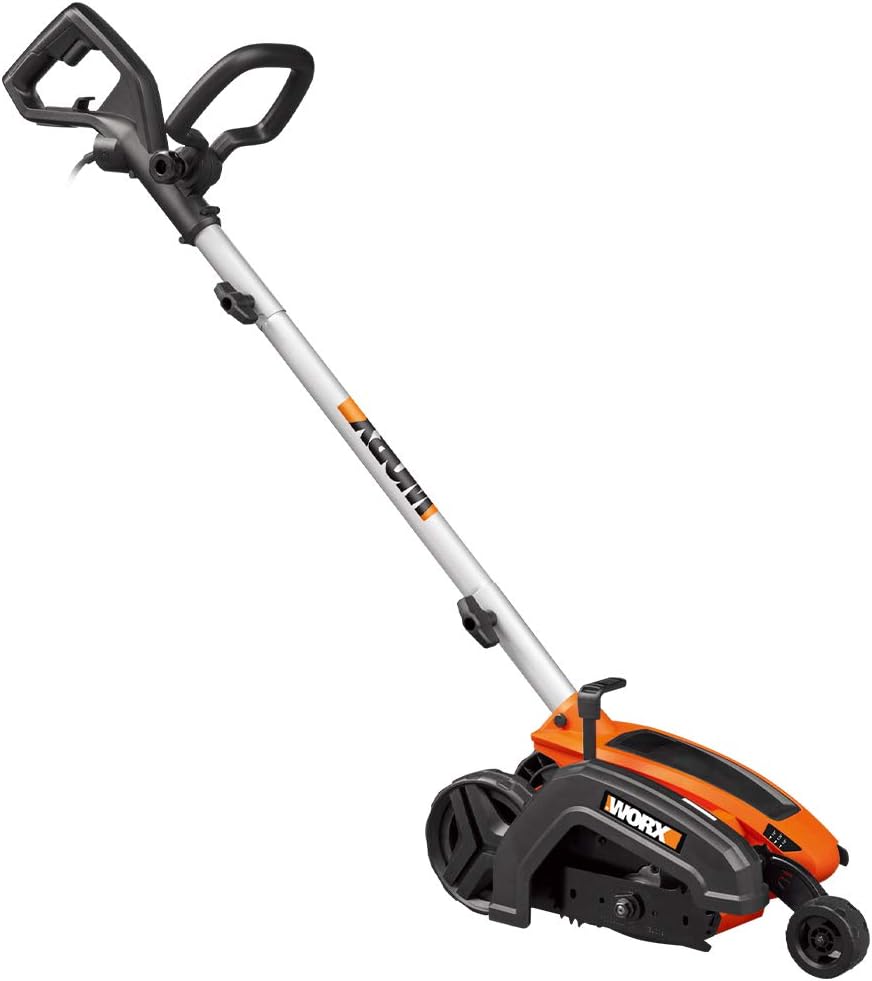
| Best Seller A high-volume bestseller chosen again and again | WORX WG896 7.5" 12-Amp Corded Electric Lawn Edger & Trencher |  |
Greenworks 40V 8" Brushless Cordless Lawn Edger with 4.0Ah Battery and Charger

| Blade size | 8 in |
|---|---|
| Voltage | 40V |
| Battery capacity | 4.0 Ah |
| Motor type | Brushless |
The Greenworks 40V 8" cordless edger is built to give a neat, professional edge without the noise and fuss of gas equipment. It pairs a brushless motor with an 8-inch hardened steel blade to cut cleanly through grass and compacted soil, and the kit includes a 4.0Ah 40V battery and charger so it is ready to use out of the box. Tool-less depth adjustment makes it simple to change cutting depth for sidewalks, driveways, patios, and garden beds, and the unit is designed to stay stable on uneven or sloped terrain for consistent results. Practical benefits include quieter operation, lower maintenance than gas models, and lighter weight that reduces fatigue during longer sessions. Limitations to note are the runtime limits inherent to a single 4.0Ah battery for large properties and the 8-inch blade size, which is ideal for detail work but slower for very long edges. For typical residential yards it balances power, convenience, and ease of use effectively.
Best for: Homeowners who want a low-maintenance, cordless edger that produces clean, professional-looking borders around driveways, sidewalks, patios, and beds and who value quieter operation and easy setup.
Less Ideal for: Landscapers or property owners with very large lawns who need extended runtime or faster coverage should consider a model with larger batteries or a wider cutting capacity.
- Brushless motor for stronger cutting performance, quieter operation, and longer motor life
- Includes 4.0Ah 40V battery and charger so the tool is ready to use immediately
- Tool-less depth adjustment allows quick changes without tools
- Designed for stable, controlled edging on uneven or sloped terrain
- Single 4.0Ah battery may limit continuous runtime on larger yards
- 8-inch blade is better for precision edging than rapid coverage of long borders
Verdict: A convenient, brushless 40V cordless edger that delivers precise, quiet edging and is ready to use with the included 4.0Ah battery and charger.
Colwelt 59" Manual Rotary Lawn Edger with Extra-Wide Rubber Wheel

| Blades Material | alloy steel with chrome-plated surface |
|---|---|
| Wheel Width | 3.4 inches |
| Support Bracket Material | reinforced metal |
| Handle Material | steel |
The Colwelt 59-inch manual rotary edger is a hands-on tool for creating crisp lawn edges along sidewalks, driveways, and patios. It uses a serrated, chrome-plated alloy-steel blade mounted on a spinning wheel so the blade cuts as you push, and a 3.4-inch extra-wide rubber wheel keeps the unit tracking straight and adds traction on thicker turf. The reinforced metal support bracket and steel handle give the tool a sturdy feel compared with lightweight hobby models. In practice it works best on flat turf and delivers clean, scissor-like cuts that reduce ragged edges. Because it is manual there is no noise, fuel, or cord to manage, but it does require physical effort and is not ideal for very uneven ground or for edging where lawn meets planting beds. Assembly is straightforward and the non-slip grip improves comfort for longer runs. For someone who prioritizes cutting performance and durability in a non-powered edger, this one is a solid, no-frills option.
Best for: Buyers who prioritize clean cutting performance and a durable, no-power tool for straight lawn edges along sidewalks and driveways and who are willing to use manual effort.
Less Ideal for: People who need a powered edger for large properties, steep or highly uneven lawns, or frequent deep bed-edge work should consider a motorized or half-moon edger instead.
- Serrated, chrome-plated alloy-steel blade designed for rust resistance and sharp cutting
- Extra-wide 3.4-inch rubber wheel provides better tracking and traction on thick grass
- Reinforced metal support bracket and steel handle improve durability and rigidity
- Manual operation requires no power source so it is quiet and low-maintenance
- Manual design requires physical effort and can be tiring for long edging runs
- Less effective on uneven terrain and not optimized for edging into planting beds
Verdict: If you want a sturdy, high-performance manual edger that produces clean, consistent edges without fuel or cords, this Colwelt rotary model delivers.
BlumWay 67-inch Rotary Wheel Lawn Edger with Stainless Steel Handle and Gloves

| Cutting width | 6 inches |
|---|---|
| Wheel Size | 6 inches |
| Power Source | Manual Powered |
| Number of Positions | 4 |
| Material Type | Stainless Steel |
The BlumWay 67-inch rotary wheel edger is a manual edging tool designed to roll along sidewalks, driveways and flowerbed borders to cut turf and create clean edges. It assembles from four telescoping stainless steel poles so you can pick one of four heights and avoid bending while you work. The 6-inch wheel and 17 serrated steel blades increase the cutting area per pass and help stabilize direction when pushing the tool. Practical touches include a non-slip handle for comfort and a pair of gloves in the box for immediate use. Because it is manually operated and built from stainless steel, it is simple to maintain, rust resistant and quiet compared with powered trimmers. Expect it to be best for routine edging on compact turf, narrow sidewalks and small hardscaped areas; the maker clearly states it is not intended for large overgrown zones or very tall, woody weeds where a powered trimmer is needed. Assembly requires basic tightening of screws and a screwdriver or wrench and users should check blade alignment during setup. For someone who wants a low-maintenance, fuss-free edging solution for regular yard touch-ups, this does the job reliably.
Best for: Gardeners who prefer a low-maintenance, manual tool for regular edge upkeep and want to minimize bending while trimming sidewalks, driveways and small lawn borders.
Less Ideal for: People who need to clear large overgrown areas, woody vegetation or tall weeds should choose a powered trimmer or brush cutter instead.
- Adjustable 4-length shaft reduces bending and adapts to different user heights
- 6-inch wheel and 17 serrated steel blades cover more area per pass for faster edging
- Stainless steel construction resists rust and adds durability for outdoor use
- Comes with gloves and a mounting kit so it is ready to assemble and use
- Manual operation limits effectiveness on very tall or dense weeds compared with motorized trimmers
- Assembly needs tools and careful tightening to keep the head secure during use
Verdict: A durable, manually operated edger that lets practical gardeners keep sidewalks and small lawn borders tidy without the noise or maintenance of a motorized trimmer.
YAKUHY Wheel Rotary Manual Lawn Edger with Adjustable Handle and Gloves

| Power Source | Manual |
|---|---|
| Cutting width | 5.9 inches |
| Maximum Adjustable Cutting Height | 63 inches |
| Number of Positions | 4 |
| Material Type | Stainless Steel,Carbon Steel |
The YAKUHY wheel rotary edger is a manual edging tool built to give clean lawn borders along sidewalks, driveways, and flower beds. It uses a serrated, self-sharpening wheel blade made from stainless and carbon steel and a telescoping handle with four height positions up to 63 inches so users can set a comfortable working posture. Assembly is straightforward and the tool is operated by rolling the wheel along the edge to slice turf and weeds without electricity. Practical benefits include a compact lightweight design that is easy to store, a modest cutting width suitable for narrow edges, and included gloves for immediate use. Limitations are apparent for heavy clay or deeply rooted sod where a sturdier, heavier edger or powered option will cut more effectively, and the lightweight build may feel less durable under very frequent professional use. For routine residential edging and occasional lawn maintenance this tool offers a simple, low-cost way to keep edges neat with minimal effort.
Best for: Homeowners looking for an inexpensive, no-fuss tool to tidy lawn edges around sidewalks, driveways, and beds who prioritize low upfront cost and simple manual operation.
Less Ideal for: Landscaping professionals or gardeners who need a heavy-duty edger for deep sod cutting, large properties, or prolonged daily use should consider a more robust or powered model.
- Adjustable handle with four height positions for comfortable use by different users
- Stainless steel and carbon steel construction for basic corrosion resistance
- Self-sharpening serrated wheel blade that maintains cutting edge during use
- Lightweight and compact design that is easy to store and maneuver
- Narrow cutting width limits speed on wide borders or heavy-duty jobs
- Lightweight construction may feel less robust for frequent professional use
Verdict: A budget-friendly manual edger that gives neat, precise residential edges without power and is ideal for occasional home use.
Truper Rotary Lawn Edger with Dual-Wheel and 48-inch Fiberglass Handle

| Power Source | Manual |
|---|---|
| Cutting width | 48 inches |
| Included Components | 1 x Truper 32100 Tru Tough Rotary Lawn Edger with Dual Wheel and Ash Handle |
The Truper rotary lawn edger is a straightforward, manual tool that uses a spinning blade and dual-wheel guide to trim clean edges along driveways, sidewalks, and flower beds. You use it by rolling the edger along the turf margin while the blade severs grass and shallow roots to produce a defined border. Notable features include the dual-wheel design that stabilizes the tool for straighter edging lines, a 48-inch fiberglass handle that gives reach and leverage while remaining lightweight, and a textured non-slip grip for control. The manual operation means no fuel, batteries, or cords to maintain, which keeps the tool simple and dependable for routine seasonal trimming. Because it is hand powered, work is slower than powered alternatives and harder in compacted soil or very thick turf, but for regular upkeep it is durable and easy to store. Safety calls for gloves and eye protection around the exposed blade. For homeowners who want a low-maintenance, long-lasting edger, this model delivers consistent results with minimal upkeep.
Best for: Homeowners who prioritize a dependable, low-maintenance tool for regular lawn border upkeep and prefer simple hand tools over powered equipment.
Less Ideal for: People who need fast, heavy-duty edging for large areas or who regularly work in rock-hard or heavily compacted soil should consider motorized or specialized equipment instead.
- Dual-wheel guide improves stability and helps produce straighter edging lines
- Long 48-inch fiberglass handle provides good reach and leverage while staying lightweight
- Manual design requires no fuel, batteries, or cords for low-maintenance use
- Textured non-slip grip increases control during edging tasks
- Manual operation makes edging slower and more strenuous than powered models
- Not ideal for very compacted soil or heavy turf without prior loosening
Verdict: A simple, dependable manual edger that delivers straight, clean borders with minimal upkeep for homeowners who value reliability.
BARAYSTUS Wheel Rotary Lawn Edger — Manual Adjustable Height

| Cutting width | 5.5 inches |
|---|---|
| Power Source | manual |
| Number of Positions | 3 |
| Material Type | Stainless steel, Carbon steel |
| Maximum Adjustable Cutting Height | 58.3 inches |
This BARAYSTUS wheeled rotary edger is a manual edging tool designed to cut clean borders along sidewalks, driveways, and flower beds by rolling the weighted wheel while the serrated blade slices through grass and sod. It typically assembles quickly and is used by pushing it along the edge with a steady motion; the manufacturer recommends keeping the wheel axle clear of debris and adjusting the wheel tension for smooth operation. Notable features include self-sharpening serrated blades, a three-position telescoping stainless steel handle to suit different user heights, and a relatively narrow 5.5-inch cutting path for precise trimming. Practical benefits are low maintenance because it needs no fuel or power, portability, and a durable metal construction that resists rust on the working parts. Important limitations are that it requires physical push force on thicker turf or compacted soil, it is best used on edges free of stones or heavy debris, and the single narrow cutting width means longer runs will take more time than wider powered options.
Best for: Buyers who prioritize a simple, durable manual tool and want a low-maintenance way to create neat edges without power tools, especially if they value demonstrated user satisfaction and straightforward operation.
Less Ideal for: Not a good fit for someone who routinely needs to edge long runs of heavy turf or rocky edges or who prefers a powered tool to minimize physical effort.
- Serrated, self-sharpening blade stays effective with regular use
- Three adjustable handle positions to adapt to different user heights
- Stainless steel construction for corrosion resistance on working parts
- Wheeled design provides guided, consistent cutting and easier control than a hand spade
- Manual operation requires physical effort on thick turf or compacted edges
- Narrow 5.5-inch cutting width makes long edging runs slower than powered tools
Verdict: A simple, durable wheeled edger that delivers precise manual edging and low upkeep for gardeners who prefer a no‑power, proven tool.
WORX WG896 7.5" 12-Amp Corded Electric Lawn Edger & Trencher
| Power Source | Corded Electric |
|---|---|
| Cutting width | 7.5 inches |
| Motor | 12 Amps |
| Depth settings | 1", 1-1/4", 1-1/2" |
| Included components | 7.5" blade |
The WORX WG896 is a corded electric edger that uses a 7.5" serrated steel blade driven by a 12‑amp motor to cut clean, deep edges around sidewalks, driveways, and planting beds or to trench for low‑voltage wire. It is typically used by walking the unit along the lawn edge while aligning the cutting line indicator for straight results; a three‑position depth selector (1", 1‑1/4", 1‑1/2") and an adjustable shaft make it comfortable for most users. Notable features include a high‑speed blade (about 4700 rpm), a wear indicator on the blade, and a relatively lightweight 14 lb body that is easier to maneuver than heavier gas machines. Because it is corded, you get consistent power for extended jobs without battery swaps, but you must use a proper outdoor extension cord and avoid wet conditions. The serrated blade delivers more defined edges than string trimmers, yet it requires occasional blade replacement and cannot be used in saturated soil. For buyers who prefer straightforward, powerful electric equipment, this model balances performance and ease of use for tidy, professional‑looking edges.
Best for: Buyers who want reliable, no‑surprises electric power and a tool that makes crisp, professional lawn edges with minimal fuss and maintenance.
Less Ideal for: Those who need cordless portability for large properties away from outlets or who frequently work in very wet conditions should consider battery or gas alternatives.
- Powerful 12‑amp motor for consistent cutting performance
- Three adjustable cutting depths for edging and shallow trenching
- 7.5" serrated steel blade with wear indicator for defined, professional edges
- Lightweight design and adjustable shaft improve maneuverability and user comfort
- Corded power requires an outdoor extension cord and limits mobility
- Not suitable for use in wet or saturated ground
Verdict: A dependable, corded electric edger that delivers professional, deeply defined lawn edges with simple controls and low maintenance.
Choosing the Right Rotary Lawn Edger: Key Factors to Consider
Cutting Accuracy and Blade Type
A rotary edger's primary task is to slice a clean vertical face between lawn and hard surface. Blade design and sharpness determine how neatly turf roots are severed and how much repeated passes are needed. A heavier, well-tempered blade maintains a straighter cut through compacted turf, while thinner blades can be better for tight curves but may flex on dense soil.
Consider how often you will edge and whether you prefer a single-pass clean cut or a tool that requires follow-up trimming. Blade replaceability matters because frequent use dulls edges; having a standard blade size or easy-change system reduces downtime.
Power Delivery and Runtime
How the unit delivers power affects cut consistency. Gas and corded-electric models tend to maintain torque against thick sod and root-filled edges, while battery units are quieter and easier to start but vary by voltage and battery capacity. For longer stretches or heavy clay soil, steady torque prevents the blade from bogging down and producing ragged edges.
If you choose a battery model, check typical runtime and whether the battery is interchangeable with other yard tools. For gas units, consider engine responsiveness and whether they stall under sudden loads.
Handling, Balance, and Maneuverability
Edging involves walking along borders while keeping a steady blade depth and angle. Handle geometry, shaft length, and weight distribution affect control during long runs and when attacking corners or irregular edges. A well-balanced machine reduces wrist and shoulder fatigue and makes consistent cuts easier.
Look for adjustable handles, swivel features, or guide wheels that help maintain a steady line. Maneuverability is especially important if your yard has many curves, tight beds, or obstacles like steps and posts.
Durability and Weather Resistance
Outdoor tools face dirt, moisture, and accidental impacts. Corrosion-resistant finishes on the blade housing and shaft extend service life, as do sealed bearings and durable switch assemblies. Resin or composite components can reduce weight but should be reinforced at stress points to avoid cracking.
Pay attention to maintenance access for cleaning clippings and soil from the cutting area. Units that allow easy access to the blade and drive components make routine upkeep faster and can prevent premature failures.
Operator Comfort and Safety Features
Comfort features keep edging from becoming a chore. Vibration-damping handles, soft grips, and ergonomic trigger placement reduce strain during extended use. Safety shields and blade guards lower the chance of thrown debris, while a dependable shutoff or dead-man switch limits risk if you lose grip.
Consider whether the unit allows for controlled depth adjustment to avoid scalping and whether it includes clear instructions for safe operation. Comfortable machines are used more often, which helps maintain crisp borders with less effort.
Maintenance and Parts Availability
Edging tools need occasional servicing: blade sharpening or replacement, belt or gearbox inspection, and cleaning. Units that use common blade sizes or readily available replacement parts simplify upkeep. Clear access to wear items speeds routine checks and reduces service costs.
Also consider the simplicity of routine tasks like removing the guard to clean debris, tightening fasteners, and accessing the drive system. A design that minimizes tools required for basic maintenance will keep the edger in use longer with less hassle.
Best Uses by Yard Size and Surface
Smaller lawns with short runs of edging and mostly soft soil benefit from lighter, more maneuverable rotary edgers that are easy to start and handle around frequent beds. For larger properties or long concrete driveways choose a unit with higher torque and sustained power so the blade does not bog down on thicker turf or compacted edges.
If you frequently edge against gravel or pavers, look for models with durable guards and adjustable depth stops to prevent the blade from catching on loose stones. For curving beds, units with swivel handles or shorter shafts offer tighter turning radius and better control.
- Small yards: prioritize light weight and easy handling
- Large yards: prioritize consistent torque and longer runtime
- Paved edges: choose robust guards and depth control
Working Techniques for Cleaner Edges
Start by mowing the lawn first so the blade meets uniform grass height. Run the edger at a steady walking pace and let the blade do the cutting; forcing it faster increases jagged cuts. Take an initial shallow pass to define the line, then a second pass at full depth for a crisp face.
For corners or adjoining beds, use short controlled passes and adjust the angle slightly to follow curves. After edging, remove clippings from the trench and use a flat shovel to tidy the base if needed. Regular light maintenance prevents a deep overgrown lip from forming, which becomes harder to correct.
- Mow before edging for uniform height
- Make an initial shallow cut then finish at full depth
- Clean the trench after edging to expose the crisp face
Storing and Seasonal Care
Clean the blade and housing of soil and grass clippings after each use to prevent corrosion and buildup. Inspect fasteners and the blade for damage; replace or sharpen blades before storing. Store battery packs separately in a cool, dry place to preserve charge cycles and longevity.
Before long-term storage, run a quick maintenance check: lubricate moving parts per the manual, dry any wet components thoroughly, and protect metal surfaces with a light coating of oil if recommended. Proper seasonal care keeps the edger ready and reduces the risk of failures at the start of the next season.
- Clean and dry before storage
- Remove batteries for long-term storage
- Sharpen or replace blades before storing
Accessory and Setup Tips
Common accessories that improve results include guide wheels for steady depth control, replacement blades of different thickness for varied turf conditions, and extension handles or padded grips for comfort. A compact sharpening kit or bench grinder makes blade maintenance straightforward.
When setting up, follow a routine: check tightness of blade fasteners, verify the depth stop or guide wheel engagement, and test the shutdown mechanism. Small setup adjustments pay off in neater cuts and longer component life.
- Guide wheels stabilize depth
- Keep a sharpening kit handy
- Verify blade fasteners and safety cutoffs before use
How We Chose the Best Rotary Lawn Edger
We prioritized real-world edging performance and longevity when assembling this list. Key evaluation criteria included cutting accuracy on turf and compacted soil, power delivery and consistency under load, handling and operator comfort during front-facing and side-facing work, and construction quality of the blade guard, shaft, and wheel or guide system. Battery runtime or engine responsiveness was considered for frequent use, as was ease of blade replacement and routine maintenance. We excluded products that lacked clear blade protection, had inconsistent drive systems, or showed poor user controls that increase risk of kickback or wandering cuts. Lightweight but flimsy units were filtered out in favor of those that balance manageability with robust build. The shortlisted items therefore represent tools suited for typical residential edging tasks, from occasional touch-ups to weekly maintenance, across paved, gravel, and turf edges.
FAQ
How deep should I set a rotary lawn edger for the first pass?
Start with a shallow pass of about one-third of your intended final depth to mark the line. Then make a second pass at full depth to produce a cleaner vertical edge. This two-pass approach reduces tearing and makes the final line neater.
Can I use a rotary edger on gravel or pavers?
You can, but take care. Use shallower cuts and robust blade guards to avoid catching loose stones. For porous or uneven pavers, reduce speed and use short controlled passes to protect the blade and the surface.
How often should I sharpen or replace the blade?
Frequency depends on soil type and how often you edge. Light residential use may need sharpening once or twice per season, while heavy use on sandy or gritty soils could require more frequent attention. Replace the blade if it becomes chipped, bent, or excessively worn.
Are battery rotary edgers powerful enough for large yards?
Battery units vary. Higher-voltage systems can handle moderate residential workloads but may require spare batteries for long runs. For very large properties or thick, rooted turf, models with more sustained power delivery are generally more efficient.
What safety gear should I wear when edging?
Wear eye protection, long pants, and closed-toe shoes to guard against flying debris. Hearing protection is recommended for louder gas or high-speed electric units. Gloves improve grip and reduce vibration transfer to your hands.
Final Verdict
Choose an edger that matches the length and toughness of your edging runs. Prioritize cutting accuracy and a power system that holds torque under load for large or heavily rooted borders. Operator comfort and accessible maintenance features make frequent edging less of a chore. Weigh tradeoffs between lighter, more maneuverable units and heavier models that preserve torque on difficult turf. With clear priorities on blade performance, handling, and upkeep, you can pick a rotary lawn edger that keeps borders sharp with minimal fuss.
