

Note: This article contains affiliate links. If you click on these links and make a purchase, I may earn a small commission at no extra cost to you. This helps support my research and content. Read my full affiliate disclosure here.
A 20-inch gas chainsaw sits between lightweight homeowner saws and heavy commercial rigs, offering the bar length and power needed for mid-size trees, storm cleanup, and firewood. Choosing the right 20-inch gas chainsaw matters because differences in engine torque, chain speed, and ergonomics affect how quickly and safely you finish real tasks in the yard or on the job. This guide shortlists the top options for that bar length and fuel type so you can match cutting power to the work you do. We evaluated handling, cutting performance, reliability, and maintenance needs to help you find a saw that feels balanced and dependable. Read on for the picks and the decision criteria that matter for everyday cutting and seasonal heavy-use jobs.
Top Picks at a Glance
| Best Overall The best all-around choice for most situations | Husqvarna 450S Rancher 20-Inch Gas Chainsaw |  |
| Best Quality Built to a higher standard if you want something more solid | Husqvarna 450 Rancher 20" Gas Chainsaw |  |
| Best Value The sweet spot between price and what you get | GTHAN STORE 62cc Gas-Powered Chainsaw with 20" Guide Bar |  |
| Best Budget The cheapest option that still gets the job done reliably | Shulemin 58cc 20" Gas Chainsaw |  |
| Highest Rated A top-rated pick with lots of positive feedback | Husqvarna 455 Rancher 20-Inch Gas Chainsaw |  |
| Most Popular A crowd favorite that many people choose with confidence | VEVOR 62cc Gas-Powered Chainsaw, 20-inch Guide Bar |  |
| Best Seller A high-volume bestseller chosen again and again | PROYAMA 68CC Gas Chainsaw with 20" and 24" Bars |  |
Husqvarna 450S Rancher 20-Inch Gas Chainsaw

| Power Source | Gas Powered |
|---|---|
| Horsepower | 3.2 hp |
| Chain Length | 20 inches |
The Husqvarna 450S Rancher is a 20-inch gas chainsaw built to handle yard cleanup, firewood cutting, and small-to-medium tree work with professional-grade intentions. It uses a 3.2-HP X-Torq two-stroke engine and X-CUT chain to deliver strong cutting performance while Smart Start and an air purge make starting quicker and less frustrating. Practical features include automatic oiling, LowVib dampening for reduced vibration, an inertia-activated chain brake for safety, and Air Injection to keep debris out of the air filter for longer engine life. The slim-body and ergonomic rear handle improve maneuverability for overhead or limbing work. Expect robust power and durability in exchange for the typical maintenance of a gas saw such as fuel mixing, periodic filter and spark plug care, and higher noise and emissions compared with battery models. The saw is best used by someone comfortable with gas equipment who needs reliable cutting power for seasonal property maintenance and heavier yard tasks.
Best for: Buyers who want a capable, gas-powered 20-inch saw that balances professional-level cutting performance with homeowner-friendly starting and handling for seasonally intensive yard work.
Less Ideal for: People who prioritize low noise, minimal maintenance, or cordless convenience should consider battery models instead.
- Powerful 3.2-HP X-Torq engine suitable for 20-inch bar work
- Smart Start and air purge make starting easier and reduce warm-up hassles
- LowVib system reduces handle vibration for longer cutting sessions
- Air Injection centrifugal cleaner reduces air filter maintenance
- Inertia-activated chain brake and automatic oiler improve safety and convenience
- Requires regular gas and two-stroke oil mixing and routine maintenance inherent to gas saws
- Heavier and louder than battery-powered alternatives, which can limit very long-duration use
Verdict: Choose the 450S Rancher if you need dependable gas-powered cutting power and pro-oriented features in a homeowner-friendly 20-inch chainsaw.
Husqvarna 450 Rancher 20" Gas Chainsaw

| Power Source | Gas Powered |
|---|---|
| Chain Length | 20 inches |
| Included Components | Chainsaw, Bar &Chain |
| Manufacturer Warranty Description | 2 Year Warranty |
The Husqvarna 450 Rancher is a workhorse 20-inch gas chainsaw built for homeowners and light pros who need a reliably powerful saw. Its 50.2-cc X-Torq two-stroke engine produces strong cutting power while reducing emissions and improving fuel efficiency, and features such as Smart Start and air purge make starting and routine use straightforward. LowVib anti-vibration design, an ergonomic rear handle with soft inlay, and an inertia-activated chain brake improve comfort and control during extended cutting sessions. The centrifugal Air Injection system helps keep the air filter cleaner for longer, reducing maintenance frequency. It comes with bar and chain and supports standard 18–20 inch bars, so swapping or replacing cutting parts is simple. Expect typical gas-saw maintenance: fuel mixing, periodic filter and spark plug checks, and more vibration and noise than electric alternatives. Its weight and gas engine complexity make it less convenient for casual users who prefer low-maintenance or quieter tools, but for balanced buyers wanting power, durability, and professional features, it is a capable all-rounder.
Best for: For buyers who want a durable, powerful 20-inch chainsaw that balances professional features with homeowner usability for regular pruning, storm cleanup, and firewood cutting.
Less Ideal for: Not a great fit for users who need a near-silent, low-maintenance saw for occasional light yard tasks or who prefer cordless convenience.
- Robust 50.2-cc X-Torq engine delivers strong cutting performance for firewood and tree work
- Smart Start and air purge make starting easier and reduce fuss during use
- LowVib and ergonomic rear handle improve comfort for longer jobs
- Air Injection centrifugal system reduces debris reaching the air filter, extending service intervals
- Compatible with standard 18–20 inch bars and chains for easy parts replacement
- Requires regular gas/oil mixing and routine two-stroke maintenance typical of gas chainsaws
- Heavier and louder than battery or corded electric alternatives
Verdict: Choose the Husqvarna 450 Rancher if you need a powerful, dependable 20-inch gas chainsaw that balances pro-level features with everyday usability.
GTHAN STORE 62cc Gas-Powered Chainsaw with 20" Guide Bar
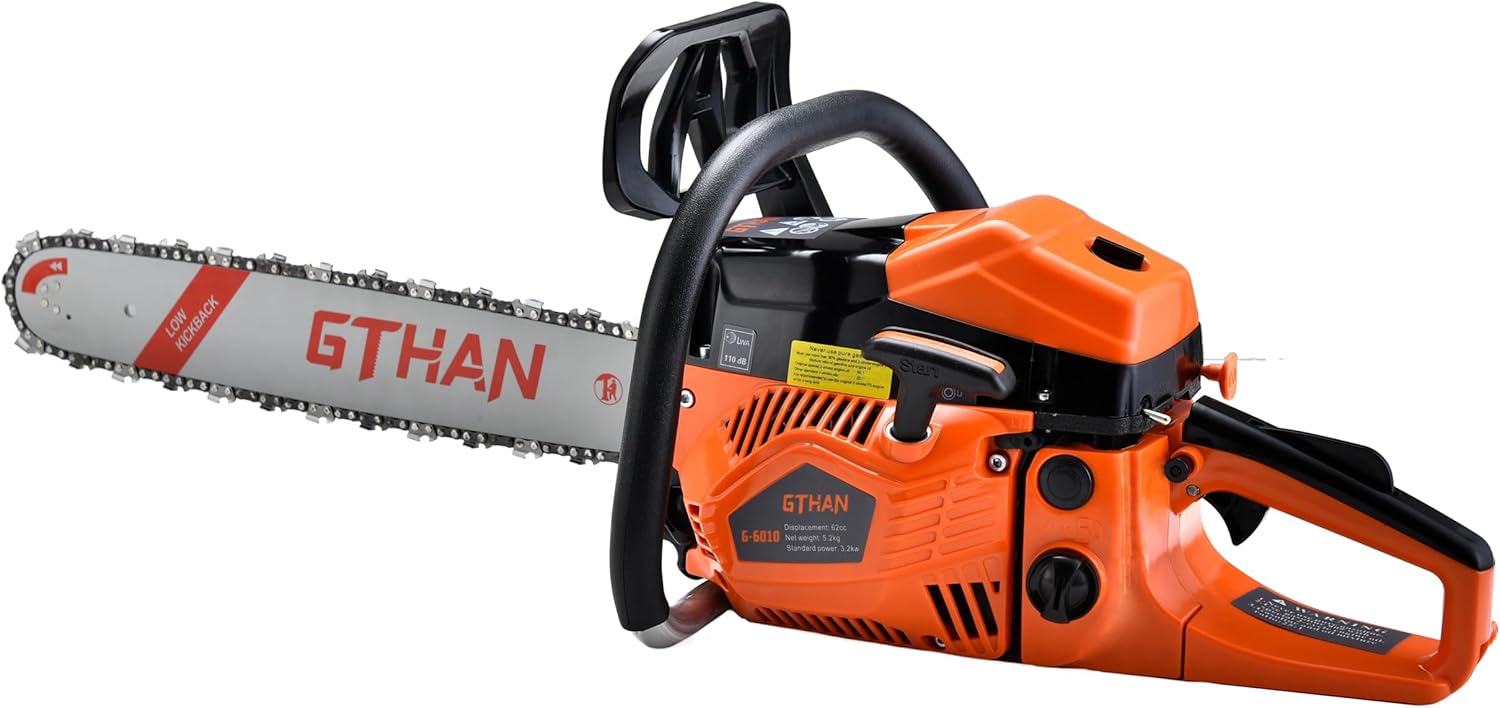
| Power Source | Gas Powered |
|---|---|
| Horsepower | 4.2 hp |
| Chain Speed | 8500 Rpm/Min |
| Chain Length | 20 inches |
This GTHAN STORE chainsaw pairs a 62cc 2-cycle engine with a 20-inch guide bar to tackle larger logs, fallen trees, and heavy pruning. Typical use is property maintenance and firewood cutting where longer reach and raw power reduce the number of cuts needed. Notable features include a claimed 4.2 horsepower motor and an 8500 rpm chain speed for sustained cutting performance, plus an easy-start design and accessible controls that simplify day-to-day operation and maintenance. The included installation toolkit helps get the saw ready for first use. In practice the saw is best for homeowners and landowners who need a robust gasoline tool rather than a lightweight occasional trimmer. Expect solid cutting throughput on medium to large-diameter wood, but also plan for routine fuel mixing, vibration, noise, and regular chain sharpening and tensioning. The unit is fairly heavy and sized for adults comfortable handling gas equipment, so it is not aimed at casual users who prefer low-maintenance electric options.
Best for: Buyers who prioritize practical, powerful cutting performance for regular property work and want a gas tool that handles larger logs and frequent use.
Less Ideal for: If you need a lightweight, low-maintenance saw for occasional small jobs or prefer near-silent operation, an electric or battery model is a better choice.
- Powerful 62cc 2-cycle engine providing up to 4.2 hp for demanding cutting jobs
- 20-inch guide bar extends reach and reduces the number of passes on larger logs
- High chain speed (8500 rpm/min) for efficient, continuous cutting
- Easy-start design and accessible controls simplify regular use and maintenance
- Gas engine requires fuel mixing, more maintenance, and produces noise and vibration
- Relatively heavy and large compared with battery or small electric saws
Verdict: Choose this chainsaw if you need a practical, gas-powered 20-inch tool that delivers strong cutting power for regular yard and farm work.
Shulemin 58cc 20" Gas Chainsaw

| Power Source | Gas Powered |
|---|---|
| Horsepower | 25.4 |
| Rated Power | 2.4kw/3.2hp |
| Guide Specification | 20 Inches |
| Fuel Tank Volume | 550ml |
This Shulemin gas chainsaw pairs a 58cc two-stroke engine with a 20-inch guide bar to tackle pruning, storm cleanup, firewood and light land-clearing jobs. It ships with a replacement chain, basic tools, oil can and guide plate so it is ready for straightforward assembly and use. Notable features include an electronic ignition, integrated chain brake and vibration-dampening handle that make starting and handling easier for occasional users. The metal and ABS construction aims for durability while the 550ml fuel tank and 260ml chain tank reduce the need for frequent refills during a typical afternoon of cutting. Expect the saw to perform well on medium-diameter logs up to about 55cm and for homeowners who need a budget workhorse rather than a professional commercial unit. Limitations to keep in mind are typical of value chainsaws: fit-and-finish and long-term reliability may vary, and the 2-stroke engine requires fuel-oil mixing and basic maintenance. Buyers should be prepared to maintain the carburetor and chain tension for dependable operation.
Best for: Homeowners on a tight budget who need a gas saw for occasional pruning, firewood and light clearing tasks and who are comfortable performing basic engine maintenance.
Less Ideal for: Professionals or users who need a high-durability commercial saw or a low-maintenance electric option for frequent daily use.
- Powerful 58cc two-stroke engine suitable for cutting medium-diameter wood
- Includes essential accessories (chain, guide plate, oil can, installation tools) for out-of-the-box setup
- Integrated chain brake and vibration-dampening handle improve user control and comfort
- Large fuel and chain tanks reduce refill frequency during extended yard work
- Requires mixed fuel and more frequent routine maintenance compared with electric models
- Build quality and long-term durability may be inconsistent on lower-cost units
Verdict: A cost-conscious, ready-to-use gas chainsaw that gives homeowners strong cutting power and basic safety features for occasional yard and firewood work.
Husqvarna 455 Rancher 20-Inch Gas Chainsaw

| Power Source | Gas Powered |
|---|---|
| Horsepower | 2.6 KW |
| Chain Length | 20 inches |
| Included Components | Chainsaw, chainsaw bar, chain, 2 cycle fuel |
The Husqvarna 455 Rancher is a 20-inch gas chainsaw designed to handle pruning, limbing, and firewood cutting for property owners who need dependable power. It uses a 2-stroke, 55.5cc engine with smart-start and an air injection centrifugal system to reduce debris reaching the air filter, helping the engine run cleaner over time. Practical features include automatic chain oiler, side-mounted quick chain tensioning, a quick-release air filter for fast maintenance, and an inertia-activated chain brake for safety. The saw balances strong cutting performance with rider comfort through an anti-vibration system and ergonomic layout that makes longer jobs less fatiguing. Important trade-offs are the typical maintenance demands of a gas two-stroke engine and the need to buy bar and chain oil separately before use. For buyers who prioritize a rugged, serviceable saw with proven components, the 455 Rancher delivers predictable performance and accessible upkeep for seasonal heavy use.
Best for: Buyers who need a reliable, work-capable 20-inch saw for seasonal heavy chores and value proven mechanical systems and easy field maintenance.
Less Ideal for: Casual users who prefer low-maintenance electric or battery models or those who need a lighter, less powerful saw for small yard tasks.
- Powerful 55.5cc two-stroke engine suitable for heavy cutting tasks
- Smart-start and anti-vibration design improve starting and operator comfort
- Automatic chain oiler and side-mounted tensioner simplify on-the-job maintenance
- Air injection system helps keep the air filter cleaner for longer engine life
- Requires routine two-stroke maintenance and fuel mixing
- Bar and chain oil not included and must be purchased separately
Verdict: A robust, serviceable 20-inch gas chainsaw that delivers dependable cutting power and straightforward maintenance for landowners and serious homeowners.
VEVOR 62cc Gas-Powered Chainsaw, 20-inch Guide Bar

| Engine displacement | 62CC |
|---|---|
| Horsepower | 3.8 hp |
| Chain pitch | 0.325 in |
| Chain links | 76 links |
| Fuel tank capacity | 550 ml |
The VEVOR 62cc gas-powered chainsaw is built to tackle medium to large jobs like felling small trees, cutting firewood, and heavy pruning. Its 3.8 hp two-stroke engine and 20-inch guide bar can cut logs up to about 18 inches in diameter, and a high-revving 12,000 rpm top speed helps it chew through dense wood. The saw includes practical touches such as a longer pull rope and cold/hot start settings to help with starting in varied temperatures, an emergency stop lever, and a corrosion-resistant 45# steel guide bar with a 0.325-inch pitch chain (76 links). The PA6 composite body and separate fuel and chain-oil tanks aim to reduce leaks and withstand outdoor conditions. Expect a substantial tool weight and the usual maintenance demands of a gas saw: you will need proper fuel mixing, routine chain tensioning, sharpening, and periodic engine tuneups. Also plan for noise, vibration, and protective gear when operating. For buyers who prioritize power and cut capacity, this VEVOR delivers straightforward performance, but it requires the typical hands-on upkeep of a 2-stroke gas machine.
Best for: Buyers who need brute cutting power for frequent medium-to-large tree work and accept hands-on maintenance and safety protocols to keep a gas saw performing reliably.
Less Ideal for: Casual gardeners, those who prefer low-maintenance tools, or users who need a quiet, vibration-minimized option should consider electric or battery alternatives instead.
- High cutting capacity with a 20-inch guide bar suitable for logs up to about 18 inches in diameter
- Strong 62cc two-stroke engine rated at 3.8 hp for demanding yard and light-logging tasks
- Cold and hot start options plus an extended pull rope to improve starting reliability in different conditions
- Separate chain oil tank and chain adjuster for on-the-job lubrication and easy tensioning
- Emergency stop and guard design to help limit flying debris and improve operator safety
- Requires regular gas/oil mixing, carburetor adjustments, chain sharpening, and general 2-stroke maintenance
- Relatively heavy and produces typical gas-saw noise and vibration which mandate PPE during use
Verdict: If you want a powerful 20-inch gas chainsaw that handles large-diameter cuts and you are prepared for routine 2-stroke upkeep, this VEVOR is a work-oriented choice.
PROYAMA 68CC Gas Chainsaw with 20" and 24" Bars

| Power Source | Gas Powered |
|---|---|
| Horsepower | 4.5 hp |
| Chain Length | 24 inches |
The PROYAMA 68CC is a gas-powered chainsaw built to tackle demanding outdoor work like tree felling, storm cleanup, and firewood processing. Its 4.5 hp 2-cycle engine combined with supplied 20" and 24" bars gives plenty of cutting reach for large logs and thick trunks. The magnesium alloy chain brake and case improve impact resistance while keeping the unit relatively light for a high-displacement saw. Practical features include an easy-start system, automatic oiler, quick-release air filter and an anti-vibration handle that reduce operator fatigue during extended use. The design emphasizes durability and lower maintenance for regular jobsite use, but buyers should expect the usual gas-saw requirements such as periodic tune-ups, mixed fuel handling, and louder operation compared with electric models. For someone prioritizing raw cutting power and versatility on larger trees or commercial tasks, this chainsaw delivers strong performance, though it demands basic mechanical familiarity and routine servicing to stay reliable.
Best for: Buyers who need a powerful, low-maintenance-capable saw for commercial or serious homeowner tasks and who prioritize cutting performance over convenience of electric models.
Less Ideal for: Casual users who want a quiet, low-inspection tool for occasional light pruning or those unwilling to perform routine engine maintenance.
- High power 68cc 2-cycle engine (4.5 hp) suitable for heavy-duty cutting
- Includes both 20" and 24" bars for versatile cutting lengths
- Magnesium alloy chain brake and case for improved durability and impact resistance
- Easy-start system, automatic oiler, and quick-release air filter for convenient operation and maintenance
- Requires gas mixing and regular mechanical maintenance typical of large two-cycle engines
- Louder and heavier than comparable electric models which can affect comfort and noise-sensitive sites
Verdict: A robust, high-power gas chainsaw that gives professionals and serious users the bar length options and durability needed for heavy tree work.
Choosing the Right 20-Inch Gas Chainsaw: Key Factors to Consider
Engine Power and Torque
Engine output is the first determinant of how a 20-inch gas chainsaw performs under load. Higher torque at the chain sprocket keeps the chain moving through thick hardwoods with less bogging, so you spend less time sawing and more time stacking. Consider both peak horsepower and how the power curve behaves at mid-range RPMs because sustained cutting is usually done below maximum revs.
Fuel type and engine displacement influence torque, but carburetion and exhaust design affect usable power. For repeated large cuts, prioritize engines with a reputation for maintaining chain speed under load rather than rare peak numbers that only appear at wide-open throttle.
Bar Length, Construction, and Chain Type
A true 20-inch bar changes what you can cut in a single pass and how the saw balances. Look for bars manufactured from hardened steel with reinforced noses if you plan on heavy, daily use. Bar construction affects straightness, heat dissipation, and how often the bar needs flank adjustments.
Chain type and pitch matter for cut quality and maintenance. Higher-pitch chains remove more wood per pass but put more load on the engine and require appropriate sprockets. A replaceable sprocket nose and easily accessible chain tensioning make long-term ownership less of a chore.
Ergonomics and Anti-Vibration Design
Handling matters when you use a 20-inch saw for extended periods. Weight distribution affects control in limbing and felling, and poorly balanced saws increase the risk of fatigue and mistakes. Anti-vibration mounts, rubber isolators, and thoughtfully placed handles reduce transmitted vibration to the hands and arms, which both improves comfort and helps you hold a steady cutting line.
Also consider rear-handle reach and front-handle clearance for gloved hands. Trigger position, safety interlocks, and handguard size factor into practical usability on ladders or when cutting awkward branches.
Starting System and Fuel Reliability
Reliable starting lowers frustration before the first cut and during cold-weather work. Look for designs with easy-reach choke settings, primer bulbs where helpful, and starter assemblies that balance fast compression release with durability. Fuel delivery and carburetor accessibility influence how quickly the saw can be tuned and returned to service after storage.
Consider how the saw manages heat in long sessions and whether its fuel cap and venting reduce spills and vapor lock. For seasonal users, simpler choke designs and easier carburetor adjustments mean fewer trips to a small-engine shop.
Maintenance Access and Serviceability
A 20-inch gas chainsaw that is easy to maintain will cost less time and hassle over its life. Check how accessible the air filter, spark plug, and chain brake are for routine checks. Tool-free chain tensioners and quick-access side covers speed sharpening and chain swaps in the field.
Long-term ownership also depends on parts availability and straightforward procedures for common repairs like replacing the recoil starter or clutch. If you plan to keep a saw for years, prioritize designs with clearly laid-out maintenance paths and replaceable wear items.
When a 20-Inch Bar Is the Right Choice
A 20-inch bar is a versatile middle ground for property owners who face trees that are too large for a 16-inch saw but do not need a full commercial rig. It allows single-pass cuts on medium-diameter trunks and works well for felling, bucking, and producing firewood without constantly relimbing.
Choose this bar length if you regularly tackle fallen trees from storms, need to cut larger firewood rounds, or want a saw that can handle mixed deciduous and softwood species with fewer passes. Keep in mind that a longer bar adds weight and changes handling, so personal strength and experience should guide the decision.
- Good for mid-size tree felling and bucking
- Reduces number of passes on larger-diameter wood
- Increases weight and requires solid footing and technique
Safe Handling and Best Practices
Operating a 20-inch gas chainsaw safely means adopting techniques that mitigate kickback and manage saw weight. Always start with a firm stance, keep both hands on the saw, and avoid cutting above shoulder height. Use proper felling cuts and escape routes when taking down trees.
Maintain chain sharpness and correct chain tension to reduce grabbing and kickback risk. Wear impact-rated gloves, eye protection, hearing protection, and chainsaw chaps. Regularly inspect safety features such as the chain brake and throttle interlock to ensure they function before you begin work.
- Maintain sharp chain and correct tension
- Use both hands and proper stance
- Wear appropriate PPE including chaps and hearing protection
Routine Maintenance Checklist
A short maintenance routine keeps a gas chainsaw ready and extends component life. Before each use check chain tension, fuel and oil levels, and inspect the air filter and spark arrestor. After heavy sessions clean sawdust from cooling fins and around the carburetor area.
Weekly or after extended use, inspect the bar rails for burrs and check sprocket wear. Keep a regular chain sharpening schedule; dull chains increase load, heat, and wear on the engine and bar. Store the saw with a light coat of bar oil on the bar and chain to prevent rust during off-season periods.
- Pre-use: fuel, oil, chain tension, air filter
- Post-use: clean cooling fins and debris
- Periodic: bar rail dressing and sprocket inspection
Transporting and Storing a Gas Chainsaw
Transport a 20-inch gas chainsaw in a locked case or secured to prevent bumping the chain and to contain residual fuel. Use a bar cover to protect the cutting edge and to prevent accidental contact. When storing for long periods, run the saw dry of fuel or use a fuel stabilizer and fog the cylinder with a light oil to prevent corrosion.
Cool, dry storage will protect rubber components and seals. Keep maintenance logs and spare parts like one or two extra chains, a spare spark plug, and a small file kit close at hand so you can address common issues quickly when back at the worksite.
- Use a bar cover and secure transport case
- Run fuel dry or use stabilizer for long-term storage
- Keep spare chains and basic tools with the saw
Matching Chain Pitch and Guide Sprockets
Chain pitch and the correspondingly sized sprocket determine cutting smoothness and the load placed on the engine. For a 20-inch setup, common pitches offer different tradeoffs between bite and required engine torque. A larger pitch removes more wood per tooth but needs stronger power delivery and may reduce cutting finesse.
Confirm that the saw's sprocket and bar are compatible and that the chain can be serviced or replaced easily. Using the correct pitch extends sprocket life and ensures the chain tracks correctly on the bar, which improves cut quality and reduces vibration.
- Larger pitch increases bite and engine load
- Confirm compatibility between sprocket, bar, and chain
- Proper pitch reduces vibration and improves tracking
How We Chose the Best 20-Inch Gas Chainsaw
We prioritized criteria that signal real-world cutting performance and owner experience for 20-inch gas chainsaws. Engine output and torque were used to assess cutting power under load and the ability to keep chain speed steady through large-diameter cuts. Bar and chain durability, including the chain type and bar construction, informed long-term wear and the frequency of sharpenings. Vibration and ergonomics were evaluated to estimate user fatigue during prolonged jobs, focusing on handle layout, weight distribution, and anti-vibration features. Ease of maintenance and serviceability covered spark plug access, carburetor adjustability, chain tensioning, and air filter accessibility. Starting reliability and fuel-system design were considered for real-yard use, including cold starts and choke systems. We excluded compact homeowner saws with bars significantly shorter than 20 inches and heavy commercial engines that exceed typical homeowner/pro-saw use. Units with poor service access or known excessive vibration were filtered out. The remaining picks reflect balance across power, durability, comfort, and maintainability for typical cutting tasks at this bar length.
FAQ
Is a 20-inch gas chainsaw too big for occasional yard work?
It depends on the types of tasks. For occasional pruning and small limbs a shorter bar is easier to handle, but a 20-inch saw is appropriate if you face medium trunks, storm cleanup, or want fewer passes when cutting firewood.
How often should I sharpen the chain on a 20-inch saw?
Sharpening frequency depends on wood species, dirt contact, and how you use the saw. Many users sharpen after every heavy day of cutting or whenever the saw starts producing fine sawdust instead of coarse chips. Regular checks prevent excessive wear to the bar and engine.
What maintenance tasks can I do without a shop?
You can perform most routine tasks such as cleaning or replacing the air filter, adjusting chain tension, sharpening the chain with a file or guide, and replacing the spark plug. More involved work like carburetor rebuilds or clutch replacement usually benefits from a small-engine technician unless you have experience.
Can I use a 20-inch chainsaw for limbing and felling on steep terrain?
Yes, but exercise caution. A longer bar increases reach but also changes balance. On steep slopes maintain secure footing, avoid overreaching, and consider lighter setups or assistance for difficult angles. Proper cutting technique and safe escape paths are essential.
How does chain lubrication affect a 20-inch bar?
Consistent bar and chain lubrication reduces heat, wear, and chain stretch. Make sure the oiler is functioning and the bar oil reservoir is topped before long jobs. Inadequate lubrication shortens bar life and increases the risk of chain failure.
Final Verdict
For gardeners and property owners who need to tackle medium-diameter trees and heavy cleanup, prioritize a 20-inch gas chainsaw that balances adequate torque with manageable weight and low vibration. Focus on engine torque, bar and chain durability, and serviceability when choosing so the saw stays reliable through repeated jobs. Expect tradeoffs between raw power and comfort. If you value long sessions and frequent heavy cutting, favor stronger engines and robust bar construction. If occasional use and ease of handling matter more, seek models with better ergonomics and easier maintenance access.
