

Note: This article contains affiliate links. If you click on these links and make a purchase, I may earn a small commission at no extra cost to you. This helps support my research and content. Read my full affiliate disclosure here.
Picking the right potting soil makes an immediate difference for container gardening. The wrong mix can hold too much water, compact around roots, or lack nutrients that young or potted plants need. This guide focuses on top-performing potting soils suited to a range of containers and plant types, from annuals and herbs to houseplants and vegetables. We shortlisted seven potting soils that perform consistently in real garden and indoor settings. Each pick was evaluated for drainage, water holding, nutrient content, and ease of use so you can choose a mix that matches your container, watering habits, and plant needs.
Top Picks at a Glance
| Best Overall The best all-around choice for most situations | Miracle-Gro Moisture Control Potting Mix, 16 qt. (2-Pack) |  |
| Best Quality Built to a higher standard if you want something more solid | FoxFarm Ocean Forest Potting Soil, 12 Qt |  |
| Best Value The sweet spot between price and what you get | Miracle-Gro Indoor Potting Mix for All Plants, 6 qt., 2-Pack |  |
| Best Budget The cheapest option that still gets the job done reliably | Miracle-Gro Indoor Potting Mix for Seed Starting, 8 qt. (2-Pack) |  |
| Highest Rated A top-rated pick with lots of positive feedback | Premier Pro Mix BX with Mycorrhizae, 2.8 cu ft |  |
| Most Popular A crowd favorite that many people choose with confidence | Miracle-Gro Potting Mix, 16 qt. (2-Pack) |  |
| Best Seller A high-volume bestseller chosen again and again | Back to the Roots Organic Indoor Potting Mix, 6 Quart |  |
Miracle-Gro Moisture Control Potting Mix, 16 qt. (2-Pack)

| Number of Packs | 2 |
|---|---|
| Item Highlight | Plant Soil For Container Plants, Protects against Over- and Under-Watering |
| Feeds Plants | Up to 6 months |
| Style Name | 16 qt. |
Miracle-Gro Moisture Control Potting Mix is a ready-to-use container soil designed to reduce episodes of over- and under-watering while feeding plants for up to six months. In practice you fill a pot with the mix, loosen and set the plant's root ball, top off and water through until drainage; the mix is intended for outdoor containers, hanging baskets, and planters. Notable features include the AquaCoir formula that the brand says absorbs more water than basic potting soils and a lightweight, airy texture that helps roots breathe and promotes drainage. The included nutrients mean you can expect reduced need for feeding for several months, which is convenient for seasonal planting and busy gardeners. Limitations are that it is formulated specifically for containers rather than in-ground beds and containers should still have drainage holes and periodic repotting to avoid compaction and refresh nutrients. Expect good convenience and moisture buffering for a wide range of flowers, vegetables, and ornamentals in pots.
Best for: Gardeners who want an easy, low-maintenance potting mix that moderates watering and supplies months of nutrients for container flowers, vegetables, and ornamentals.
Less Ideal for: Gardeners looking to amend in-ground beds or seeking a heavy-duty soil for long-term raised beds should choose a product formulated for in-ground use instead.
- Moisture-control formula that absorbs more water than basic potting soils, helping prevent over- and under-watering
- Feeds plants for up to six months, reducing the need for frequent fertilizing
- Light, airy texture that promotes root aeration and good drainage in containers
- Sold as a two 16 qt. bag bundle, enough to fill common 12-inch pots
- Formulated for container use only and not intended as in-ground garden soil
- Will compact over time and requires annual repotting to refresh nutrients
Verdict: A convenient, moisture-buffering potting mix that reduces watering headaches and feeds container plants for months.
FoxFarm Ocean Forest Potting Soil, 12 Qt

| Item Form | Granules |
|---|---|
| Specific Uses For Product | Dry Fertilizer |
| Coverage | 4.8 sq ft |
| Mixing Ratio | 1:1 |
FoxFarm Ocean Forest is a premixed potting soil designed to give container-grown plants a strong start without immediate feeding. The blend of aged forest products, sandy loam and sphagnum peat moss creates a light, aerated texture that promotes drainage while retaining moisture for seedlings, houseplants and container vegetables. The mix includes organic amendments such as fish meal, crab meal and earthworm castings so young plants get an initial nutrient boost and can often go 30 days without added fertilizer. It is convenient to use straight from the bag for potting, top dressing or blending with other soils at a 1:1 ratio. Practical benefits include improved root aeration, built-in nutrients for early growth and clear directions for planting. Expect some natural variability in texture and a need to water carefully until the mix settles; the product is not formulated for heavy-duty field soils or extremely large beds where bulk commercial mixes would be more economical.
Best for: Gardeners who prioritize strong, predictable early growth in containers and want a high-performance, ready-mix that reduces the need for immediate fertilizing.
Less Ideal for: Large-scale landscapers or gardeners needing bulk soil for in-ground beds should choose larger, more economical commercial soils instead.
- Ready-to-use mix with built-in organic amendments for early plant growth
- Light, aerated texture that supports good drainage and root development
- Suitable for seedlings, houseplants and most container vegetables
- Can be used straight from the bag or blended at a 1:1 ratio with other soils
- Sold in relatively small bags which makes it less economical for large projects
- Contains peat and other organic components that will compress over time requiring occasional fluffing
Verdict: Choose Ocean Forest when you want a high-performance, ready-to-use potting mix that gives container plants a fast, nutrient-rich start.
Miracle-Gro Indoor Potting Mix for All Plants, 6 qt., 2-Pack

| Number of Packs | 2 |
|---|---|
| Volume | 6 quarts |
| Ingredients | Sphagnum Peat Moss, Coir, Perlite, Fertilizer, Wetting Agent |
| Feeds for up to | 6 Months |
This two-pack of Miracle-Gro Indoor Potting Mix is a convenient, ready-to-use soil blend designed for a wide range of houseplants. The mix combines sphagnum peat moss, coconut coir, and perlite to balance water retention and drainage, so pots stay moist but not waterlogged. It contains a built-in fertilizer that the manufacturer says feeds plants for up to six months, reducing how often you need to add nutrients. The formula is bark- and compost-free, which helps deter fungus gnats and makes it better for indoor use. Use it straight from the bag when potting or repotting: fill a container with drainage, place the plant, backfill and water thoroughly. Practical gardeners will appreciate that each 6 qt. bag fills about four 6-inch pots, so the two-pack covers multiple repots or a small indoor collection. Limitations include that the bagged volume is modest for larger projects and the included fertilizer may not match every plant's specific nutrient needs over time, so periodic feeding or repotting is still recommended.
Best for: Ideal for practical indoor gardeners who want a low-fuss, ready-made soil that makes repotting and routine care quicker and cleaner for common houseplants.
Less Ideal for: Not the best choice for growers who need large volumes of soil for many or very large containers or who require custom soil formulas for specialty plants.
- Balanced blend of peat moss, coir, and perlite for moisture control and aeration
- Built-in fertilizer that feeds plants up to six months to reduce immediate feeding needs
- No compost or bark, which lowers the chance of fungus gnat infestations
- Ready-to-use formula requires no mixing, simplifying repotting tasks
- Relatively small 6 qt. bag size may require multiple bags for larger collections or big pots
- Pre-mixed fertilizer may not suffice for long-term feeding needs of heavy feeders
Verdict: A no-mess, ready-to-use indoor potting mix that simplifies repotting and keeps common houseplants healthy with up to six months of feed.
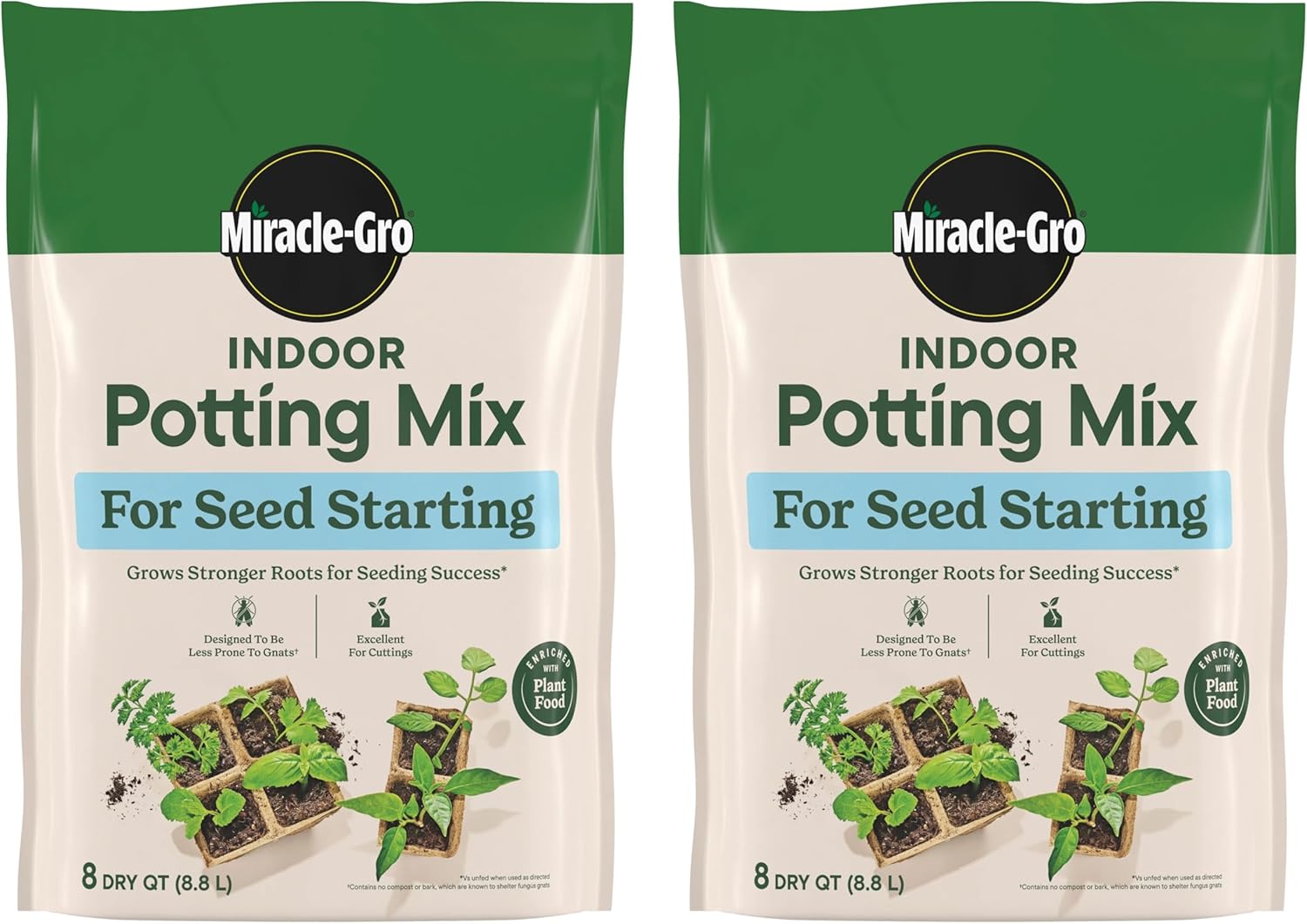
Miracle-Gro Indoor Potting Mix for Seed Starting, 8 qt. (2-Pack)
| Number of Packs | 2 |
|---|---|
| Item Type Name | Potting Mix |
| Item Highlight | For Starting Vegetable, Flower, and Herb Seeds Indoors |
| Volume | 8 quarts |
This two-pack of Miracle-Gro Indoor Potting Mix is built for starting seeds and rooting cuttings indoors. The lightweight, ready-to-use blend is enriched with plant food so seedlings and cuttings get a nutrient boost during the critical early stages. Because the formula omits compost and bark it is less likely to harbor fungus gnats, which makes it a practical choice for small indoor growing areas and seeding trays. Use it to fill cell trays or small pots, keep the mix consistently moist and shaded until germination, then transplant when seedlings develop true leaves. The bags are sized to fill multiple 72-cell trays, so you can start batches across the season. Limitations are that it is a starter mix, not a long-term container soil, so you will need to pot up into a more robust blend for larger plants and ongoing growth; also it contains fertilizer so handle carefully and avoid overwatering to reduce runoff.
Best for: Buyers who want an affordable, ready-to-use starter medium to germinate seeds and root cuttings indoors and prefer a low-maintenance mix that reduces pest risk.
Less Ideal for: Gardeners searching for an all-purpose potting soil to use long term in large containers or outdoor beds should choose a heavier, amended mix instead.
- Lightweight seed-starting formula that supports germination and root development
- Enriched with plant food to give seedlings an early nutrient boost when used as directed
- Formulated without compost or bark to reduce likelihood of fungus gnat problems
- Comes as a two-pack with enough volume to fill multiple 72-cell seeding trays
- Not formulated for long-term container use so plants will need repotting into regular potting soil
- Contains fertilizer which requires careful handling and can contribute to runoff if overwatered
Verdict: A convenient, budget-friendly seed-starting mix that helps seedlings and cuttings establish strong roots while minimizing fungus gnat risk.
Premier Pro Mix BX with Mycorrhizae, 2.8 cu ft

| Brand Name | Premier Horticulture |
|---|---|
| Included Components | Pro Mix Loose with Mycorrhizae, 2.8 Cubic Feet |
| Unit Count | 400 Ounce |
| Volume | 2.8 cubic feet |
Premier Pro Mix BX with Mycorrhizae is a general-purpose professional growing media formulated for greenhouse work, transplanting, and container-grown ornamentals. The mix is peat-based and includes a mycorrhizal inoculum (Glomus intraradices) that colonizes roots and helps plants take up water and nutrients more efficiently. Typical uses are repotting seedlings, starting transplants, and filling containers where consistent, repeatable establishment is a priority. The practical benefits are steadier early growth, improved root development, and potentially reduced water and fertilizer needs due to the fungal symbiosis. Because it is a ready-to-use professional blend, it cuts out the guesswork of mixing amendments for most common horticultural plants. Important limitations are that it is peat-based, so it may compress over time and will still require regular feeding for long-term container plants, and the bag size means multiple bags are needed for larger projects. For gardeners seeking consistent, proven media for reliable starts and transplants, this mix delivers predictable performance.
Best for: Buyers who prioritize consistent, reliable results when starting seedlings, repotting transplants, or running small-scale greenhouse production and prefer a ready-made professional media.
Less Ideal for: Gardeners who want peat-free or large-volume landscape topdressing solutions or those planning long-term single-container mixes without periodic refreshes.
- Pre-inoculated with Glomus intraradices to boost root nutrient and water uptake
- Professional peat-based formulation consistent for greenhouse and transplant use
- Ready-to-use mix removes need for custom blending
- Supports stronger early root development and establishment
- Peat-based mix can compact or decompose over long-term container use
- Bag volume requires multiple purchases for large beds or many pots
Verdict: Choose this professional pre-inoculated potting mix when you want dependable, repeatable transplant and seedling performance backed by mycorrhizal support.
Miracle-Gro Potting Mix, 16 qt. (2-Pack)

| Number of Packs | 2 |
|---|---|
| Volume | 16 quarts |
| Feeds Plants | Up to 6 months |
| Intended Use | Outdoor containers |
| Ingredients | Sphagnum Peat Moss, Perlite, Compost, Fertilizer |
Miracle-Gro Potting Mix is a general-purpose container soil designed to make outdoor potted plants grow well with minimal fuss. It is typically used to fill planters, hanging baskets, and large pots for vegetables, annuals, perennials, shrubs and herbs. Notable features include a fast-draining blend of peat, perlite and compost plus built-in fertilizer that the brand says feeds plants for up to six months. In practice that means you get a light, airy mix that helps roots establish quickly and reduces the need for immediate feeding for several weeks. The mix is convenient for seasonal repotting or starting new container plantings and works well when you follow standard potting steps like using a draining pot and watering through. Important limitations are that it is formulated for containers only and is not a soil amendment for in-ground beds, and the built-in feed will eventually run out so regular fertilizing is still necessary for long-term containers or heavy-feeding vegetables.
Best for: Buyers who want a low-effort, proven potting mix for outdoor containers and value products with strong user endorsement and predictable results.
Less Ideal for: Gardeners planning to amend in-ground beds or those who need a long-term, slow-release soil solution for permanent large containers.
- Formulated specifically for outdoor containers, supporting a wide range of plants from flowers to vegetables
- Includes fertilizer that feeds plants for up to six months, reducing early-season feeding needs
- Light, fast-draining blend (peat, perlite, compost) that helps roots establish and prevents compaction
- Comes as a two-pack of 16 quart bags, enough to fill standard 12-inch containers without mixing
- Not intended as garden soil for in-ground beds, so it should not be used to amend heavy native soil
- Nutrient boost is temporary and will require additional fertilizing for long-term plantings
Verdict: A convenient, fast-draining potting mix that reliably jump-starts outdoor container plants and reduces early-season feeding.
Back to the Roots Organic Indoor Potting Mix, 6 Quart

| Unit Count | 192 Fluid Ounces |
|---|---|
| Item Type Name | Indoor Potting Mix 6qt |
| Ingredients | Coconut Coir, Yukka, Mycorrhizae, Perline, Horticultural Sand |
| Item Highlight | Indoor potting mix for pothos, monstera, ferns; peat-free; made in the USA |
This 6-quart Back to the Roots indoor potting mix is a ready-to-use soil blend aimed at houseplants like pothos, monstera and ferns. It combines coconut coir, horticultural sand, perlite and yucca extract to hold moisture while remaining airy, and includes mycorrhizae to support root establishment and nutrient uptake. The peat-free, organic formula and added dolomitic limestone mean it is balanced for common indoor plants and less likely to carry the pests or dust often associated with fresh bark mixes. In practice the bag is easy to work with for repotting, top-ups and seed starts in small containers, and the composition drains better than straight coir. Limitations are the modest 6-quart volume, which means you will need multiple bags for larger collections or big pots, and it is not a complete fertilizer so periodic feeding is still necessary. For buyers who prefer low-risk, organic options for everyday houseplant care, this mix offers predictable, beginner-friendly results.
Best for: Buyers who want a low-risk, organic indoor potting mix that reliably supports common houseplants and minimizes pests and mess.
Less Ideal for: Growers needing bulk volumes for many large containers or those who want a potting medium with built-in long-term fertilizer.
- 100% organic and peat-free formula suitable for eco-conscious indoor gardeners
- Includes yucca extract to help retain moisture without reducing aeration
- Contains mycorrhizae to support root development and nutrient uptake
- Balanced with dolomitic limestone to stabilize soil pH for houseplants
- Small 6-quart bag that requires several units for larger plants or multiple repots
- Does not include fertilizer so plants will need regular feeding
Verdict: A beginner-friendly, peat-free organic potting mix that reliably preserves moisture and boosts root health for indoor plants.
Choosing the Right Potting Soil: Key Factors to Consider
Drainage and Aeration
Drainage determines how quickly excess water moves away from the root zone and aeration governs airflow around roots. In containers, poor drainage and compaction lead quickly to root rot because water sits and replaces oxygen in pore spaces. A good potting soil combines coarse particles such as bark, perlite, or coir fiber with finer organic matter to create stable pore structure.
When evaluating mixes, think about the container type and the plants you intend to grow. Shallow pots and baskets need faster-draining blends, while larger, deeper containers can retain a bit more moisture. Drainage also affects how often you will water and whether you need to add extra drainage layers or amendments.
Moisture Retention
Moisture retention is about the soil's ability to hold available water for plant uptake between waterings. Too little retention forces very frequent watering and stresses plants. Too much retention keeps soil wet and limits oxygen for roots. The ideal potting soil balances retention with drainage so that plants have consistent access to moisture without prolonged saturation.
Look for mixes that incorporate materials like sphagnum peat, coco coir, or composted bark in balanced proportions. Consider your climate and indoor humidity: in hot, dry environments you may prefer higher retention, while humid or overwatered settings benefit from drier-running mixes.
Nutrient Blend and Starter Fertility
Potting soils vary greatly in their initial nutrient content and the presence of slow-release fertilizers. Some mixes are lightly charged and rely on your feeding schedule, while others include a starter fertilizer sufficient to feed seedlings or newly potted plants for several weeks.
If you are potting edibles or high-feeding ornamentals, choose a mix with a clear nutrient profile and balanced N-P-K that matches the plant's needs. For sensitive seedlings or houseplants, milder starter fertility prevents root burn. Also consider compatibility with liquid feeds and biological amendments like mycorrhizae.
Texture Stability and Resistance to Compaction
Over months of watering and root growth, some potting soils collapse and compact, reducing pore space and harming roots. Texture stability refers to how well a mix maintains its structure under repeated wetting and drying cycles.
Stable textures keep air channels open and make repotting easier because the root ball holds together. Look for mixes that combine stable particles such as shredded bark or coarse perlite with organic fines in proportions that resist settling.
Ingredient Transparency and Safety
Knowing what is in the mix affects both plant health and safety for humans and pets. Ingredient lists that specify peat, coir, compost, perlite, vermiculite, bark, and fertilizer types let you predict performance and avoid contaminants. For edible crops, verify that composts are well-rotted and certified where possible.
Also consider the sustainability of ingredients. Peat has high water retention but raises environmental concerns in some regions; alternatives like coco coir offer similar benefits but differ in nutrient and salt content. Transparency about sourcing and processing matters when choosing a long-term potting medium.
Ease of Use and Versatility
How easy a potting soil is to handle affects everyday gardening. Factors include bag size and format, moisture level in the bag, how well the mix pours and packs into pots, and whether it mixes well with amendments. Versatile mixes work across a range of container sizes and plant types, reducing the need to buy multiple specialized bags.
Consider whether you want a ready-to-use mix or a base that you will amend for specific plant groups. Also think about storage-some mixes compact in small spaces while others require larger areas to keep bags dry and intact.
When To Use a Lightweight Mix
Lightweight potting soils are excellent for hanging baskets, shallow containers, and plants that need excellent root aeration. These mixes rely more on coarse components like expanded perlite and shredded bark to maintain low bulk density and prevent the crown from sitting in soggy soil.
- Best for hanging baskets and trailing plants
- Reduces weight for large planters on balconies
- Often requires more frequent feeding due to lower nutrient content
Amending Potting Soil for Edibles
Vegetables and herbs in containers often need a richer nutrient profile than typical ornamental mixes. You can start with a balanced potting soil and amend it with well-rotted compost, a measured slow-release fertilizer, or organic liquid feeds to support steady fruiting and leaf growth.
- Add compost or worm castings sparingly to avoid compacting the mix
- Use a bloom-focused feed for fruiting crops once flowering begins
- Monitor salt buildup if using synthetic fertilizers for edible containers
Adjusting Mixes for Indoor Houseplants
Indoor plants vary from moisture-loving ferns to cacti that prefer fast-draining blends. Adjust the base potting soil by adding pumice or extra perlite for succulents or by mixing in more coir or peat for moisture-loving species. Ensure the pot has adequate drainage and check pots regularly for signs of overwatering.
- Use coarser particles for succulents and cacti
- Keep a consistent watering schedule for tropical houseplants
- Refresh the top couple of inches annually to replenish organic matter
Storing and Refreshing Potting Soil
Store unused potting soil in a dry, cool place away from direct sunlight and pests. Once opened, reseal bags or transfer to airtight containers to prevent moisture uptake and degradation. For older stored mixes, refresh by mixing in compost or a light fertilizer before using for new plantings.
- Avoid storing bags on bare ground where moisture can wick in
- Label partially used bags with the opening date
- Stir and aerate compacted soil before repotting
Environmental Considerations and Alternatives
If you are concerned about the environmental impact of peat, consider blends that use coco coir or recycled bark as principal organic components. These alternatives perform similarly in water retention and aeration but have different nutrient and salt profiles. Choose sustainably sourced ingredients where possible and look for certifications that indicate responsible harvesting or manufacturing.
- Coconut coir is renewable but may require buffering for salts
- Bark-based mixes drain well and reduce bulk density
- Check certifications or source statements if peat use is a concern
How We Chose the Best Potting Soil
We evaluated candidate potting soils using practical, garden-centered criteria that matter for potted plants. First, drainage and aeration: mixes that let excess water escape while maintaining oxygen at the root zone score higher. Second, moisture retention: good potting soil keeps available moisture for several days without suffocating roots. Third, nutrient formula and starter fertility: we looked for blends with balanced initial nutrients and compatible slow-release options for ongoing feeding. Fourth, texture and stability: the particle mix should resist compaction over time and allow repotting without turning to mud. Fifth, ingredient transparency and safety: clear ingredient lists and absence of contaminants are important for edible plantings and indoor use. Finally, ease of handling and versatility: how manageable the bagged mix is for filling pots, mixing, and amending. We excluded garden topsoil, straight compost, and heavy soils intended for in-ground beds because those do not behave like potting mixes in containers. Products that relied solely on peat or solely on coco with no balancing amendments were treated cautiously unless their formulation addressed drainage or nutrient needs. The scoring criteria below reflect the dimensions we tested conceptually and used to compare mixes.
FAQ
How often should I water container plants in potting soil?
Water frequency depends on container size, plant type, and the mix. Smaller pots and lightweight mixes usually need daily or every-other-day checks in warm weather, while larger containers with higher retention can be watered less often. The best cue is the root zone: water when the top inch or two is dry for most houseplants, or when the soil feels noticeably lighter for larger pots.
Can I mix garden soil with potting soil to save money?
Mixing garden soil into containers is rarely recommended because garden soil can compact and reduce aeration in pots. It may also introduce pests or pathogens. If you must stretch a mix, use a small proportion of screened garden compost for nutrients rather than raw soil, and always ensure good drainage.
Is potting soil safe for vegetable containers?
Potting soil formulated for containers can be safe for vegetables when it lists clean, well-composted organic ingredients and avoids contaminants. For edibles, prefer mixes with clear ingredient lists and consider blends with food-safe compost or certified components. Avoid mixes that do not disclose compost source or that include unprocessed manure.
When should I repot plants into fresh potting soil?
Repot when roots are circling the pot, when growth slows despite proper care, or every 12 to 24 months for many houseplants. Repotting refreshes depleted nutrients and restores a healthy structure if the original mix has compacted. Choose a pot only one size larger and use a fresh potting soil suitable for the plant's needs.
Can I reuse potting soil from last season?
You can reuse potting soil with care. Remove old roots and debris, then refresh the mix by adding compost and a balanced fertilizer. If the soil smells sour or shows signs of pests or disease, it is safer to replace it. Sterilize reused soil by heat treatment only when necessary, because that can also kill beneficial organisms.
How do I reduce compacting in pots over time?
Prevent compaction by using mixes with coarse particles, avoiding heavy topdressings that settle, and allowing containers to dry slightly between waterings. Periodic stirring and gentle fluffing when repotting helps restore structure. Adding perlite, pumice, or shredded bark during initial potting improves long-term stability.
Final Verdict
Choose a potting soil that matches how you garden and the plants you grow. Prioritize drainage and texture stability if you frequently water or use shallow containers. Opt for higher moisture retention and richer nutrient blends for edibles and thirsty ornamentals. Balance ingredient transparency and environmental concerns against performance needs. Decide which tradeoffs matter most for your situation and pick a mix that aligns with those priorities. With the right potting soil you reduce watering headaches, support healthy root growth, and make repotting and seasonal care easier.
