

Note: This article contains affiliate links. If you click on these links and make a purchase, I may earn a small commission at no extra cost to you. This helps support my research and content. Read my full affiliate disclosure here.
Picking the right budget potting soil matters more than the bag price. Poor mixes can compact, drain badly, or burn roots, and that shows quickly in containers, hanging baskets, and seed flats. This guide focuses on affordable potting soils that still support healthy root growth, consistent moisture, and reasonable nutrient retention. We shortlisted seven top options and evaluated them on texture, drainage, nutrient content, and ease of use so you can choose the best affordable mix for your planting style. Read on for the criteria we used and practical tips for getting the most from a lower-cost potting soil.
Top Picks at a Glance
| Best Overall The best all-around choice for most situations | Miracle-Gro Indoor Potting Mix for All Plants, 6 qt., 2-Pack |  |
| Best Quality Built to a higher standard if you want something more solid | FoxFarm Ocean Forest Potting Soil, 12 qt (with 2 Plant Tags) |  |
| Best Value The sweet spot between price and what you get | Back to the Roots Organic Indoor Potting Mix, 12 Quart |  |
| Best Budget The cheapest option that still gets the job done reliably | Back to the Roots Organic Indoor Potting Mix, 6 Quart |  |
| Highest Rated A top-rated pick with lots of positive feedback | KXUPOIAV Premium Potting Mix, Compressed Bale (4 cu ft expanded) |  |
| Most Popular A crowd favorite that many people choose with confidence | Miracle-Gro Potting Mix, 16 qt. (2-Pack) |  |
| Best Seller A high-volume bestseller chosen again and again | Back to the Roots Organic Expanding Coco Coir Potting Soil Brick (10 lb) |  |
Miracle-Gro Indoor Potting Mix for All Plants, 6 qt., 2-Pack

| Number of Packs | 2 |
|---|---|
| Unit Count | 400.58 Ounce |
| Item Highlight | Feeds for up to 6 Months |
| Ingredients | Sphagnum Peat Moss, Coir, Perlite, Fertilizer, Wetting Agent |
This two-pack of Miracle-Gro Indoor Potting Mix is an all-purpose, ready-to-use soil designed for common houseplants, herbs, foliage and flowering indoor containers. The blend of sphagnum peat moss, coconut coir and perlite gives the mix a lightweight texture that holds moisture yet drains well so roots avoid sitting in water. It includes a built-in fertilizer intended to feed plants for up to six months, which reduces the need for immediate additional feeding after repotting. Because the formula is bark- and compost-free it also lowers the chance of fungus gnat habitat compared with mixes that contain coarse organic debris. Typical use is straightforward: fill a pot, add the plant, backfill and water thoroughly; one 6 qt. bag fills about four 6-inch pots. Limitations are that it is a general-purpose mix rather than a specialty formula for orchids or succulents, and heavy feeders or large container plantings will need extra amendments or more frequent feeding over time.
Best for: Houseplant owners who want an easy, no-mix potting soil that supports a broad range of indoor plants and minimizes upfront maintenance.
Less Ideal for: Growers seeking a specialty substrate for orchids, succulents, or very large containers should choose a purpose-built mix instead.
- Ready-to-use all-purpose blend for a wide variety of indoor plants
- Lightweight mix that balances moisture retention and drainage
- Includes fertilizer that feeds for up to six months after potting
- Bark- and compost-free formula reduces places for fungus gnats to breed
- Not formulated for specialty plants like orchids or fast-draining cactus mixes that need coarser media
- May require additional fertilizer sooner for heavy-feeding or large plants
Verdict: A convenient, budget-friendly indoor potting mix that simplifies repotting and supports most houseplants with built-in feeding for months.
FoxFarm Ocean Forest Potting Soil, 12 qt (with 2 Plant Tags)

| Brand | FoxFarm |
|---|---|
| Unit Count | 144 Ounce |
| Item Highlight | Light, Aerated Texture with Fish Meal, Crab Meal, Earthworm Castings |
FoxFarm Ocean Forest is a premium-feeling 12 quart potting soil designed for container gardening and houseplants. It arrives ready to use and is formulated with aged forest products, sandy loam and sphagnum peat moss for a light, well-aerated texture that helps drainage and root development. The mix includes fish meal, crab meal and earthworm castings, which supply slow-release organic nutrients useful for getting seedlings and transplants off to a strong start. In practice this soil works well in pots and planters where you want good structure and fertility without immediately adding fertilizers. The included plant tags are a handy extra for labeling. The main limitations are that the bag is modest in volume for larger projects and its nutrient content means you may not want high-nitrogen starters if you plan to amend heavily; some gardeners prefer a less rich mix for seedlings that need gentler starts. Still, for container growers who want a reliable, nutrient-packed medium right out of the bag, this is a strong choice.
Best for: Gardeners who want a performance-oriented potting mix that provides structure and built-in organic nutrition for container plants and houseplants without extra prep.
Less Ideal for: Growers managing large beds or many containers who need bulk soil by volume or gardeners seeking an ultra-light, low-nutrient seed-starting mix.
- Ready-to-use blend with light, aerated texture that promotes drainage and root growth
- Contains organic amendments like fish meal, crab meal and earthworm castings for built-in nutrition
- Suitable for a wide range of container plants and houseplants
- Includes two plant tags for easy labeling of varieties and planting dates
- 12 quart bag is small for larger container projects or multiple pots
- Rich nutrient mix may be stronger than preferred for very delicate seedlings
Verdict: Choose this if you want a ready-made, nutrient-rich potting soil that delivers good drainage and strong early growth for container plants.
Back to the Roots Organic Indoor Potting Mix, 12 Quart

| Volume | 12 quarts |
|---|---|
| Organic | 100% organic |
| Peat-free | Yes |
| Special ingredients | Yucca extract, mycorrhizae |
| Made in | USA |
This indoor potting mix is designed for everyday houseplants and seed starting, offering a peat-free, organic blend that expands to 12 quarts. It contains yucca extract to help the mix retain moisture and mycorrhizae to encourage stronger root development and nutrient uptake. The balanced pH from dolomitic limestone makes it suitable for common indoor species such as pothos, monstera, and ferns and reduces the need for frequent pH adjustments. Typical use is filling pots or topping up existing mixes for improved water retention and root health; it also works for seed trays when kept evenly moist. Practical benefits include reduced indoor gnat issues since it omits bark and compost, and the organic formula aligns with eco-conscious gardening. Limitations are that it is a general-purpose mix so heavy feeders or specialized plants may still need additional fertilizer or amendments, and users should handle it with care to avoid skin or eye irritation as noted in the safety guidance.
Best for: Buyers who want a reliable, low-maintenance potting mix that improves water retention and root health for common indoor plants and seedlings while prioritizing organic ingredients and practicality.
Less Ideal for: Growers needing highly specialized mixes for acid-loving plants or extremely fast-draining media for cacti and succulents should look elsewhere.
- Peat-free organic formula reduces environmental impact
- Yucca extract helps retain moisture for easier watering schedules
- Includes mycorrhizae to support root growth and nutrient uptake
- Balanced pH with dolomitic limestone minimizes need for adjustments
- General-purpose mix may require extra fertilizer for heavy-feeding plants
- Not formulated for specific needs like cacti or succulents
Verdict: A practical, organic indoor potting mix that makes watering and seed starting easier while supporting healthier roots.
Back to the Roots Organic Indoor Potting Mix, 6 Quart

| Unit Count | 192 Fluid Ounces |
|---|---|
| Item Type Name | Indoor Potting Mix 6qt |
| Item Highlight | Peat-free, 100% organic, made in the USA |
| Ingredients | Coconut Coir, Yucca, Mycorrhizae, Perlite, Horticultural Sand |
This 6-quart Back to the Roots indoor potting mix is aimed at everyday houseplant care: repotting pothos, monsteras, ferns and seed starting in small containers. The blend uses coconut coir as the base, plus yucca extract to help the mix retain moisture and mycorrhizae to support root development and nutrient uptake. It is peat-free and made in the USA, and the inclusion of horticultural sand and perlite improves drainage and prevents compaction for better aeration. For budget-focused gardeners, the pack provides a ready-to-use, organic option that reduces the need for immediate fertilizer thanks to the microbial support. Limitations are the modest 6-quart volume, which means multiple bags are needed for several pots or larger repots, and the mix does not list NPK fertilizer content so heavy feeders may need supplemental feeding. It is also a lightweight bag that may require more frequent watering cycles than heavier, moisture-retentive mixes depending on pot size and plant type.
Best for: Buyers looking for an affordable, organic indoor potting mix for routine repotting and container gardening who prioritize sustainable ingredients and ease of use.
Less Ideal for: People needing large volumes for many pots or large plants, or growers who want a potting mix with built-in, measurable fertilizer levels.
- 100% organic and peat-free formula suitable for environmentally minded indoor gardeners
- Contains yucca extract to help retain moisture in the root zone
- Includes mycorrhizae to support root growth and improve nutrient uptake
- Perlite and horticultural sand improve drainage and prevent compaction
- Small 6-quart bag may require multiple purchases for several plants or larger pots
- No listed nutrient analysis so additional fertilization may be needed for heavy feeders
Verdict: A compact, budget-friendly organic potting mix that gives indoor plants moisture retention and root support without using peat.
KXUPOIAV Premium Potting Mix, Compressed Bale (4 cu ft expanded)
| Brand Name | KXUPOIAV |
|---|---|
| Number of Packs | 1 |
| Volume | 4 cubic feet |
| Slow-release fertilizer | Feeds up to 9 months |
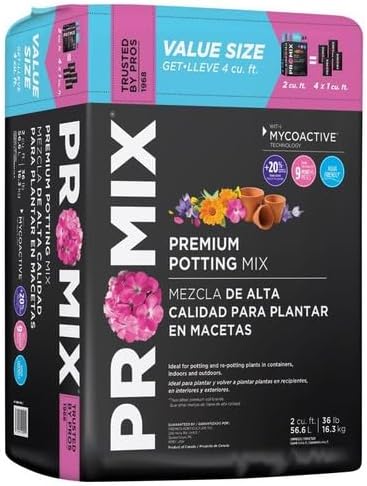
This compressed potting mix arrives as a compact bale that expands to roughly 4 cubic feet when fluffed, making it convenient to store and move before use. It is designed for general potting and seed starting, combining a slow-release fertilizer that feeds plants for up to nine months with mycorrhizae to encourage stronger root systems and better nutrient uptake. The included polymer gel increases water-holding capacity so containers and seed trays need less frequent watering, which is useful in drier summer conditions or for busy gardeners. Practical benefits include reduced watering frequency, built-in long-term fertility, and improved root development for healthier transplants. Limitations are that the formula is a one-size-fits-most potting mix so gardeners needing specialty mixes for succulents, orchids, or heavy-duty vegetable production may prefer purpose-made blends, and the compressed packaging requires time and space to expand fully before use.
Best for: Gardeners who prioritize a low-maintenance, reliable potting mix that reduces watering and supplies steady nutrition for container plants and seedlings.
Less Ideal for: Specialist growers who need mixes tailored to high-drainage or very specific pH requirements such as cacti, orchids, or acid-loving plants.
- Compressed bale expands to a usable 4 cu ft for easy storage and transport
- Slow-release fertilizer provides up to 9 months of feeding
- Contains mycorrhizae to promote stronger root growth and nutrient uptake
- Polymer gel increases water retention to reduce watering frequency
- Not formulated for specialized plant groups that need tailored pH or drainage
- Compressed form requires time and space to fully expand before use
Verdict: A dependable, low-maintenance compressed potting mix that expands to 4 cu ft and delivers long-lasting fertility and improved root growth.
Miracle-Gro Potting Mix, 16 qt. (2-Pack)

| Volume | 16 quarts per bag |
|---|---|
| Number of packs | 2 |
| Feeds plants | Up to 6 months |
| Intended use | Outdoor containers |
| Ingredients | Sphagnum Peat Moss, Perlite, Compost, Fertilizer |
Miracle-Gro Potting Mix is a ready-to-use outdoor container soil designed to support flowers, vegetables, herbs, shrubs, annuals, and perennials. You use it the same way you would any commercial potting mix: choose a pot with drainage, fill about a third, set the plant, top off, and water through. The mix includes peat moss, perlite, compost, and fertilizer so it drains well while holding enough moisture for container-grown roots and provides nutrition that claims to feed up to six months. That makes it convenient for seasonal planting and repotting without immediate follow-up feeding. Because it is formulated for containers rather than in-ground beds, it is lighter and more porous than garden soil but will compact over time, so expect to repot or refresh annually. Also note the fertilizer is built in, so gardeners who prefer full control over nutrient timing may want to supplement or choose plain, unfertilized mixes. Packaged in two 16-quart bags, this product is practical for filling standard 12-inch pots and small planters around the patio.
Best for: Buyers who want a reliable, ready-to-use potting mix that simplifies planting and reduces early-season maintenance, especially those who value social proof and proven performance.
Less Ideal for: Gardeners who prefer to tailor fertilizer timing or who need a heavy soil to amend large in-ground beds should consider specialty mixes or plain soil and separate fertilizers.
- Formulated specifically for outdoor containers and a wide range of plants
- Includes fertilizer that feeds plants for up to six months, reducing early-season feedings
- Fast-draining texture from peat and perlite supports healthy root oxygenation
- Comes as a two-bag pack suitable for multiple 12-inch containers
- Contains pre-mixed fertilizer so nutrient schedule is not fully customizable
- Not intended as a soil amendment for in-ground beds
Verdict: A convenient, proven potting mix that feeds outdoor container plants for months and makes seasonal potting fast and low-effort.
Back to the Roots Organic Expanding Coco Coir Potting Soil Brick (10 lb)

| Item Highlight | 10 lb compressed coco coir brick; peat-free, OMRI Listed |
|---|---|
| Item Type Name | Coconut Coir |
| Volume | 2 cubic feet |
| Ingredients | Coconut Coir |
This compressed coco coir brick is designed to expand into roughly 2 cubic feet of loose, airy potting medium when you add water, making it an easy way to store and mix fresh potting soil on demand. Typical use is hydrating the block, fluffing it up, and using it alone for container-grown herbs, vegetables, and flowers or blending it into existing soil to improve drainage and aeration. Notable features include a peat-free, OMRI-listed organic ingredient and a balanced pH suitable for a wide range of plants. Practical benefits are compact storage, lighter handling compared with heavy bagged soil, and good water retention that helps seedlings and potted plants establish roots. Limitations are that coco coir by itself lacks complete nutrients long-term so you will need to add fertilizer for mature plant feeding, and it can be dusty to hydrate if not done carefully. For buyers who prefer an easy, eco-friendlier base medium that stores small and expands to fill pots, this is a convenient option.
Best for: Buyers who want a low-maintenance, easy-to-store base potting medium and prioritize organic, peat-free options for container vegetables, herbs, and seed starting.
Less Ideal for: Gardeners who want an all-in-one, nutrient-rich potting mix ready for long-term plant feeding or those who prefer pre-fortified commercial soils.
- Expands to about 2 cubic feet for compact storage and easy transport
- OMRI-listed and peat-free for organic-friendly gardening
- Balanced pH suitable for seed starting and a wide range of plants
- Improves aeration and water retention when used alone or mixed into soil
- Contains only coconut coir so it provides little to no nutrients and requires feeding for ongoing plant growth
- Needs thorough hydration and fluffing which can be messy if done indoors
Verdict: A compact, peat-free coco coir brick that expands into usable potting medium, ideal for buyers who want an easy, organic base soil to store and mix as needed.
Choosing the Right Budget Potting Soil: Key Factors to Consider
Texture and Porosity
Texture and porosity determine how easily roots penetrate the mix and how well the soil resists compaction. A good budget potting soil combines fine and coarse particles so roots can explore while larger pores maintain airflow. Too many fines will pack down when watered and reduce oxygen, stressing roots.
Porosity also controls how water moves through a container. Higher porosity improves drainage and lowers the risk of root rot, especially in deep pots or poorly drained containers. Look for mixes that list components like perlite, coarse sand, or aged bark to indicate deliberate texture control.
Drainage and Aeration
Drainage affects how quickly excess water leaves the container and whether the root zone stays oxygenated. Good aeration prevents waterlogging after heavy rains or routine overwatering, which is a common issue for busy gardeners using budget mixes.
Aeration is often achieved with inorganic inclusions such as perlite or pumice and with coarse organic particles. For shallow containers and hanging baskets, faster-draining mixes are usually better to avoid soggy soil that cools roots and invites disease.
Nutrient Content and Starter Fertilizer
Many budget potting soils include a modest starter charge of nutrients to support seedlings and transplants for a few weeks. Understand whether a mix contains slow-release fertilizer or a small water-soluble charge, because that changes how soon you must begin feeding.
A low upfront nutrient level is acceptable if you plan to fertilize regularly, but beginners benefit from a reliable starter level. Also check for added lime or pH adjustments that can affect nutrient availability to common container plants.
Moisture Retention Versus Watering Frequency
Budget mixes vary in how long they hold water. High moisture retention reduces how often you need to water, which is helpful for busy gardeners and for large containers. However, mixes that hold too much water can keep roots cool and oxygen-poor.
Consider your container type and exposure. In hot, windy sites, choose mixes with higher water-holding components such as coir or peat. In cool, shaded spots, favor quicker-draining blends so roots do not sit in cold wet soil.
Organic Matter and Stability
Organic matter feeds soil life and slowly releases nutrients as it breaks down, but it also compresses over time. Budget potting soils often rely on lower-cost organics that decompose faster, so expect some settling after the first season.
Stable organic components like well-aged bark or composted materials improve long-term structure. If you plan to reuse or overwinter containers, choose mixes with more stable organics or plan to refresh the top layer in spring.
Bag Consistency and Storage Behavior
Consistency between bags matters when you fill several pots for a uniform crop. Bags that vary in grind size, moisture, or ingredient ratios lead to inconsistent watering and feeding needs across containers. Reliable batch-to-batch consistency makes routine care simpler.
Storage behavior is also important. Some budget mixes compact severely in storage, making rehydration slow and uneven. Check how the mix fluffs up when opened and how easily it re-wets after sitting dry in a garage or shed.
Best Uses by Container Type
Different container styles and sizes change what you need from a potting soil. Deep, narrow pots need mixes that retain moisture down the root column while still allowing side drainage. Shallow or wide trays require a lighter, quicker-draining mix to avoid soggy crowns.
For hanging baskets and window boxes that dry quickly, prioritize mixes with higher water-holding components so you do not have to water multiple times per day. For large outdoor planters exposed to sun and wind, choose a balance that prevents both rapid drying and waterlogging after heavy rain.
- Hanging baskets: higher moisture retention, still with good aeration
- Deep pots: balanced porosity to support root depth
- Seed starting trays: fine texture with modest nutrients for seedlings
- Outdoor planters: stable organics to resist rapid breakdown
How to Amend Budget Mixes for Better Performance
You can upgrade an inexpensive potting mix quickly and cheaply with a few targeted amendments. Adding coarse perlite or pumice improves aeration and drainage for heavy mixes, while adding coconut coir or well-composted pine fines can raise moisture retention for mixes that dry too fast.
A small handful of balanced slow-release fertilizer or occasional liquid feeding corrects low nutrient levels without altering texture. For long-term container plantings, mix in aged bark or compost to increase organic stability and slow decomposition.
- Add 10 to 20 percent perlite or pumice for better drainage
- Incorporate 10 to 15 percent coir or compost for moisture retention
- Topdress with compost or slow-release fertilizer midseason
Preparing and Rehydrating Stored Soil
Many budget potting soils arrive compacted. Open bags well in advance of potting and gently fluff the mix to restore porosity. If the mix is very dry, pre-wet it slowly, allowing water to soak in rather than pouring and creating channels that leave dry pockets.
Screen any large clumps or debris before filling containers. For seed starting, run the mix through a fine sieve to achieve a uniform fine texture that helps even germination and moisture contact with seeds.
- Fluff by hand or with a fork to reintroduce air
- Pre-wet slowly and let sit to fully absorb water
- Sieve for seed starting to remove oversized particles
Sustainability and Ingredient Transparency
If sustainable sourcing matters to you, check ingredient lists and look for clearly labeled organic components, recycled materials, or certified peat-free claims. Budget mixes can still be responsibly produced, but transparency is less common in lower-cost products.
Consider blends that use coir instead of fresh peat or that list composted organics. Even when a mix is economical, small choices like preferring reclaimed or renewable substances reduce environmental impact over many seasons.
- Look for coir or composted organics as peat alternatives
- Avoid mixes that list 'fillers' without detail
- Prefer products that clearly state ingredient percentages
Common Mistakes When Using Budget Potting Soil
A frequent error is expecting a cheap mix to behave like a premium soilless formula. That leads to overwatering, impatient feeding, or replanting failures. Adjust expectations: budget mixes may need more frequent feeding or seasonal top-ups of organic matter.
Another mistake is failing to check drainage in the container itself. Even the best mix cannot compensate for a pot without adequate drainage holes or a tray that traps water under the root zone. Test how quickly water exits after a thorough soak to understand your mix and container pairing.
- Do not overwater assuming the mix will always drain well
- Check and modify container drainage before potting
- Plan to refresh or topdress mixes after a growing season
How We Chose the Best Budget Potting Soil
We looked for mixes that balance the needs of container gardening without demanding a high price. Evaluation focused on four to six concrete dimensions that affect plant health and handling: particle texture and porosity, drainage and aeration, nutrient content and slow-release feeding, organic matter and amendment levels, consistency bag-to-bag, and ease of rehydration from dry storage. Each candidate had to demonstrate acceptable particle size distribution so roots avoid compaction and so water flows through rather than pooling. We excluded any mixes formulated primarily for a single specialty use, such as orchids, cacti, or lawn topdressing, because those narrow formulas do not work broadly for common container plants. We also filtered out mixes with unclear ingredient lists or excessive pebble content that undermine nutrient-holding capacity. The final short list emphasizes reliable performance in containers, predictable moisture behavior, and basic nutrient provision that gardeners can build on with targeted feeding.
FAQ
How often should I fertilize plants in budget potting soil?
It depends on the mix. Many affordable soils have a small starter charge that lasts a few weeks. After that, monthly liquid feeding or a slow-release product applied according to label rates keeps plants vigorous.
Can I reuse budget potting soil from last season?
You can reuse it with care. Remove roots and debris, refresh with compost or fresh potting mix at about 25 to 50 percent, and replenish nutrients. Expect some compaction and reduced structure compared with fresh mix.
Is coir or peat better in a budget mix?
Both hold moisture, but coir often rehydrates more consistently and is a renewable option. Peat can be inexpensive and hold water well but compresses and is less sustainable. Choose based on water needs and environmental preference.
Do budget mixes increase the risk of pests or disease?
Not inherently. Poorly stored or contaminated bags can harbor pathogens or pests, so inspect and store dry. Good drainage and healthy cultural practices reduce disease risks more than price alone.
Should I add perlite to every budget potting soil?
Not always. If the mix already lists perlite or pumice, additional amendments may not be necessary. Adding a small percentage of perlite is a low-cost fix when a mix seems dense or drains slowly.
Final Verdict
For most gardeners, the best budget potting soil is the one that fits the container type and watering routine while leaving room for simple amendments. Prioritize texture and drainage first, then nutrient provision and moisture retention based on your plants and exposure. Accept that lower-cost mixes often need small upgrades such as extra aeration or supplemental feeding. With thoughtful amendments and proper container selection, an affordable potting soil can support healthy plants and consistent results season after season.
