

Note: This article contains affiliate links. If you click on these links and make a purchase, I may earn a small commission at no extra cost to you. This helps support my research and content. Read my full affiliate disclosure here.
Choosing the right potting soil for houseplants matters more than most indoor gardeners realize. The medium controls water availability, aeration, root anchoring, and how nutrients move to leaves – all things that affect how quickly a plant recovers from stress or adapts to a new pot. This guide covers seven shortlisted potting soils for houseplants that perform well across typical indoor conditions, from low-light corners to bright windowsills. We evaluate each pick on practical gardener concerns like drainage, water-holding capacity, and nutrient balance so you can match a mix to your plants and routine. Read on to find the right soil texture and features for your indoor collection.
Top Picks at a Glance
| Best Overall The best all-around choice for most situations | FoxFarm Ocean Forest Potting Soil, 12 Quart |  |
| Best Quality Built to a higher standard if you want something more solid | Grow Queen Craft Aroid Potting Mix — Chunky, Peat-Free Soil for Monstera & Tropical Houseplants, 2 qt |  |
| Best Value The sweet spot between price and what you get | Miracle-Gro Moisture Control Potting Mix, 8 qt. (2-Pack) |  |
| Best Budget The cheapest option that still gets the job done reliably | Back to the Roots Organic Indoor Potting Mix, 6 Quart |  |
| Highest Rated A top-rated pick with lots of positive feedback | circle soil Houseplant Potting Mix (Peat-Free, 4 Quart) |  |
| Most Popular A crowd favorite that many people choose with confidence | Miracle-Gro Indoor Potting Mix for All Plants, 6 qt., 2-Pack |  |
| Best Seller A high-volume bestseller chosen again and again | Back to the Roots Organic Indoor Potting Mix, 12 Quart |  |
FoxFarm Ocean Forest Potting Soil, 12 Quart

| Item Form | Granules |
|---|---|
| Specific Uses For Product | Dry Fertilizer |
| Coverage | 4.8 sq ft |
| Mixing Ratio | 1:1 |
FoxFarm Ocean Forest is a premixed potting soil meant to be used straight from the bag for houseplants and container gardens. It combines aged forest products, sandy loam and sphagnum peat moss to give a light, well-aerated texture that helps roots get oxygen while still retaining moisture. The mix is amended with fish meal, crab meal and earthworm castings so seedlings and plant starts receive nutrients for roughly the first month without extra feeding. Typical use is filling pots or top-dressing existing containers, then watering thoroughly; the product also blends easily with other soils at a 1:1 ratio for custom mixes. Practical benefits include good drainage with moisture-holding components and nutrient content that supports early growth. Important limitations are that the bag is sold in a 12 quart unit so larger collections will need multiple bags, and gardeners looking for fully inorganic or precision-controlled nutrient mixes should look elsewhere. Handle with gloves and store dry to avoid degradation of organic amendments.
Best for: Houseplant owners who want a reliable, nutrient-rich all-purpose potting mix that simplifies repotting and helps seedlings establish quickly.
Less Ideal for: Growers who need sterile or fully inorganic media, or those managing large collections who prefer bulk-sized commercial mixes.
- Ready-to-use straight from the bag for quick potting or repotting
- Light, aerated texture that improves root oxygenation and drainage
- Includes organic amendments (fish meal, crab meal, earthworm castings) to feed young plants
- Blends well with other soils at a 1:1 ratio for custom mixes
- 12 quart bag is small for those with many or large pots
- Organic nutrient levels decline over time so additional feeding is needed after the first month
Verdict: A convenient, ready-to-use potting mix that kickstarts healthy root growth and early nutrient needs for houseplants.
Grow Queen Craft Aroid Potting Mix — Chunky, Peat-Free Soil for Monstera & Tropical Houseplants, 2 qt

| Brand | Grow Queen |
|---|---|
| Volume | 2 quarts |
| Ingredients | Douglas fir bark, pumice, lava rock, tree fern fiber, coco coir, biochar, earthworm castings |
This Grow Queen Craft Aroid Mix is a purpose-built potting soil for aroids and other tropical houseplants that need airy, fast-draining media. The blend combines Douglas fir bark, pumice, lava rock and tree fern fiber to create large pore space that resists compaction and speeds drainage, while coco coir and charged biochar retain modest moisture and buffer nutrients. It arrives pre-moistened and includes earthworm castings, alfalfa meal and gypsum to support microbial activity and gentle feeding from the start. Because it is peat free and avoids perlite, the mix aims for sustainability and a more natural texture that mimics a rainforest floor. In practice this means easier repots for Monstera, Alocasia and similar plants and a lower risk of waterlogged roots, but it is chunkier than standard potting soils so it may require more careful watering for small-rooted seedlings or very shallow pots. The small 2 quart bag is handy for single repots or top-ups, and the composition makes it a solid choice for growers focused on vigorous root health and long-term plant performance.
Best for: Plant owners who prioritize vigorous root health and performance for Monstera, Alocasia and other tropical houseplants and want a repot-ready, biologically active soil that improves drainage and long-term vigor.
Less Ideal for: People repotting many large containers at once or raising seedlings and cuttings in shallow trays should consider coarser or finer alternatives tailored to those tasks.
- Chunky mix of bark, pumice and lava rock provides excellent aeration and fast drainage for aroids
- Includes charged biochar and earthworm castings to supply nutrients and support soil microbes from day one
- Peat-free, perlite-free formulation uses sustainable ingredients like New Zealand tree fern fiber and coco coir
- Pre-moistened and ready to use for immediate repotting
- Chunky texture is less suitable for seedlings or very small pots and may require gentler watering
- Sold in small volumes, so multiple bags are needed for larger collections or bigger pots
Verdict: Choose this chunky, peat-free aroid mix when you want a repot-ready soil that maximizes aeration and biological fertility for Monstera and other tropical houseplants.
Miracle-Gro Moisture Control Potting Mix, 8 qt. (2-Pack)

| Number of Packs | 2 |
|---|---|
| Unit Count | 512 Ounce |
| Item Type Name | Potting Mix |
| Feeds Plants | Up to 6 months |
| Style Name | 8 qt. |
Miracle-Gro Moisture Control Potting Mix is a ready-to-use container soil designed to reduce over- and under-watering while supplying nutrition for up to six months. It is typically used to fill pots, hanging baskets, and planters for outdoor container plants and follows standard potting steps: choose a pot with drainage, fill, set the plant, top off, and water through. The mix’s AquaCoir formula combines sphagnum peat moss, coir, and a wetting agent to absorb up to 33% more water than basic potting soils and keep the root zone consistently moist without staying waterlogged. It is airy enough to promote root aeration and is promoted as suitable for flowers, vegetables, annuals, perennials, and shrubs in containers. Practical benefits include less frequent watering and built-in nutrients that feed plants for months, which is helpful for busy plant owners. Important limitations are that it is intended for container use rather than in-ground beds and that container soils should still be refreshed annually to avoid compaction and nutrient depletion.
Best for: Home plant owners who want a low-effort, reliable potting mix that reduces watering frequency and supplies months of nutrients for container houseplants and outdoor containers.
Less Ideal for: Gardeners looking to amend in-ground soil or build raised beds should choose a garden or planting soil formulated for in-ground use instead.
- Designed for containers so it holds moisture without waterlogging
- AquaCoir formula absorbs up to 33% more water than basic potting soils
- Feeds plants for up to six months, reducing need for frequent fertilizing
- Airy texture that helps roots breathe and establishes quickly in pots
- Formulated for container use only and not intended to amend garden beds
- Will compact and lose nutrients over time so annual repotting or refresh is recommended
Verdict: Choose this mix when you want a container-focused potting soil that holds moisture better and feeds plants for months to simplify houseplant care.
Back to the Roots Organic Indoor Potting Mix, 6 Quart

| Unit Count | 192 Fluid Ounces |
|---|---|
| Item Type Name | Indoor Potting Mix 6qt |
| Item Highlight | Peat-free, 100% organic, made in the USA |
| Ingredients | Coconut Coir, Yucca, Mycorrhizae, Perlite, Horticultural Sand |
This 6-quart Back to the Roots indoor potting mix is designed for everyday houseplant use — repotting pothos, ferns, monsteras and other common indoor varieties. The blend uses coconut coir for structure, yucca extract to help soil retain moisture, and mycorrhizae to support root development and nutrient uptake. It is peat-free and formulated with dolomitic limestone to balance pH, which helps plants access nutrients without extra amendments. In practice the mix is easy to work with, relatively low-dust compared with bark-based mixes, and less attractive to fungus gnats because it excludes compost and large bark pieces. The small 6-quart bag is convenient for single pots or small plant refreshes, but budget-minded shoppers should note you may need multiple bags for several houseplants. Also it lacks added slow-release fertilizer, so expect to feed plants separately for long-term growth. For casual indoor growers this mix combines organic ingredients and ready-to-use performance in a compact size.
Best for: Buyers who want an easy-to-use, organic indoor potting mix for a few houseplants and prioritize natural ingredients and pet-safe formulas.
Less Ideal for: People who need large-volume soil for many plants or want a mix with pre-mixed long‑term fertilizer included.
- Peat-free organic blend with coconut coir and yucca for moisture retention
- Includes mycorrhizae to support root development and nutrient uptake
- Formulated with dolomitic limestone to help balance soil pH
- Less prone to indoor gnats due to absence of compost and large bark pieces
- Small 6-quart volume requires buying multiple bags for larger collections
- No built-in slow-release fertilizer so regular feeding is needed
Verdict: A compact, peat-free organic potting mix that makes repotting a few houseplants simple while supporting roots and moisture retention.
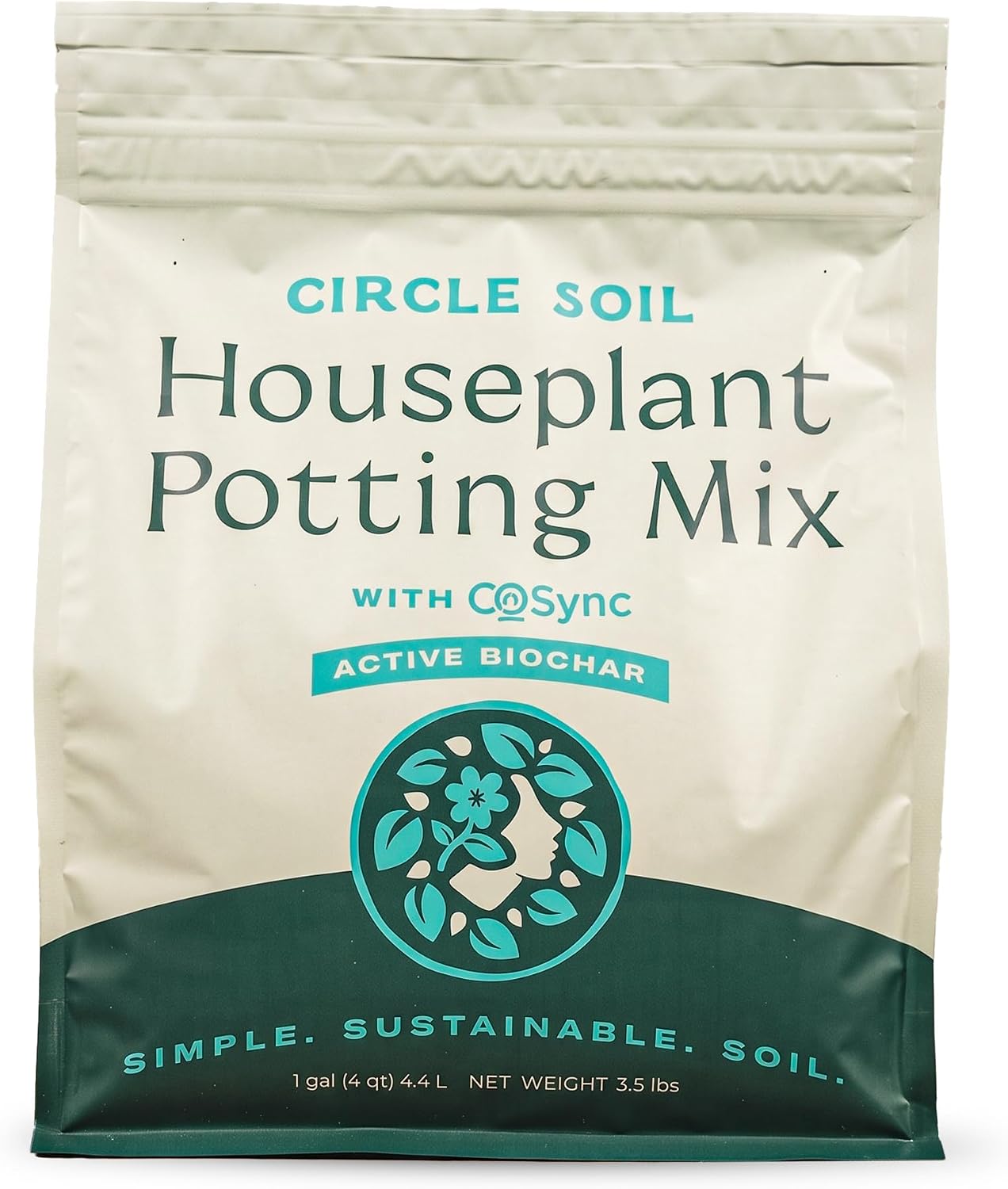
circle soil Houseplant Potting Mix (Peat-Free, 4 Quart)
| Unit Count | 56 Ounce |
|---|---|
| Item Highlight | Active Biochar, Worm Castings, Expanded Shale, Peat-Free, Organic |
| Number of Packs | 1 |
| Manufacturer | Circle Soil |
This houseplant potting mix is aimed at steady, low-maintenance performance for common indoor plants and herbs. It combines active biochar, coconut coir, expanded shale and worm castings to keep the mix light, promote drainage, and hold nutrients where roots can access them. Typical use is repotting or top-dressing potted aroids, tropicals and herbs that need even moisture without waterlogging; the mix’s porous components help prevent compacting and root rot. The peat-free, organic formulation and recycled resealable packaging are practical for gardeners who prefer sustainable inputs. Because it is a blended everyday mix rather than a specialized gritty cactus or heavy aroid substrate, plants that need extremely fast drainage or highly chunky media may require amendment. For most houseplants this product simplifies repotting by providing ready-to-use structure and built-in organic nutrients, reducing the need for immediate fertilizer applications.
Best for: Buyers who prioritize a reliable, low-maintenance potting medium for everyday houseplants and want a sustainable, ready-to-use soil that reduces repotting guesswork.
Less Ideal for: Growers who prefer highly gritty, fast-draining substrates for succulents or large aroids should choose a dedicated succulent or chunky aroid mix instead.
- Peat-free blend with active biochar to improve nutrient retention and microbial support
- Contains expanded shale and coconut coir for natural aeration and better drainage
- Includes worm castings and local compost to provide organic nutrients
- Resealable recycled packaging for easier storage and reduced waste
- Not a specialty gritty mix, so may need extra drainage amendments for cacti or some high-airflow aroids
Verdict: A dependable, peat-free everyday potting mix that provides balanced moisture, aeration, and organic nutrients for most houseplants.
Miracle-Gro Indoor Potting Mix for All Plants, 6 qt., 2-Pack

| Number of Packs | 2 |
|---|---|
| Item Highlight | Feeds for up to 6 Months |
| Unit Count | 400.58 Ounce |
| Ingredients | Sphagnum Peat Moss, Coir, Perlite, Fertilizer, Wetting Agent |
Miracle-Gro Indoor Potting Mix is a lightweight, ready-to-use soil blend designed for common houseplants, herbs, tropicals, and flowering container plants. It combines sphagnum peat moss, coconut coir, and perlite to hold moisture while allowing excess water to drain, which helps roots stay healthy without waterlogging. The mix includes a slow-release fertilizer that the brand says feeds plants for up to six months, so newly potted plants get an initial nutrient boost without immediate feeding. Because it is free of bark and compost, this blend aims to reduce hiding places for fungus gnats compared with some other mixes. Typical use is simple: fill a draining pot, position the plant, backfill and water thoroughly; one 6 qt. bag will fill several small pots and this listing includes two bags for multiple repots. Limitations to note are that the product is a general all-purpose indoor mix rather than a specialty formula for orchids, cacti, or succulents and it does not replace routine repotting or targeted fertilizing after the initial feeding period.
Best for: Buyers who want an easy, dependable all-purpose indoor potting soil that simplifies repotting and provides an initial nutrient boost for a collection of common houseplants.
Less Ideal for: Specialist growers of orchids, cacti, or other plants that require a bespoke growing medium should choose a purpose-made mix instead.
- Ready-to-use blend of peat moss, coir, and perlite for balanced water retention and drainage
- Includes slow-release fertilizer formulated to feed indoor plants for up to six months
- Bark- and compost-free formula reduces likely habitats for fungus gnats
- Lightweight texture that makes repotting easier and helps prevent soil compaction
- Not formulated specifically for orchids, succulents, or cacti which need different drainage or aeration characteristics
- Initial nutrient boost does not eliminate the need for follow-up fertilizing after about six months
Verdict: A convenient, general-purpose indoor potting mix that makes repotting simple and gives houseplants a six-month nutrient head start.
Back to the Roots Organic Indoor Potting Mix, 12 Quart

| Volume | 12 quarts |
|---|---|
| Organic | 100% organic |
| Peat-free | Yes |
| Includes | Mycorrhizae and yucca extract |
This indoor potting mix is designed specifically for potted houseplants such as pothos, monstera and ferns. The compressed 12‑quart volume expands into an all-purpose potting medium that contains organic yucca extract to help retain moisture and mycorrhizae to support root development and nutrient uptake. It is peat-free and balanced with dolomitic limestone for a neutral pH, which helps plants access nutrients more easily. In practice the mix works well for repotting established indoor plants and for refreshing soil in decorative containers because it is formulated to reduce indoor gnats and be gentler around people and pets. Users will appreciate the organic composition and the simple, ready-to-use texture without needing to amend for basic houseplant care. Limitations are that it is packaged as a compressed block so it needs to be fluffed or watered to expand before use and serious growers who favor exact fertilizer schedules or custom blends may prefer a mix with specific ratios of perlite, peat, or added fertilizers.
Best for: Ideal for mainstream houseplant owners who want a low-maintenance, organic potting mix that works reliably for common indoor plants without complex setup.
Less Ideal for: Not ideal for advanced growers who require precise soil texture or tailored nutrient blends for specialty plants or propagation techniques.
- Peat-free organic formula reduces environmental impact compared with peat-based mixes
- Yucca extract helps the mix retain moisture, reducing how often indoor pots need watering
- Contains mycorrhizae to encourage stronger root development and nutrient uptake
- Neutral pH via dolomitic limestone supports broad houseplant compatibility
- Arrives compressed and requires watering/fluffing to fully expand before use
Verdict: A dependable, low-maintenance organic potting mix that makes repotting and routine houseplant care easier for risk-averse indoor gardeners.
Choosing the Right Potting Soil for Houseplants: Key Factors to Consider
Drainage and Aeration
Good drainage prevents standing water around roots, which is the main cause of root rot in houseplants. A mix with visible chunkier components such as perlite, pumice, or coarse bark creates pore space that lets excess water escape while keeping air available for roots. Too fine a texture compacts over time and reduces oxygen, while too coarse a mix can dry out quickly and stress moisture-loving species.
Consider the pot size and plant type when judging drainage. Shallow pots and succulents need quicker-draining mixes, while tropical foliage plants often benefit from blends that retain some moisture without staying soggy.
Water-holding Capacity
Indoor watering schedules vary, so the right soil should hold enough moisture between waterings without remaining saturated. Materials like coconut coir, peat, or compressed compost can increase water retention. These components act like sponges, releasing moisture slowly to the root zone and helping plants survive typical household drying cycles.
Balance is key. A mix with high water-holding capacity is great for forgetful waterers or large planters, but it must be paired with adequate drainage to avoid oxygen loss at the roots.
Nutrient Content and Release
Houseplants rely on the potting medium for immediate nutrients and on added feeding over time. Many potting soils include a starter nutrient charge or slow-release fertilizer to support growth for several weeks after repotting. Look for mixes that state the type of nutrient source so you can plan follow-up fertilizing.
A stable, predictable nutrient release helps avoid rapid flushes that can burn roots or leave plants deficient. Consider how often you fertilize and whether you prefer organic amendments that break down slowly versus mineral fertilizers with more immediate effects.
pH and Organic Composition
Soil pH affects nutrient availability. Most common houseplants prefer a slightly acidic to neutral pH range. The organic ingredients in a mix, such as peat or composted bark, influence that pH as well as microbial activity. If you grow ericaceous plants or certain orchids, you will need mixes formulated with appropriate pH and raw materials.
Knowing the organic content also informs long-term care. High-organic mixes can break down and compact sooner, requiring more frequent repotting, while inert component-rich mixes remain stable longer.
Mix Stability and Repotting Frequency
How quickly a potting soil breaks down matters for maintenance. Some blends compress after a season or two and need repotting more often. Stable mixes that include inert components like expanded clay, pumice, or coarse sand keep structure and reduce how frequently you must refresh root zones.
Think about whether you want to repot annually or prefer longer intervals. Stability also affects root pruning and how easy it is to tease roots from an old ball of soil during repotting.
Texture and Ease of Use
The physical feel of the mix determines how easy it is to pot and how well it settles around roots. A mix that is too dusty makes a mess and can compact. A very chunky mix can be hard to fill narrow pots. Good potting soil blends balance fine particles and larger aggregates so they pack around roots without crushing them.
Ease of use also covers dust suppression, how the mix wets when first watered, and whether it needs pre-soaking or amendment before use.
Match the Mix to Plant Types
Different houseplants have clear preferences for moisture and aeration. Succulents and cacti do best in fast-draining, mineral-rich mixes while aroid species and ferns prefer blends that retain moisture but still offer air around roots. Group plants with similar watering needs together and choose a common soil style to simplify care.
When repotting, think about whether the plant is a fast grower or a more delicate sitter. Fast growers often tolerate slightly richer mixes because their roots expand quickly, whereas slower growers benefit from lighter, well-aerated media.
- Succulents: high mineral content, very free-draining
- Tropical foliage: balanced water retention and drainage
- Orchids/epiphytic plants: chunky, bark-based media
How to Adjust a Ready-Mix
You can tailor a purchased potting soil to better suit a particular plant. Add coarse perlite, pumice, or orchid bark to increase drainage and aeration. Stir in coconut coir or well-aged compost to raise water-holding capacity.
Make adjustments in small batches and test how the mix wets and dries over a week before using it broadly across many pots.
- Increase drainage: add 10 to 30 percent pumice or perlite
- Increase retention: mix in 5 to 15 percent coir or compost
Pot Size, Container Material, and Soil Choice
Container size affects moisture retention. Large pots hold more water and dry more slowly, so they can tolerate mixes with higher drainage modifiers. Small pots dry quickly and often need soils with better water-holding components. The container material matters too; terracotta wicks moisture through the walls and speeds drying, while plastic retains moisture longer.
When selecting soil, consider how the pot will influence your watering schedule and choose a mix that compensates for the container's drying characteristics.
- Terracotta pots: choose a slightly moister mix
- Plastic pots: use a faster-draining formulation for moisture-loving plants
Preparing Soil for Repotting
Before repotting, moisten dry potting soil so it settles around roots without leaving dry pockets. Avoid overly wet soil during repotting because it is harder to work with and increases compaction risk. Loosen compacted root balls and position the plant so the crown sits at the same height as before.
After repotting, water thoroughly until excess drains and then allow the top inch to dry before the next watering to encourage root establishment without oxygen loss.
- Pre-wet mixes that are very dry to reduce dust and improve handling
- Ensure correct plant depth to prevent stem rot
Storing and Refreshing Potting Soil
Store unopened bags in a cool, dry place to preserve structure and nutrient charge. Once opened, keep soil covered to prevent drying and contamination. Over time, organic-rich mixes lose volume and nutrients; refresh potting soil by topdressing with compost or replacing the top layer during repotting.
For long-term storage, avoid placing bags directly on cold or damp floors, which can introduce moisture and pests.
- Cover open bags with a tarp or airtight bin
- Topdress pots annually instead of full soil replacement when roots are not pot-bound
How We Chose the Best Potting Soil for Houseplants
We focused on the attributes that actually change how houseplants perform indoors. Our selection process prioritized mixes engineered for container culture rather than garden soil repurposed for pots. Key evaluation criteria included drainage and aeration to prevent root rot, water-holding capacity for typical indoor watering schedules, nutrient formulation and slow-release behavior, and mix stability so the medium does not compact or break down quickly. We also examined organic content and pH tendencies because many houseplants prefer slightly acidic to neutral mixes, plus texture and ease of use for repotting small and large containers. Exclusions removed outdoor potting blends meant for bedding plants, raw garden soil, and mixes that require heavy amendments before use. The final shortlist reflects products that balance immediate plant needs with low-maintenance performance in indoor settings.
FAQ
How often should I repot houseplants when using potting soil?
It depends on plant growth and mix stability. Fast-growing plants may need repotting every year, while others can go two to three years. If the soil is compacting or roots circle the pot, repot sooner.
Can I use garden soil for indoor pots?
Garden soil is usually too dense for containers and can hold too much water, leading to poor aeration and root problems. Potting soil formulated for containers provides the right balance of drainage, aeration, and nutrients.
Should I wet potting soil before planting?
Lightly moistening very dry potting soil makes it easier to work with and helps it settle around roots. Avoid soaking the mix before planting because overly wet soil compacts and reduces oxygen availability.
How can I tell if potting soil is draining properly?
After a thorough watering, observe how quickly excess exits through drainage holes and whether the surface stays wet for an extended period. Slow drainage and a consistently soggy surface are signs the mix retains too much water or has compacted.
Do I need to add fertilizer to potting soil for houseplants?
Many potting soils include a starter nutrient charge, but that declines over weeks to months. Regular feeding according to your plant's needs keeps growth steady, especially for heavy feeders or plants in small containers.
Final Verdict
Choosing potting soil for houseplants is about matching texture and water behavior to the plants and containers you use. Prioritize drainage and aeration for long-term root health, then balance water retention and nutrient strategy based on your watering habits. If you are unsure, start with a balanced container mix and adjust with small additions of pumice or coir. With the right medium, repotting becomes less frequent and plants establish faster.
