

Note: This article contains affiliate links. If you click on these links and make a purchase, I may earn a small commission at no extra cost to you. This helps support my research and content. Read my full affiliate disclosure here.
If you work acres, a market garden, or a large home property, a 3 point hitch garden tiller turns tractor power into fast, consistent soil preparation. The right tiller makes short work of breaking compacted soil, incorporating amendments, and creating an even seedbed without forcing you to run multiple passes. This guide covers six shortlisted tractors-mounted tillers chosen for a range of tractor sizes and soil conditions. We focus on real-world performance factors gardeners care about: digging depth and width, durability of tines and gearbox, how the hitch and PTO interface with your tractor, and maintenance demands. Read on to see the evaluation criteria that guided our picks and the practical tradeoffs to consider before you attach a tiller to your tractor.
Top Picks at a Glance
| Best Overall The best all-around choice for most situations | Ag-Rite 48" Gear-Driven PTO Rotary Tiller (Fits 20–35 HP Tractors) |  |
| Best Quality Built to a higher standard if you want something more solid | MechMaxx MRT48 48-inch Gear-Driven Rotary Tiller with Slip Clutch PTO |  |
| Best Value The sweet spot between price and what you get | QEEKA 3-Point Hitch Rotary Tiller (42 in) for Category I Tractors |  |
| Best Budget The cheapest option that still gets the job done reliably | HUOHUATHREE 3-Point PTO Rotary Tiller, 37-inch for Cat 1 Tractors |  |
| Most Popular A crowd favorite that many people choose with confidence | Sigma 3-Point Hitch Rotary Tiller 5' Working Width with PTO Shaft and Cast Iron Gearbox |  |
| Best Seller A high-volume bestseller chosen again and again | Titan Attachments 72" 3-Point Rotary Tiller Attachment, Cat 1, 540 RPM Gearbox |  |
Ag-Rite 48" Gear-Driven PTO Rotary Tiller (Fits 20–35 HP Tractors)

| Power Source | PTO Driven |
|---|---|
| Working Width | 47.24 inches |
| Tines | 36 C-shaped tines |
| Tractor Compatibility | Fits 20–35 HP, Category 1 3-point hitch |
The Ag-Rite 48" rotary tiller is a heavy-duty PTO-driven implement made for prepping soil on small acreage, food plots, and landscaping beds. It mounts to a Category 1 three-point hitch and includes a collapsible PTO shaft for 540 RPM tractors in the 20–35 HP range, so setup and connection are straightforward for typical compact tractors. The gear-driven transmission offers durable power transfer with less routine maintenance than many chain-driven units, and the 36 C-shaped tines on a 2.36" rotor tube provide aggressive soil mixing and breakup for faster seedbed prep. With a 47.24" working width the tiller balances coverage and maneuverability in tighter fields. Important limitations are its weight and size, which make it best matched to tractors within the specified horsepower range, and it is a straightforward mechanical tool with no hydraulic depth control or onboard adjustments, so expect manual setup for working depth and transport. For buyers who need a robust, serviceable tiller for regular soil preparation, this model provides dependable performance without complex electronics.
Best for: Buyers who want a durable, low-maintenance tiller for regular soil preparation on small acreage or garden plots and who operate a compatible 20–35 HP three-point hitch tractor.
Less Ideal for: Home gardeners without a compatible tractor or users who need precise hydraulic depth control or smaller, lighter transportable units.
- Gear-driven transmission reduces routine maintenance compared to chain drives
- Includes PTO shaft for direct connection to 540 RPM Category 1 tractors
- 36 heavy-duty C-shaped tines deliver effective soil mixing and breakup
- 47.24-inch working width balances coverage and maneuverability
- No hydraulic depth control or on-the-fly adjustments
- Designed only for tractors in the 20–35 HP 540 RPM Category 1 range
Verdict: A rugged, gear-driven 48" PTO tiller that delivers reliable, low-maintenance soil preparation for owners of 20–35 HP Category 1 tractors.
MechMaxx MRT48 48-inch Gear-Driven Rotary Tiller with Slip Clutch PTO
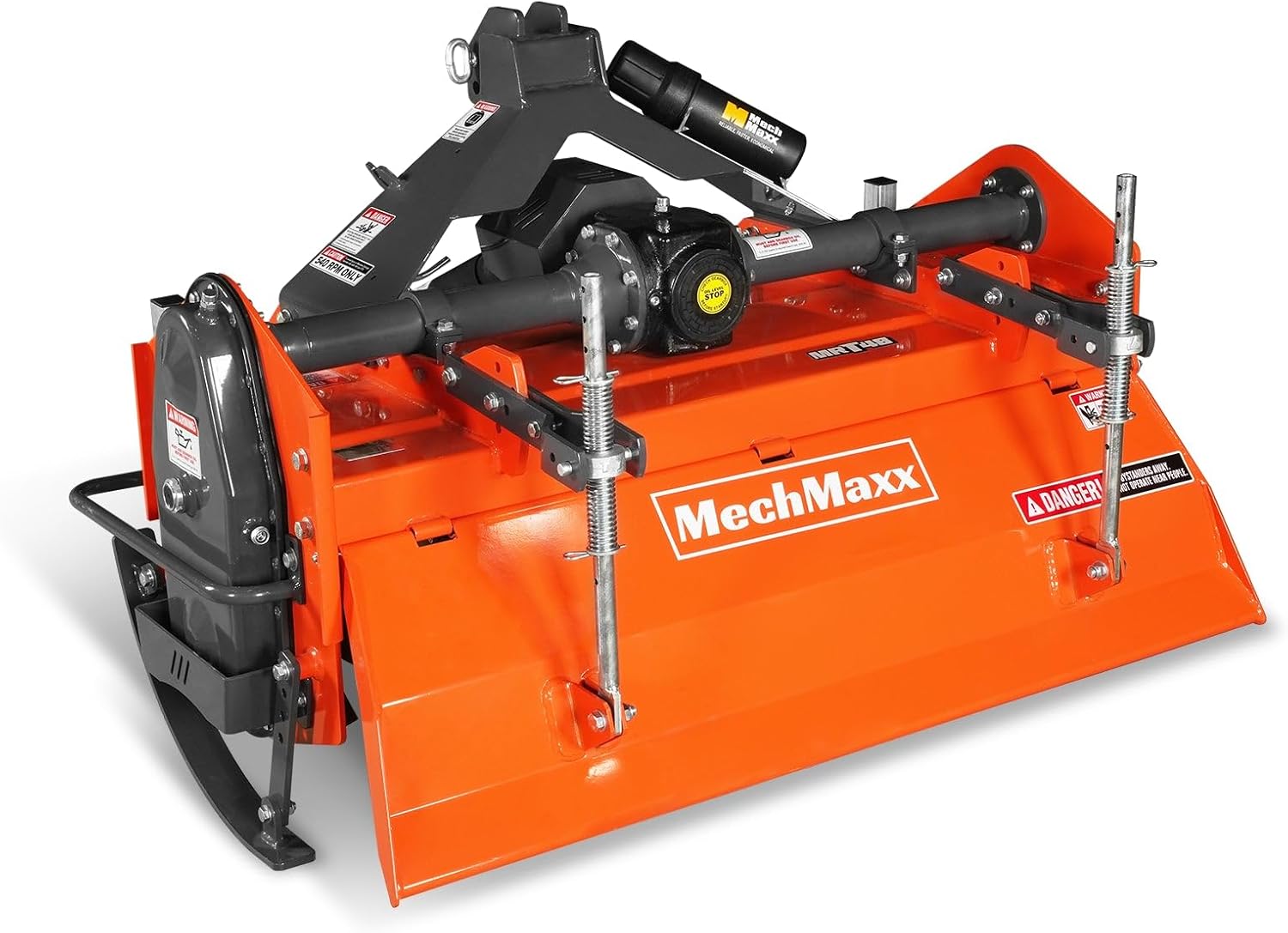
| Working Width | 48 in |
|---|---|
| Recommended PTO HP | 25-50 HP |
| Max Working Depth | 7 in |
| PTO Shaft | Series 5 PTO Shaft with Slip Clutch, 1-3/8" × 6-Spline (Both Ends) |
| Blade Type | Heat-Treated 60Si2Mn Steel C-Shaped |
The MechMaxx MRT48 is a performance-focused 48-inch rotary tiller designed to attach to Category 1 and 2 three-point hitch tractors and driven by a 540 RPM PTO. Its fully gear-driven, oil-bath cast iron gearbox and Series 5 PTO shaft with a slip clutch deliver higher torque and drivetrain protection when hitting tough or debris-filled soils. The tiller uses 30 heat-treated C-shaped spring-steel tines arranged on multiple flanges and a spring-loaded rear deflector to produce a consistent, pulverized seedbed. Adjustable skid shoes allow working depth control up to 7 inches so you can match shallow garden prep or deeper reworking. Practical benefits include reduced maintenance versus chain drives, strong penetration in compacted ground, and broad tractor compatibility. Important limitations are that it ships without gearbox oil and requires initial greasing and filling before use, and its medium-duty construction is sized for small acreage and food-plot work rather than heavy commercial tilling.
Best for: Buyers who prioritize strong, repeatable soil preparation on small acreage, large gardens, or food plots and want a durable, torque-focused tiller that pairs with standard tractors.
Less Ideal for: Not a good choice for operators needing a heavy-commercial duty tiller for continuous large-acreage farming or contractors who cannot perform initial setup and maintenance.
- Fully gear-driven cast iron oil-bath gearbox for higher torque and reduced maintenance
- Slip-clutch Series 5 PTO driveline to protect tractor and tiller from shock loads
- Thirty heat-treated C-shaped tines with multi-flange layout for aggressive cutting and uniform soil mixing
- Adjustable skid shoes provide consistent depth control up to 7 inches
- Compatible with Cat.1 and Cat.2 three-point hitches and quick-hitch systems for broad tractor fit
- Shipped without gearbox oil and grease so it needs initial service before first use
- Designed for medium-duty use so it may not suit heavy commercial or continuous large-acreage tilling
Verdict: Choose the MRT48 when you need a torque-oriented, gear-driven rotary tiller that delivers consistent, deeper tillage and drivetrain protection for medium-duty tractor work.
QEEKA 3-Point Hitch Rotary Tiller (42 in) for Category I Tractors

| Working width | 41.34 inches |
|---|---|
| Max cutting depth | 3-5 inches |
| Blades | 20 alloy steel L-shaped blades |
| Power source | Tractor powered (3-point, Category I) |
The QEEKA 3-point rotary tiller is a straightforward tractor-mounted implement for preparing seedbeds, clearing overgrown patches, and loosening topsoil to depths of roughly 3 to 5 inches under normal conditions. It mounts to any Category I three-point hitch and uses a single-speed PTO gearbox to spin 20 alloy steel L-shaped blades across a roughly 41 inch working width, producing a fine, clod-free finish for vegetable plots, orchards, and nursery beds. Notable features include sealed bearings and a powder-coated Q235 steel body for corrosion resistance, a support leg system for safer storage and easier attachment, and an adjustable rear chain/cover for controlling soil discharge and working depth. Practical benefits are durable construction that stands up to frequent use, replaceable blades for maintenance, and simple mechanical design that most tractor owners can service. Limitations to expect are sensitivity to very rocky or compacted ground where stones can damage internals and the single speed PTO which reduces flexibility for specialized tilling tasks.
Best for: Gardeners and small-scale farmers who own a Category I three-point tractor and prioritize a durable, serviceable tiller for regular bed preparation and vegetation cleanup.
Less Ideal for: People with very rocky fields or who need variable-speed tilling for specialized soil conditions should consider alternative tillers or different implements.
- Robust Q235 steel frame with powder coating resists corrosion and abrasion
- Sealed bearings to reduce water and mud ingress and extend service life
- Support legs and three-position adjustment make storage and setup easier
- Replaceable alloy steel L-shaped blades provide effective tilling and are serviceable
- Not suitable for stony or extremely compacted ground where debris can damage the tiller
- Single-speed PTO gearbox limits operating speed options for different soil conditions
Verdict: Buy this if you want a no-nonsense, heavy-duty Category I three-point rotary tiller built for reliability and easy maintenance on small farms and garden plots.
HUOHUATHREE 3-Point PTO Rotary Tiller, 37-inch for Cat 1 Tractors

| Power Source | PTO Driven |
|---|---|
| Working Width | 37.4" |
| Working Depth | 4.7" |
| Material | Carbon Steel |
This HUOHUATHREE 37-inch rotary tiller is a PTO-driven, 3-point hitch attachment built to prepare garden beds and small fields with minimal setup. It mounts to Category 1 tractors and runs at 540 RPM, using replaceable L-shaped blades to cut, crush, and mix soil to a working depth adjustable from about 3 to 5 inches. Typical use is seedbed preparation, loosening compacted ground, and light weed incorporation across plots where a single-pass till is helpful. Notable features include a sliding baffle for depth control, carbon steel construction and support legs that let the unit stand when detached. Those features make it practical for regular small-farm or large-garden chores and reduce maintenance because blades are replaceable. Limitations are its basic, no-frill design and relatively heavy build which means you need a compatible tractor with enough lift capacity and will want to check drive-line protection and gearbox service requirements before frequent heavy-duty use.
Best for: Buyers who need a straightforward, heavy-duty tiller for prepping garden beds, orchards, or small fields and who prioritize function and replaceable parts over extra features.
Less Ideal for: Users who want a lightweight, feature-rich tiller with built-in drive protection or those with very small riding mowers and low-lift tractors.
- Fits standard Category 1 3-point hitches and runs on a 540 RPM PTO for wide tractor compatibility
- Adjustable tilling depth (approximately 3–5 inches) for versatile soil preparation
- Replaceable L-shaped blades reduce long-term maintenance costs
- Carbon steel construction and support legs improve durability and storage stability
- Basic, utilitarian design lacks advanced safety guards or drivetrain overload protection
- Heavy unit requires a tractor with sufficient lift and may be cumbersome to handle off the tractor
Verdict: A no-frills, durable 37-inch PTO rotary tiller that delivers reliable soil preparation with replaceable blades for budget-minded small‑farm and garden owners.
Sigma 3-Point Hitch Rotary Tiller 5' Working Width with PTO Shaft and Cast Iron Gearbox

| Power Source | Tractor Powered |
|---|---|
| Operation Mode | Mechanical |
| Material Type | Carbon Steel, Cast Iron |
| Recommended PTO HP | 24-45 HP |
| Total Number of Tines | 42 |
This Sigma 5-foot 3-point hitch rotary tiller is built for contractors and serious gardeners who need a durable PTO-driven tool for preparing soil on small acreage. It mounts to a Category I hitch and uses the tractor PTO to drive a shaft with 42 heavy-duty steel tines that can work up to about a 6-inch depth in ideal conditions. Notable features include a cast iron gearbox, an included PTO shaft, replaceable skid shoes, and a parking stand for easier handling. In practice it excels at breaking new ground, incorporating organic matter, and creating seedbeds when paired with a 24–45 HP tractor. Expect robust construction and few surprises in heavy soils, though the skid plate reduces resistance without actively controlling depth so some operator adjustment is required to avoid overworking soft ground. The unit ships without gear oil in the gearbox and is not compatible with compact tractors, so plan for initial setup and correct lubrication before first use.
Best for: Buyers who want a rugged, tractor-mounted tiller to prepare garden beds and small fields and who prioritize durable construction and proven components backed by positive user feedback.
Less Ideal for: Casual gardeners with only a compact tractor or homeowners who need a lightweight, portable tiller for small urban plots should consider smaller, walk-behind options instead.
- Heavy-duty cast iron gearbox for durable power transmission
- 42 steel tines and 5-foot working width for efficient soil cultivation
- Includes PTO shaft and parking stand for straightforward hookup and parking
- Replaceable skid shoes help protect the rotor and clear debris
- Not compatible with compact tractors so requires a 24–45 HP tractor
- Gearbox ships dry so buyer must add gear oil before operation
Verdict: Choose this tiller if you need a heavy-duty, PTO-driven 5-foot implement that delivers reliable soil preparation when paired with a 24–45 HP Category I tractor.
Titan Attachments 72" 3-Point Rotary Tiller Attachment, Cat 1, 540 RPM Gearbox
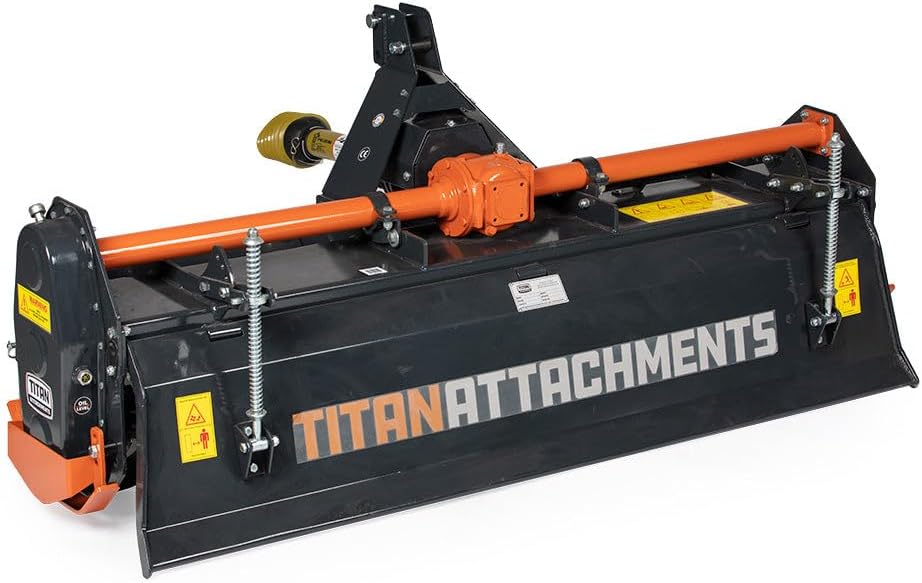
| Power Source | PTO Driven |
|---|---|
| Tilling Depth | Up to 5" |
| Hitch Type | Cat 1 3-Point |
| Power Requirement | 20-45 HP |
This Titan Attachments 72" 3-point rotary tiller is a PTO-driven cultivator intended for Category 1 tractors and small farms, orchards, and large garden plots. It connects to a 3-point hitch and runs from the tractor PTO at 540 RPM through a heavy-duty gearbox, using a rotating shaft with curved, replaceable L-shaped tines to churn and aerate soil up to about 5 inches deep. Typical use is field or garden bed preparation where you want to break clods, mix residues, and create a smooth seedbed quickly across a wide swath. Notable features include five adjustable ski height settings for leveling, sealed bearings to keep out moisture and mud, and a hardened-steel tine design with available replacement packs. Practical benefits are reduced time and labor versus hand tools, consistent till depth across the 72" width, and a robust alloy-steel build with powder coat for corrosion resistance. Important limitations are that it requires a compatible Category 1 tractor with 20 to 45 HP and a PTO hookup, it is single-speed so ground-engagement control is through tractor speed and ski settings, and its large, heavy construction means installation and transport need adequate equipment and care.
Best for: A buyer who wants a heavy-duty, tractor-mounted tiller to prepare medium to large garden plots or small fields efficiently and values durability and straightforward, dependable equipment.
Less Ideal for: Those who only have a walk-behind tiller, very small raised beds, or who need a lightweight, easily moved tool for container gardening should look at smaller, non-tractor options.
- Wide 72" tilling width covers large areas faster than small walk-behind tillers
- PTO-driven 540 RPM gearbox and heavy-duty PTO shaft designed for reliable power transfer
- Replaceable hardened steel L-shaped tines for long life and easy maintenance
- Sealed bearings and powder-coated alloy steel frame improve durability in wet or muddy conditions
- Requires a Category 1 tractor with 20–45 HP and a PTO, so not suitable for casual gardeners without a tractor
- Single speed operation limits fine control of rotor speed compared with multi-speed models
- Large and heavy, which makes handling, mounting, and storage more demanding
Verdict: If you have a compatible Category 1 tractor and need a durable, wide tiller to prepare large garden plots quickly, this 72" PTO-driven rotary tiller delivers reliable, heavy-duty performance.
Choosing the Right 3 Point Hitch Garden Tiller: Key Factors to Consider
Tractor Size and PTO Power
Matching the tiller to your tractor's horsepower and PTO speed is essential. A tiller rated for higher PTO power requires a heavier-duty driveline and stronger gearbox; using an underpowered tractor will strain the engine and produce poor tilling results. Conversely, an overpowered tractor on a lightweight tiller can damage the implement under hard loads.
Consider also the tractor three-point hitch category and the usable lift capacity at your lift arms. A tiller that fits mechanically but overloads your lift will be difficult to control and unsafe. Check the recommended horsepower range and confirm your tractor's PTO rpm matches the implement's design so the tines rotate at intended speeds for effective soil turnover.
Working Width and Field Efficiency
Working width determines how much ground you cover per pass and affects maneuverability. Wider tillers reduce time per acre but require more tractor power and can be harder to maneuver near beds, fences, or tight rows. Narrower units offer greater control for small plots, raised beds, or gardens with obstacles.
Think about the typical work patterns on your property. If you mainly maintain long runs or open fields, a wider tiller increases efficiency. For irregular beds, access gates, and tight headlands, a moderate width provides a better balance of speed and handling.
Tine Style and Soil Interaction
Tine shape, thickness, and arrangement determine how the tiller penetrates and mixes the soil. Curved or L-shaped tines tend to dig deeper and flip heavier soil, which is useful for breaking compaction and incorporating organic matter. S-shaped or shorter tines work well for lighter cultivation and finishing a seedbed without excessive inversion.
Hard, rocky, or root-filled soils demand thicker, replaceable tines and a design that resists bending. Also check whether tines are reversible or modular; reversible tines can be flipped when one side wears, extending service life. Tine spacing affects clod size and finishing quality, so pick a style that matches your desired tilling finish.
Gearbox Quality and Drive Protection
The gearbox transfers PTO power into the rotor and must handle shock loads from rocks and roots. Look for heavy-cast housings, serviceable gear trains, and accessible oil fill and drain points. Overload protection such as shear pins, slip clutches, or overrunning clutches helps prevent catastrophic gearbox failure when the rotor hits an immovable object.
A tiller with easily replaceable driveline safety items and a sensible service schedule will cost less to keep running over the long term. Consider whether the gearbox uses common oil types and if parts like seals and bearings are standard sizes for easier field servicing.
Adjustable Working Depth and Transport Setup
Depth control affects finishing quality and tractor load. A reliable depth-adjustment system gives you predictable results across changing soil moisture and texture. Look for simple, robust mechanisms such as crank-style depth screws, adjustable skids, or hitch lift stops that lock depth repeatably.
Transport considerations matter too. A tiller with a straightforward transport lock or curb-side lift point reduces the time spent raising, restraining, and securing the implement for road or storage. Confirm that transport height and width are manageable for your towing and storage setup.
Serviceability and Parts Availability
Over a tiller's life you will replace tines, shear pins, belts, and possibly gearbox components. A machine designed with common fastener sizes, accessible grease points, and straightforward access to wear parts reduces downtime. Check whether tines and driveline components are modular and sold as separate service kits.
Local dealer support or easily obtainable replacement parts matter more when you rely on the tiller during busy planting seasons. Even well-built tillers need periodic attention, so designs that simplify routine greasing, gearbox oil changes, and tine replacement will save time and money.
Preparing Your Tractor and Worksite
Before attaching a tiller, inspect your tractor's three-point hitch, top link, and PTO for proper operation and safety. Confirm that the top link and lift arms are in good condition and that the PTO shaft and splines are free of damage.
Walk the worksite to identify buried obstacles, large rocks, and compacted zones. Mark irrigation lines, shallow utility lines, and any fragile landscape features so you can avoid costly damage. Adjust your tiller depth and perform a short test run in a safe area to verify settings.
- Verify tractor PTO rpm and hitch category before hookup
- Check lift capacity versus tiller weight
- Mark underground utilities and obstructions
- Perform a short test pass to set depth and speed
Soil Conditions and Tilling Strategy
The same tiller behaves differently in dry, cloddy soil versus moist loam. In heavy clay or compacted soils, plan multiple shallow passes rather than a single deep pass to avoid bogging the tractor and producing a poor finish. In sandy or loose soils, one pass at the desired depth may be sufficient.
Adjust PTO speed and forward ground speed to control the aggressiveness of the cut. Faster ground speed reduces tine engagement per foot and can leave larger clods, while slower speed increases soil turnover but raises tractor load.
- Use incremental depth increases in compacted ground
- Avoid tilling when soils are overly wet to reduce smearing
- Finish with a higher rotor speed and light pass for smoother seedbeds
Routine Maintenance Checklist
Establish a simple pre- and post-season maintenance routine. Before the season, inspect the gearbox oil level, grease all fittings, and check tines for wear or cracks. Replace any bent or fractured tines and stock common spare parts like shear pins.
After use, clean debris from the rotor and remove packed soil to prevent corrosion. Store the tiller in a dry location and cover exposed driveline splines with a light film of grease to deter rust.
- Check gearbox oil and seals before first use
- Grease universal joints and mounting points regularly
- Replace worn tines and keep spare shear pins handy
- Clean and store the tiller off the ground after the season
Safety Practices When Tilling
Safe operation reduces the risk of injury and machine damage. Always stop the tractor, disengage the PTO, and lower the tiller to the ground before making adjustments or clearing debris. Keep bystanders and animals clear of the work area while the PTO is engaged.
Use appropriate personal protective equipment such as eye protection and sturdy footwear. Follow tractor and implement manuals for maximum PTO speed and recommended hitch settings to avoid equipment strain.
- Disengage PTO and lower tiller before any adjustments
- Keep clear of rotating tines and driveline components
- Use recommended safety shields and guards at all times
Modifying Tine Patterns for Different Tasks
Some tillers allow changes to tine spacing or offer optional tine types for finishing versus primary cultivation. Wider spacing and aggressive tines are useful for breaking sod and heavy mixing, while tighter spacing and finishing tines produce finer seedbeds.
Consider swapping to reversible tines when one side wears, or fitting bolt-on extensions when you need deeper penetration. Make adjustments in small increments and test the result to avoid overworking the tractor or destroying soil structure.
- Use aggressive tines for primary breaking, finer tines for finishing
- Test any tine changes on a small area before full-field use
- Reversible or replaceable tines extend usable life
How We Chose the Best 3 Point Hitch Garden Tiller
We selected six tillers that represent a range of working widths, tine styles, and drivetrain designs suitable for backyard farms, acreage, and small commercial plots. Editorial filters prioritized real-world durability, compatibility with common three-point hitch categories and PTO speeds, and clear serviceability features. Evaluation criteria included digging depth control and tine design because those directly affect how well a tiller breaks compaction and prepares seedbeds. Drivetrain and gearbox construction were judged to assess long-term reliability under load. Hitch compatibility and ease of hookup were required to ensure a proper match with common tractors and to reduce setup time. Maintenance accessibility and parts availability were considered so gardeners can keep machines running with routine servicing. We excluded compact rotary hoes and mini-tillers that do not mount on a tractor three-point hitch or that rely exclusively on front-mounted frames. We also excluded products intended only for mulch or shallow cultivation rather than primary soil inversion. The result is a practical cross-section that balances digging capability, durability, and daily usability for tractor users.
FAQ
What tractor horsepower do I need for a 3 point hitch tiller?
It depends on the tiller's working width and intended depth. Small tillers for narrow beds often work with lower horsepower tractors, while wider, heavier-duty models require more PTO power. Check the implement's recommended horsepower range and match it to your tractor to avoid underperforming or overloading components.
How deep can a tractor-mounted tiller dig in one pass?
Maximum depth varies by design and soil conditions. Many tillers are adjustable and can work shallow for finishing or deeper for primary cultivation, but very deep single passes increase tractor load and risk. In compacted soils, multiple shallower passes usually give better results.
How do I protect the gearbox from rocks and roots?
Look for driveline protection such as slip clutches, shear pins, or overrunning clutches that absorb shock loads. Regular inspection and using appropriate PTO speeds reduce stress. Avoid operating in areas with large unseen obstacles or remove hazards before tilling.
Can I use a three-point tiller near irrigation lines?
You can, but take care. Mark and verify the depth of irrigation lines before tilling and avoid settings that exceed the protective depth. Hand-dig or work cautiously near known shallow lines to prevent accidental damage.
How often should I replace tines and wear parts?
Replacement frequency depends on soil type and usage hours. Hard, rocky soil wears tines faster than loam. Inspect tines regularly for thinning, cracking, and bending and replace them when they no longer penetrate efficiently or show structural damage.
Is transport setup complicated for tractor-mounted tillers?
Transport procedures vary, but many tillers use simple transport locks or rely on the tractor lift for road clearance. Confirm transport height and secure any loose parts before moving on public roads or through tight gates. Practice hitching and lifting at slow speeds before regular transport.
Final Verdict
Choose a 3 point hitch garden tiller by first matching it to your tractor's PTO power, hitch category, and the typical soil conditions you will work. Prioritize robust tine design and a well-built gearbox if you face heavy, rocky, or compacted soils. If you value efficiency on open acreage, increase working width but accept higher power needs and maneuvering demands. Balance digging depth, serviceability, and transport convenience against your site layout and maintenance capacity. With those tradeoffs in mind, pick the tiller that aligns with your tractor and workload so you get dependable, consistent bed preparation season after season.
