

Note: This article contains affiliate links. If you click on these links and make a purchase, I may earn a small commission at no extra cost to you. This helps support my research and content. Read my full affiliate disclosure here.
If you maintain a medium or large yard with lots of heavy grass, weed patches, or occasional brush, choosing the right 4 cycle gas string trimmer matters. These trimmers use a four-stroke engine that runs on regular gasoline without mixing oil, which reduces mess and cuts routine maintenance compared with two-stroke models. You want something that starts reliably, balances power with manageable weight, and holds up through a season of tough cutting. This guide covers a short list of top-rated 4 Cycle Gas String Trimmers suited to different yard demands. We evaluated each for engine reliability, cutting performance, ergonomics, fuel efficiency, and ease of maintenance to help you pick the best fit. Read on for practical guidance before the product list.
Top Picks at a Glance
| Best Overall The best all-around choice for most situations | ONEUPING 4‑Cycle 36CC Gas String Trimmer and Edger (Straight Shaft, 1 HP) |  |
| Best Quality Built to a higher standard if you want something more solid | PROYAMA PBC40 40cc 4-Cycle Gas Brush Cutter (3-in-1) |  |
| Best Value The sweet spot between price and what you get | SENIX 26.5cc 4-Cycle Gas String Trimmer, 17.7" Cutting Width |  |
| Best Budget The cheapest option that still gets the job done reliably | HinLIaDa 35.88CC 4‑Stroke Gas String Trimmer with Dual Cutting Heads |  |
| Highest Rated A top-rated pick with lots of positive feedback | ARPITUYN 35.88cc 4‑Stroke Gas String Trimmer with Dual Blade Head |  |
| Most Popular A crowd favorite that many people choose with confidence | Wild Badger Power Gen2 31cc 4-Cycle Gas String Trimmer with 10" Brush Cutter |  |
| Best Seller A high-volume bestseller chosen again and again | BILT HARD 22-Inch Walk-Behind 170cc 4-Cycle Gas String Trimmer |  |
ONEUPING 4‑Cycle 36CC Gas String Trimmer and Edger (Straight Shaft, 1 HP)

| Power Source | Gas Powered |
|---|---|
| Displacement | 36CC |
| Power | 0.75 kW (1HP) |
| Rotation Speed | 8500 RPM |
| Fuel Tank Volume | 650 ml (22 oz) |
This ONEUPING 4‑cycle trimmer is a gas-powered straight‑shaft tool designed for general yard work where cordless power is limiting. It runs a 36CC, 1 HP four‑stroke engine with an 8500 rpm peak, and can be fitted with either a multi‑purpose mowing head or a two‑tooth blade for thicker stems and light brush. Typical use is edging lawns, trimming around beds and fences, and cutting dense patches that a simple string trimmer would struggle with. Key practical benefits are a large fuel tank for longer run time, a throttle safety lock for accidental starts, and an adjustable handle for control and comfort. Build materials listed include aluminum alloy and manganese steel for wear resistance, and the package includes a funnel, oil pot, goggles, and strap for safer operation. Important limitations are its heavier, bulkier 18.7 pound package weight and the need to follow four‑stroke oil and fuel procedures, which raises maintenance complexity versus simple two‑stroke or battery units. It is best where longer runtime and cutting power matter more than low weight or quiet operation.
Best for: A practical homeowner or small‑property caretaker who wants a single gas tool that handles regular trimming plus tougher cutting without relying on battery runtime. Ideal if you prioritize sustained power and longer run sessions over minimal weight.
Less Ideal for: Not a good fit for users who need a very lightweight or near‑silent trimmer for frequent short jobs around tight landscaping or where easy storage and minimal maintenance are top priorities.
- Four‑stroke 36CC engine delivers sustained power suitable for thick grass and light brush
- Convertible heads (line mowing head plus two‑tooth blade) expand use from trimming to cutting tougher stems
- Large fuel tank reduces refueling interruptions during longer jobs
- Adjustable handle and included strap improve control and reduce operator fatigue
- Package includes useful assembly and safety accessories like a funnel, oil pot and goggles
- Heavier and bulkier than battery or compact two‑stroke trimmers which affects maneuverability
- Requires correct four‑stroke oil and fuel handling and slightly more maintenance
Verdict: Choose this model if you want a versatile, four‑stroke gas trimmer that delivers longer run time and the cutting strength to handle both edging and tougher grass or light brush.
PROYAMA PBC40 40cc 4-Cycle Gas Brush Cutter (3-in-1)

| Power Source | Gas Powered |
|---|---|
| Cutting width | 18 inches |
| Size | 40cc |
| Recommended Uses For Product | heavy-duty gardening tasks, trimming thick brush, and maintaining large and small areas |
The PROYAMA PBC40 is a 40cc 4-stroke brush cutter built for homeowners and landscapers who need more power than a cordless trimmer. It uses a 4-cycle 1.5HP engine so you run regular gasoline without premixing oil, which simplifies refueling and reduces mess. The unit ships as a 3-in-1 system with a string head for grass and replaceable metal blades for thick brush, and a wide 18-inch cutting width lets you cover ground quickly. Ergonomic touches include a U-shaped bike handle for control and a padded shoulder harness that spreads the load for longer sessions. Because it is gas powered and has a solid steel shaft, it handles heavy-duty trimming and brush-clearing tasks that smaller electric trimmers struggle with. Expect typical gas-tool maintenance such as carburetor and filter cleaning and occasional tuning to keep it running smoothly, and it is heavier and louder than electric alternatives which affects storage and short-session convenience.
Best for: Buyers who want a robust, gasoline-powered trimmer that can switch between string and metal blades for both lawn trimming and heavy brush clearing and who value runtime and cutting power over ultra-lightweight convenience.
Less Ideal for: Not a good choice for users who need a lightweight, quiet tool for small urban lawns or who prefer low-maintenance electric or battery-powered trimmers.
- 4-cycle engine runs on regular gasoline so no fuel mixing is required
- 3-in-1 cutting system (dual-line head plus metal blades) handles grass, weeds, and thick brush
- Ergonomic harness and U-shaped bike handle reduce operator fatigue during long jobs
- Steel shaft and 18-inch cutting width provide durability and efficient area coverage
- Heavier and louder than electric models, making it less convenient for small yards or short jobs
- Requires routine gas-engine maintenance and occasional carburetor or filter adjustments
Verdict: Choose the PROYAMA PBC40 when you need a no-mix 4-stroke gas trimmer that delivers real brush-cutting power and versatile cutting options for larger or tougher yards.
SENIX 26.5cc 4-Cycle Gas String Trimmer, 17.7" Cutting Width

| Power Source | Gas Powered |
|---|---|
| Cutting width | 17.7 inches |
| Speed | 7000 rpm |
| Engine displacement | 26.5cc |
The SENIX 26.5cc 4-cycle string trimmer is a lightweight gas-powered unit aimed at homeowners who need reliable, extended trimming without mixing gas and oil. Its 4-cycle engine runs on regular gasoline, which simplifies fueling and reduces exhaust emissions compared with two-cycle models. The straight shaft and D-handle deliver balanced control for edging around beds and fences while a wide 17.7-inch cutting swath and dual 0.098" bump-feed head let you clear larger areas faster. The engine is described as 20% lighter than traditional units and coupled with vibration-control features to cut user fatigue on longer jobs. Practical benefits include easier starting, fewer fuel hassles, and compatibility with common replacement lines. Limitations to consider are that it is a gas tool so it requires routine maintenance and fuel storage, and it is designed for trimming rather than heavy-duty brush clearing where a higher displacement or brush blade might be better. For buyers after a lighter, low-vibration gas trimmer that avoids gas/oil mixing, this model is a solid choice.
Best for: Someone who prioritizes a dependable, low-maintenance gas trimmer for regular yard edging and midsize lawn cleanup and prefers simpler fueling and reduced vibration during extended use.
Less Ideal for: Landscapers or homeowners who need a trimmer for heavy brush, thick saplings, or commercial daily use should consider higher-capacity or specialized brush-cutting models.
- 4-cycle engine runs on straight gasoline so no gas/oil mixing is required
- Wide 17.7-inch cutting width with dual bump-feed lines for faster coverage
- Straight shaft and D-handle provide good balance and precise control
- Engine described as 20% lighter and vibration control reduces user fatigue
- Bump-feed head and compatible replacement lines simplify maintenance
- Being gas-powered requires routine engine maintenance and fuel handling
- Not optimized for heavy brush cutting compared with higher-displacement or brush-specific trimmers
Verdict: If you want a lighter, low-vibration gas trimmer that runs on straight gasoline for reliable, hassle-free yard trimming, this SENIX 4-cycle model is a practical pick.
HinLIaDa 35.88CC 4‑Stroke Gas String Trimmer with Dual Cutting Heads

| Power Source | Gas Powered |
|---|---|
| Displacement | 35.88CC |
| Power | 0.75kw |
| Speed | 8500 rpm |
This HinLIaDa 35.88CC 4-stroke string trimmer is built for homeowners and small-scale landscaping jobs that need more power than a cordless model. It runs on a 35.88CC, 0.75 kW engine with an 8500 rpm top speed and uses a side-mounted shaft for familiar trimming motions. The kit includes two cutting heads — a nylon line mowing head for general grass and a 2T blade with roller for tougher stalks and reed work — so you can switch between tidy edging and heavier cutting in orchards or pond sides. A generous dual fuel setup and a shoulder strap make longer sessions less disruptive, while a grass-blocking baffle helps reduce debris. Assembly is required but the package includes basic tools, goggles, and a manual. Expect typical gas-engine maintenance like oil checks and tuned starts, and be prepared for the noise, vibration, and emissions that come with petrol power. Overall it is a value-oriented, rugged option when you need more cutting muscle than battery trimmers provide, but it is not as refined or quiet as higher-end commercial machines.
Best for: Buyers who need an affordable, gas-powered trimmer with enough power to handle larger yards, orchard edges, or agricultural fringe work and who prioritize cutting performance over low noise and zero emissions.
Less Ideal for: Urban gardeners with small lawns, users who prefer low-noise battery tools, or anyone unwilling to perform regular engine maintenance should consider quieter cordless or professional commercial models instead.
- Powerful 35.88CC 4-stroke engine offers sustained high speed for demanding trimming tasks
- Two cutting heads (nylon mowing head and 2T blade) cover both light grass and tougher stalks
- Large dual fuel tanks extend run time between refuels for longer work sessions
- Included accessories (goggles, strap, funnel, oil pot) support safe setup and use
- Gas engine requires routine maintenance, proper starting procedure, and emits noise and exhaust
- Heavier and louder than cordless alternatives, which may limit use in noise-sensitive areas
Verdict: A budget-friendly 4-stroke gas trimmer that delivers strong cutting power and two interchangeable heads for versatile yard and light agricultural work.
ARPITUYN 35.88cc 4‑Stroke Gas String Trimmer with Dual Blade Head

| Displacement | 35.88CC |
|---|---|
| Power | 0.75kw |
| Engine Type | 4‑stroke Gasoline Engine |
| Rotation Speed | 8500 r/min |
| Gasoline Tank Volume | 650ml/22 Oz |
This ARPITUYN 35.88cc 4‑stroke trimmer is built for heavier yard and agricultural work where corded or battery tools fall short. The 4‑stroke gasoline engine produces about 0.75 kW at up to 8500 rpm and runs on separate gas and oil tanks, which reduces the need to premix fuel and simplifies refueling. It ships with two cutting options: a 2T blade for thick stalks and a multi‑purpose mowing head for lighter vegetation and around saplings. Practical touches include a throttle safety lock, adjustable handle position, and a carrying strap to ease shoulder load during extended use. Assembly is required and the package includes basic accessories such as goggles, a funnel, and an oil pot. Expect robust cutting power and good uptime for orchard, field, pond edge, and heavy lawn tasks, but be prepared for standard maintenance of a gas engine, occasional tuning of the diaphragm carburetor, and noise and emissions typical of gasoline equipment.
Best for: Buyers who prioritize dependable, continuous cutting power for large yards, orchards, or light agricultural work and who are comfortable maintaining a small gasoline engine.
Less Ideal for: People who need a quiet, low‑maintenance tool for small suburban lawns or who prefer electric or battery powered equipment for short, occasional trimming tasks.
- 4‑stroke 35.88cc engine avoids fuel premixing and provides consistent torque for heavy cutting
- Includes both a 2T blade and a multi‑purpose mowing head for versatile cutting tasks
- Throttle safety lock and carrying strap improve safe, longer duration operation
- Accessory kit (goggles, funnel, oil pot) and removable design aid transport and setup
- Requires routine gasoline engine maintenance and occasional carburetor adjustment
- Produces noise and exhaust typical of gas trimmers, not suited for noise‑sensitive areas
Verdict: Choose this trimmer if you need reliable, continuous 4‑stroke gas power and versatile cutting heads for demanding yard or light agricultural work.
Wild Badger Power Gen2 31cc 4-Cycle Gas String Trimmer with 10" Brush Cutter

| Power Source | Gas Powered |
|---|---|
| Cutting width | 17 inches |
| Item Type Name | 31cc, 4-Cycle Gas Engine Straight Shaft Multi-Tool with Brush Cutter, String Grass Trimmer and Shoulder Harness |
| Item Highlight | 17-in trimmer swath and 10-in brush blade for grass, edging and overgrowth; extra spool line and shoulder harness included. |
The Wild Badger Power Gen2 is a 4-cycle, 31cc gas-powered multi-tool built to handle routine lawn trimming and tougher brush-clearing tasks. It ships with a 17-inch trimmer swath and accepts a 10-inch brush blade, so you can switch between edging, grass trimming, and cutting thicker weeds. The 4-cycle engine runs without mixing oil and gas, which simplifies fueling and reduces exhaust smell compared with 2-cycle units. Practical touches include an aluminum-alloy construction to reduce weight, a tool-free air filter cover for easier maintenance, a shoulder harness for balance during longer jobs, and an extra spool of trimmer line. The straight shaft gives good reach for edges and around obstacles. Limitations to note are that the machine is still a gas tool so it requires routine engine maintenance and fuel storage, and the brush blade attachment can be noisy and demands careful use around landscaping and bystanders. Buyers should also verify local emissions or noise regulations before use.
Best for: Buyers who prioritize reliable real-world performance and want a single gas tool that easily switches between trimming and brush cutting for suburban or rural yards.
Less Ideal for: People who need a low-noise, low-maintenance electric or battery trimmer for small yards or who cannot store fuel safely should consider cordless alternatives.
- 4-cycle 31cc engine eliminates the need to premix fuel and tends to run cleaner and quieter than 2-cycle engines
- Dual cutting options: 17-inch trimmer swath for grass and a 10-inch brush blade for heavy weeds and overgrowth
- Aluminum-alloy construction reduces tool weight for easier handling during extended use
- Tool-free air filter cover and included extra spool line simplify maintenance and keep the tool working longer
- Shoulder harness and straight shaft improve reach and balance for edging and awkward spots
- As a gas-powered tool it requires regular engine maintenance and safe fuel storage
- Brush blade attachment is louder and requires care to avoid damaging plants or hitting hard objects
- No battery option means ongoing fuel and emission considerations for users in restricted areas
Verdict: Choose this Gen2 31cc 4-cycle trimmer if you need a single gas-powered tool that reliably switches between everyday trimming and serious brush cutting.
BILT HARD 22-Inch Walk-Behind 170cc 4-Cycle Gas String Trimmer
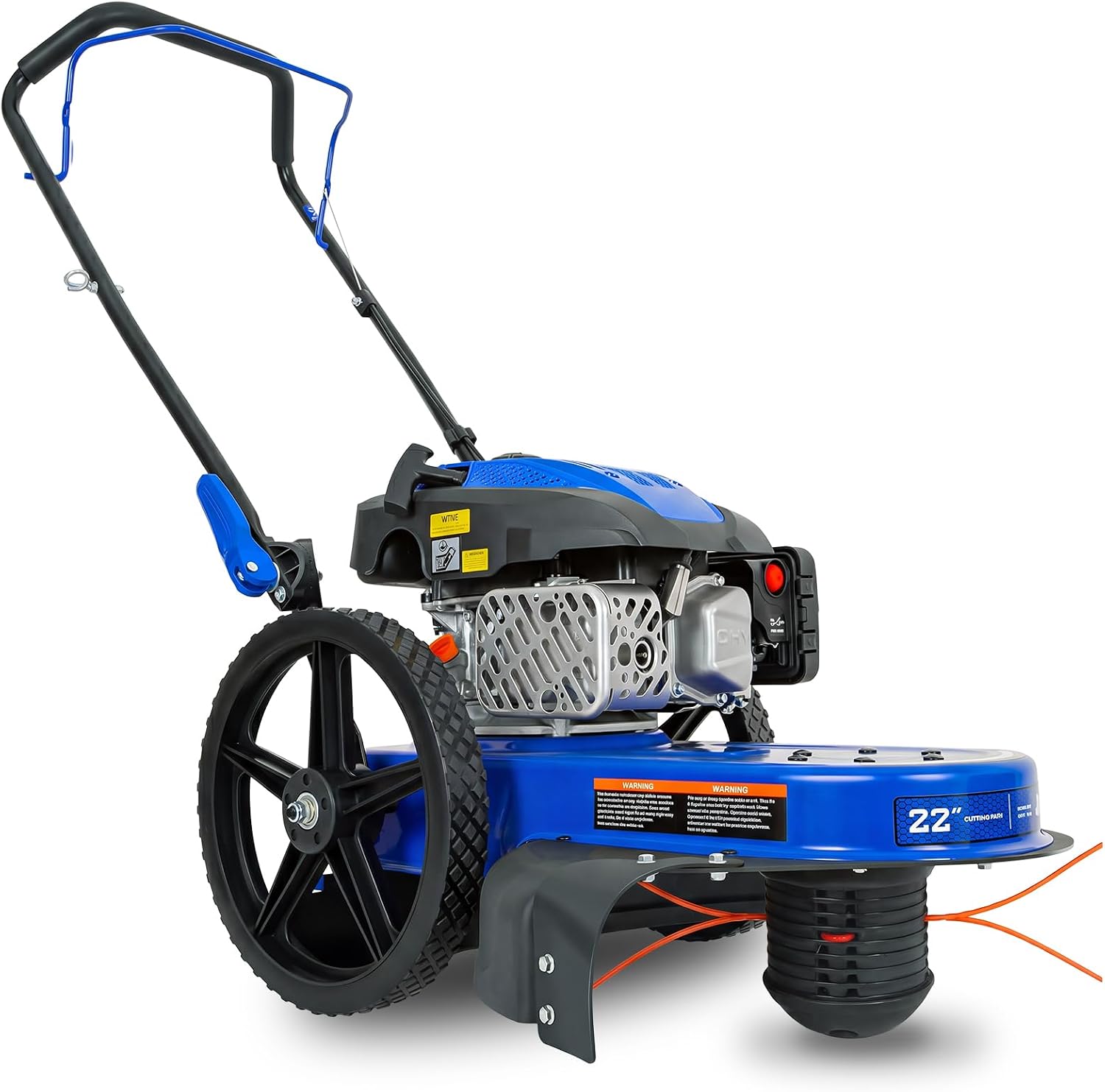
| Power Source | Gasoline-Powered |
|---|---|
| Cutting width | 22 inches |
| Wheel Size | 14 inches |
| Material Type | Alloy Steel |
| Operation Mode | Manual |
This BILT HARD walk-behind string trimmer is designed to clear heavy grass and weeds where a standard mower or handheld trimmer struggles. It uses a 170cc 4-cycle OHV engine with a manual recoil start to power a heavy-duty nylon line across a 22-inch cutting width, and a one-piece steel deck improves strength and reduces vibration while you work. Large 14-inch flat-free wheels make it easier to push over uneven ground and the foldable ergonomic handle helps with control and compact storage. Typical uses include edging along fences, clearing overgrown patches, and cutting through dense, tall grass or light brush around obstacles. Important limitations are the manual start and small 0.2 gallon fuel tank, which mean occasional refueling and some effort starting compared with electric or e-start models, and regular engine maintenance is required. For buyers who want a robust gas-powered solution for heavy trimming, this machine delivers straightforward performance without complex electronics.
Best for: A buyer who prefers a straightforward, durable gas-powered tool for heavy-duty backyard trimming and values reliability over advanced features. Good for homeowners who want a machine that tackles thick grass and tight spots where a lawn mower cannot reach.
Less Ideal for: Not the best choice for users who prioritize low-noise, zero-emissions operation or who need electric push-button starting; consider electric or e-start gas models instead.
- Powerful 170cc 4-cycle OHV engine for cutting dense grass and weeds
- 22-inch cutting width covers wide swaths and reduces passes
- One-piece steel deck increases durability and reduces vibration
- 14-inch flat-free wheels improve maneuverability on uneven terrain
- Foldable ergonomic handle for improved control and compact storage
- Manual recoil start requires physical effort and may be harder for some users
- Small 0.2 gallon fuel tank means more frequent refueling during long jobs
Verdict: Buy this if you want a no-frills, heavy-duty gas walk-behind trimmer that reliably clears thick grass and overgrown areas.
Choosing the Right 4 Cycle Gas String Trimmer: Key Factors to Consider
Engine Design and Starting Ease
Four-stroke engines eliminate the need to mix oil and gasoline and often start differently than two-stroke units. Check whether the engine has features that make cold or hot starts easier, such as a choke design that is accessible and intuitive. A trimmer that starts reliably reduces downtime and frustration during yard work.
Also consider the engine layout and whether it is a straight shaft or curved shaft design. Straight shafts usually reach farther and handle heavier loads without flex, while curved shafts are lighter and more maneuverable near beds and fences. Both choices affect how the engine feels and how often you will service it.
Cutting Head Compatibility and Line Options
Look for trimmers that accept common spool types and allow you to use heavier or tapered cutting lines when needed. The cutting head determines how easily you can refill line and whether advanced bump-feed, automatic feed, or fixed-line systems are available. A flexible head keeps the tool useful across seasons, from thin grass to tougher weeds.
Consider the ability to swap to a blade or brush-cutter attachment if your landscape includes light woody growth. Heads that balance fast line speed with durability will give cleaner cuts and extend spool life.
Ergonomics, Weight, and Vibration
Trimmer comfort affects how long you can work without fatigue. Evaluate the unit's overall weight distribution, handle adjustability, and the presence of an auxiliary handle or harness attachment points. Well-positioned handles let you keep the cutting head level and maintain control around obstacles.
Vibration isolation matters for both comfort and control. Excessive vibration can make trimming tedious and less precise. Also assess throttle placement and whether the controls feel natural for your dominant hand.
Fuel Capacity and Real-World Efficiency
A practical tank size reduces interruption for refueling, especially on larger properties. However, a larger tank adds weight. Balance fuel capacity with weight and how long you typically work in one session. The engine's carburation and tuning play a large role in real fuel use beyond the tank size.
Fuel efficiency also ties to emissions and smell. Better fuel consumption means fewer stops and lower operating cost over a season. Consider how easy it is to get the engine running cleanly after storage periods, since inefficient combustion increases fuel use.
Maintenance Access and Parts Availability
Routine upkeep for four-stroke trimmers includes checking oil level, changing air filters, and servicing spark plugs. Prefer designs where these service points are reachable without special tools. A trimmer that requires disassembly for basic maintenance will probably sit idle longer.
Investigate how easy it is to source common replacement parts like air filters, spark plugs, and spools. Readability of the owner manual and availability of clear maintenance intervals also reduce long-term hassle.
Choosing Between Straight and Curved Shaft
Straight shafts extend reach and transfer power more directly to the cutting head, which helps when you need to trim under low branches or along long fence lines. They are typically preferred for heavier work because the rigid shaft handles torque with less flex.
Curved shafts shorten reach but make the head easier to maneuver close to the ground and around tight garden beds. For gardeners who value lightness and nimble handling, a curved-shaft four-stroke may be the better daily tool.
- Straight shaft: greater reach and durability for larger open areas.
- Curved shaft: lighter and easier to steer around plants and borders.
Noise, Emissions, and Local Regulations
Four-stroke engines are often quieter and cleaner than older two-stroke designs because they burn fuel more efficiently. Still, sound levels vary by model and muffler design. Check local noise ordinances if you live in a noise-restricted community or have close neighbors.
Some areas have restrictions on engine types or emissions. Choosing a well-tuned four-stroke and maintaining it properly will reduce smoke and smell and help keep you within local rules.
- Regular maintenance keeps emissions low.
- Use fresh fuel and change filters to reduce odor and smoke.
Attachment Options and Multi-Tool Compatibility
If your yard tasks go beyond edging and trimming, consider trimmers that accept attachments for edging, pruning, or brush cutting. Attachment-ready shafts and compatible drive systems convert a single engine into a multi-tool, saving storage space and broadening utility.
Confirm how attachments mount and whether they add significant weight or change the balance. Compatibility with a harness can also make heavier attachments usable for longer periods.
- Look for standardized attachment mounts.
- Consider how attachments affect balance and vibration.
Seasonal Storage and Winterizing
Proper off-season care extends the life of a four-stroke trimmer. Stabilize fuel or drain the tank before long storage, change the engine oil, and keep the unit clean of grass clippings and debris that can trap moisture and promote corrosion.
Store the trimmer in a dry, ventilated spot and protect the cutting head. A small routine of seasonal checks makes it faster to get the tool back into service when the growing season starts again.
- Drain or stabilize gasoline for storage.
- Clean cutting head and air intake before storing.
Common Repairs You Can Do at Home
Many routine repairs are straightforward, like replacing the spark plug or swapping an air filter. Learning to access these parts and keeping a basic tool kit can save time and service bills. Adjusting carburetor idle and cleaning the fuel lines are moderate tasks that extend reliable use.
More complex work, such as major engine overhaul or replacing internal components, is best handled by a technician. Still, preventing those repairs through consistent maintenance will keep the trimmer in service longer.
- Keep spare filters and spark plugs on hand.
- Practice safe procedures: disconnect spark plug before servicing.
How We Chose the Best 4 Cycle Gas String Trimmer
We filtered models based on real gardener priorities for four-stroke straight-shaft and curved-shaft trimmers. Reliability was weighted heavily, including cold starts and consistent idling, since a trimmer that stalls or is hard to start becomes a maintenance burden. Cutting capacity and head options were evaluated next, focusing on effective line speed, spool compatibility, and the ability to handle thick grass and light brush. Ergonomics and handling were assessed for prolonged use: vibration levels, harness compatibility, balance, and control layout. Serviceability was a separate filter, checking easy access to spark plugs, air filters, and carburetor settings so routine upkeep does not require shop service. Fuel efficiency and emissions were considered because four-stroke engines run on straight gasoline; better combustion and efficient carburetion reduce fuel stops and exhaust smell. We excluded two-stroke machines, battery-only units, and trimmers intended solely for professional fleet use. Also excluded were models with poor parts availability or weak support. The final shortlist emphasizes dependable four-stroke engines, practical cutting performance, comfortable handling, straightforward maintenance, and reasonable parts accessibility.
FAQ
How often should I change the oil in a four-stroke trimmer?
Oil change intervals vary by engine hours and manufacturer guidance, but many gardeners change oil once per season or after a specified number of hours. Check the manual for exact intervals and replace oil if it looks contaminated or after long storage.
Can I use regular gasoline in a 4 Cycle Gas String Trimmer?
Yes, four-stroke trimmers run on straight gasoline without mixing oil. Use fuel with the recommended octane and avoid gasoline with excessive ethanol content if the manual warns against it. Fresh fuel improves starting and reduces carburetor gumming.
Is a harness necessary for using a heavier four-stroke trimmer?
A harness is often helpful on heavier units or for prolonged trimming sessions because it redistributes weight, reduces arm fatigue, and improves control. For shorter tasks or lighter curved-shaft trimmers, a harness may be optional.
How do I reduce vibration when using a gas trimmer?
Vibration reduction starts with good maintenance: tight fasteners, balanced cutting head, and proper mounting of handles. Choosing a model with built-in vibration dampers and using an anti-vibration harness also helps for extended work.
Can I use metal blades with a four-stroke trimmer?
Some four-stroke trimmers accept blade attachments for thicker brush, but suitability depends on the drive and gearbox design. Confirm the shaft compatibility and ensure you use the correct guard and protective gear if switching to a blade.
Final Verdict
Prioritize engine reliability and user comfort when choosing a four-stroke string trimmer. For larger properties or heavy grass, favor straight-shaft designs with robust cutting heads and easy maintenance access. If you need nimble handling in tight gardens, a lighter curved-shaft model with good balance and harness compatibility will feel better in day-to-day use. Weigh the tradeoffs between fuel capacity and weight, and plan for routine service to keep the engine running cleanly. Focus on the criteria covered here to choose a durable trimmer that matches how and where you work in the yard.
