

Note: This article contains affiliate links. If you click on these links and make a purchase, I may earn a small commission at no extra cost to you. This helps support my research and content. Read my full affiliate disclosure here.
If you are outfitting a 4×4 grow space, the right 4X4 grow light makes the difference between patchy yields and uniform canopy development. A good fixture delivers even light across the full footprint, supplies the right spectrum for each growth stage, and does so without wasting electricity or adding excessive heat. This guide shortlists six top options suited to a 4×4 planting area. We evaluated units for canopy coverage, light spectrum control, energy efficiency, heat management, and build quality so you can choose a fixture that fits your space and cultivation goals. Read on for practical guidance and clear criteria to narrow to the best fit for your grow setup.
Top Picks at a Glance
| Best Overall The best all-around choice for most situations | Spider Farmer G5000 LED Grow Light — App‑Controlled, 480W, 4×4 Coverage |  |
| Best Quality Built to a higher standard if you want something more solid | AC Infinity IONFRAME EVO6 500W Samsung EVO Bar LED Grow Light (4×4) |  |
| Best Value The sweet spot between price and what you get | MARS HYDRO FC-E4800 480W LED Full Spectrum Grow Light |  |
| Best Budget The cheapest option that still gets the job done reliably | Barrina 4×4 Full-Spectrum Dimmable Grow Light Panel, 200W |  |
| Highest Rated A top-rated pick with lots of positive feedback | Phovivis OptiGrowX480 LED Full-Spectrum Grow Light for 4×4 Tent | 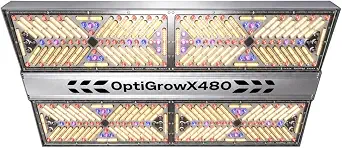 |
| Most Popular A crowd favorite that many people choose with confidence | Spider Farmer SF4000 450W LED Grow Light (4×4 Coverage) |  |
Spider Farmer G5000 LED Grow Light — App‑Controlled, 480W, 4×4 Coverage

| Light Source Type | Light Emitting Diode |
|---|---|
| Power Source | Corded Electric |
| Voltage | 120 volts |
| Wattage | 480 watts |
| Mounting Type | Ceiling Mount |
The Spider Farmer G5000 is a high-output LED panel built to run a 4×4 grow tent or small grow room through a complete crop cycle. It delivers a full spectrum tuned for seedlings through flowering and uses a dense array of Bridgelux diodes to spread light evenly across the canopy while keeping heat low. Typical use is ceiling-mounted above a 4×4 area where the unit’s digital dimmer and app control let you set schedules, simulate sunrise/sunset, and drop output from 10 to 100 percent as plants move between growth stages. The daisy-chain dimming and APP support make it easy to control multiple fixtures from one controller. Practical benefits include strong, uniform coverage, energy-efficient PPE around the stated spec, and a five-year warranty for longer runs. Important limitations are the fixed 4×4 personal coverage expectation and the need to match hanging height and light schedule to your crop; growers wanting higher PPE or larger single-fixture coverage may prefer a different series or a higher-spec diode option.
Best for: Serious hobbyists and performance‑focused growers who need reliable, uniform light for a 4×4 tent and value precise scheduling and remote control to maximize yields.
Less Ideal for: Casual plant owners with single houseplants or growers who need single-fixture coverage for areas larger than 4×4 feet; those prioritizing the absolute highest PPE available should consider higher-tier models.
- High 480W output with dense Bridgelux diode array for uniform canopy penetration
- Full spectrum suitable for seedling to flowering stages
- App control plus digital dimmer and daisy-chain capability for multi-light scheduling
- Designed for low heat and energy-efficient operation relative to output
- Five-year warranty and recognized safety certifications (CE, ETL, FCC)
- Personal coverage optimized for 4×4 spaces so larger rooms require multiple units
- PPE stated in comparative materials but not a separately listed spec on the product page
Verdict: If you want a performance-focused 4×4 full-cycle grow light with app control, dimming, and dependable uniform coverage, the Spider Farmer G5000 is a strong choice.
AC Infinity IONFRAME EVO6 500W Samsung EVO Bar LED Grow Light (4×4)

| Light Source Type | Light Emitting Diode |
|---|---|
| Wattage | 500 watts |
| Mounting Type | Magnetic Mount |
| Light Source Special Features | Adjustable Brightness (10 Levels), Sunrise/Sunset Dimming, WiFi App Control Compatible |
| Number of Light Sources | 1074 |
The AC Infinity IONFRAME EVO6 is a commercial-style 500W LED grow light built around Samsung LM301H EVO diodes for high efficiency and strong canopy penetration in a 4×4 grow area. It uses an array of densely spaced bars and 1680 diodes to reduce hotspots and deliver deep, even light across a single tent. Programmable features include 10 brightness levels, sunrise/sunset dimming and schedule control via the UIS platform for WiFi app integration when paired with AC Infinity controllers. The fixture has a removable passive-cooled LED driver to help manage heat and supports daisy-chaining multiple units, which is useful for scaling. Practical benefits are high PPFD for flowering, flexible dimming for veg-to-flower cycles, and ETL certification for safety. Expect a relatively heavy, commercial-sized unit that requires sturdy mounting and compatible tent space; the advanced app features need an AC Infinity controller to access full automation. This light is best when you want a performance-focused, scalable solution rather than a lightweight hobbyist lamp.
Best for: Growers who prioritize high-performance yields and precise light control in a single 4×4 tent and who plan to scale or automate their setup.
Less Ideal for: Casual hobbyists who want an ultra-light, plug-and-play fixture or growers without room for a substantial, heavier fixture.
- High-efficiency Samsung LM301H EVO diodes for strong light output and energy efficiency
- Algorithmically spaced bars to reduce hotspots and provide even 4×4 coverage
- Programmable controls with 10 brightness levels plus sunrise/sunset scheduling for stage-specific runs
- Removable passive-cooled driver and daisy-chain support for easier heat management and scaling
- ETL certification indicating tested safety standards
- Requires a separate AC Infinity controller and app to unlock full remote automation features
- Heavier and larger than typical hobby lights so it needs robust mounting and space planning
Verdict: If you need a commercial-grade 4×4 grow light that delivers high PPFD, precise dimming and scalable automation, the IONFRAME EVO6 is built for performance-focused growers.
MARS HYDRO FC-E4800 480W LED Full Spectrum Grow Light

| Light Source Type | LED |
|---|---|
| Power Source | Corded Electric |
| Wattage | 480 watts |
| Light Source Special Features | dimmable,remote control |
| Specification Met | ETL, CE, UKCA, RoHS |
The MARS HYDRO FC-E4800 is a 480W LED fixture built for full-cycle indoor growing in a 4×4 tent. It uses high-efficiency Bridgelux diodes and an enhanced OSRAM red spectrum to push flowering performance while keeping energy use relatively low. Typical setup requires basic assembly and hanging in the tent; the lamp is dimmable and can be integrated with MARS HYDRO controllers or an app for scheduling and remote adjustments. In practice the light gives even coverage across a 4×4 footprint and stronger red output in the core 3×3 area, which helps bud development during bloom. The aluminum housing and removable bars aid heat dissipation and serviceability, but the unit is relatively heavy compared with smaller panels and needs sturdy hang points. For growers who want reliable, app-compatible control and a focused flowering spectrum without moving to a top-tier premium model, this balances output and value well. Expect to pair it with adequate ventilation and a solid suspension when installing in a 4×4 tent.
Best for: Growers outfitting a 4×4 tent who prioritize efficient flowering performance and smart control while keeping costs reasonable.
Less Ideal for: Gardeners who need an ultra-light or plug-and-play fixture for small seedlings or who demand the highest-end, premium-output fixtures for commercial-scale yields.
- High-efficiency Bridgelux LEDs with boosted OSRAM red spectrum to improve flowering
- Dimmable and compatible with app or controller for remote scheduling and precise light cycles
- Designed for uniform 4×4 coverage with stronger core 3×3 output for bloom performance
- Aluminum construction and removable bars support heat dissipation and maintenance
- Requires assembly and is relatively heavy, needing secure hanging hardware
- Advanced smart controls such as iHub-Pro are sold separately
Verdict: A cost-conscious 480W full-spectrum fixture that gives reliable 4×4 tent coverage and smart dimming tailored for stronger flowering results.
Barrina 4×4 Full-Spectrum Dimmable Grow Light Panel, 200W

| Light Source Type | LED |
|---|---|
| Wattage | 200 watts |
| Number of Light Sources | 816 |
| Light Source Special Features | Dimmable |
| Power Source | Corded Electric |
The Barrina 4×4 grow light panel is a 200W, full-spectrum LED fixture intended for small indoor gardens and seedling racks. It uses 816 LEDs that combine blue, warm white, red (660nm) and infrared (730nm) elements to support vegetative growth and flowering phases. The panel is adjustable so you can change the angle to concentrate light or broaden coverage and it includes a dimming knob for fine brightness control and multi-unit daisy-chaining with unified dimming for larger setups. Practical benefits include high central PPFD for stronger yields, a quiet no-fan design, and lightweight aluminum construction that is easy to hang using the included chains and hooks. Important limitations are that the listed coverage and PPFD figures describe an optimal central zone so you may need to position the panel lower or add a second unit to reach uniform light across a full 4×4, and the included bulb-style base and plug-and-play mounting may not suit hardwired installations. For budget setups this panel gives strong output and useful controls but plan placement carefully for even canopy coverage.
Best for: Growers looking for an affordable, high-output single-panel solution to boost seedlings, herbs, or small vegetable beds in a 3×3 to 4×4 indoor space who prioritize raw light intensity and simple setup.
Less Ideal for: People wanting a fully uniform commercial canopy or hardwired fixtures should consider modular commercial lights or multiple panels designed for even spread instead.
- Full-spectrum LED array including red and IR to support flowering and fruiting
- Dimmable control and multi-light unified dimming for flexible intensity and scale
- Adjustable panel angle to focus light or widen coverage
- High central PPFD output for strong light intensity in the target zone
- Lightweight aluminum build with included hanging hardware for easy setup
- Central PPFD and coverage claims may not translate to even light across an entire 4×4 canopy
- Designed as a plug-and-play unit with bulb base which may limit mounting options for some setups
Verdict: A budget-friendly 200W full-spectrum panel that delivers strong central light and easy dimming, making it a solid pick for small 4×4 grow spaces that need powerful, simple lighting.
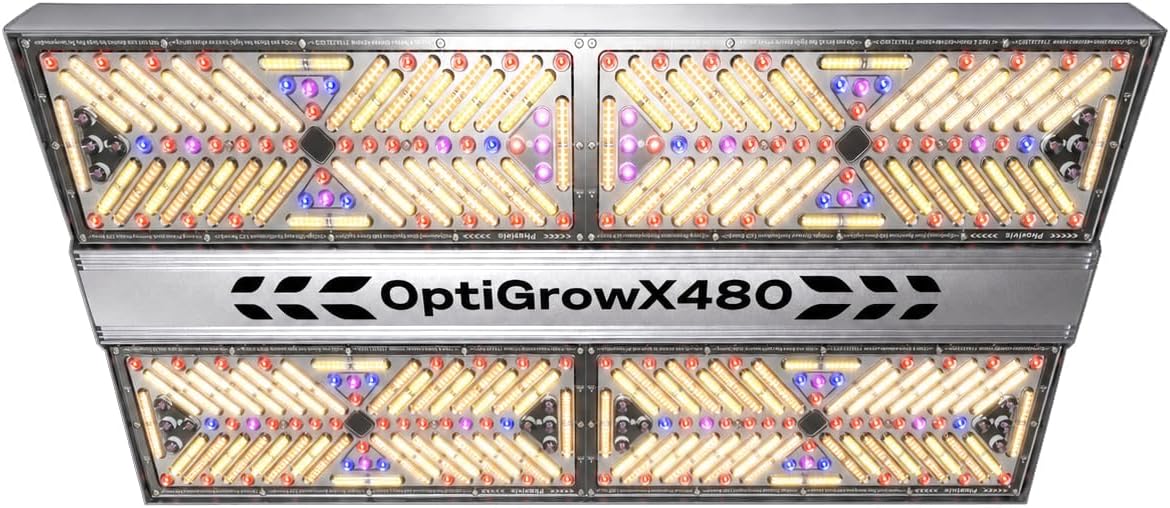
Phovivis OptiGrowX480 LED Full-Spectrum Grow Light for 4×4 Tent
| Light Source Type | Light Emitting Diode |
|---|---|
| Wattage | 440 watts |
| Color Temperature | 3500 Kelvin |
| Color Rendering Index | 95 |
| Material Type | Aluminum |
The OptiGrowX480 is built for steady, full‑cycle indoor cultivation in a 4×4 tent. It combines a 440W high‑efficiency LED array and an advanced optical lens to deliver strong PPFD and improved canopy penetration while running cooler thanks to its all‑aluminum body and passive cooling. Two independent knobs let you switch and fine‑tune Veg and Bloom spectrum and intensity without extra controllers, and an RJ45 daisy‑chain port supports scaling to multiple fixtures. Practical benefits include energy savings versus older HPS fixtures, even canopy coverage for small commercial or serious hobby grows, and UL specification compliance for safer installation. Limitations are that the unit is relatively powerful for very small setups and requires careful height adjustment to avoid light burn at close mounts; integrated controls are manual so growers who want fully automated schedules will need an external controller for advanced programming.
Best for: Growers who prioritize reliable, consistent performance and want a single fixture that handles veg to bloom in a 4×4 tent with durable construction and simple onboard controls.
Less Ideal for: Casual hobbyists with a single small tray or growers who need plug‑and‑play automated scheduling without adding controllers should consider simpler or lower‑output options.
- High PPFD output with efficient 440W draw for strong canopy penetration
- Independent Veg and Bloom dimming knobs for real-time spectrum control
- Advanced optical lens design for more even canopy coverage and less wasted light
- Passive aluminum body cooling for quieter, low‑maintenance operation
- Integrated manual controls mean automated scheduling requires an external controller
- Power and intensity may be overkill for very small or seedling‑only setups
Verdict: A dependable, high‑output full‑spectrum LED built to deliver strong, energy‑efficient performance across a full growth cycle in a 4×4 tent.
Spider Farmer SF4000 450W LED Grow Light (4×4 Coverage)

| Light Source Type | LED |
|---|---|
| Light Source Wattage | 450 watts |
| Dimming Range | 0%-100% |
| Coverage | 4'x4'/5'x5' |
| Input Voltage | AC100-277V |
The Spider Farmer SF4000 is a high-output LED panel built for a 4×4 tent setup and all growth stages from veg to bloom. It delivers a full spectrum that combines 3000K and 5000K whites with 660nm red and IR diodes, and the manufacturer lists an actual power draw around 450W and a claimed coverage of 4×4 to 5×5. The light is fanless so it runs silently and uses a thick aluminum heat sink and branded driver for passive cooling and long life. A dimming knob and daisy-chain compatibility make it easy to dial intensity for seedlings through flower and to link multiple units for larger tents. Practical benefits include strong PPFD across the canopy, simple ceiling mounting, and a 5-year warranty for peace of mind. Important limitations are the unit size and 450W draw, which may require adequate electrical circuits and tent space planning, and the product listing references specific diode brands and performance claims that buyers may want to verify with third-party PPFD measurements for exact output in their setup.
Best for: Growers equipping a single 4×4 tent who prioritize quiet, full-spectrum performance and want a robust, easy-to-dim fixture with manufacturer support.
Less Ideal for: People needing minimal power consumption for tiny trays or shelves or growers who require published third-party PPFD maps before buying.
- Full spectrum including 3000K, 5000K, 660nm red and IR for veg and bloom stages
- Dimmable with knob and daisy-chain support for multi-light setups
- Fanless passive cooling with sturdy aluminum heat sink for quiet operation
- Rated actual power around 450W with claimed 4×4 to 5×5 coverage suitable for a single 4×4 tent
- 5-year manufacturer warranty for after-sale support
- High 450W power draw may require dedicated circuit planning in multi-light installs
- Output and PPFD values are implied by specs rather than provided as measured charts in the listing
Verdict: A quiet, full-spectrum 450W LED that is well suited as the primary fixture for a 4×4 grow tent when you want adjustable intensity and manufacturer support.
Choosing the Right 4X4 Grow Light: Key Factors to Consider
Canopy Coverage
Even light distribution is the primary function of a 4X4 grow light. In a 4×4 footprint you want minimal hot spots and no deep shadowed areas at typical hanging heights. Variance in PPFD across the grid can cause uneven stretch, irregular flowering, and inconsistent ripening.
Assess coverage by looking for published PPFD maps or manufacturer test data at multiple hanging heights. Fixtures with wider beam angles, multiple emitters spread across the fixture surface, or modular arrays tend to produce more even coverage than a single concentrated light source.
Spectrum and Stage Control
Different growth stages need different spectral mixes. A fixture that offers separate veg and bloom modes or adjustable spectrum allows you to tailor light to seedlings, vegetative growth, and flowering without swapping fixtures.
Consider whether the light provides a full spectrum with usable red and blue peaks and whether it includes far-red or UV outputs if those wavelengths are important for your crop. User-adjustable spectrum can improve canopy management and quality outcomes.
Energy Efficiency and Electrical Load
Running a 4×4 fixture for many hours adds up in energy use. Efficiency measured in micromoles per joule (µmol/J) indicates how much usable PAR each watt produces. Higher efficiency lowers operating costs and reduces the cooling burden.
Also review fixture input wattage and recommended hanging height to estimate circuit load and ventilation needs. Efficient fixtures may cost more up front but reduce monthly electricity consumption and heat output.
Heat Output and Thermal Design
Heat affects canopy temperature, transpiration, and surrounding equipment. Good thermal design keeps diodes and drivers cool, extending component life and simplifying climate control.
Look for integrated heat sinks, active fans that are serviceable, or passive designs that dissipate heat across a large surface. Consider how much extra ventilation or exhaust capacity your space requires when adding a particular fixture.
Fixture Durability and Mounting Options
Durability determines how long a fixture performs near its rated output. Quality housings, water-resistant connectors, and reliable drivers reduce failure risk in humid grow environments.
Mounting flexibility matters in a 4×4 area where you may hang centrally or use multiple point hangings to fine-tune angles. Check for multiple hang points, adjustable ratchets, and how easy it is to service or replace internal components.
Controls and Usability
User controls influence daily management and longer-term tuning. Built-in timers, dimming, spectrum presets, and remote or app control simplify routine changes and let you adopt advanced light schedules.
Ease of access to controls, clear labeling, and reliable dimming range that does not shift spectrum are useful features. For commercial or complex home setups, programmable schedules and daisy-chain power capabilities reduce cabling and simplify management.
Sizing and Hanging Height Guidance
A 4×4 grow footprint has specific PPFD goals depending on plant type and growth stage. Seedlings and clones need lower intensity, while flowering plants usually require higher average PPFD across the canopy. Fixtures perform differently at various heights, so verify manufacturer distance recommendations and PPFD maps for each stage.
Start with the recommended veg and bloom hang heights, then measure with a light meter at canopy level if possible. Small adjustments in height or using multiple fixtures hung lower can correct uneven spots without increasing total wattage.
- Seedlings: keep light higher and intensity lower to avoid stretch.
- Vegetative: moderate height for even cover and compact growth.
- Flowering: lower for higher PPFD but watch heat and leaf burn.
Measuring Performance: What Data to Ask For
Published specs vary widely. The most useful data are PPFD distribution charts at realistic hanging heights, power draw in watts, and efficiency ratings in µmol/J. Look also for driver specifications and expected lumen or PAR lifespan.
If test data are not available, seek details on emitter count, arrangement, and beam angles as proxies for coverage. Transparent testing protocols and third-party measurements are the most reliable indicators of real-world performance.
- Request PPFD grid maps at 12, 18, and 24 inches when possible.
- Compare µmol/J numbers rather than raw wattage alone.
Managing Heat and Ventilation in a 4X4 Space
Heat output affects plant transpiration and the workload on your ventilation and AC systems. Calculate total heat by referencing fixture wattage and factor in any internal fan noise or maintenance needs. Passive fixtures often require more room ventilation, while active-cooled units can concentrate heat removal at the fixture.
Plan exhaust and intake to maintain canopy temperature and avoid hot spots. If space uses carbon filtration or ducting, coordinate fixture placement to avoid obstructing airflow and creating thermal pockets.
- Place fixtures to keep hot air away from canopy where possible.
- Regularly clean fans and heatsinks to preserve thermal performance.
Installation and Safety Considerations
Secure mounting hardware rated for the fixture weight and use rated cables and connectors to prevent electrical hazards. Ensure drivers and control boxes are protected from humidity and potential water exposure.
Follow local electrical codes, use GFCI protection where applicable, and avoid overloading circuits with multiple high-wattage fixtures. Proper strain relief for power cords reduces connection failures and safety risks.
- Use multiple hang points for larger fixtures to prevent sagging.
- Keep driver compartments accessible for maintenance.
Warranties, Support, and Serviceability
A robust warranty and accessible customer support are important because fixture failures can interrupt a grow cycle. Check what the warranty covers, especially drivers, diodes, and water damage.
Serviceability matters in the long run. Fixtures that allow driver replacement or modular diode boards make repairs easier and less expensive than full-unit replacements.
- Confirm warranty terms for indoor horticultural use and expected lifespan.
- Look for fixtures with replaceable components to extend usable life.
How We Chose the Best 4X4 Grow Light
To assemble this list we focused on criteria that matter in a 4×4 indoor growing environment. Primary evaluation points were evenness of canopy coverage, usable spectrum across veg and bloom phases, and measured photosynthetic photon flux density across a 4×4 plane. Electrical efficiency and heat management were treated as separate filters because they directly affect running costs and ventilation needs. Build quality and durability were assessed through material choices and control features such as dimming, spectrum switches, or programmable veg/bloom cycles. We also considered ease of mounting and maintenance, including cord routing and driver access. We excluded fixtures that are undersized for a 4×4 footprint or those designed strictly for small tents and single-pot setups. Extremely specialized horticultural laboratory lights were also excluded because they do not reflect practical home or small commercial cultivation. The resulting shortlist emphasizes lights that provide even PPFD across a 4×4 area, flexible spectrum control, sensible thermal design, and reliable electrical efficiency.
FAQ
What PPFD range should I aim for under a 4×4 grow light?
It depends on the crop and stage. Seedlings often do well with lower PPFD (lighter levels), vegetative growth prefers moderate PPFD, and flowering usually needs higher average PPFD. Aim for published stage-specific PPFD targets and verify with a meter when possible.
Can I use more than one smaller fixture instead of a single 4×4 unit?
Yes. Multiple smaller fixtures can improve uniformity and reduce hot spots if placed correctly. They also add redundancy so one unit failing has less impact than a single large fixture.
How high should I hang my 4X4 grow light?
Manufacturers recommend different heights depending on beam angle and power. Start at the suggested veg and bloom heights, then adjust to balance PPFD uniformity and heat. Use a light meter to fine-tune distance for even canopy coverage.
Does higher wattage always mean better results in a 4×4 space?
Not necessarily. Wattage alone does not indicate usable light. Efficiency in µmol/J and distribution across the canopy are more important. Too much concentrated wattage can cause hotspots and heat stress.
How important is spectrum control for a 4×4 grow light?
Spectrum control is useful because different phases benefit from different wavelengths. Adjustable spectrum or separate veg and bloom modes lets you optimize light quality for seedlings, vegetative growth, and flowering without changing fixtures.
What maintenance should I plan for grow lights?
Regularly clean dust from heatsinks and lenses, check fans for debris, and inspect power connections. Replace failed drivers or modules promptly to avoid reduced light output and uneven canopy development.
Final Verdict
When choosing a 4X4 grow light, prioritize even canopy coverage and spectral flexibility while keeping an eye on energy efficiency and heat production. Decide whether a single high-performance fixture or multiple smaller units better fits your ventilation, mounting, and redundancy needs. Balance initial expense against long-term operating costs and serviceability. Focus on PPFD maps, µmol/J efficiency, and thermal design to choose a fixture that reliably supports the plant stages you care about.
