

Note: This article contains affiliate links. If you click on these links and make a purchase, I may earn a small commission at no extra cost to you. This helps support my research and content. Read my full affiliate disclosure here.
If you want a fast, hands-off way to control flying and crawling pests around the house, an aerosol option can deliver targeted knockdown and easy application. The right aerosol insect killer behaves predictably on ceilings, baseboards, and entry points without over-spraying living spaces or leaving messy residues. This guide looks at five shortlisted aerosol insect killers chosen for common home situations, from kitchen pest touch-ups to garage and attic spot treatments. We evaluate coverage pattern, how long pests stay inactive after exposure, and user safety and odor so you can pick an option that fits your home and routine.
Top Picks at a Glance
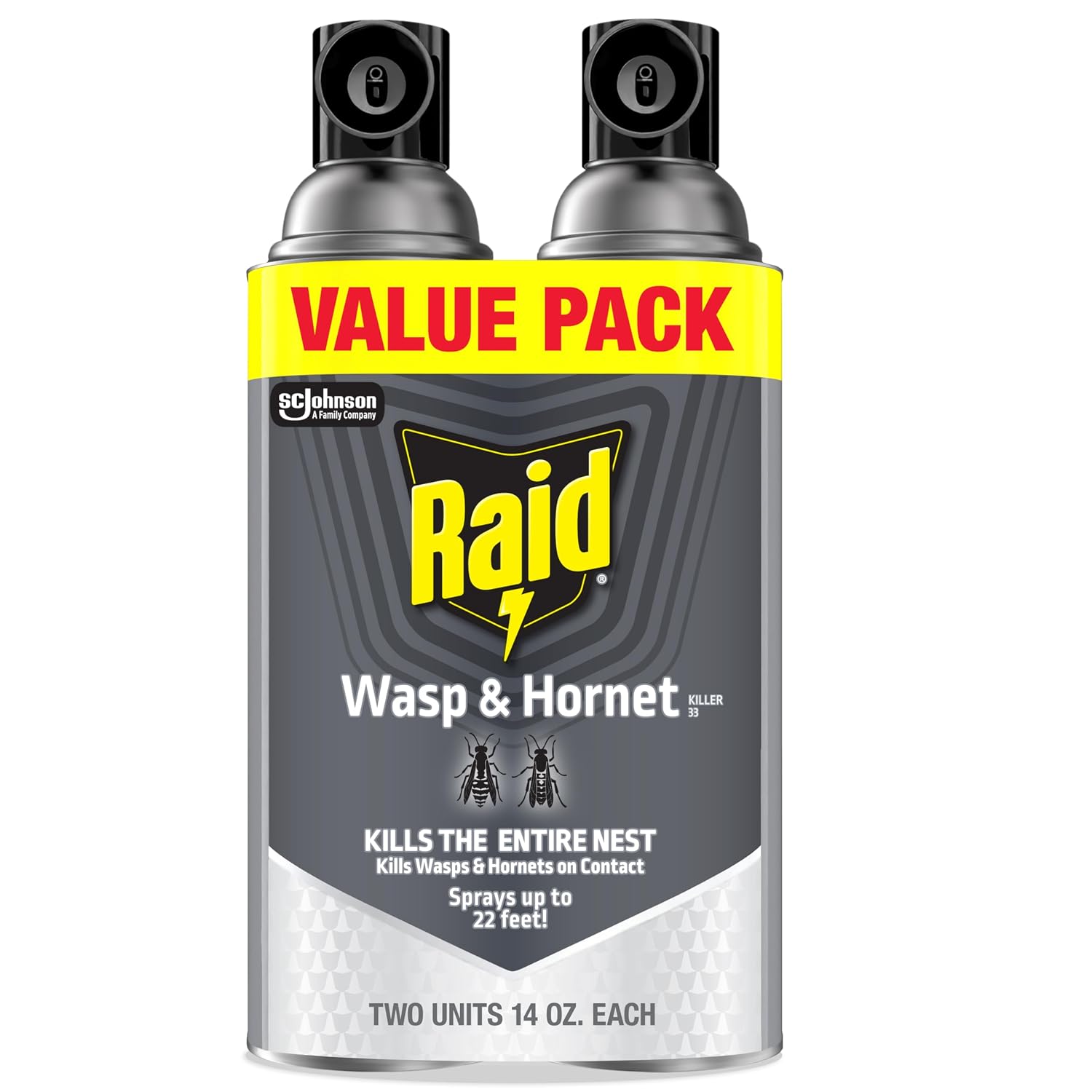
| Best Overall The best all-around choice for most situations | Raid Wasp & Hornet Killer Spray, 14 oz, 2‑Pack |  |
| Best Quality Built to a higher standard if you want something more solid | MGK CrossFire Insecticide Aerosol (13 fl oz) |  |
| Best Value The sweet spot between price and what you get | HOT SHOT Flying Insect Killer Aerosol, 15 fl oz (3 pack) |  |
| Best Budget The cheapest option that still gets the job done reliably | Raid Flying Insect Killer Spray, 18 oz |  |
| Highest Rated A top-rated pick with lots of positive feedback | BASF PT 221L Pressurized Insecticide Aerosol Spray, 14 oz (Case of 12) |  |
Raid Wasp & Hornet Killer Spray, 14 oz, 2‑Pack
| Unit Count | 28 Ounce |
|---|---|
| Included Components | Two 14 oz cans |
| Item Form | Spray |
| Active Ingredients | Prallethrin, Cypermethrin |
Raid Wasp & Hornet Killer is a straightforward outdoor aerosol for quickly dealing with stinging flying insects and nests. Each 14 oz canister sprays up to about 22 feet so you can treat nests from a safe distance, and the formula is designed to kill paper wasps, yellow jackets, mud daubers and bald‑face hornets on contact. It is electrically non‑conducting up to 32,500 volts, which can be helpful if nests are near electrical equipment. Typical use is to spray a saturated stream at the nest in early morning or evening when insects are less active, then wait 24 hours before removing the nest. The product includes common active ingredients (prallethrin and cypermethrin) and comes as a two‑pack so you have a backup or enough coverage for multiple nests. Important limitations are that it is for outdoor use only, is extremely flammable and toxic to aquatic life, and requires careful handling to avoid exposure to people and pets. Follow label directions closely and avoid spraying vegetation or water sources.
Best for: Buyers who prioritize a reliable, no‑nonsense solution to quickly eliminate outdoor wasp and hornet nests and who follow label safety instructions.
Less Ideal for: People looking for non‑chemical, pet‑safe, or aquatic‑safe options or those who need an indoor insecticide should consider alternative approaches.
- Sprays up to 22 feet to allow treatment from a safer distance
- Kills common stinging wasps and hornets on contact for fast results
- Two 14 oz cans provide extra coverage or a spare for larger problems
- Non‑conducting formulation reduces electrical hazard when treating nests near power equipment
- Contains flammable propellants and petroleum distillates so it must be stored and used with caution
- Extremely toxic to fish and aquatic invertebrates so not safe near water
- Intended for outdoor use only and not for use on edible crops or around pets
Verdict: Choose this if you want a proven, distance‑spraying aerosol that quickly kills wasps and hornets so you can remove nests with confidence.
MGK CrossFire Insecticide Aerosol (13 fl oz)

| Item Volume | 13 fluid ounces |
|---|---|
| Item Form | Oil |
| Scent Name | Unscented |
| Target Species | Insects |
| Active Ingredients | Clothianidin 0.40%, Metofluthrin 0.01%, Piperonyl Butoxide 1.00% |
MGK CrossFire Aerosol is a professional-strength bed bug spray designed for indoor use on mattresses, furniture, baseboards and other hiding spots. It combines three active ingredients to deliver fast knockdown plus a residual effect that continues to control bed bugs after application. Typical use is spot treatment and perimeter sprays in bedrooms, apartments and institutional settings; the product is non-repellent and labeled for direct application to mattresses and similar surfaces. Notable features include claims of activity against pyrethroid-resistant bed bugs, egg-hatch prevention, and a non-staining formulation for water-safe fabrics. In practice the aerosol gives targeted, effective coverage where applied and can reduce infestations when used as part of an integrated approach. Limitations are that it is a contact and residual insecticide rather than a room fumigant so it will not reach bugs sealed in voids, and safe use requires following label directions for ventilation and treated-area reentry. The formula may leave removable marks on dark surfaces despite being non-staining on water-safe fabrics.
Best for: Homeowners who prioritize fast, professional-level control of bed bugs and want a product suitable for targeted indoor treatments where residual activity and resistance control matter.
Less Ideal for: People seeking a whole-room fumigation solution or a non-chemical approach should consider alternatives; this is not intended for outdoor use or for treating inaccessible voids.
- Formulated to kill pyrethroid-resistant bed bugs and all life stages including eggs
- Ready-to-use aerosol for targeted spot and perimeter treatments
- Non-repellent action helps avoid driving bugs deeper into hiding
- Non-staining on water-safe fabrics and removable marks on dark surfaces
- Contains three active ingredients for both quick knockdown and residual control
- Not a fumigant so will not eliminate bugs hidden in sealed voids or deep structural cracks
- Requires careful adherence to label safety and reentry instructions
Verdict: Choose MGK CrossFire Aerosol when you need a ready-to-use, resistance-busting spray that delivers quick knockdown plus lasting residual control for targeted indoor bed bug treatments.
HOT SHOT Flying Insect Killer Aerosol, 15 fl oz (3 pack)

| Unit Count | 45 Ounce |
|---|---|
| Included Components | 15 Fl Oz (3 Pack) |
| Item Form | Aerosol |
| Target Species | Insects |
| Active Ingredients | Permethrin (0.15%), Tetramethrin (0.15%) |
This HOT SHOT aerosol comes as a three-pack of 15 fl oz cans and is formulated to kill houseflies, mosquitoes and other listed flying insects by direct contact. You can use it indoors as a space spray to quickly knock down flies, gnats and moths by filling a room with mist and ventilating after 15 minutes, or apply it directly to nests, rafters and door frames outdoors where insects congregate. The formula lists permethrin and tetramethrin as active ingredients and the label says it leaves a clean, fresh scent rather than a strong chemical odor. Practical features include both immediate knockdown and a residual effect on nonporous surfaces for up to four weeks against certain pests, plus clear directions for timed room treatment and spot application. Important limitations are typical for pressurized aerosols: it is toxic to fish and should not be used near water, and precautions are needed to avoid skin contact and exposure to heat or flames. It is best used as a targeted control for nuisance flying insects rather than a broad landscape or aquatic application.
Best for: Buyers who want a convenient, ready-to-use spray for quick knockdown and short-term residual control of common indoor and porch/entryway flying pests.
Less Ideal for: People who need year-round landscape-wide pest control, aquatically sensitive sites, or low-toxicity solutions for homes with fish or heavily exposed outdoor wildlife should consider alternative methods.
- Kills a wide range of common flying nuisance insects on contact
- Provides residual control on nonporous surfaces for up to four weeks against mosquitoes and houseflies
- Clear label directions for indoor space-spray and targeted outdoor applications
- Aerosol format delivers quick knockdown and convenient spot treatment
- Contains pyrethroid active ingredients and is toxic to aquatic life
- Pressurized cans require careful storage and cannot be used near heat or open flame
Verdict: A practical, ready-to-use aerosol for fast knockdown and short-term residual control of common flying nuisance insects around the home.
Raid Flying Insect Killer Spray, 18 oz

| Unit Count | 18 Ounce |
|---|---|
| Item Form | Spray |
| Target Species | Insects |
| Specification Met | EPA |
| Active Ingredients | d-Phenothrin 0.125%, prallethrin 0.100% |
Raid Flying Insect Killer is an 18 oz aerosol spray designed to kill mosquitoes, flies, gnats, small moths, wasps and similar flying pests on contact and by misting treated areas for short-term residual control. For indoor use you close doors and windows, spray with a sweeping motion into the air about three feet from walls and fabrics, then leave the room to allow the mist to work before ventilating after two hours. Notable features include a water-based formula that dries without a greasy residue and an "Outdoor Fresh" scent that reduces strong chemical odor. The product is EPA-specified and includes active pyrethroid ingredients for rapid knockdown. Practical benefits are quick results when insects are present and the ability to treat entry points like screens and around doors for continued control. Important limitations are the required safety precautions: the spray is harmful if inhaled or contacted, contains flammable ingredients, and rooms must be vacated and ventilated for a set time after use, which makes it less convenient for frequent or casual indoor use around children, pets, or food preparation areas.
Best for: Buyers who need a fast, reliable indoor solution to eliminate mosquitoes and other flying pests and who are comfortable following strict safety and ventilation steps after treatment.
Less Ideal for: Households that need frequent quick-turnaround sprays around children, pets, food areas, or where leaving rooms closed for extended ventilation is impractical.
- Kills a wide range of flying insects on contact including mosquitoes and flies
- Mist application allows room treatment without having to target each insect
- Water-based formula that dries without a greasy residue and has milder scent
- EPA-specified formulation with fast-acting pyrethroid active ingredients
- Requires vacating treated area and two hours of ventilation before re-entry
- Contains flammable ingredients and chemicals that require careful handling
Verdict: Use this aerosol when you want fast, on-contact elimination of mosquitoes and other flying insects and can follow the required safety and ventilation steps.
BASF PT 221L Pressurized Insecticide Aerosol Spray, 14 oz (Case of 12)

| Item Form | Spray |
|---|---|
| Target Species | Insects, Ants, Cockroach, Bed Bugs, Spiders |
| Special Features | Fast-Acting, Long-Lasting |
| Liquid Volume | 14 fluid ounces |
| Active Ingredients | Cyhalothrin 0.05% |
The BASF PT 221L is a pressurized aerosol intended for targeted control of crawling insects such as ants, cockroaches, bed bugs, spiders and select wood-infesting species. It is typically used as a crack-and-crevice or spot treatment indoors and for nest injections or perimeter points outdoors. The product’s active ingredient cyhalothrin (0.05%) and EPA specification support a fast-acting formula with residual activity, which makes it practical for follow-up treatments on persistent problems. Packaged as 14 ounce ready-to-use cans and sold in a case of 12, it is designed for professional-style, repeatable applications in homes and commercial settings where consistent performance is important. Important limitations are that it is a spot treatment rather than a broadcast solution and label directions must be followed for indoor use and reapplication intervals, especially in food-handling areas and for bed bug treatment. Users should also follow safety and storage instructions when working in occupied spaces.
Best for: Homeowners or property managers who prioritize dependable, professional-style spot control for crawling insect problems and who value a product with documented residual activity.
Less Ideal for: People who need a ready-to-spray product for large-area or landscape-wide broadcast treatments or those seeking a non-chemical prevention-only approach.
- Broad-spectrum control for many crawling insects including ants, cockroaches, bed bugs and spiders
- Ready-to-use pressurized aerosol allows precise crack-and-crevice and spot applications
- Formulated with cyhalothrin for fast knockdown plus residual activity
- EPA-specified product suitable for use in varied indoor and outdoor environments
- Not intended for whole-structure broadcast treatments so multiple spot applications may be needed
- Contains an active insecticide that requires careful adherence to label directions and safety precautions
Verdict: Choose this pressurized BASF aerosol when you need reliable, professional-style spot and crack-and-crevice control with residual effect against crawling insects.
Choosing the Right Aerosol Insect Killer: Key Factors to Consider
Spray Pattern and Reach
How the aerosol streams and droplets disperse affects how easily you can treat cracks, soffits, corners, and flying insect flight paths. A narrow, directed stream lets you target crevices and baseboards without over-spraying furniture or food prep areas. A slightly wider cone can be useful for ceiling edges and swifter treatment of flying insects, but wider sprays increase drift onto unintended surfaces.
Consider the tradeoff between reach and control: longer, focused sprays reduce the need to get close to insect harborage but require steady aim. Nozzle designs that allow short bursts and controlled pulses help conserve product and reduce airborne odor during application.
Knockdown Speed and Residual Control
Knockdown speed determines how quickly visible pest activity ceases after treatment. Fast knockdown is important around food prep areas and where immediate relief is needed. Residual control is the length of time treated surfaces remain toxic to crawling insects that contact them later. Longer residual activity reduces how often you need to reapply in entryways and baseboards.
Match expected pest pressure to residual needs. For occasional flying insect problems, short residual activity may be acceptable. For persistent crawling pests entering from outdoors, choose formulations with a measurable residual so you are not treating multiple times a week.
Indoor Safety and Odor
Indoor use calls for products that minimize strong chemical odors and airborne irritants. Lower-odor formulas make it easier to reoccupy rooms soon after treatment, and clear instructions about ventilation and dwell time are essential. Look for labeling that specifies safe distances from food, children, and pets, and for nozzle control that reduces overspray.
Also consider whether the aerosol contains ingredients known to be irritants for sensitive household members. Protective steps such as temporarily moving pets and covering aquaria are commonly recommended; products that reduce these burdens improve usability in everyday homes.
Surface Compatibility and Clean-up
Aerosol residues can stain, leave a film, or damage painted surfaces and fabrics. Surface compatibility matters when you plan to treat baseboards, window sills, door frames, or upholstery edges. Choose formulations that do not leave sticky or oily residues on contact points where children or pets might touch.
Easy-clean formulas reduce the need for vigorous wiping after treatment. If a product recommends wiping treated surfaces before reoccupying, that adds work. Evaluate how easily residues are removed with a damp cloth and whether the label lists any materials to avoid.
Target Pest Spectrum and Usage Scenarios
Different aerosols vary in which insects they control effectively. Some are optimized for flying insects like mosquitoes and houseflies, while others include ingredients more active against crawling pests such as ants, roaches, and spiders. Matching the spectrum to your primary pest problem reduces wasted product and unnecessary exposure.
Think about where you will use the spray: kitchens and living areas need low-odor, non-staining options; garages and basements can tolerate stronger formulations. A versatile aerosol that covers both flying and crawling insects simplifies storage and response when new pests appear.
How to Use an Aerosol Safely Indoors
Before treating, read the label for ventilation, reentry time, and surface restrictions. Remove or cover exposed food, dishes, baby items, and pet bowls. Open windows or use an exhaust fan if recommended to clear fumes more quickly.
Apply short bursts and aim at insect harborages, baseboards, and entry points rather than broadcasting across an entire room. After the recommended dwell time, air out the space and, if necessary, wipe treated countertops or dining surfaces with a damp cloth.
- Test a small, inconspicuous area first if you are unsure about staining
- Keep children and pets out of the treated area until the label allows reentry
- Avoid spraying directly onto fabrics or electronics
Spot Treatment Techniques for Common Areas
Entryways and windows are prime spots for treating crawling insects that come indoors. Direct short sprays along thresholds, door frames, and behind trim where insects hide. For flying insects around light fixtures or ceilings, use a slightly upward angled spray from a safe distance to reach flight paths without spraying lightbulbs directly.
In kitchens, avoid direct sprays near food preparation surfaces; treat baseboards and behind appliances instead. Garages and basements tolerate more aggressive spot treatments, but minimize contact with stored fabrics and cardboard to prevent staining or residue transfer.
- Target baseboards, attic stairs, and under sinks for crawling pests
- Treat window and door casings for entry-point control
- Use ceiling-edge sprays for flying insect resting spots
When to Choose Longer Residual Vs Immediate Knockdown
Use fast knockdown formulations when you need immediate relief from visible flying insects or a sudden indoor infestation. These are useful for evening events or meals when immediate reduction of activity is the priority. Expect to re-treat sooner if residual activity is brief.
Select options with longer residual activity for chronic crawling pest pressure at thresholds and garages. Longer residuals reduce reapplication frequency but may have stronger odors or more restrictive surface directions, so balance persistence with household sensitivity.
- Fast knockdown for short-term, visible insect activity
- Long residual for ongoing entry-point control
- Rotate treatment locations to avoid buildup on a single surface
Managing Odor and Ventilation Post-Application
Open windows and run fans when the label suggests ventilation. Odor intensity varies with formulation and room size, so airing out for 15 to 30 minutes is a common recommendation for lower-odor products. For stronger formulations, wait longer before reoccupying or keep sensitive individuals out of the area.
Use fans to direct airborne vapors toward open windows rather than into adjacent living spaces. If someone in the home is chemically sensitive, consider treating when they can be absent for several hours and thoroughly ventilate afterward.
- Ventilate immediately after short treatments
- Use fans to speed clearing of fumes
- Avoid reentry until label-specified times have passed
Storage and Disposal Best Practices
Store aerosol cans in a cool, dry place away from heat sources and direct sunlight. Keep them locked or out of reach of children and pets. Do not puncture or incinerate empty cans, even when they feel empty, as residual propellant can be hazardous.
Follow local regulations for aerosol disposal. Many municipalities accept empty aerosol cans in household recycling if they are fully empty, but check local guidance. Worn or partially full cans should be handled per hazardous waste instructions to avoid accidental release.
- Keep away from open flames and heat
- Store upright to avoid nozzle clogs
- Check municipal rules before disposing of partially full cans
How We Chose the Best Aerosol Insect Killer
We prioritized real-world home use criteria that matter when using aerosol insect killers indoors. First, spray pattern and reach: a fine, even aerosol stream covers cracks, ledges, and flying insect flight paths without wasting product. Second, knockdown speed and residual activity: products with quick paralysis and a measurable residual effect reduce repeat treatments. Third, safety profile and application control: lower-odor formulations, clear labeling for indoor surfaces, and nozzle designs that limit overspray make treatments safer for households. Fourth, versatility across target pests: effective control of both common flying insects and crawling pests simplifies storage and use. Finally, surface compatibility and clean-up: aerosols that do not leave sticky films on countertops, floors, or fabrics are preferred. We excluded foggers, space heaters, and non-aerosol pump or concentrate formats to focus on ready-to-use spray cans. Items missing clear indoor-use instructions or lacking basic safety labeling were removed from consideration.
FAQ
Are aerosol insect killers safe to use around pets?
They can be used safely if you follow label directions. Remove pets from the area during application and until the recommended reentry time has passed. Keep pet food and water covered and avoid direct sprays on pet bedding or areas where animals rest.
How long should I wait to reenter a room after spraying?
Reentry times vary by formulation but usually range from a few minutes to several hours. Follow the product label for ventilation instructions and minimum reentry times, and err on the side of longer ventilation if anyone in the household is sensitive.
Will an aerosol leave a greasy residue on surfaces?
Some formulations can leave an oily or waxy film, especially those with long residuals. If residue is a concern, test a small area first and plan to wipe treated surfaces with a damp cloth after the recommended dwell time when the label allows cleaning.
Can I use aerosol sprays near food preparation areas?
Avoid spraying directly on food preparation surfaces. Treat adjacent baseboards and behind appliances instead, and cover or remove food items and utensils before application. Wipe any surfaces that might have been exposed once the label permits cleaning.
How often should I reapply aerosol treatments for crawling pests?
Reapplication frequency depends on the product's residual duration and the level of pest pressure. For heavy infestation areas you may need repeat treatments every few weeks, while long-residual options can extend control to several weeks or months under normal conditions.
Final Verdict
Choose an aerosol based on where you will use it and which pests you encounter most. Prioritize spray control and indoor safety if you plan to treat living areas, and favor longer residuals for entryways and persistent crawling pests. Balance odor and surface compatibility with knockdown speed to match your household tolerance. With those tradeoffs in mind, you can pick an aerosol that gives predictable, targeted control while minimizing clean-up and disruption.
