

Note: This article contains affiliate links. If you click on these links and make a purchase, I may earn a small commission at no extra cost to you. This helps support my research and content. Read my full affiliate disclosure here.
Picking the right all round garden fertilizer matters because a single product may need to feed containers, flower beds, vegetables, and patchy lawn areas with different needs. The wrong balance can lead to weak blooms, leggy foliage, or excess foliage at the expense of fruit and flower production. This guide focuses on seven shortlisted options that work across common garden uses and growing situations. We evaluated each fertilizer on plant-appropriate nutrient balance, ease of application, and how it behaves in real garden conditions. Read on to compare the key tradeoffs and find the style of all-purpose feeding that fits your garden and routine.
Top Picks at a Glance
| Best Overall The best all-around choice for most situations | Miracle-Gro Shake 'N Feed All Purpose Plant Food, 4.5 lb |  |
| Best Quality Built to a higher standard if you want something more solid | Osmocote Smart-Release Plant Food Flower & Vegetable, 8 lb. |  |
| Best Value The sweet spot between price and what you get | GARDENWISE 10-10-10 Slow-Release Granular Plant Fertilizer (1/2 Quart) |  |
| Best Budget The cheapest option that still gets the job done reliably | USEDGDIG 15-15-15 All-Purpose Granular Garden Fertilizer (1 lb) |  |
| Highest Rated A top-rated pick with lots of positive feedback | Pegmapri Organic Liquid Plant Food, 8.45 fl oz Concentrated |  |
| Most Popular A crowd favorite that many people choose with confidence | Miracle-Gro Water Soluble All Purpose Plant Food, 3 lb |  |
| Best Seller A high-volume bestseller chosen again and again | Miracle-Gro Water Soluble All Purpose Plant Food, 1.5 lb |  |
Miracle-Gro Shake 'N Feed All Purpose Plant Food, 4.5 lb

| Item Form | Granules |
|---|---|
| Application Method | Shake onto soil and work into top 1-3 inches |
| Target Species | flowers, vegetables, herbs |
| Unit Count | 72 Ounce |
| Feeds For | up to 3 Months |
Miracle-Gro Shake 'N Feed All Purpose is a granular, continuous-release fertilizer you sprinkle onto soil and lightly work into the top inch or three before watering. It is typically used on in-ground garden beds, raised beds and established container plants to provide slow feeding across the season; the label recommends reapplying every three months. Notable features include natural ingredients that feed soil microbes, added micronutrients, and an easy shake-on application that requires no mixing. In practice this product is convenient for routine garden maintenance because one application supports steady nutrient availability without frequent dosing. For garden beds it helps promote root strength and consistent growth while reducing the need to remember weekly feedings. The main limitations are that it is a general-purpose formula rather than a crop-specific blend and that application rates must be followed to avoid overfeeding; it also provides broad coverage but not the fast boost of a water-soluble feed if plants need immediate recovery.
Best for: Gardeners who want a low-maintenance, reliable feeding method for flower and vegetable beds and containers and prefer scheduled, less frequent fertilizing over weekly applications.
Less Ideal for: Growers seeking fast corrective feeding, precise NPK ratios for fruiting crops, or specialty blends for roses or acid-loving plants should consider targeted fertilizers instead.
- Continuous-release formula feeds plants for up to three months per application
- Granular shake-on application is simple and requires no mixing
- Contains micronutrients and ingredients that support soil microbes and root health
- Suitable for both in-ground garden beds and container plants
- All-purpose formula may not match nutrient ratios for specific crops or problems
- Slower acting than water-soluble fertilizers when immediate nutrient correction is needed
Verdict: Use this granular, three-month continuous-release fertilizer when you want a simple, low-maintenance feed that keeps garden beds and containers nourished through the season.
Osmocote Smart-Release Plant Food Flower & Vegetable, 8 lb.

| Item Form | Granules |
|---|---|
| Specific Uses For Product | Root Development |
| Target Species | Perennials |
| Mixing Ratio | 1:22 (1 lb.:1 cubic foot) |
Osmocote Smart-Release Flower & Vegetable is a granular slow-release fertilizer designed to provide steady nutrition to vegetable beds, raised beds, and perennial planting areas for up to four months. It is applied by mixing the measured scoop into the top 1 to 3 inches of soil or broadcasting over mulched areas, with 1 lb treating roughly 40 sq ft. The balanced 14-14-14 NPK formula supports root development and consistent above-ground growth without frequent reapplication. Notable practical benefits include the no-burn reputation that makes it forgiving if you misapply, and the temperature-responsive release that aligns feeding with plant uptake. It comes with an applicator and clear coverage guidance, so it is straightforward to use for typical home gardeners. Limitations are that release rate depends on soil temperature so feeding timing can vary between climates, and as a granular product it requires incorporation into the soil rather than being foliar or water-soluble for quick correction of deficiencies. For gardeners seeking a low-maintenance, season-long feed for edible and ornamental plantings, this performs predictably and safely.
Best for: Home gardeners who want a reliable, low-maintenance fertilizer for vegetable plots, raised beds, and perennial borders and prefer a product that reduces the need for frequent feeding.
Less Ideal for: Growers who need fast corrective feeding or who prefer liquid or foliar fertilizers for immediate nutrient delivery should consider other options.
- Balanced 14-14-14 NPK supports both root and top growth across vegetables and flowers
- Slow-release formula feeds up to four months, reducing reapplication frequency
- Included scoop and clear coverage guidance make application easy and consistent
- Formulation is forgiving and unlikely to burn plants even if over-applied
- Nutrient release depends on soil temperature so timing can vary by climate
- Granular form must be mixed into soil and cannot correct nutrient deficiencies quickly
Verdict: Choose this if you want a dependable, mistake-proof slow-release fertilizer that feeds vegetables and flowers for an entire season.
GARDENWISE 10-10-10 Slow-Release Granular Plant Fertilizer (1/2 Quart)
| Item Form | Granules |
|---|---|
| Mixing Ratio | 10-10-10 |
| Specific Uses For Product | Vegetable gardens, fruit trees, shrubs, lawns, flowers, potted plants, indoor gardening |
| Liquid Volume | 0.5 quarts |
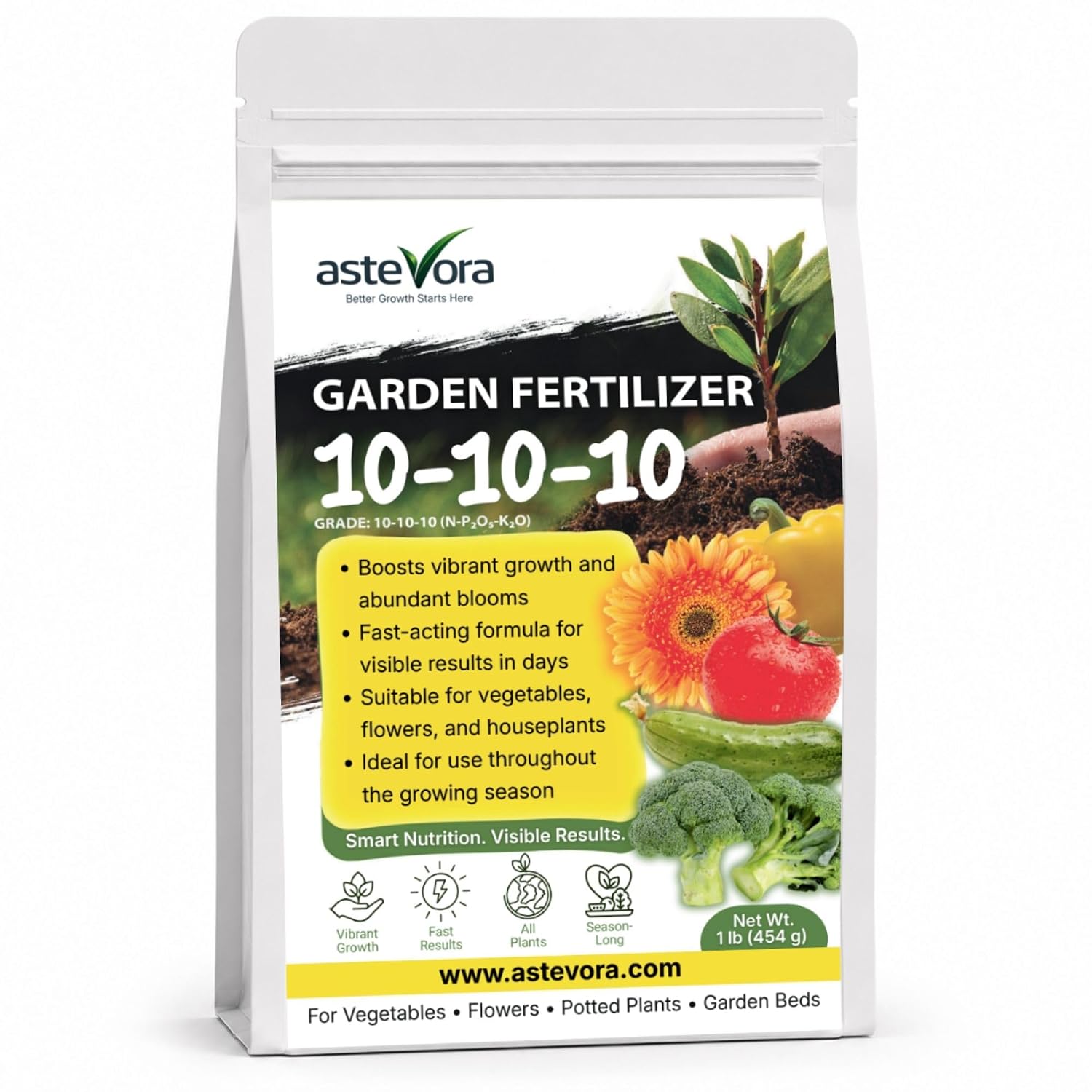
This GARDENWISE 10-10-10 granular fertilizer is an all-purpose, slow-release plant food that supplies equal parts nitrogen, phosphorus, and potassium for up to eight weeks. You apply the fine granules evenly around the root zone and water in; directions include specific rates for vegetable beds, lawns, flowers, shrubs, and trunk-diameter-based dosing for fruit trees. The balanced N-P-K and slow-release formulation support root development, steady leaf and shoot growth, and improved stress tolerance—useful for fig trees between spring feeding cycles and as a maintenance boost during the growing season. Practical benefits include predictable feeding intervals that cut down on frequent applications and clear dosing guidance for different plant types. Limitations are that the product is a general-purpose formula rather than a fig-specific blend, so if your soil test shows particular nutrient imbalances or micronutrient needs you may need a supplemental product. Also the pack is a small consumer size, so larger orchards will need multiple bags.
Best for: Buyers who want a straightforward, low-maintenance fertilizer to support fig tree growth without fuss and who prefer predictable feeding intervals and simple dosing instructions.
Less Ideal for: Growers managing nutrient-deficient or pH-sensitive soils, or those who need large-volume supplies for multiple mature trees should consider targeted or bulk alternatives.
- Balanced 10-10-10 N-P-K supports roots, foliage, and fruiting for a wide range of plants
- Slow-release granules provide up to eight weeks of continuous feeding, reducing application frequency
- Clear, plant-specific dosing guidelines including per-inch trunk recommendations for fruit trees
- Fine granule form spreads evenly for good soil contact and easy watering-in
- Not formulated with fig-specific micronutrients or pH adjustments that some fruit growers prefer
- Small 0.5 quart/16 ounce consumer size may be insufficient for larger fig trees or multiple trees
Verdict: A convenient, balanced slow-release granular fertilizer that makes routine feeding of fig trees simple and low-effort.
USEDGDIG 15-15-15 All-Purpose Granular Garden Fertilizer (1 lb)

| Item Form | Granules |
|---|---|
| Application Method | Spread evenly |
| Coverage | Full |
| Mixing Ratio | 15:15:15 |
This 15-15-15 granular fertilizer supplies equal parts nitrogen, phosphorus and potassium in a single easy-to-spread product intended for general garden feeding. It is typically broadcast over beds, worked lightly into the soil or applied around established plants to encourage leaf growth, root development and flowering or fruit set. The quick-release nitrogen component kick-starts visible growth while the formula also delivers ongoing nutrients to support steady vigor. The resealable 1 lb package and granular form make measuring and applying simple for small plots, containers and patch repairs. Limits to expect are modest package size and the product is a general-purpose formula rather than a tailored blend for specific crops or soil deficiencies, so soil testing and supplemental amendments may still be needed for long-term fertility planning. For gardeners aiming for a single, straightforward fertilizer to feed a wide range of plants, this one is practical and easy to use.
Best for: Gardeners looking for an affordable, no-fuss all-purpose fertilizer to feed mixed beds, containers and small vegetable plots who prioritize simplicity and immediate results.
Less Ideal for: Large-scale gardeners or those managing soil-specific nutrient issues who need bulk fertilizer or custom blends tailored to soil test results.
- Balanced N-P-K 15-15-15 suitable for many common garden plants
- Granular form is easy to spread and measure for small beds and containers
- Resealable 1 lb package is convenient for occasional applications
- Quick-release nitrogen gives visible growth response soon after application
- Small single-pound package may require frequent repurchasing for larger gardens
- General-purpose formula will not correct specific nutrient deficiencies without testing
Verdict: A straightforward, budget-friendly 15-15-15 granular fertilizer that delivers quick visible growth and works as a single go-to feed for mixed home gardens.
Pegmapri Organic Liquid Plant Food, 8.45 fl oz Concentrated

| Item Form | Liquid |
|---|---|
| Specific Uses For Product | Plant Growth, Root Development, Seed Development, Soil Conditioning |
| Application Method | Watering can, Drip irrigation, Soil drenching |
| Target Species | Houseplants |
| Liquid Volume | 8.45 fluid ounces |
This Pegmapri liquid plant food is a small, concentrated bottle designed to stretch into multiple gallons of ready-to-use nutrient solution for houseplants, herbs, vegetables, and flowers. You use it by diluting the concentrate in water for routine watering, soil drenching, drip irrigation, or hydroponic feedings. Notable features include an all-purpose organic nutrient blend, fast root uptake compared with granular slow-release feeds, and a low-residue formula meant to avoid clogging pumps and lines. In practice it provides quick, visible green-up and supports root and stem development when applied at regular intervals. The compact, leak-resistant bottle is convenient for storage and precise pouring. Limitations are that the product listing does not show an NPK breakdown or specific dosing chart on the product page, so users should follow included directions carefully or start at reduced strength to avoid overfeeding sensitive plants.
Best for: Buyers who prioritize a dependable, easy-to-use feed for routine indoor container gardening and want a concentrated organic option that works across watering and hydroponic systems.
Less Ideal for: Growers who require exact nutrient formulations for advanced fertilization schedules or commercial-scale nutrient management should consider products with full lab-verified analyses and detailed dosing charts.
- Concentrated formula that dilutes to feed multiple gallons, saving shelf space
- Organic nutrient blend suitable for indoor and outdoor container plants
- Water-soluble and low-residue so it works with watering cans, drip systems, and hydroponics
- Fast root uptake to encourage quicker green-up and root development
- No explicit NPK ratio or full ingredient breakdown provided in the product details
Verdict: A compact, concentrated organic liquid fertilizer that reliably feeds indoor container plants and hydroponic setups for steady growth and stronger roots.
Miracle-Gro Water Soluble All Purpose Plant Food, 3 lb

| Item Form | Powder |
|---|---|
| Application Method | Mix with water in a watering can |
| Fertilizer Analysis (N‑P‑K) | 24-8-16 |
| Unit Count | 48 Ounce |
| Coverage | Feeds approximately 1,200 sq. ft. |
Miracle‑Gro Water Soluble All Purpose Plant Food is a powdered NPK 24‑8‑16 formula that dissolves in water to give plants a quick nutrient boost. You mix measured scoops into a watering can and apply to the soil at the base of plants every 7–14 days for outdoor use or every 14 days for houseplants. Notable features include a high nitrogen content for leafy growth, compatibility with containers and in‑ground beds, and guidance for use with a Miracle‑Gro Garden Feeder for larger areas. In practical terms this is a fast‑acting feed that encourages bigger, greener foliage and works well in regular maintenance of perennials like hostas. Limitations are that it is a fast‑release fertilizer rather than a slow‑release option, so it requires regular reapplication and careful measuring to avoid overfeeding. Also, the 24‑8‑16 balance is geared toward vegetative growth, so it is not optimized if you want to prioritize flowering or bloom boosting.
Best for: Buyers who want a reliable, fast‑acting feed to maintain lush, leafy perennials and container plants and who value proven products with broad user endorsement.
Less Ideal for: Gardeners seeking a single, long‑lasting granular fertilizer or a bloom‑focused formula should consider alternative slow‑release or high‑phosphorus products.
- Water‑soluble powder mixes easily for quick uptake by roots
- High nitrogen formula promotes robust leafy growth ideal for shade plants
- Clear mixing and application instructions for both indoor and outdoor use
- Suitable for containers and in‑ground gardens and compatible with garden feeders
- Requires frequent applications so it is not a low‑maintenance, slow‑release option
- High nitrogen ratio is less suitable when the primary goal is more flowers than foliage
Verdict: A fast‑acting, water‑soluble fertilizer that reliably produces bigger, greener hosta leaves when used as directed.
Miracle-Gro Water Soluble All Purpose Plant Food, 1.5 lb

| Item Form | Powder |
|---|---|
| Application Method | Watering Can |
| Target Species | For all flowers, vegetables, trees, shrubs and houseplants |
| Mixing Ratio | 24-8-16 |
Miracle-Gro Water Soluble All Purpose Plant Food is a powdered, water-soluble fertilizer formulated to deliver fast nutrition to a broad mix of plants. You mix the powder into a watering can or a garden feeder and apply every 1 to 2 weeks depending on whether plants are indoors or out. The 24-8-16 NPK ratio supplies a strong nitrogen boost for leafy growth along with phosphorus and potassium to support flowering and fruit set. For pepper growers this means it can help produce vigorous plants and encourage fruit development when used at the recommended strengths. Notable features include clear mixing guidance for both indoor and outdoor use and compatibility with container and in-ground plantings. Practical benefits are quick uptake by roots and flexible application options. Important limitations are the high nitrogen proportion, which can favor foliage over fruit if overused, and the need to follow dilution instructions to avoid nutrient burn. This product is best used as a regular boost within a balanced feeding plan rather than the only fertility source for long-term soil health.
Best for: Home gardeners looking for an affordable, easy-to-use boost to support vigorous pepper plant growth and quick results in both containers and garden beds.
Less Ideal for: Growers who want a low-nitrogen or slow-release fertility plan for long-term soil building should consider specialized or organic alternatives.
- Water-soluble powder that feeds plants quickly through the roots
- Clear mixing instructions for indoor and outdoor applications
- Broadly labeled for use on flowers, vegetables, trees, shrubs and houseplants
- Feeds approximately 600 sq. ft. from the 1.5 lb container
- High nitrogen ratio may encourage foliage more than fruit if used too frequently
Verdict: A budget-friendly, fast-acting soluble fertilizer that gives bell pepper plants a regular nitrogen-rich boost to promote vigorous growth and quicker results.
Choosing the Right All Round Garden Fertilizer: Key Factors to Consider
Nutrient Ratio and Balance
A balanced fertilizer supplies nitrogen, phosphorus, and potassium in ratios suited to mixed plantings. Nitrogen promotes leafy growth, phosphorus supports roots and flowers, and potassium helps overall plant health. Choosing a formula with moderate nitrogen helps avoid plants becoming too leafy at the expense of blooms or fruit.
For mixed beds and vegetable patches, look for labels that indicate balanced or slightly bloom-oriented ratios rather than very high nitrogen blends. The actual N-P-K numbers tell you what to expect in the garden, so read them and match to the dominant planting types you have.
Release Type and Longevity
Fertilizers come as quick-release soluble types and slow-release or controlled-release granules. Soluble feeds give a fast nutrient hit, useful for quick corrections or boosting a flowering flush. Slow-release products feed over weeks to months, reducing the frequency of applications and lowering burn risk when used correctly.
Your gardening schedule matters here. If you prefer fewer feedings and more predictable steady growth, a slow-release formula is helpful. If you want rapid response for container plants or a late bloom push, soluble feeds let you target timing more precisely.
Application Method and Labor
Application ease affects how consistently you will feed plants. Granular spreads are simple for in-ground beds and lawns but require dissolving or topdressing for containers. Water-soluble concentrates and powders mix into a watering can or hose-end applicator for quick coverage but need accurate measuring to avoid overfeeding.
Consider the tools you already use. If you maintain many containers, a soluble or liquid feed that integrates with watering is convenient. For beds and borders, a broadcastable granule or slow-release pellet can cut down repeated handling.
Container and In-Ground Compatibility
Containers and in-ground plantings have different nutrient dynamics. Containers have limited soil volume and higher risk of salt buildup, so milder feeds or slow-release capsules often work better there. In-ground beds can tolerate stronger feeding schedules and benefit from incorporated granular products.
Check product directions for container use and whether dilution rates differ. A product labeled safe for both contexts reduces the need to buy separate fertilizers for pots and garden beds.
Solubility and Residue
How a fertilizer dissolves affects residue, watering behavior, and salt accumulation. Highly soluble salts deliver nutrients quickly but can leave a crust or increase electrical conductivity in potting mixes. Low-residue controlled-release options minimize crusting and reduce the risk of fertilizer burn.
If you routinely repot or refresh soil, soluble feeds are workable. For long-term container crops or established beds where you want lower maintenance, choose formulas with minimal surface residue and stable release profiles.
Environmental Impact and Runoff Risk
All gardeners should consider how a fertilizer behaves during heavy rain or irrigation. Fast-moving soluble nutrients are more likely to wash away and contribute to runoff, whereas stabilized or organic-based slow-release products tend to remain available in the root zone longer.
Select products with lower runoff potential if you garden near water features or on sloped sites. Also look for clear application guidance that helps reduce over-application, which is the biggest driver of environmental harm from garden fertilizers.
When to Use All Round Fertilizer in the Garden
All round garden fertilizer fits into regular maintenance schedules where plant types vary across a yard. Use it at planting to give young transplants a steady start, and apply during the primary growing season to sustain mixed beds and containers.
Avoid heavy feeding during dormancy or peak summer stress. Instead, time applications for active growth phases and after light soil cultivation to maximize root uptake.
- Apply at planting for an even baseline nutrient level
- Feed at the start of the growing season and mid-season for most temperate gardens
- Skip or reduce feeding during drought or heat stress
Using All Round Fertilizer on Vegetables and Edibles
Vegetables often respond to balanced feeding but vary by crop. Leafy greens need more nitrogen, while fruiting crops benefit from steady phosphorus and potassium once fruit set begins. An all-purpose formula simplifies maintenance when you grow many types in the same plot.
When using the same product across edibles, follow lower recommended rates for young seedlings and containers. Adjust feeding rhythm by observing plant vigor and leaf color rather than strictly following a calendar.
- Start with half-strength feed for seedlings and transplants
- Increase to regular strength as plants establish
- Reduce nitrogen-heavy applications for fruiting vegetables to encourage blooms and fruit set
Tips for Applying Fertilizer to Potted Plants
Potted plants need gentler feeding due to confined soil volume. Use diluted soluble feeds more frequently or choose a slow-release capsule designed for containers. Always water thoroughly before and after applying granular fertilizer to avoid localized root burn.
Flush containers periodically to prevent salt buildup if you use soluble concentrates. Repotting annuals and perennials every couple of years also resets soil nutrient balance and reduces dependency on heavy feeding.
- Dilute liquid feed according to directions for containers
- Use slow-release granules to reduce application frequency
- Flush pots with fresh water occasionally when using soluble fertilizers
Managing Fertilizer During Rain and Irrigation
Timing applications to avoid imminent heavy rain lowers runoff risk and ensures nutrients stay in the root zone. For soluble feeds, apply when you can water in gently so nutrients penetrate the soil rather than washing away.
If a heavy rain is likely, postpone feeding or choose a slow-release product that is less susceptible to immediate loss. Proper irrigation management complements fertilizer choice and reduces nutrient waste.
- Check weather before applying water-soluble fertilizers
- Water in granules gently to move nutrients into the root zone
- Favor slow-release feeds on sloped sites or near water features
Organic Versus Synthetic All Round Fertilizers
Organic fertilizers release nutrients more slowly and often improve soil biology over time. They can be gentler in containers and reduce burn risk. Synthetic options provide predictable nutrient analysis and faster correction of deficiencies.
Deciding between organic and synthetic comes down to desired speed of response, soil goals, and management preferences. Both types can serve as effective all-purpose feeds if applied correctly.
- Choose organic for long-term soil building and slower release
- Choose synthetic for quick corrections and precise nutrient delivery
- Combine approaches cautiously to avoid overfeeding
How We Chose the Best All Round Garden Fertilizer
We prioritized fertilizers that provide balanced nutrition suitable for a mix of ornamentals, edibles, and lawn patches common in home gardens. Evaluation focused on nutrient formulation and ratios that support steady growth without forcing excessive leafy growth at the expense of flowers or fruit. We examined application formats and how they affect timing and labor, favoring options that allow predictable schedule control for backyard gardeners. Other assessment criteria included release type and longevity, because slow-release versus soluble products change how often you need to feed; compatibility with container and in-ground plantings, since many gardens combine both; and environmental behavior, emphasizing products with lower burn risk and minimal runoff potential. Packaging and measured application instructions were also considered for ease of measuring and avoiding over-application. We excluded specialty single-crop or high-analysis formulas designed only for lawns, tomatoes, or acid-loving plants. The list focuses on truly general-purpose fertilizers that will perform across a typical mixed garden. Products that lacked clear nutrient information or usable instructions were omitted from consideration.
FAQ
How often should I apply an all round garden fertilizer?
It depends on the product type. Slow-release granules may only need application every 8 to 12 weeks, while soluble feeds are often used every 2 to 4 weeks. Adjust frequency based on plant response and package directions.
Can I use one all-purpose fertilizer for both containers and beds?
Often you can, but follow container-specific dilution rates if provided. Containers are more sensitive to salts, so use lower concentrations or slow-release options for potted plants.
Will an all round fertilizer make my plants grow too leafy?
High nitrogen blends can encourage leafy growth. Using a balanced formula or one slightly higher in phosphorus and potassium during flowering and fruiting reduces the risk of excessive foliage at the expense of blooms.
Is it safe to apply fertilizer before heavy rain?
Applying before heavy rain increases runoff risk. Delay feeding if heavy storms are expected, or use slow-release formulations that are less likely to wash away.
How do I avoid fertilizer burn in my garden?
Use recommended application rates and water in granular feeds to move nutrients away from the root crown. For sensitive containers, dilute liquid feeds and avoid applying to drought-stressed plants.
Can I combine organic and synthetic fertilizers?
Combining is possible but requires care. Organic products release nutrients slowly, while synthetics act faster. Stagger applications and monitor plant vigor to prevent overfeeding.
Final Verdict
Select an all round garden fertilizer based on the mix of plants you grow and how much time you want to spend feeding. Prioritize nutrient balance first, then match release type to your schedule and container needs. Consider environmental risk on sloped or wet sites and pick products with clear instructions to avoid over-application. A measured approach focusing on balanced ratios, appropriate release duration, and sensible application methods will keep a mixed garden healthy without excess maintenance or runoff risk.
