

Note: This article contains affiliate links. If you click on these links and make a purchase, I may earn a small commission at no extra cost to you. This helps support my research and content. Read my full affiliate disclosure here.
Pavement ants behave differently than kitchen-invading species: they forage in trails across sidewalks, driveways, and foundation cracks and often prefer dry, carbohydrate-rich foods. Choosing the right ant bait for pavement ants matters because bait attractiveness, formulation, and how you deploy it determine whether foraging workers will carry the poison back to the nest. This guide looks at seven shortlisted ant baits chosen for use against pavement ants. We focus on how attractive the baits are, how durable they are in outdoor or semi-exposed settings, and practical placement strategies so you can expect real reductions in colony activity. Read on for the evaluation criteria and guidance to help you pick the best fit for your situation.
Top Picks at a Glance
| Best Overall The best all-around choice for most situations | Maxforce FC Ant Bait Stations (24 Count) by Envu |  |
| Best Quality Built to a higher standard if you want something more solid | Envu Maxforce Quantum Ant Bait Gel, 120 g Tube |  |
| Best Value The sweet spot between price and what you get | Raid Max Liquid Ant Killer Baits, 12-Count |  |
| Best Budget The cheapest option that still gets the job done reliably | Combat Max Ant Killing Bait Stations, 6 Count |  |
| Highest Rated A top-rated pick with lots of positive feedback | TERRO Ultra Complete Kill Ant Baits, 6 Dual-Formula Bait Stations |  |
| Most Popular A crowd favorite that many people choose with confidence | TERRO Liquid Ant Killer Bait Stations, 12-Pack (T300B) |  |
| Best Seller A high-volume bestseller chosen again and again | TERRO Multi-Surface Liquid Ant Baits, 4-Pack |  |
Maxforce FC Ant Bait Stations (24 Count) by Envu
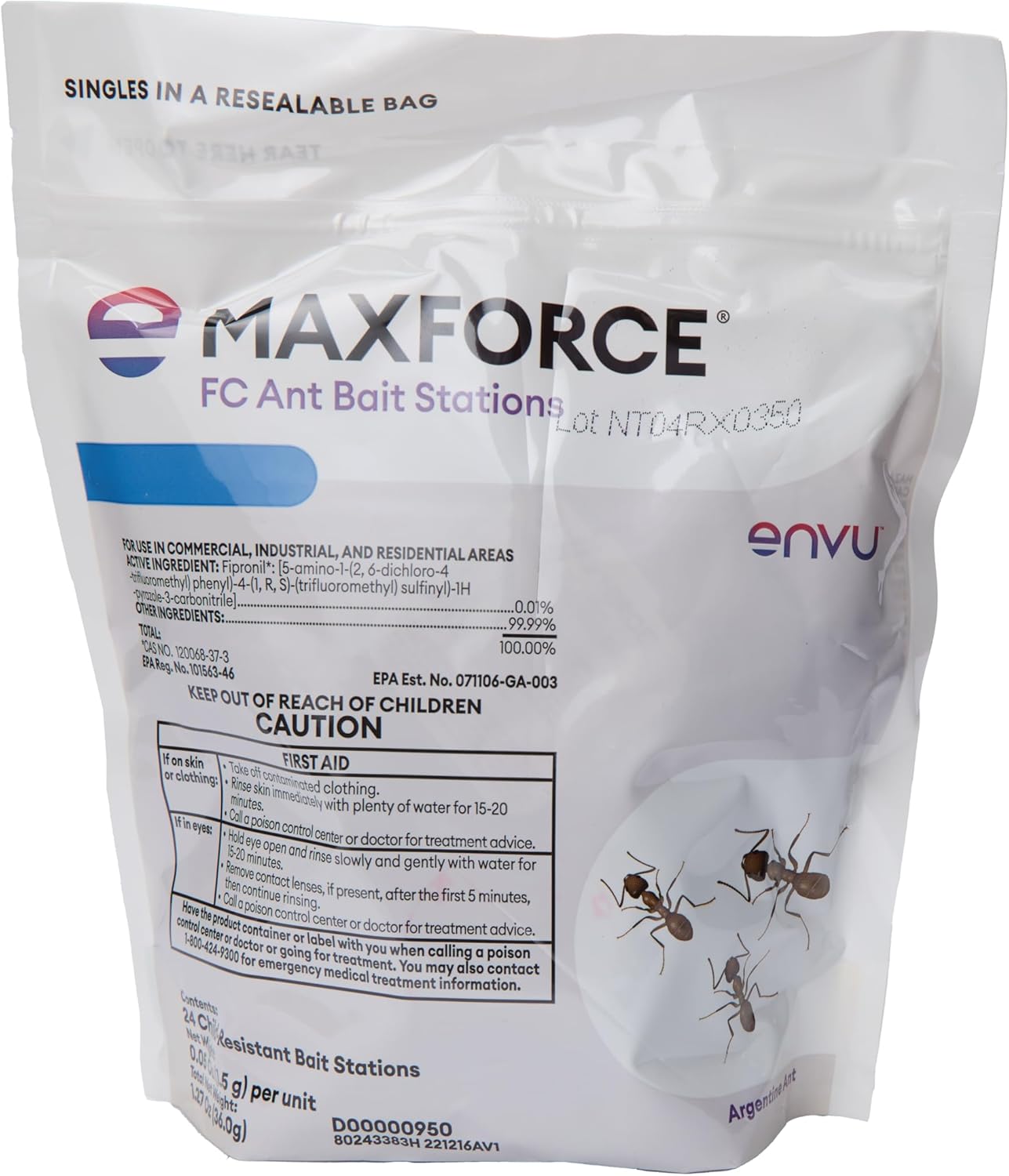
| Unit Count | 24 Count |
|---|---|
| Target Species | Insects |
| Active Ingredient | 0.01% Fipronil |
| Number of Pieces | 24 |
Maxforce FC Ant Bait Stations are ready-to-use, child-resistant stations prefilled with a slow-acting fipronil bait designed to be placed along ant trails, cracks, and entry points. In practice you set the small clear stations where you see worker ants; they feed on the bait, return to the nest, and transfer the active ingredient to other colony members which can lead to colony elimination rather than just killing foragers. The stations are odorless and contained, so they are easy to use in kitchens and living areas without spills or strong smells, and the clear housing makes it simple to monitor activity. The formulation is labeled effective against common household species including pharaoh ants, making this pack useful for treating multiple rooms or ongoing activity. Important limitations are that results are not immediate since the bait relies on worker transfer and that success depends on correct placement and continued monitoring; very large or heavily infested nests may require professional follow up.
Best for: Buyers who prioritize dependable colony-level control and want a low-maintenance, contained option for treating pharaoh ants and other household species inside and around the home.
Less Ideal for: People needing immediate knockdown of visible ants or those unwilling to place multiple stations and monitor activity may prefer contact sprays or professional services instead.
- Prefilled, child-resistant stations for safe indoor placement and easy monitoring
- Slow-acting fipronil formula designed to be carried back to the nest for colony-level control
- Odorless, contained design prevents spills and makes indoor use practical
- 24 stations provide enough placements for multiple rooms or ongoing treatments
- Action is slow because control depends on worker ants taking bait back to the colony
- Effectiveness depends on correct placement and ant feeding preferences which may require some trial and error
Verdict: Use these prefilled, child-resistant bait stations when you want a practical, colony-focused solution for persistent pharaoh ant problems.
Envu Maxforce Quantum Ant Bait Gel, 120 g Tube

| Item Form | Gel |
|---|---|
| Target Species | Insects |
| Liquid Volume | 120 |
| Specification Met | EPA |
Maxforce Quantum is a hygroscopic ant bait gel meant to be applied along active trails, in cracks, and in crevices where pavement ants and other nuisance species forage. The gel’s moisture-retaining formula keeps it attractive longer than many baits, which helps foraging workers carry the product back to the nest and spread it through the colony. It is clear and low-odor, so placement near baseboards, doorways, or entry points is discreet. Use is straightforward: apply small dabs along trails or inside voids and reapply as label directions indicate. Practical benefits include flexibility for indoor or exterior use and targeted colony control rather than surface contact kill. Important limitations are that it targets sugar- or protein-feeding ants depending on formulation suitability and results can take days to weeks because the method relies on bait transfer, not immediate knockdown. For heavy infestations or situations requiring immediate visible knockdown, combine with sanitation and perimeter exclusion measures or professional service.
Best for: Buyers who want a performance-focused, bait-first approach to reduce pavement ant colonies and are willing to use targeted placements and follow label directions for best results.
Less Ideal for: People needing immediate visible knockdown or those unwilling to monitor and reapply bait; those preferring broad-spectrum surface sprays instead of colony-targeted control.
- Hygroscopic formula retains moisture to stay attractive longer to foraging ants
- Designed for colony-level control by encouraging bait transport and trophallaxis
- Clear, low-odor gel allows discreet placement in sensitive indoor areas
- Suitable for both indoor and outdoor placement along active trails
- Not an instant kill method so reductions may take days to weeks
- Effectiveness depends on ant species feeding preferences and proper placement
Verdict: Choose this gel if you want a discreet, colony-targeted bait that stays attractive longer to reduce pavement ant populations rather than relying on quick-contact sprays.
Raid Max Liquid Ant Killer Baits, 12-Count
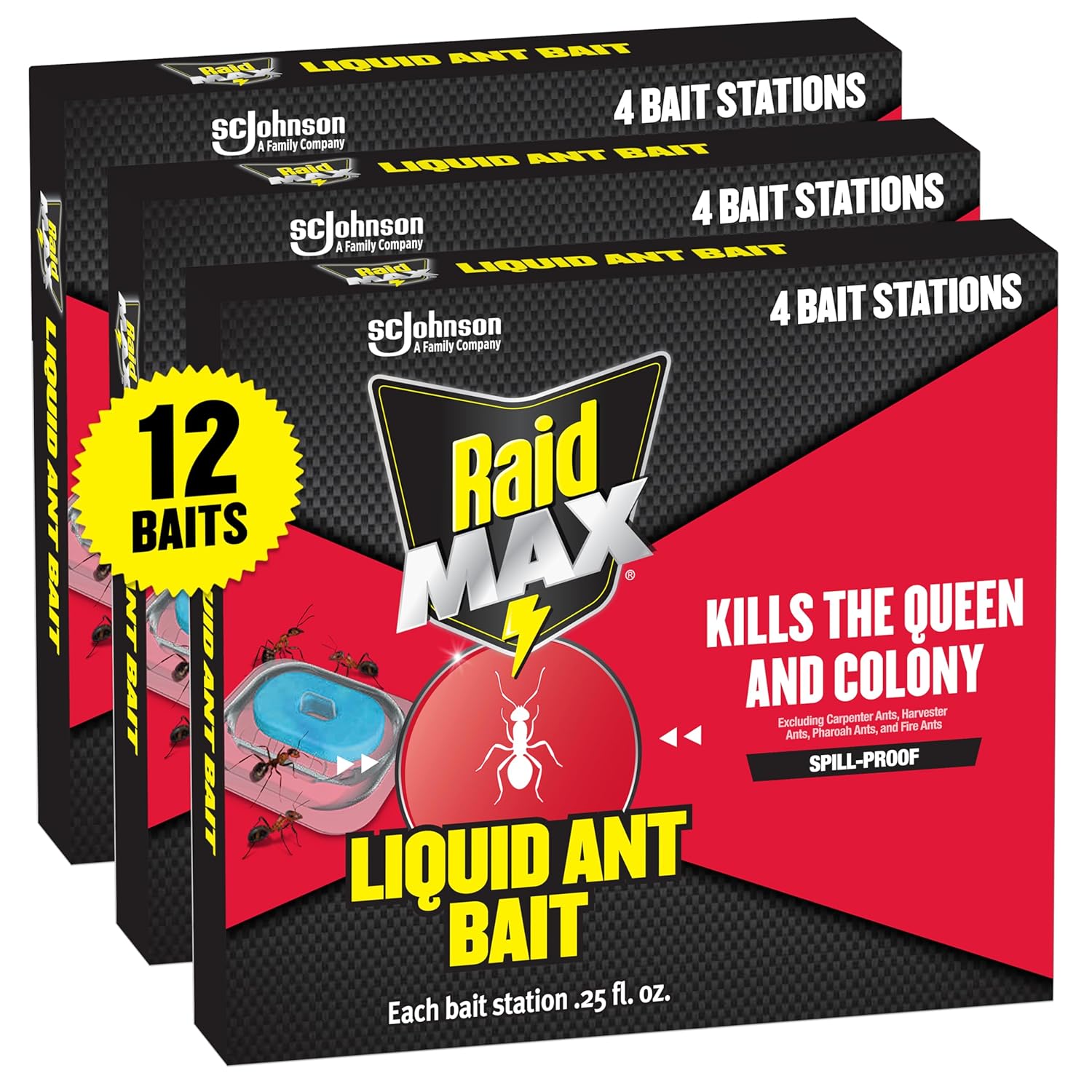
| Unit Count | 12 Count |
|---|---|
| Item Form | Liquid Bait |
| Target Species | Insects |
| Active Ingredients | Spinosad |
Raid Max Liquid Ant Killer comes as ready-to-use, spill‑proof bait stations that are placed where you see ants to be carried back to the nest and shared with the colony. Typical use is simple: peel the activation film, set the station along baseboards, near trash, or at entry points, and replace multiple stations for larger infestations. The product targets many common ant species and uses spinosad as the active ingredient, which helps kill workers and the queen when ants feed and share the liquid. Practical benefits include easy placement, no mixing or spraying, and suitability for both indoor and outdoor spots where you want discrete control. Limitations: it does not work on fire ants, carpenter ants, harvester ants, or pharaoh ants, and effectiveness depends on ants finding and consuming the bait so very dry, hot, or heavily baited areas may reduce uptake. Also stations should be kept away from children and pets and monitored until activity stops.
Best for: Buyers who want a low‑effort, discrete ant control method to treat visible ant trails and likely colony locations around a home and yard. Ideal for people who prefer bait stations over sprays and who will monitor and replace stations as needed.
Less Ideal for: Those dealing primarily with fire ants, carpenter ants, or other excluded species or users who need immediate knockdown of large outdoor mounds should look for alternatives.
- Ready-to-use prefilled stations require no mixing or setup
- Works indoors and outdoors for flexible placement
- Spinosad-based liquid is carried back to colony to target queen and larvae
- Comes in a 12-count pack for coverage of multiple hotspots
- Not effective against fire ants, carpenter ants, harvester ants, or pharaoh ants
- Performance depends on ants choosing the bait so very large or competing food sources can slow results
Verdict: A convenient, ready-to-use liquid bait pack that kills common household ant colonies by being carried back to the nest, making it a practical choice for routine outdoor and indoor ant control.
Combat Max Ant Killing Bait Stations, 6 Count

| Active ingredient | Fipronil 0.01% |
|---|---|
| Units included | 6 bait stations |
| Intended use | Indoor and outdoor |
| Protection duration | Up to 3 months per station |
Combat Max Ant Killing Bait Stations are compact, child-resistant plastic stations prefilled with a Fipronil-based bait intended for indoor and outdoor use. You place the stations along ant trails or near entry points and foraging ants enter, feed, and carry the bait back to the nest where it works to eliminate the queen and other colony members. The package includes six stations, each designed to provide up to three months of protection, and the odorless, fuss-free formula means they can sit in kitchens, bathrooms, and living areas without noticeable fumes. Practical benefits include no-mess setup, a discreet low-profile housing that fits under sinks and behind appliances, and a bait attractive to multiple common ant species. Limitations are that results depend on ants finding and accepting the bait and that replacement every three months is recommended to maintain effectiveness. As with any insecticide, keep stations out of reach of children and pets and follow label directions for safe placement and disposal.
Best for: Buyers who want a practical, low-effort indoor ant solution they can place and forget for weeks at a time; good for homeowners prioritizing convenience and discreet placement.
Less Ideal for: People who need immediate knockdown of visible ants by contact spray or who prefer non-chemical control methods; not suitable where children or pets may repeatedly access bait despite child-resistant design.
- Ready-to-use, no activation or messy application required
- Child-resistant, low-profile plastic housing suitable for tight spaces
- Uses Fipronil for fast-acting control that targets the colony via forager transfer
- Odorless and vapor-free formula safe for use in living areas when used as directed
- Effectiveness depends on ants locating and accepting the bait so placement matters
- Requires replacing stations approximately every three months to maintain control
Verdict: A convenient, ready-to-use bait station pack that reliably targets entire ant colonies with minimal setup for buyers who prioritize low-effort indoor control.
TERRO Ultra Complete Kill Ant Baits, 6 Dual-Formula Bait Stations

| Unit Count | 6 Count |
|---|---|
| Included Components | 4 Bait Stations |
| Target Species | Ant |
TERRO Ultra Complete Kill Ant Baits use a dual-formula design—liquid sugar in the top chamber and a protein paste in the bottom—to appeal to ants in different feeding cycles and life stages. You simply open a station and place it near ant trails, baseboards, counters, or other indoor hotspots; worker ants feed on the baits and carry the active ingredient back to the nest, which helps eliminate the queen and colony over time. The product is sold as a 6-count pack of ready-to-use stations and is intended for common indoor species such as pavement, odorous house, and little black ants. In practice you may see increased ant activity initially as more workers are drawn to the bait, but reductions are typically noticeable within days and full control can take a few weeks. The stations are convenient for indoor placement and can remain effective for weeks while visited, but they are not labeled for fire ants, pharaoh ants, carpenter ants, or harvester ants and will not address outdoor mound-only infestations.
Best for: Buyers who prioritize a dependable, low-effort indoor solution for common household ant sightings and want a product that targets the colony rather than only the visible workers.
Less Ideal for: Those dealing primarily with outdoor mound infestations or with specialist ant species that the formula does not cover should consider targeted outdoor treatments or professional pest control.
- Dual bait formula (liquid sugar plus protein paste) attracts ants with different dietary needs
- Ready-to-use stations require no mixing or setup for quick placement
- Designed to be carried back to the nest to reach the queen and reduce the entire colony
- Compact stations suitable for indoor use along baseboards, counters, and corners
- Not effective against fire ants, pharaoh ants, carpenter ants, or harvester ants
Verdict: Use TERRO Ultra when you want a reliable, ready-to-use indoor bait that targets the whole ant colony by offering both sugar and protein attractants.
TERRO Liquid Ant Killer Bait Stations, 12-Pack (T300B)

| Unit Count | 12 Count |
|---|---|
| Item Form | Liquid |
| Target Species | Insects |
| Active Ingredients | Sodium Tetraborate Decahydrate (Borax), 5.40% |
Terro Liquid Ant Killer bait stations are prefilled, single-use traps designed for indoor control of common sugar-loving ants. You place the small stations along baseboards, in corners, under appliances, or on countertops where you see ant activity. Worker ants are drawn to the sweet liquid, feed on it, and take it back to the nest so the borax-based active ingredient can eliminate the colony over days to weeks. The product is easy to use with no mixing or setup and the 12-pack gives coverage for several rooms. Because the bait is contained inside a low-profile plastic station, it reduces incidental contact risk compared with loose sprays or powders and lasts for weeks while ants continue to visit. Limitations are that the formula targets sugar-preferring species so very protein- or grease-attracted ants may ignore it, and control can take 2 to 4 weeks for larger infestations. Also stations should be placed away from pets and children despite the contained design since the bait contains borax.
Best for: Homeowners who prioritize an easy, low-hassle indoor solution and want a bait that works at the colony level with minimal hands-on pest handling.
Less Ideal for: People who need immediate knockdown of ants or who have pets or children that frequently access treated areas and cannot reliably keep them away from placed stations.
- Ready-to-use stations require no mixing or setup
- Designed to be carried back to the nest for colony-level control
- Low-profile enclosed bait reduces messy exposure compared with loose liquids or sprays
- 12 stations provide coverage for multiple rooms or hotspots
- Formulation is sugar-based so less effective on ants that prefer protein or grease
- Control can take 2–4 weeks for large or established colonies
Verdict: A simple, low-contact indoor bait system that reliably reduces sugar-loving ant infestations by getting worker ants to carry borax back to the colony.
TERRO Multi-Surface Liquid Ant Baits, 4-Pack

| Included Components | 4 ant bait stations plus adhesive strips |
|---|---|
| Target Species | Ant |
| Material Type | Plastic |
| Active Ingredient | Sodium Tetraborate Decahydrate (Borax) 5.40% |
TERRO Multi-Surface Liquid Ant Baits are pre-filled stations designed for indoor control of common household ants, including pavement ants. The small plastic stations contain a sweet liquid bait with borax that worker ants consume and carry back to the nest, which helps reduce the entire colony over a few weeks. They are simple to use: remove the tab, lay them flat or stick them to walls and baseboards with the included adhesive strips, and place several along ant trails or entry points. Practical benefits include discreet placement out of sight, no mixing or setup, and a slow-acting active ingredient that allows bait to spread through the colony. Expect visible reductions within days and more complete control in two to four weeks. Limitations are that bait stations need periodic replacement when depleted and results depend on correct placement and the ants accepting the bait; they are not a quick-spray knockdown for large outdoor mounds. These are best used as part of a targeted indoor baiting plan rather than the sole measure for heavy outdoor nests.
Best for: Homeowners who prefer a low-effort, minimal-contact approach to stopping pavement ants indoors and who want a product that works through colony-level control rather than instant surface kills.
Less Ideal for: People needing a fast-acting surface spray for visible heavy outdoor mounds or those who want a single-visit professional-style solution for large infestations.
- Ready-to-use prefilled stations require no mixing or measuring
- Multi-surface design and adhesive strips allow discreet placement on walls and under cabinets
- Borax-based slow-acting bait spreads through the colony for broader control
- Small, low-profile plastic stations blend into indoor spaces
- Not designed for immediate, visible knockdown of large outdoor nests
- Requires multiple placements and monitoring until the bait is depleted
Verdict: A simple, ready-to-use indoor baiting option that quietly reduces pavement ant colonies by letting worker ants carry borax-laced bait back to the nest.
Choosing the Right Ant Bait for Pavement Ants: Key Factors to Consider
Bait Formulation and Food Preference
Pavement ants often prefer sweet or carbohydrate sources, but preferences can shift with season and local conditions. Choosing a bait formulation that matches the colony's current feeding drive improves uptake and increases the chance that foragers will carry poison back to nest mates.
Granules, gels, and liquid baits behave differently in outdoor spots. Gels can be easy to place on hard surfaces but may dry out; granules stay put but might be ignored if not attractive; liquids can be highly attractive but are harder to contain. Consider which formulation will remain palatable long enough for transfer in your typical weather and placement locations.
Active Ingredient Mode of Action
Ant baits use active ingredients that act immediately on contact or allow delayed toxicity after ingestion. For pavement ant control, delayed-action ingredients that permit workers to return to the nest before dying enable trophallaxis and broader colony impact.
Understanding the active ingredient also helps with timing and reapplication. Some modes of action require only a single well-accepted baiting event, while others may need continuous availability. Check label directions for how the toxin is meant to work and plan placements accordingly.
Placement Durability and Weather Resistance
Pavement ant trails cross exposed hardscape where sun, rain, and foot traffic can degrade bait quickly. Durability is not just product longevity but how well the bait stays accessible to ants under real conditions.
Look for bait formats or stations that limit exposure to direct sun and water or that adhere to cracks and crevices. If you must place loose bait on a hot sidewalk, expect faster drying and plan to check and refresh more often. Durability influences the frequency of maintenance you will need.
Dispensing Method and Ease of Placement
How a bait is delivered matters as much as its chemistry. Station-based systems and contained gel syringes reduce spill risk and make targeted placement along trails simple. Loose baits require more care to avoid scattering, especially in windy or busy areas.
Ease of placement affects how likely you are to follow label directions precisely. If a delivery method is awkward, it increases the chance of under- or over-application, which can reduce effectiveness and create unnecessary exposure to non-targets.
Non-Target Safety and Child or Pet Considerations
Many gardeners need to protect children, pets, and beneficial insects while managing pavement ants. Some bait stations and paste formats reduce accidental contact and ingestion, while loose baits can be accessible to curious animals.
Choose products with lower spill risk and clear label guidance about placement away from areas used by children and pets. Consider physical barriers or station mounts to limit access when treating high-traffic zones near patios or play areas.
Monitoring and Follow-Up Requirements
Effective pavement ant control usually requires monitoring after initial placement to see whether foragers continue to accept the bait. Some baits need only a few days of availability, while others are most effective if left in place until activity drops significantly.
Plan a follow-up schedule to check acceptance, refresh bait if weather degrades it, and remove bait once activity is minimal. Regular monitoring prevents wasted product and helps identify whether the infestation is declining or needs additional measures.
How Pavement Ant Behavior Affects Baiting Strategy
Pavement ants establish numerous small nests and forage along consistent trails, so successful baiting targets those trails rather than a single entry point. Workers scout widely and recruit nest mates to reliable food sources, which means a well-placed, attractive bait can be far more effective than scattering product randomly.
Because colonies are often fragmented in urban settings, expect to treat multiple trails and near-foundation gaps. Place bait where ants are actively foraging rather than where you guess they might be. Observing peak foraging times, typically during cooler morning or evening hours, helps increase uptake.
- Focus placement along visible ant trails, cracks, and foundation edges.
- Observe foraging times for better initial acceptance.
- Treat multiple nearby trails to reach different colony fragments.
Practical Placement Tips for Outdoor Hardscape
Use contained stations or place small amounts of bait inside protected crevices to reduce drying and accidental loss. Burying a bait container slightly or tucking it under an overhang increases longevity in exposed sites.
Avoid placing bait directly in the flow of foot traffic or areas prone to watering. If you must put bait on a flat surface, use a dot of bait in a shallow depression to help it stay put and be less visible to non-targets.
- Tuck stations into cracks and behind edging to shield from sun and rain.
- Place bait near observed recruitment hubs rather than random spots.
- Check bait daily for the first several days, then every few days after.
When to Expect Results and How to Monitor Progress
Ant activity typically declines within days to weeks depending on colony size and how many nests are connected. Because nests may be multiple and distributed, full control can take longer and often requires patience and repeated monitoring.
Look for reduced traffic on treated trails and fewer new foraging lines. If activity persists unchanged after a reasonable period, re-evaluate placement, bait palatability, and whether different trails or additional stations are needed.
- Check for diminished ant numbers on treated trails daily at first.
- Replace degraded bait promptly to maintain attractiveness.
- If no reduction after two weeks, shift placement or consider additional stations.
Combining Sanitation and Exclusion with Baiting
Baiting is most effective when combined with basic sanitation and exclusion measures. Reducing available food residues and sealing obvious entry points lowers competing food choices and encourages ants to accept the bait.
Seal cracks and gaps where possible and remove sticky residues or fallen fruit near foundations. These steps do not replace baiting but complement it and reduce re-infestation pressure from neighboring colonies.
- Keep outdoor eating areas clean and free of spills.
- Seal gaps in mortar, pavement edges, and foundation seams where ants nest.
- Trim vegetation that contacts hard surfaces to reduce bridge paths for ants.
Safety Precautions and Minimizing Non-target Exposure
Always follow label directions for placement and disposal. Use tamper-resistant stations in areas frequented by children and pets, and avoid placing loose granules where animals can access them.
Store leftover bait securely and dispose of spent containers according to instructions. When using baits near pollinator-rich plantings, place stations away from flowering plants to reduce accidental attraction.
- Prefer contained delivery formats in high-traffic yards.
- Keep records of placement locations to remove baits when activity stops.
- Wear gloves when handling bait and wash hands afterward.
How We Chose the Best Ant Bait for Pavement Ants
We shortlisted ant baits based on criteria that reflect pavement ant biology and real outdoor use. Our evaluation prioritized bait attractiveness to pavement ants across common food preferences, since poor acceptance often prevents colony-level control. We assessed bait persistence and delivery format to see how well the product stays effective in exposed spots like sidewalk edges and foundation gaps. Palatability over time was considered, because some formulations harden or dry out and lose uptake before transfer reaches the nest. We checked active ingredient modes of action to ensure delayed toxicity suitable for sharing among workers, and we evaluated ease and safety of placement, including low-spill designs and recommendations for placement near trails. We excluded products designed only for indoor use or those lacking clear label instructions for outdoor or perimeter placement. We also filtered out baits that rely on immediate-contact toxins rather than transfer poisons, because pavement ant control depends on forager-mediated bait transfer. The final list reflects these practical filters and real-world gardener priorities.
FAQ
How long should I leave ant bait out for pavement ants?
Leave bait in place until ant activity around the station or bait drops significantly, often several days to a few weeks. Replace or refresh bait if it becomes dried, contaminated, or washed away.
Can I use indoor ant bait outdoors against pavement ants?
Many indoor-only formulations are not weather resistant and may degrade quickly when used outside. Choose products labeled for outdoor or perimeter use and follow label guidance for placement in exposed sites.
Will baiting one trail control all nearby pavement ant nests?
Not always. Pavement ant colonies can be fragmented across multiple nearby nests, so treating several active trails and likely nesting areas is often necessary to achieve broad control.
Are bait stations necessary or can I scatter granules?
Scattering granules can work in sheltered spots, but stations reduce spill risk, protect bait from weather, and limit access by pets and wildlife. Stations often lead to more consistent uptake in busy yards.
What should I do if bait stops attracting ants after a few days?
If acceptance drops quickly, move the bait to a different spot along the trail, replace degraded product, or try a different formulation that better matches the ants' current food preference.
Will baiting harm beneficial insects in my yard?
Most contained ant baits minimize exposure to pollinators and non-target insects when used as directed. Avoid placing bait directly on flowering plants and use tamper-resistant stations near pollinator areas.
Final Verdict
When targeting pavement ants, prioritize bait attractiveness, a delivery format that holds up outdoors, and placement along active trails. Expect to monitor and refresh bait as weather and activity levels change. Combining baiting with sanitation and exclusion increases the chance of meaningful reduction. Choose the bait format and placement strategy that matches your site conditions and the level of maintenance you can commit to. With patient monitoring and proper placement, you can significantly reduce pavement ant activity while minimizing non-target exposure.
