

Note: This article contains affiliate links. If you click on these links and make a purchase, I may earn a small commission at no extra cost to you. This helps support my research and content. Read my full affiliate disclosure here.
Ants in garden beds, patios, or inside a shed can quickly become an annoyance and a threat to young plants or stored seeds. Choosing the right ant bait matters because formulation, bait presentation, and placement determine whether you reduce foraging workers only or actually collapse nearby colonies. This guide covers a curated shortlist of top ant bait options designed for common garden and outdoor situations. We evaluated each option for how well it suppresses ants, how easy it is to use without creating additional mess, and how safely it can be placed around people, pets, and plants. Read on to see the strengths and intended uses of the best bait types for garden and patio ant control.
Top Picks at a Glance
| Best Overall The best all-around choice for most situations | Syngenta Advion Ant Gel Bait (4 tubes, 30 g each) |  |
| Best Quality Built to a higher standard if you want something more solid | Syngenta Advion Ant Gel Bait, 4 x 30 g Tubes with Plungers and Tips |  |
| Best Value The sweet spot between price and what you get | Advion Ant Gel Station Insecticide (3 Stations) |  |
| Best Budget The cheapest option that still gets the job done reliably | Raid MAX Liquid Ant Killer Baits, 8-Count |  |
| Highest Rated A top-rated pick with lots of positive feedback | ROUTADE Slow-Acting Ant Gel Bait Stations, 48-Pack |  |
| Most Popular A crowd favorite that many people choose with confidence | TERRO Liquid Ant Bait Stations, 18-Count (3 Pack) |  |
| Best Seller A high-volume bestseller chosen again and again | TERRO Liquid Ant Killer Bait Stations, 12-Pack |  |
Syngenta Advion Ant Gel Bait (4 tubes, 30 g each)

| Item Form | Gel |
|---|---|
| Target Species | Insects |
| Active Ingredients | 0.05% indoxacarb |
| Included Components | 4 Tubes x 30-Grams, 1 Plunger and 2 Tips |
Advion Ant Gel is a ready-to-use ant bait intended for indoor and outdoor use that targets common household ant species by enticing workers to feed and transfer the bait to the colony. The product comes in four 30 g tubes with a plunger and tips for precise placement in cracks, crevices, along trails, and near entry points. Its non-repellent formula and highly attractive bait matrix help worker ants take the gel without avoiding it, which increases the chance of queen elimination over time. Practical benefits include nearly odorless application, easy spot or line placement, and suitability across many ant types such as Argentine and carpenter ants. Important limitations are that it is a bait rather than a contact spray so results take several days to weeks depending on colony size and activity, and it requires locating active trails for best effect. Users should also follow safety directions to keep the gel away from children and pets.
Best for: Homeowners wanting a reliable, low-odor bait solution to eliminate ant colonies using targeted spot treatments and who prefer a hands-on, methodical approach to pest control.
Less Ideal for: People who need immediate visible ant kill or who prefer broad surface sprays for fast barrier protection should consider other product types.
- Non-repellent formulation encourages ants to feed and return bait to the nest
- Includes plunger and application tips for targeted placement in cracks and along trails
- Suitable for indoor and outdoor use against multiple common ant species
- Odorless gel that is easy to apply in small spots or lines
- Works on baiting and colony elimination over days to weeks rather than instant knockdown
- Effectiveness depends on finding and treating active ant trails and foragers
Verdict: Choose Advion Ant Gel when you want a low-odor, non-repellent bait that workers will carry back to the nest for effective colony-level control.
Syngenta Advion Ant Gel Bait, 4 x 30 g Tubes with Plungers and Tips

| Item Form | Gel |
|---|---|
| Target Species | ant |
| Active Ingredients | Indoxacarb |
| Specification Met | EPA |
Advion Ant Gel is a concentrated, non-repellent gel bait intended for targeted ant control. It is applied in small spots or lines along active trails, in cracks and crevices, and beneath appliances where foragers feed and carry the bait back to the nest. The 0.05% indoxacarb formulation is designed to be highly attractive to sugar-seeking ants and to pass through worker-to-worker and worker-to-queen transfer for broader colony suppression. Syringes include plungers and tips for precise placement, making it easy to reach concealed areas without excess mess. Practical benefits include suitability for indoor and outdoor use and a bait matrix that encourages feeding rather than repelling ants, which speeds up colony-level control when ants accept it. Limitations are that it targets foraging ants specifically so success depends on correct placement and continued monitoring, and it is not a residual spray substitute for broad perimeter treatments.
Best for: Buyers who prioritize fast, colony-level control and will place bait strategically and monitor results; good for homeowners or pros focused on targeted treatments rather than broad sprays.
Less Ideal for: People wanting a one-time broad residual treatment or those unwilling to inspect and reapply bait as needed should consider other treatment formats.
- Non-repellent indoxacarb formula encourages foragers to feed and transfer bait into the colony
- Includes plungers and application tips for precise, low-mess placement
- Suitable for both indoor and outdoor use so you can treat trails and nests in multiple locations
- Gel form lets you place small doses in cracks, crevices, and other hidden spots
- Effectiveness depends on correct placement and ant species feeding preferences
- Requires monitoring and reapplication for complete control of large or multiple nests
Verdict: Choose Advion Ant Gel when you want a professional-strength, non-repellent bait that encourages worker feeding to eliminate entire ant colonies.
Advion Ant Gel Station Insecticide (3 Stations)

| Brand | Advion |
|---|---|
| Unit Count | 3 Count |
| Item Type Name | Ant Trap |
| Item Form | Gel |
The Advion Ant Gel Station is a user-friendly ant bait system that delivers a gel formulation of indoxacarb inside sealed plastic stations for indoor and outdoor use. You activate each station by removing the top tab and squeezing the gel capsule into the internal reservoir, then place stations along ant trails or near entry points. The gel is attractive to many common ant species and is designed for horizontal transfer so foraging workers can carry the active ingredient back to the nest, helping control the queen and brood. Practical benefits include a no-mess application, clear placement options for sensitive areas like kitchens, and suitability for commercial settings. Limitations are inherent to baits: effectiveness depends on ants taking the gel and may be slower against species or colonies that prefer different food sources, and stations need monitoring and replacement as the gel is consumed or exposed to weather. The product is compact and straightforward but not a one-time fix for all infestations without integrated sanitation and exclusion measures.
Best for: Buyers who want a low-effort, containment-focused ant control method for homes or small commercial spaces and who will pair baiting with basic sanitation and exclusion steps.
Less Ideal for: People needing immediate knockdown of large outdoor infestations or situations where ants refuse sweet or protein baits should consider contact sprays or professional services instead.
- Ready-to-use stations reduce handling and mess
- Designed for indoor and outdoor placement including sensitive commercial areas
- Gel formulation attracts a wide range of common ant species
- Indoxacarb enables horizontal transfer to target the colony
- Requires ants to accept and feed on the bait so results vary by species and local food availability
- Stations may need regular replacement if exposed to weather or heavy activity
Verdict: A simple, ready-to-use gel bait station that is ideal for practical users seeking a low-mess way to reduce ant colonies by encouraging foragers to carry the active ingredient back to the nest.
Raid MAX Liquid Ant Killer Baits, 8-Count

| Unit Count | 8 Count |
|---|---|
| Item Form | LIQUID |
| Target Species | Insects |
| Active Ingredients | Spinosad (0.015%) |
Raid MAX Liquid Ant Killer comes as eight ready-to-use, spillproof bait stations intended for indoor or outdoor placement where ants are active. You peel the activation film and set the small stations along baseboards, in pantries, near trash areas, or around entry points; foragers feed on the liquid, carry it back, and share it so the colony is affected beyond the ants you see. The product uses spinosad at low concentration and lists a wide range of common household ants it targets while excluding species like fire or carpenter ants. Practical benefits include the convenience of pre-filled, low-maintenance stations and discreet placement around living spaces. Important limitations are that it is not labeled for certain ant species and it relies on ants accepting the bait so results may take days and vary by species and season. Follow label instructions and keep stations away from children and pets.
Best for: Buyers who want an inexpensive, low-effort way to reduce common household ant activity without spraying and who prefer ready-made, easy-to-place bait stations.
Less Ideal for: People needing a fast kill for invasive species like fire or carpenter ants or those who need immediate visible reduction within hours.
- Ready-to-use, prefilled bait stations minimize setup and mess
- Formulation is attractive to common household ants and is carried back to the colony
- Suitable for both indoor and outdoor placement for flexible perimeter control
- Compact, spillproof stations allow discreet placement in kitchens and along baseboards
- Not effective against fire ants, carpenter ants, harvester ants, or pharaoh ants
- Performance depends on ants accepting the bait so results can be slow or inconsistent
Verdict: A budget‑friendly, ready-to-use liquid bait pack that quietly targets common household ant colonies by having foragers carry poison back to the nest.
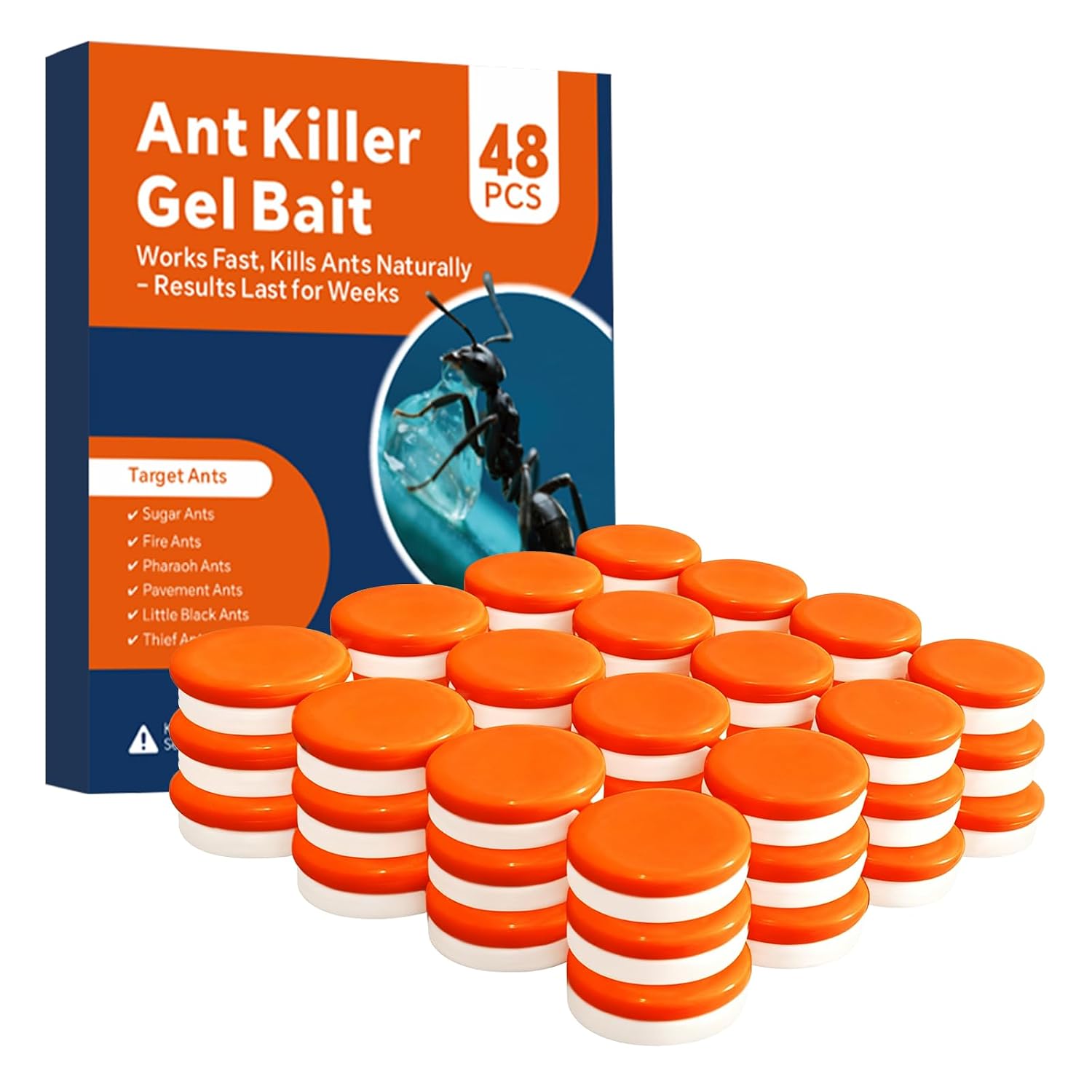
ROUTADE Slow-Acting Ant Gel Bait Stations, 48-Pack
| Unit Count | 48 Count |
|---|---|
| Item Form | Gel |
| Target Species | Ants |
| Included Components | Ant gel bait |
These ROUTADE gel bait stations are a bulk, ready-to-use solution for reducing ant populations by letting worker ants carry slow‑acting bait back to the nest. Each station contains ant gel in a tamper‑resistant housing and ships with adhesive so you can stick units along baseboards, cabinets, patios, and entryways without messy sprays. The slow‑acting formula is the product’s key feature because it encourages foraging ants to share the bait with larvae and the queen, which increases the chance of colony elimination instead of just killing visible workers. The 48‑pack gives you enough coverage to place multiple stations across a whole house and replace traps as needed. Limitations to note are that species-specific behavior and bait preferences vary, so results can take days to weeks and success depends on placing stations where ants regularly forage; highly bait‑averse ant species may ignore the gel. Also this is not a one‑time structural treatment so expect to monitor and refresh stations during long infestations.
Best for: Buyers who prioritize reliable, long‑term colony control and want a low‑maintenance, ready‑to‑place solution to manage ants throughout a home or yard.
Less Ideal for: People needing a fast knockdown for a single, short‑term ant sighting or those who prefer non‑chemical or bait‑free control methods.
- Slow‑acting gel encourages worker ants to carry bait back to the nest for colony control
- Tamper‑resistant bait stations with adhesive for clean, fixed placement indoors and outdoors
- Large 48‑pack provides enough units to cover multiple rooms and entry points
- Ready‑to‑use format requires no mixing or complex setup
- Effectiveness depends on ant species and correct placement which can require monitoring
- Not an immediate kill so visible ants may persist for days to weeks
Verdict: Choose this 48‑pack if you want a ready‑to‑place, slow‑acting bait strategy aimed at eliminating entire ant colonies rather than just killing visible workers.
TERRO Liquid Ant Bait Stations, 18-Count (3 Pack)

| Item Form | Liquid |
|---|---|
| Unit Count | 18 Count |
| Specification Met | EPA |
| Active Ingredients | Sodium Tetraborate Decahydrate (Borax) |
TERRO Liquid Ant Bait comes as prefilled, compact stations intended for indoor placement where ants are active. You open the tab and set the station on a level surface along baseboards, in corners, or behind appliances; worker ants feed on the sweet liquid, carry it back to the nest, and spread the borax-based bait through the colony. The kit includes 18 stations (three packs of six) and the liquid design helps prevent drying so the bait remains attractive for days or weeks. Practical benefits include easy placement with no mixing or equipment, fast attraction that often produces visible results within days, and colony-level control rather than just killing foraging workers. Limitations are that control can take up to two to four weeks for large infestations, stations must be replaced when depleted, and the product is for indoor use only, so it is not suited for outdoor mound treatments or non-ant pests. Follow safety directions to keep stations out of reach of children and pets.
Best for: Buyers who want a low-effort, evidence-backed indoor solution to eliminate household ant colonies and prefer products with a strong track record of customer success.
Less Ideal for: People needing immediate knockdown for outdoor ant mounds or those who require a multi-species pest control product for insects beyond ants.
- Prefilled, ready-to-use stations require no mixing or setup
- Liquid formula resists drying so bait remains attractive over time
- Compact stations fit along baseboards and behind appliances for discreet placement
- Designed to be carried back to the nest for colony-level control
- Indoor-only formulation unsuitable for outdoor mound treatments or landscape use
- Works gradually and may take several weeks to eliminate large infestations
Verdict: A simple, ready-to-use indoor bait system that attracts worker ants and delivers borax to the colony for reliable long-term ant control.
TERRO Liquid Ant Killer Bait Stations, 12-Pack

| Unit Count | 12 Count |
|---|---|
| Item Form | Liquid |
| Active Ingredients | Sodium Tetraborate Decahydrate (Borax), 5.40% |
| Specification Met | EPA |
TERRO Liquid Ant Killer bait stations are prefilled, compact traps designed to control common household sugar-loving ants by letting workers take a borax-based liquid back to the nest. You place the small stations on level surfaces along baseboards, counters, in corners, or under appliances where you see ant activity. The sweet liquid attracts ants quickly and is formulated to act slowly enough that workers share it with the colony, which helps eliminate the queen and hidden nest populations over days to weeks. Practical benefits include simple, no-mess placement, multiple stations for room-to-room coverage, and an EPA-recognized formulation. Expect to see more ants initially as they discover the bait, then a steady reduction in activity within a few days; full control can take 2 to 4 weeks depending on infestation size. Limitations are that the product targets sugar-attracted species and works best indoors where competing food sources are removed, and you must replace stations as the bait is consumed.
Best for: Buyers who prefer a low-effort, proven indoor solution for common household ant problems and want a product that targets the entire colony rather than just visible ants.
Less Ideal for: People needing instant knockdown for heavy outdoor infestations or those dealing primarily with non-sugar-seeking ant species should consider alternative or complementary treatments.
- Ready-to-use stations that require no mixing or complicated setup
- Borax-based liquid attracts ants and is carried back to the colony for broader control
- 12-count package provides coverage for multiple rooms or hotspots
- Compact, discreet design allows placement along baseboards and under appliances
- Formulation targets sugar-loving ant species and may be less effective on protein-preferring ants
- Control can take 2 to 4 weeks, so results are not immediate for large infestations
Verdict: A simple, ready-to-use indoor bait system that eliminates common sugar-attracted ants by getting workers to carry borax bait back to the colony.
Choosing the Right Ant Bait: Key Factors to Consider
Bait Formulation and Active Ingredient
The active ingredient determines how ants respond and whether the bait will kill workers quickly or allow time for the bait to be shared with nestmates. Slow-acting ingredients increase the chance of transfer to the queen and brood, which is critical when your goal is colony elimination rather than just killing visible foragers.
Different chemicals attract different species, and some formulations include carbohydrates while others use protein or oil matrices to appeal to hungry workers based on season and food availability. Consider the typical ant species and local conditions when selecting a formulation because that affects bait acceptance and ultimate success.
Bait Presentation and Placement Options
How bait is presented influences where you can safely put it. Station or trap-style baits limit non-target access and are useful near walkways, patios, and plant containers. Gel or syringe baits are easier to apply into cracks, weep holes, and active trails but can be messier and harder to protect from pets.
Placement matters for bait longevity and transfer. Place baits close to active trails or soil edges where workers travel, not randomly. For garden beds, use low-profile stations tucked near mulch or plant bases to reduce exposure to rain and curious animals.
Pet and Child Safety Considerations
If you have pets or children, choose bait systems designed to limit accidental access. Tamper-resistant stations, enclosed bait cartridges, or gel dispensers placed out of reach reduce risk. Even with safer designs, always follow label instructions for placement and storage and avoid leaving bait where pets can chew or tip containers.
Think about placement height and visibility. Elevating bait off the ground inside a sheltered container or placing it behind heavy landscaping features can cut unwanted contact while still intercepting ant traffic.
Weather Tolerance and Environmental Persistence
Bait effectiveness drops if rain dissolves it or sun dries it into an unpalatable crust. Weather-resistant formulations and sealed stations extend active life outdoors. For exposed patios and planters, look for baits labeled for outdoor use or that come with protective housings.
While persistence helps maintain control between servicing, avoid overly persistent products near pollinator plantings or water features. Shorter persistence in combination with timely reapplication often reduces environmental exposure while still delivering colony control.
Target Species and Foraging Behavior
Different ant species forage for different foods and at different times. Carpenter ants, pavement ants, and sugar ants vary in what attracts them. Choosing a bait that matches the foraging preference of the local pest increases acceptance and transfer.
Observe ant activity before you buy bait. Track the trails and note whether workers appear to be carrying solids or liquids. Matching bait type to that behavior greatly improves bait uptake and overall control outcomes.
Maintenance, Monitoring, and Reapplication
Baiting is a process, not a one-time event. Stations need periodic checks to refill or replace spent bait, and monitoring will tell you whether bait is being taken and colonies are collapsing. Frequent servicing is more important for gel and liquid baits, which can be consumed or weathered quickly.
Plan a simple monitoring routine: check bait every few days the first two weeks, then weekly until activity stops. Proper maintenance reduces wasted product and avoids leaving palatable leftovers that attract non-target animals.
How Ant Bait Works in a Garden Setting
Ant bait relies on foraging workers to carry a small amount of attractive material back to the colony where it is shared with other workers, larvae, and the queen. In a yard or garden the most effective placements intercept foragers on trails between food sources and nesting sites.
In practice, that means placing stations along baseboards, under potted plants, along mulch edges, and near cracks in patios or shed floors. Successful garden use also depends on reducing alternative food sources so ants find the bait attractive.
- Place bait where you see consistent ant traffic rather than scattering widely.
- Avoid putting bait directly on plants or in flowering areas to reduce non-target exposure.
- Check bait frequently during active foraging times and after heavy rain.
Setting Up Bait Stations for Outdoor Use
Choose low-profile stations that sit flush with soil or mulch and have removable lids for servicing. For patios and concrete, tuck stations beside planters, under benches, or against wall joints where trails meet hard surfaces.
When dealing with pets, place stations inside a shallow container or behind physical barriers that still allow ant access. Keep a consistent pattern so you can monitor which stations are being used and which need repositioning.
- Start with several stations placed near multiple trails to increase chances of interception.
- Move stations toward the most active trail if you observe uptake, rather than adding more stations.
- Replace or refresh bait when it becomes moldy, dry, or visibly depleted.
Timing Baiting for Best Results
Season and daily temperature influence whether ants prefer sweet, greasy, or protein-based baits. In warm weather most species are actively foraging and will take baits more readily. In cooler or wet conditions acceptance rates can drop.
Apply bait when ant activity is highest, typically mid-morning to late afternoon in temperate climates. Avoid baiting during heavy rain or immediately before irrigation to prevent dilution or washout of the bait matrix.
- Observe for several days to identify peak activity times before placing bait.
- Reapply after storms and reduce watering near bait placements for at least 24 hours.
Non-Target Safety and Integrated Practices
Use bait as one part of an integrated approach that includes sanitation and habitat modification. Removing food scraps, sealing entry points, and reducing excess moisture will make baits more attractive and reduce the need for ongoing treatments.
Protect beneficial insects and wildlife by limiting bait placements to areas where ants forage and avoiding flowers or nesting substrates. If you use more persistent baits, take care to remove spent stations once activity subsides.
- Clean up fallen fruit, spilled pet food, and compost leachate that attracts ants.
- Trim vegetation away from foundations and avoid overmulching directly against structures where ants nest.
When Baiting Might Not Be Enough
Some infestations originate from multiple colonies or deep nests that are not readily reached by transferred bait. In these cases baiting can reduce visible activity but may require follow-up placements, different bait formulations, or addressing nest sites directly.
If trails persist after several baiting cycles, reassess bait placement, try a different active ingredient class that better matches foraging preferences, and increase monitoring frequency to identify secondary nest locations.
- Look for new trails leading away from baited areas as a sign of untreated satellite nests.
- Combine baiting with physical nest removal when nests are accessible and safe to treat manually.
How We Chose the Best Ant Bait
We focused on real-world garden use to select the ant bait options included in this roundup. Key evaluation criteria were poison delivery and transfer potential, which measures whether foraging ants will carry bait back to the nest and share it; active ingredient suitability, looking at formulation effectiveness against common garden ant species; placement formats, such as stations, gels, or granules that affect where and how bait can be used safely; pet and child safety features, including tamper-resistant designs and low-exposure formulations; persistence and weather tolerance, which assess how bait holds up to sun, rain, and soil moisture; and ease of use, covering refillability, visibility, and cleanup. We excluded single-use DIY mixes and broadcast granular pesticides that rely on broadcast insecticide application rather than targeted baiting. We also filtered out options that do not provide clear instructions for placement around plants or that lack common-sense safety labeling. The final list favors baits with demonstrable transfer pathways, realistic placement options for garden and patio settings, and clear safety guidance for households with pets or children.
FAQ
How long does it take for ant bait to show results?
Results often appear within a few days as workers take bait back to the nest, but complete colony suppression can take several weeks. The timeline depends on bait uptake, colony size, species, and weather.
Is ant bait safe to use around pets and children?
Many bait stations are designed to limit access and reduce risk, but no product is zero-risk. Choose tamper-resistant formats, place them out of reach, and follow label storage and disposal instructions to minimize exposure.
Can I use indoor bait stations outside?
Indoor-only formulations may not hold up to sun and rain and can degrade quickly. Use baits labeled for outdoor or dual use and protect them from direct moisture to maintain attractiveness.
Should I remove mulch before baiting garden beds?
You do not need to remove mulch, but place bait at the mulch-soil interface or along mulch edges where ants travel. Excess mulch can hide trails, so thinning it may help you find active paths for placement.
What if ants ignore the bait?
If ants avoid bait, try a different formulation that matches their current diet preference or reposition stations closer to steady trails. Reducing alternative food sources will also increase bait acceptance.
How often should I check and refill bait stations?
Check stations every few days during the first two weeks, then weekly until activity drops. Replace bait when it is depleted, moldy, or has become hard and unpalatable.
Final Verdict
Pick an ant bait system that matches the species and the environment where ants are active. Prioritize transfer-capable formulations and placement options that protect pets and children while letting foragers access the bait. Expect to monitor and service stations regularly and be ready to try a different bait type or placement pattern if activity persists. With targeted placement, weather-appropriate products, and routine checks, most gardeners can reduce ant colonies without broad-scope pesticide broadcasts.
