

Note: This article contains affiliate links. If you click on these links and make a purchase, I may earn a small commission at no extra cost to you. This helps support my research and content. Read my full affiliate disclosure here.
If tiny ants have started patrolling your counters, pantry, or patio, picking the right ant trap makes the difference between a temporary nuisance and long-term control. Small ant species often ignore coarse baits or devices designed for larger foragers, so you want traps formulated for bait size, attractant type, and placement in tight entry points. This guide covers our seven shortlisted ant traps for tiny ants and explains why each made the cut. We focus on bait formulation, delivery method, and how traps behave in real homes and outdoor seating areas. Use the evaluation notes that follow to match a trap to your infestation pattern and placement needs.
Top Picks at a Glance
| Best Overall The best all-around choice for most situations | TERRO Liquid Ant Killer 3-Pack with Cardboard Tiles |  |
| Best Quality Built to a higher standard if you want something more solid | HOME PLUS Ant Killer Bait Stations, 4 Metal Child‑Resistant Traps (Abamectin B1) |  |
| Best Value The sweet spot between price and what you get | ROUTADE 48-Pack Slow-Acting Ant Gel Bait Stations |  |
| Best Budget The cheapest option that still gets the job done reliably | Hot Shot MaxAttrax Ant Bait, 4 Child-Resistant Bait Stations |  |
| Highest Rated A top-rated pick with lots of positive feedback | ROUTADE Slow-Acting Ant Gel Bait Stations, 48-Pack |  |
| Most Popular A crowd favorite that many people choose with confidence | TERRO Liquid Ant Killer Bait Stations, 12-Pack (T300B) |  |
| Best Seller A high-volume bestseller chosen again and again | Ortho Orthene Indoor Ant Killer Bait Stations, 12 Count |  |
TERRO Liquid Ant Killer 3-Pack with Cardboard Tiles

| Item Form | Liquid |
|---|---|
| Target Species | Insects |
| Active Ingredients | Sodium Tetraborate Decahydrate (Borax) 5.40% |
| Included Components | Ant Bait |
| Specification Met | EPA |
TERRO Liquid Ant Killer is a straightforward indoor ant bait system that uses a borax formula workers carry back to the nest to eliminate the colony, including the queen. Use is simple: apply drops of the liquid onto the included cardboard tiles and place them near ant trails, baseboards, counters, and other areas with activity. Notable features include a ready-to-use liquid formulation, three 2 oz bottles for multiple placements, and an EPA-recognized specification. In practice the product is effective for sweet‑eating household ants like sugar, ghost, and pavement ants and typically shows visible reduction in days when baits remain undisturbed. Practical benefits are easy placement, low user involvement, and the ability to treat several locations at once thanks to the 3-pack. Important limitations are that it is for indoor use only and relies on ants actively foraging for sweet bait, so very small or non-sugar-preferring species may not be controlled as well. Also, it needs to be kept away from curious children and pets until placed per directions.
Best for: Homeowners who want an easy, low-effort indoor solution to eliminate common sweet‑feeding household ants and prefer a bait that works at the colony level.
Less Ideal for: People needing outdoor mound treatments or who require immediate knockdown of visible ants with contact sprays rather than a colony-targeting bait.
- Ready-to-use liquid that worker ants carry back to the colony for broader control
- Three bottles allow multiple bait stations for whole-house coverage
- Simple application on included cardboard tiles for quick placement
- EPA specification met for a recognized formulation
- Effective mainly against sugar-attracted species and may miss ants with different food preferences
- Intended for indoor use only and not suited for outdoor colony control
Verdict: Choose TERRO Liquid Ant Killer when you want an easy, indoor bait that workers carry back to eliminate entire sweet‑feeding ant colonies.
HOME PLUS Ant Killer Bait Stations, 4 Metal Child‑Resistant Traps (Abamectin B1)

| Unit Count | 4 Count |
|---|---|
| Active Ingredients | Abamectin B1 |
| Liquid Volume | 0.42 fluid ounces |
| Target Species | Ants |
| Specification Met | EPA |
The HOME PLUS Ant Killer Bait Stations are prefilled metal traps designed to lure worker ants with four different food attractants and deliver a 0.05% Abamectin B1 bait back to the nest to eliminate the queen and colony. Use them along ant trails, baseboards, under appliances, near sinks, in pantries, or outdoors near entry points; the tamper-resistant metal housing and ant-sized entry ports make placement straightforward and discreet. Notable features include a multi-attractant formula meant to appeal to a wide range of common household ants, EPA specification compliance, and child-resistant stations that arrive ready to use with no mixing or activation. In practice they tend to start showing results within 24 hours as worker ants carry bait to the colony, which is useful for addressing active infestations without messy sprays. Limitations are that they exclude carpenter, fire, and harvester ants, and effectiveness depends on worker ants finding and regularly visiting the stations, so placement and replacement as bait is consumed are important for best results.
Best for: Buyers who prioritize fast, practical colony-level control and want a ready-made, low-fuss solution they can place around the home or patio to tackle active ant infestations.
Less Ideal for: People dealing specifically with carpenter, fire, or harvester ant problems or those who need a broadcast spray solution for large outdoor areas should consider other products.
- Prefilled, ready-to-use metal stations require no setup or mixing
- Four different food attractants increase appeal across many ant species
- Child-resistant, tamper-resistant design improves safety around homes
- Designed for both indoor and outdoor placement for flexible use
- Does not target carpenter, fire, or harvester ants
Verdict: A ready-to-place, multi-attractant metal bait system built for buyers who want fast, colony-level ant control with minimal setup.
ROUTADE 48-Pack Slow-Acting Ant Gel Bait Stations

| Pack size | 48 stations |
|---|---|
| Application | Indoor and outdoor |
| Target pests | Carpenter ants and common household ants |
| Mounting | Adhesive-backed stations |
These prefilled gel bait stations are built to kill entire ant colonies by letting worker ants take slow-acting bait back to the nest. In use you pop open the lid, stick the station where you see ant trails or near entry points, and let foraging ants feed and transport the gel. The included adhesive keeps stations in place on floors, baseboards, or outdoor surfaces so they do not tip or spill. Because the formula is slow-acting and labeled for common household and carpenter ants, it targets hidden nests rather than just visible workers, which makes it suitable for ongoing prevention across a home or patio. The large 48-count pack lets you cover many hotspots and replace stations over time without running out. Limitations are that this is a bait-only solution so it requires active ant foraging to be effective and will not provide immediate removal of visible ants the way a contact spray does, and species that do not accept sugary gels may not be controlled as well.
Best for: Buyers who want a low-effort, preventive approach to ant control and prefer placing multiple discreet bait points around a home or outdoor living area to eliminate colonies over time.
Less Ideal for: People who need an immediate knockdown of visible ants or who prefer non-bait contact treatments should look at other control methods.
- Slow-acting formula designed to be taken back to the nest for colony-level control
- Ready-to-use sealed stations minimize mess and no mixing is required
- Adhesive backing keeps units stable and prevents tipping or spillage
- Large 48-pack provides enough stations for whole-house coverage and periodic replacement
- Relies on ants actively foraging so results are not instantaneous
- Less effective against ant species that refuse gel baits
Verdict: This bulk set is best for homeowners who want a hands-off, colony-level ant control strategy by placing many ready-to-use bait stations around the property.
Hot Shot MaxAttrax Ant Bait, 4 Child-Resistant Bait Stations

| Unit Count | 4 Count |
|---|---|
| Target Species | Insects |
| Active Ingredient | Indoxacarb (0.05%) |
| Intended Use | Indoor and outdoor |
Hot Shot MaxAttrax Ant Bait comes as four sealed, child-resistant stations prefilled with a sugar-and-grease attractive bait that uses 0.05% indoxacarb to kill foraging ants and, per the manufacturer, transfer the active ingredient back to the colony. Use is straightforward: break the stations apart, place them along ant trails or in out-of-the-way spots inside cabinets, under sinks, or around foundation lines outdoors, and replace as stations empty. The stations are mess-free and rated to last up to three months outdoors and up to six months indoors for continued protection. Notable features include a quick-action attractant that starts working within 24 hours and a child-resistant housing that reduces accidental access. Limitations are that the pack contains only four small stations so heavy or widespread infestations may need multiple packs, and as with any bait, results depend on ants finding and feeding on the bait rather than competing food sources.
Best for: Buyers looking for an affordable, easy-to-deploy solution to common indoor or perimeter ant problems who prefer low-effort pest control that can be placed in out-of-the-way spots.
Less Ideal for: Those needing immediate whole-yard eradication for very large or dispersed infestations or who prefer non-chemical control methods should consider alternative approaches.
- Child-resistant, prefilled bait stations are mess-free and simple to place.
- Formula attracts both sugar- and grease-feeding ants and begins acting within 24 hours.
- Designed for indoor and outdoor use with stations that can last weeks to months.
- Kills foraging ants and is formulated to transfer toxicant back to the colony for broader control.
- Pack includes only four small stations, so multiple packs may be required for large or severe infestations.
- Contains a chemical active ingredient so it must be placed out of reach of children and non-target animals.
Verdict: A low-cost, easy-to-use bait station pack that delivers fast, colony-level ant control for common household infestations.
ROUTADE Slow-Acting Ant Gel Bait Stations, 48-Pack
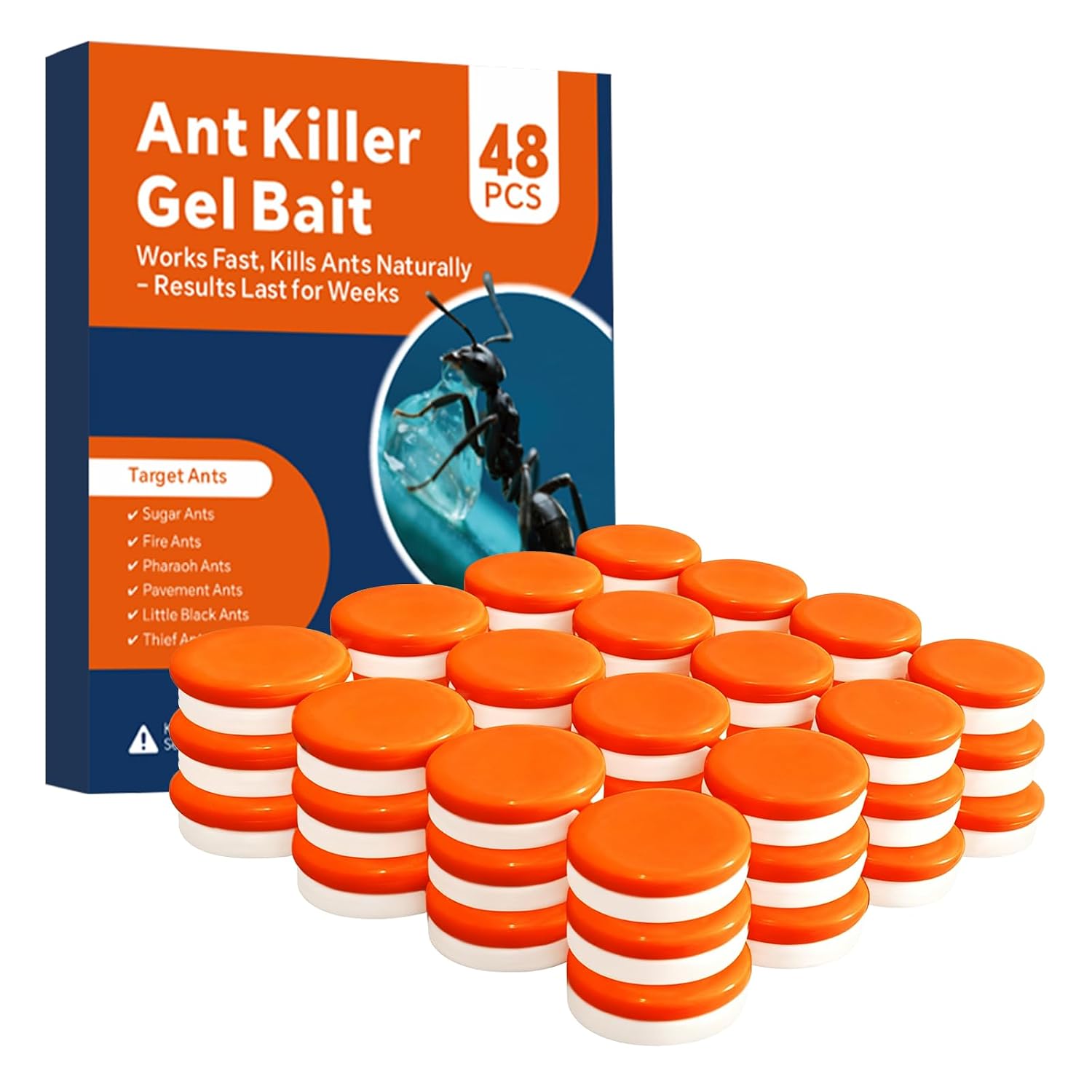
| Unit Count | 48 Count |
|---|---|
| Item Form | Gel |
| Target Species | Ants |
| Included Components | Ant gel bait |
These ROUTADE gel bait stations are a bulk, ready-to-use solution for knocking out ant colonies rather than just removing visible worker ants. The slow-acting gel is placed inside small, fixed bait stations that you peel open and stick to baseboards, floors, or outdoor surfaces using the included adhesive. Worker ants feed on the gel and transport it to the nest, which helps eliminate the queen and other hidden members over several days. The set is versatile for kitchens, bathrooms, garages, patios, and entry points, and the fixed station design reduces mess and prevents spills. Practical benefits include the large 48-pack for treating multiple hotspots and regular replacement, plus simple placement that needs no mixing or application tools. Limitations are that results take time since the formula relies on ant foraging and transfer, and effectiveness varies by species and colony size; heavily infested homes may need targeted professional treatment or complementary methods for immediate reduction.
Best for: Buyers who prioritize a dependable, low-effort approach to erase ant colonies across multiple rooms and outdoor entry points and who want the convenience of many prefilled stations for ongoing protection.
Less Ideal for: People needing immediate knockdown of large, active infestations or those who prefer fast-acting contact treatments should consider more aggressive or professional options.
- Slow-acting gel designed for worker ants to carry bait back to the nest for colony-level control
- Ready-to-use sealed stations reduce mess and are easy to stick in place with included adhesive
- 48-count pack supplies coverage for whole-house placement and routine replacement
- Suitable for both indoor and outdoor placement to block entry points and treat hotspots
- Takes several days for colony elimination because it depends on ant feeding and transfer
- Effectiveness can vary by ant species and may not fully resolve very large infestations
Verdict: A convenient, large-pack gel bait system for homeowners who want a reliable, low-maintenance way to eliminate ant colonies over time.
TERRO Liquid Ant Killer Bait Stations, 12-Pack (T300B)

| Unit Count | 12 Count |
|---|---|
| Item Form | Liquid |
| Target Species | Insects |
| Active Ingredients | Sodium Tetraborate Decahydrate (Borax), 5.40% |
These TERRO bait stations are a straightforward, no-touch solution for indoor sugar-loving ant problems. Each ready-to-use station contains a liquid borax formula that worker ants find attractive; they drink it, return to the nest, and spread the bait so the colony is affected rather than just the foragers. Typical use is simple: open the tab and place stations along baseboards, in corners, under appliances, or near ant trails, then monitor and replace when the bait is gone. Notable features include a compact, leak-resistant housing and a formula designed to act slowly enough for ants to carry it home, which speeds colony-level control while keeping the product contained. Practical benefits are fast reduction in visible ant activity within days and enough units in the 12-pack to cover multiple rooms or repeat placements. Important limitations are that it targets sugar-preferring species and works over days to weeks rather than instantly, and it requires keeping other food sources removed and avoiding areas previously sprayed with insecticides for best results.
Best for: Buyers who want a low-effort, containment-focused way to eliminate household sugar-loving ants and prefer products with strong user adoption and documented effectiveness.
Less Ideal for: People needing instant knockdown of visible ants, those dealing with non-sugar-attracted ant species, or households that cannot keep bait placements undisturbed.
- Ready-to-use stations require no mixing or setup
- Liquid borax formula is taken back to the nest for colony-level control
- Compact, discreet housing suitable for placement along baseboards and counters
- 12-count pack provides good coverage for multiple rooms or repeat use
- Effective mainly on sugar-attracted household ants and may be less useful on protein-preferring species
- Acts over days to weeks so not an immediate kill of visible ants
Verdict: A ready-to-use, widely adopted liquid bait system that targets entire indoor ant colonies by letting worker ants carry borax-based bait back to the nest.
Ortho Orthene Indoor Ant Killer Bait Stations, 12 Count

| Unit Count | 12 Count |
|---|---|
| Target Species | Ant |
| Power Source | manual |
Ortho Orthene Ant Killer comes as 12 pre-filled indoor bait stations designed to be placed where ants forage, such as along baseboards, in cabinets, and near entry points. Foraging workers enter the station, feed on the bait, and carry it back to nestmates and the queen, so you typically see fewer ants within 3 to 7 days. The stations are simple to set up—break them apart and lay them label-side down on flat surfaces—and are sized for use in homes, garages, and similar buildings. Practical benefits include targeted indoor placement that avoids spraying, an approach that focuses on colony elimination rather than just killing visible ants, and disposable single-use stations for low-maintenance control. Limitations are that it is a slow-acting bait (so immediate droves of dead ants are unlikely), it is not labeled for fire, carpenter, or harvester ants, and you should avoid placing stations where food is actively handled or where other pesticides have recently been used. Follow label directions to keep children and pets from playing with the stations.
Best for: People who want a simple, low-intervention indoor solution to reduce common household ant infestations and prefer baiting over sprays or traps.
Less Ideal for: Those dealing with fire, carpenter, or harvester ant problems or anyone who needs immediate visible kill by contact treatments.
- Targets the colony by letting worker ants carry bait back to nestmates and the queen
- Ready-to-use, no mixing or sprays required
- Discrete, low-odor stations suitable for indoor placement
- Includes 12 individual stations for multiple problem areas
- Not labeled for use against fire, carpenter, or harvester ants
- Works slowly—results typically take several days to appear
Verdict: Use these ready-to-place indoor bait stations when you want a low-effort, colony-focused method to substantially reduce common household ant infestations.
Choosing the Right Ant Trap for Tiny Ants: Key Factors to Consider
Bait Attraction and Palatability
Tiny ant species vary in what they prefer to forage on. Some are strongly attracted to sweet, carbohydrate-rich baits while others will take protein or oil-based baits. Choosing a formula that matches the local ant diet increases the chance that scout workers will recruit nestmates and carry toxin back to the colony.
Palatability also depends on bait texture and droplet size. Very small ants struggle with coarse granules or large gel globes; fine liquid or thin-film baits are more accessible. Consider offering a couple of bait types if you are unsure which food source the ants in your home prefer.
Bait Accessibility and Dispenser Design
How a bait is presented matters as much as what it contains. Traps with narrow channels, micro-wicks, or shallow feeding wells let tiny mandibles access the food without crowding, while large reservoirs or deep cups can be unusable for small workers.
The dispenser should also protect the bait from drying out and from accidental contact by children, pets, or beneficial insects. Removable inserts and clear windows for monitoring are convenient features when you need to check if ants are feeding without disturbing the device.
Placement Flexibility and Form Factor
Tiny ants often travel along baseboards, inside door thresholds, around potted plants, and through hairline cracks. A trap that conforms to those narrow pathways will intercept trails more effectively than a bulky station.
Look for low-profile stations, adhesive-backed strips with bait, or bait gels that can be applied into crevices. Outdoor use requires weather-resistant housings and the ability to tuck a trap under an eave or behind a planter where rain will not wash away the lure.
Lure Longevity and Environmental Durability
Baits that evaporate or crystallize quickly lose effectiveness, especially in warm kitchens or sunlit patios. Longer-lasting formulations reduce the need for frequent replacement and keep a steady source of toxicant available for colony-level control.
Consider how indoor humidity, outdoor temperature swings, and exposure to sunlight will affect bait life. Some traps include sealed reservoirs or replaceable cartridges that extend service life; others require more frequent topping up but let you adjust bait type as needed.
Non-target Safety and Containment
When placing traps in homes and gardens, protecting children, pets, and desirable insects is essential. Enclosed stations that allow only ants to reach the bait lower accidental exposure risk. For outdoor placements, anchored housings reduce disturbance by wind or wildlife.
Also consider whether the bait formulation is attractive to bees or other pollinators. Use contained stations in flowering areas or choose baits that are less likely to draw beneficial insects away from blooms.
Monitoring and Maintenance Needs
Some traps require weekly checks, bait replacement, or cleaning of debris to remain effective. If you prefer a low-maintenance approach, select devices with clear windows, replaceable cartridges, or longer-lasting gels. More hands-on options can be adjusted to changing ant behavior but demand regular attention.
Maintenance also includes proper disposal of spent bait and cleaning of heavy ant traffic areas to remove pheromone trails. Regular monitoring helps you know whether bait is being taken or if you need to switch attractant types.
How Tiny Ant Behavior Affects Control
Tiny ants use narrow travel lanes and pheromone trails that can run along the smallest cracks and ledges. They often forage in large numbers but may exploit microscopic openings that larger traps miss, so interception is about placing accessible bait where scouts naturally travel.
Because many tiny species have fast recruitment, a small, well-placed bait can lead to a rapid reduction in visible workers. However, if bait access is poor or the lure is wrong for the species, foragers will ignore the station and trails will persist.
- Follow visible trails when placing traps; ants rarely wander far from established lanes.
- Check entry points around doors, windows, and where utility lines meet structures.
- Place traps low and flush to baseboards or under appliances to match natural ant pathways.
Indoor Vs Outdoor Placement Tips
Indoors, position traps along baseboards, inside cabinets, near appliances, and by pantry shelves. Use shallow stations or small gel dots for crumbs and tight edges. Keep stations out of reach of children and pets and avoid placing baits directly on countertops where food is prepared.
Outdoors, use weather-resistant stations tucked under eaves, behind potted plants, or along the foundation. Avoid placing baits in direct sun or in areas that flood. Anchor lightweight housings and inspect them after heavy rain or lawn care to maintain continuous control.
- Rotate indoor placement if initial traps show no activity; scouts may be using a nearby alternate path.
- For balconies and patios, conceal traps near planter rims and between decking boards where ants travel.
Safe Use Around Gardens and Pollinators
Keep bait stations off flowering plants and away from areas where bees forage. Enclosed stations limit access to small crawling insects and reduce the chance of attracting pollinators. If you must use a liquid or granular bait outdoors, place it in a secure station rather than scattering it.
Consider physical barriers as a complementary strategy. Sealing cracks, moving debris, and managing outdoor food sources will reduce ant traffic and the number of traps required.
- Inspect flowering areas before placing outdoor stations to avoid unintended pollinator attraction.
- Use traps with locked lids or tamper-resistant features near areas children or pets frequent.
When to Switch Bait Types
If a trap shows no ant activity after several days, the bait may be unattractive to the local species or colony state has shifted from sugar to protein preference. Swap to a different attractant type rather than moving the trap immediately; bait preference can change with brood development and seasonal food availability.
Rotate through sweet and protein formulations and monitor which one sees the most traffic. Successful bait acceptance is indicated by steady recruitment and less surface foraging over time.
- Give a new bait station 48 to 72 hours before changing tactics unless there is clear evidence of no activity.
- Observe morning and evening activity when ants are often most active to judge bait uptake.
Combining Traps with Exclusion and Sanitation
Traps are most effective when part of an integrated approach. Seal gaps around doors, screens, and pipe penetrations to reduce entry points. Remove food residues, store sweet items in sealed containers, and manage outdoor compost or pet food that can attract foragers.
Exclusion reduces the number of foragers that need to find the bait, which speeds up colony control and lowers maintenance time for refillable stations.
- Clean surfaces where ants trail using a mild detergent to break pheromone scent lines after baiting.
- Eliminate standing water and trim vegetation that contacts the building to discourage ant highways.
How We Chose the Best Ant Trap for Tiny Ants
We started by screening products meant specifically to control small-bodied ant species, then filtered for designs gardeners and homeowners use in kitchens, patios, and near entry points. Our selection criteria prioritized bait palatability for sugar- and protein-seeking tiny ants, bait particle size and dispenser design to ensure accessible feed, and placement flexibility so traps work along narrow baseboards, potted plants, and outdoor seams. We evaluated lure longevity under typical indoor humidity and outdoor shaded patio conditions, and we favored traps with secure housings that limit non-target access while allowing steady ant traffic. Ease of monitoring and replenishment mattered because tiny ant infestations can require repeated attention. We excluded bulk pest-control formulations not designed for point placement and devices intended only for large carpenter or field ants. The final picks balance bait chemistry, delivery form, placement adaptability, and safety in household and garden-adjacent settings.
FAQ
How long before I see results from ant traps for tiny ants?
Often you will see fewer surface workers in a few days if the bait is attractive and accessible. Full colony reduction can take one to several weeks depending on nest size and bait uptake.
Are liquid baits better than gels for tiny ants?
It depends on the ant species and dispenser design. Liquids with thin wicks are easier for tiny ants to access, while gels can work if presented in a shallow film or micro-dots. Match the delivery to the ants' feeding behavior.
Can I use ant traps outdoors near flowering plants?
You should avoid exposing baits where pollinators forage. Use enclosed, tamper-resistant stations placed away from blooms, and inspect traps regularly to prevent accidental attraction of beneficial insects.
How often should I replace bait in a station?
Replacement frequency varies by formulation and environmental conditions. Check bait every few days at first, then move to weekly checks. Replace bait when it dries out, becomes moldy, or shows no sign of being consumed.
Will traps work if ants are nesting inside walls?
Traps can reduce foraging pressure even with hidden nests, because foragers still leave the structure to find food. However, access to bait must be placed along the trails leading to entry points for the best chance of delivering toxicant back into the nest.
Are there safer options if I have pets or children?
Choose enclosed, tamper-resistant stations and keep them out of reach. Avoid loose granules or open liquid placements in accessible areas. Follow label directions and consider physical exclusion and sanitation to reduce reliance on chemical baits.
Final Verdict
For tiny ants, prioritize accessibility and bait palatability over sheer toxin strength. A well-placed, low-profile station with a bait type that matches local ant preferences will intercept foragers and increase the chance of colony-level control. Balance placement flexibility, lure longevity, and non-target safety when choosing a trap. Regular monitoring and combining traps with exclusion and sanitation will shorten the timeline to control and reduce the need for frequent bait changes.
