

Note: This article contains affiliate links. If you click on these links and make a purchase, I may earn a small commission at no extra cost to you. This helps support my research and content. Read my full affiliate disclosure here.
Good bagged manure can transform tired beds, improve soil structure, and feed vegetables and ornamentals with minimal mess. Whether you garden in raised beds, containers, or in-ground rows, the right bagged manure makes prepping planting areas and topdressing established beds faster and neater. This guide covers six top bagged manure options that suited our shortlist for common garden situations. We looked at how each product behaves in the soil, its nutrient contribution, odor and handling, and suitability for different planting timelines. Read on to see the practical evaluation points and pick the style of bagged manure that fits your garden workflow.
Top Picks at a Glance
| Best Overall The best all-around choice for most situations | Black Kow Composted Cow Manure, 35 lb Bag |  |
| Best Value The sweet spot between price and what you get | Garden Magic Michigan Peat Compost & Manure Blend, 40 lb |  |
| Best Budget The cheapest option that still gets the job done reliably | Home & Country USA Organic Composted Cow Manure, 1 Quart |  |
| Highest Rated A top-rated pick with lots of positive feedback | Lancaster Agriculture Chicken Manure Pellets, 4 lb |  |
| Most Popular A crowd favorite that many people choose with confidence | BRUT Worm Farms Cow Compost — 10 Quart Bag |  |
| Best Seller A high-volume bestseller chosen again and again | Espoma Organic Chicken Manure Granules, 3.75 lb |  |
Black Kow Composted Cow Manure, 35 lb Bag

| Item Form | Granules |
|---|---|
| Specific Uses For Product | Organic |
| Coverage | Medium |
| Target Species | Plants, Houseplants, Vegetables |
| Mixing Ratio | 0.5-0.5-0.5 |
Black Kow Composted Cow Manure is a ready-to-use organic soil amendment that supplies slow-release nutrients and improves soil texture. Gardeners typically work it into topsoil or use it as a side dressing on lawns and planting beds; the product can also be used as a planting medium for tomatoes by cutting and planting directly in the bag. Notable features include a mild 0.5-0.5-0.5 nutrient analysis that will not burn roots and a granulated, composted form that increases moisture retention in sandy soils and improves aeration in clay soils. Practical benefits for lawns are better water-holding capacity, improved soil structure, and a steady nutrient supply that reduces the need for frequent feeding. Limitations are that the nutrient analysis is very low compared with concentrated fertilizers, so it is more of a long-term soil builder than a quick lawn green-up solution, and the bagged format means you will need to handle and spread multiple bags for larger lawns. The package also includes handling guidance and cautions to avoid direct ingestion and contact with skin or eyes.
Best for: Homeowners who want an inexpensive, low-risk way to build soil health over time and improve lawn soil structure rather than seeking immediate greening.
Less Ideal for: People needing a fast, high-nitrogen lawn boost or landscapers covering large turf acreage who prefer concentrated fertilizers or bulk delivery options.
- Organic, composted material that improves soil structure and aeration
- Slow-release 0.5-0.5-0.5 nutrient profile that will not burn roots
- Granular, bagged form is easy to spread or incorporate into topsoil
- Helps increase moisture retention in sandy soils and loosens compacted clay soils
- Low nutrient concentration so it is not a quick fix for nitrogen-deficient lawns
- Bag handling required for covering large lawn areas
Verdict: Choose Black Kow if you want an affordable, organic compost that steadily improves lawn soil structure and moisture retention over time.
Garden Magic Michigan Peat Compost & Manure Blend, 40 lb

| Unit Count | 640 Ounce |
|---|---|
| Included Components | Michigan Peat – 5240 – 40lb |
| Item Type Name | Manure |
| Manufacturer | Michigan Peat |
This 40 lb Garden Magic Michigan Peat Compost & Manure Blend is a pre-mixed, odor-reduced soil amendment intended to boost nutrients and organic matter in raised beds and containers. It combines reed sedge peat with composted animal manure so you can work it into existing bed soil or use it to refresh potting mixes without additional processing. The bag is easy to scoop and spread around planting holes, top-dress beds, or mix into the top few inches of soil for vegetables, flowers, and lawns. Notable features are the organic compost content, manure-derived nutrients, and the claim of being odor-free, which makes handling more pleasant than raw manure. Because it is a blend rather than a complete potting soil, expect it to act as an amendment that improves texture and fertility rather than a standalone, soilless potting mix. If you need large volumes for deep beds you will likely need multiple bags, but for small raised beds and container refreshes this provides a straightforward, no-mix option to add organic matter and feed plants.
Best for: Ideal for gardeners updating small raised beds or refreshing container soil who prioritize value and a simple, ready-to-use organic amendment.
Less Ideal for: Not the best choice for growers who need a full premium potting mix formulated for seed starting or for large-scale bed builds where bulk soil or compost deliveries are more economical.
- Ready-to-use blend that can be applied directly to raised beds and containers
- Contains composted animal manure for added nutrients to support plant growth
- Odor-reduced reed sedge peat makes handling more pleasant than raw manures
- 40 lb bag provides a manageable amount for small beds and planter refreshes
- Sold as a soil amendment rather than a complete soilless potting mix
- One 40 lb bag covers a limited volume so larger projects require multiple bags
Verdict: A convenient, budget-friendly organic amendment that quickly boosts fertility and structure in small raised beds and containers.
Home & Country USA Organic Composted Cow Manure, 1 Quart

| Brand Name | Home and Country USA |
|---|---|
| Item Type Name | Cow Manure |
| Volume | 1 quarts |
This small 1-quart package of organic composted cow manure is designed to boost soil fertility in vegetable beds, flower borders, containers, and shrubs. It is fully composted and free of chemical additives, so gardeners can work it into potting mixes, topdress garden beds, or mix into planting holes to improve soil structure and water retention. The product emphasizes nutrient density and beneficial microbial activity, which help seedlings and established plants develop stronger roots and healthier foliage. Because the bag is compact, it is handy for small gardens, raised beds, and potted plants but will require multiple bags for larger areas. The product is sourced from sustainable U.S. farms, which is useful if you prefer domestically produced organic amendments. Expect modest volume per purchase and plan accordingly when prepping multiple beds or heavy feeding schedules.
Best for: Gardeners who want an organic, ready-to-use soil amendment for containers, small beds, or spot improvements and who prioritize sustainable, chemical-free inputs.
Less Ideal for: Those preparing large in-ground beds or landscaping multiple beds at once should consider bulk compost or manure options to avoid repeated purchases.
- 100% organic, fully composted cow manure safe for vegetables, flowers, and shrubs
- Improves soil structure and water retention while encouraging beneficial microbes
- Sustainably sourced from U.S. farms
- Compact 1-quart size is convenient for containers, raised beds, and spot treatments
- Small volume means multiple bags are needed for larger gardens
Verdict: A convenient organic composted cow manure option for improving soil in containers and small garden plots.
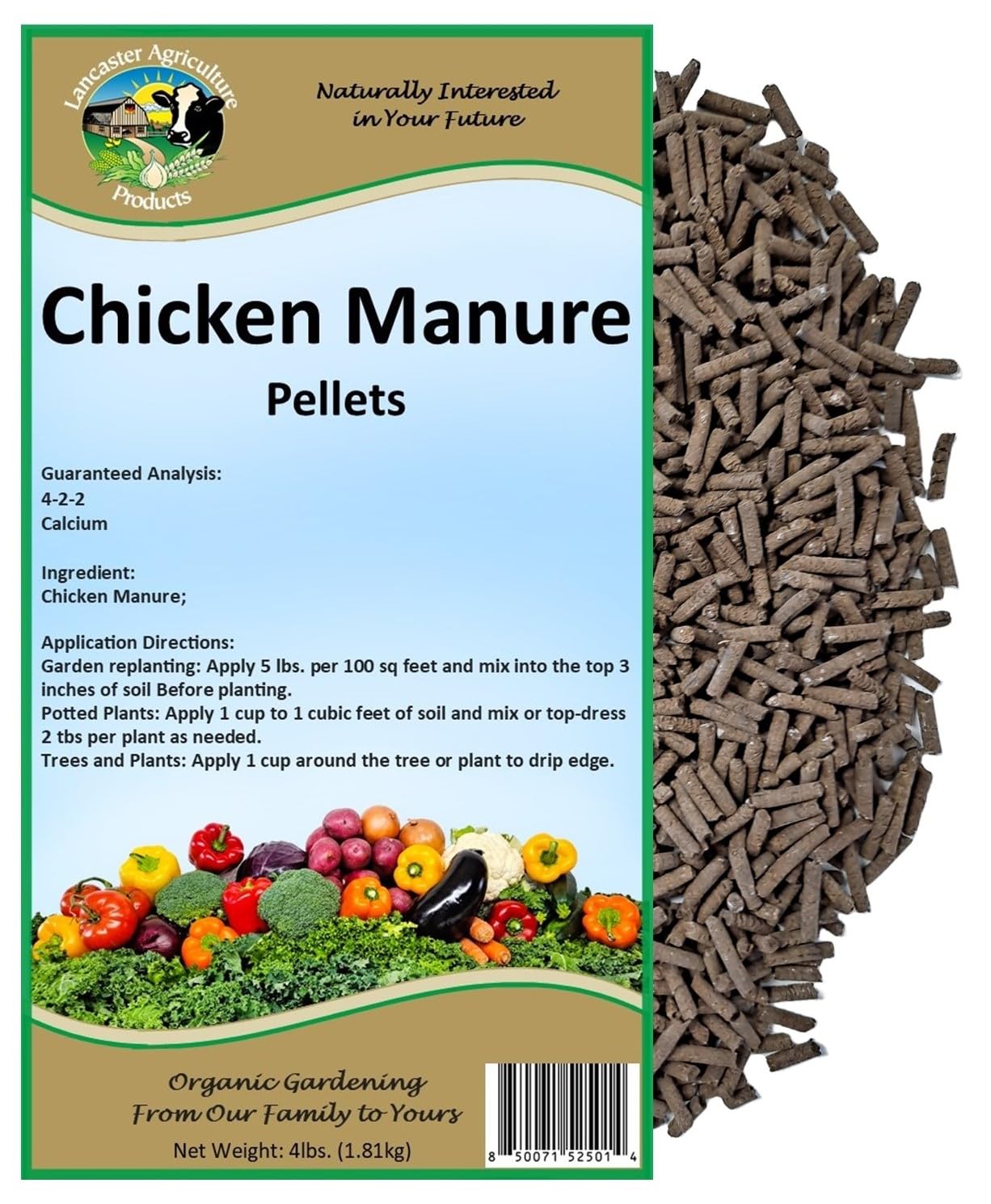
Lancaster Agriculture Chicken Manure Pellets, 4 lb
| Item Form | Pellets |
|---|---|
| Target Species | Flowers |
| Unit Count | 64 Ounce |
| Mixing Ratio | 4:2:2 |
These chicken manure pellets are a ready-to-use organic fertilizer intended to boost soil fertility in vegetable and flower beds. The product comes as heat-treated, dehydrated pellets that you sprinkle around the drip line and water in, so there is no mixing or composting required before application. With a 4-2-2 NPK ratio and about 8% calcium, the pellets supply steady, slow-release nitrogen and useful phosphorus and potassium for leafy and fruiting vegetables. Practical benefits include convenience of pellets for targeted side-dressing, suitability for monthly feeding of vegetables during the growing season, and a clear mixing ratio listed for custom blends. Because the material is heat-treated, it is safer to handle than raw manure, but the nutrient release is not instant so expect gradual soil improvement rather than rapid greening. The bag size is small for larger plots, so frequent purchases or larger-volume sourcing may be necessary for sizeable vegetable gardens. This product suits gardeners who prioritize an organic, consistent fertilizer that is simple to apply and integrates well into regular feeding schedules.
Best for: Home vegetable gardeners who want an organic, low-hassle fertilizer they can apply regularly to maintain soil fertility and support steady crop growth.
Less Ideal for: Gardeners needing a high-volume solution for large-scale plots or those who require fast-acting, high‑nitrogen feed for immediate greening should consider bulk amendments or concentrated fertilizers instead.
- Heat-treated, pelleted form for easy, mess-free application
- Balanced 4-2-2 NPK analysis with added calcium for general vegetable needs
- Suitable for monthly side-dressing of vegetables and regular use on flowers and shrubs
- Small 4 lb unit may be insufficient for larger vegetable plots
- Slow-release action means nutrients are gradual rather than immediate
Verdict: A convenient, organic pelleted chicken manure that provides steady, slow-release nutrition ideal for regular feeding of home vegetable gardens.
BRUT Worm Farms Cow Compost — 10 Quart Bag

| Unit Count | 192 Ounce |
|---|---|
| Volume | 10 quarts |
| Brand Name | BRUT WORM FARMS |
| UPC | 860000284295 |
Brut Cow Compost is a ready‑to‑use bagged cow manure compost aimed at improving soil fertility and structure. It is made from 100% composted cow manure that has been finely sifted, which makes it easy to mix into potting mixes, top‑dress containers, or incorporate into garden beds. Notable features include an OMRI listing for organic use, a nutrient profile with nitrogen, calcium and iron, and a low‑odor, non‑burning formula that is safe around seedlings and houseplants. In practice the compost increases microbial activity and helps retain moisture, so plants show healthier foliage and better growth when used regularly. The 10 quart bag is convenient for small gardens, potted plants, or spot treatments without handling bulk loads. Limitations are the modest volume per bag for larger beds and the product is a general amendment rather than a complete, balanced fertilizer, so heavier feeding or specific NPK management may still be needed for high‑demand crops.
Best for: Gardeners who want an easy, certified organic soil amendment to boost soil life and moisture retention in containers, small beds, or targeted spots without handling raw manure.
Less Ideal for: People establishing large garden plots or those seeking a complete NPK fertilizer for heavy feeding crops should consider bulk compost or supplemental fertilizers instead.
- OMRI‑listed organic compost safe for edible and ornamental plants
- Finely sifted, low‑odor formula suitable for indoor use and seedlings
- Adds organic matter and beneficial microbes to improve moisture retention and soil structure
- Versatile application as top dressing, mix‑in amendment, or container soil enhancer
- Small 10 quart volume requires multiple bags for larger garden projects
- Not formulated as a balanced complete fertilizer for high‑demand crops
Verdict: A compact, OMRI‑listed bag of finely composted cow manure that reliably adds organic matter and microbial life to containers and small garden beds.
Espoma Organic Chicken Manure Granules, 3.75 lb

| Item Form | Granules |
|---|---|
| Application Method | Scatter around plants |
| Target Species | Flowers, Vegetables, Trees, Shrubs |
| Specific Uses For Product | Gardening, Organic, Plant Food |
Espoma Organic Chicken Manure is a ready-to-use, granulated poultry manure fertilizer aimed at home gardeners who want an organic nitrogen-rich soil amendment. With a 5-3-2 NPK analysis and added calcium, it is scattered around the plant drip line and watered in to release nutrients; the granulated, heat-treated form makes application tidy and eliminates the need for mixing. It is labeled for monthly use on vegetables and for seasonal use on trees and shrubs, which makes it practical for routine feeding of tomatoes, peppers and other vegetable beds. The product is registered for organic production and contains no fillers, so you get mostly poultry manure rather than blended proprietary mixes. Because it is dehydrated and granulated there is minimal odor and easier storage than fresh manure, but nutrient levels are moderate so heavy-feeding crops may need larger or repeated applications. Also it does not supply specific micronutrient balances or slow-release polymers, so pairing it with a balanced organic program will give best results.
Best for: Gardeners who prioritize certified organic inputs and want a simple, easy-to-apply manure fertilizer for regular feeding of vegetable beds and common garden plants.
Less Ideal for: Growers seeking a single-product, high-analysis or slow-release fertilizer for intensive commercial production should consider concentrated or formulated alternatives.
- Certified for organic gardening and made from dehydrated poultry manure
- Granulated, heat-treated form is easy to apply and has lower odor than fresh manure
- Straightforward 5-3-2 NPK plus calcium provides usable nitrogen for vegetables
- Ready-to-use with no mixing required and simple scatter-and-water application
- Moderate nutrient analysis may require more frequent applications for heavy feeders
- Does not list a full micronutrient profile or slow-release formulation
Verdict: A simple, certified organic chicken manure in granule form that makes monthly feeding of vegetable beds easy and low-odor.
Choosing the Right Bagged Manure: Key Factors to Consider
Nutrient Profile and Application Timing
Knowing the nutrient profile matters because different manures vary widely in nitrogen, phosphorus, and potassium content. A balanced profile helps improve soil fertility without causing nutrient lockups or excessive leafy growth at the expense of flowers and fruit. For pre-plant incorporation, choose a bagged manure with a modest available nitrogen level so you can mix it into beds several weeks before planting. For topdressing established beds, lower immediate nitrogen release reduces the risk of burning roots.
Timing your application around planting and crop type is important. Warm-season vegetables tolerate fresher, slightly higher-nitrogen amendments when incorporated early in the season, while bulbs and perennials often benefit from more stabilized, slower-release material applied in fall or late winter.
Compost Maturity and Stability
Maturity indicates whether the manure has finished composting and stabilized. Immature manure can tie up soil nitrogen as microbes continue breaking down organic matter, which may stunt young plants. Mature, well-composted bagged manure provides humus, improves soil structure, and releases nutrients more predictably.
Look for product information about temperature monitoring, curing time, or laboratory analysis when evaluating maturity. In practice, a stable bagged manure will not smell strongly of ammonia and will feel crumbly rather than slimy or overly wet.
Physical Texture and Workability
Texture affects how easy the manure is to spread, incorporate, and use in containers. Fine, crumbly products are quicker to blend into soil and are less likely to leave large clods that take time to break down. Coarser or woody material can improve long-term organic matter but may require more mixing or additional compost to avoid uneven pockets in planting beds.
Consider how you will apply the manure. For hand gardens and containers, a finer texture reduces the need for heavy tools. For larger beds, chunkier material can be worked in with a fork or tiller and will contribute to longer-term soil aeration.
Odor, Storage, and Handling
Odor matters if you store bags near your house, garage, or greenhouse. Well-composted manure typically has an earthy scent rather than strong ammonia or barn smells. Bags that allow excess moisture to escape or that are over-wet can ferment and produce unpleasant odors.
Also think about packaging weight, bag strength, and how easy bags are to reseal or cover once opened. Good storage behavior reduces waste, deters pests, and keeps your work area clean. Properly stored bagged manure will last through a season without molding or developing bad smells.
Weed Seed and Contaminant Risk
Manure sourced from animals fed weed-heavy hay or not hot-composted can carry viable weed seeds. Introducing those seeds into garden beds creates a recurring weed problem that is time-consuming to manage. Similarly, contaminated material with foreign debris, plastics, or veterinary byproducts can be harmful to soil life and plant health.
Choose bagged manure that states a heat-treatment or screening process, and avoid products with visible foreign matter. For organic gardens, verify that the manure meets any relevant certification or sourcing expectations to minimize unintended contaminants.
Moisture Content and Bag Size
Moisture affects immediate workability and weight. Very wet bags are heavier to move and may compact in storage, while overly dry material can blow away when applied as a light topdressing. The right moisture level makes spreading easier and helps the material begin integrating with soil microbes once applied.
Bag size matters for your garden scale and strength. Smaller bags are convenient for container gardeners and raised beds; larger sacks offer better economy for broad beds but require assistance or a wheelbarrow to move. Pick a size that matches how much you can handle and how quickly you plan to use the product.
How Bagged Manure Improves Soil Structure
Bagged manure adds organic matter that helps soil hold moisture in sandy ground and improves drainage and aeration in clay. As it breaks down, it forms humus that binds soil particles into crumbs, improving root growth and nutrient exchange.
Applied annually, a moderate layer of composted manure can change the soil's texture over several seasons, reducing the need for constant watering and improving the effectiveness of fertilizers already in the soil.
- Short-term: adds nutrients and temporary moisture retention.
- Long-term: builds humus and improves tilth.
- Best use: mix into top 6-8 inches for new beds, thin topdress for established beds.
Using Bagged Manure in Raised Beds and Containers
Containers and raised beds have limited soil volume, so using well-composted, fine-textured bagged manure helps avoid nutrient spikes and uneven decomposition. Blend manure with existing potting mix or native soil at a moderate rate to avoid compaction or excess soluble salts.
For small containers, pre-mixed amendments or sieved manure reduce the chance of large particles stressing plant roots. In raised beds, incorporate manure before planting or use as a light surface mulch that is worked in during fall.
- Mix no more than 20-30 percent by volume into potting mixes.
- Topdress raised beds in fall to let residues stabilize before spring planting.
Reducing Odor and Pest Attraction
Properly composted bagged manure usually emits a mild, earthy scent. To minimize odors during storage, keep bags in a shaded, ventilated area off the ground. Opened bags should be covered with a tarp or moved to sealed containers if pests are a concern.
When applying, avoid placing fresh, strongly scented manure next to living spaces. If you find a particularly aromatic bag, let it age in a covered pile or mix it with finished compost to reduce smell before using close to patios or windows.
- Store in a cool, dry spot with airflow.
- Cover opened bags to deter rodents and insects.
- Blend aromatic material with finished compost before use near living areas.
Testing Soil Before and After Application
A simple soil test before applying bagged manure helps you match application rates to plant needs and avoid nutrient imbalances. Tests reveal pH, organic matter, and baseline nutrient levels so you can plan whether a high-phosphorus or moderate-nitrogen amendment is appropriate.
Re-testing a season after incorporation shows how the manure affected soil fertility and helps refine future application amounts. Adjust planting plans or additional amendments based on those results rather than assuming every bed needs the same treatment.
- Test pH and N-P-K before major applications.
- Re-test annually or every other year to track changes.
Safe Practices for Handling and Applying Manure
Use gloves and a dust mask when handling dusty bags, and wash hands after work. Avoid applying manure directly to edible parts of crops; instead, incorporate into soil or use as a mulch that is not in direct contact with food. Compost or let manure age before applying to vegetable beds that will be harvested soon.
Keep pets and children away from freshly applied manure until it has been worked into the soil and any strong odors have dissipated. Follow local guidelines for manure use on food crops if you have specific regulatory or certification requirements.
- Wear protective gear when spreading dusty manure.
- Incorporate rather than surface-apply before planting edible crops.
- Follow local recommendations for food-safety intervals where applicable.
How We Chose the Best Bagged Manure
We focused on attributes that matter in real gardens rather than marketing claims. Primary evaluation criteria included nutrient profile and maturity, because gardeners need predictable nitrogen, phosphorus, and potassium contributions and manure that is properly composted to avoid burning plants. Physical texture and consistency were assessed to determine ease of spreading and how quickly the material integrates into raised beds and topdressings. Odor and handling look at how agreeable the product is to move, open, and store near a home or greenhouse. Contaminant screening and weed seed content were weighed to reduce the risk of introducing persistent weeds or pathogens. Finally, packaging and moisture level were considered because bag integrity and usable moisture affect storage life and immediate workability in the garden. We excluded loose, bulk-only manures and raw on-farm piles that are not sold in consumer bags. We also filtered out products without clear composting or maturity information. The shortlist favors materials that are clearly labeled for garden use, show evidence of stabilization, and offer practical handling for home gardeners. These criteria align with the scorecard dimensions used to evaluate each bagged manure option in the product blocks.
FAQ
How soon can I plant after applying bagged manure?
It depends on compost maturity. Well-composted manure can usually be incorporated several weeks before planting. Fresher or less-stable manure is best added months ahead or composted further to avoid nitrogen drawdown that can harm seedlings.
Is bagged manure safe for vegetable gardens?
Yes when it is properly composted and free of contaminants. Mature bagged manure improves soil organic matter and nutrient supply. For direct contact with edible crops, allow time for stabilization or incorporate it well before harvest to reduce food-safety concerns.
Can I use bagged manure in containers?
You can if it is fine-textured and well-aged. Mix only a portion into potting media to prevent nutrient spikes and avoid compaction. Very fresh or coarse manure is not recommended for small containers because it can stress roots and alter moisture retention.
How much bagged manure should I apply to a raised bed?
Application rates vary by product and soil condition. A common approach is to incorporate a 1-2 inch layer across the bed then mix it into the top 6-8 inches of soil. Adjust according to soil test results and the manure's nutrient content.
Will bagged manure introduce weed seeds into my garden?
It can if the manure was not adequately hot-composted or was made from animals fed seed-heavy forage. Choose products that state heat treatment or screening to reduce weed seed risk, and inspect bags for visible plant material before use.
How should I store leftover bagged manure?
Store unopened bags in a cool, dry, ventilated place off the ground. For opened bags, reseal or cover them and keep them away from direct sun and moisture. Using up opened bags within the season reduces spoilage and pest attraction.
Final Verdict
Choose bagged manure based on how you will use it and what your soil needs. Prioritize mature, screened products for vegetable beds and fine textures for containers. Expect tradeoffs between immediate nutrient availability and long-term soil-building; fresher material can give a nutrient boost but may require more curing, while well-stabilized manure is safer to apply close to plants. Decide first on application timing and handling capacity, then match product attributes like nutrient balance, moisture, and bag size to your workflow. That approach will give you steady soil improvement and predictable results across seasons.
