

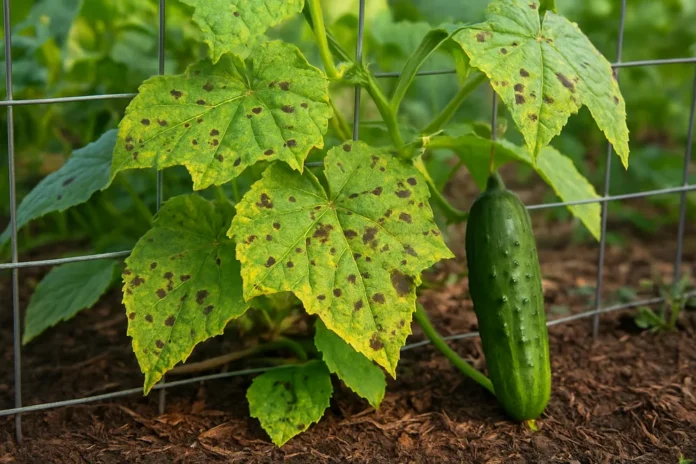
Cucumber leaves usually get black spots from fungal or bacterial disease, especially when leaves stay wet and air flow is poor. In some cases, black spotting can also come from pest damage, sun stress, or dead tissue after earlier leaf injury.
Seeing cucumber leaves with black spots can be alarming because the damage often seems to spread fast. One day the leaves look mostly normal, and a few days later they have dark flecks, dead patches, or holes forming around the spots. In my experience, black spotting on cucumbers is often tied to leaf disease, but not every dark mark means the same thing.
The key is to look at the shape, color, and location of the spots. Tiny black pinpoints, tan spots with dark borders, angular lesions between veins, and blackened edges all suggest different problems. Weather matters too. Warm temperatures, splashing rain, overhead watering, and crowded vines create ideal conditions for many cucumber leaf issues.
If you can match the pattern early, you have a much better chance of slowing the damage and keeping the plant productive. Below are the most likely causes, how to tell them apart, and what usually helps most in a home garden.
What Black Spots on Cucumber Leaves Usually Mean
Black spots are usually areas of dead or dying leaf tissue. The tissue may have started out pale yellow, tan, water-soaked, or brown before turning darker. That is why gardeners sometimes describe the same problem as black spots, brown spots, or burned spots depending on when they notice it.
On cucumbers, the most common reason is a leaf disease caused by fungi or bacteria. These pathogens spread more easily when leaves stay wet for hours at a time. They can arrive from infected transplants, contaminated tools, old plant debris, splashing soil, or windblown spores.
- If spots are spreading from leaf to leaf, suspect disease first.
- If the dark marks are concentrated where leaves were chewed, torn, or sunburned, the black color may be secondary dead tissue.
- If lower leaves are affected first, moisture splash and soilborne spores are more likely.
- If spotting appears suddenly after rainy, humid weather, fungal or bacterial infection moves higher on the list.
When I diagnose cucumbers, I do not look at just one damaged leaf. I compare several leaves from the top, middle, and bottom of the plant. A true disease pattern is usually consistent, while random injury tends to look uneven and isolated.
Diseases That Commonly Cause Black Spotting
Angular Leaf Spot
Angular leaf spot is a bacterial disease that often starts as water-soaked areas bounded by leaf veins. Because cucumber veins create a blocky pattern, the spots often look angular rather than round. As tissue dies, the centers can turn tan, brown, or dark and may later tear out, leaving ragged holes.
This problem is especially common in wet weather or gardens where plants are watered from above late in the day. You may also notice a sticky or crusty residue on the underside of infected leaves. Fruits can develop small sunken spots too.
Anthracnose
Anthracnose often causes irregular brown or blackish lesions on cucumber leaves. In humid conditions, spots can enlarge quickly and merge into bigger dead patches. On fruit, anthracnose tends to create sunken dark lesions, which is a useful clue if the leaves alone are hard to read.
Warm, wet weather favors anthracnose. It often shows up after extended rain, overhead irrigation, or when vines are packed tightly enough that leaves stay damp long after morning.
Alternaria Leaf Blight
Alternaria can create dark brown to nearly black spots, sometimes with faint target-like rings. Older leaves are usually hit first. As the disease progresses, the tissue around the spots may yellow, and badly affected leaves can dry up and collapse.
Gummy Stem Blight
Gummy stem blight is more than a leaf issue, but leaves can show dark spots and dead areas. Stems may develop lesions that ooze a gummy material, which helps separate it from simpler leaf spot diseases. If you are seeing black spots on leaves plus stem damage, this one deserves attention.
- Rounded or irregular dark spots often point toward fungal disease.
- Angular spots that follow veins often point toward bacterial disease.
- Yellow halos around spots are common with several infections but are not diagnostic by themselves.
- Holes forming where dead tissue drops out are especially common with angular leaf spot and some advanced fungal infections.
Less Obvious Causes Besides Disease
Pest Damage That Turns Dark Afterward
Chewing insects like cucumber beetles, flea beetles, and even rough handling can wound leaves. Those injured spots can later dry out and turn dark brown or black. If the black areas line up with holes, scraping, or torn edges, the original problem may have been physical damage rather than infection.
Sun Scorch and Heat Stress
Leaves exposed suddenly to intense sun after transplanting, pruning, or a weather shift can develop scorched patches. These often start pale or bleached and then darken as tissue dies. The pattern is usually broader and less spot-like than disease, often affecting the most exposed leaves first.
Chemical Burn
Foliar sprays, strong fertilizer solutions, soap sprays used in hot weather, or herbicide drift can all burn cucumber leaves. Burned tissue may appear as speckling, edge necrosis, or blackened patches. If damage appeared within a day or two of spraying, that timing matters.
Old Leaf Decline
Near the end of a cucumber plant's productive run, older lower leaves often spot, yellow, and fail before the rest of the plant. This does not mean you should ignore it, but mild spotting on a few bottom leaves late in the season is less serious than rapid spotting on young upper growth.
If you recently sprayed anything, even an organic product, check whether the spotting is heaviest where spray droplets would have dried. I have seen homemade treatments blamed on disease more than once, especially after hot afternoons.
How to Tell Which Cause Is Most Likely
A quick symptom check can narrow things down before you take action. Black spots alone are too broad, but the leaf pattern usually tells a story.
- Small angular spots between veins: often bacterial angular leaf spot.
- Rounder dark spots with tan centers or ringed patterns: often fungal leaf blight or anthracnose.
- Blackened tissue around holes or tears: often insect or physical injury first.
- Dark patches mostly on top, exposed leaves after heat: often sun scorch or spray burn.
- Rapid spread after rain or overhead watering: often infectious disease.
- Lower leaves affected first with splashback from soil: often fungal or bacterial leaf spots.
Also look underneath the leaves. Some diseases show residue, fuzzy growth, or more visible spotting below. Check stems and fruits too. A leaf problem that also shows up on fruit or stems is more likely to be a true pathogen issue than simple stress.
If only one or two leaves are affected and new growth looks clean, you may be catching the issue early or dealing with minor injury. If many leaves across the plant have matching lesions, assume the problem is active and likely spreading.
What to Do Right Now
Your first goal is to reduce spread and relieve stress on the plant. Whether the cause is fungal, bacterial, or environmental, overcrowded wet foliage almost always makes things worse.
- Remove the worst affected leaves if they are heavily spotted, collapsing, or covered in lesions. Do not strip the plant bare.
- Throw infected foliage in the trash rather than composting it unless your compost pile gets reliably hot.
- Water at the base of the plant instead of wetting the leaves.
- Water early in the day so any accidental splashing dries quickly.
- Improve airflow by lifting vines, trimming only what is necessary, and keeping weeds down around the base.
- Avoid handling the plants when leaves are wet, since that spreads many diseases.
- Clean pruners or scissors between cuts with a disinfecting solution or alcohol.
If disease is advanced and the plant is no longer producing well, removal may be smarter than trying to salvage it. A badly infected cucumber can become a source of spores or bacteria for the rest of the bed.
I usually judge cucumber recovery by the condition of new growth, not by whether old leaves improve. Damaged leaves rarely turn pretty again. If fresh leaves emerge mostly clean after you adjust watering and sanitation, you are heading in the right direction.
When Fungicides or Bactericides May Help
Sprays work best when they are used early and paired with cultural fixes like better airflow and dry foliage. They protect healthy tissue better than they cure badly damaged leaves. If the plant already has widespread black spotting, manage your expectations.
For fungal leaf spots, gardeners often use products labeled for cucurbits that contain chlorothalonil, copper, or sulfur, depending on the crop, local rules, and the exact disease. For bacterial problems like angular leaf spot, copper-based products are more commonly used to slow spread rather than eliminate the infection.
Always read the label for cucumbers specifically, follow harvest interval instructions, and avoid spraying in the hottest part of the day. Some products can damage leaves when temperatures are high or when plants are already stressed.
- Do not mix extra-strong concentrations hoping for a faster fix.
- Do not spray wilted plants in direct afternoon heat.
- Do not keep using a product if spotting worsens immediately after application, since phytotoxicity is possible.
- Do not rely on spraying alone if leaves are staying wet every night.
How to Prevent Black Spots on Future Cucumber Crops
Prevention starts before the first spot appears. Cucumber leaves are thin and tender, so anything that keeps them wet and crowded sets the stage for problems.
- Space plants generously so leaves dry faster.
- Trellis vining varieties when possible to improve airflow and reduce soil splash.
- Use mulch to limit mud and spores splashing onto lower leaves.
- Water the soil, not the foliage.
- Rotate cucumbers and related crops to a different bed each year if you have room.
- Remove old cucumber vines and leaf debris at the end of the season.
- Start with disease-free seed or transplants from a reliable source.
- Choose resistant varieties when the same problem shows up year after year.
I have found that trellising plus drip irrigation prevents a surprising number of cucumber leaf issues. It does not make the plants immune, but it cuts down the long wet periods that let spotting diseases take hold.
When the Plant Can Still Recover and when It Probably Will Not
A cucumber plant can often keep producing if spotting is limited mostly to older leaves and the growing tips remain vigorous. If flowers, new leaves, and fruits still look decent, it is worth cleaning up the plant and improving conditions.
Recovery is less likely if dark spotting has moved across most leaves, stems are involved, fruits are developing lesions, or the plant is rapidly defoliating. At that point, even if it survives, yields may drop sharply and nearby cucumber relatives may be at risk.
In a home garden, I usually remove a plant when it has become more of a disease source than a harvest source. That choice can protect healthier cucumbers, melons, or squash growing nearby.
FAQ
Should I Cut Off Cucumber Leaves with Black Spots?
Yes, if the leaves are heavily infected or collapsing, removing them can reduce spread and improve airflow. Leave enough healthy foliage for the plant to keep photosynthesizing, and disinfect tools between cuts.
Can I Still Eat Cucumbers From a Plant with Black Spots on the Leaves?
Usually yes, if the fruit itself is firm, normal-looking, and free of rot or sunken lesions. Wash harvested cucumbers well and discard any fruit that is soft, spotted, or visibly infected.
Do Black Spots on Cucumber Leaves Mean Overwatering?
Not always. Overwatering by itself is not the usual direct cause, but frequent moisture and wet leaves create ideal conditions for fungal and bacterial diseases that produce black spotting.
Will Black Spotted Cucumber Leaves Turn Green Again?
No. Tissue that has turned black is dead and will not recover. Focus on stopping new spots and protecting fresh growth.
Can Baking Soda Fix Black Spots on Cucumber Leaves?
Baking soda is sometimes used in homemade sprays, but it is not a reliable cure for established cucumber leaf diseases. It can also burn leaves if mixed too strongly or applied in hot weather.
Why Are Only the Bottom Cucumber Leaves Getting Black Spots?
Lower leaves are often hit first because they stay shaded and damp longer and get splashed with soil during watering or rain. That pattern often points to a disease favored by moisture.
How Fast Do Cucumber Leaf Spot Diseases Spread?
They can spread very quickly during warm, humid, rainy weather, sometimes over just a few days. In drier conditions with good airflow, spread is often much slower.
Need a treatment that actually matches the symptom? Read our guide to the best fungicides and copper sprays for cucumbers so you can choose the right product before leaf damage spreads.
