

Note: This article contains affiliate links. If you click on these links and make a purchase, I may earn a small commission at no extra cost to you. This helps support my research and content. Read my full affiliate disclosure here.
Removing woody brush and small trees is often a different job than killing annual weeds. You need a product that acts quickly on foliage and moves into roots so stump sprouts and suckers do not return. This guide looks at six shortlisted brush killers suited for tree and shrub control, chosen for their contact activity, systemic movement, and application flexibility. We evaluated products on how fast they burn back foliage, how well they prevent root and stump regrowth, and how easy they are to apply safely in yards and near desirable plants. Read on to understand the differences and find the right approach for your situation.
Top Picks at a Glance
| Best Overall The best all-around choice for most situations | RM43 Concentrated 43% Glyphosate Plus Weed Preventer, 1 Gallon |  |
| Best Quality Built to a higher standard if you want something more solid | ALLIGARE Triclopyr 4 EC Herbicide, 1 Quart |  |
| Best Value The sweet spot between price and what you get | BioAdvanced Poison Ivy Killer Plus Concentrate, 32 oz |  |
| Highest Rated A top-rated pick with lots of positive feedback | Honcho K6 Glyphosate Herbicide 48.7% (2.5 Gallon) |  |
| Most Popular A crowd favorite that many people choose with confidence | Bonide Stump-Out Stump & Vine Killer, 8 oz with Brush Applicator | 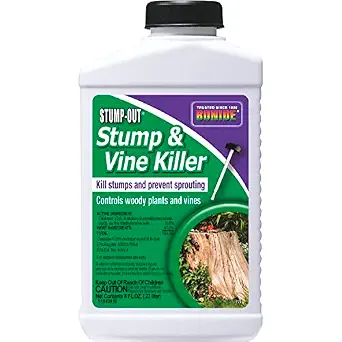 |
| Best Seller A high-volume bestseller chosen again and again | Ortho GroundClear Poison Ivy & Tough Brush Killer, 1 gal |  |
RM43 Concentrated 43% Glyphosate Plus Weed Preventer, 1 Gallon

| Unit Count | 128 Fluid Ounces |
|---|---|
| Item Form | Spray |
| Coverage | 17297 square feet |
| Active Ingredients | glyphosate |
RM43 is a concentrated herbicide formulated for total vegetation and brush control on non-crop areas. You dilute the gallon with water in a sprayer to treat large areas or spot-treat woody brush, fence rows, driveways, and around outbuildings. The formula combines glyphosate and an additional herbicidal ingredient with a surfactant so treated plants wilt to the root and regrowth is suppressed for up to a year. It is rainfast within about two hours and the product info notes no entry restrictions once spray has dried, which makes follow-up work easier. Practical benefits include high coverage per gallon and proven effectiveness against tough grasses and woody sprouts. Important limitations are strict use restrictions around desirable plants and the need for careful handling and disposal; this is intended for non-crop, non-landscape areas and requires correct mixing and protective gear. The concentrate form keeps storage and sprayer prep efficient but raises exposure risk compared with ready-to-use products.
Best for: Buyers needing a potent, long-lasting brush and vegetation killer for non-crop areas like fence lines, driveways, and around outbuildings who prioritize effectiveness and coverage over selectivity.
Less Ideal for: Home gardeners who need a selective or gentle product for beds, lawns, ornamental plants, or anyone unwilling to follow chemical safety and application rules.
- Concentrated formula provides high coverage from one gallon when mixed for spot or area treatments
- Designed for total vegetation control including woody brush and roots for long-term suppression
- Rainfast in about two hours which reduces reapplication after light showers
- Combines multiple active ingredients plus surfactant to improve kill of tough plants
- Not selective so it will damage or kill desirable plants if contacted
- Intended only for non-crop/non-landscape areas and requires careful handling and PPE
Verdict: Choose RM43 when you need a concentrated, long-lasting total vegetation and brush killer for large non-crop areas where strong, reliable control is the priority.
ALLIGARE Triclopyr 4 EC Herbicide, 1 Quart

| Unit Count | 32 Fluid Ounces |
|---|---|
| Item Form | Liquid |
| Active Ingredients | Triclopyr |
| Coverage | Pastures, rangelands, rights-of-way, lawns, golf courses, sod farms, industrial properties, ditches |
This concentrated triclopyr 4 EC is a professional-strength brush and stump killer designed to target woody plants and broadleaf weeds while leaving grasses largely unaffected. It is typically mixed into a spray solution (manufacturer guidance suggests about 3.2 to 6.4 oz per gallon with a bark penetrant) and applied to foliage, cut stems, or basal bark for effective uptake through leaves and roots. Notable features include year-round application flexibility, compatibility with many tank mixes for custom treatments, and an ester formulation that improves absorption on woody stems. Practical benefits are strong control of brush on pastures, forestry edges, CRP acres, and rights-of-way and the ability to tailor concentration and adjuvants for tougher species. Important limitations are that this is a concentrated, regulated herbicide that requires protective equipment and careful handling, it can damage non-target broadleaf plants if drift occurs, and local use restrictions vary by state so follow label directions and disposal rules.
Best for: Buyers who need a performance-oriented brush killer for managing trees, woody regrowth, and broadleaf invasives on pasture, forestry margins, or rights-of-way and who are comfortable following label directions and using PPE.
Less Ideal for: Casual gardeners, small-property owners unfamiliar with herbicide mixing, or anyone unwilling to follow safety precautions and local regulations should consider gentler or ready-to-use alternatives.
- Effective on woody plants, brush, and broadleaf weeds while minimizing harm to grasses
- Concentrated liquid formulation allows customizing mix strength for different infestations
- Tank-mix compatible so it can be combined with other herbicides and adjuvants
- Flexible year-round application options for seasonal control strategies
- Requires careful handling and protective gear because it is a concentrated herbicide
- Potential to injure non-target broadleaf plants if drift or overspray occurs
Verdict: Choose this concentrated triclopyr formula when you need professional-strength control of trees, brush, and broadleaf weeds across large or challenging acres.
BioAdvanced Poison Ivy Killer Plus Concentrate, 32 oz

| Unit Count | 32 Fluid Ounces |
|---|---|
| Coverage | Up to 4,000 square feet |
| Active Ingredients | Triclopyr, triethylamine salt 8.8% |
This 32 oz BioAdvanced concentrate is a systemic brush and vine killer designed for treating large patches of poison ivy, poison oak, kudzu, blackberries and similar woody weeds. It is used by mixing or applying as directed for broad coverage across up to 4,000 square feet, and can be brushed undiluted onto stumps to prevent regrowth. The active ingredient (triclopyr, triethylamine salt 8.8%) moves through leaves and stems into roots for lasting control, so a single well-timed application can stop resprouting instead of just browning foliage. Practical benefits include strong coverage for fence lines, wooded edges and overgrown trails and the convenience of a concentrate that reduces frequent reapplications. Limitations to note are that it is a nonselective brush killer so care is required to avoid desirable trees and shrubs, and results are not instantaneous since systemic action takes time to fully kill roots. Protective handling and following label directions are essential for safe, effective use.
Best for: Buyers who want a practical, long-term solution for clearing patches of woody weeds and brush along fence lines or wooded edges and prefer a concentrate that covers large areas in fewer treatments.
Less Ideal for: People who need immediate contact-only weed burnoff, who must protect nearby ornamental plants, or who only have very small containers or potted plants to treat.
- Systemic action that moves to roots for longer lasting control
- Concentrate treats up to 4,000 sq ft, suitable for large areas
- Effective on 70+ tough brush and vines including poison ivy and kudzu
- Nonselective herbicide so it can damage desirable vegetation if contacted
- Works more slowly than contact herbicides because it kills through systemic uptake
Verdict: Choose this concentrate when you need a strong, systemic solution to permanently remove poison ivy and other tough vines across large outdoor areas.
Honcho K6 Glyphosate Herbicide 48.7% (2.5 Gallon)

| Active Ingredients | Glyphosate potassium salt 48.7% |
|---|---|
| Unit Count | 320 Fluid Ounces |
| Item Form | Liquid |
| Included Components | (1) 2.5 Gallon Jug of Honcho K6 |
Honcho K6 is a high-load potassium glyphosate formulation intended for post-emergence, systemic control of a wide range of weeds, brush, vines, and woody plants. It is applied by mixing with water or other carriers and spraying foliage, where the active ingredient and built-in surfactant promote uptake and translocation to roots for complete plant kill without soil residual. Practical uses include fence row and farmstead cleanup, shrub-bed renovation, turf renovation before replanting, and targeted stump or brush control when applied carefully to foliage. The product’s concentrated 2.5 gallon size supplies multiple applications for larger properties or repeated spot treatments. Important limitations are that it is nonselective and will damage desirable plants if contacted, it is restricted in some states, and safe, label-directed handling with protective equipment is required. Because it leaves no soil residual, repeat treatments may be needed for persistent regrowth from seed banks or nearby roots.
Best for: Buyers who need a reliable, no-nonsense systemic brush and woody plant killer for larger yards, fence lines, or farmsteads and who prioritize consistent control over convenience formulations.
Less Ideal for: Home gardeners with small ornamental beds, or anyone unwilling to follow restrictive label directions or handle concentrated herbicides should choose a more selective or lower-strength option.
- High glyphosate concentration for effective systemic control
- Built-in surfactant for improved leaf coverage and uptake
- Large 2.5 gallon jug suitable for multiple applications on bigger properties
- Non-residual action reduces long-term soil impact when used correctly
- Nonselective herbicide that will kill desirable plants on contact
- Not approved for use in certain states and requires strict label compliance
- Requires careful mixing and protective equipment for safe handling
Verdict: Choose Honcho K6 when you need a concentrated, dependable systemic glyphosate to reliably kill brush and woody plants across larger properties.
Bonide Stump-Out Stump & Vine Killer, 8 oz with Brush Applicator

| Unit Count | 8 Ounce |
|---|---|
| Item Form | Spray |
| Coverage | Stumps, woody plants, vines, broadleaf weeds |
| Active Ingredients | 3,5,6-Tricloro-2-Pyridinyloxyacetic Acid |
Bonide Stump-Out is a targeted herbicide designed to kill tree stumps, woody plants, vines and broadleaf weeds. It is supplied as an 8 oz concentrate and includes a brush applicator for painting undiluted product directly onto cut stumps or heavy stems, and it can also be applied as a foliar spray with a hose-end or tank sprayer for larger infestations. The active ingredient listed is a pyridinyloxyacetic acid derivative that acts relatively quickly, with results typically visible within one to six weeks. Practical strengths are the brush applicator for precise, low-drift application around turf and ornamentals and the ability to prevent stump resprouting when used undiluted. Limitations are that it is a nonselective woody-killing product so careful application is required to avoid desirable plants and that small container size means you may need multiple bottles for large jobs. Follow label directions and safety guidance to protect people and pets during use.
Best for: Gardeners who prioritize confident, evidence-backed solutions for removing stumps and persistent woody vines and who prefer a product that allows precise application to minimize collateral damage.
Less Ideal for: Landscapers or property owners with large acreage who need bulk quantities or want a selective, turf-safe broadcast treatment.
- Brush applicator allows precise, low-drift application to stumps and vines
- Works on a range of targets including stumps, woody plants, vines and broadleaf weeds
- Can be applied undiluted to prevent stump resprouting or mixed for foliar spraying
- Visible control within one to six weeks for many targets
- Small 8 oz bottle may be insufficient for large properties or many stumps
- Nonselective action requires careful application to avoid damage to desirable plants
Verdict: Buy this if you want a compact, brush-applicator herbicide that reliably kills stumps and woody vines with precise, low-drift application.
Ortho GroundClear Poison Ivy & Tough Brush Killer, 1 gal

| Unit Count | 128 Fluid Ounces |
|---|---|
| Item Form | Spray |
| Coverage | Over 60 types of listed tough weeds and brush |
| Active Ingredients | Triclopyr, Triethylamine Salt, Pelargonic Acid |
This 1 gallon Ortho GroundClear formula is a ready-to-spray brush and weed killer made for targeted removal of poison ivy, poison oak, kudzu, wild blackberry and many other tough brush species. It includes a battery-powered Comfort Wand that lets you aim the spray at foliage, stems or trunks without bending or pumping, which helps when treating brush around trees, fences or along trails. The product starts showing visible effects within an hour and becomes rainproof in about two hours, so treated areas can withstand light weather soon after application. It is intended for non-garden areas and is not safe for desirable plants or lawns, so care is required to avoid drift or overspray. Active ingredients include triclopyr and pelargonic acid, which move through the plant for longer control but may require retreatment on very persistent regrowth. For homeowners who prefer a straightforward, no-mix option with a convenient wand for precise application, this product simplifies brush clearing while requiring cautious use near desirable vegetation and water.
Best for: Homeowners who want a simple, ready-made solution to remove poison ivy and aggressive brush around trees, fences and non-garden areas and who prefer a wand for controlled application.
Less Ideal for: People looking to treat lawns, garden beds with desirable plants, or those who need an aquatic-safe option for use near streams or ponds.
- Ready-to-use 1 gallon container requires no mixing for quick application
- Battery-powered Comfort Wand provides precise, low-effort spraying for stems and foliage
- Starts showing visible results in about 1 hour and is rainproof in 2 hours
- Controls over 60 listed tough weeds and brush including poison ivy, poison oak, kudzu and blackberry
- Not selective and will kill desirable plants or lawn if contacted
- May need repeat applications for persistent regrowth of very tough woody species
Verdict: A straightforward, ready-to-use brush killer with a comfort wand that makes targeting poison ivy and other tough brush quick and easy for homeowners.
Choosing the Right Brush Killer for Trees: Key Factors to Consider
Mode of Action and Systemic Movement
Understanding how a brush killer moves inside treated vegetation is crucial. Contact-only products burn leaves quickly but often leave roots intact, which leads to resprouting. Systemic formulations translocate active ingredient from foliage or a cut stump into roots and the crown, increasing the chance of permanent kill on many woody species.
When selecting a product, match its mode of action to your goal. For killing small trees and multi-stem shrubs, favor systemic activity or a cut-stump treatment that delivers herbicide directly into the cambium. For small, isolated seedlings, a fast-contact spray may be sufficient but expect follow-up treatments for root systems.
Application Method and Timing
Application method affects effectiveness and safety. Foliar sprays require thorough coverage of leaves during active growth; cut-stump treatments need herbicide applied immediately to the fresh cut surface to move into the root system. Basal bark treatments coat the lower trunk and are useful in wet or dormant seasons when foliage applications are not appropriate.
Timing matters: apply when plants are actively translocating sugars-typically late spring through early fall-so systemic products move to roots. Avoid treatments during drought stress or leaf drop when translocation is limited. Also consider weather forecasts to prevent drift onto desirable vegetation.
Target Species and Size of Woody Growth
Different woody plants and sizes respond differently to herbicides. Small saplings and brush under a certain diameter are easier to kill with foliar sprays, while larger trunks may require cut-stump or basal bark approaches. Some species resprout aggressively and need stronger systemic action or repeated treatments.
Identify the species when possible and choose an approach rated for that type. For large or multi-rooted trees, mechanical removal combined with a targeted herbicide on the stump often yields the best long-term control.
Persistence and Environmental Considerations
Residual soil activity can be a benefit or a drawback. Products with longer soil persistence may control root fragments and suckers but also increase the risk to nearby non-target plants and soil organisms. Shorter persistence lowers off-target risk but may require retreatment.
Consider proximity to desirable trees, garden beds, water sources, and pollinator habitat. Select products with appropriate label restrictions and follow buffer or setback guidance to protect sensitive areas.
Safety, Label Directions, and PPE
Herbicide safety and clear label directions are essential for effective and responsible use. Labels provide legal restrictions, mixing rates, application techniques, and required personal protective equipment. Using correct PPE and following re-entry intervals protects you and family members or pets.
Look for products with straightforward mixing instructions and clear cleanup and disposal guidance. If treating near edible plants or water, ensure the label explicitly allows or restricts those uses and follow any mandatory buffer zones.
Formulation and Mixing Convenience
Formulation affects how easy a product is to use on trees. Ready-to-use sprays are convenient for spot-treating small patches, while concentrates let you mix larger volumes for broad infestations. Oil-based mixes are often required for basal bark applications because they penetrate bark and reach cambial tissues.
Consider the quantity you need and storage constraints. For seasonal jobs, a small ready-to-use option may be simplest. For recurring or large-scale treatments, a concentrate with clear dilution charts may be more economical and efficient.
When to Use Foliar Spray Versus Cut-Stump Treatments
Foliar sprays work best on actively growing, smaller-stemmed brush where you can achieve full leaf coverage. They are fast and effective for seedlings and multi-stem shrubs under a certain diameter when done during the plant's growth period.
Cut-stump treatments are the preferred method for larger trees or multi-stem shrubs. Cutting the trunk and immediately applying herbicide to the fresh cambium maximizes uptake into the root system and reduces the chance of resprouting.
- Use foliar spray for dense patches of small plants during active growth.
- Choose cut-stump treatment for single large stems or where you want to avoid drift.
- Basal bark applications are useful when foliage access is limited or during dormancy.
Protecting Nearby Plants and Water
Buffering and careful application reduce the risk to desirable plants and aquatic areas. Apply directed sprays with shields or use a brush applicator to minimize drift. Follow label setbacks near streams, ponds, and wells.
Rinsing equipment and handling rinsate properly prevents contamination. If you must treat near ornamentals, consider physical barriers or switch to cut-stump methods to localize herbicide placement.
- Check label for required water buffers and follow them exactly.
- Limit spray on windy days and use low-pressure applicators to reduce drift.
- Favor direct-application methods when treating near sensitive vegetation.
Dealing with Resprouts and Follow-Up
Even with systemic products, some species resprout from deep roots or stump collars. Monitor treated areas for several months and be ready to retreat spots that show regrowth. Early retreatment is usually easier and requires less herbicide.
Combining mechanical removal with a targeted herbicide application to fresh cuts or root collars improves long-term control. Persistent re-sprouters may need multiple treatments spaced through the active season.
- Inspect treated plants after 6 to 12 weeks for signs of regrowth.
- Retreat small resprouts with a spot foliar application or a quick cut-and-apply stump treatment.
- Record treatment dates and conditions to refine timing on future control efforts.
Equipment and Application Tools
Having the right tools makes treatments safer and more effective. Backpack sprayers are useful for larger patches, while handheld pump sprayers and brush-applicator bottles work well for spot treatments and cut-stump applications. Basal bark work often needs an oil-based mix and a low-pressure sprayer.
Calibrate sprayers and use fitted nozzles to control droplet size. Proper calibration helps you apply the labeled rate across the target area and reduces waste and drift.
- Keep separate equipment for herbicides and clean it after each use.
- Use conical or adjustable nozzles to match application type and plant size.
- Wear appropriate PPE and have spill-cleanup materials at hand.
Legal and Local Restrictions
Local regulations can affect which active ingredients are permitted or restricted. Check municipal or regional rules for use near public waterways and protected habitats before treating. Some areas require licensed applicators for certain herbicide classes.
Even on private property, follow label directions as law. Restrictions can vary by jurisdiction, so review local guidance and obey any buffer or disposal requirements.
- Verify local restrictions and permits for herbicide use near water.
- Keep label and safety data sheets accessible when applying.
- Dispose of unused concentrate and rinse water according to local rules.
How We Chose the Best Brush Killer for Trees
We focused on practical, gardener-centered performance that matters when treating trees and woody brush. Key evaluation criteria included contact speed because rapid foliar knockdown reduces sap flow and damage to nearby plants; systemic root translocation to limit stump and root-sucker regrowth; labeled use on woody species and clear application methods for tree treatments; and formulation flexibility, such as ready-to-use, concentrate, or cut-stump options for different job sizes. We also considered residual activity in the soil where relevant, herbicide persistence to avoid unintended damage, and safety guidance for use around turf, ornamentals, and water. Products were excluded if their label did not allow tree or woody brush application, if they lacked clear directed-application instructions, or if they relied solely on non-systemic action that would not prevent resprouting. The final list emphasizes tools that balance fast contact control with systemic movement and clear user guidance.
FAQ
Can I use a brush killer on tree stumps after cutting?
Yes. Applying a systemic herbicide immediately to a fresh cut stump helps translocate the active ingredient into roots and reduces resprouting. Follow label timing instructions and apply to the cambium for best uptake.
How long before I see results after treating woody brush?
Visible leaf yellowing or browning often appears within days to a few weeks, depending on formulation and species. Complete kill and root failure can take several weeks to months, so monitor treated plants before assuming success.
Is it safe to treat near desirable trees or garden beds?
It depends on the product and application method. Directed cut-stump or basal bark treatments are safer near desirable plants because they limit off-target movement. Always follow label buffers and avoid broadcast spraying near sensitive vegetation.
When is the best time of year to apply a systemic brush killer for trees?
Late spring through early fall when trees are actively translocating sugars is typically ideal. Applications during dormancy or drought can reduce systemic movement and limit effectiveness.
Do I need special protective equipment to apply these products?
Most labels require personal protective equipment such as gloves, long sleeves, eye protection, and sometimes respirators. The exact PPE depends on formulation and application method, so follow the label instructions.
Will one treatment permanently kill deep-rooted shrubs?
Often it depends on the species and root structure. Some deep-rooted or vigorous resprouters may require multiple treatments or a combination of mechanical removal and herbicide application to achieve long-term control.
Final Verdict
Choosing the right brush killer for trees means matching mode of action and application method to the size and species you want to remove. Prioritize systemic movement or targeted cut-stump and basal bark techniques for reliable root control, and time applications for active growth to maximize translocation. Balance effectiveness with environmental and safety concerns by following label directions, using appropriate application tools, and planning for follow-up treatments when needed. With the right approach you can minimize resprouts and regain planting space confidently.
