

Note: This article contains affiliate links. If you click on these links and make a purchase, I may earn a small commission at no extra cost to you. This helps support my research and content. Read my full affiliate disclosure here.
If you need a reliable tool for chopping firewood, clearing small trees, or routine yard work without spending a lot, a Budget Axe can get the job done. Choosing the right inexpensive axe matters because cheaper tools vary widely in head steel, handle feel, and long-term safety. You want something that cuts cleanly, resists chipping, and stays secure in your hand when swinging. This guide shortlists six top options suited to everyday garden and yard tasks. We evaluated each pick for the qualities gardeners care most about: cutting performance, durability, handle comfort, and safety. Read on to understand the practical tradeoffs so you can choose an axe that matches the work you do and the budget you have.
Top Picks at a Glance
| Best Quality Built to a higher standard if you want something more solid | Estwing Sportsman's Axe, 14" Leather Grip Hatchet (E24A) |  |
| Best Value The sweet spot between price and what you get | DESHIL 15-inch Camping Hatchet Axe with Fiberglass Handle |  |
| Best Budget The cheapest option that still gets the job done reliably | REAT 9.5" Full Tang Throwing Axe with Sheath (440 Stainless Steel) |  |
| Highest Rated A top-rated pick with lots of positive feedback | Ccanku C1342 Camping Hatchet with DC53 Steel Blade and Micarta Handle |  |
| Most Popular A crowd favorite that many people choose with confidence | DESHIL 10" Outdoor Hatchet Mini Camping Axe with Sheath |  |
| Best Seller A high-volume bestseller chosen again and again | Fiskars X7 14" Hatchet |  |
Estwing Sportsman's Axe, 14" Leather Grip Hatchet (E24A)

| Blade Material | Alloy Steel |
|---|---|
| Handle Material | Leather |
| Head Type | Hatchet |
| Blade Length | 3.25 inches |
The Estwing Sportsman’s Axe is a compact, one-piece forged hatchet built for hard outdoor use. Its single-piece alloy steel construction and hand-polished head give it excellent balance and durability for chopping limbs, splitting small logs and kindling, and general campsite tasks. The sanded and lacquered leather handle provides a comfortable, non-slip grip during extended use, and the included ballistic nylon sheath with belt loop keeps the blade protected and easy to carry. The 3.25-inch cutting edge is sharp out of the box and suited to controlled cuts rather than heavy felling, so it works best for camp chores and light to medium splitting. Because the head and handle are forged in one piece there are no welded joints to fail, but that solid construction also means less shock absorption compared with some modern composite-handled axes. Overall it is a straightforward, high-quality tool for outdoorsmen who prioritize durability and a classic feel, though users needing a longer reach or heavy timber felling will want a larger axe.
Best for: Buyers who want a durable, no-nonsense camp hatchet that will hold up to frequent outdoor use and value classic forged construction and a leather grip.
Less Ideal for: People who regularly need to fell large trees or want maximum vibration reduction should choose a larger felling axe or a tool with a shock-absorbing handle.
- Forged in one piece from alloy steel for excellent durability and balance
- Genuine leather handle that is sanded and lacquered for a comfortable, secure grip
- Includes ballistic nylon sheath with belt loop for safe transport and storage
- Compact 14-inch length makes it easy to carry for camping and backpacking
- Smaller 3.25-inch blade and compact size limit effectiveness on large trees or heavy felling
- One-piece steel handle transmits more shock to the user than shock-absorbing composite handles
Verdict: A rugged, one-piece forged hatchet that delivers reliable chopping performance and a comfortable leather grip for campers and outdoorsmen.
DESHIL 15-inch Camping Hatchet Axe with Fiberglass Handle

| Blade Material | Carbon Steel |
|---|---|
| Handle Material | Fiberglass |
| Head Type | Hatchet |
| Blade Edge | Convex |
The DESHIL 15-inch hatchet is a budget-friendly camp axe designed for chopping kindling, splitting small logs, driving tent stakes, and general campsite tasks. Its forged, heat-treated carbon steel blade holds a sharp convex edge suitable for processing firewood and preparing kindling, while the included locking sheath protects the edge in a pack. The fiberglass handle with anti-slip grip absorbs shock and gives controlled swings for repeated use, and the flat hammer back doubles as a camp hammer so you do not need a separate tool for stakes. At about 600 g it is light enough to carry on short hikes yet substantial enough for yard cleanup and firewood prep. Limitations to note are the compact size and lighter head weight, which mean it is not intended for heavy-duty splitting of large logs and will require more effort on dense wood; the carbon steel blade will also need periodic sharpening and protection from rust. For the price it offers a practical, multiuse tool for campers and homeowners who need a capable, portable hatchet without premium cost extras.
Best for: Buyers who want an affordable, portable hatchet for campsite chores, kindling and light wood prep and who prioritize a functional, low-cost tool over heavy-duty splitting power.
Less Ideal for: People who need a full-size splitting axe for large firewood or professional log splitting should choose a heavier, long-handled splitter instead.
- Forged heat-treated carbon steel blade that holds a sharp convex edge for chopping and kindling
- Shock-reducing fiberglass handle with anti-slip grip for comfortable, controlled swings
- Built-in hammer back adds campsite functionality without extra tools
- Includes locking sheath for safer transport and edge protection
- Lightweight and compact for easy carrying during camping and hiking
- Head weight and overall length limit effectiveness on large, hard logs
- Carbon steel requires routine sharpening and corrosion prevention
Verdict: A lightweight, no-frills camping hatchet that delivers dependable chopping and campsite utility at a budget-friendly value.
REAT 9.5" Full Tang Throwing Axe with Sheath (440 Stainless Steel)

| Blade Material | Stainless Steel |
|---|---|
| Handle Material | Stainless Steel |
| Blade Length | 2.75 inches |
| Head Type | Throwing |
| Included Components | Sheath, Throwing Axe |
This REAT throwing axe is a small, budget-friendly full-tang hatchet built for recreational throwing, camping, and practice. The 440 stainless steel head and hollow-grind edge give a sharp, durable face while the balanced, weighted design aims to produce a predictable flight for beginners and casual users. Its stainless-steel handle keeps the tool low maintenance and the supplied sheath makes it easy and safer to carry to a range or campsite. Typical use cases are target practice, backyard throwing, and light campsite tasks rather than heavy chopping or splitting. At this price point you get solid materials and a compact, travel-ready package, but expect limitations: the slim 2.75-inch blade and metal handle sacrifice ergonomic cushioning and heavy-duty chopping power, and the all-metal construction can transmit more vibration on impact than a wood or rubber-handled hatchet. For budget buyers who want a throw-ready axe for practice and occasional outdoor use, this is a practical, no-frills option.
Best for: Buyers seeking an inexpensive, ready-to-throw axe for target practice, casual competitions, or camping who prioritize affordability and portability over heavy-duty use.
Less Ideal for: People who need a multiuse camp axe for frequent chopping, splitting, or heavy-duty survival work should choose a larger hatchet with a cushioned or wooden handle.
- Full-tang 440 stainless steel construction for durability and edge retention
- Balanced weight distribution designed for predictable throwing flight
- Includes sheath for safer storage and easy transport
- Compact and lightweight for travel and backyard use
- Blade and compact size are not suited for heavy chopping or splitting tasks
- All-metal handle offers less shock absorption than padded or wooden handles
Verdict: A straightforward, low-cost full-tang throwing axe that gives beginners and budget-minded buyers a durable, travel-ready tool for practice and light outdoor use.
Ccanku C1342 Camping Hatchet with DC53 Steel Blade and Micarta Handle
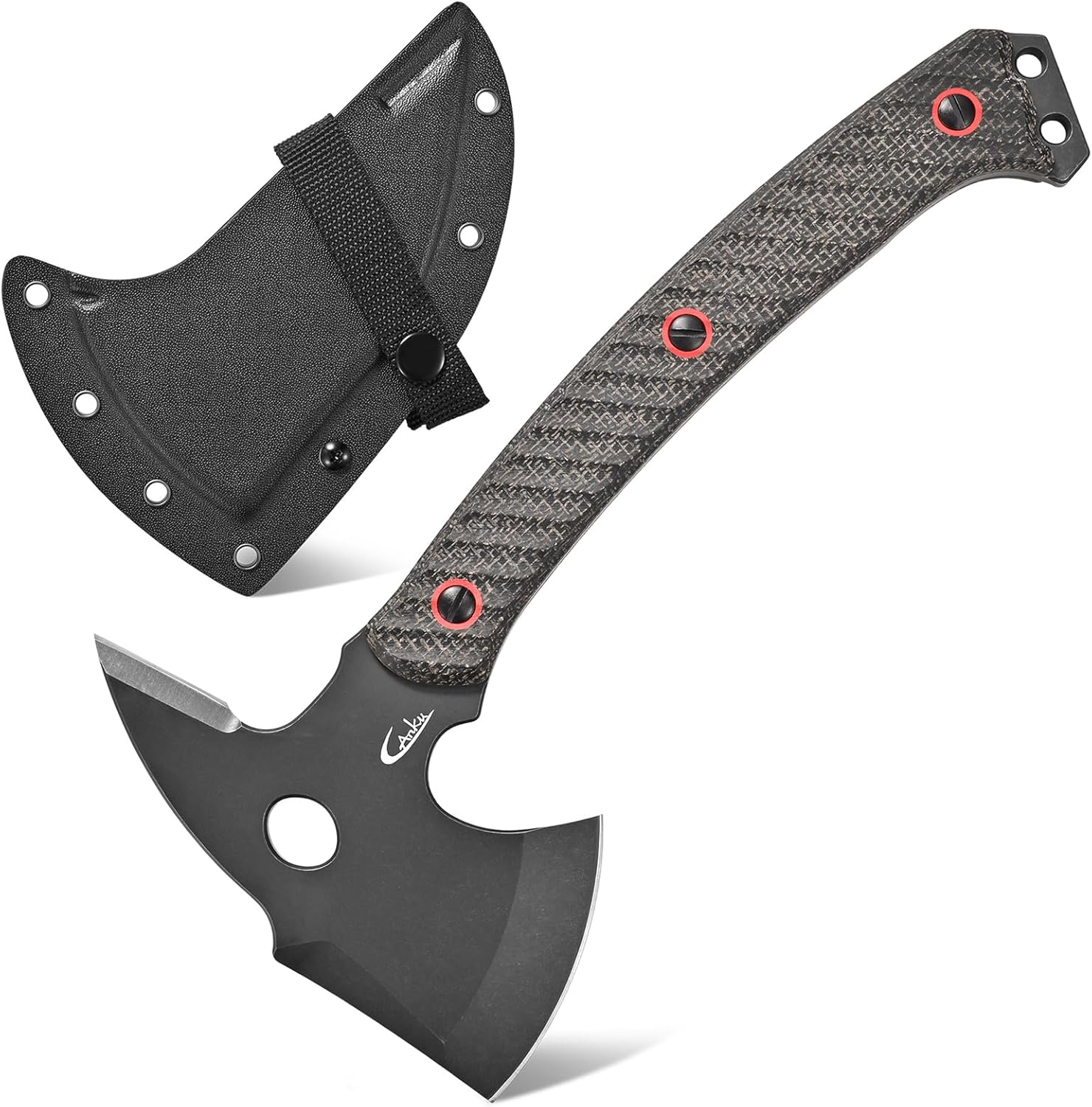
| Blade Material | DC53 |
|---|---|
| Handle Material | Micarta |
| Head Type | Hatchet |
| Included Components | Sheath |
This Ccanku C1342 camping hatchet is a small, full-tang axe intended for chopping kindling, splitting small logs, clearing brush, and general campsite tasks. The DC53 steel blade is hardened (reported 60-61 HRC) and stonewashed, which should give strong edge retention and a durable cutting edge for repeated use. The Micarta handle provides a secure, non-slip grip and the included Kydex sheath protects the blade in transport. At about a pound of net weight it is light enough to carry on hikes yet substantial enough to deliver solid strikes for household and camping chores. Practical benefits include a beefy, sharp blade that stays sharper longer and a sheath that resists water and damage compared with thin plastic covers. Important limitations are its short handle and compact head, which make it less efficient than a full-sized axe for felling or splitting large timber and give less throwing power for heavy chopping jobs. Buyers should expect to use it for kindling, pruning, and general camp tasks rather than heavy-duty forestry work.
Best for: Buyers who prioritize a durable, dependable camp tool for regular campsite use and light wood prep and want a blade that holds an edge without special care.
Less Ideal for: People who need a full-size splitting axe or a tool for felling trees and heavy-duty timber work should choose a larger, heavier axe instead.
- Hard DC53 steel blade with high reported hardness for strong edge retention
- Full-tang construction and Micarta handle for a secure, comfortable grip
- Included Kydex sheath offers durable, water-resistant blade protection
- Compact and relatively lightweight for easy transport on hikes and camping trips
- Short handle and smaller head limit efficiency on large splitting or felling tasks
- Heavier than ultralight hatchets, so not ideal for minimal-weight backpacking
Verdict: A solid, reliable compact hatchet that gives hard-use edge retention and a durable sheath, making it a practical budget pick for campsite chopping and light bushcraft.
DESHIL 10" Outdoor Hatchet Mini Camping Axe with Sheath

| Handle Material | Fiberglass |
|---|---|
| Blade Material | Carbon Steel |
| Head Type | Hatchet |
| Blade Edge | Convex |
The DESHIL 10-inch outdoor hatchet is a lightweight, budget-friendly tool designed for camping, kindling and light backyard work. Its heat-treated carbon steel head and convex blade edge hold a decent cutting profile for splitting small logs and trimming branches, and the painted finish helps resist corrosion. The fiberglass handle is shock-absorbing and has an anti-slip grip that reduces vibration during repetitive strikes and keeps the tool comfortable in wet conditions. A flat hammer-style poll adds simple multifunctionality for driving tent stakes or small nails. The hatchet ships with a protective sheath for safe transport and storage. Important limitations are its small size and lighter overall mass, which make it unsuitable for heavy-duty felling or splitting large rounds; expect slower progress on larger wood. For basic camp chores and occasional yard use this hatchet gives good value, but buyers who need high-powered splitting should choose a larger, heavier axe.
Best for: Buyers looking for an affordable, portable hatchet for camping, backpacking or light backyard chores who prioritize low cost and convenience over heavy splitting power.
Less Ideal for: People who regularly split large firewood or need a heavy-duty felling axe should choose a larger, heavier model designed for sustained splitting.
- Heat-treated carbon steel head for reasonable edge retention
- Fiberglass shock-reduction handle with anti-slip grip for comfort and reduced vibration
- Includes protective blade sheath for safe transport and storage
- Flat poll doubles as a hammer for driving stakes and small tasks
- Small 10-inch form limits chopping power and is not suited to splitting large logs
- Lightweight design may require more swings compared with heavier hatchets
Verdict: A practical, low-cost 10-inch hatchet that delivers dependable performance for campfire kindling and general campsite tasks.
Fiskars X7 14" Hatchet

| Blade Material | Forged Steel |
|---|---|
| Head Type | Hatchet |
| Included Components | Fiskars X7 Hatchet (14") |
| Manufacturer Warranty Description | Lifetime Manufacturer Limited |
The Fiskars X7 14" Hatchet is a lightweight, purpose-built tool for campfire prep and light wood chopping. Its forged-steel head uses a proprietary grind and low-friction coating to hold an edge longer and reduce blade sticking when splitting small to medium kindling. The hatchet’s weight distribution increases swing speed and perceived power, so one-handed or short two-handed chops feel efficient compared with a basic hatchet. The FiberComp insert-molded handle provides shock absorption and a non-slip grip that reduces fatigue during repeated use, and the included sheath makes it safe to carry. Practical limitations are its size and head weight, which make it unsuitable for heavy-duty felling or large log splitting. The wooden handle listed in some specs may need occasional care compared with full synthetic handles, but the build and edge geometry make this a dependable choice for campers and yard work where a compact, durable hatchet is preferred.
Best for: Buyers who prioritize a reliable, easy-to-use hatchet for camping, firewood prep, and light yard tasks and who look for proven performance rather than experimental features.
Less Ideal for: People needing a heavy-duty splitting axe or a tool for cutting large trees should choose a larger splitting axe or maul instead.
- Proprietary ground forged-steel blade that stays sharp longer and reduces sticking
- Balanced weight distribution for increased swing speed and chopping power
- Shock-absorbing FiberComp handle with non-slip grip reduces user fatigue
- Compact size with included sheath makes it easy to carry for camping and hikes
- Not designed for heavy felling or splitting large logs due to lighter head weight
- Some listings reference a wooden handle which may require more maintenance than full synthetic handles
Verdict: A compact, well-engineered hatchet that delivers durable sharpness and efficient chopping power for campers and outdoor enthusiasts.
Choosing the Right Budget Axe: Key Factors to Consider
Head Steel and Edge Holding
The metal used for the axe head determines how long the cutting edge stays sharp and how resistant it is to chips when striking wood. Higher-carbon steels usually take a sharper edge and are easier to reprofile when they dull, but very hard steels can be brittle and chip on hidden knots.
For budget axes, look for a balance: steel that hardens enough to cut well but still allows field sharpening and resists catastrophic fractures. A finish that limits surface rust also matters because corrosion can weaken the edge over time.
Handle Material and Shock Absorption
Handle material affects comfort, durability, and how much vibration you feel on each swing. Traditional hickory handles absorb shock and can be replaced if broken, while fiberglass or composite handles resist weather and rot and often include integrated shock dampening.
Consider how many swings you expect per session. If you do long chopping sessions, a handle that reduces vibration and provides a comfortable two-handed grip will lessen fatigue. Also check how the grip performs when wet; textured or contoured grips improve control in damp conditions.
Head-to-Handle Attachment and Safety
How the head is fixed to the handle is a primary safety concern. Wedges, epoxy, or molded head designs all aim to prevent the head from loosening during use. A secure attachment reduces the risk of the head flying off on impact and increases the tool's usable life.
Inspect the fixing method when assessing a model. Inexpensive assembly methods can work well if done correctly, but visibly weak fittings or lack of reinforcement are reasons to avoid an axe for demanding chores.
Weight, Balance, and Intended Tasks
An axe that feels well balanced will transfer energy efficiently into the cut. Heavier heads store more momentum for splitting larger logs, while lighter heads let you swing faster and control finer cuts. Balance is the relationship between head weight and handle length.
Match the weight and balance to the tasks you do most often. Backyard kindling and limbing call for a lighter, more maneuverable profile. Splitting larger pieces benefits from a heavier, well-balanced head. Consider handle length too, since longer handles increase leverage but reduce precision.
Ease of Sharpening and Maintenance
Even budget axes need occasional sharpening and rust prevention. A blade geometry that accepts a sharpening stone or file easily means you can restore cutting performance in the field without special tools. Thinner edges cut more easily but require more frequent touch-ups.
Also consider how coatings and finishes perform. Simple protective coatings slow rusting and make maintenance easier. Replacement handle availability and how straightforward it is to re-wedge or reseat the head also affect long-term upkeep.
Durability and Corrosion Resistance
Durability combines the resilience of the head, the strength of the handle, and the quality of assembly. Corrosion resistance matters because surface rust can propagate into pits that weaken the edge and the head body.
For budget tools, expect tradeoffs. Protective finishes, stainless or alloy steels in critical areas, and sealed handle materials will last longer in damp garden conditions. Consider whether small repairs are feasible at home and how easily worn parts can be renewed.
Choosing the Right Size for Your Yard Work
Think about the primary tasks you expect to do. For trimming branches and light limbing, a shorter-handled, lighter axe gives better control and less fatigue. For splitting seasoned logs or dealing with larger trunks, a longer handle and heavier head deliver more splitting power.
Also consider storage and transport. A compact axe is easier to stow in a shed or to carry to remote parts of the property, while a full-size splitting axe is bulkier but more effective for bigger jobs.
- Lightweight axes are best for repeated small tasks and pruning.
- Medium-weight axes are versatile for both chopping and light splitting.
- Heavy splitting axes excel at breaking down larger logs but require more strength and space.
Safe Swinging Techniques for Garden Tasks
Proper stance and swing mechanics reduce the chance of injury and extend the life of the tool. Stand with feet shoulder-width apart and position the wood at a comfortable height. Focus on controlled swings rather than maximum force to avoid glancing blows that can chip the edge.
Wear eye protection and sturdy footwear, and always check the swing path is clear. Regularly inspect the head-to-handle junction for any sign of loosening before each session.
- Use two hands for most chopping swings to maintain control.
- Start with lighter practice swings to ensure balance and angle.
- Avoid striking nails, metal, or very hard knots that can damage the edge.
Maintaining an Axe on a Budget
Basic maintenance keeps a budget axe working for years. Wipe the blade dry after use, apply a light film of oil to prevent rust, and store the axe in a dry location. For edge upkeep, use a file or coarse stone to remove chips, then refine the edge with a finer stone.
Address handle wear proactively. Tighten or re-wedge heads that show any movement, and replace wooden handles that have deep cracks. For composite handles, clean debris from textured grips and inspect for impact damage regularly.
- Dry the blade and oil it after damp use.
- Sharpen frequently with a file for best cutting performance.
- Repair or replace damaged handles promptly to avoid accidents.
When a Budget Axe Is the Right Tool
A budget axe is an excellent choice for casual users, weekend gardeners, or anyone who needs an affordable backup tool. If you only need to split occasional kindling, clear small saplings, or do light property maintenance, a well-chosen inexpensive axe will serve reliably.
If you routinely fell large trees or perform professional-level timber work, consider a heavier-duty tool designed for intensive use. For most home garden tasks, though, the right budget model balances cost with the practical features outlined here.
- Good for occasional firewood splitting and property cleanup.
- Suitable as a second tool for lighter clearing tasks.
- Not ideal for continuous commercial logging or heavy-duty felling.
Transport, Storage, and Blade Protection
Protecting the blade while transporting and storing the axe preserves the edge and prevents accidents. Use a sheath or cover to keep moisture off the steel and to prevent accidental contact. Secure the axe in a vehicle or trailer so it cannot shift during transit.
Store the tool in a dry place away from extremes of temperature. Hanging the axe or using a wall rack keeps the head from resting on damp floors and reduces the risk of handle warping.
- Always sheath the blade when not in use.
- Store off the ground in a ventilated area.
- Secure in transport to prevent movement and damage.
How We Chose the Best Budget Axe
We focused on attributes that determine how a budget axe performs in real garden and yard use. Our selection filtered for head metallurgy and edge geometry that hold an edge during repeated chopping, along with handle materials and shapes that reduce shock and improve control. Build quality and head-to-handle fixation were critical exclusion filters; tools with obvious loose fittings or poor assembly were not considered. We emphasized blades that are serviceable-easy to sharpen and capable of taking a true edge-because inexpensive steel can vary and field maintenance matters. Safety and ergonomics were separate, weighted criteria. Handles that transmit less vibration and provide a secure grip scored higher, as did designs that protect the user during typical chopping motions. Weight and balance were assessed for real tasks like splitting kindling versus felling small trees, since too-heavy heads fatigue you and too-light heads require more swings. Finally, we checked corrosion resistance and the potential lifespan of replacement parts. Products with missing key features or that failed basic durability checks were excluded from the shortlist.
FAQ
What size axe should I choose for splitting kindling?
For kindling, a lighter axe with a shorter handle is usually best because it offers better control and requires fewer swinging muscles. A medium head weight helps create clean splits without excessive effort. It often depends on your stature and strength, so try to handle a similar-size tool if possible before buying.
How often do I need to sharpen a budget axe?
Frequency depends on use, but for regular yard work you may need to touch up the edge after several sessions. Light chopping can go longer between sharpenings, while cutting through dirty wood or hitting knots will dull the edge faster. Quick field filing preserves performance and reduces the need for major regrinding.
Are fiberglass handles worth it over wood on a budget axe?
Fiberglass and composite handles resist rot and weather and often reduce vibration, which is helpful for long sessions. Wooden handles can be comfortable and are often replaceable at low cost. The better choice depends on whether you value replaceability and traditional feel or weather resistance and low maintenance.
Can I use a budget axe for felling small trees?
Budget axes can handle small trees if they have suitable head weight and a secure attachment, but frequent heavy-duty felling may expose weaknesses in cheaper materials. For occasional small tree work, choose a model with robust head-to-handle fixation and be attentive to wear signs.
How do I tell if the axe head is becoming loose?
Check for movement by grasping the head and trying to wiggle it relative to the handle. Also listen for creaks during use and inspect for visible gaps at the eye. If the head shows any play, stop heavy work and tighten, re-wedge, or repair the attachment before continuing.
What protective gear should I use when chopping wood?
Use eye protection to guard against chips, sturdy boots to protect feet, and gloves to improve grip and reduce blisters. Hearing protection is optional for short sessions, but consider it for extended work. Dress in close-fitting clothing to avoid snag hazards during motion.
Final Verdict
For most gardeners and homeowners, the best Budget Axe balances a resilient head, a comfortable handle, and secure assembly. Prioritize edge-holding steel and a handle that reduces vibration for longer sessions. Consider weight and balance relative to the jobs you do most often, and factor in how easy the axe is to maintain in the field. If you focus on those practical tradeoffs-durability, safety, and ergonomics-you can select an inexpensive axe that performs reliably for years. Choose based on the tasks and frequency of use rather than price alone, and maintain the tool to extend its service life.
