

Note: This article contains affiliate links. If you click on these links and make a purchase, I may earn a small commission at no extra cost to you. This helps support my research and content. Read my full affiliate disclosure here.
A reliable car pressure washer pump makes the difference between a quick, gentle wash and a long, frustrating chore. For cars, you want steady pressure that removes road grime without damaging paint, plus materials and seals suited to repeated detergent use. This guide covers six top-rated options shortlisted for automotive duty and compares them across the technical and practical features that matter in a driveway or detailing bay. We evaluate each pump for flow and pressure consistency, corrosion resistance, compatibility with standard detergents, and ease of maintenance. Read on to understand how those criteria change what you should buy and which features match the way you wash vehicles.
Top Picks at a Glance
| Best Overall The best all-around choice for most situations | WOJET Triplex Pro Pressure Washer Pump PA3031 — 3600 PSI, 2.7 GPM |  |
| Best Quality Built to a higher standard if you want something more solid | CAT Pumps 4DNX25GSI 3000 PSI Triplex Pressure Washer Pump (2.5 GPM, Adjustable Unloader) |  |
| Best Value The sweet spot between price and what you get | Hourleey 3/4" Shaft Horizontal Pressure Washer Pump, 3400 PSI 2.5 GPM |  |
| Highest Rated A top-rated pick with lots of positive feedback | Hochspuel 1" Shaft Triplex Pressure Washer Pump — 4300 PSI, 4.4 GPM |  |
| Most Popular A crowd favorite that many people choose with confidence | YAMATIC 3/4" Horizontal Shaft Pressure Washer Pump, 3400 PSI 2.5 GPM |  |
| Best Seller A high-volume bestseller chosen again and again | WOJET PA3023 Horizontal Self-Priming Pressure Washer Pump (3/4" Shaft, 3400 PSI, 2.5 GPM) |  |
WOJET Triplex Pro Pressure Washer Pump PA3031 — 3600 PSI, 2.7 GPM
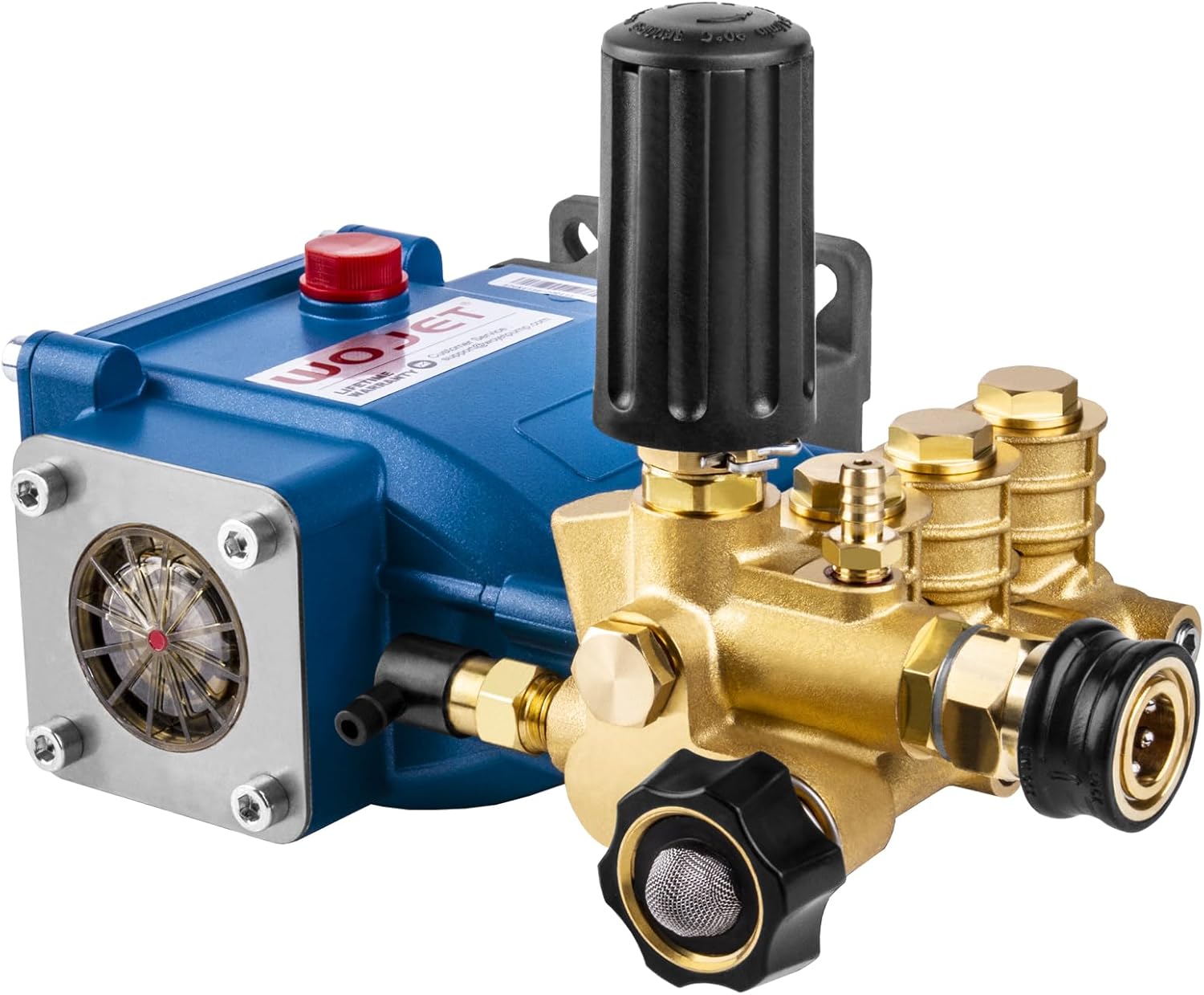
| Max Pressure | 3600 PSI |
|---|---|
| Max Flow Rate | 2.7 GPM |
| Engine Size Required | 5-7 HP |
| Pump Type | Triplex Plunger |
| Shaft | 3/4" Shaft |
The WOJET Triplex Pro PA3031 is a commercial-style replacement pressure washer pump designed to restore or upgrade engine-driven washers that use a 3/4" horizontal shaft. It delivers up to 3600 PSI at 2.7 GPM and installs directly onto 5–7 HP engines such as Honda GX series and similar units. Notable features include a corrosion-resistant brass pump head, polished ceramic pistons, a forged brass manifold, an integrated unloader valve for continuous cooling when the trigger is released, and a self-priming capability that lets you draw from tanks or buckets. The unit arrives factory-filled with oil and includes a detergent tube, mounting bolts, and shaft key to simplify installation. In practice this pump gives strong, consistent pressure for heavy-duty cleaning tasks like driveways, equipment, and boat hulls while resisting corrosion and wear. Limitations are that it is direct-engine-crankshaft mount only and sized for 5–7 HP with a 3/4" shaft so it will not fit larger engines or units requiring different shaft sizes or mounting adapters.
Best for: Buyers who need a performance-focused, long-lasting replacement pump to return a 5–7 HP engine-driven washer to strong, consistent cleaning power for frequent heavy-duty tasks.
Less Ideal for: Users with larger engines, non-direct-mount frames, or those who need higher flow rates for industrial-scale cleaning should look at pumps with 1" shafts or higher GPM ratings.
- Commercial-grade triplex plunger design for smooth, stable high-frequency operation
- Corrosion-resistant brass pump head with polished ceramic pistons and forged brass manifold for durability
- Integrated unloader valve provides continuous cooling under idle to reduce overheating
- Self-priming capability allows drawing water from tanks or buckets for remote use
- Factory-filled with oil and includes mounting hardware, detergent tube, and shaft key for easier installation
- Fits only direct engine crankshaft mounts with a 3/4" shaft, so adapters or different shaft sizes are not supported
- Flow and pressure are fixed at 2.7 GPM and 3600 PSI, which may be low for very large or industrial cleaning needs
Verdict: Choose this pump when you want a rugged, performance-oriented direct-mount replacement that restores OEM-level pressure and reliability on 5–7 HP horizontal-shaft engines.
CAT Pumps 4DNX25GSI 3000 PSI Triplex Pressure Washer Pump (2.5 GPM, Adjustable Unloader)

| Maximum Pressure Rating | 3000 PSI |
|---|---|
| Flow Rate | 2.5 gpm |
| Power Source | Gas Powered |
| Material Type | Brass |
| Maximum Temperature | 140 degrees F |
The CAT Pumps 4DNX25GSI is a compact triplex plunger pump designed to deliver smooth, consistent pressure for demanding cleaning tasks such as car washing and light-duty detailing work. It mounts directly to a gas engine via a 3/4" hollow shaft and is built with ceramic plungers and high-pressure seals intended to extend seal life under intermittent heavy use. Key features include a fixed chemical injector for applying cleaners, a swivel garden-hose inlet for easier hookup, and an integral adjustable unloader to protect the system and control pressure. In practice this pump gives steady flow at its 2.5 GPM rating and the 3000 PSI capability provides strong cleaning power without the complexity of a gearbox. The stacked valve design simplifies servicing, but the pump is intended for intermittent duty rather than continuous industrial cycles. It also requires a compatible gas engine and correct plumbing to perform as specified, so expect installation and alignment work on replacement or retrofit jobs.
Best for: Buyers who prioritize reliable cleaning performance and durability for vehicle and home pressure-washing projects and who plan to mount the pump to a gas-driven powerhead.
Less Ideal for: Users who need a continuous-duty industrial pump or who want a plug-and-play electric pressure washer solution without engine mounting.
- Triplex ceramic plungers and high-pressure seals for longer seal life
- Adjustable integral unloader protects the pump and allows pressure control
- Built-in chemical injector adds cleaning flexibility
- Compact hollow-shaft direct-mount design simplifies engine coupling
- Stacked valve layout for easier servicing and maintenance
- Rated for intermittent duty so not intended for continuous industrial operation
- Requires compatible gas engine and appropriate shaft alignment for installation
Verdict: Choose this pump if you want a compact, high-pressure, gas-drive unit that delivers dependable cleaning power and easy servicing for car and home pressure-washing tasks.
Hourleey 3/4" Shaft Horizontal Pressure Washer Pump, 3400 PSI 2.5 GPM

| Power Source | Gas Powered |
|---|---|
| Maximum Flow Rate | 2.5 gpm |
| Maximum Pressure | 3400 psi |
This Hourleey 3/4" horizontal pressure washer pump is a practical replacement for gas pressure washers that need up to 3400 PSI at 2.5 GPM. It is intended to swap directly into units that use a 3/4" shaft and standard 3/4" NH garden hose inlet with an M22 high-pressure outlet, making it suitable for common brands. The pump ships pre-filled with oil and includes basic mounting hardware, a detergent hose, and a shaft key so you can install it quickly and start cleaning walls, driveways, fences, and vehicles without a lengthy setup. A double seal system, metal shaft sleeve, one-piece pump head, and thermal relief valve are built to reduce leaks and limit overheating during bypass. For buyers focused on cost, the unit offers a low-cost repair option instead of replacing an entire washer. Expect a straightforward fit for compatible machines but plan to verify shaft and connector matches before purchase because it is a direct replacement pump rather than a universal drop-in for every model.
Best for: Buyers who want an inexpensive, ready-to-install replacement pump to extend the life of a gas pressure washer and avoid buying a new unit.
Less Ideal for: People who need a universal pump that fits multiple shaft sizes or who prefer factory-specific OEM replacements for exact fit guarantees.
- Delivers up to 3400 PSI and 2.5 GPM suitable for heavy residential cleaning
- Pre-filled with oil and includes mounting hardware for quick installation
- Double seal system and metal shaft sleeve reduce risk of oil and water leaks
- Thermal relief valve helps protect the pump from overheating in bypass
- Only fits horizontal 3/4" shaft configurations so compatibility must be checked
- Designed for gas-powered machines and may not suit electric washer designs
Verdict: A low-cost, pre-filled replacement pump that restores 3400 PSI cleaning power for compatible gas pressure washers without complex setup.
Hochspuel 1" Shaft Triplex Pressure Washer Pump — 4300 PSI, 4.4 GPM

| Maximum Pressure | 4300 psi |
|---|---|
| Maximum Flow Rate | 4.3 gpm |
| Power Source | Gas Powered |
This Hochspuel triplex pressure washer pump is built as a direct replacement for 1" horizontal shaft gas engines and focuses on durable, commercial-style performance. It installs using a standard mounting flange and 3/4" inlet and 3/8" quick-connect outlet, so it is typically used to restore or upgrade a gas-powered washer driven by GX270/GX340/GX390-class engines. Key features include a forged brass manifold, ceramic-coated plungers, an anodized aluminum crankcase and a built-in oil sight glass; those choices reduce corrosion, wear and simplify maintenance. The pump ships factory-filled with premium oil so you can install and run it immediately. It is rated to produce up to 4300 PSI and about 4.3–4.4 GPM, with recommended operation near 3500 PSI at 3400 RPM for long life. Limitations to note are that it is for cold-water use only and it requires a compatible 1" horizontal shaft engine and correct plumbing to get full performance. Overall it is a workhorse replacement for owners who prioritize longevity and serviceability.
Best for: Owners of gas-powered pressure washers who need a dependable, serviceable replacement pump and who prioritize long-term durability over low cost.
Less Ideal for: Casual users with small electric pressure washers or anyone needing a hot-water pump should look for a different product.
- Commercial-grade triplex design with ceramic-coated plungers for smoother output and extended wear life
- Forged brass manifold and anodized aluminum crankcase resist corrosion and improve durability
- Factory-filled oil and integrated sight glass make initial setup and ongoing oil checks quick
- Fits common 9–15 HP horizontal shaft gas engines and uses standard inlet/outlet fittings for straightforward replacement
- Cold-water use only so not suitable for hot-water cleaning applications
- Requires a compatible 1" horizontal shaft engine and correct plumbing to achieve rated pressure and flow
Verdict: Buy this pump if you want a rugged, serviceable triplex replacement that restores commercial-grade pressure and longevity to a 1" horizontal-shaft gas washer.
YAMATIC 3/4" Horizontal Shaft Pressure Washer Pump, 3400 PSI 2.5 GPM

| Max Pressure | 3400 PSI |
|---|---|
| Max GPM | 2.5 GPM |
| Pump Type | Axial Cam |
| Shaft Diameter | 3/4" Horizontal Shaft |
| Pre-filled Oil | Yes |
This YAMATIC pump is a direct-replacement axial cam unit designed for gas pressure washers with a 3/4-inch horizontal engine shaft. It arrives pre-filled with oil and includes mounting bolts, a siphon hose, and a shaft key to simplify installation. The pump is built with aluminum pump head and brass fittings including inlet, outlet, thermal relief valve, and soap injector port, and it offers an adjustable unloader to tune operating pressure to your engine. In practice it restores strong cold-water cleaning power for sidewalks, vehicles, decks, and siding when matched to compatible engines and bolt patterns. Notable benefits are the thermal relief valve and double-seal design aimed at longer service life and a 200-hour rated running life. Important limits are strict compatibility requirements: it is only for horizontal 3/4" shafts, not for vertical shafts, 7/8" or 1" outputs, and it is not for hot-water systems. Buyers should verify shaft diameter, mounting pattern, inlet/outlet orientation, and frame clearance before installation.
Best for: Buyers who need a reliable, low-cost replacement pump to restore cleaning power to a compatible gas pressure washer and who value clear compatibility confirmation and included installation hardware.
Less Ideal for: People with vertical-shaft engines, 7/8" or 1" shaft outputs, electric pressure washers, or users who need a hot-water pump.
- Pre-filled with oil and includes mounting hardware for faster installation
- Solid brass fittings and thermal relief valve for corrosion resistance and heat protection
- Adjustable unloader lets you match pump pressure to the engine for safer operation
- Double-seal design and upgraded piston/bearing surfaces for improved durability
- Only compatible with 3/4" horizontal engine shafts and specific mounting patterns
- Not rated for hot-water use
Verdict: A practical, ready-to-install replacement pump that reliably revives compatible 3/4" horizontal-shaft gas pressure washers for strong cold-water cleaning.
WOJET PA3023 Horizontal Self-Priming Pressure Washer Pump (3/4" Shaft, 3400 PSI, 2.5 GPM)

| Max Pressure | 3400 PSI |
|---|---|
| Max Flow Rate | 2.5 GPM |
| Engine Fit | 3/4" shaft engines, 180–225 cc (6.5–7 HP) |
| Material Type | Aluminum, Brass |
| Self-Priming | Yes |
This WOJET PA3023 is a straightforward replacement axial pump intended to revive older gas-powered pressure washers that use a 3/4" shaft. It bolts directly to compatible engine crankshafts and provides a maximum 3400 PSI at 2.5 GPM, making it suitable for routine tasks like washing cars, patios, and light exterior cleaning. Notable features include a self-priming inlet so you can draw water from a bucket or tank, an M22 high-pressure outlet for standard connections, an oil sight glass for quick checks, and a hand-adjustable unloader that changes pressure without tools. The pump body is aluminum with brass inlet/outlet fittings and a thermal relief valve to reduce overheating risk. Practical benefits are ease of installation for compatible engines, the ability to operate away from a faucet, and user-friendly pressure control. Important limitations are that it is designed only for direct crankshaft mounting on 3/4" shaft engines and is not an electric-motor pump, so it will not fit electric pressure washer platforms or require different mounting and drive arrangements.
Best for: A cautious homeowner or DIYer who wants a reliable replacement pump to restore a compatible gas-powered pressure washer for routine vehicle and outdoor cleaning and values easy maintenance and simple controls.
Less Ideal for: Buyers who need an electric-pressure-washer pump or who perform heavy commercial cleaning should look for pumps with higher flow rates or models designed for electric motor mounting.
- Self-priming capability lets you draw water from a bucket or tank for off-grid use
- Hand-adjustable unloader for tool-free pressure changes
- Aluminum crankcase with brass fittings for corrosion resistance
- Oil sight glass and thermal relief valve simplify maintenance and protect the pump
- Includes installation hardware and a siphon hose for faster setup
- Direct crankshaft mount only so it will not fit electric-motor or alternative mounting configurations
- 2.5 GPM flow rate is modest and not suited to heavy commercial cleaning tasks
Verdict: Choose this pump if you need an easy-to-install, self-priming replacement to get a compatible gas-powered washer back to reliable household cleaning duty.
Choosing the Right Car Pressure Washer Pump: Key Factors to Consider
Flow Rate and Pressure Balance
For car washing, the combination of gallons per minute and operating pressure determines cleaning speed and safety. A higher flow rate shortens rinse times and reduces streaking, but too much pressure can strip wax or damage trim. Look for pumps that maintain target flow while preventing pressure spikes during nozzle changes or when the trigger gun is cycled. A pump that holds steady under variable load makes it easier to use softer nozzles and foam cannons without losing cleaning power.
Consistent output also affects detergent performance. If flow drops when the pump heats up or under longer runs, soap coverage and rinse effectiveness will vary, leaving spots or residues on paint.
Materials and Corrosion Resistance
Pumps that circulate water and detergents need components that resist rust and chemical attack. Aluminum, brass, and quality stainless steels are common in wetted areas; polymer components are fine when they are rated for detergent exposure. Pay attention to the pump housing, manifolds, and fasteners. Corrosion-prone materials will shorten service life, especially if the unit is stored outdoors or used with hard water.
Seals and internal rings should be specified for detergent use and contact with hot water if you plan to use warm rinse cycles. Choosing a pump with appropriate materials reduces the need for premature rebuilds and keeps performance steady over seasons.
Seals, Valves, and Parts Availability
The type and quality of seals and valves determine how long a pump will run between rebuilds. Ceramic plungers and high-grade elastomers often last longer under frequent use and exposure to cleaners. Consider whether replacement seal kits and valves are easily obtainable; a pump with common parts simplifies maintenance and lowers downtime.
Designs that allow partial disassembly for seal replacement without removing the entire unit save time. Pumps with clear maintenance intervals and user-serviceable components are generally better choices for car owners who do regular washing or light detailing.
Serviceability and Ease of Maintenance
Simple maintenance keeps a pressure washer pump reliable. Look for pumps with accessible oil fill and drain points, clear instructions for oil type and service intervals, and straightforward access to common wear parts. A pump engineered to accept standard tool sets and that documents torque specs reduces the risk of incorrect reassembly.
Regular tasks include changing crankcase oil, replacing seals, inspecting valves, and flushing after detergent use. Pumps that minimize special tools or proprietary fasteners reduce the barrier to proper upkeep and extend effective life for routine car-cleaning schedules.
Compatibility with Detergents and Accessories
Not every pump tolerates all detergent chemistries. For automotive cleaning, you may use foaming agents, wax emulsions, and alkaline wheel cleaners. Confirm that the pump seals and internal materials are rated for the types of cleaners you plan to use. Some pumps require using a downstream injector or soap nozzle to avoid concentrated detergent contacting seals.
Also consider compatibility with common accessories like foam cannons, surface cleaners, and pressure-regulating guns. A pump that integrates with those tools without causing cavitation or pressure drops will deliver a smoother washing experience.
Why Pump Choice Matters for Vehicle Finishes
Water pressure and flow behavior influence how safely you remove dirt, bird droppings, and road film. Too much pressure concentrated in one spot risks lifting polish or damaging trim, while too little pressure forces you to scrub and can leave swirl marks. A pump that delivers controlled, consistent output helps you rely on the cleaning chemistry and nozzle choices rather than manual abrasion.
Beyond paint, pump behavior affects wheel and underbody cleaning. Wheels often need higher flow and detergent contact to remove brake dust. Choosing a pump that maintains pressure when switching nozzles makes the whole job more predictable and reduces the temptation to overwork surfaces.
- Stable output reduces overspray and keeps foam coverage even.
- Predictable pressure helps protect decals, rubber trim, and soft plastics.
- Good pumps reduce rinse time and water waste during repeated passes.
Maintaining Your Pump After Each Use
Rinse the pump and flush lines after running detergents to avoid chemical buildup on seals and valves. Many car-safe soaps can still harm elastomers if left to sit. Run clean water through the detergent feed and operate the spray gun briefly to purge residual cleaner.
Check oil level and look for discoloration or metal shavings periodically. Follow the manufacturer-recommended oil change intervals if you perform regular, heavy use. Store the unit dry and protected from freezing conditions, since trapped water can expand and crack components.
- Flush detergent lines and pump internals with fresh water.
- Inspect seals and fittings for leaks after a cleaning session.
- Drain or protect the pump in freezing temperatures.
Common Installation and Fit Issues
Mechanical fit matters when swapping pumps into an existing pressure washer. Check shaft size, mounting bolt pattern, and drive coupling type. Mismatched splines or incorrect shaft length can lead to vibration, premature wear, or mechanical failure.
Also confirm that the pump's recommended rpm range matches the engine or motor you are pairing it with. Running a pump outside its intended speed window affects pressure and lubricant performance, which shortens service life.
- Verify shaft and coupling compatibility before purchase.
- Match pump rpm recommendations to your motor for optimal performance.
- Consider professional installation if alignment or coupling modification is required.
Protecting the Pump From Hard Water and Sediment
Hard water and particulate matter shorten pump life by wearing seals and scoring internal surfaces. Use a simple inlet filter or garden hose filter to trap grit before it reaches the pump. When your water source has high mineral content, consider periodic descaling and check valves more frequently.
Filtering also reduces nozzle clogging and inconsistent spray patterns that can mask underlying pump issues. For frequent car detailing, protecting the pump from sediment is an inexpensive step that pays off in longer service intervals.
- Install an inline water filter to capture sand and rust particles.
- Use soft water where practical or perform occasional descaling.
- Monitor nozzle spray pattern for signs of internal wear.
When to Rebuild or Replace Pump Components
Watch for declining pressure, increased oil contamination, or persistent leaks as signs that seals, valves, or plungers need service. Small performance drops can often be addressed with a seal kit and valve replacement, while more severe wear on ceramic plungers or crank bearings may require a rebuild.
Regular maintenance logs help you track when components were last serviced and can reveal patterns tied to detergent use, water quality, or duty cycles that accelerate wear. Planning maintenance reduces the chance of sudden failure mid-use.
- Use seal kits for minor leaks and pressure loss.
- Consider rebuilds when multiple internal parts show wear.
- Keep spare service parts on hand for frequent users.
How We Chose the Best Car Pressure Washer Pump
We focused on attributes that directly affect automotive cleaning performance and pump longevity. Primary evaluation criteria included steady flow rate and pressure stability under typical car-washing cycles, material resistance to corrosion from water and common detergents, seal and valve durability for repeated on/off use, and ease of routine maintenance such as seal replacement and oil checks. We also considered compatibility with common torque and RPM ranges on electric and gas pressure washer units, plus the availability of service parts. Products were excluded if specifications indicated they were designed only for industrial high-temperature or abrasive slurry use, or if documentation lacked clear materials and seal details. We prioritized pumps with clear maintenance guidance and those suitable for automotive-safe detergents. The shortlist balances pumps that perform well for regular driveway washing with units engineered for more frequent detailing work. Scoring focused on measurable, gardener-friendly dimensions so readers can judge fit for their car-washing habits.
FAQ
What pressure and flow are best for washing a car safely?
Most car washing tasks work well with moderate pressure and a steady flow. Focus on stability rather than maximum PSI. Higher flow helps rinse soap faster, while avoiding nozzle choices that concentrate pressure on paint. Exact numbers depend on your spray lance and nozzle combination.
Can I use automotive detergents through any pump?
It depends. Many pumps tolerate diluted, car-safe detergents, but some seals and elastomers are sensitive to stronger chemistries. Check pump material compatibility and if recommended, use a downstream injector or soap nozzle to limit detergent exposure to internal seals.
How often should I change pump oil?
Oil change intervals vary by design and use intensity, but a general approach is to change oil after the first 50 hours of use and then every 200 hours or once per season if used lightly. Always follow the pump manufacturer's guidance when available.
Will hard water damage my pressure washer pump?
Hard water can accelerate seal wear and leave mineral deposits inside the pump. Installing a simple inlet filter and descaling periodically helps reduce wear. If you have very hard water, more frequent inspections and seal replacements may be necessary.
Are repair parts and seal kits usually available?
Many pumps use common seal kits and valves that are sold separately. Availability depends on pump design and manufacturer support, so favor pumps with well-documented service parts and avoid obscure proprietary assemblies if you plan to do your own maintenance.
Can I install a new pump myself?
Home installation is possible if you are comfortable with basic mechanical alignment, shaft coupling, and torqueing fasteners to specified values. Verify mounting patterns, shaft sizes, and rpm compatibility. If the job requires modifying couplings or precise alignment, professional help reduces risk.
Final Verdict
Choosing the right Car Pressure Washer Pump means balancing steady flow, appropriate working pressure, and materials that stand up to detergents and hard water. Prioritize pumps with durable seals, accessible maintenance points, and good parts availability if you plan to wash vehicles regularly. Decide based on how often you wash, whether you use foam and stronger wheel cleaners, and whether you are prepared to maintain the pump. Favor pumps that match your motor rpm and that have clear service guidance to keep your car-cleaning routine reliable and efficient.
