

Note: This article contains affiliate links. If you click on these links and make a purchase, I may earn a small commission at no extra cost to you. This helps support my research and content. Read my full affiliate disclosure here.
A properly chosen carnivorous plant can be the star of a terrarium, providing motion, unusual foliage, and a built-in pest control element. Picking the right species matters because terrarium microclimates concentrate moisture, light, and airflow in a small space, and some carnivores thrive while others struggle in those conditions. This guide covers a short list of top carnivorous plants for terrarium growing, each selected for suitability in confined, humid displays. We evaluated candidates for their humidity tolerance, size control, light preferences, and ease of care so you can match plants to your enclosure. Read on for practical notes on setup and maintenance, followed by focused buying factors to consider before adding plants to your terrarium.
Top Picks at a Glance
| Best Overall The best all-around choice for most situations | Nature Gift Store Venus Flytrap and Cape Sundew Terrarium Kit |  |
| Best Value The sweet spot between price and what you get | Fam Plants Nepenthes Carnivorous Pitcher Plant 4‑Pack (starter plants) |  |
| Best Budget The cheapest option that still gets the job done reliably | Outsidepride Venus Flytrap Seeds (10 Pack) |  |
| Highest Rated A top-rated pick with lots of positive feedback | Garden Belle Carnivorous Plant Collection — Set of 5 (2" Pots) |  |
| Most Popular A crowd favorite that many people choose with confidence | Bloomify Venus Flytrap Self-Sustaining Glass Terrarium |  |
| Best Seller A high-volume bestseller chosen again and again | Plants for Pets Venus Fly Trap (Dionaea muscipula) live plant, 3 in. pot |  |
Nature Gift Store Venus Flytrap and Cape Sundew Terrarium Kit

| Included Components | Venus flytrap, Cape sundew, sphagnum peat moss, clear vented terrarium, tweezers, instructions |
|---|---|
| Vivarium Type | Terrarium |
| Target Species | Fly |
| Tank Volume | 37.7 cubic inches |
This kit bundles two live carnivorous plants (a Venus flytrap and a Cape sundew) with a vented clear terrarium, peat moss, tweezers, and feeding food so you can set up an active display right away. Plants arrive with multiple active traps and sundew leaves so you can see prey capture soon after assembly; the vented lid helps air circulation while the included sphagnum peat moss provides the low-nutrient substrate these species need. The clear terrarium gives an unobstructed view, making this a good conversation piece for a desk or shelf, and the tweezers and food make initial feeding straightforward and less messy. Limitations to expect are the small kit size and the sensitivity of live plants to shipping and temperature; the seller warns against ordering in extreme temperatures and success depends on keeping them within the recommended range and providing appropriate light and distilled or rain water. For a balanced hobbyist who wants an easy starter setup and a ready display, this kit removes much of the guesswork but still requires basic plant care and monitoring to keep the plants healthy long term.
Best for: Buyers who want an easy, turn-key carnivorous plant display for a home or office and prefer a kit that includes plants plus basic supplies and feeding tools.
Less Ideal for: Gardeners seeking large mature specimens or a long-term greenhouse solution should look for larger plants or separate pots rather than this small starter kit.
- Includes two live, complementary carnivorous species ready to demonstrate prey capture
- Comes with a vented clear terrarium that provides visibility and airflow
- Supplies needed for first setup provided: sphagnum peat moss, tweezers, and feeding food
- Plants arrive with multiple active traps/leaves so you can see action soon after setup
- Live plants are temperature-sensitive and the seller restricts shipping in extreme temperatures
- Small terrarium size limits long-term growth and may require repotting as plants mature
Verdict: A compact, ready-to-use terrarium kit that gets you two active carnivorous plants and the basic supplies needed to start observing prey capture immediately.
Fam Plants Nepenthes Carnivorous Pitcher Plant 4‑Pack (starter plants)

| Unit Count | 4 Count |
|---|---|
| Soil Type | Peat Soil |
| Moisture Needs | Constant Watering |
| Sunlight Exposure | Partial Sun |
This pack delivers four live starter Nepenthes (pitcher) plants—commonly Gaya, Miranda, Lady Luck, and Alata—intended for growers who want insect‑eating tropical plants for a terrarium or bright, humid indoor spot. Plants arrive young so they acclimate and establish more reliably; the listing advises potting into peat and sphagnum, using distilled or rainwater, and avoiding fertilizer that can burn sensitive roots. Nepenthes naturally trap insects, reducing pests without chemicals, and the colorful pitchers add tropical interest to a planted display. Because they need constant moisture, high humidity and bright indirect light to form traps, they perform best inside a covered terrarium or a humid room rather than a dry windowsill. The grower’s choice selection means you may not get specific named varieties every time, which is useful for variety but less ideal if you need an exact cultivar. Overall this is a practical starter option for someone building a terrarium of carnivorous tropicals who can provide consistent humidity and pure water.
Best for: Ideal for terrarium hobbyists or plantkeepers who want to add tropical carnivores to a humid, controlled indoor display and who prioritize easy establishment of young plants.
Less Ideal for: Not a good fit for casual houseplant owners who cannot provide consistent humidity or who want specific named cultivars on arrival.
- Includes four live starter plants for establishing a terrarium collection
- Plants are insect‑eating so they help control small pests naturally
- Care instructions specify peat and sphagnum mix and distilled or rainwater for healthy growth
- Starter size improves shipping survival and long‑term establishment
- Requires high humidity and constant moisture which demands a terrarium or frequent attention
- Grower’s choice selection means variety and color are not guaranteed for each order
Verdict: A convenient four‑plant starter pack for terrarium growers who want tropical Nepenthes that establish well and naturally control small insects.
Outsidepride Venus Flytrap Seeds (10 Pack)

| Indoor Outdoor Usage | Indoor |
|---|---|
| Soil Type | Peat Soil |
| Sunlight Exposure | Full Sun, Partial Shade |
| Moisture Needs | Moderate Watering |
| Unit Count | 10 Count |
These Outsidepride Venus flytrap seeds let you grow classic carnivorous plants suited to terrariums, small pots, or sunny indoor spots. Sow 1–2 seeds per plant in peat or sphagnum moss, keep the medium consistently moist with distilled or rain water, and provide bright, indirect light and high humidity — conditions typical for terrarium setups. The listing emphasizes ease of growing for USDA Zones 8–10 and notes the plants are perennial, disease resistant, and adapted to nutrient-poor, acidic soil so they obtain nutrients from captured insects rather than fertilizer. Practical benefits for terrarium use include small mature size, striking trap coloration that adds visual interest, and natural insect control. Expect slow germination and a need for consistent moisture and humidity at early stages; seeds and young plants are sensitive to minerals and should not be given tap water. The packet contains a small quantity of seeds, so plan for careful sowing and patience to produce several healthy plants for a compact carnivorous-plant display.
Best for: Buyers who want an affordable way to start a small carnivorous-plant terrarium and are willing to tend to humidity and water quality for best results.
Less Ideal for: Gardeners looking for immediate mature plants, large outdoor displays, or low-attention houseplants should choose established potted specimens or non-carnivorous species instead.
- Compact packet size suited to terrariums and small pots
- Seeds meant for peat or sphagnum moss and low-nutrient soil common to carnivores
- Described as disease resistant and perennial for year-over-year plants
- Attractive, interactive traps that also help reduce small indoor pests
- Small seed count requires careful sowing and patience to establish multiple plants
- Requires distilled or rain water and consistent humidity which adds ongoing care needs
Verdict: A low-cost seed packet that lets terrarium growers start authentic Venus flytraps affordably when they can provide humid conditions and mineral-free water.
Garden Belle Carnivorous Plant Collection — Set of 5 (2" Pots)

| Indoor Outdoor Usage | Outdoor |
|---|---|
| Other Special Features of the Product | Carnivorous Plants |
| Expected Blooming Period | Spring to Fall |
| Sunlight Exposure | Full Sun |
This Garden Belle collection delivers five different carnivorous plants potted in 2" containers, aimed at beginners or terrarium hobbyists who want several species to start with. The set typically includes Venus flytraps, pitcher plants, sundews and similar small insect-eating plants selected by the grower. Plants arrive potted to reduce shipping stress and the listing emphasizes using rainwater or distilled water, a nutrient-poor peat-perlite medium, and moderate to high humidity. For terrarium use these species are appropriate because they prefer consistent moisture, bright light, and higher humidity levels. Practical benefits include a ready-made variety pack to compare growth habits and simple planting in small displays without immediate repotting. Important limitations are the small pot size at arrival, which means plants will need careful acclimation and eventual repotting for long-term growth, and sensitivity to extreme temperatures during transit or after arrival. Follow the provided care notes to minimize stress and watch for normal yellowing as they recover from shipping.
Best for: Buyers who want a dependable, ready-to-display set of beginner-friendly carnivorous plants for a terrarium or small outdoor setup and who prioritize clear care instructions and live arrival handling.
Less Ideal for: Gardeners seeking mature specimens or immediate long-term plantings; those who cannot provide consistent humidity and appropriate distilled or rainwater care should consider hardier houseplants instead.
- Includes five different carnivorous species for variety and comparison
- Shipped potted in 2" pots to reduce root disturbance during transit
- Clear care guidance about water type, soil mix, light and humidity suitable for terrariums
- Small starter size is convenient for setting up a multi-plant terrarium or tabletop display
- Plants arrive very small and will require acclimation and repotting for long-term health
- Sensitive to extreme temperatures so timing and weather conditions affect survivability
Verdict: A convenient starter pack for dependable, easy-to-acclimate carnivorous plants that suit terrariums and small displays.
Bloomify Venus Flytrap Self-Sustaining Glass Terrarium

| Indoor Outdoor Usage | Indoor |
|---|---|
| Other Special Features of the Product | Self Cleaning |
| Expected Blooming Period | Winter |
| USDA Hardiness Zone | 1 |
| Moisture Needs | Moderate Watering |
This Bloomify kit arrives as a compact glass terrarium with a living Venus flytrap already planted in a soil-free Terra Gel medium. It is designed for indoor display on desks, shelves, or windowsills and aims to be largely maintenance free: the gel supplies water and nutrients so you do not need to water or add fertilizer. The package includes the terrarium, the plant, a care guide, and a heat pack for shipping or cooler months. The B52 mericlone variety offers larger-than-average traps which make the plant an attractive, eye-catching addition to small closed terrariums. Practical benefits include low daily effort, tidy presentation without loose soil, and a clear transplant path once the plant outgrows the jar—Bloomify provides a transplant kit with peat and sand. Important limitations are that the plant is intended for indoor, decorative terrarium use only and will eventually need replanting into a proper carnivore mix to thrive long term; the sealed gel environment also limits how large the plant can grow. Buyers should be prepared for eventual transplanting and for giving the plant appropriate light while it is in the jar.
Best for: Buyers who want a low-maintenance, decorative closed-terrarium plant to brighten a desk or small indoor space with minimal ongoing care and setup.
Less Ideal for: Experienced carnivorous-plant growers who want full control over soil conditions or gardeners seeking a long-term outdoor specimen should choose a traditional potted Venus flytrap instead.
- Comes ready-to-display in a sealed glass terrarium for minimal setup
- Terra Gel provides moisture and basic nutrients so no routine watering is required
- B52 mericlone variety has larger traps that make the plant visually striking
- Includes care guide, heat pack, and a transplant kit for moving the plant to soil later
- Sealed gel environment restricts long-term growth and eventual transplanting is required
- Designed for indoor decorative use only, not for outdoor or full horticultural cultivation
Verdict: For a risk-averse buyer who wants an effortless, display-ready closed terrarium, this Venus flytrap offers immediate visual impact with almost no daily maintenance.
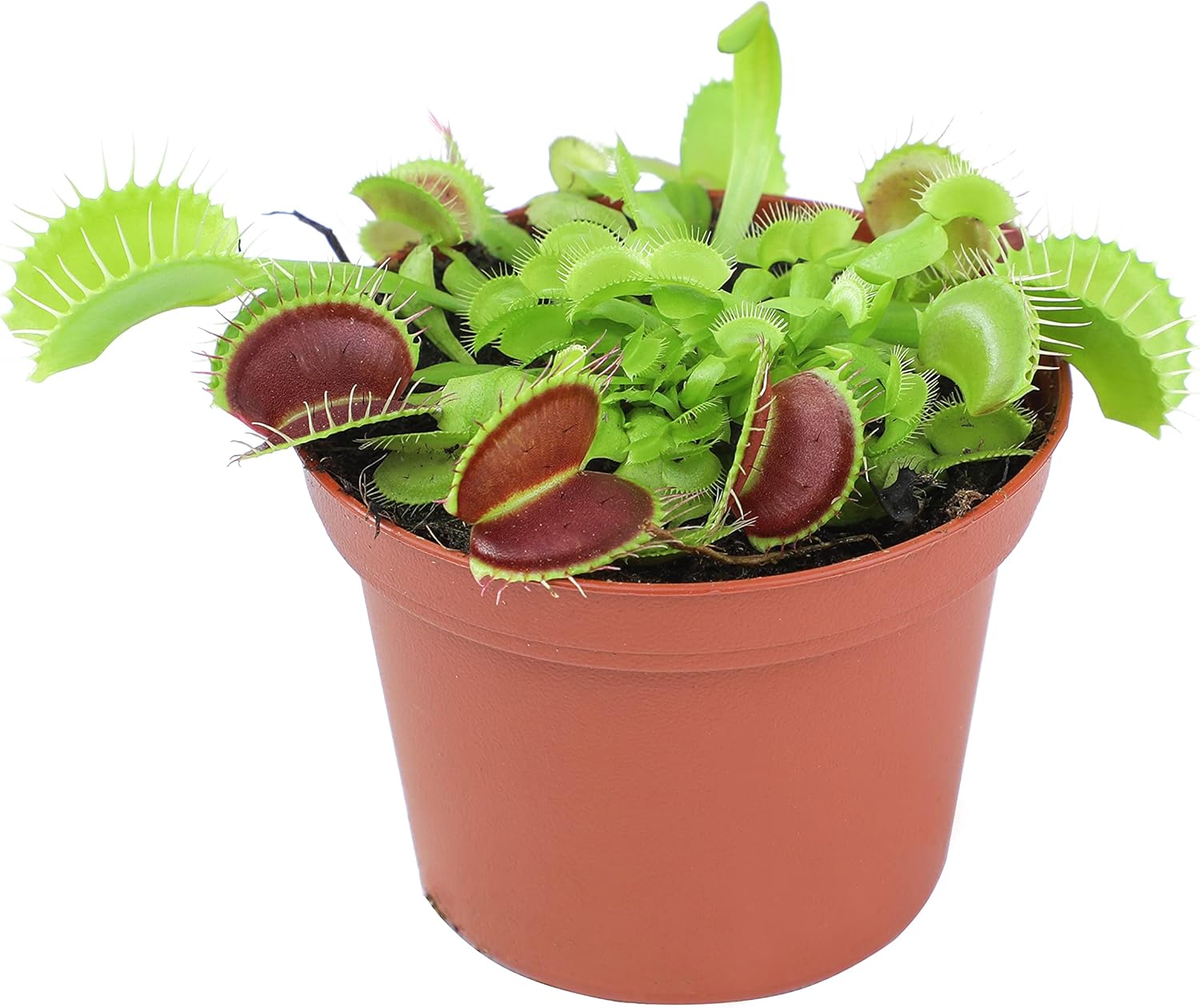
Plants for Pets Venus Fly Trap (Dionaea muscipula) live plant, 3 in. pot
| Indoor Outdoor Usage | Indoor |
|---|---|
| Other Special Features of the Product | Pet Friendly |
| Sunlight Exposure | Partial Sun |
| Moisture Needs | Moderate Watering |
| Soil Type | trap soil |
This live Venus flytrap is a compact, showy carnivorous plant intended for indoor display or a small terrarium. It functions as both a curious houseplant and a small-scale insect trap, using hinged leaves to catch gnats, flies, mosquitoes and other small bugs. Typical use is placing the pot in bright, indirect light or partial sun, keeping the soil consistently moist with distilled or rainwater, and avoiding tap water. Notable features include its pet-safe label, compostable growing medium details, and guidance that each trap can catch multiple insects before being replaced by new growth. Practical benefits are visual interest for a terrarium, gentle natural pest reduction, and educational value for kids or a classroom. Important limitations are that Venus flytraps require specific water quality and consistent moisture, can be stressed by flowering (owners may need to remove flower stalks), and they are small plants that will not control large infestations. Buyers should be prepared for basic carnivorous plant care rather than a no-maintenance houseplant.
Best for: Buyers who want an easy-to-display carnivorous plant for a terrarium or desk that provides visual interest and occasional natural bug control while following straightforward care steps.
Less Ideal for: People seeking a hands-off houseplant or those who cannot provide distilled/rainwater and consistent moisture; not suitable for controlling large pest problems.
- Live, fully rooted Venus flytrap suitable for terrariums or tabletop display
- Functional at catching small flying and crawling insects, offering mild pest reduction
- Clear care guidance recommending distilled or rainwater and partial sun exposure
- Pet-safe designation and compostable material features for eco-conscious buyers
- Requires distilled, reverse-osmosis, or rainwater; tap water can damage the plant
- Needs regular moisture and specific light conditions so it is not a low-maintenance houseplant
Verdict: A compact, terrarium-ready Venus flytrap that delivers eye-catching carnivorous behavior and mild indoor pest control when given proper water and light.
Choosing the Right Carnivorous Plants for Terrarium: Key Factors to Consider
Humidity Tolerance
Terrariums concentrate moisture and raise relative humidity well above typical room levels. A plant that tolerates constant high humidity is essential because some carnivorous species prefer drier, bog-like conditions or fluctuating air flow that terrariums do not provide. Assess how a species handles condensation, persistent wet media, and low evaporation rates.
Plants with natural histories in bog pools or misty microhabitats tend to fare best. If you plan a partially closed terrarium, choose species known for thriving in steady humidity rather than those needing dry dormancy periods.
Compact Growth Habit
Space is limited in most terrariums, so size control is a major buying consideration. Look for species that naturally form small rosettes, short pitchers, or diminutive trap structures and that do not develop extensive rhizomes or deep root systems.
Compact plants reduce the need for frequent pruning, lower the chance of overcrowding, and allow you to combine multiple species without immediate competition for light and substrate. Think about the mature footprint of the plant as well as its growth rate.
Light Requirements
Terrarium light can vary from dim indoor windowsill conditions to bright supplemental LED setups. Choose carnivores that match the light you can consistently provide. Some species need bright, indirect light to color well and form traps; others tolerate lower, diffused light but may be slower-growing.
Consider whether you can add a humidity-safe grow light. Matching plant light needs to the terrarium position reduces etiolation, weak growth, and trap failure.
Soil and Water Compatibility
Most carnivorous plants require low-nutrient, acidic substrates that retain moisture while draining poorly for oxygen balance. In a terrarium, substrate selection affects both plant health and the microclimate. Choose mixes designed for carnivores or simple blends of sphagnum peat and silica sand or long-fiber sphagnum.
Water quality matters because minerals can build up in a closed environment. Use rainwater, distilled, or reverse-osmosis water and avoid tap water with high dissolved salts. Regularly check substrate pH and replace or leach media if mineral accumulation becomes visible.
Pest and Disease Susceptibility
High humidity and limited airflow in terrariums can encourage fungal growth, rot, and certain pests like fungus gnats. Select species with known resistance or that form compact growth allowing better inspection and spot treatment.
Good terrarium hygiene, occasional air exchange, and monitoring are important. Plan for small-scale interventions such as removing decaying leaves, using sticky traps for gnats, and temporarily opening the enclosure to dry the substrate if mold appears.
Dormancy and Seasonal Needs
Some carnivorous plants require a winter dormancy with cooler temperatures and reduced light, which can be difficult to replicate in a consistently warm indoor terrarium. Before choosing a species, confirm whether it needs a period of dormancy and whether you can provide cooler temperatures or simulated seasonal changes.
If seasonal changes are impractical, favor species that do not require strict dormancy or that tolerate the mild seasonal fluctuations typical of indoor environments.
Setting Up a Terrarium for Carnivorous Plants
Start with a clear plan for ventilation, substrate layers, and water source. A shallow drainage layer of inert material followed by a barrier and a low-nutrient carnivore mix gives plants the moisture retention they need without pooling water at the crown. Keep substrate depth modest to prevent deep-rooted growth and to limit the volume of saturated media.
Place the terrarium where you can provide consistent light and occasional fresh air. If using supplemental LEDs, choose fixtures rated for humid enclosures and position them to avoid heating the glass directly. Monitor condensation and adjust ventilation to strike a balance between humidity and air exchange.
- Use distilled or rainwater to avoid mineral buildup
- Avoid fertilizer; carnivores obtain nutrients from prey
- Position plants so taller specimens do not shade smaller ones
Combining Species Safely
Mixing species creates visual interest but requires matching cultural needs. Combine only plants with similar humidity, light, and substrate requirements. Grouping bog-adapted species together reduces conflict and simplifies care.
Maintain separate planting pockets or shallow compartments to limit root competition and make trimming easier. Be conservative about the number of specimens in a single terrarium; it is easier to add plants than to remove an overcrowded planting.
- Keep territorial or fast-spreading species isolated
- Watch for allelopathic interactions when mixing unrelated plants
Light and Temperature Management
Carnivorous plants vary in their light appetite. Many terrarium-suitable species prefer bright, indirect light and do well under full-spectrum LED strips set on a daily timer. Avoid direct midday sun through glass, which can overheat and scorch foliage.
Temperature stability helps maintain trap function. Most suitable terrarium species tolerate cool nights and warm days within typical indoor ranges. If a chosen species needs cooler winters, plan for seasonal placement changes or brief dormancy simulation.
- Use a timer to provide consistent photoperiods
- Check internal terrarium temperature during sunny days
Maintenance Routine for Long-Term Health
Regular, small maintenance tasks keep a terrarium healthy. Remove dead foliage promptly to reduce mold, spot-check humidity and substrate moisture with a finger or moisture meter, and prune runners or oversize growth to preserve design balance.
Periodically open the terrarium to exchange air and allow the substrate surface to dry slightly. That occasional drying prevents chronic rot while still supporting humidity-loving carnivores. Replace part of the substrate every couple of years if it compacts or shows mineral buildup.
- Inspect plants weekly for signs of rot or pests
- Rotate the container slightly to promote even light exposure
Propagation and Replacement Strategies
Knowing how your chosen carnivores propagate helps maintain a stable display. Many compact species propagate by division, leaf cuttings, or seed. Plan for small propagating trays outside the main terrarium so you can raise replacements without disturbing the display.
Keep a routine for removing offsets that threaten to overcrowd the primary planting. Propagated juveniles make great swaps into other enclosures or backups if a specimen declines.
- Label propagated plants with date and parentage
- Use gentle tools to avoid root and trap damage when dividing
How We Chose the Best Carnivorous Plants for Terrarium
We focused on traits that determine success inside a closed or open terrarium rather than garden beds. Primary evaluation criteria included humidity tolerance, compact growth habit, ease of propagation and establishment in small containers, light requirements compatible with common terrarium setups, and pest and fungal resistance under high-moisture conditions. We prioritized species that remain small or can be easily managed to avoid rapid overcrowding and that tolerate the distilled or low-mineral water commonly used in enclosed displays. Plants were excluded if they commonly grow too tall or wide for typical terrariums, require extensive seasonal dormancy that is impractical in a display, or demand specialist soils inappropriate for mixed plant terrariums. We also filtered out species with reliably aggressive root systems that damage substrate structure. The final picks balance visual interest with real-world ease of cultural care in terrarium conditions.
FAQ
Can all carnivorous plants live in a terrarium?
No. Many carnivorous species need open-air bog conditions, deep roots, or seasonal dormancy that a terrarium cannot provide. Choose species specifically known to tolerate steady humidity and compact growing spaces.
How often should I water carnivorous plants in a terrarium?
Frequency depends on enclosure ventilation and substrate, but most terrarium carnivores do well with consistently moist but not waterlogged media. Use distilled or rainwater and check moisture regularly rather than following a fixed schedule.
Do carnivorous plants need insects inside a terrarium?
They can catch small insects that enter, but in a tightly sealed terrarium you may need to supplement nutrition occasionally with tiny insects or diluted fertilizer applied carefully to the root zone. Many hobbyists rely on naturally occurring microfauna and occasional feedings.
Is lighting important for trap development?
Yes. Adequate light influences trap size, color, and activity. Insufficient light often yields weak traps and elongated growth, while bright, indirect light encourages robust trap formation in most terrarium-suitable species.
How do I prevent mold and fungus in a humid terrarium?
Good hygiene, ventilation, and removing decaying plant material are key. Briefly opening the terrarium to dry the surface and increasing airflow can break mold cycles. Avoid overwatering and promptly treat persistent growth with appropriate measures.
Final Verdict
Choose carnivorous plants for a terrarium by prioritizing humidity tolerance, compact size, and matching light to the enclosure. Balance ambition and practicality: a tight, well-tended selection will look healthier and need less intervention than an overcrowded, mismatched planting. If you can provide the right substrate, water quality, and occasional fresh air, these terrarium-friendly carnivores will give you an engaging living display with minimal ongoing fuss.
