

Note: This article contains affiliate links. If you click on these links and make a purchase, I may earn a small commission at no extra cost to you. This helps support my research and content. Read my full affiliate disclosure here.
A Carpenter hand saw is a basic but crucial tool for woodworking and on-site carpentry. Choosing the right saw affects cut accuracy, how quickly you can work, and how tired your hands feel after a day of ripping or crosscutting. This guide covers six top-rated carpenter hand saws shortlisted for solid cut control, durable tooth geometry, and comfortable handles tailored to real workshop and jobsite use. We evaluated blades and grips with practical tasks in mind so you can pick a saw that matches the kinds of cuts, timber sizes, and working positions you use most. Read on to compare the key strengths that matter for everyday carpentry.
Top Picks at a Glance
| Best Overall The best all-around choice for most situations | IRWIN Marathon ProTouch 15-Inch Coarse-Cut Carpenter Saw |  |
| Best Quality Built to a higher standard if you want something more solid | Jorgensen 15-Inch Hand Saw with 8 TPI Black-Coated Blade |  |
| Best Value The sweet spot between price and what you get | CRAFTSMAN 20" Fine Finish Hand Saw (CMHT20881) |  |
| Best Budget The cheapest option that still gets the job done reliably | EXTYQWC 6" Ryoba Japanese Pull Saw, SK5 Double-Edge Blade |  |
| Highest Rated A top-rated pick with lots of positive feedback | Jorgensen 20-Inch Hand Saw with 11 TPI Black-Coated Blade and Ergonomic Non-Slip Handle |  |
| Most Popular A crowd favorite that many people choose with confidence | RUITOOL 6" Ryoba Japanese Double-Edge Pull Saw |  |
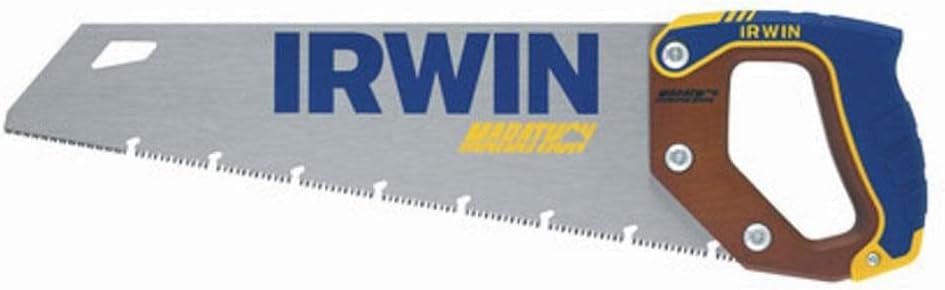
IRWIN Marathon ProTouch 15-Inch Coarse-Cut Carpenter Saw
| Blade Material | Alloy Steel |
|---|---|
| Number of Teeth | 14 |
| Blade Shape | Rectangular |
| Power Source | Hand powered |
The IRWIN Marathon ProTouch 15-inch carpenter saw is built for heavy-duty, performance-focused wood cutting. Its M2 tooth geometry and Tri-Ground teeth deliver fast, efficient cutting across and with the grain, while deep gullets clear chips quickly to maintain cutting speed. The tapered-pitch nose improves clearance and control when starting cuts and working near corners, and the thick-body blade adds rigidity for straighter strokes when ripping or crosscutting. The wood ProTouch handle is shaped for comfort during extended use but remains robust for jobsite wear. This saw is best used for framing, rough carpentry, and general-purpose wood cutting where speed and aggressive material removal matter more than super-fine finish. Limitations include a coarse 9-point tooth pattern that leaves a rougher cut compared with fine-tooth saws and a wooden handle that some users may find less ergonomic than modern composite grips.
Best for: Buyers who prioritize fast, aggressive cutting for framing, rough carpentry, or frequent jobsite use and want a reliable, high-performance hand saw.
Less Ideal for: People who need very fine, smooth finish cuts for trim, cabinetry, or finish carpentry should choose a finer-toothed saw designed for precision.
- Aggressive M2 and Tri-Ground teeth for fast cutting and efficient chip removal
- Deep gullets reduce clogging and keep the cut moving quickly
- Thick-body blade improves rigidity for straighter, controlled strokes
- Tapered-pitch nose aids clearance and starting cuts in tight spots
- Coarse 9-point tooth pattern produces a rougher finish not ideal for fine joinery
- Wooden handle offers durability but less modern ergonomic padding
Verdict: Choose this saw when you need a durable, high-performance carpenter saw that cuts fast and clears chips efficiently for rough and framing work.
Jorgensen 15-Inch Hand Saw with 8 TPI Black-Coated Blade

| Number of Teeth | 8 |
|---|---|
| Blade Material | Alloy Steel |
| Handle Material | Aluminum |
| Surface Recommendation | Plastic,Wood |
The Jorgensen 15-inch hand saw is a straightforward, heavy-cut handsaw aimed at general woodworking and outdoor trimming tasks. Its 8 TPI triple-ground teeth deliver aggressive, fast cuts through dimensional lumber and framing stock, while the SK5 high-carbon steel blade holds an edge and resists bending under regular use. The black Teflon-like coating reduces friction and helps keep sap and debris from building up on the blade. The reinforced aluminum frame and TPE/ABS ergonomic grip make it comfortable to hold for extended sessions and the handle includes 45° and 90° angle guides useful for marking cuts. Practical uses include rip and cross cuts on rough lumber, pruning thick branches, and cutting PVC or trim where speed matters more than ultra-fine finish. Limitations are inherent to the coarse 8 TPI: it is not intended for fine finish work or precise joinery and will leave a rougher cut on delicate stock. Also, being a fixed non-folding saw it requires safe storage with the included edge protector.
Best for: A buyer who wants a reliable, fast-cutting handsaw for general carpentry, framing, and heavier trimming tasks and values durability and comfort during frequent use.
Less Ideal for: Not the best choice for woodworkers focused on fine finish work, delicate trimming, or precision joinery who need higher-tooth-count saws.
- Aggressive 8 TPI triple-ground teeth for fast, efficient cutting of rough lumber
- SK5 high-carbon steel blade offers good edge retention and resists bending
- Black low-friction coating reduces material buildup and helps corrosion resistance
- Ergonomic aluminum-framed handle with TPE/ABS grip and built-in angle guides
- Coarse 8 TPI tooth pattern produces a rougher finish not suited to fine joinery
- Fixed blade requires careful storage and is less portable than folding saws
Verdict: Choose this saw if you want a durable, comfortable hand saw that makes fast, aggressive cuts for general carpentry and trimming.
CRAFTSMAN 20" Fine Finish Hand Saw (CMHT20881)

| Blade Length | 20 inches |
|---|---|
| Number of Teeth | 6 |
| Blade Material | High Speed Steel |
| Power Source | Manual Power |
| Handle Material | Composite Materials |
The CRAFTSMAN 20" Fine Finish hand saw is a straightforward wood-cutting tool designed for clean, fast cuts in panel and dimensional lumber. Its 20-inch high-speed steel blade with induction-hardened teeth delivers lasting sharpness and the six teeth per inch profile is tuned for smooth crosscuts and general carpentry tasks. The bi-material ergonomic handle gives good control and includes simple 45- and 90-degree references for square and miter work, which helps when cutting without a box or guide. Because the blade is rectangular and built for fine finish work, it performs best on wood, plywood, and laminate rather than heavy demolition. The saw is lightweight and easy to use for extended periods, making it suitable for finish carpentry, trimming, and DIY projects where a neat edge matters. It lacks specialized features like replaceable blades or extra teeth density for ultra-fine joinery, but as a durable, no-frills hand saw it balances performance and comfort for everyday woodworking tasks.
Best for: A practical homeowner or carpenter who wants a reliable, easy-to-use saw for general woodworking and finish cuts around the house.
Less Ideal for: Woodworkers who need ultra-fine joinery blades, frequent ripping, or modular saw systems with replaceable blades should consider more specialized saws.
- Durable high-speed steel blade with induction-hardened teeth for longer edge life
- Six TPI fine-finish tooth pattern for clean crosscuts in wood and panel materials
- Ergonomic bi-material handle that improves grip and control during cuts
- Lightweight design suitable for extended use and general carpentry
- Tooth count and blade design prioritize finish cuts over aggressive ripping or heavy demolition
- No replaceable blade option for specialized or worn-edge replacements
Verdict: Choose this saw if you need a durable, comfortable 20" hand saw that delivers clean, fast finish cuts for everyday woodworking.
EXTYQWC 6" Ryoba Japanese Pull Saw, SK5 Double-Edge Blade

| Blade Material | Alloy Steel (SK5 high-carbon) |
|---|---|
| Number of Teeth | 168 |
| Power Source | manual |
| Other Special Features of the Product | Lightweight |
This 6-inch ryoba Japanese pull saw is a compact hand saw aimed at trimming, joinery and detailed woodworking. It cuts on the pull stroke, which gives better control and cleaner results when working on small furniture, dowels, plugs and tight joints. The blade is SK5 high-carbon steel with hardened teeth and a flexible profile that allows flush trimming close to the work surface. One edge is 17 TPI for finer cuts in hardwood while the 11 TPI side removes material faster in softwoods, so you get two useful cutting options in one blade. Triple-ground teeth help the saw cut smoothly and reduce binding during controlled strokes. Because the blade is short and flexible it excels at precision work and maneuvering in confined spaces but is not designed for ripping large stock or heavy construction tasks. For a budget-focused buyer this saw delivers versatile, accurate cutting for small to medium woodworking jobs without extra frills.
Best for: A budget-minded woodworker or carpenter who needs a precise, versatile hand saw for joinery, trimming and small furniture repairs where control and clean cuts matter more than long-stroke ripping.
Less Ideal for: Buyers who routinely cut large timbers, sheet goods or need a heavy-duty ripping saw for construction work should choose a larger, purpose-built saw instead.
- Double-edge ryoba blade provides 17 TPI for fine hardwood cuts and 11 TPI for faster softwood work
- SK5 high-carbon steel blade with HRC60-63 hardened teeth for durable cutting performance
- Flexible 6-inch blade allows flush trimming and precise work on dowels, plugs and joints
- Pull-stroke design gives control and cleaner cuts for detailed joinery and furniture tasks
- Short, flexible blade is not suited for ripping large boards or heavy-duty cutting
- Alloy steel handle may lack the ergonomic comfort of dedicated wood or rubber handles
Verdict: A cost-conscious choice for carpenters who need a compact, controllable pull saw for precise joinery and flush trimming.
Jorgensen 20-Inch Hand Saw with 11 TPI Black-Coated Blade and Ergonomic Non-Slip Handle

| Power Source | hand_powered |
|---|---|
| Number of Teeth | 11 |
| Blade Material | High Speed Steel |
| Handle Material | ABS and TPE |
The Jorgensen 20-inch hand saw is a straightforward, reliability-minded tool for cutting wood, PVC and similar materials. Its 11 TPI triple-ground teeth and induction hardened high-speed steel blade are designed to hold an edge and cut quickly on both push and pull strokes, while the low-friction black coating helps reduce binding. The molded ABS and TPE handle is shaped for a firm, non-slip grip and includes 45 and 90 degree guide marks to help keep cuts square. Practical touches include a cardboard sleeve and plastic tooth protector for safe storage and transport. In use the saw excels at fast, coarse ripping and trimming tasks around the workshop or yard, and the robust blade construction makes it suitable for repeated use without frequent re-sharpening. It is not a fine-tooth finish saw, so expect rougher edges on delicate joinery and slower performance on very hard, dense timbers. For routine framing, pruning and general carpentry where dependable, aggressive cutting is the priority, this saw performs well.
Best for: Buyers who prioritize a durable, workhorse handsaw for everyday cutting tasks like framing, pruning and general carpentry and who want a tool that stays sharp through repeated use.
Less Ideal for: Woodworkers needing a fine-tooth saw for smooth finish cuts or hobbyists doing delicate joinery should choose a finer TPI saw instead.
- Triple-ground 11 TPI teeth and induction hardened high-speed steel blade for durable, fast cutting
- Low-friction black coating reduces binding for smoother strokes
- Ergonomic ABS+TPE non-slip handle with angle guides for comfortable, accurate cutting
- Includes blade protector and cardboard sleeve for safer storage
- Coarse 11 TPI tooth pattern produces rougher cuts not suited for fine finish work
Verdict: A tough, no-nonsense 20-inch handsaw built for fast, reliable cutting on everyday woodworking and yard tasks.
RUITOOL 6" Ryoba Japanese Double-Edge Pull Saw

| Blade Material | Sk5 steel |
|---|---|
| Blade Length | 6 inches |
| TPI | 14 & 17 |
| Blade Thickness | 0.67mm |
| Handle Material | Beechwood |
The RUITOOL 6" Ryoba pull saw is a compact hand saw designed for precise finish and flush cutting on wood. It uses a thin, flexible SK5 high-carbon steel blade with one side at 17 TPI and the other at 14 TPI so you can alternate between finer crosscuts and slightly coarser rip-style cuts. A hardened three-edge tooth grind and an ultra-thin 0.67mm blade help the saw cut quickly and leave smooth surfaces, while the beechwood handle provides a traditional, comfortable grip for one-handed control. Typical use cases are trim work, small joinery, flush cutting dowels or tenons, and detailed carpentry where a long saw would be unwieldy. The compact blade limits reach and is not suited to large framing tasks, and the thin blade requires careful handling to avoid bending during heavy-duty cuts. For buyers who value a responsive pull-stroke saw for detailed work, this delivers good sharpness and versatility; those needing long cuts or heavy material removal will prefer a larger saw.
Best for: Skilled hobbyists and professional carpenters who do detailed trim, joinery, or flush cutting and prioritize control and a fine finish over long cutting reach.
Less Ideal for: Contractors or woodworkers who need to make long straight cuts, heavy framing cuts, or frequent deep ripping should choose a larger handsaw designed for those tasks.
- Flexible SK5 high-carbon steel blade for fast, precise cuts
- Double-edge teeth (14 and 17 TPI) let you switch between rip and crosscut tasks
- Hardened three-edge tooth geometry improves sharpness and chip removal
- Beechwood handle offers a comfortable, traditional grip for detailed work
- 6-inch blade limits reach and speed on large or thick stock
- Ultra-thin blade can bend if used for heavy-duty ripping or prying
Verdict: Buy this if you want a nimble, razor-sharp Ryoba pull saw geared toward precise trim and flush-cut woodworking.
Choosing the Right Carpenter Hand Saw: Key Factors to Consider
Tooth Pattern and Pitch
Tooth pattern and pitch determine how a saw cuts through wood. Rip teeth are shaped differently from crosscut teeth; rip teeth remove wood along the grain quickly, while crosscut teeth slice across fibers for a cleaner finish. A finer pitch produces smoother cuts in thin stock but slows progress in thick timber. Matching tooth geometry to the wood species and the type of cut you do most often reduces tear-out and effort.
When evaluating saws, think about whether you do more joinery or framing. Joinery favors finer crosscut patterns for neat shoulders and tenons, while framing favors coarser rip teeth for speed. Some carpenter hand saws use an intermediate pattern to handle both tasks reasonably well, which is useful if you need one do-it-all tool.
Blade Length and Stiffness
Blade length affects how many teeth engage a cut and how long a single stroke can be. Longer blades let you make longer, straighter cuts with fewer strokes, but they can be harder to control in tight spaces. Blade stiffness matters because a flexing blade wanders and causes uneven kerfs. Look for blades with rolled or reinforced spines or those made from higher-grade carbon steel to reduce flex.
Consider the scale of your projects: compact blades are useful for trim and confined work, while full-length carpenter blades are better for dimension lumber and sheet goods. Balance is key; a blade that is too heavy or too flexible will cost you accuracy and speed.
Handle Shape and Comfort
Handle shape influences control and fatigue. A well-contoured grip lets you apply force directly behind the blade without pinching, which improves tracking. Handles with rounded palms and adequate finger clearance reduce hotspots and blisters during extended use. Some handles include slight offsets that help keep the knuckles clear of the workpiece when cutting flush to a surface.
Materials matter as well. Molded synthetic grips resist swelling and weathering, while well-finished hardwood handles offer a traditional feel and can be reshaped if needed. Think about hand size and whether you wear gloves on site when choosing a handle profile.
Sharpening, Setting, and Maintenance
A saw that can be easily maintained will last longer and perform better. Tooth profiles that accept standard files are easier to re-sharpen in the workshop. Proper setting helps the saw cut a kerf wide enough to prevent binding without wasting effort. Consider whether the saw's teeth are filed in a way that you can reproduce at the bench, and whether the blade finish resists gumming from pitch and resin.
Routine maintenance also includes checking the tang and fasteners connecting the blade to the handle. Loose handles or corroded hardware make accurate cutting difficult. Choose a saw whose construction allows occasional tightening, filing, and light rust removal.
Durability and Corrosion Resistance
Carpentry often happens in mixed conditions, from dry workshops to damp sites. Corrosion resistance keeps a blade smoother and easier to start cutting, while durable finishes and robust blade-to-handle joints withstand heavy use. Blades with protective coatings or stainless treatment resist rust, but the coating should not hide poor steel quality. Reinforced tangs or securely pinned handles reduce the chance of failure under load.
Also consider how the saw will be stored. A blade that tolerates occasional exposure to moisture without pitting will save time on maintenance and keep tooth geometry true longer.
When to Use a Dedicated Carpenter Hand Saw
A carpenter hand saw is ideal when you need portable, controlled cuts without setting up power tools. Use them for on-site trimming, making final adjustments to fitted pieces, or cutting where noise and dust must be minimized. They are also valuable for delicate shoulder cuts and paring back joints where a power saw would remove too much material quickly.
Hand saws are particularly useful for rough cutting in framing when power is not available, and for finish work where tactile feedback is important. Keep a well-sharpened carpenter saw in any kit you take to a jobsite for quick corrections and clean cuts.
- Portable and does not require power
- Good for final adjustments and precision shoulder cuts
- Suitable for quiet or cramped work areas
Ripping Vs Crosscut Techniques
Ripping and crosscutting use different motions and tooth interactions. For ripping, use long, steady strokes and let the saw's geometry do the work, keeping the blade aligned with the cut. Crosscutting benefits from a slightly angled wrist and a shorter stroke to score the fibers before sawing deeper. Practice each motion to reduce binding and improve line accuracy.
Proper body positioning and clamping are as important as tooth choice. Secure the workpiece at a comfortable height and sight along the intended cut line frequently instead of forcing the blade through a crooked trajectory.
- Keep strokes consistent to maintain a straight kerf
- Start cuts with a light scoring stroke for cleaner edges
- Use clamps and work supports to prevent movement
Maintaining Sharpness Between Jobs
Regular light filing keeps a saw behaving like new. Remove burrs and restore tooth profiles with the correct file size; small, frequent maintenance is easier than large repairs. If teeth are set unevenly, use a setting tool to restore uniformity before re-filing.
Clean pitch and resin periodically with a solvent safe for the blade finish, and wipe a thin coat of rust inhibitor if the saw will be stored for a while. Proper storage like hanging or a protective sleeve reduces the chance of accidental damage to the teeth.
- File regularly with the correct file profile
- Use a setting tool to keep uniform tooth spread
- Wipe and protect the blade from moisture
Safe Handling and Working Posture
Safety is about posture as much as protective gear. Stand with a steady base, position the work at a comfortable height, and use your off hand to stabilize the piece well away from the cut line. Avoid overreaching which can twist the blade and lead to inaccurate or dangerous cuts.
Keep the saw's handle secure in your grip but not clenched. Controlled motion reduces the chance of slips and gives more consistent cuts. Always inspect the blade for cracks or severe corrosion before use, and replace any saw with compromised structural integrity.
- Secure work with clamps or vises
- Keep non-cutting hand clear of the blade path
- Inspect blade condition before each use
Adapting a Single Saw for Multiple Tasks
If you prefer to carry one saw, choose a pattern that offers compromise between ripping speed and crosscut cleanliness. A medium pitch with a balanced tooth geometry will not excel at either extreme but will handle general carpentry tasks from trimming to small-scale framing. Match stroke length and technique to clean up imperfections with a rasp or plane afterward.
You can also modify a general-purpose saw by tuning the set and keeping the teeth well-filed for the tasks you do most. This approach keeps your kit light while keeping acceptable performance across common jobs.
- Select a medium-pitch tooth pattern for versatility
- Tune tooth set and sharpening to your common tasks
- Carry a backup small saw for tight spots
How We Chose the Best Carpenter Hand Saw
We selected candidate saws using practical carpentry criteria that matter when you are cutting timber by hand. Primary evaluation centered on cut quality and tooth geometry, with emphasis on how quickly a saw tracks and how clean the kerf is for both rip and crosscuts. Blade stability and steel grade were judged for resistance to flexing and how well a saw stays true over long cuts. Handle ergonomics were assessed for hand shape, palm support, and vibration dampening during long sessions. Ease of setting and re-sharpening was considered so a saw can be maintained in the workshop. Durability of the blade-to-handle connection and corrosion resistance were included for site use and storage conditions. We excluded tools that are primarily for pruning, frame saws, or specialized metal-cutting saws because they do not meet the carpentry cutting profile. The final selections balanced these measurable dimensions to reflect what most carpenters need for routine joinery and framing work.
FAQ
What blade length is best for general carpentry?
Blade length depends on the work you do. A mid-length blade gives a good balance for cutting stock and sheet goods with longer, straighter strokes, while a shorter blade is handier in confined spaces. Choose based on the typical sizes you cut.
How often should I sharpen a carpenter hand saw?
Sharpening frequency depends on use and wood species. For regular day-to-day work, light filing every few weeks keeps teeth consistent. Heavier use or cutting abrasive materials will require more frequent attention.
Can a single saw handle both ripping and crosscutting?
A single, medium-pitch saw can perform both tasks reasonably well but will not match a dedicated rip or crosscut saw for speed or finish. Adjust technique and accept some tradeoffs if you prefer one versatile tool.
Is a coated blade worth it for carpentry work?
Coatings help resist corrosion and pitch build-up, which improves start-up and reduces maintenance. However, coating quality varies, and good steel plus regular care can be equally effective. Consider coating as one of several durability factors.
How do I prevent a blade from wandering when cutting?
Wandering usually comes from blade flex, improper starting techniques, or an uneven tooth set. Use proper stance and align the first scoring strokes carefully, ensure the blade is stiff enough for the cut, and maintain a uniform tooth set and sharpness.
Final Verdict
Choose a Carpenter hand saw based on the cuts you make most often. Prioritize tooth pattern and blade stiffness if accuracy and clean kerfs matter, or favor coarser teeth and a robust blade for fast rough cutting. Handle shape and maintenance needs determine how comfortable and long-lasting the tool will be in daily use. By recognizing those tradeoffs, you can select a saw that matches your workflow and keeps you productive on site or in the workshop.
