

Note: This article contains affiliate links. If you click on these links and make a purchase, I may earn a small commission at no extra cost to you. This helps support my research and content. Read my full affiliate disclosure here.
Getting the right feed makes a noticeable difference with clivia. These shade-tolerant bulbs hold energy in thick fleshy leaves and need a fertilizer that supports steady growth and flowering without encouraging floppy, weak foliage. This guide covers six top shortlisted options suited to container and garden clivias, and explains how each product was judged on nutrient balance, application style, and plant response. Below we evaluate how formulas perform for bloom initiation, leaf health, and root vigor so you can pick a fertilizer that fits your watering routine and growing conditions.
Top Picks at a Glance
| Best Overall The best all-around choice for most situations | Osmocote Smart-Release Plant Food Plus Outdoor & Indoor, 1 lb |  |
| Best Quality Built to a higher standard if you want something more solid | FoxFarm Tiger Bloom Liquid Plant Food (1 pint) |  |
| Best Budget The cheapest option that still gets the job done reliably | Jobe's Organics Houseplant Fertilizer Spikes, 50 Count |  |
| Highest Rated A top-rated pick with lots of positive feedback | Rubisco Orchid Magic MSU Formula Liquid Plant Food, 8 fl oz |  |
| Most Popular A crowd favorite that many people choose with confidence | Miracle-Gro Indoor Plant Food for All Plants, Liquid, 8 fl. oz. (2-Pack) |  |
| Best Seller A high-volume bestseller chosen again and again | TPS NUTRIENTS Indoor Plant Food Liquid Fertilizer, 8 fl oz |  |
Osmocote Smart-Release Plant Food Plus Outdoor & Indoor, 1 lb
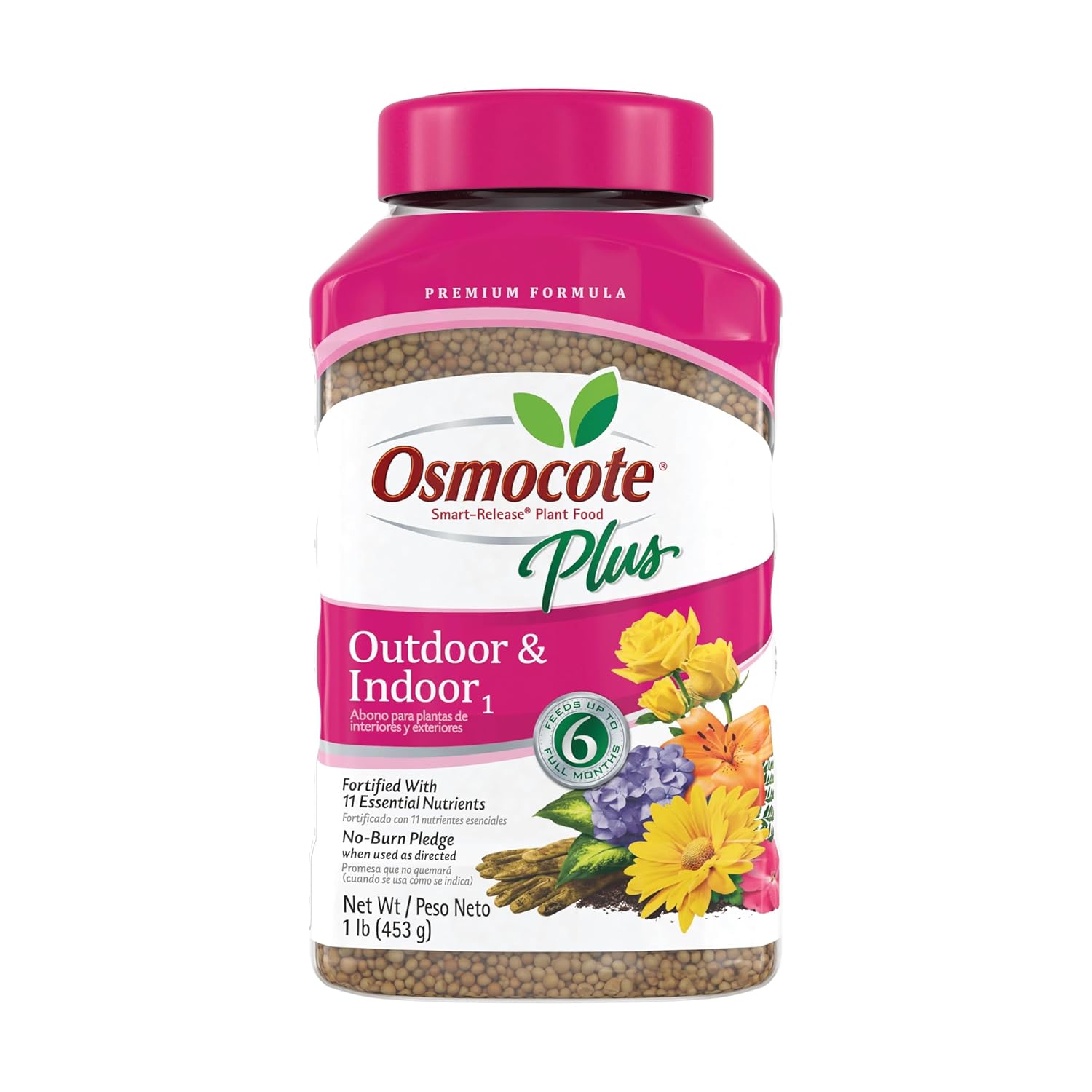
| Item Form | Granules |
|---|---|
| Specific Uses For Product | Plant Food |
| Application Method | sprinkle around the base and work into the soil |
| Unit Count | 16 Ounce |
Osmocote Smart-Release Plant Food Plus is a resin-coated granular fertilizer designed to deliver steady nutrition to a wide range of plants for up to six months from a single application. You apply it by sprinkling the recommended scoop into the top inch or so of potting mix for containers or around plants in garden beds, then watering to activate the coating. The product contains 11 essential nutrients and is formulated to release based on soil temperature, which helps reduce overfeeding and supports consistent bloom and foliage performance in hanging baskets. Its no-burn pledge makes it easy to use at the recommended rates for mixed annuals, trailing plants, and container veggies. Limitations are that coverage is modest from a 1 lb. container so frequent use on many large baskets will require buying more, and release timing still depends on temperature so plants in cool, shaded spots may receive nutrients more slowly than those in warm sun.
Best for: Gardeners who prioritize steady, low-maintenance feeding for hanging baskets and containers and want consistent bloom and foliage without frequent fertilizing.
Less Ideal for: Those who need immediate, short-term nutrient boosts or precise liquid feeding schedules for plants that demand fast correction.
- Resin-coated granules provide controlled release of nutrients for up to six months
- Formulated with 11 essential nutrients suitable for a wide variety of plants
- No-burn pledge when used as directed reduces risk of damaging roots in containers
- Simple sprinkle-and-water application works well for hanging baskets and pots
- 1 lb container covers a limited area so multiple baskets will need additional product
- Release rate depends on temperature so nutrient delivery can be slower in cool conditions
Verdict: An easy, low-maintenance slow-release fertilizer that keeps hanging baskets fed for months with minimal effort.
FoxFarm Tiger Bloom Liquid Plant Food (1 pint)
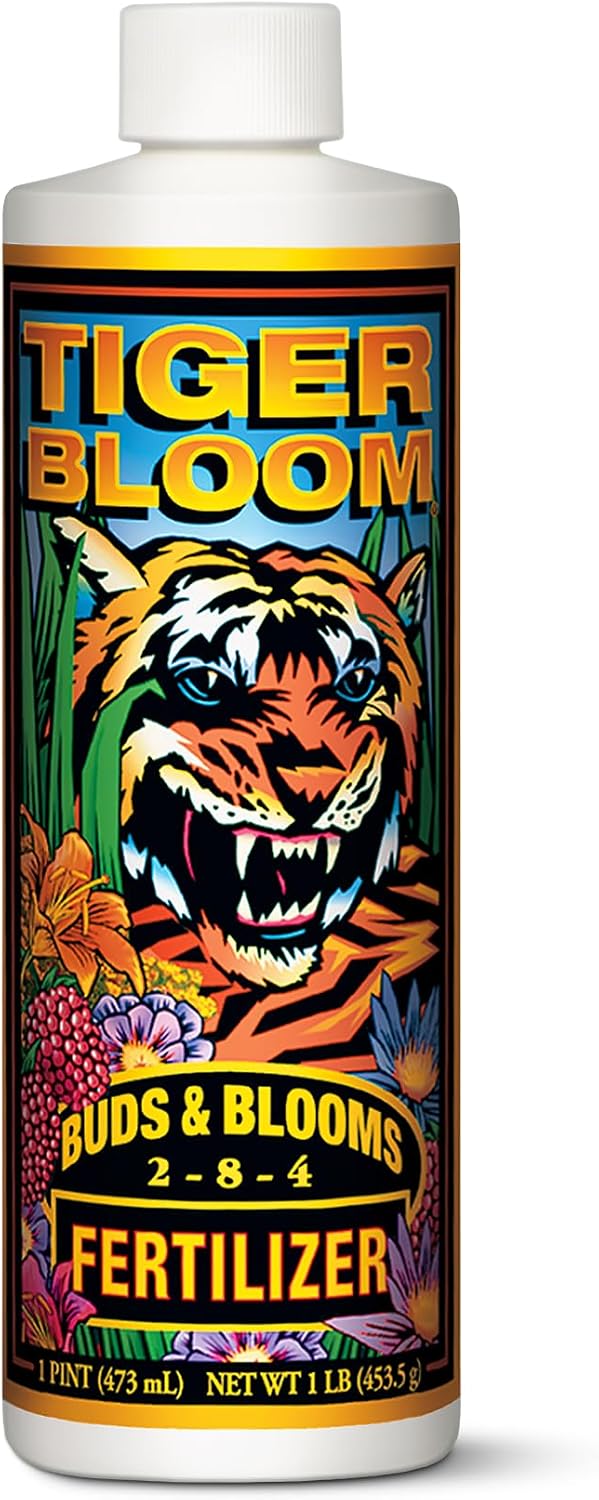
| Item Form | Liquid |
|---|---|
| Specific Uses For Product | Hydroponic |
| Application Method | Watering; Foliar spraying |
| Target Species | Flowering Plants |
| Mixing Ratio | 1:200 or 1:300 |
Tiger Bloom is a liquid, high-phosphorus fertilizer designed to push plants into a strong flowering and fruiting phase. You mix a small amount into the irrigation water or use it as a foliar spray and apply from first signs of flowering through harvest. The 2-8-4 formula and included micronutrients support bud set and larger blooms, and the concentrate mixes at 1:200 to 1:300 for routine feeding or 2 to 4 teaspoons per gallon for heavier feeding. It works in both soil and hydroponic setups and is formulated for quick nutrient uptake and stable micronutrient availability during storage. Practical benefits include flexible application methods, suitability for intensive flowering cycles, and a small bottle that lasts when used at recommended dilutions. Important limitations are that it is bloom-focused rather than an all-purpose feed so it may not meet vegetative needs, and the phosphorus content means users near waterways should follow local regulations to avoid runoff issues.
Best for: Serious growers who prioritize maximizing flower and bloom performance and want a concentrated, fast-acting bloom booster for soil or hydroponic environments.
Less Ideal for: Casual gardeners seeking a single all-purpose fertilizer for every growth stage or those managing turf or non-flowering lawns where phosphorus restrictions apply.
- High phosphorus NPK (2-8-4) concentrated for stronger bud development
- Works in soil and hydroponic systems for versatile use
- Liquid concentrate mixes easily for foliar or watering applications
- Formulated for quick nutrient uptake and stable micronutrient availability
- Focused on flowering so it is not a balanced all-stage fertilizer
- Contains phosphorus which may be restricted near waterways
Verdict: Choose Tiger Bloom when you need a concentrated, fast-acting bloom booster to maximize flower and fruit production.
Jobe's Organics Houseplant Fertilizer Spikes, 50 Count

| Unit Count | 50 Count |
|---|---|
| Application Method | Insert spikes into soil |
| Item Form | Granules, Liquid, Sticks |
| Target Species | Houseplant |
| Mixing Ratio | 13-4-5 |
Jobe's Organics fertilizer spikes are pre-measured, slow-release sticks you insert directly into potting soil to feed indoor flowering and foliage houseplants. Each pack includes 50 spikes formulated at 13-4-5 NPK, designed to supply nutrients at the roots for roughly 60 days before replacement. Use is straightforward: push the recommended number of spikes into the soil around the root zone and forget them until the next application. The spikes eliminate mixing, reduce mess and runoff, and help prevent accidental overfeeding because each spike contains a set dose. For small pots and casual plant owners this delivers consistent feeding with minimal effort, especially where you want steady bloom and leaf color without daily attention. Limitations are the fixed nutrient ratio and dosing schedule so you cannot fine-tune feeding for specific species or correct nutrient imbalances quickly, and spikes may be less practical for very large containers or heavy feeders that need more frequent or soluble feeding.
Best for: A practical, budget-minded houseplant owner who prefers low-effort, scheduled feeding and wants reliable bloom and foliage maintenance without mixing fertilizers.
Less Ideal for: Enthusiasts who need customizable nutrient ratios, rapid corrective feeding, or who primarily care for very large or heavy-feeding plants.
- Pre-measured slow-release spikes remove mixing and reduce mess
- Continuous root-zone feeding for about 60 days per application
- Formulated 13-4-5 NPK suited to flowering and foliage development
- Pack of 50 provides multiple applications for several small plants
- Fixed NPK ratio and dose cannot be adjusted for individual plant needs
- Not ideal for very large pots or plants requiring frequent soluble feeding
Verdict: If you want an inexpensive, no-mess way to provide steady root-zone nutrition to multiple houseplants, these pre-measured spikes are a simple and reliable choice.
Rubisco Orchid Magic MSU Formula Liquid Plant Food, 8 fl oz

| Item Form | Liquid |
|---|---|
| Specific Uses For Product | Orchids and Tropical House Plants |
| Target Species | Orchids and Tropical House Plants |
| Liquid Volume | 8 fluid ounces |
Rubisco Orchid Magic is a professional-grade liquid concentrate based on the MSU orchid formula used by growers and greenhouses. It is designed for orchids and other plants that prefer low-mineral water and can be mixed into rainwater, reverse-osmosis, or low-mineral tap water at three clearly labeled strengths for seedlings, maintenance, and active growth or bloom pushes. The 13-3-15 NPK balance combined with calcium, magnesium, and a full micronutrient package helps feed root-sensitive species without building up salts, and the bottle treats multiple gallons depending on dilution, so a small bottle lasts many feedings. Directions are printed on the label for straightforward weekly dosing. Limitations are that it is formulated specifically for plants that do best with low-mineral water, so gardeners who rely on hard tap water without conditioning may not get the intended benefits without switching water sources or using filtered water.
Best for: Growers who prioritize consistent, greenhouse-style nutrition for orchids and tropical houseplants and who use or are willing to use rainwater or low-mineral water for feeding.
Less Ideal for: Casual gardeners who rely solely on untreated hard tap water or who prefer slow-release granular fertilizers that do not require regular mixing.
- MSU-based 13-3-15 formula with added calcium, magnesium, and micronutrients suited to orchids
- Concentrated bottle covers many gallons with three labeled feeding strengths for different growth stages
- Low-salt formulation that reduces mineral buildup when used with rainwater or RO water
- Clear label directions for weekly dosing make routine feedings simple
- Designed for low-mineral water so effectiveness is reduced if used with hard tap water without filtration
- Only sold as a liquid concentrate which requires measuring and mixing
Verdict: If you want reliable, greenhouse-style nutrition for orchids and other root-sensitive tropicals and can use low-mineral water, this concentrated MSU-formula feed delivers consistent results.
Miracle-Gro Indoor Plant Food for All Plants, Liquid, 8 fl. oz. (2-Pack)

| Item Form | Liquid |
|---|---|
| Application Method | Apply directly to soil or mix with water |
| Target Species | Houseplants |
| Liquid Volume | 8 fluid ounces |
| Mixing Ratio | 4 pumps per 1 quart of water |
Miracle-Gro Indoor Plant Food is a ready-to-use liquid fertilizer for indoor potted plants that you apply either directly to soil or diluted in water. It is typically used every two weeks by mixing the recommended number of pumps into a quart of water or by applying a few pumps for larger pots, making it easy to add to a regular watering routine. The product feeds quickly because nutrients are water-soluble and the pump dispenser gives repeatable doses without measuring spoons. Practical benefits include broad compatibility with most houseplants and a compact bottle size that is convenient for small indoor gardens. Limitations are that the label lists only N, P, K without a full nutrient breakdown, so growers wanting precise NPK ratios or micronutrient profiles may prefer a more detailed formula. Also the 8 fl. oz. bottles are best for hobbyists or small collections rather than large indoor plantings because frequent repurchasing will be necessary for heavy users.
Best for: Buyers who want a simple, low-effort fertilizer to add to a regular watering routine and who prioritize straightforward dosing and broad houseplant compatibility.
Less Ideal for: Specialist growers who need exact NPK ratios, detailed micronutrient information, or bulk quantities for many plants should consider a different product.
- Liquid formula feeds instantly when mixed with water or applied to soil
- Pump dispenser provides simple, repeatable dosing without measuring
- Designed for use with a wide range of indoor plants including herbs, flowers and vegetables
- Full NPK ratio and micronutrient details are not shown on the product summary
- Small 8 fl. oz. bottle size may require frequent replacement for larger collections
Verdict: A convenient, pump-dosed liquid fertilizer that makes fortnightly feeding simple for casual indoor plant owners.
TPS NUTRIENTS Indoor Plant Food Liquid Fertilizer, 8 fl oz

| Item Form | Liquid |
|---|---|
| Specific Uses For Product | Plant Food |
| Application Method | Watering can |
| Mixing Ratio | 2:1 (oz/gallon) or 1:64 (tbsp/gallon) |
TPS NUTRIENTS Indoor Plant Food is a concentrated liquid fertilizer made for regular use with houseplants. You mix the measured dose into water and apply it with your usual watering can; the label gives an easy mixing ratio for household use. Its kelp-enriched formula is pitched at improving leaf color, encouraging steady new growth, and supporting root health, so expect glossier foliage and more frequent leaf production when plants are fed consistently. The 8 fl oz bottle is portable and fits on a plant shelf or utility area, and the liquid form dissolves readily for even application. It is intended for medium coverage and labeled as gentle for weekly feeding, which simplifies care for busy owners. Important limitations are that this is a small bottle meant for regular top-up feedings rather than long-term bulk use, and it assumes you will follow dilution directions to avoid overfeeding. Keep it away from children and pets and avoid skin or eye contact when handling.
Best for: Plant owners who want a simple, low-effort weekly fertilizer to keep indoor foliage vibrant and encourage steady new leaf growth. Good for people who prefer an easy liquid mix applied during regular watering routines.
Less Ideal for: Gardeners needing a bulk or multi-season fertilizer for outdoor beds or large collections should consider larger-capacity or specialized products instead.
- Liquid concentrate mixes easily for even application with a watering can
- Kelp-enriched formula aimed at improving foliage color and encouraging new growth
- Gentle enough for weekly feedings according to product guidance
- Clear mixing instructions for home use
- Small 8 fl oz volume limits how many plants you can feed before repurchasing
- Not formulated or labeled for outdoor or large-scale garden use
Verdict: A convenient kelp-enriched liquid concentrate that makes weekly feeding easy for anyone who wants healthier, more vibrant indoor foliage.
Choosing the Right Clivia Miniata Fertilizer: Key Factors to Consider
Nutrient Ratio and Timing
Clivia miniata responds best to a balanced feeding that favors bloom without excessive nitrogen. A formula with moderate nitrogen, slightly higher phosphorus, and adequate potassium helps plants set flower spikes while maintaining healthy leaves.
Timing matters because clivias develop buds on stored reserves. Feed during the active growth period after flowering and reduce or stop feeding during the winter rest to encourage bud initiation. Overfeeding early in the season can produce lush leaves but fewer blooms.
Fertilizer Form and Release
Slow-release granules offer steady nutrition and reduce the risk of overfertilizing compact pots, which is helpful if you water irregularly. Liquid concentrates let you dial in rates quickly, which is useful when correcting deficiencies or giving a bloom boost.
Controlled-release options that last several months are convenient for container growers, while soluble feeds let you feed on a schedule tied to watering. Choose the form that matches your routine and how often you inspect soil moisture and root health.
Micronutrients and Secondary Elements
Trace elements such as iron, magnesium, and manganese keep clivia leaves a healthy green and prevent interveinal chlorosis in shaded spots. Calcium and magnesium improve cell structure and reduce tip burn or leaf distortion.
A feed that includes chelated iron or magnesium can be a good insurance policy in potting mixes that leach these elements. Avoid products lacking any micronutrients if your plants show subtle deficiency signs or are in recycled potting mix.
Salt Buildup and Root Safety
Clivias in small pots are vulnerable to salt accumulation from frequent fertilizing, which causes tip scorch and root stress. Slow-release formulas and dilute liquid feed rates help minimize salt concentration.
Flushing pots periodically and using feeds formulated for container plants reduce the risk of buildup. Look for recommendations on dosage and frequency that suit the pot size and watering habits you follow.
Application Convenience for Containers and Beds
Many clivias live in pots or shaded garden beds where access can be limited. Granular top-dressings are low-effort for beds, while liquids are easier for potted plants when you need controlled doses.
Think about how often you want to handle fertilizer, whether you can safely apply granules around established roots, and whether you prefer mixing concentrates at watering time. Convenience affects consistency, and consistent feeding yields better bloom reliability.
Feeding Schedule for Pot-Grown Clivias
Set a feeding schedule that follows the plant's growth cycle. Start regular feeding in spring as new growth appears, continue through the active growth period, and taper in autumn to allow the plant to rest.
For slow-release granules, a single early-spring application often covers the season. For liquid feeds, dilute to half the recommended strength and feed every two to four weeks depending on plant vigor and pot size.
- Spring to early autumn: regular, moderate feeding
- Late autumn to winter: reduce or stop fertilizers to encourage bud set
- Flush pots occasionally to prevent salt buildup
Adjusting Feed for Shaded Conditions
Clivia miniata thrives in shade, which slows soil drying and plant metabolism. In low light you need less fertilizer because slower growth reduces nutrient demand. Overfeeding shaded plants leads to soft foliage and potential root damage.
Use lower strength solutions or extend intervals between slow-release top-ups when plants receive limited light. Watch leaf color and new growth rate to fine-tune feeding.
- Reduce feed concentration in deep shade
- Monitor leaf color for subtle nutrient deficiencies
- Increase aeration and drainage if soils stay wet
Correcting Common Nutrient Issues
Yellowing between veins often points to iron or magnesium deficiency and is common when potting mix pH is high. A targeted liquid feed containing chelated iron or magnesium can address this quickly.
Pale or stunted growth after repotting may indicate a need for a balanced feed to restore reserves. Apply a gentle liquid feed at reduced strength to help recovery without shocking tender roots.
- Interveinal chlorosis: consider chelated micronutrients
- Stunted growth after repotting: gentle liquid feed
- Tip burn or brown edges: check for salt buildup and flush pots
Mixing Fertilizer with Potting Mixes
When repotting clivias, amend mixes sparingly. Pre-mixed slow-release granules can be blended into the top layer rather than mixed throughout to avoid exposing roots to concentrated nutrients.
Avoid high peat mixes that hold excess moisture; choose a free-draining mix and apply fertilizer according to container size. For heavily amended soils, reduce applied fertilizer rates to compensate for added nutrients.
- Top-dress rather than mixing high concentrations into root zone
- Match fertilizer rate to pot volume, not plant size alone
- Prefer free-draining mixes and adjust feed frequency
Safety and Environmental Notes
Use fertilizers sparingly around shaded beds to avoid runoff into nearby plantings. Controlled-release products reduce the risk of leaching compared with frequent soluble feeds.
Store concentrated liquids and granules away from children and pets, and follow label guidance on disposal. Rinse applicators and measuring tools after use to avoid cross-contamination.
- Avoid overapplication to prevent runoff
- Follow label safety and storage instructions
- Clean tools and containers after use
How We Chose the Best Clivia Miniata Fertilizer
We selected fertilizers that match the specific needs of Clivia miniata rather than general houseplant feeds. Evaluation prioritized nutrient ratios that support bloom set and leaf health, fertilizer form and ease of application for container-grown and in-ground clivias, and the presence of secondary nutrients and micronutrients that prevent common deficiencies. We also considered release profile and longevity to avoid frequent feeding that can stress roots in compact pots. Excluded were products aimed only at bulbs grown for foliage indoors without bloom focus, and broad-market garden fertilizers whose N-P-K ratios do not align with clivia bloom needs. The final shortlist favors balanced formulas that encourage flowering and root strength, slow-release or controlled liquid options for steady uptake, and feeds that minimize salt buildup. Performance under typical shady conditions and compatibility with regular potting mixes were key deciding dimensions.
FAQ
How often should I feed clivia in a pot?
For slow-release granules one spring application often suffices. If using a liquid feed, apply diluted solution every two to four weeks during active growth and stop feeding during the winter rest.
Can I use general houseplant fertilizer on Clivia miniata?
Often a general houseplant feed will work, but choose one with a balanced N-P-K or slightly higher phosphorus to encourage blooms. Reduce strength and frequency when plants are in low light.
What signs show my clivia needs fertilizer?
Slow growth, pale new leaves, and fewer flower spikes than expected usually indicate insufficient nutrients. Interveinal yellowing suggests micronutrient deficiency rather than just lack of N-P-K.
Is slow-release better than liquid feed for clivias?
Slow-release reduces the risk of salt buildup and is convenient for containers. Liquid feeds give faster correction and more control. The best choice depends on your watering routine and how closely you monitor plants.
How do I avoid salt buildup in potted clivias?
Use lower concentrations, choose a slow-release option, and occasionally flush the pot with water to leach salts. Repot every few years to refresh the mix if buildup recurs.
Final Verdict
Choose a fertilizer that matches your growing style and the pot conditions your clivias experience. Prioritize a nutrient balance that supports bloom formation along with micronutrients that keep leaves healthy. Consider delivery form and release profile based on how often you water and how much monitoring you will do. Balancing these tradeoffs lets you pick a feed that encourages regular flowering without risking root stress. Feed moderately, observe plant response, and adjust timing or concentration to suit your light and potting conditions.
