

Note: This article contains affiliate links. If you click on these links and make a purchase, I may earn a small commission at no extra cost to you. This helps support my research and content. Read my full affiliate disclosure here.
Choosing the right controlled release fertilizer matters because feeding rhythm and nutrient predictability shape plant health across seasons. With a controlled release product you get steady delivery instead of boom-and-bust nutrient spikes, which helps containers, beds, and lawns avoid burn and nutrient swings. This guide covers seven shortlisted controlled release fertilizers that suit a range of garden uses from container veggies to established shrubs. We evaluated each option for how long nutrients last, how predictable the release is, and how the product handles in real garden conditions. Read on to understand the factors that matter and which attributes support your planting situation.
Top Picks at a Glance
| Best Overall The best all-around choice for most situations | Nutricote 13-11-11 Controlled Release Plant Food, 180-Day Formula, 15 oz |  |
| Best Quality Built to a higher standard if you want something more solid | Osmocote Smart-Release Plant Food Flower & Vegetable, 8 lb. |  |
| Best Value The sweet spot between price and what you get | Osmocote Smart-Release Plant Food for Flowers & Vegetables, 2 lb |  |
| Best Budget The cheapest option that still gets the job done reliably | RAINFLOW Slow-Release Granular Fertilizer 14-13-13 (11.28 oz) |  |
| Highest Rated A top-rated pick with lots of positive feedback | Osmocote Smart-Release Plus Plant Food 15-9-12, 8 lb (2 Pack) |  |
| Most Popular A crowd favorite that many people choose with confidence | Osmocote Smart-Release Plant Food Plus Outdoor & Indoor, 8 lb |  |
| Best Seller A high-volume bestseller chosen again and again | Miracle-Gro Shake 'N Feed All Purpose Plant Food, 4.5 lb |  |
Nutricote 13-11-11 Controlled Release Plant Food, 180-Day Formula, 15 oz

| Item Form | Granules |
|---|---|
| Application Method | Sprinkle |
| Target Species | orchids, bromeliads |
| Mixing Ratio | 13:11:11 |
Nutricote 13-11-11 is a slow-release granular fertilizer that delivers steady nutrition over roughly six months, making it suitable for pot plants, orchids, and outdoor beds where frequent feeding is undesirable. The coated prills release nutrients gradually (Type 180), supplying about 80% of nitrogen over 180 days, so you mix it into potting media or sprinkle it around plants and then let it work. Its balanced 13-11-11 NPK supports foliage and root growth while being versatile enough for vegetables, flowers, and specialty species like orchids and bromeliads. Because it is a controlled-release product, it reduces the risk of burning from overfertilizing and cuts down on maintenance compared with daily or weekly liquid feeds. Limitations include fixed nutrient proportions and a single release period, so it is less flexible when plants need a different NPK balance or shorter feeding cycles. Also it comes in a relatively small 15 oz unit, which may require repurchasing for larger gardens.
Best for: Buyers who want a low-maintenance, all-purpose slow-release fertilizer for container plants, houseplants, and small garden plots and prioritize consistent feeding with minimal effort.
Less Ideal for: Large-scale vegetable growers or gardeners who need custom NPK mixes or faster-acting feeds for rapid growth cycles should consider other products.
- Controlled-release coating supplies nutrients steadily for up to 180 days, reducing feeding frequency
- Balanced 13-11-11 NPK suitable for general growth, root development, and flowering across many plant types
- Granular form is easy to mix into potting mix or sprinkle around plants for versatile application
- Coating reduces risk of fertilizer burn compared with immediate-release products
- Single NPK ratio and fixed 180-day release may not match plants that need different nutrient balances or shorter feeding schedules
- 15 oz unit is small for larger gardens and may require frequent repurchasing
Verdict: Choose Nutricote 13-11-11 when you want a dependable six-month slow-release fertilizer that keeps container and specialty plants fed with minimal maintenance.
Osmocote Smart-Release Plant Food Flower & Vegetable, 8 lb.

| Item Form | Granules |
|---|---|
| Specific Uses For Product | Root Development |
| Target Species | Perennials |
| Mixing Ratio | 1:22 (1 lb.:1 cubic foot) |
Osmocote Smart-Release Flower & Vegetable is a granular slow-release fertilizer designed to provide steady nutrition to vegetable beds, raised beds, and perennial planting areas for up to four months. It is applied by mixing the measured scoop into the top 1 to 3 inches of soil or broadcasting over mulched areas, with 1 lb treating roughly 40 sq ft. The balanced 14-14-14 NPK formula supports root development and consistent above-ground growth without frequent reapplication. Notable practical benefits include the no-burn reputation that makes it forgiving if you misapply, and the temperature-responsive release that aligns feeding with plant uptake. It comes with an applicator and clear coverage guidance, so it is straightforward to use for typical home gardeners. Limitations are that release rate depends on soil temperature so feeding timing can vary between climates, and as a granular product it requires incorporation into the soil rather than being foliar or water-soluble for quick correction of deficiencies. For gardeners seeking a low-maintenance, season-long feed for edible and ornamental plantings, this performs predictably and safely.
Best for: Home gardeners who want a reliable, low-maintenance fertilizer for vegetable plots, raised beds, and perennial borders and prefer a product that reduces the need for frequent feeding.
Less Ideal for: Growers who need fast corrective feeding or who prefer liquid or foliar fertilizers for immediate nutrient delivery should consider other options.
- Balanced 14-14-14 NPK supports both root and top growth across vegetables and flowers
- Slow-release formula feeds up to four months, reducing reapplication frequency
- Included scoop and clear coverage guidance make application easy and consistent
- Formulation is forgiving and unlikely to burn plants even if over-applied
- Nutrient release depends on soil temperature so timing can vary by climate
- Granular form must be mixed into soil and cannot correct nutrient deficiencies quickly
Verdict: Choose this if you want a dependable, mistake-proof slow-release fertilizer that feeds vegetables and flowers for an entire season.
Osmocote Smart-Release Plant Food for Flowers & Vegetables, 2 lb

| Item Form | Granules |
|---|---|
| Specific Uses For Product | Plant Growth, Root Development, Seed Development |
| Application Method | Mix into 1 – 3” of soil |
| Coverage | 80 sq. ft. |
Osmocote Smart-Release Plant Food is a granular, slow-release fertilizer designed to support both root development and above-ground growth in flowers, vegetables and herbs. Applied by mixing into the top 1–3 inches of soil, one pound covers about 40 sq. ft. and the formula releases nutrients over up to four months, so it reduces the need for frequent feeding during the growing season. The balanced 14-14-14 NPK makes it suitable for general-purpose feeding of seasonal vegetables, perennials and mulched garden beds, and the manufacturer notes a no-burn performance even if over-applied moderately. Practical benefits include predictable nutrient delivery driven by soil temperature and an included applicator for easier distribution. Limitations are that specific ingredient details are not listed and the coverage of a 2 lb container is modest for larger plots, so you will need more product for medium to large vegetable beds. It is a straightforward, low-maintenance option for gardeners who want steady feeding without weekly fertilizer chores.
Best for: Gardeners who want an easy, dependable all-purpose fertilizer for small to medium vegetable beds and mixed flower/edible plantings and prefer low-maintenance, seasonal feeding.
Less Ideal for: Growers managing large-scale vegetable plots, container-only growers needing very frequent dosing, or those seeking a targeted specialist fertilizer for specific soil deficiencies.
- Slow-release granules feed up to four months, reducing reapplication frequency
- Balanced 14-14-14 NPK suitable for general vegetable and flower feeding
- Includes applicator and simple application method of mixing into 1–3 inches of soil
- Manufacturer states low risk of burning plants even if applied above recommended rates
- Coverage guidance provided for planning garden usage (approx. 1 lb per 40 sq. ft.)
- 2 lb size provides limited coverage for medium to large vegetable gardens
- Ingredients are not specified in the product details
- Not formulated for specialty nutrient needs such as high-phosphorus bloom boosting
Verdict: A reliable, low-maintenance slow-release fertilizer that delivers balanced nutrients for steady vegetable and flower growth over the season.
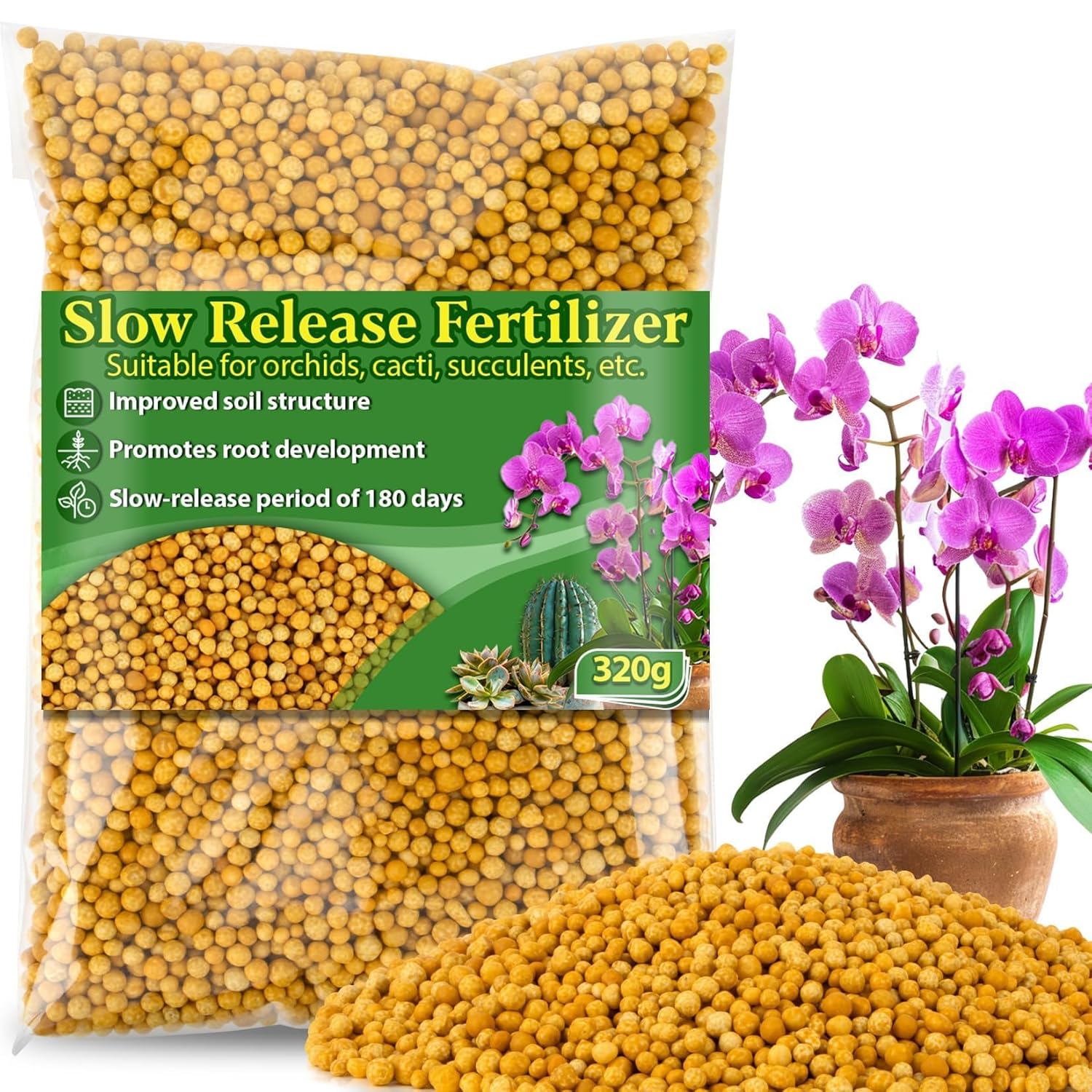
RAINFLOW Slow-Release Granular Fertilizer 14-13-13 (11.28 oz)
| Item Form | Granules |
|---|---|
| Application Method | Spray or Soil Application |
| Target Species | orchids, succulents, cacti, vegetables, flowering plants |
| Mixing Ratio | 14:13:13 |
This granular slow-release fertilizer provides balanced nutrition with a 14-13-13 NPK mix and is formulated to feed plants gradually for up to 180 days. It is intended for both soil application and diluted spray use, so you can top-dress pots of succulents and orchids or mix for larger garden beds and vegetables. The granules are easy to spread and the product targets root development, flowering, and fruiting while loosening soil. Its versatility across plant types makes it a convenient all-purpose choice for mixed gardens and houseplant collections. Limitations include the small 11.28 ounce unit, which suits containers and small beds but will require frequent repurchasing for larger areas, and there is limited dosing detail beyond a single mixing ratio. For gardeners on a budget who want a low-maintenance, slow-release option, this delivers predictable, extended feeding in a compact package.
Best for: Value-minded gardeners who maintain mixed houseplants, small container collections, or a few raised beds and want a simple low-maintenance fertilizer to reduce application frequency.
Less Ideal for: Landscape-scale gardeners or anyone managing large vegetable plots who need bulk fertilizer or precise, crop-specific nutrient plans.
- Balanced 14-13-13 NPK suitable for many plant types
- Slow-release formulation claims up to 180 days of feeding
- Granular form supports both soil application and spray dilution
- Marketed for a wide range of plants including succulents, orchids, cacti, vegetables and flowers
- Small 11.28 oz unit size is not economical for large gardens
- Mixing and application guidance is minimal beyond a single ratio
Verdict: A compact, budget-friendly slow-release fertilizer that delivers balanced, low-effort feeding for small gardens and container plants.
Osmocote Smart-Release Plus Plant Food 15-9-12, 8 lb (2 Pack)

| Item Form | Granules |
|---|---|
| NPK | 15-9-12 |
| Number of Packs | 2 |
| Target Species | plants |
This Osmocote Smart-Release Plus plant food is a controlled-release granular fertilizer formulated to provide steady nutrition for up to six months with a single application. The resin-coated granules release nutrients gradually, which reduces the need for frequent feeding and helps avoid nutrient spikes that can stress plants. It contains a balanced 15-9-12 NPK analysis plus secondary nutrients, so it works across flowers, vegetables, shrubs, trees and houseplants and performs well in containers, raised beds and in-ground gardens. The product comes as a value two-pack of 8 lb bags that together cover roughly 600 sq ft when used per label instructions, making it convenient for season-long maintenance. Limitations to note are that coverage and exact release rate depend on soil temperature and watering, so application timing matters, and granular feed requires spreading and light incorporation rather than the instant uptake of liquid fertilizers. For gardeners who want dependable, low-effort feeding across mixed plantings, this provides long-lasting, predictable nutrition.
Best for: Gardeners who prioritize dependable, low-maintenance feeding across mixed plantings and want a single application to provide season-long nutrition.
Less Ideal for: People who need immediate nutrient correction for nutrient-deficient plants or those who prefer precise, frequent dosing with liquid fertilizers.
- Resin-coated granules provide controlled nutrient release for up to six months
- Balanced 15-9-12 formulation with additional nutrients suitable for a wide range of plants
- Value two-pack supplies about 600 sq ft of coverage when applied as directed
- Works in containers, raised beds, and in-ground plantings for versatile use
- Release rate varies with soil temperature and moisture so results are less predictable in extreme conditions
- Requires spreading and incorporation rather than instant feeding offered by liquids
Verdict: Choose this product for reliable, long-lasting controlled-release feeding that reduces how often you need to fertilize during the growing season.
Osmocote Smart-Release Plant Food Plus Outdoor & Indoor, 8 lb

| Item Form | Granules |
|---|---|
| Application Method | Sprinkle |
| Specific Uses For Product | Plant Food |
| Coverage | Full |
| Mixing Ratio | 1 scoop (3 tbsp) per 2 gal pot or 4 sq. ft. |
Osmocote Smart-Release Plant Food Plus is a granular, resin-coated fertilizer designed to deliver steady nutrition for up to six months from a single application. It is applied by sprinkling the recommended scoopful into the top 1 to 3 inches of potting or garden soil and watering in; outdoor rates are halved for indoor plants. The resin coating times nutrient release so plants receive consistent feeding rather than a sudden flush, which the product backs with a no-burn pledge when used as directed. Practical benefits include broad compatibility with vegetables, flowers, shrubs and container plants, long coverage that reduces reapplication frequency, and clear dosing guidance for pots and garden beds. Limitations are that the formula details and ingredient breakdown are not specified on the listing and that granular slow-release products can be slower to correct acute nutrient deficiencies compared with soluble feeds.
Best for: Gardeners who prioritize steady, low-maintenance feeding and want a single, long-lasting application for mixed beds and containers.
Less Ideal for: Growers needing immediate correction of nutrient deficiencies or those who prefer liquid feeds and frequent, adjustable dosing.
- Feeds continuously for up to six months with a single application
- Resin-coated granules control nutrient release to reduce risk of overfeeding
- Suitable for both indoor and outdoor use across many plant types
- Clear application rates for pots and garden beds make dosing straightforward
- Ingredient breakdown is not specified, so exact nutrient ratios beyond '11 nutrients' are not clear
- Not ideal for quickly correcting acute nutrient deficiencies since release is slow
Verdict: Choose this product when you want a reliable, low-maintenance, six-month slow-release fertilizer that works across most garden and container plants.
Miracle-Gro Shake 'N Feed All Purpose Plant Food, 4.5 lb

| Item Form | Granules |
|---|---|
| Application Method | Shake onto soil and work into top 1-3 inches |
| Target Species | flowers, vegetables, herbs |
| Unit Count | 72 Ounce |
| Feeds For | up to 3 Months |
Miracle-Gro Shake 'N Feed All Purpose is a granular, continuous-release fertilizer you sprinkle onto soil and lightly work into the top inch or three before watering. It is typically used on in-ground garden beds, raised beds and established container plants to provide slow feeding across the season; the label recommends reapplying every three months. Notable features include natural ingredients that feed soil microbes, added micronutrients, and an easy shake-on application that requires no mixing. In practice this product is convenient for routine garden maintenance because one application supports steady nutrient availability without frequent dosing. For garden beds it helps promote root strength and consistent growth while reducing the need to remember weekly feedings. The main limitations are that it is a general-purpose formula rather than a crop-specific blend and that application rates must be followed to avoid overfeeding; it also provides broad coverage but not the fast boost of a water-soluble feed if plants need immediate recovery.
Best for: Gardeners who want a low-maintenance, reliable feeding method for flower and vegetable beds and containers and prefer scheduled, less frequent fertilizing over weekly applications.
Less Ideal for: Growers seeking fast corrective feeding, precise NPK ratios for fruiting crops, or specialty blends for roses or acid-loving plants should consider targeted fertilizers instead.
- Continuous-release formula feeds plants for up to three months per application
- Granular shake-on application is simple and requires no mixing
- Contains micronutrients and ingredients that support soil microbes and root health
- Suitable for both in-ground garden beds and container plants
- All-purpose formula may not match nutrient ratios for specific crops or problems
- Slower acting than water-soluble fertilizers when immediate nutrient correction is needed
Verdict: Use this granular, three-month continuous-release fertilizer when you want a simple, low-maintenance feed that keeps garden beds and containers nourished through the season.
Choosing the Right Controlled Release Fertilizer: Key Factors to Consider
Release Duration and Garden Timing
How long a controlled release fertilizer feeds is central to its usefulness. Some formulations are designed for 8 to 12 weeks of steady feeding, while others advertise season-long or multi-month performance. Your planting schedule and climate determine the ideal duration. For container plants that dry and warm quickly you may prefer shorter, predictable cycles so you can adjust for rapid growth. For established shrubs and perennials, a longer duration reduces labor and prevents nutrient swings during slow uptake periods.
Seasonal temperature changes alter release rates. Most coated fertilizers release faster in warm soils and slow down in cool conditions, so choose a duration that matches your active growing months rather than calendar weeks alone.
Release Mechanism and Predictability
Controlled release fertilizers use coatings, resin matrices, or chemically slowed compounds to meter nutrients. Coating thickness and uniformity affect how evenly granules release. A product with consistent granule coating will produce steadier nutrient availability across a bed or container, reducing localized overdosing or underfeeding. Predictability matters most when you have sensitive plants that react poorly to sudden nutrient changes.
Read instructions to learn whether release is temperature-dependent or moisture-triggered. Temperature-driven systems can be reliable in stable-climate gardens, while moisture-responsive options may vary more with irrigation patterns and rainfall.
Nutrient Ratio and Secondary Elements
Look beyond the primary N-P-K numbers to the balance that suits your planting goals. A balanced formula supports overall growth, while higher nitrogen blends favor leafy growth and may not be ideal for flowering or fruiting stages. Many controlled release options include secondary nutrients such as magnesium, calcium, and micronutrients. Those additions can prevent common deficiencies, especially in container soils that hold limited nutrient reserves.
Consider the crop: vegetables and flowering annuals often benefit from balanced or bloom-focused ratios, whereas lawns and fast-growing ornamentals may need nitrogen-weighted formulas. Avoid relying on a single feed if your soil test shows specific nutrient gaps.
Soil Type and Container Considerations
Soil texture and container media affect moisture retention and therefore release rate. Sandy garden beds drain quickly and will let coated granules release more slowly due to lower moisture contact, while heavy or peat-based potting mixes hold moisture and can accelerate release. In containers, smaller soil volumes heat and cool faster, changing release speed compared with in-ground planting.
Match fertilizer duration to the medium. For containers, shorter, more responsive products help you fine-tune feeding. For in-ground shrubs in loamy soils, long-duration formulations reduce maintenance without risking spikes.
Application Method and Coverage
How you apply controlled release fertilizer affects distribution and effectiveness. Granular products are broadcast or top-dressed around root zones and then watered in. Uniform spreading tools or calibrated handheld spreaders improve even coverage across beds and lawns. Some formulations are amenable to mixing into potting soil prior to planting for an initial dose, while others perform best when surface-applied.
Application rate and timing matter. Over-application can still cause salt buildup or excessive vegetative growth. Follow label rates scaled to container size or square footage, and consider splitting applications for sensitive plantings.
Environmental Impact and Runoff Risk
Controlled release fertilizers can reduce short-term nutrient spikes that cause runoff when compared with frequent soluble feeds, but environmental risks remain if applied excessively. Slow, steady release reduces the chance of leaching after heavy rain, yet high application rates on sloped ground or compacted soils can still move nutrients into drainage.
Choose formulations with lower soluble salt content for containers and newly planted areas, and avoid application before heavy storms. Where runoff is a concern, combine controlled release with good soil practices like mulching and buffering plantings with deep-rooted groundcovers.
When To Use Controlled Release Fertilizer
Controlled release fertilizer is most useful when you want to reduce feeding frequency while keeping nutrients available over an extended period. It is particularly helpful for container plants, hanging baskets, and high-maintenance annual displays where frequent feeding is impractical.
Use these products for established shrubs and perennials to smooth nutrient availability through fluctuating weather. Avoid relying on them as the only fertility strategy for soil-building projects where organic matter and microbial activity are the long-term focus.
- Containers and hanging baskets that dry quickly benefit from steady-release formulas.
- Low-maintenance landscapes and shrub beds can go longer between applications.
- Avoid using season-long products for young transplants that need an initial strong nutrient boost.
Applying Controlled Release Fertilizer Correctly
Follow label rates closely and match the product to the planting situation. For surface application, distribute granules evenly and water lightly to start the release process. For containers, scatter granules across the soil surface or mix into the top few inches at planting, following the manufacturer guidance for depth and rate.
Adjust application timing around your climate. In cool seasons, a product rated for temperature-driven release may feed more slowly, so plan applications earlier in spring if you want nutrients available by peak growth.
- Measure by container volume or bed square footage, not by eye.
- Avoid placing granules directly against stems to reduce local salt stress.
- Reapply only when the advertised duration has passed or plant symptoms indicate low nutrition.
Combining Controlled Release with Other Fertility Practices
Controlled release fertilizer works well as part of a broader fertility plan. Pair it with compost, mulch, and occasional water-soluble feeds when specific deficiencies appear. Organic matter improves soil structure and moisture retention, which stabilizes release rates and boosts root health.
For heavy-feeding crops like certain vegetables, supplementing with targeted foliar feeds or short-term soluble fertilizers during peak production can fill gaps that season-long controlled release products are not designed to handle.
- Use soil tests to identify nutrient gaps before relying on a single long-duration product.
- Topdress with compost annually to build long-term fertility alongside controlled release granules.
- Reserve short-term soluble feeds for bloom or fruit set stages when quick nutrient correction is needed.
Common Mistakes to Avoid
Applying too much controlled release fertilizer thinking it is harmless can lead to salt buildup and imbalanced growth. More is not better; follow recommended rates and consider the cumulative effect of repeat applications across seasons.
Another frequent error is ignoring how climate affects release. Expect faster release during hot, wet spells and slower release in cool, dry stretches. If you notice scorch, stunted root growth, or unusually lush, weak growth, reassess your application rate and timing.
- Do not double-up applications if plants look hungry shortly after applying; wait until the labeled duration ends.
- Avoid putting granules in holes directly against roots or stems.
Storage and Safety Tips
Store fertilizers in a cool, dry place away from moisture and direct sunlight to preserve coating integrity. Keep containers sealed to prevent granules from clumping or breaking down prematurely.
Keep all fertilizers out of reach of children and pets. When handling, use gloves if you have sensitive skin and wash hands after application. Dispose of empty packaging according to local regulations.
- Label storage bins with purchase date and expected shelf life.
- Avoid mixing different coated products in the same container to prevent cross-contamination of release properties.
How We Chose the Best Controlled Release Fertilizer
We focused on criteria that matter to gardeners who want predictable, low-maintenance fertilization. Primary evaluation dimensions included nutrient longevity, meaning how long a single application provides usable nutrients in common garden conditions, and release consistency, which measures whether the product delivers steady amounts instead of erratic pulses. We also assessed formulation balance to ensure the N-P-K and secondary elements match common garden needs without forcing frequent corrective feeds. Particle quality and coating integrity were reviewed because these affect how evenly the granules weather and how reliably they release. Handling and application looked at ease of measuring, spreading in beds or pots, and compatibility with standard spreaders or hand application. We excluded slow-release products that depend entirely on microbial breakdown in cold soils, specialty high-salt fertilizers for turf-only use, and starter-only spikes that are not intended for season-long feeding. We prioritized products and formulations designed for general garden, container, and landscape use, and we flagged options that require special application equipment. The products selected represent a range of expected release durations and gardener workflows so readers can choose for containers, annuals, perennials, or shrubs.
FAQ
How long will a single application of controlled release fertilizer last?
Duration varies by product and conditions but commonly ranges from eight weeks to several months. Warmer temperatures and moist soils tend to speed up release, while cool or dry conditions slow it down.
Can I use controlled release fertilizer in containers and garden beds the same way?
You can use these products in both, but application rate and expected release differ because containers warm and dry faster. Use lower rates or shorter-duration formulations for small pots and follow label guidance for in-ground beds.
Will controlled release fertilizer prevent nutrient deficiencies completely?
Controlled release products reduce feeding gaps but do not guarantee prevention of all deficiencies. Specific micronutrient shortages or pH-related availability issues may require targeted amendments or foliar feeds.
Is it okay to combine controlled release fertilizer with compost or organic amendments?
Yes. Adding compost improves soil structure and moisture retention, which can stabilize release rates. Do not over-apply nutrients; use compost for long-term fertility and controlled release for steady immediate supply.
Should I apply controlled release fertilizer before heavy rain?
Avoid applying immediately before heavy storms when possible. While controlled release reduces runoff risk compared with soluble feeds, very heavy rain can still move nutrients off-site, especially on slopes or compacted soils.
How do I know if the product is releasing as expected?
Monitor plant growth and observe for signs of over- or underfeeding, such as scorched leaf margins or pale new growth. Soil moisture and temperature tracking helps interpret release timing. If in doubt, follow labeled reapplication intervals rather than guessing.
Final Verdict
Controlled release fertilizer simplifies feeding by delivering nutrients gradually, but matching product duration and formulation to your planting situation is key. Prioritize predictable release, an appropriate nutrient ratio, and application methods aligned with containers or in-ground beds. Balance the convenience of fewer feedings with occasional targeted amendments when specific plant stages or deficiencies arise. Use the evaluation criteria in this guide to choose a formula that fits your climate, soil, and watering habits. That approach helps you get steady growth without extra work or unintended nutrient problems.
