

Note: This article contains affiliate links. If you click on these links and make a purchase, I may earn a small commission at no extra cost to you. This helps support my research and content. Read my full affiliate disclosure here.
If you want to turn kitchen scraps and yard waste into rich, usable compost without creating a mess, the right compost bin for yards makes all the difference. In a typical backyard setting you need a container that controls odors, allows airflow, and holds up to weather while still being easy to add to and turn. This guide covers seven shortlisted compost bins chosen for common yard situations, from small suburban lots to larger properties with regular garden waste. We evaluated each option on durability, ventilation, ease of use, and maintenance effort to help you find a practical everyday solution.
Top Picks at a Glance
| Best Overall The best all-around choice for most situations | Redmon 65-Gallon Outdoor Compost Bin with Lift-Off Lid |  |
| Best Quality Built to a higher standard if you want something more solid | Greenes Fence Cedar Composter (36" Square, 173.92 gallons) |  |
| Best Value The sweet spot between price and what you get | VEVOR 220 Gallon Outdoor Expandable Compost Bin |  |
| Best Budget The cheapest option that still gets the job done reliably | Niuyhe 34-Gallon Collapsible Felt Compost Bin with Observation Windows |  |
| Highest Rated A top-rated pick with lots of positive feedback | BBTEQEKN 285-Gallon Outdoor Metal Wire Mesh Compost Bin |  |
| Most Popular A crowd favorite that many people choose with confidence | VIVOSUN Outdoor Tumbling Composter, Dual-Chamber 43 Gallon |  |
| Best Seller A high-volume bestseller chosen again and again | GEOBIN Backyard Compost Bin, Expandable Plastic Composter |  |
Redmon 65-Gallon Outdoor Compost Bin with Lift-Off Lid

| Capacity | 65 gallons |
|---|---|
| Material Type | Plastic |
| Manufacturer | Redmon |
| Item Highlight | 4 Door Access Composting Bin |
The Redmon 65-gallon outdoor compost bin is a practical backyard composter aimed at homeowners who want an easy, low-maintenance way to turn kitchen scraps and yard waste into usable compost. It is built from weather-resistant plastic made with a high percentage of post-consumer recycled material and includes multiple vent holes for aeration, a snap-off lift lid for adding fresh material, and four side access doors to remove finished compost without disturbing the pile. Assembly is tool-free so you can set it up quickly, and the trapezoid shape and sizable capacity let you handle seasonal yard cleanup and continuous kitchen scrap additions. Important limitations are that the unit does not have a tumbling mechanism, so turning will require a garden fork or aerator tool, and plastic construction can be less insulating than wooden or insulated bins in colder climates. For standard backyard composting this bin provides durable, simple containment and easy access to finished compost when you need it.
Best for: Homeowners who want a straightforward, low-effort compost solution to process kitchen scraps and regular garden waste and who value easy access to finished compost.
Less Ideal for: People seeking a fast-composting tumbler system or those needing an insulated composter for cold climates should consider alternative designs.
- Large 65-gallon capacity handles kitchen scraps and seasonal yard waste
- Four access doors allow easy removal of finished compost without emptying the whole bin
- Made from mostly post-consumer recycled plastic for weather resistance and durability
- Tool-free assembly and a snap-off lift lid make setup and daily use straightforward
- No tumbling or active mixing mechanism so aeration requires manual turning
- Plastic construction provides limited insulation in cold weather which can slow decomposition
Verdict: A simple, large-capacity outdoor bin that gives homeowners easy access to finished compost without complicated setup or maintenance.
Greenes Fence Cedar Composter (36" Square, 173.92 gallons)

| Capacity | 173.92 gallons |
|---|---|
| Material Type | Cedar Wood |
| Included Components | 4 posts, 24 boards, and 40 spacers |
| Item Type Name | Cedar Composter |
The Greenes Fence cedar composter is a straightforward wooden compost bin built for outdoor backyard use. It assembles without tools by sliding 3/4" cedar boards and spacers into routed corner posts, so one person can put it together quickly using a rubber mallet if needed. The open slatted design gives good airflow and drainage, which helps materials break down and makes it easy to turn the pile with a shovel or pitchfork every two to three weeks. Because it is made from untreated North American cedar, it resists rot and insects while remaining safe for compost destined for edible gardens. The composter is modular and can be expanded into a multi-bin system with add-on kits to support continuous composting. Limitations are its basic open-top design, which requires a tarp or plywood cover to retain heat and moisture in cold or very wet climates, and the wooden walls mean you will need to replace or repair boards after many seasons of heavy use.
Best for: A beginner who wants a low-fuss, natural-material compost bin that is easy to assemble and can be expanded into a multi-bin system for steady compost production.
Less Ideal for: Gardeners who need a fully enclosed, insulated tumbler for fast hot composting or people who want a maintenance-free plastic/metal bin that never needs repair.
- Tool-free, quick assembly with slotted posts and boards
- Untreated cedar construction resists rot and is safe for edible gardens
- Open slatted design provides good airflow and drainage to speed composting
- Modular posts allow easy expansion into a multi-bin system
- No included lid or cover so you must provide a tarp or plywood to retain heat or keep out heavy rain
- Wood will weather over time and may require occasional board replacement
Verdict: A simple, expandable cedar composter that gives beginners an easy, natural way to produce garden-safe compost with minimal assembly.
VEVOR 220 Gallon Outdoor Expandable Compost Bin

| Capacity | 220 gal/1000 L |
|---|---|
| Material | HDPE |
| Air circulation | Perforated panels for ventilation |
| Assembly time | About 5 minutes |
The VEVOR 220 gallon expandable compost bin is a high-capacity outdoor composter built from corrosion‑resistant HDPE and intended to make backyard composting low-effort. It assembles quickly and uses perforated panels to promote air circulation and faster aerobic breakdown of leaves, grass clippings, kitchen scraps and cardboard. The large 220 gal volume reduces how often you need to empty or move material, and the modular panels can be disassembled for storage or relocation. Because the bin is lightweight you will want to secure it in windy sites or place it against a barrier. It lacks a dedicated access door or base tray for easy turning or harvesting, so active composters may need tools or to remove panels to retrieve finished compost. For gardeners who want a durable, weatherproof container to manage lots of yard waste without frequent handling, this unit is a practical option.
Best for: Gardeners with medium to large yards who prioritize minimizing handling and want a durable, weather-resistant bin to process large volumes of yard waste.
Less Ideal for: People who need easy one-handed access to finished compost or a bin with a rigid, heavy structure for frequent in-place turning should consider models with doors or solid bases instead.
- Very large 220 gallon capacity reduces trips for emptying and handling yard waste
- Perforated panels promote air flow to speed aerobic composting
- HDPE construction resists corrosion and weather for longer outdoor life
- Quick and simple assembly and disassembly for relocation or storage
- No built-in access door or base tray makes turning and harvesting less convenient
- Lightweight construction means it can shift in wind without additional anchoring
Verdict: If you need a weatherproof, high-capacity bin to reduce handling of large amounts of yard waste, this HDPE 220 gallon composter delivers practical, low-maintenance performance.
Niuyhe 34-Gallon Collapsible Felt Compost Bin with Observation Windows

| Capacity | 34 gallons |
|---|---|
| Material Type | Polyester |
| Material Features | Collapsable |
| Unit Count | 1 Count |
| Net Content Weight | 600 g |
This Niuyhe compost bin is a simple, budget-friendly option for collecting and fermenting kitchen scraps and yard waste. Made from 600g thickened felt it stands upright while filling yet folds flat for storage when not in use. The large dual-zipper top makes adding material easy and the two bottom observation windows let you check decomposition and scoop finished soil without fully opening the bag. Reinforced side handles help move the bag when it is full. Its breathable felt encourages aeration compared with sealed plastic containers, which can speed drying and reduce odors for basic backyard composting. Because it is a soft-sided bag rather than an insulated tumbler or rigid bin, it is best for small-scale home composting and for gardeners who want a low-cost, portable collection point rather than rapid hot composting. Expect less heat retention and less resistance to heavy, wet loads than rigid bins, and take care not to let wet soil contact the self-adhesive strips on the windows to preserve function.
Best for: Budget-minded gardeners who need a simple, portable collection and cold-composting solution for kitchen scraps and yard trimmings and prefer something lightweight that stores flat when not in use.
Less Ideal for: People who want fast, high-heat composting, heavy-duty durability, or a rigid containment system for long-term outdoor exposure should consider a tumbler or rigid bin instead.
- Breathable thick felt encourages aeration and repeat use
- Collapsible design saves storage space when not in use
- Dual-zipper top for easy loading of kitchen scraps and yard waste
- Observation windows let you monitor compost progress and remove finished material
- Not insulated so it will not reach high temperatures for hot composting
- Soft-sided construction is less durable with very heavy or constantly wet loads
Verdict: A low-cost, portable felt compost bag that makes collecting and monitoring small-batch outdoor compost easy for budget-conscious gardeners.
BBTEQEKN 285-Gallon Outdoor Metal Wire Mesh Compost Bin

| Capacity | 285 gallons |
|---|---|
| Material | Metal wire mesh |
| Feature | Ventilation openings |
| Access | Openable panels |
This 285-gallon metal wire mesh compost bin is built for heavy garden use, providing a roomy central container for leaves, grass clippings, plant trimmings, and vegetable scraps. The wire mesh walls and multiple ventilation openings support airflow through the pile, which helps speed decomposition and prevents overly wet, anaerobic pockets. Weather-resistant construction and rust-resistant treatments make it suitable to leave outdoors through seasons without needing frequent replacement. The design includes openable access panels so you can add material from the top or pull finished compost from the bottom without dismantling the whole unit. Because it is a large, simple mesh cylinder it is best used on a level patch of ground and managed with periodic turning or layering to maintain heat and moisture. It does not have an insulated or tumbling mechanism, so composting speed still depends on how actively you manage moisture, aeration, and feedstock balance.
Best for: Home gardeners and landscapers who need a durable, high-capacity outdoor bin for regular yard waste and prefer a low-maintenance, long-lasting system.
Less Ideal for: People with very small yards, apartment balconies, or those who want a compact, odor-sealing bin or a motorized/tumbling composter.
- Very large 285-gallon capacity for yards and landscaping waste
- Wire mesh and multiple vents promote good airflow through the pile
- Rust-resistant, weather-treated metal suitable for outdoor exposure
- Openable access panels make adding material and removing finished compost easier
- No insulated walls or tumbling mechanism so it relies on manual turning and management
- Mesh design offers less containment of small kitchen scraps or stray soil compared with solid-sided bins
Verdict: Choose this bin when you need a durable, large-capacity outdoor composter that promotes airflow and long-term outdoor reliability.
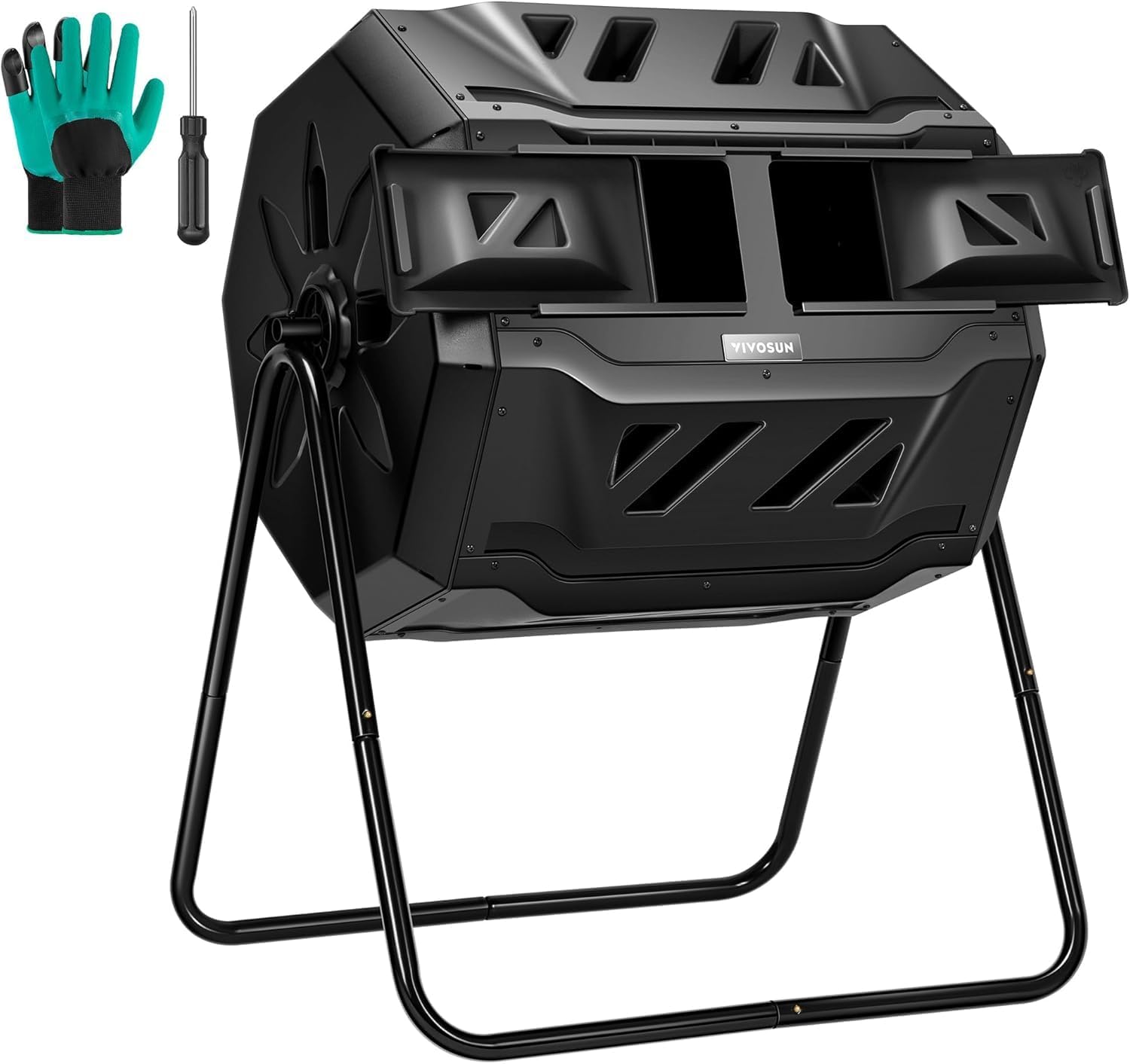
VIVOSUN Outdoor Tumbling Composter, Dual-Chamber 43 Gallon
| Material Type | galvanized steel |
|---|---|
| Capacity | 43 gallons |
This VIVOSUN tumbling composter is a practical backyard unit built around two rotating chambers so you can add fresh waste to one side while the other finishes breaking down. The 360 degree tumbling design with deep internal fins makes turning the pile simple and helps break up clumps without digging. Ventilation slots around the drum promote airflow for aerobic decomposition, and the metal frame with a PP plastic barrel is designed to resist corrosion and outdoor weathering. It comes with waterproof garden gloves and small digging claws to make loading and aerating easier. At 43 gallons it is sized for a family garden or vegetable patch but is compact enough for a patio or small yard. Limitations to note are that it requires occasional manual turning to maintain activity and that the plastic drum means it will warm less in cold climates than insulated models, so composting speed will vary by season. Assembly and placement on a level spot are also important for smooth rotation.
Best for: Gardeners who want a hands-on, efficient system to produce regular batches of compost without digging a pile and who prioritize continuous output and easy turning.
Less Ideal for: People who need a completely hands-off hot composter or who compost only very large volumes; those in very cold climates seeking year-round rapid breakdown should consider insulated or electric options.
- Dual chambers let you load new material while another batch finishes, ensuring continuous compost production
- 360 degree tumbling with deep fins makes mixing and aeration easy without manual digging
- Galvanized steel frame and PP plastic barrel designed for outdoor durability and corrosion resistance
- Ventilation slots support aerobic breakdown for faster, less smelly composting
- Plastic drum offers less insulation than insulated or fully metal units, slowing composting in cold weather
- Requires manual turning and regular management to maintain heat and moisture for fast results
Verdict: If you want steady, manageable batches of compost with easy tumbling and continuous use, this dual-chamber VIVOSUN tumbler delivers practical, durable performance.
GEOBIN Backyard Compost Bin, Expandable Plastic Composter

| Capacity | 216 gallons |
|---|---|
| Material Type | Plastic |
| Shape | Cylindrical |
The GEOBIN Backyard Compost Bin is a lightweight, cylindrical plastic composter designed for straightforward backyard use. It assembles quickly with a few closure keys and expands to increase capacity, so you can start with a small footprint and add volume as your kitchen scraps and yard waste grow. The open-structure design gives excellent ventilation, which helps speed up decomposition when you layer greens and browns and turn the pile occasionally. Because it is low-tech and portable, it is easy to move, empty, or reassemble if you relocate it in the yard. The practical benefits are its affordability, ease of setup, and versatility for beginners and experienced gardeners who want a no-fuss system. Limitations are that it is a basic ring-style bin with no insulated walls or built-in access door, so it will not retain heat as well as tumblers or insulated bins and requires manual turning and occasional maintenance to keep the process active.
Best for: Budget-conscious gardeners who want a low-cost, low-effort way to compost yard trimmings and kitchen scraps without complicated setup.
Less Ideal for: People who need fast, high-temperature composting or a bin with a convenient bottom access door for frequent harvests should consider other designs.
- Expandable capacity up to 216 gallons (listed) to handle increasing compost volume
- Very easy assembly with simple closure keys
- Lightweight and portable for repositioning or storage
- Good ventilation that helps organic material break down faster
- No insulated walls or built-in access door for easy compost removal
- Basic plastic construction offers less heat retention than enclosed designs
Verdict: A very affordable, easy-to-assemble composter that gives budget gardeners a simple, expandable solution for backyard composting.
Choosing the Right Compost Bin for Yards: Key Factors to Consider
Construction Material and UV Resistance
The material a compost bin is made from determines how long it will last in a backyard. Plastic bins can resist rot and insects but vary widely in UV resistance; thinner plastics can become brittle and crack after sun exposure. Metal bins offer strength but must be rust-resistant or coated to avoid corrosion in wet climates. Wood bins blend into a yard visually but need durable wood species and preservative treatments to resist decay.
Consider how much direct sun and rain the bin will face in your yard. A durable outer shell reduces the chance you will need to replace the unit after a few seasons and helps the bin maintain its shape so lids and openings continue to seal effectively.
Airflow, Ventilation, and Drainage
Aerobic decomposition depends on consistent airflow through the compost pile. Look for bins designed with passive vents, perforated walls, or internal chimneys that promote movement of air without letting pests in. Some designs rely on removable panels or slatted sides you can open when turning the pile to increase oxygen exposure.
Good drainage prevents waterlogging, which slows decomposition and creates odor problems. Drainage channels or elevated bases let excess moisture escape, and a weather-proof lid should shed rain without sealing the pile so tightly that it becomes anaerobic.
Capacity, Footprint, and Yard Size
Match the bin's working capacity to the amount of organic waste your household generates and the space available in your yard. Small yards often need compact bins with vertical profiles, while larger properties with substantial yard trimmings benefit from wider or modular bins that can handle bulky materials. Too small a bin means frequent turning and emptying; too large a bin may be hard to manage and slower to heat through.
Think about access for adding yard waste, the bin's visual impact in the landscape, and whether you'll need to move the bin seasonally to capture sun or avoid soggy ground.
Ease of Use and Turning Options
How you add material, mix, and harvest compost affects whether you will actually maintain the pile. Bins with bottom-access doors or removable panels make harvesting finished compost far simpler than ones you must dig out from the top. Tumblers and rotating designs speed mixing but can have limited capacity and may be harder to load with bulky yard trimmings. Consider the physical effort involved in turning and whether the mechanism will still work after repeated use.
Accessibility also matters for routine chores. Lids that are easy to remove, handles that stay secure, and hardware that resists rust all reduce friction for weekly maintenance.
Pest Resistance and Odor Control
Outdoor bins attract attention from animals when food scraps are included. Solid lids that latch, fine-mesh vent covers, and raised bases that block small mammals help keep pests out. Designs that allow frequent aeration and balanced moisture management also reduce odors that attract pests in the first place.
Avoid bins with large openings at ground level or gaps where rodents can enter. In areas with frequent wildlife visits, prioritize secure closures and construction that resists chewing and digging.
Maintenance and Longevity
A practical compost bin should require minimal ongoing maintenance while holding up for multiple seasons. Think about how easy it is to clean out old compost, whether moving parts will seize, and how exposed fasteners are to corrosion. Some materials need seasonal treatments or repositioning to prevent rot or rust, which adds time to your garden chores.
Also consider replacement parts or modular pieces. Bins with simple standard hardware are easier to repair, and modular systems let you expand capacity as your yard needs change without buying a whole new unit.
Best Siting Practices in a Yard
Choose a level, well-drained spot that balances sunlight and shade. Morning sun helps warm the pile for microbial activity while afternoon shade prevents it from drying out too fast. Avoid low spots where water collects after rain.
Place the bin close enough to your kitchen or yard work area to make adding materials convenient, but far enough from windows or outdoor living areas to minimize odor concerns. If possible, set the bin on soil rather than a hard surface so worms and microbes can move between the pile and the ground.
- Keep a small clearance from structures to allow airflow and maintenance access
- Consider a sheltered location that still receives indirect light
- Avoid placing directly under large trees whose roots could interfere
Balancing Greens and Browns in Yard Composting
Yard composting requires managing the ratio of nitrogen-rich green material to carbon-rich brown material to maintain steady decomposition. Kitchen scraps and fresh grass clippings are 'greens' that decompose quickly and can create odors if piled alone. Dry leaves, shredded paper, and woody twigs are 'browns' that add structure and absorb excess moisture.
In a yard context you might generate both types simultaneously. Aim for a mix that keeps the pile moist but not soggy and provides enough structure for air to flow. Layering materials and occasional turning are practical ways to maintain balance without lab testing.
- Shred or chop large yard trimmings before adding
- Store fresh greens in a separate small bin if you produce large amounts at once
- Add brown material progressively to bulky green loads
Managing Compost Through the Seasons
Season affects how quickly a yard-sized pile breaks down. Warm months accelerate microbial activity, so bins with good ventilation will heat and turn into usable compost faster. In colder months decomposition slows, and larger insulated masses retain heat better than thin layers.
Plan for seasonal work. You may need to dry out a wet spring pile, add extra browns in heavy summer rains, or insulate an active pile in winter. Positioning the bin to catch sun and protecting it from driving rain will make seasonal management easier.
- Turn more often in summer to keep oxygen levels high
- Add thicker layers of browns before rainy seasons
- Use insulated covers or place multiple bins side-by-side in winter to preserve heat
Simple Troubleshooting for Common Yard Problems
If a pile smells sour, it is likely too wet or compacted. Open vents, add dry brown material, and turn the pile to reintroduce oxygen. Persistent odors can indicate food waste in high proportion; remove large animal-attracting scraps or bury them deeper in the center.
Slow decomposition can be caused by a lack of nitrogen or overly large, unshredded materials. Add fresh green material, chop bulky branches, or mix in finished compost to introduce microbes. If pests are a problem, secure lids and repair any gaps or torn mesh.
- Address soggy piles by removing excess water and adding dry material
- Use a pitchfork or aerator tool to loosen compacted sections
- Cover fresh food scraps with a layer of browns to deter animals
Tools and Accessories That Make Yard Composting Easier
A few simple tools can reduce effort and improve results. A sturdy pitchfork or compost aerator helps incorporate oxygen during turns. A bin thermometer lets you monitor internal temperature if you want to optimize for faster heat-driven breakdown.
Accessories such as a small shredder for yard waste, a breathable cover to control rain exposure, or base supports that raise the bin slightly for drainage can be worthwhile additions depending on your yard routine.
- Pitchfork or compost fork for turning
- Bin thermometer for active compost management
- Shredder or lopper for bulky yard trimmings
How We Chose the Best Compost Bin for Yards
We focused on features that matter in real yard composting rather than marketing claims. Selection prioritized robust construction that withstands sun and rain, ventilation or aeration systems that speed microbial activity, and access features that make adding and removing material straightforward for routine yard use. Capacity and footprint were assessed so the list includes sizes appropriate for smaller backyards and larger yards that produce more waste. Maintenance concerns such as how easy it is to turn or harvest compost, resistance to pests, and how well a lid or enclosure controls moisture and odors were central. We excluded indoor and worm-specific systems that are unsuitable for typical outdoor yard use, and we did not consider decorative-only containers that lack functional airflow or access. Final picks reflect a balance of durability, airflow management, user access, and practical yard-scale capacity.
FAQ
How big should a compost bin be for a typical yard?
Size depends on how much yard and kitchen waste you produce. A working volume that forms a pile roughly 3 feet wide by 3 feet high is often enough for a household to sustain active decomposition. Larger yards that generate more clippings and prunings benefit from bigger or multiple bins.
Can I compost meat or dairy in a yard bin?
Meat and dairy often attract pests and can create strong odors in outdoor bins. They are usually best avoided in standard yard bins unless you have a secure, pest-resistant system and manage the pile carefully with frequent turning and adequate browns.
How often should I turn my yard compost?
Turning frequency depends on goals and bin type. For faster, hot composting, turn once a week to maintain oxygen and heat. For passive backyard systems, turning once every few weeks or monthly is common and still produces good compost over time.
Will a compost bin attract rodents or raccoons?
Bins can attract wildlife if food scraps are accessible or lids are insecure. Choosing a design with tight lids, small vent openings, and raised bases helps reduce access. Avoid leaving uncovered food scraps on top of the pile.
Do compost bins need a special base or foundation?
Most yard bins perform best placed directly on soil to allow beneficial organisms to move in and for drainage. In very wet yards, elevating the bin slightly on a frame or hardier base can prevent waterlogging.
Final Verdict
Choosing the right compost bin for yards comes down to balancing capacity, airflow, and durability with how much time you will spend maintaining the pile. Prioritize a construction that withstands weather and pests, choose ventilation that supports aerobic breakdown, and pick a size that matches your waste stream and yard space. Accept tradeoffs between ease of access and maximum capacity, and add a few simple tools to make turning and harvesting routine. With those priorities in mind, you can select a yard composting solution that reliably produces rich material for your garden.
