

Note: This article contains affiliate links. If you click on these links and make a purchase, I may earn a small commission at no extra cost to you. This helps support my research and content. Read my full affiliate disclosure here.
Picking the right compost matters more in pots than in garden beds because container-grown herbs depend entirely on the media for water, nutrients, and root space. The wrong mix can stay waterlogged, compact around roots, or run out of nutrients quickly, which leads to leggy, underperforming plants. This guide covers seven shortlisted composts suitable for growing herbs in pots, chosen for their drainage, nutrient profile, and suitability for small containers. We explain the practical tradeoffs you will face when moving herbs into pots and outline the evaluation criteria used to select top options. Read on to find a compost that helps your container herbs thrive through multiple growing cycles.
Top Picks at a Glance
| Best Overall The best all-around choice for most situations | Miracle-Gro Potting Mix, 16 qt. (2-Pack) |  |
| Best Quality Built to a higher standard if you want something more solid | Vermont Compost Company Compost-Plus Organic Container & Transplant Booster Mix, 20 Quart |  |
| Best Value The sweet spot between price and what you get | Burpee Premium Organic Potting Mix with Coco Coir (9 Quart) |  |
| Best Budget The cheapest option that still gets the job done reliably | Miracle-Gro Indoor Potting Mix for Seed Starting, 8 qt. (2-Pack) |  |
| Highest Rated A top-rated pick with lots of positive feedback | DEEP ROOTS Living Soil Soil Reviver All-in-One Soil Amendment, 2 qt |  |
| Most Popular A crowd favorite that many people choose with confidence | Miracle-Gro Organic Indoor Potting Mix, 16 qt. |  |
| Best Seller A high-volume bestseller chosen again and again | Back to the Roots Organic Indoor Potting Mix, 6 Quart |  |
Miracle-Gro Potting Mix, 16 qt. (2-Pack)

| Feeds Plants | Up to 6 months |
|---|---|
| Volume | 16 quarts |
| Number of Packs | 2 |
| Intended Use | Outdoor containers |
| Ingredients | Sphagnum Peat Moss, Peat, Perlite, Compost, Fertilizer |
Miracle-Gro Potting Mix is a general-purpose container soil designed for outdoor pots, planters, and hanging baskets. It combines peat-based media, perlite, compost, and built-in fertilizer so you can pot vegetables, herbs, annuals, perennials, and shrubs without blending amendments. Typical use is straightforward: fill a pot about one third, set the plant at nursery depth, top off, and water until excess drains. Notable features are fast drainage to prevent root rot, an all-purpose nutrient charge that feeds plants for up to six months, and a texture that helps roots establish quickly. In practice this means less upfront prep and fewer immediate feedings compared with plain soil, and it is handy for seasonal repotting and new container plantings. Important limitations are that it is formulated for containers only (not in-ground beds) and the nutrient boost will diminish after the stated feeding period so you will need to supplement or repot for long-term specimens. Also peat-based mixes can compress over time and require refreshing each season.
Best for: Gardeners who want a low-effort, dependable potting soil for seasonal container planting and quick repots, especially those optimizing time and results across many pots.
Less Ideal for: Those wanting a soil to amend in raised beds or long-term in-ground planting should choose a garden soil formulated for in-ground use instead.
- Ready-to-use mix with built-in fertilizer that feeds up to six months
- Formulated for fast drainage to reduce risk of overwatering and root rot in containers
- Versatile for a wide range of outdoor container plants including vegetables, herbs, and flowers
- Not intended for in-ground garden beds
- Fertilizer effect is temporary and requires refeeding or repotting after about six months
Verdict: A convenient, fast-draining potting mix that simplifies container planting while providing up to six months of built-in nutrition.
Vermont Compost Company Compost-Plus Organic Container & Transplant Booster Mix, 20 Quart

| Brand | Vermont Compost Company |
|---|---|
| Volume | 20 quarts |
| Style Name | Garden,Peat Moss,Potting,Soil Mix,Vermiculite |
This Compost-Plus mix is formulated to refresh depleted potting soil rather than replace it, making it convenient for potted herbs and container vegetables. You typically work a few tablespoons into each quart of existing soil or mix it into new potting mixes to add organic matter, slow-release nutrients, and improved moisture retention. The formula lists mature compost, peat moss, coconut coir, vermiculite and organic meals (blood, feather, bone, kelp) so it supplies trace elements and some nitrogen and phosphorus for steady growth. For herb growers in pots the product delivers an easy way to boost flavor and vigor without repotting full containers. Practical benefits include concentrated dosing so one bag treats many pots, and the inclusion of vermiculite and coir that help with water balance in small containers. Important limitations are that it is a booster rather than a complete, balanced potting soil so heavy feeders or seedlings started in sterile mixes may still need additional fertilizer, and safety precautions like gloves and a dust mask are advised when handling.
Best for: Herb gardeners who want a quick, low-effort way to revitalize existing potting mix and improve flavor and vigor in established pots without full repotting.
Less Ideal for: Growers who need a ready-to-use, balanced potting mix for seedlings or for plants that require precise nutrient ratios should choose a complete potting soil or tailored fertilizer program instead.
- Formulated from mature compost and organic amendments to replenish depleted container soil
- Concentrated dosing (4–8 tablespoons per quart) so one 20 qt bag treats many pots or a raised bed
- Contains moisture-retaining ingredients (coconut coir and vermiculite) to stabilize watering in small containers
- Includes multiple organic nutrient sources (blood, feather, bone, kelp meals) for slow-release feeding
- Marketed as a booster rather than a complete potting soil so additional fertilizer may be needed for heavy-feeding plants
- Contains fine particles that require gloves and a dust mask during handling
Verdict: A concentrated, all-natural compost booster that refreshes container soil to quickly improve the health and flavor of potted herbs.
Burpee Premium Organic Potting Mix with Coco Coir (9 Quart)

| Item Form | Powder |
|---|---|
| Specific Uses For Product | Plant Growth, Root Development, Seed Development, Soil Conditioning |
| Coverage | 9 Qt Container |
| Liquid Volume | 9 quarts |
Burpee Premium Organic Potting Mix is a ready-to-use container soil designed for indoor and outdoor pots, seed starting, and raised bed containers. The mix combines coco coir for improved aeration and moisture retention with a nutrient blend that feeds plants for up to three months, making it useful for establishing seedlings or repotting established vegetables, herbs, and ornamentals. It is OMRI listed, which suits organic growers, and the bag is sold in a convenient 9-quart size that fits most small to medium containers. Practical benefits include reduced watering frequency thanks to the coir component and a balanced medium that promotes root development and germination. Limitations are the small bag size for larger projects and that it supplies nutrients for only a limited period, so longer-term containers will need supplemental fertilizer. The mix is powdery and light, so it is easy to handle but may compress over time in deep pots and benefit from occasional loosening.
Best for: Gardeners who want a compact, ready-made organic potting mix that reduces maintenance and supports reliable seed starting and container growth.
Less Ideal for: Those establishing large beds or filling many large containers at once should choose bulk soil or larger bags instead.
- OMRI listed organic blend suitable for organic container gardening
- Coco coir improves moisture retention while maintaining good aeration
- Includes slow-release nutrients that feed plants for up to three months
- Light, easy-to-handle texture ideal for seed starting and repotting
- 9-quart bag is small for larger containers or multiple pots
- Nutrient supply is temporary so additional fertilizer is required for long-season crops
Verdict: A compact OMRI-listed potting mix with coco coir that simplifies seed starting and short-term container growing by improving moisture balance and early root development.
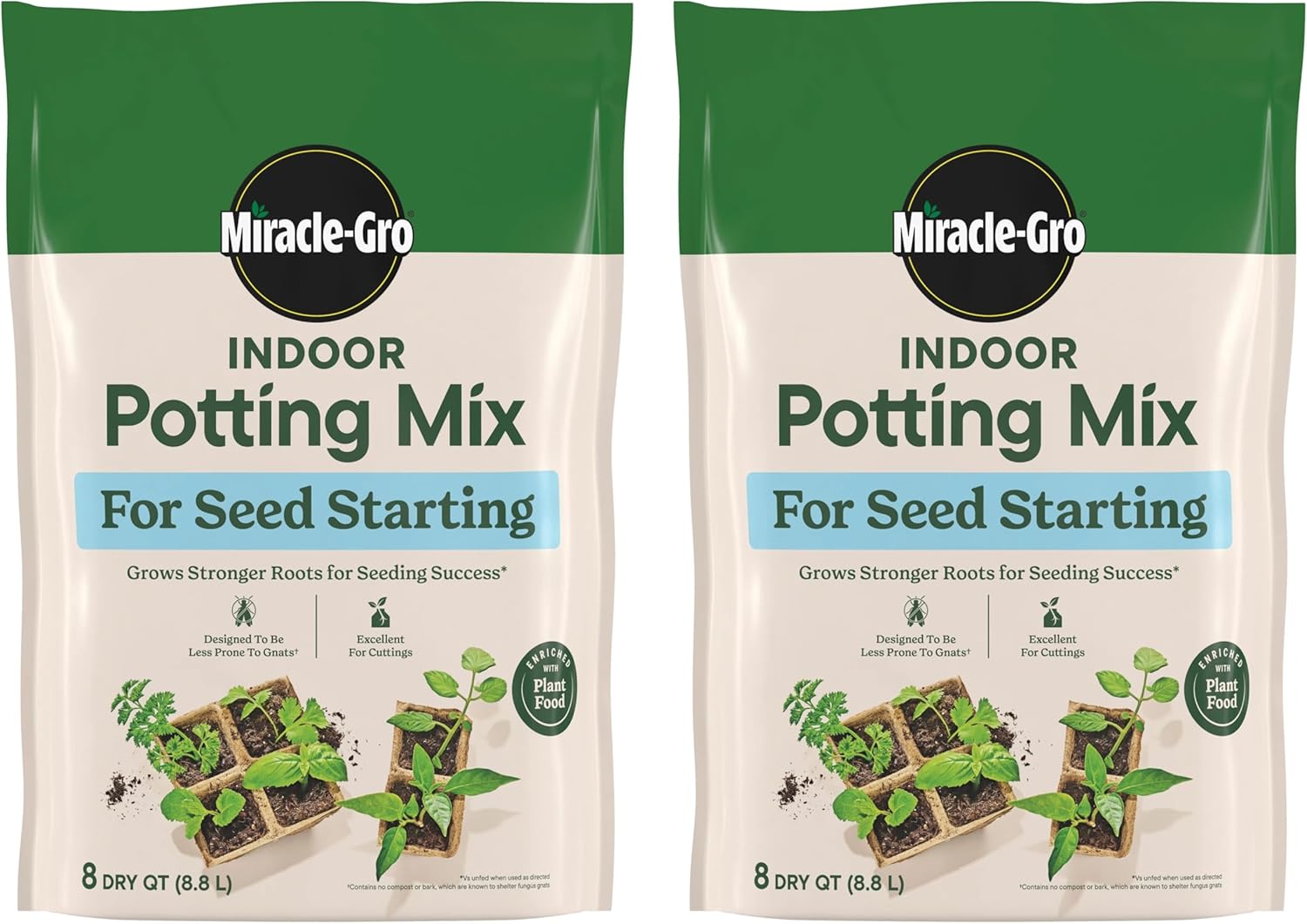
Miracle-Gro Indoor Potting Mix for Seed Starting, 8 qt. (2-Pack)
| Brand Name | Miracle-Gro |
|---|---|
| Item Type Name | Potting Mix |
| Number of Packs | 2 |
| Volume | 8 quarts |
This two-pack of Miracle-Gro Indoor Potting Mix is designed specifically for starting seeds and rooting cuttings indoors. The blend is lightweight and pre-enriched with plant food so seedlings get a nutrient boost during early root development, and the manufacturer says it yields stronger roots compared with unfed mixes when used as directed. It is intended for vegetables, flowers, and herbs and works well in cell trays and small containers; one 8 qt. bag will fill roughly three 72-cell trays. Notably, the formula omits compost and bark, which helps lower the chance of fungus gnat infestations in damp seed-starting setups. Use it by filling trays or pots, keeping the mix evenly moist, and shielding newly sown seeds from direct sun until germination. Important limitations are standard for enriched mixes: it contains fertilizer (so handle carefully) and it is a seed-starting medium rather than an all-purpose potting soil for mature plants, so you will likely transplant seedlings into a different mix or amend soil later.
Best for: Buyers who want a low-effort, indoor seed-starting medium that supports faster root development and reduces common pest risks while following proven seed-starting practices.
Less Ideal for: Gardeners who need a permanent potting soil for mature container plants or who prefer fully organic, compost-rich mixes should consider alternatives.
- Lightweight, ready-to-use formula tailored for seed germination and cuttings
- Pre-enriched with plant food to support early root and seedling growth
- Excludes compost and bark to reduce habitat for fungus gnats
- Comes as a two-pack so you have enough mix for multiple trays
- Contains fertilizer which requires careful handling and storage
- Intended for seed starting so not formulated as long-term potting soil for mature plants
Verdict: A practical, low-risk seed-starting mix that boosts early root growth and reduces fungus gnat risk, making it a reliable choice for indoor vegetable seedlings.
DEEP ROOTS Living Soil Soil Reviver All-in-One Soil Amendment, 2 qt

| Net volume | 2 qt |
|---|
Soil Reviver is designed as a ready-to-use soil conditioner you can mix into beds or use as a top-dressing to rebuild tired planting media. It combines living compost and worm castings to add organic matter and slow-release nutrients, biochar and humic substances to help soils hold water and move nutrients, plus mycorrhizal fungi to boost root access to moisture and nutrients. In practice this product is most useful when working into rose beds or renewing container mixes where improved structure and microbial activity are priorities. Because it targets biology and moisture retention rather than fast-release fertilizer, you should expect gradual improvements over weeks to months rather than immediate leaf greening. The 2 qt size is convenient for spot applications or small beds but may require multiple bags for larger gardens. Easy to apply and versatile, it is a practical choice for gardeners who want a single organic amendment to support longer term soil health in rose plantings.
Best for: Gardeners who prioritize building reliable, long‑term soil health for roses and want a single organic amendment to improve structure, moisture retention, and root function.
Less Ideal for: Growers needing a quick, high‑nitrogen boost for rapid top growth or those managing large beds who prefer bulk commercial amendments.
- Contains living compost and worm castings to increase organic matter and slow‑release nutrients
- Includes biochar and humic acids to improve water retention and nutrient availability
- Contains mycorrhizal fungi to support stronger root development and nutrient uptake
- Versatile for garden beds, containers, or as a top‑dressing
- Small 2 qt package means multiple purchases for larger rose beds
- Formulated to improve soil biology slowly so plants may not show immediate nutrient responses
Verdict: Choose Soil Reviver when you want a compact, organic all‑in‑one amendment to steadily rebuild soil biology and moisture retention for healthier rose roots.
Miracle-Gro Organic Indoor Potting Mix, 16 qt.

| Volume | 1 cubic feet |
|---|---|
| Style Name | Indoor |
| Item Highlight | Protects Against Over & Under Watering |
| OMRI Listed | Yes |
Miracle-Gro Organic Indoor Potting Mix is a ready-to-use organic blend designed for houseplants, seedlings, and container herbs. It combines coir for air space and moisture retention, sphagnum peat moss to hold and release water, and a quick-start natural fertilizer so young plants get an initial nutrient boost. Typical use is filling pots or seed trays with a drain hole, transplanting by loosening the root ball and topping up with fresh mix, or starting seeds in shallow trays and keeping them moist until germination. Practical benefits for herb growers include improved moisture regulation that helps prevent both waterlogging and rapid drying, and organic certification for those avoiding synthetic inputs. The bag claims one 16 qt. package fills a 12-inch container, which fits small- to medium-sized herb pots. Limitations are the modest volume per bag for users with multiple pots and the inclusion of peat, which some growers try to avoid for sustainability reasons. Also, plants that need very fast-draining media, such as certain succulents, may need a different blend or added grit.
Best for: Buyers who want an easy, organic potting mix for growing kitchen herbs and houseplants and who prioritize proven formulations and user guidance over sourcing bulk soil.
Less Ideal for: People looking to pot large numbers of containers at once or gardeners who prefer a peat-free, fast-draining custom mix should consider larger bags or alternative blends.
- OMRI listed and made with organic ingredients suited to organic indoor gardening
- Blend of coir and sphagnum peat moss balances aeration and moisture retention
- Includes quick-start natural fertilizer to feed plants during establishment
- Formulated specifically for indoor containers and seed starting
- 16 qt. bag provides limited coverage if you have several herb pots
- Contains peat which some gardeners avoid for environmental reasons
Verdict: A convenient OMRI-listed indoor potting mix that helps regulate moisture and gives seedlings and container herbs a reliable, organic start.
Back to the Roots Organic Indoor Potting Mix, 6 Quart

| Unit Count | 192 Fluid Ounces |
|---|---|
| Item Type Name | Indoor Potting Mix 6qt |
| Item Highlight | Peat-free, 100% organic, made in the USA |
| Ingredients | Coconut Coir, Yucca, Mycorrhizae, Perlite, Horticultural Sand |
This Back to the Roots indoor potting mix is a ready-to-use, 6-quart blend designed for common houseplants such as pothos, monstera and ferns. It combines coconut coir, yucca extract, mycorrhizae, perlite and horticultural sand to improve moisture retention, drainage and root development without peat. In practice it feels light and friable, so it is easy to pot seedlings or repot mature plants and it reduces compaction that can suffocate roots. The added mycorrhizae helps young roots establish and take up nutrients more efficiently while yucca extract helps the mix hold water between waterings, which is convenient for forgetful or busy plant owners. Because it is peat-free and made in the USA, it is a more sustainable choice versus traditional peat-based mixes. Limitations are the small 6-quart size, which means frequent repurchasing for larger collections, and the bag does not include fertilizer so you will need to feed plants separately as they grow.
Best for: Buyers who prioritize low-risk, easy-care houseplant solutions and want an organic, ready-to-use potting mix that reduces watering hassles and supports healthy root growth.
Less Ideal for: Not ideal for gardeners who need large-volume soil for many pots or for those expecting a mix that includes built-in fertilizer for long-term feeding.
- Peat-free organic formula that reduces environmental impact
- Yucca extract improves moisture retention between waterings
- Contains mycorrhizae to support root development and nutrient uptake
- Light, well-draining texture suitable for repotting seedlings and houseplants
- Small 6-quart volume may require frequent repurchasing for larger plant collections
- Does not include fertilizer so additional feeding is necessary
Verdict: A compact, peat-free potting mix that simplifies indoor plant care by holding moisture and boosting root establishment.
Choosing the Right Compost for Growing Herbs in Pots: Key Factors to Consider
Drainage and Aeration
Good drainage matters because pots have limited volume and roots can sit in excess water. Compost that contains coarse components such as pine bark fines, perlite, or shredded wood provides air spaces that let roots breathe and prevents anaerobic conditions.
Aeration also affects how quickly the media dries between waterings. For herbs grown in small pots, aim for a mix that balances moisture retention with open structure so you can water confidently without causing root rot.
Nutrient Balance and Release
Herbs generally prefer moderate fertility. Compost with a balanced nutrient profile or a built-in slow-release organic feed supplies steady nourishment without forcing rapid, soft growth that can reduce essential oils and flavor.
Look for mixes that list nitrogen, phosphorus, and potassium sources and that include composted plant matter or well-stabilized manure. Avoid mixes with excessively high initial salt or nitrogen spikes, which can scorch roots in small containers.
Texture, Particle Size, and Consistency
Particle size influences how a compost packs in a pot. Very fine materials compact under watering and restrict root growth, while very coarse blends dry out quickly and require more frequent attention.
A consistent, medium-textured compost with a mix of fine humus and some larger particles gives a predictable watering cadence and lets roots explore the pot without struggling through a cement-like mass.
Water Retention Vs Dry-Down Rate
Container herbs need a compost that retains enough moisture between planned waterings but does not stay soggy. The right balance depends on pot size, local climate, and watering routine.
In hotter, drier locations aim for compost with modest water-retention components such as coconut coir or peat alternatives. In cooler or shaded spots, a faster-draining blend reduces the risk of overwatering.
Cleanliness and Seed Content
Compost that contains weed seeds or plant pathogens creates ongoing maintenance problems in pots, where small seedlings can quickly compete with herbs. Sterilized or well-composted media lower that risk.
Choose composts that specify weed-free sourcing or have been heat-stabilized. Clean media also reduce the chance of introducing pests or disease into a container planting.
Longevity and Reusability
How long compost stays useful in a pot determines maintenance frequency. High-quality mixes retain structure and slow-release nutrients longer so you do not need to repot or replace media every season.
Consider whether the compost can be refreshed with top-dressing, how easily it breaks down, and whether it supports multiple growing cycles before full replacement.
Adjusting Compost for Different Pot Sizes
Pots range from tiny starter cells to large tubs, and compost behavior changes with volume. Small pots heat and dry more quickly, so mixes for them should include slightly more moisture-holding components and finer particles to reduce watering frequency.
In larger containers, improve drainage by adding coarser elements or blending in extra grit so water does not pool at the base. Regardless of size, always ensure the pot has drainage holes and consider a thin layer of coarse material or mesh at the bottom to prevent media loss through drainage.
- Small pots: a finer, moisture-retentive but well-aerated mix.
- Medium pots: balanced texture and steady nutrients.
- Large pots: coarser particles to improve drainage and reduce compaction.
When to Top-Dress or Refresh Potting Compost
Top-dressing with fresh compost or a light layer of slow-release organic feed restores nutrients without disturbing roots. For most herbs in pots, top-dress in spring and again midseason if growth looks weak.
Full compost replacement is necessary when the media compacts, smells sour, or root growth fills the pot. In those cases, repot into fresh mix or carefully divide and refresh the rootball with new compost to restore structure and fertility.
- Top-dress yearly for light feeders like thyme and rosemary.
- Refresh every 1 to 2 years for fast-growing or heavily harvested herbs.
Customizing Mixes for Specific Herb Types
Different herbs have different moisture and nutrient preferences. Mediterranean herbs such as rosemary, sage, and thyme favor leaner, fast-draining composts with added grit. Lush herbs like basil and parsley prefer mixes with more organic matter and steady nutrients.
You can tailor a base compost by adding perlite or grit to improve drainage for dry-loving herbs, or folding in extra composted matter or coconut coir for herbs that need more consistent moisture. Adjust fertilization rather than the compost itself for short-term growth spurts.
- Dry-loving herbs: increase coarse particles and reduce organic content.
- Leafy herbs: boost moisture retention and nutrient content slightly.
Watering Practices That Match Your Compost
How you water should match the compost's dry-down rate. Fast-draining mixes need more frequent, shorter waterings while moisture-retentive mixes suit less frequent, deeper soakings. Monitor soil moisture with your finger or a probe rather than sticking to a strict schedule.
Always water until you see excess drain from the pot to wet the whole root zone. Allow the top third of the media to dry before watering again for most culinary herbs, adjusting for individual plant needs or seasonal changes.
- Use finger test or moisture meter to check dryness.
- Water deeply and let excess drain for oxygenation of roots.
Safety and Organic Considerations
If you grow herbs for kitchen use, prefer composts made from clean, well-composted organic inputs to avoid introducing contaminants to edible plants. Labels that state compost maturity or testing for heavy metals and pathogens provide extra assurance.
Organic certification can be a useful signal but focus primarily on cleanliness and material sources. Rinsing herbs before use is always a good practice, but start with safe media to reduce the load of contaminants.
- Choose well-stabilized organic matter for edibles.
- Check for statements on pathogen testing or source materials when possible.
How We Chose the Best Compost for Growing Herbs in Pots
We focused on features that reliably affect herb health in containers. First, drainage and aeration: compost that sheds excess water while retaining enough moisture prevents root rot and encourages fibrous root systems. Second, nutrient balance and slow-release feeding: herbs need steady but not excessive fertility so foliage is flavorful rather than overly leafy. We also evaluated texture and particle size because fine, compacting mixes choke roots, while overly coarse blends dry out too fast. Longevity and reusability were considered to judge how often you will need to repot or top-dress. Finally, organic matter source and weed or pathogen cleanliness were checked to reduce pests and seed contaminants. Excluded from our list were blends intended only for large beds, mixes with persistent synthetic hydrogels unsuited to frequent potting, and any composts that require extensive on-site processing before use. The final picks balance water management, steady nutrition, and easy handling for container herb growing.
FAQ
How often should I replace compost in herb pots?
It often depends on plant vigor and pot size. Light feeders may go two years with top-dressing, while fast-growing or heavily harvested herbs usually benefit from a full refresh every 12 to 18 months.
Can I mix garden soil with potting compost for herbs?
Usually not recommended because garden soil compacts in pots and reduces aeration. If you need to bulk up a mix, use coarse materials like grit or bark rather than garden loam to maintain drainage.
Is coconut coir a good component for herb compost?
Yes, coir can improve moisture retention without compacting like fines. It works well for herbs that need steady moisture, though it may require supplementation with nutrients since it holds little on its own.
What compost texture is best for rosemary and thyme?
These Mediterranean herbs prefer a leaner, faster-draining texture with coarse particles and some grit. That reduces water retention and helps keep roots healthy in pots.
How can I tell if my potting compost is breaking down?
Signs include reduced drainage, a sour smell, and a dense, compacted feel. Visible root crowding and poor plant growth are also indicators that the media has degraded and needs refreshing.
Should I add fertilizer to compost in pots?
Often yes. Even nutrient-rich composts eventually deplete in containers. Use a balanced organic feed or dilute liquid fertilizer during the growing season to maintain steady growth without pushing excessive leafy growth.
Final Verdict
Container herbs thrive when the compost supports steady moisture, good aeration, and balanced nutrients. Prioritize a mix that matches your pot size and the herb type you grow, and be ready to refresh or top-dress when structure or nutrient levels decline. Focus on drainage, particle size, and cleanliness as you decide. Those tradeoffs determine how often you water, how frequently you repot, and how flavorful your herbs will be. Choose the compost that fits your routine and container setup to get the most from potted herbs.
